)
or https:// means you've safely connected to the .gov website. Share sensitive information only on official, secure websites.
)
or https:// means you've safely connected to the .gov website. Share sensitive information only on official, secure websites.


- 3.11.10 Revenue Receipts
- 3.11.10.1 Program Scope and Objectives
- 3.11.10.1.1 Background
- 3.11.10.1.2 Authority
- 3.11.10.1.3 Responsibilities
- 3.11.10.1.4 Program Management and Review
- 3.11.10.1.5 Program Controls
- 3.11.10.1.6 Terms/Definitions/Acronyms
- 3.11.10.1.7 Related Resources
- 3.11.10.1.8 ♦IRM Deviation Procedures♦
- 3.11.10.2 Taxpayer Advocate Service (TAS)
- 3.11.10.2.1 ♦Taxpayer Advocate Service♦
- 3.11.10.2.2 ♦Taxpayer Bill of Rights (TBOR)♦
- 3.11.10.2.3 ♦TAS Service Level Agreements (SLA)♦
- 3.11.10.2.4 Operations Assistance Request (OAR)
- 3.11.10.3 Individual/Business Master File On-Line and Return View
- 3.11.10.3.1 CADE 2 / IMF Daily Processing
- 3.11.10.4 Electronic Federal Tax Payment System (EFTPS) Payment Indicator
- 3.11.10.5 General Editing Guidelines—Error Resolution System (ERS) Coding
- 3.11.10.6 Document Perfection General Instructions
- 3.11.10.6.1 Name Control/Check Digits
- 3.11.10.6.2 Taxpayer Identification Number (TIN)
- 3.11.10.6.3 Tax Period
- 3.11.10.6.3.1 Editing a Calendar Year
- 3.11.10.6.3.2 Editing a Fiscal Year
- 3.11.10.6.3.3 Editing a Prior Year
- 3.11.10.6.3.4 Special Instructions (BMF)
- 3.11.10.6.4 Master File Tax Account Codes (MFT)
- 3.11.10.6.5 Plan/Report Number
- 3.11.10.6.6 Transaction (Received) Date
- 3.11.10.6.7 Transaction Codes (TCs)
- 3.11.10.6.8 Special Conditions—Transaction Codes (TCs)
- 3.11.10.6.9 Special Conditions—Transaction Amounts
- 3.11.10.6.10 Designated Payment Codes (DPCs)
- 3.11.10.6.11 Split Refund Indicator (Information Only)
- 3.11.10.6.12 Trace ID (Identification) Numbers - General Information Only
- 3.11.10.7 Examination and Editing of Specific Documents
- 3.11.10.7.1 Electronically-Generated TDA/Taxpayer Delinquent Account, Coded with Document Code 17 or 18 (Payment Documents from Courtesy Deposit)
- 3.11.10.7.2 Omitted Green Marked or Written Amounts on Tax Documents
- 3.11.10.7.3 Form 3753, Special Handling, Manual Refund Posting Voucher
- 3.11.10.7.4 Form 2287, Check/Payment Not Accepted by Bank
- 3.11.10.7.5 Form 3809 and Form 8758 Credit Transfers
- 3.11.10.7.6 SF 1098, Schedule of Cancelled or Undeliverable Checks
- 3.11.10.7.7 Form 514–B (Credit Transfer Voucher)----Tax Transfers Out of the Master File
- 3.11.10.7.8 Payment Documents from Campus Deposit Activity
- 3.11.10.7.9 Form 2424 (Account Adjustment Voucher)—Special Editing Instructions
- 3.11.10.7.10 Form 1041-ES, Payment Voucher
- 3.11.10.7.11 Form 1040-V, Payment Voucher
- 3.11.10.8 Form 1040-ES and Form 1040-C
- 3.11.10.8.1 General Information
- 3.11.10.8.2 Transfer of Data
- 3.11.10.9 Editing Form 1040-ES (Estimated Tax for Individuals) and Form 1040-C (U. S. Departing Alien Income Tax Return)
- 3.11.10.9.1 Tax Period
- 3.11.10.9.2 Editing of Form 1040-ES (Estimated Tax for Individuals) With IRS Label
- 3.11.10.9.2.1 Short Entity
- 3.11.10.9.2.2 Partial Entity
- 3.11.10.9.2.3 Exception Entity
- 3.11.10.9.2.4 Intermediate Entity
- 3.11.10.9.2.5 Long Entity
- 3.11.10.10 Editing of Form 1040-ES Without IRS Label
- 3.11.10.10.1 Name Line
- 3.11.10.10.2 Deceased Taxpayers
- 3.11.10.10.3 Social Security Numbers (SSNs)
- 3.11.10.10.4 Address Editing
- 3.11.10.11 Relationship Tables
- Exhibit 3.11.10-1 Valid Tax Class—BMF/IMF MFT Codes—Tax Period Tables
- Exhibit 3.11.10-2 Valid Transaction Codes—Document Codes Table
- Exhibit 3.11.10-3 Valid Transaction Codes (TCs) By MFT
- Exhibit 3.11.10-4 Julian Date Calendar, Perpetual and Leap Year
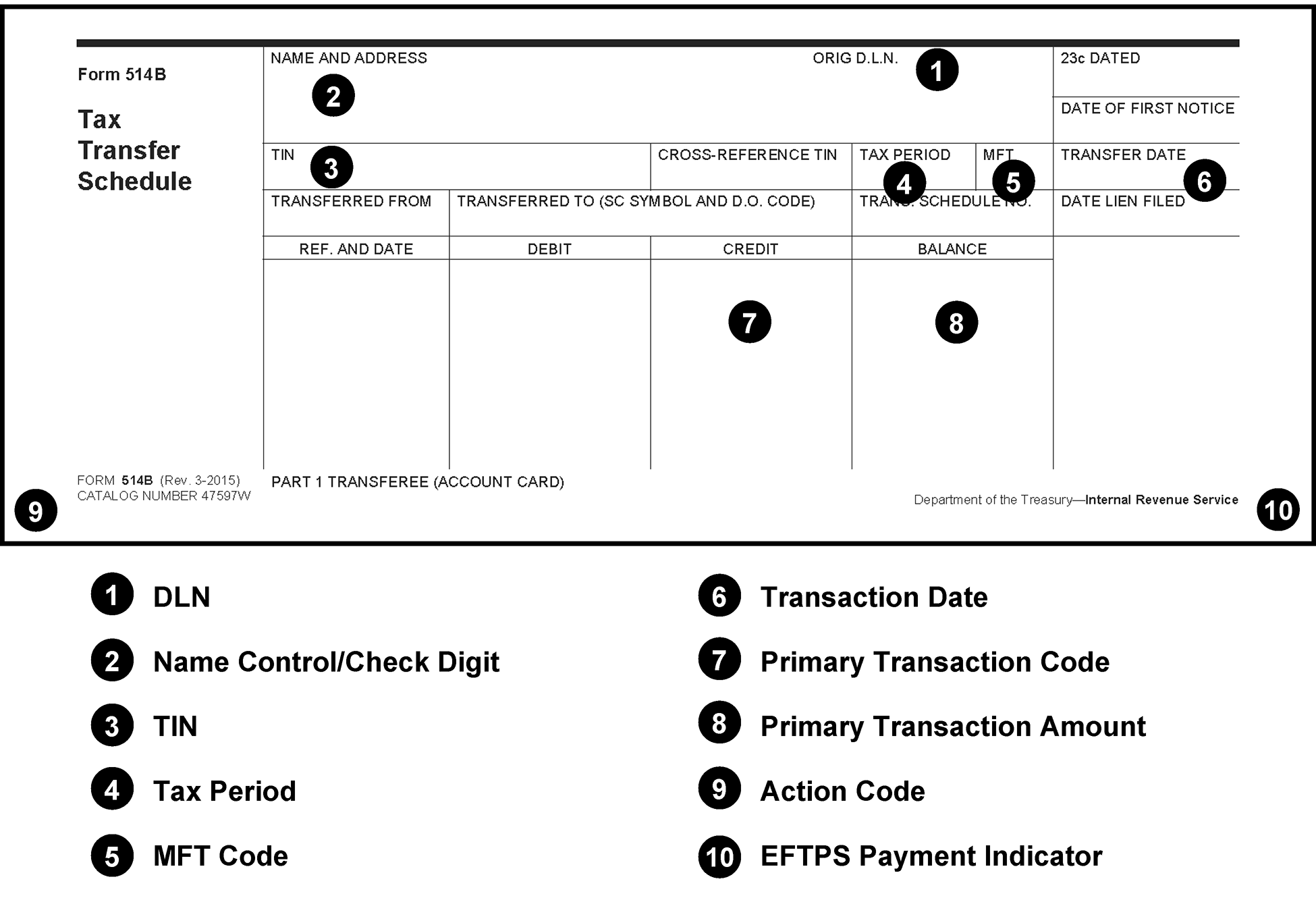
- Exhibit 3.11.10-5 Form 514–B, Credit Transfer Schedule
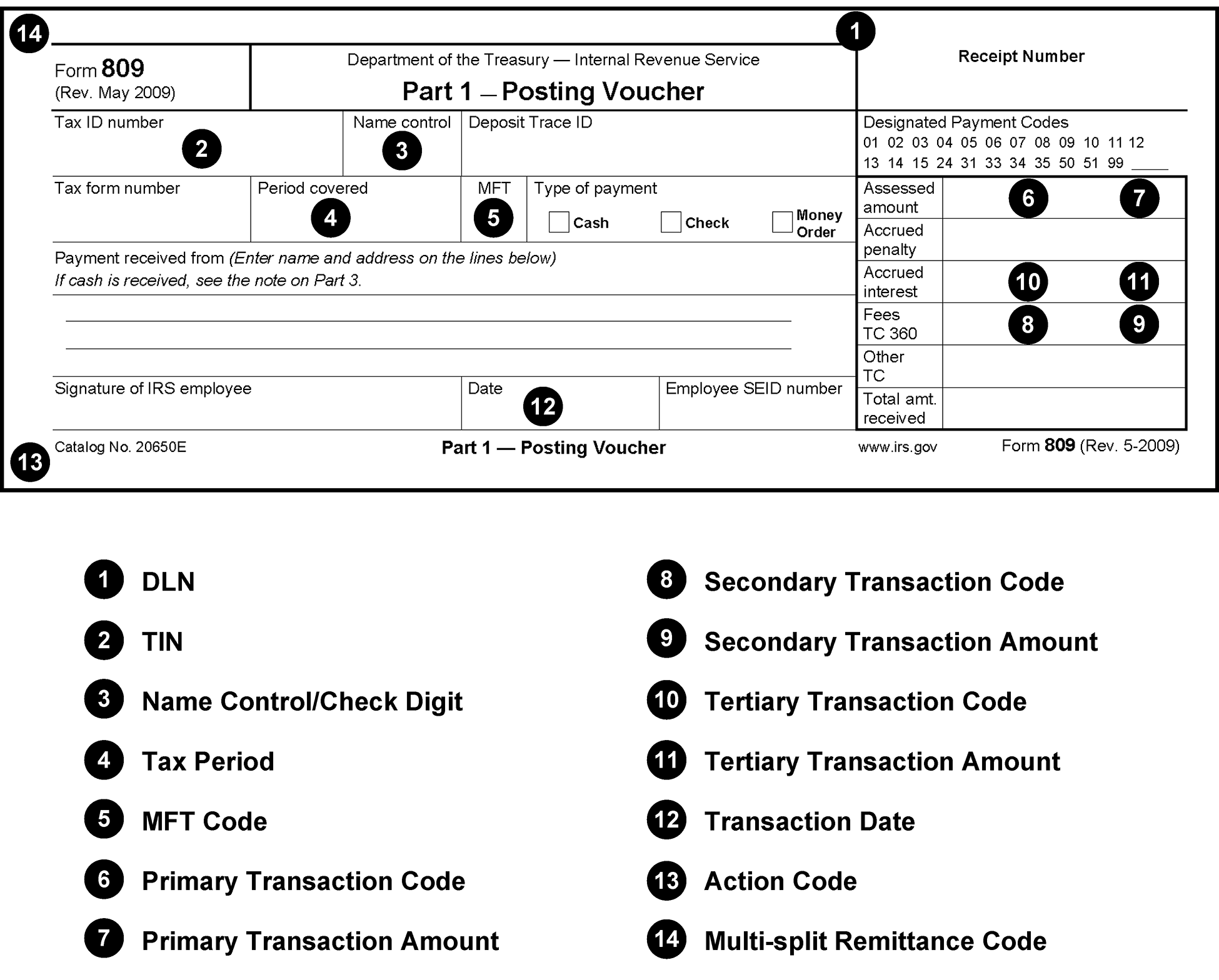
- Exhibit 3.11.10-6 Form 809, Part 1 Posting Voucher
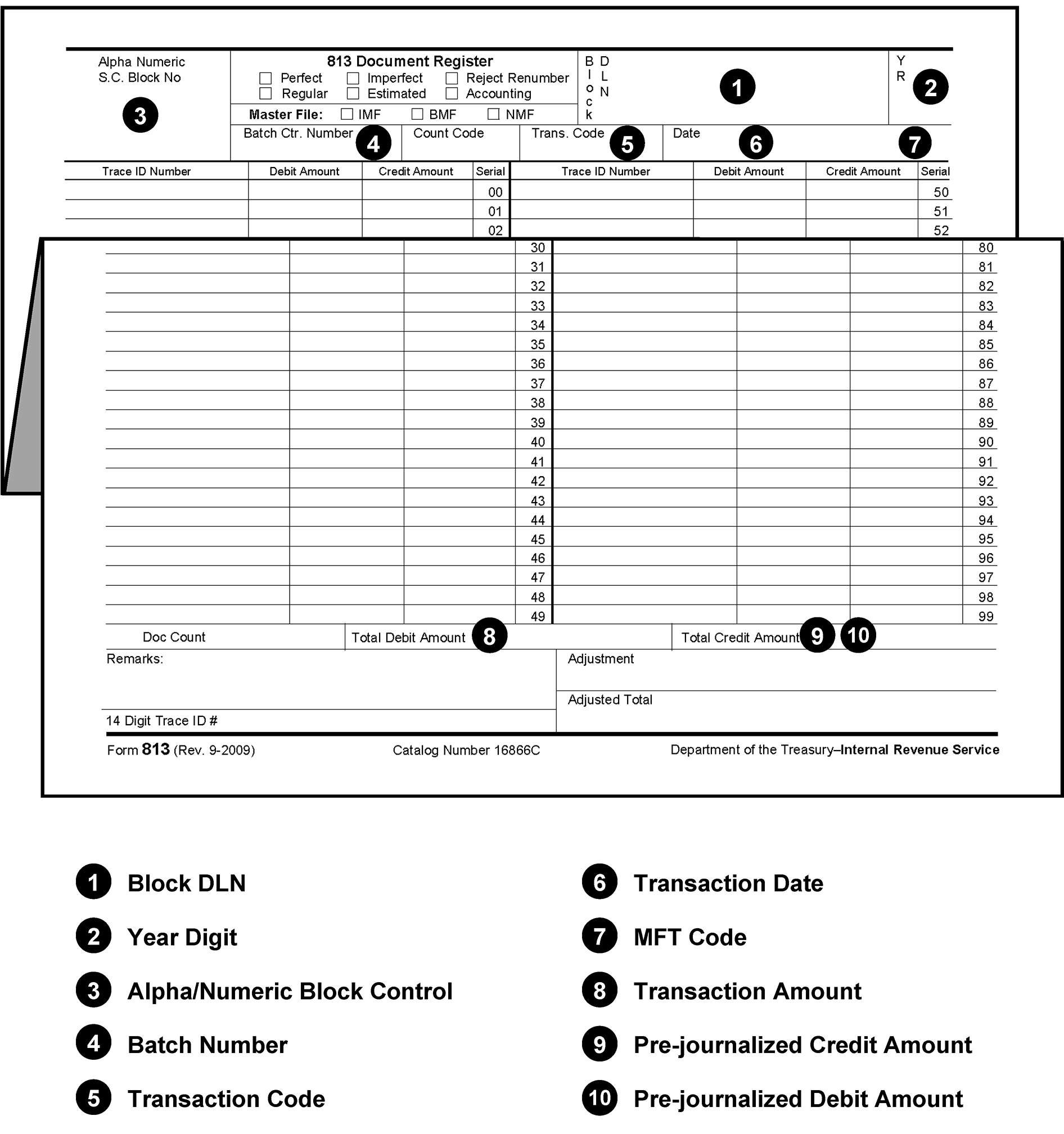
- Exhibit 3.11.10-7 Form 813, Document Register
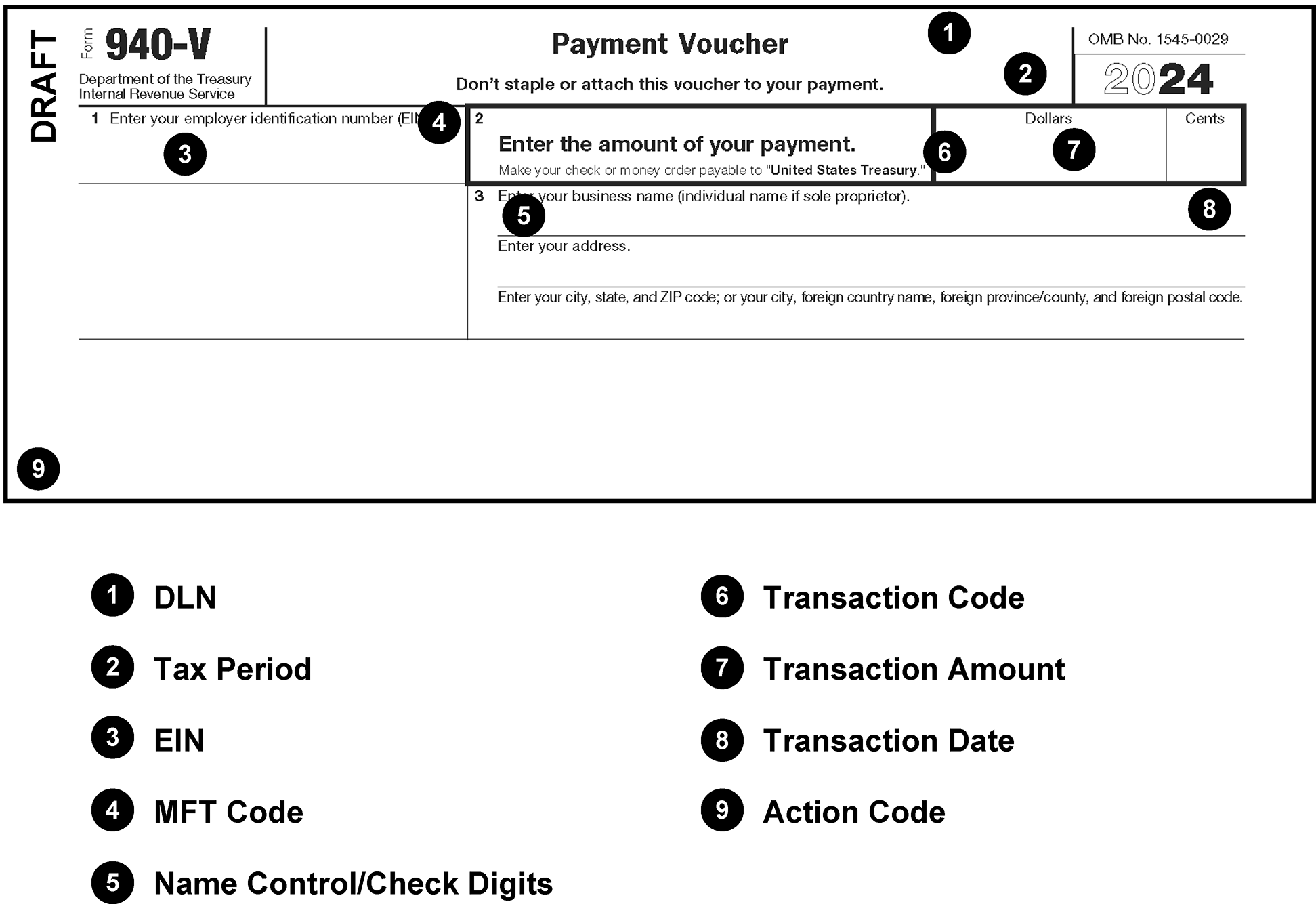
- Exhibit 3.11.10-8 Form 940-V, Payment Voucher
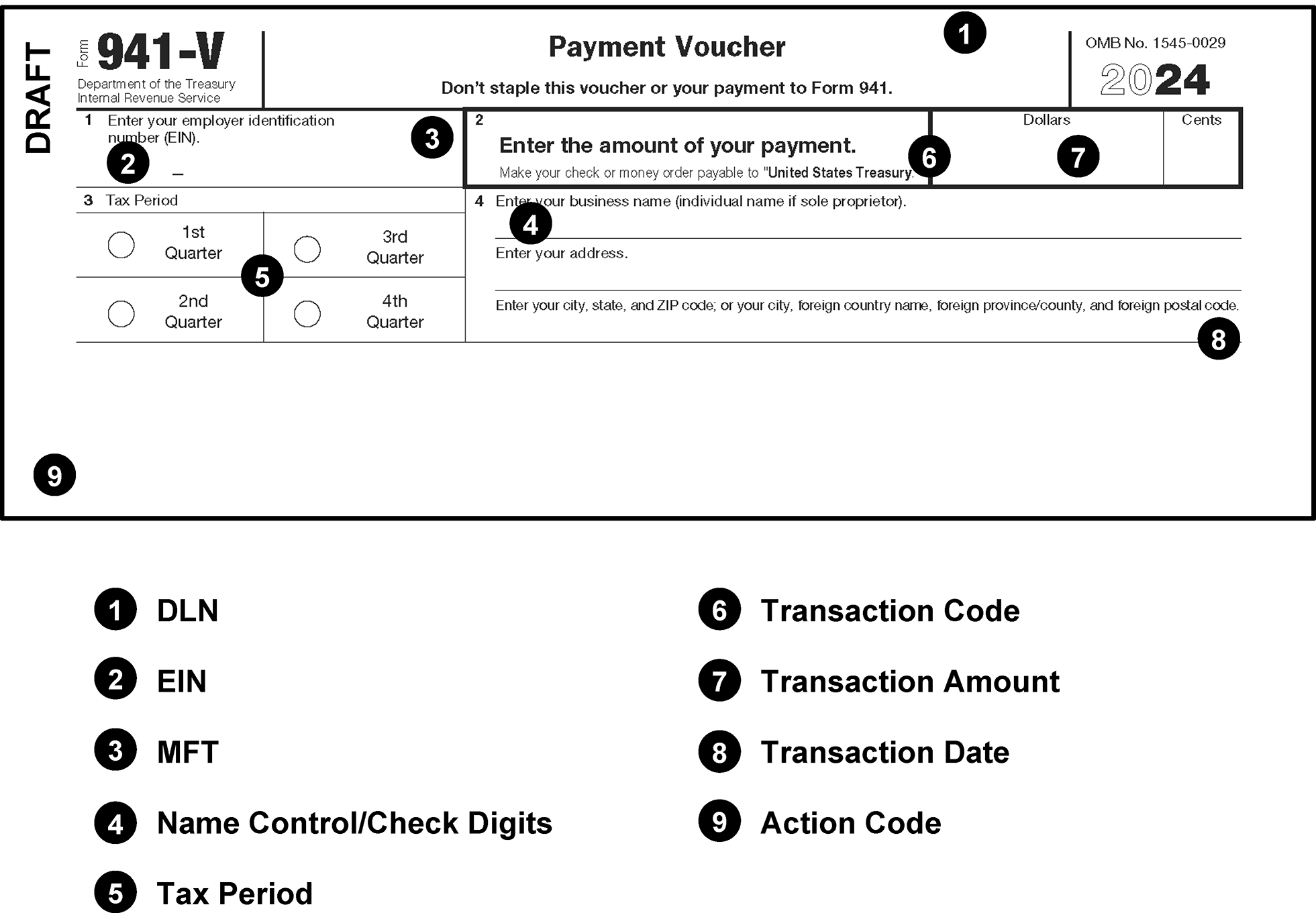
- Exhibit 3.11.10-9 Form 941–V, Payment Voucher
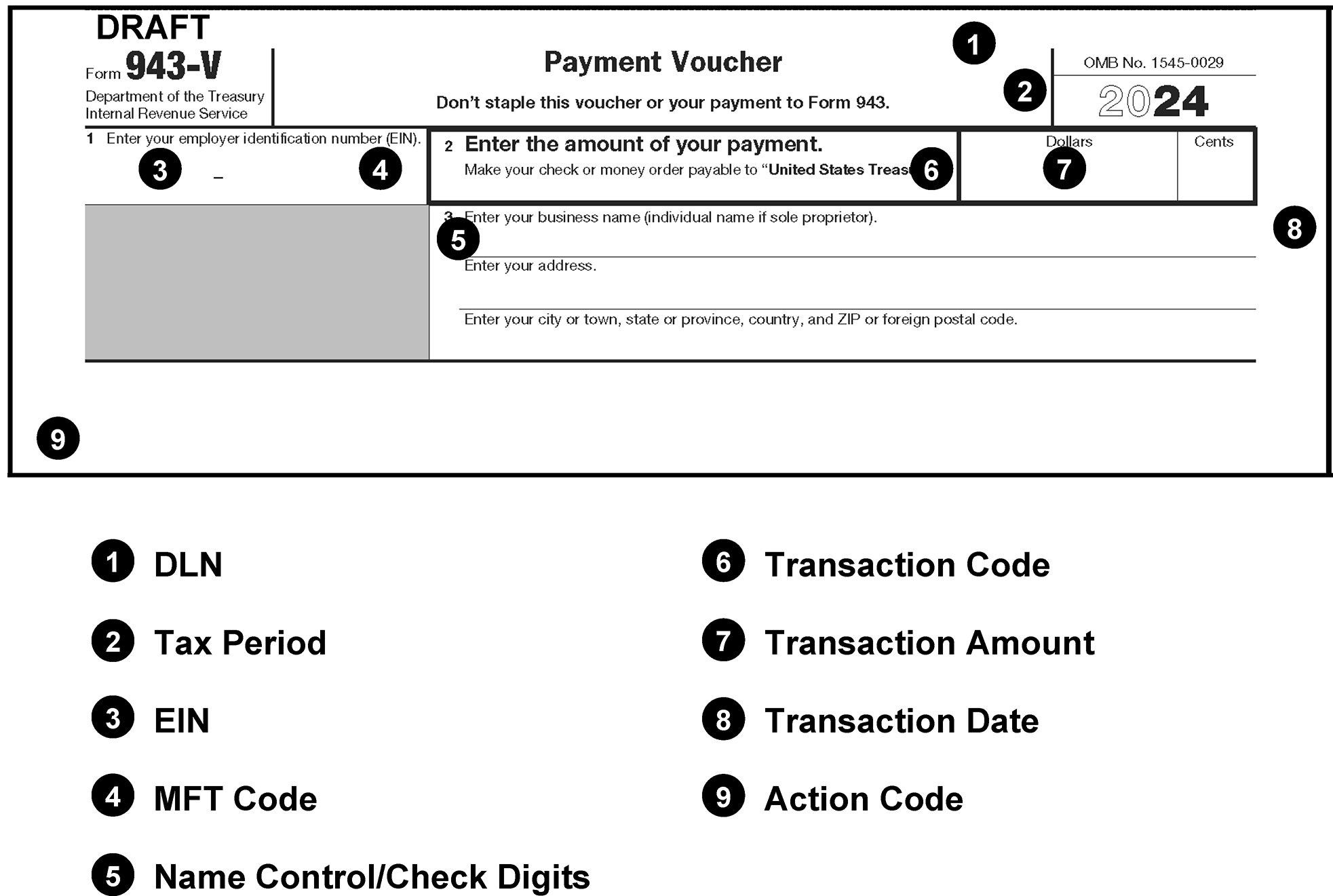
- Exhibit 3.11.10-10 Form 943–V, Payment Voucher
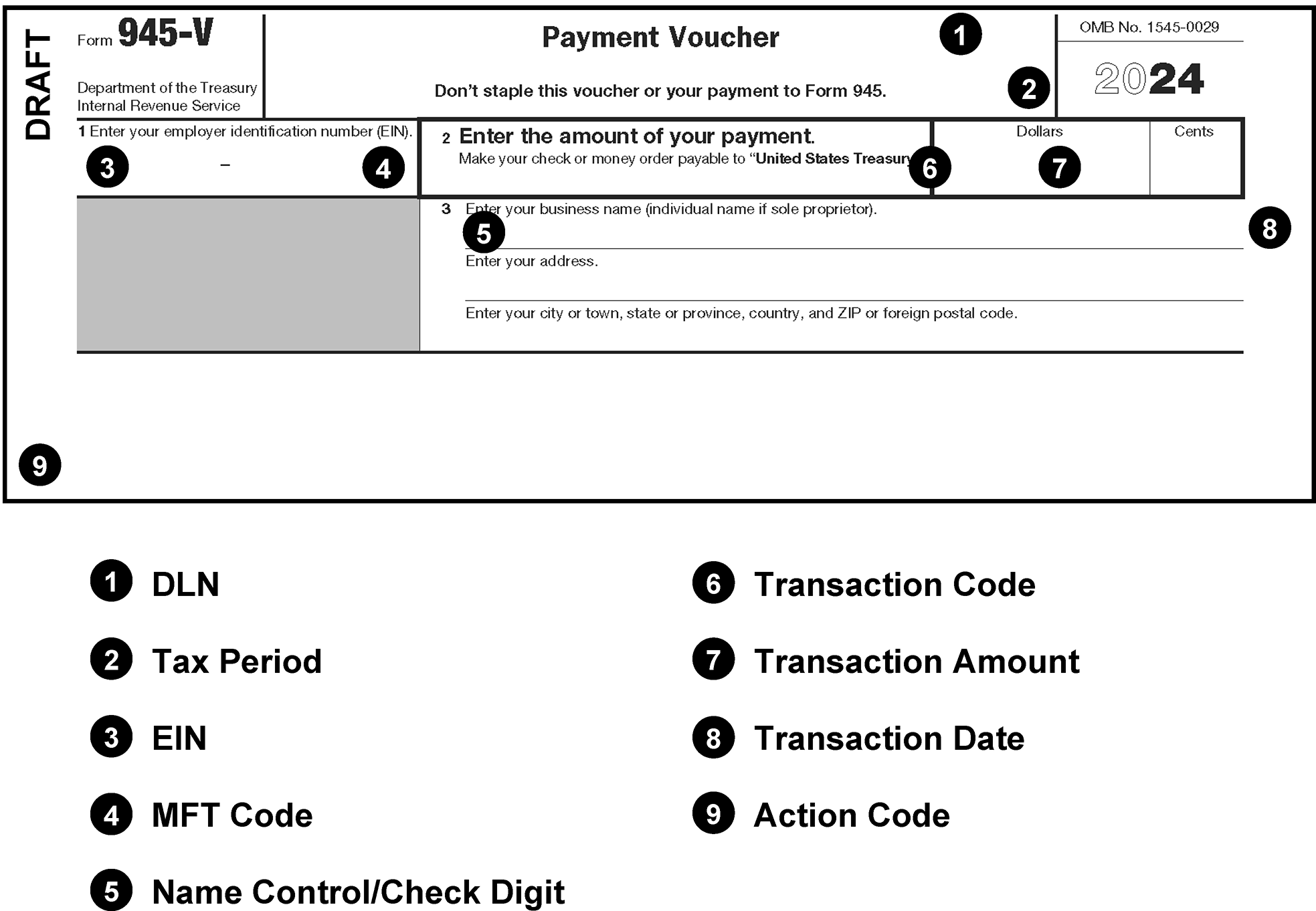
- Exhibit 3.11.10-11 Form 945–V, Payment Voucher
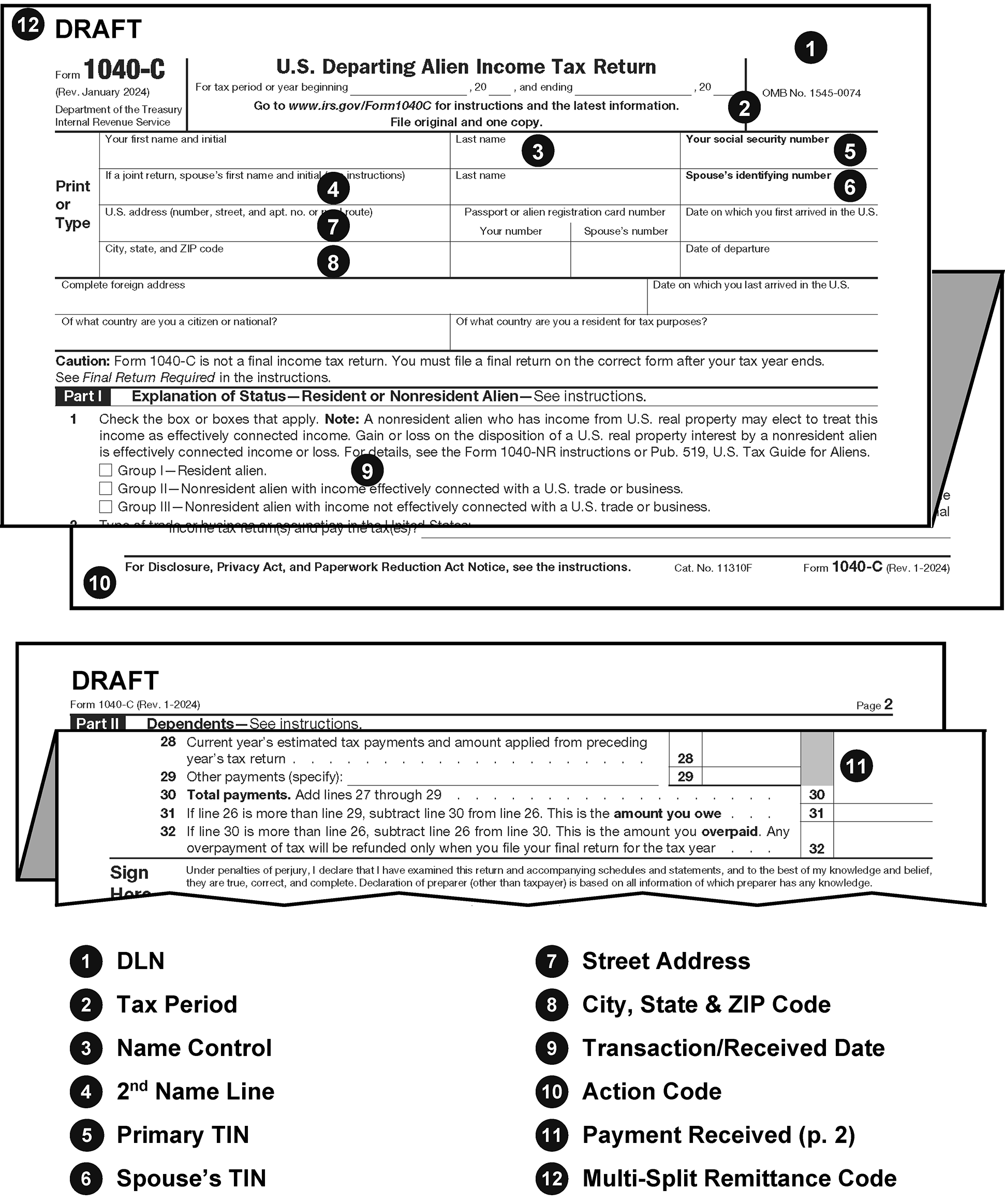
- Exhibit 3.11.10-12 Form 1040-C, U. S. Departing Alien Income Tax Return
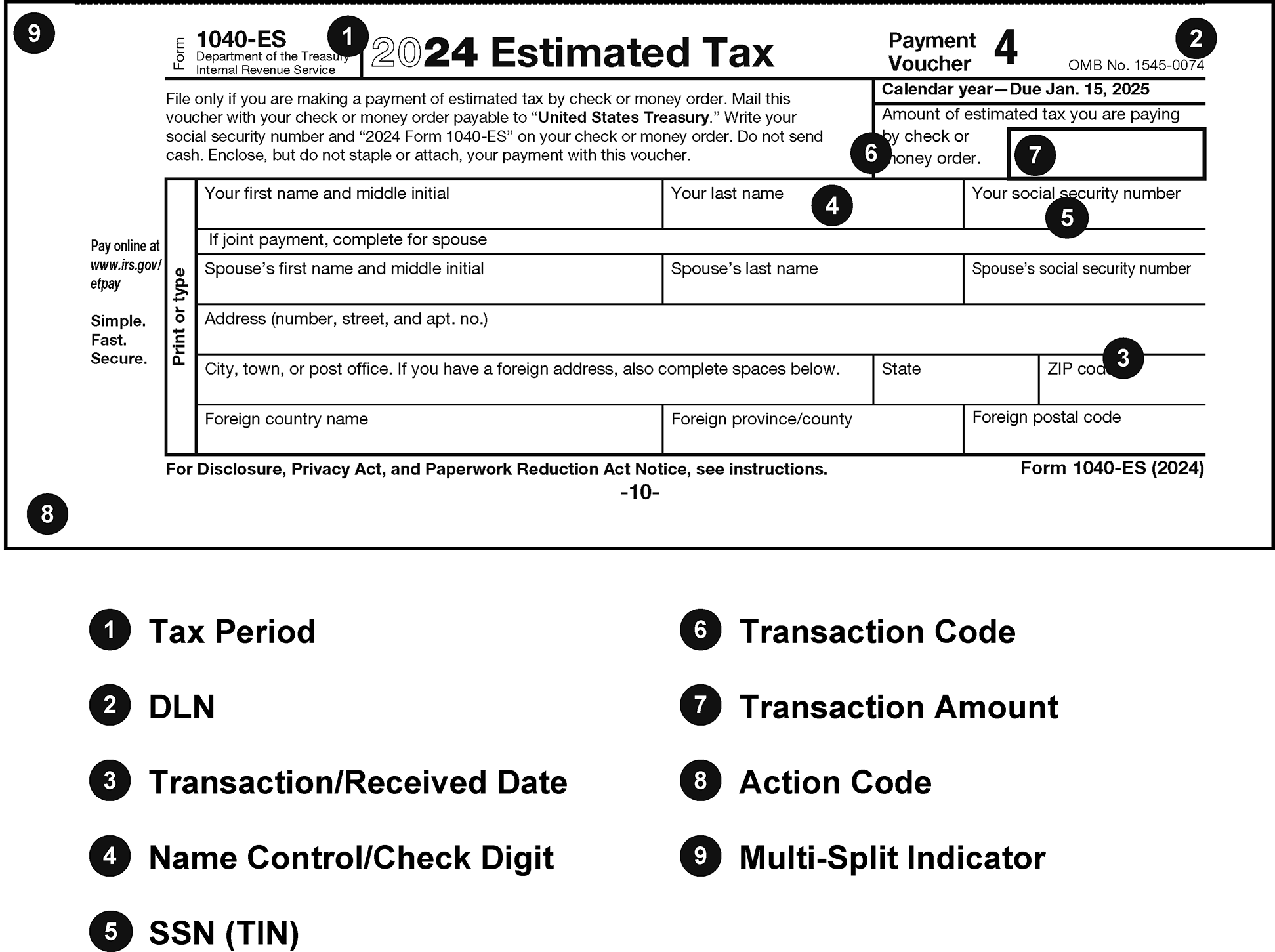
- Exhibit 3.11.10-13 Form 1040-ES, Payment Voucher 1
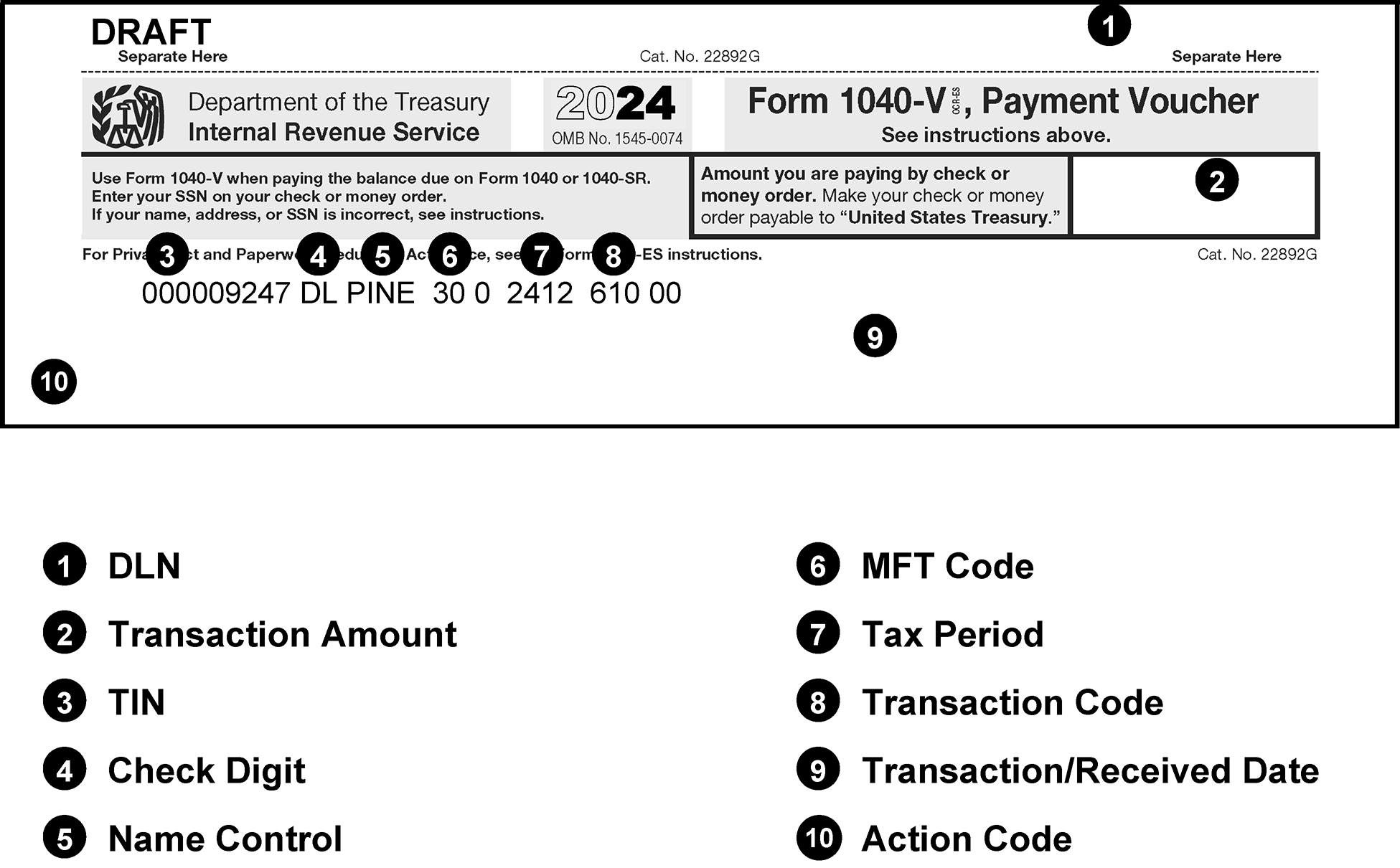
- Exhibit 3.11.10-14 Form 1040–V, Payment Voucher
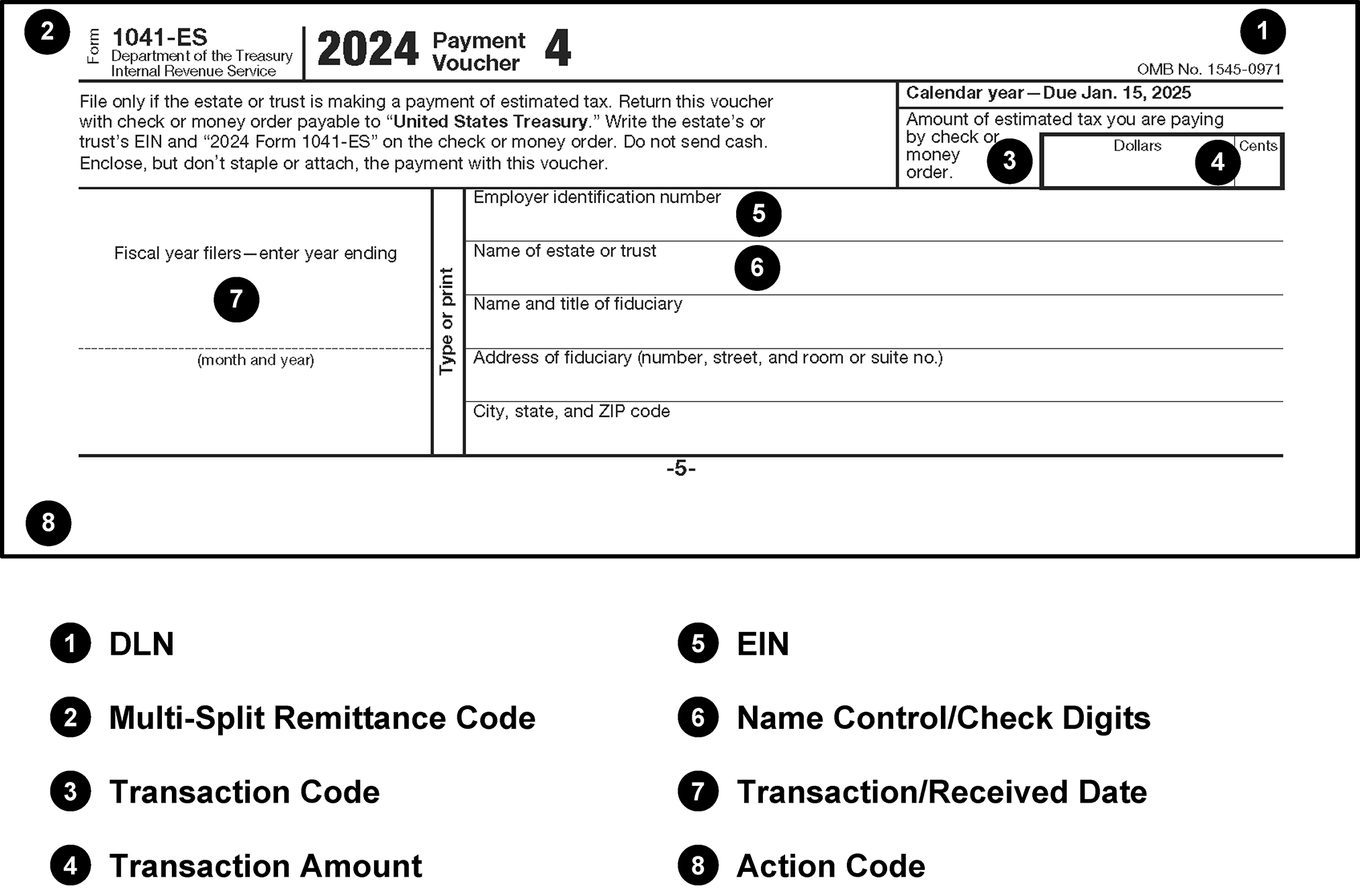
- Exhibit 3.11.10-15 Form 1041-ES, Payment Voucher 1
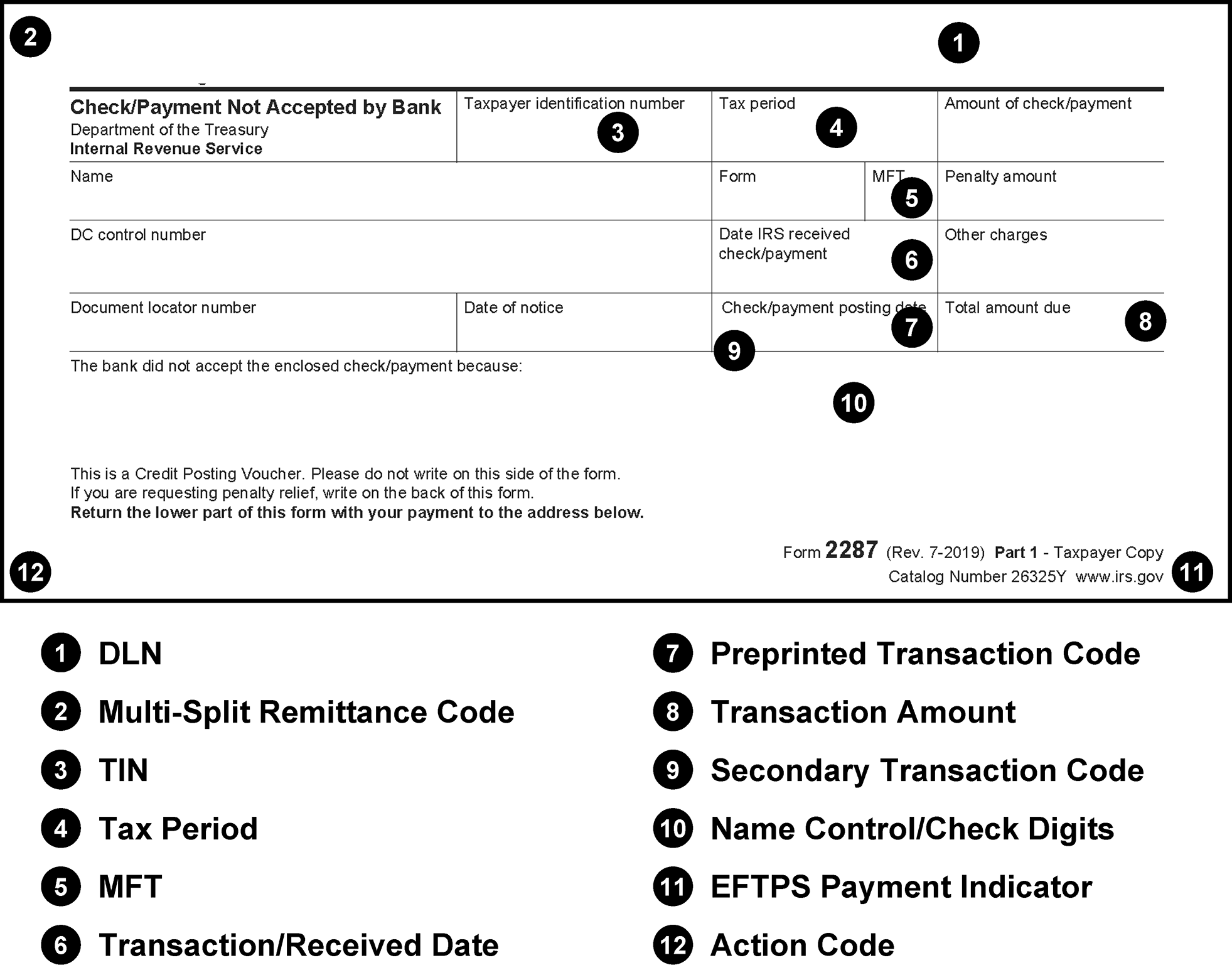
- Exhibit 3.11.10-16 Form 2287, Check/Payment Not Accepted by Bank
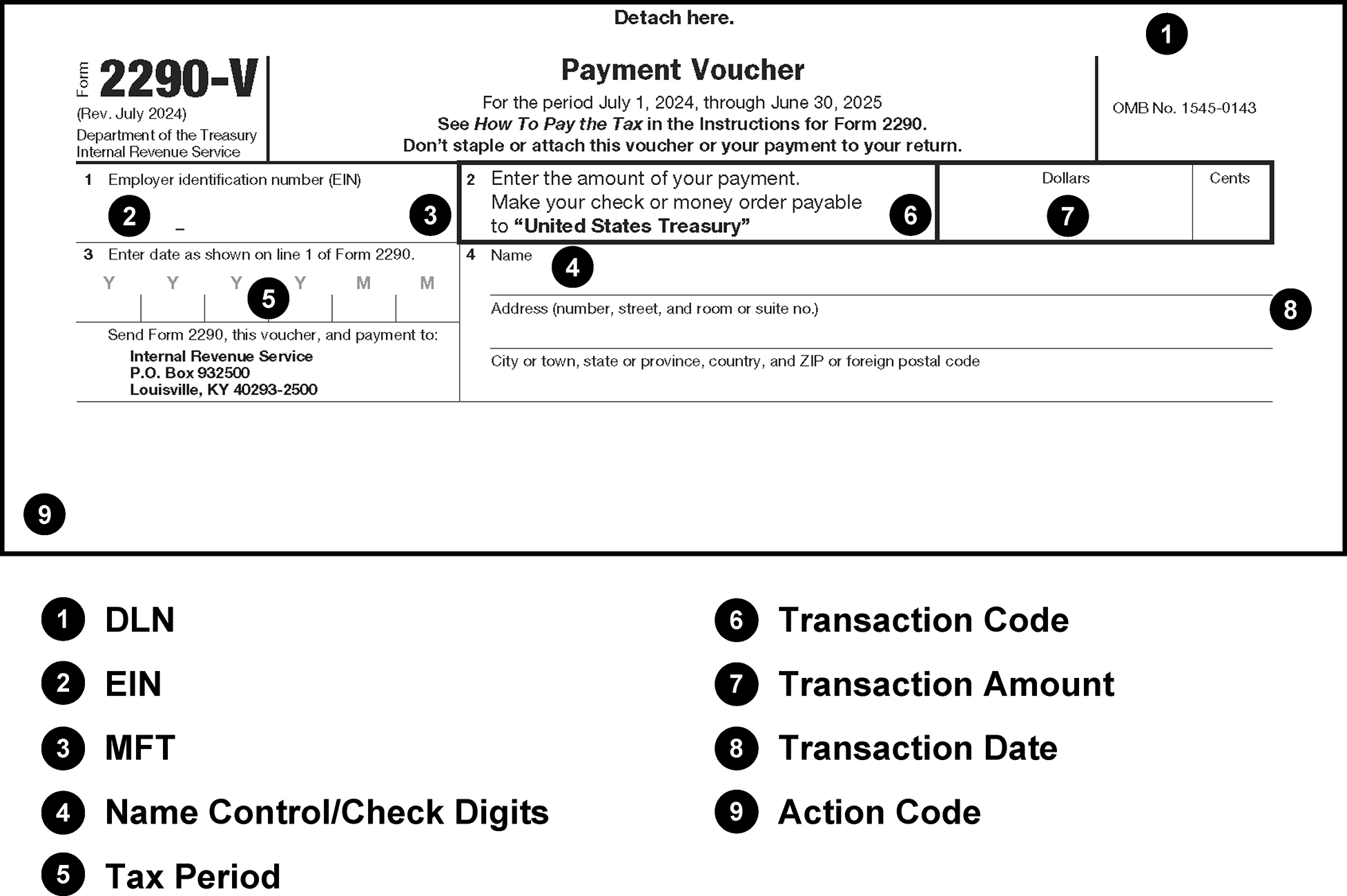
- Exhibit 3.11.10-17 Form 2290–V, Payment Voucher 1
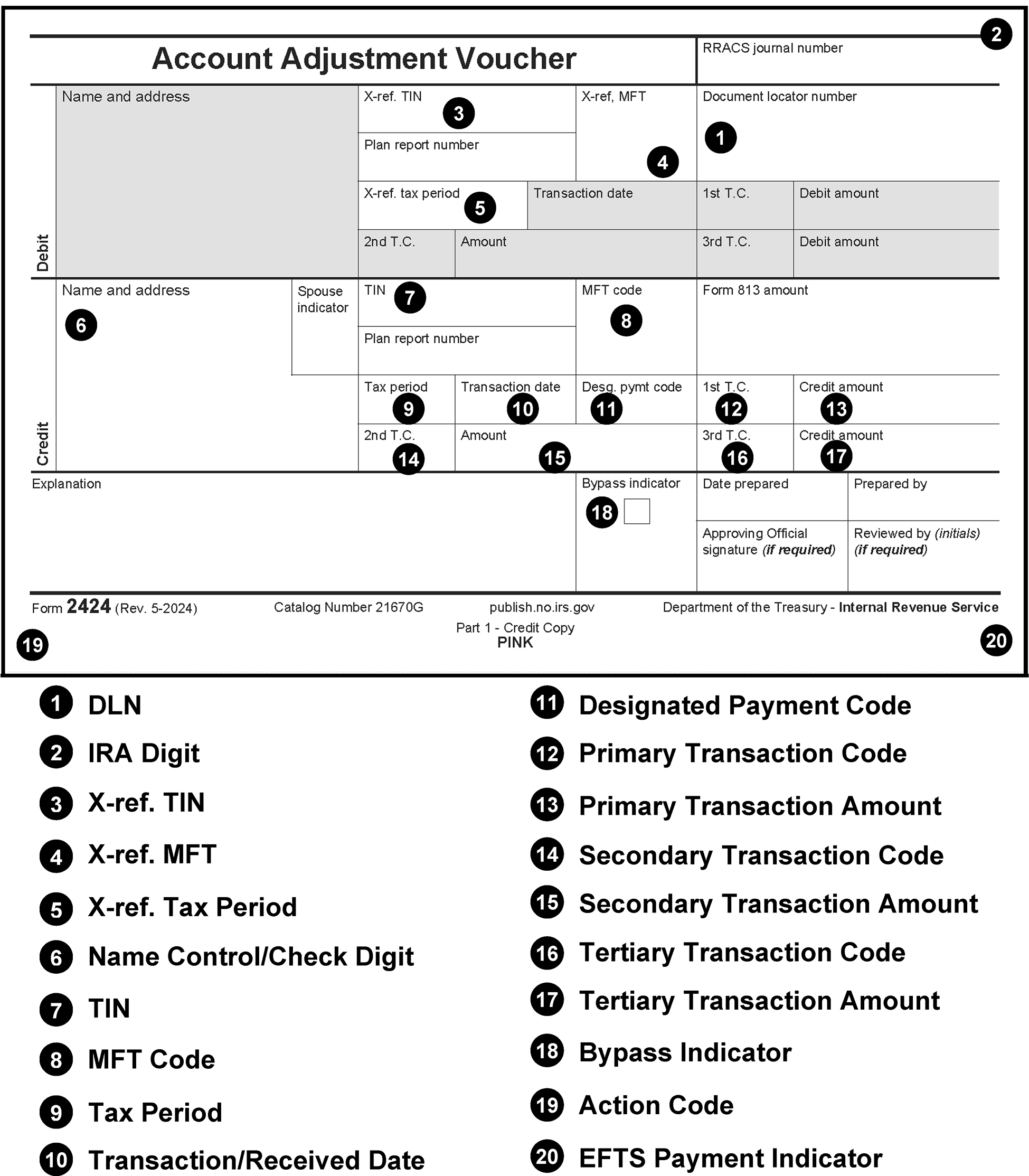
- Exhibit 3.11.10-18 Form 2424, Account Adjustment Voucher
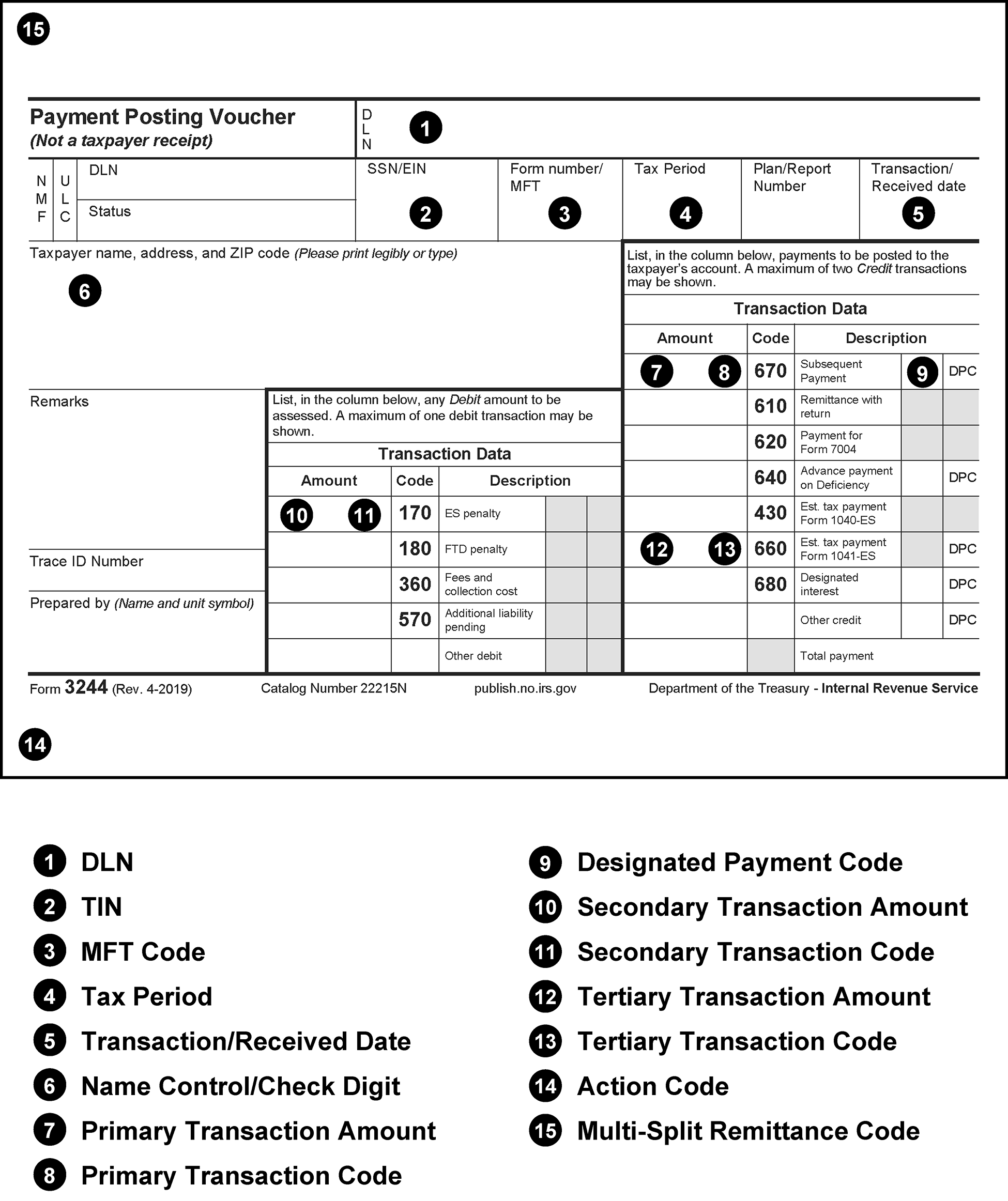
- Exhibit 3.11.10-19 Form 3244, Payment Posting Voucher (Not a Taxpayer Receipt)
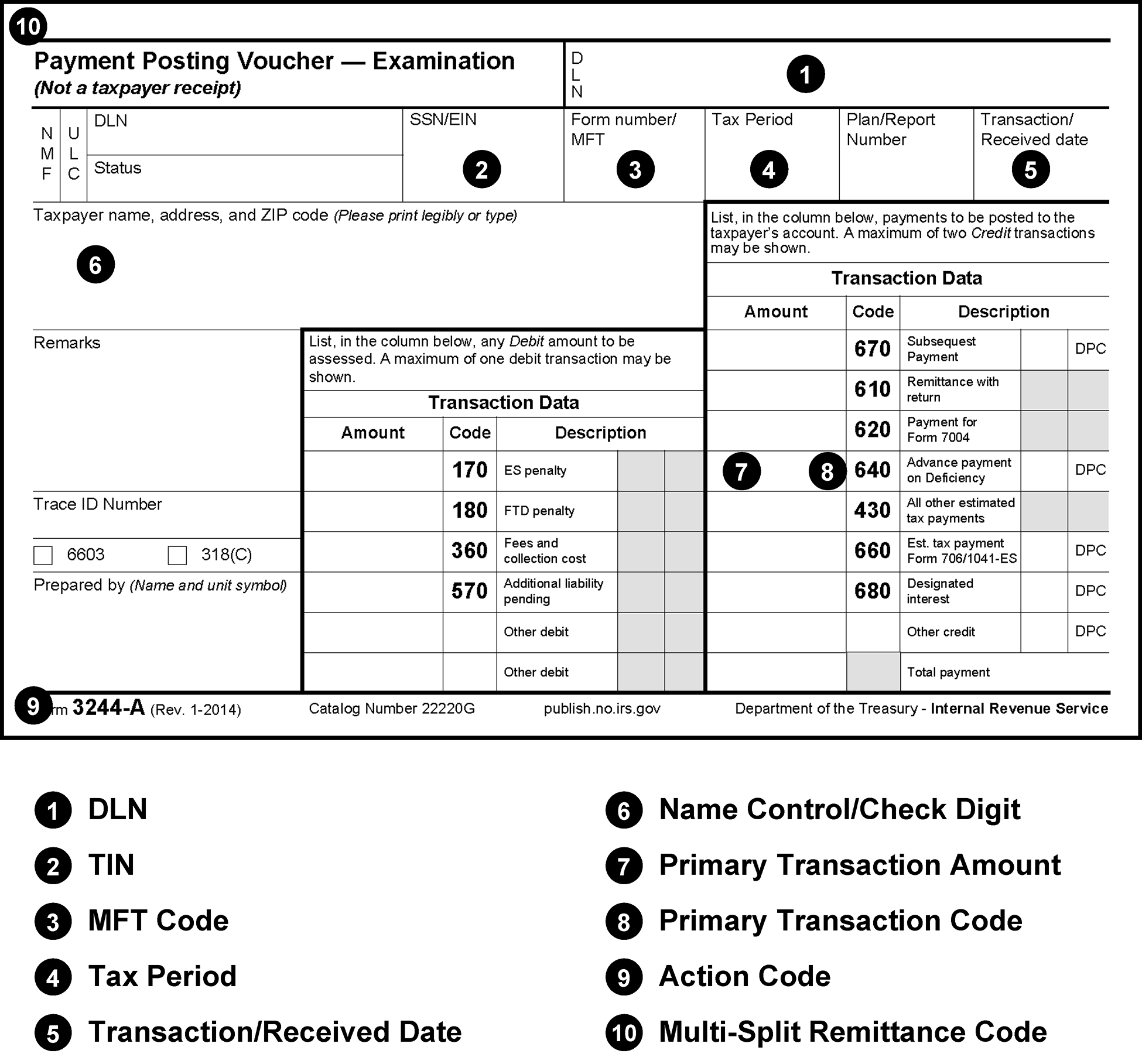
- Exhibit 3.11.10-20 Form 3244–A, Payment Posting Voucher- Examination (Not a Taxpayer Receipt)
- Exhibit 3.11.10-21 Form 3245, Posting Voucher—Refund Cancellation or Repayment
- Exhibit 3.11.10-22 Form 3552 (Part 3), Notice of Tax Due on Federal Tax Return
- Exhibit 3.11.10-23 Form 3753, Manual Refund Posting Voucher
- Exhibit 3.11.10-24 Form 3809, Miscellaneous Adjustment Voucher
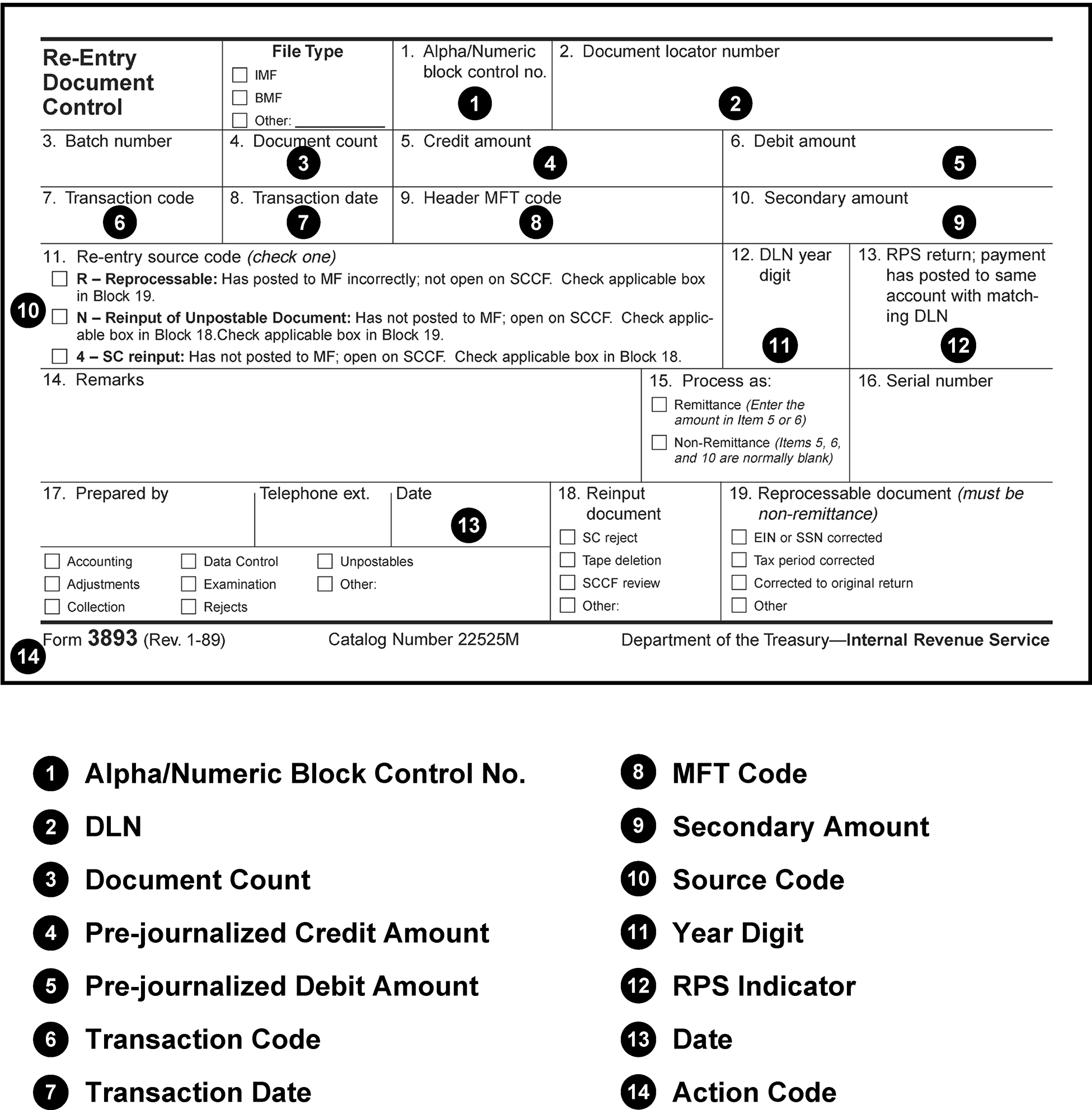
- Exhibit 3.11.10-25 Form 3893, Re-Entry Document Control
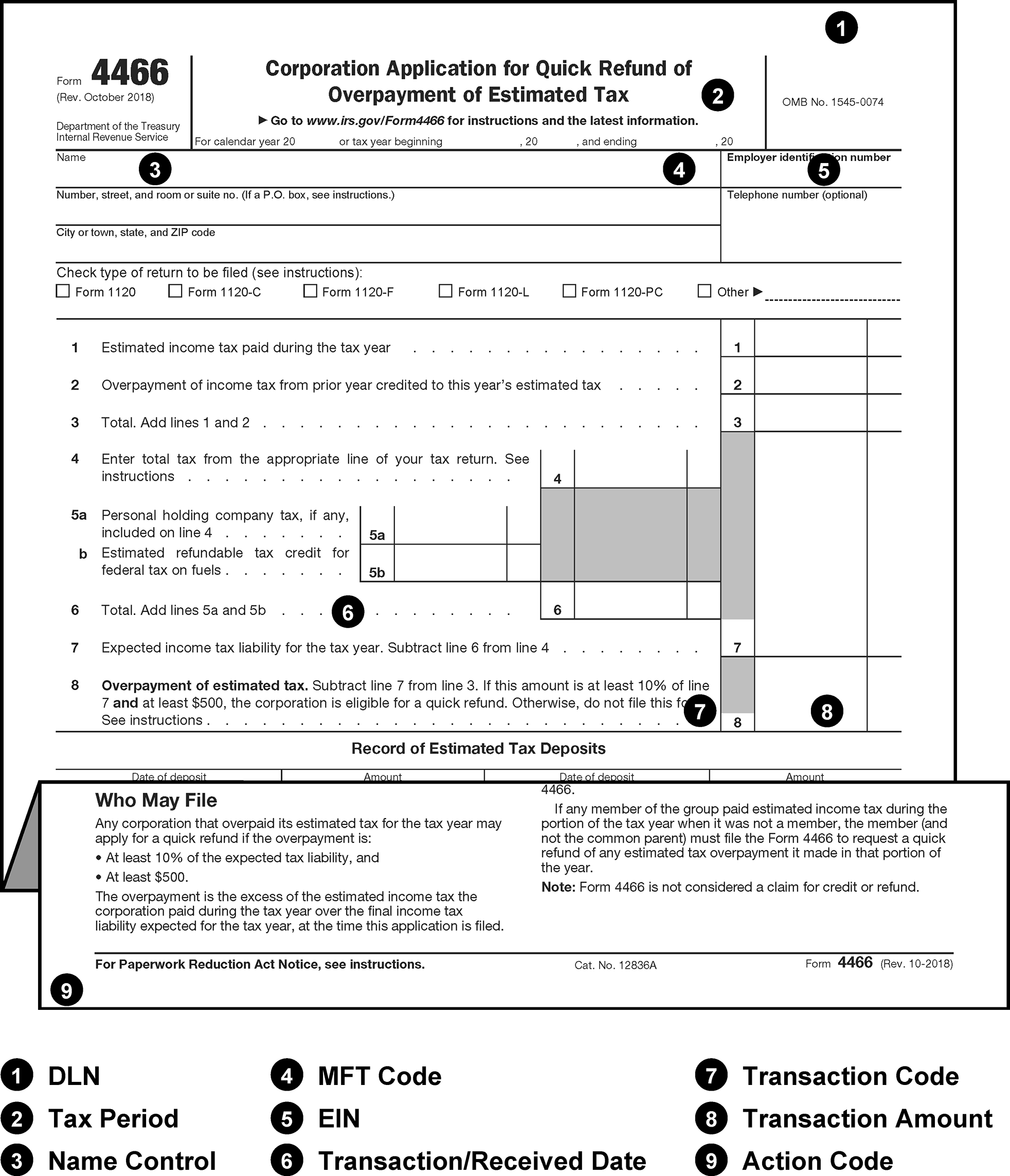
- Exhibit 3.11.10-26 Form 4466, Corporation Application for Quick Refund of Overpayment of Estimated Tax
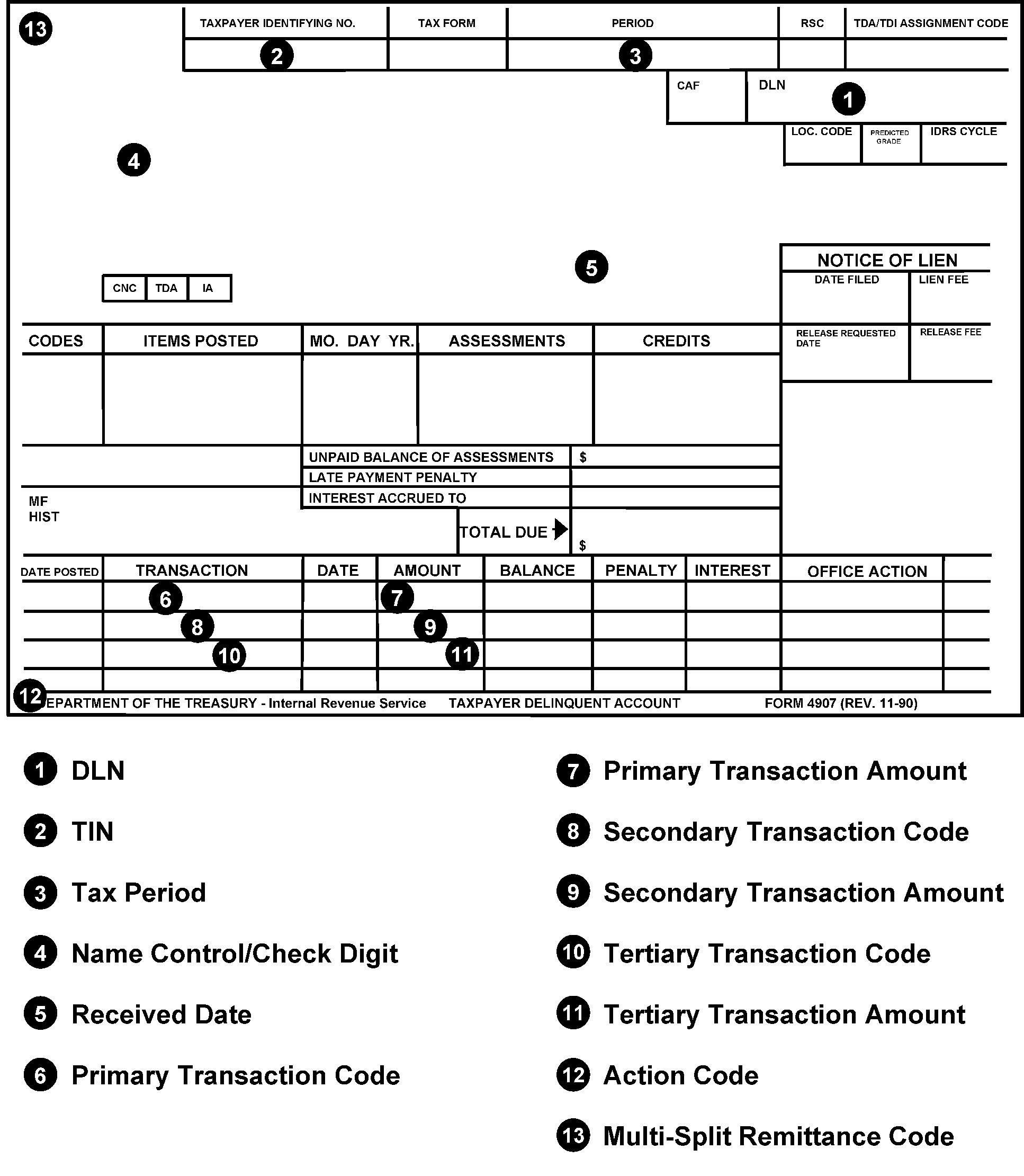
- Exhibit 3.11.10-27 Form 4907, Taxpayer Delinquent Account
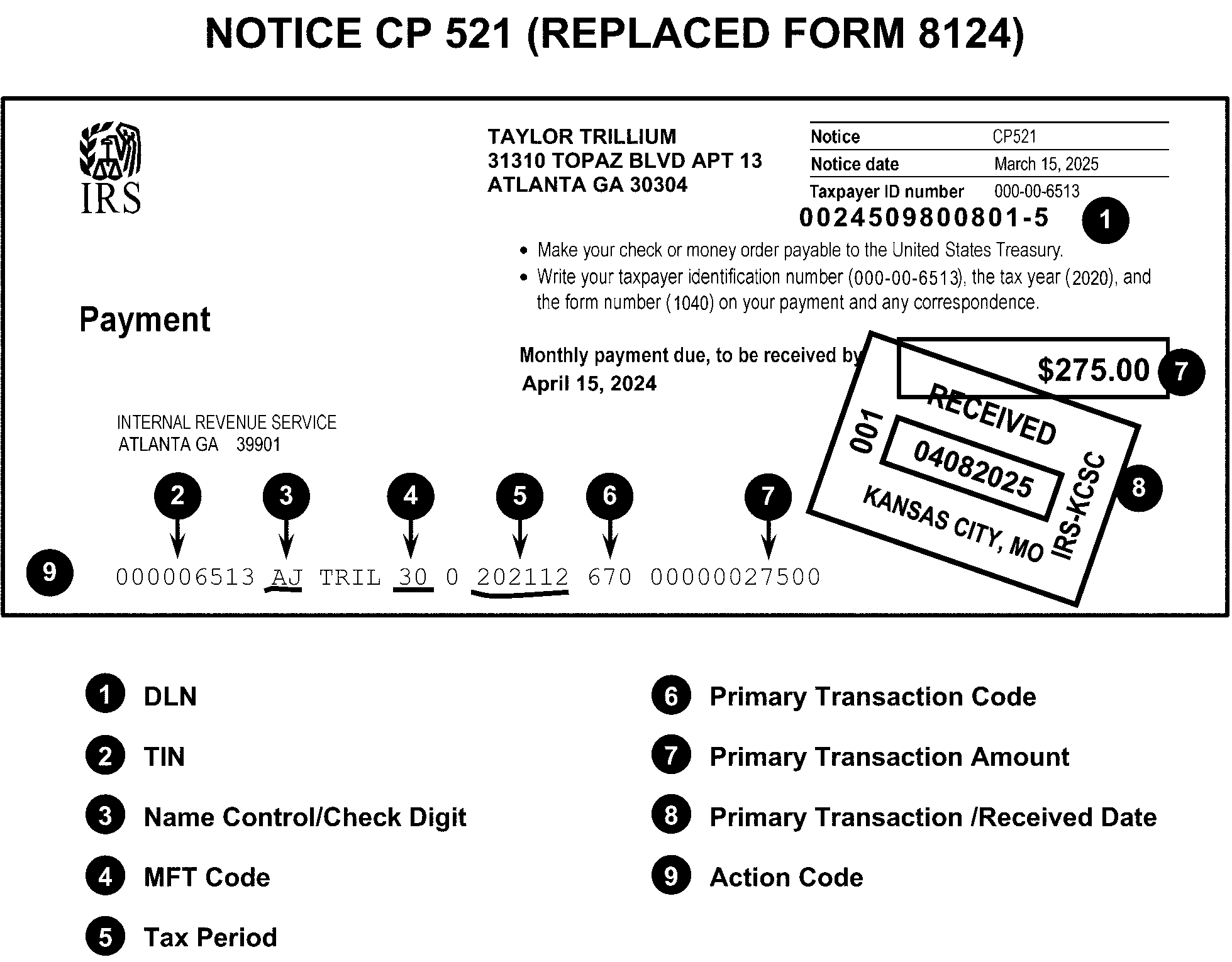
- Exhibit 3.11.10-28 Notice CP 521, Installment Agreement Reminder Notice
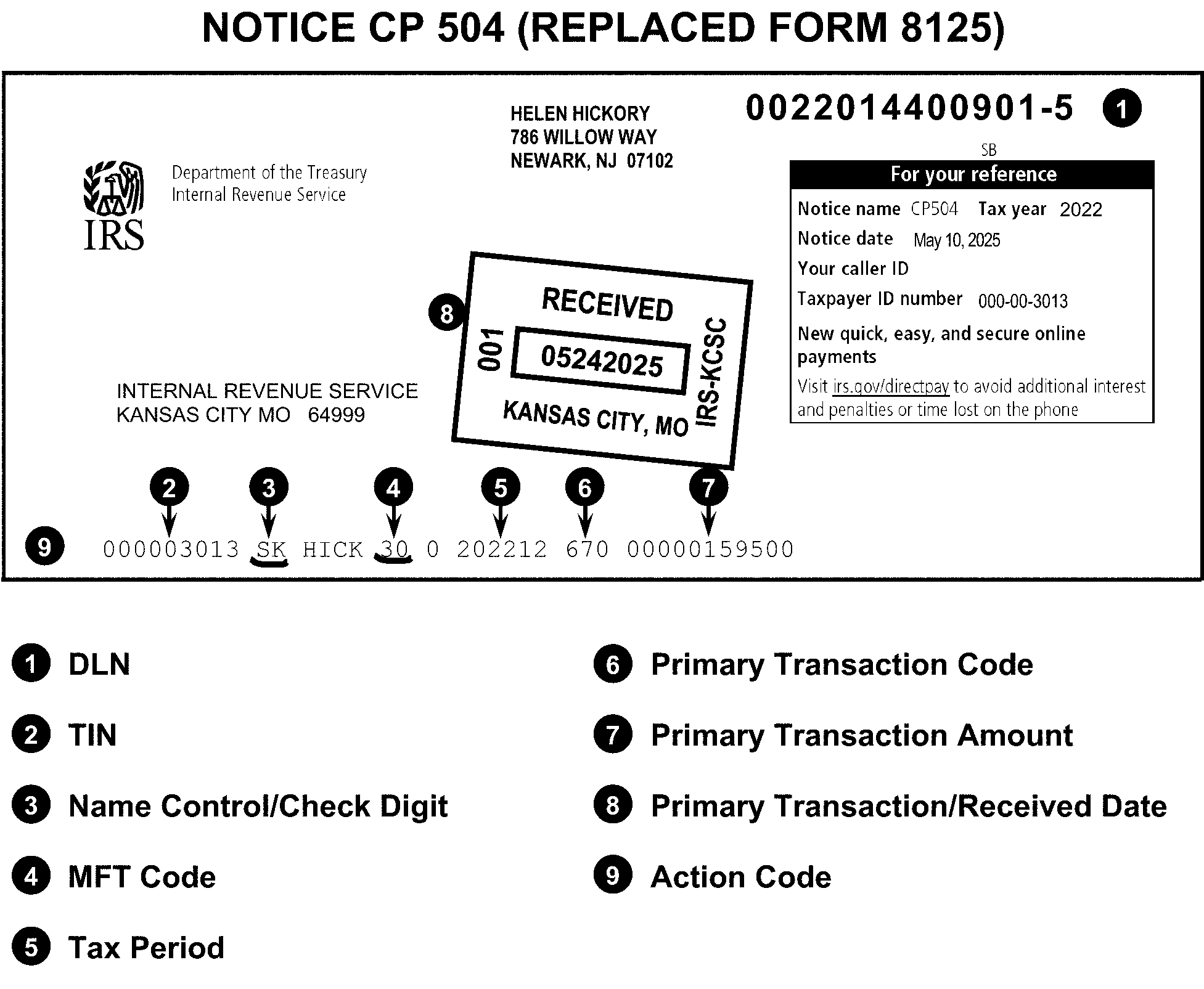
- Exhibit 3.11.10-29 Notice CP 504, Final Balance Due Notice
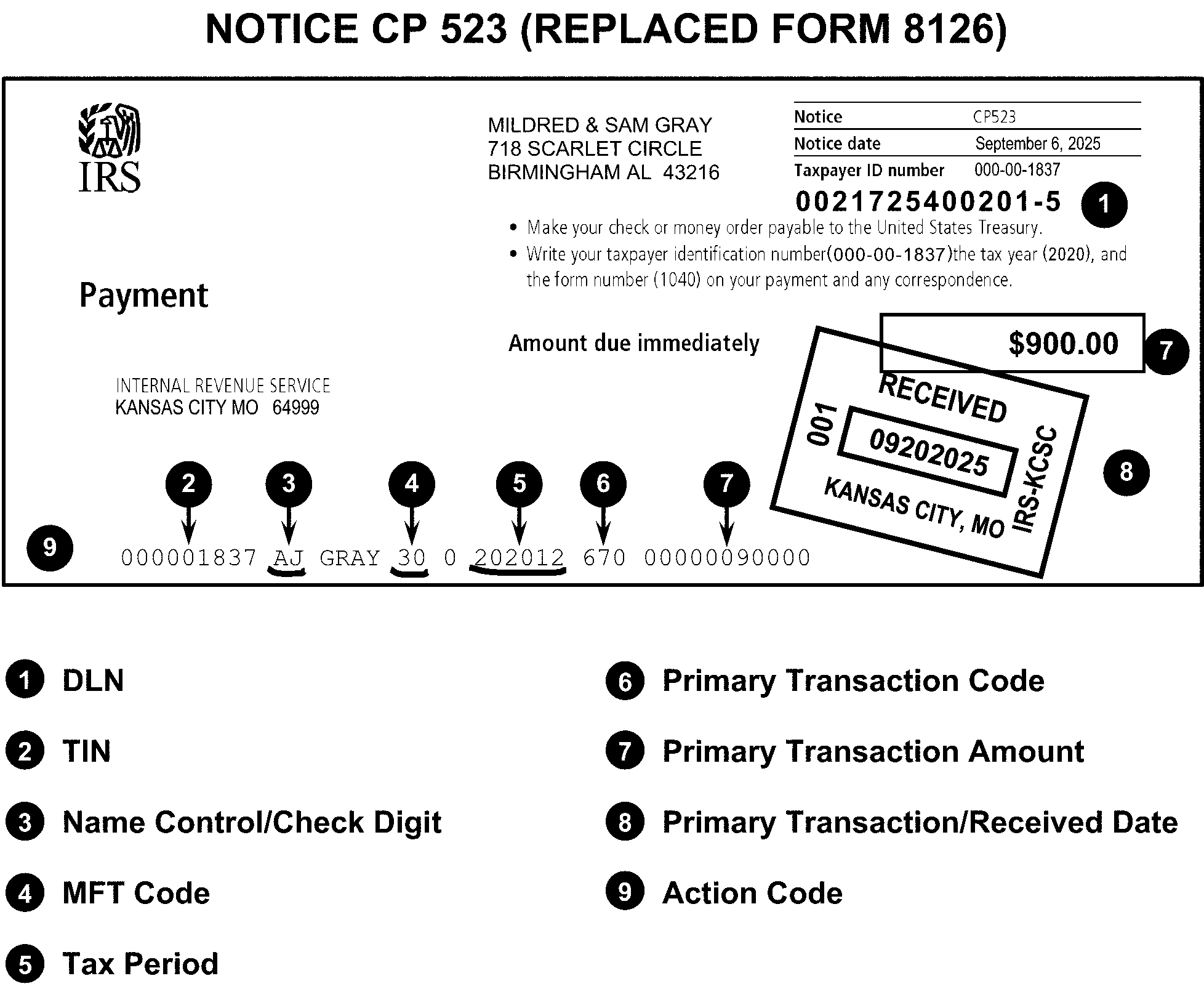
- Exhibit 3.11.10-30 Notice CP 523, Installment Agreement Default Notice
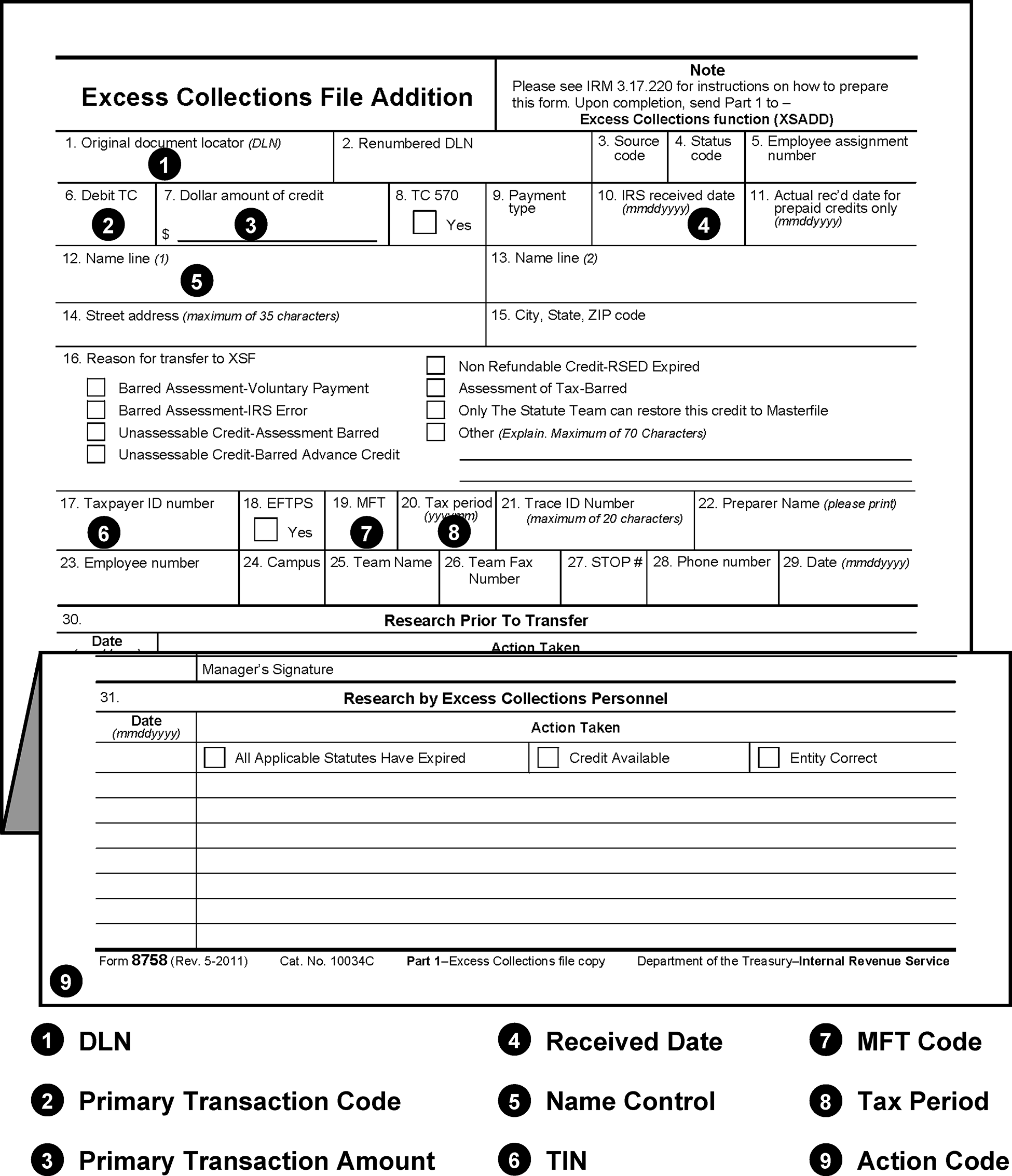
- Exhibit 3.11.10-31 Form 8758, Excess Collections File Addition
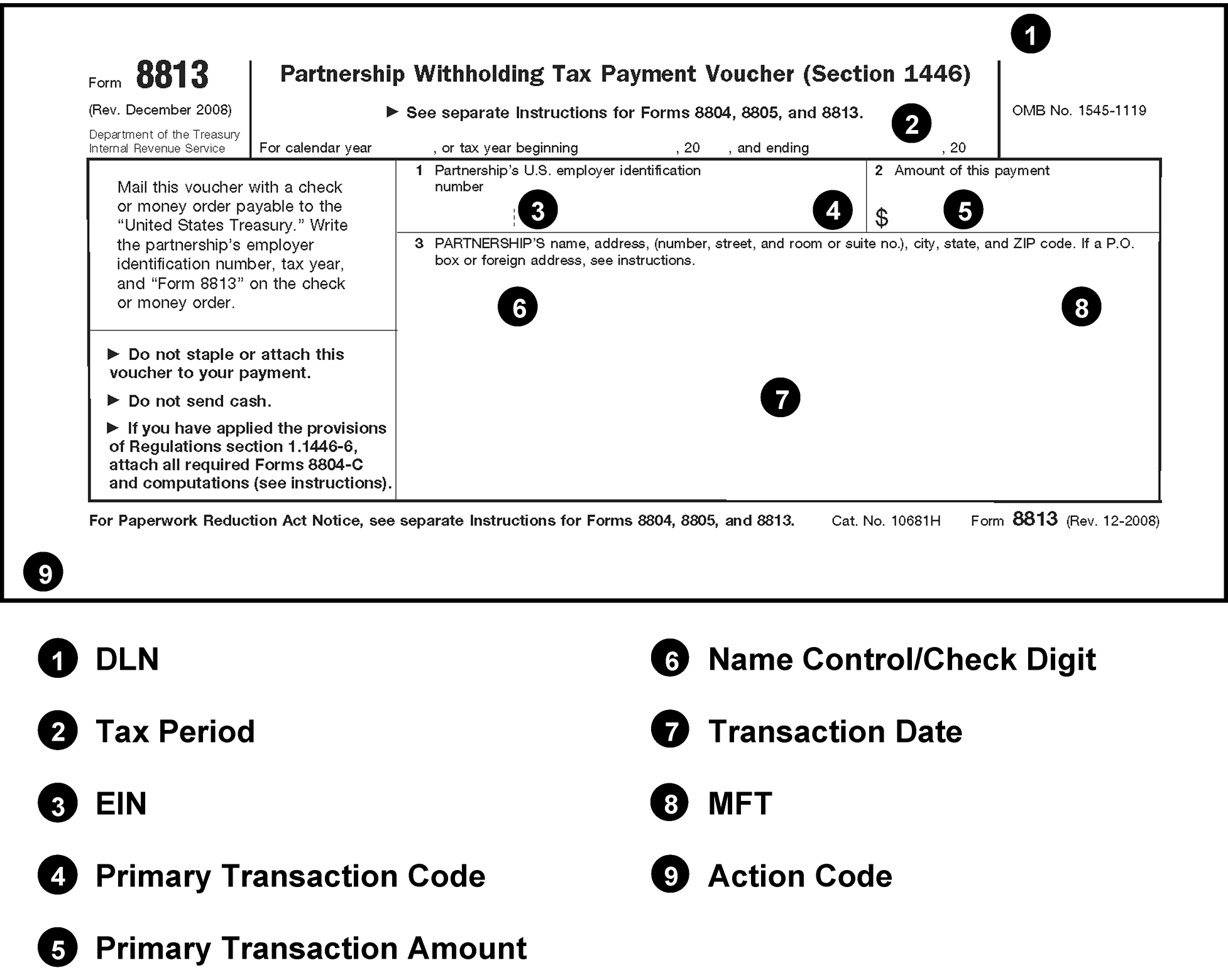
- Exhibit 3.11.10-32 Form 8813, Partnership Withholding Tax Payment Voucher (Section 1446)
- Exhibit 3.11.10-33 Form 12857, Refund Transfer Posting Voucher
- 3.11.10.1 Program Scope and Objectives
Part 3. Submission Processing
Chapter 11. Returns and Documents Analysis
Section 10. Revenue Receipts
3.11.10 Revenue Receipts
Manual Transmittal
September 17, 2025
Purpose
(1) This transmits revised IRM 3.11.10, Returns and Documents Analysis, Revenue Receipts.
Material Changes
(1) IRM 3.11.10.1.6, entitled, Terms/Definitions/Acronyms: Deleted references to "CSPC" and "Cincinnati Submission Processing Center" from the table.
(2) IRM 3.11.10.6.1, entitled, Name Control/Check Digits.
-
Added MFT 50 (Form 4720, Return of Excise Taxes on Chapters 41 and 42 of the Internal Revenue Code) to the list of MFTs which may contain either an SSN (Social Security Number) OR an EIN (Employer Identification Number).
-
Changed Paragraph (6)c) to read as follows: "BMF MFT 13, 17, 50, 51, 52, 58, 63, 76, or 78 may have an SSN."
-
We made these changes to the Revenue Receipts program as the result of a campus request for a programming change (Unified Work Request (UWR) 1000687, entitled, Revenue Receipts (CY2026) for MFT 50: Changing Error Code 151 and TIN Type Indicator (TTI) to Allow Zero ("0" ) As a TTI Option).
(3) IRM 3.11.10.6.2, entitled, Taxpayer Identification Number (TIN).
-
Changed the texts to read as follows:
-
If the BMF MFT is 13, 17, 50, 58, 63, 76, or 78, edit with TIN-Type Indicator "0" following the TIN/SSN.
(4) IRM 3.11.10.7.3, entitled, Form 3753, Special Handling, Manual Refund Posting Voucher.
-
Form 3753 was revised May 2025.
-
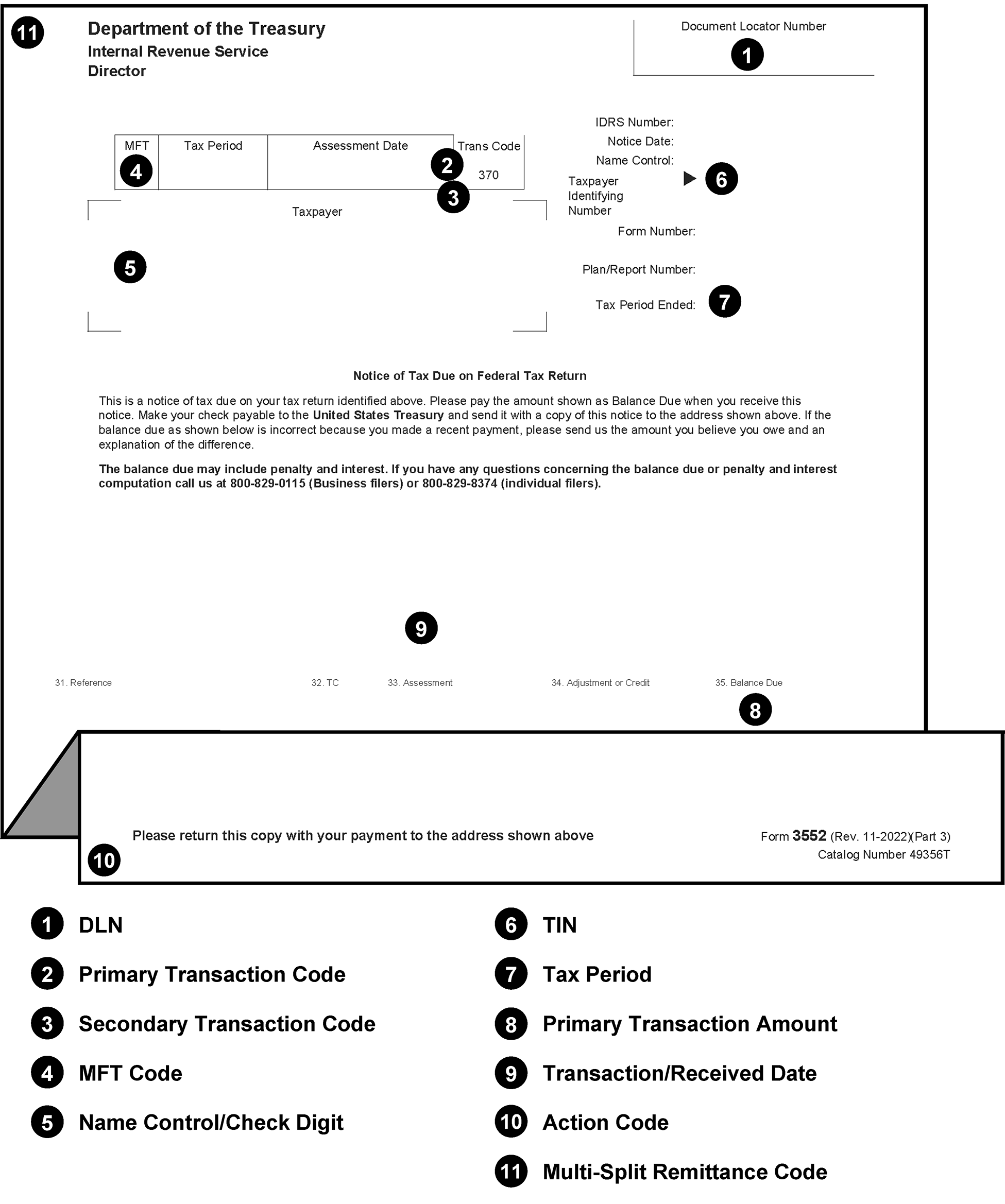
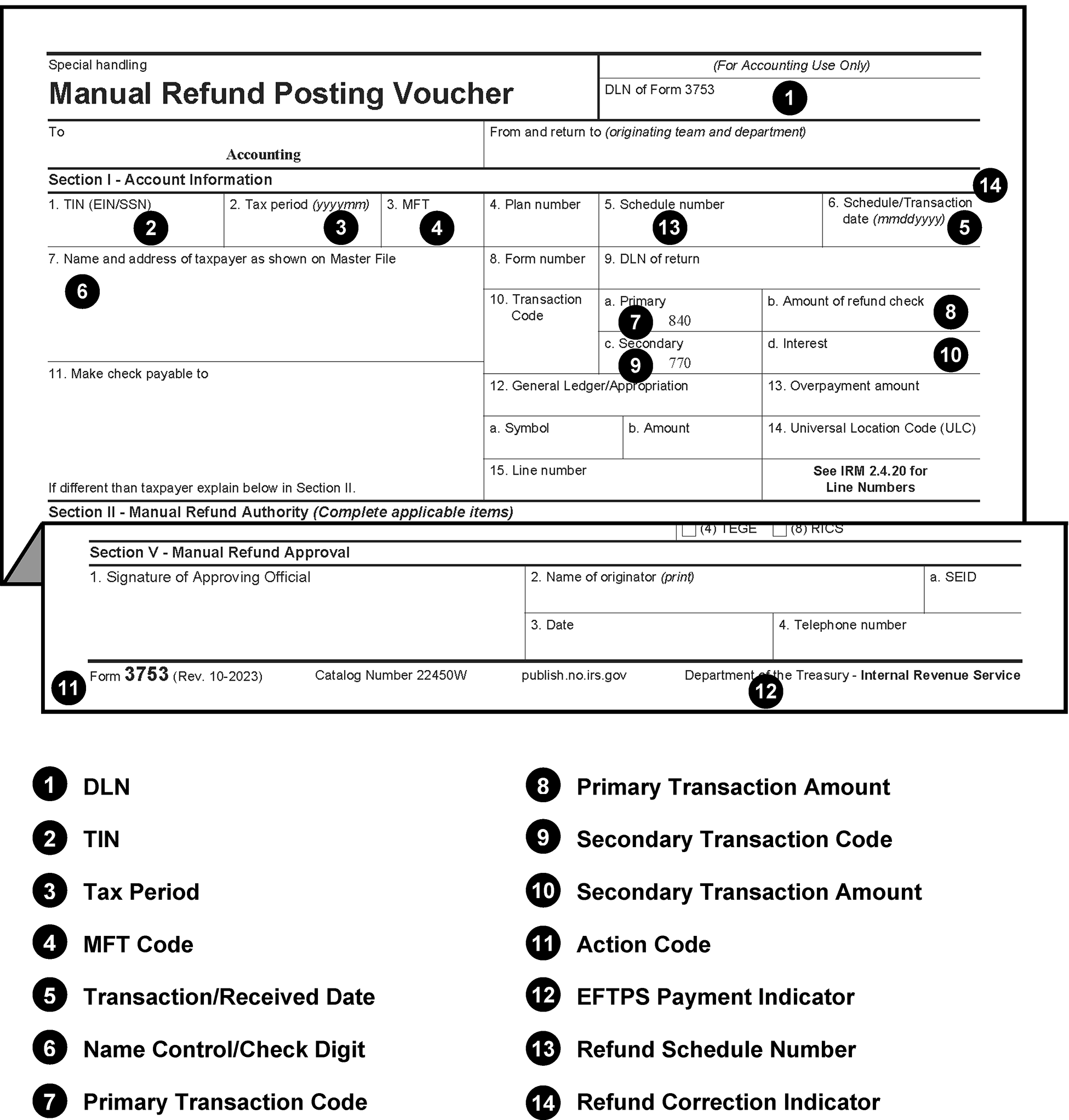
Text graphic/figures display revised Form 3753.
(5) Revised Exhibit 3.11.10-1, entitled. Valid Tax Class---BMF/IMF MFT Codes---Tax Period Table. Introduces new Form 709-NA, entitled, United States Gift (and Generation-Skipping Transfer) Tax Return of Nonresident Not a Citizen of the United States.
-
MFT is "51" .
-
Tax Class is "5" .
-
Doc Code is "08" .
-
Month is "12" after "2312" .
-
Tax Period format is "YYYYMM" .
-
Month is 12 after 2412.
(6) Revised the Internal Revenue Manual (IRM), where necessary, for the following types of editorial changes:
-
Spelling, grammar, formatting, and plain language
-
IRM references, citations, and links
-
IRM graphics and alternative text
-
Included modifications throughout the text to Verbal Descriptive Narratives (VDNs).
Effect on Other Documents
IRM 3.11.10, Revenue Receipts, dated May 7, 2025 (effective May 7, 2025), is superseded.Audience
These instructions will be used by Document Perfection Operation, Code and Edit Department, when coding and editing revenue receipt documents in preparation for data entry. Taxpayer Services (TS) and Small Business/Self-Employed (SB/SE).Effective Date
(01-01-2026)
Scott Wallace
Director, Submission Processing
Taxpayer Services
-
Purpose: Documents processed as “Revenue Receipts” transactions are prepared by campus Accounting employees. The Document Perfection Operations, Code & Edit Unit, receives these paper documents and reviews and edits them with specialized processing codes for use downstream.
Reminder:
Deposit tickets (DTs) and debit vouchers (DVs) are prepared by campus Accounting Function personnel and are not submitted to the Service by taxpayers. As a result, corresponding with taxpayers is not a part of Revenue Receipts processing. Documents requiring more information necessary for processing are returned to the originators for completion prior to Integrated Submissions and Remittance Processing System (ISRP) input.
-
The IRM 3.11.10 has processing information for Revenue Receipts documents and Estimated Tax Payments forms (i.e., Form 1040C, Form 1040ES).
-
Follow these general instructions for processing of all documents processed as Revenue Receipts and Estimated Tax Payments unless the procedures for a specific form includes differing instructions. In that case, the specific instructions will take precedence.
-
The purpose of Document Perfection is to code and edit (perfect) returns and other documents for input through the Integrated Submissions and Remittance Processing (ISRP) System.
-
Document Perfection forwards any other documents or attachments not related to the processing of the return to the function responsible for handling it.
-
Document Perfection is not responsible for mathematically verifying of any documents or for the checking the validity of the documents being processed, except as noted in the specific line-by-line instructions.
-
The computer (Generalized Mainline Framework (GMF)) will perform math verification and validity and consistency checks after the documents, deposit tickets, and debit vouchers are perfected (i.e., coded and edited) as directed in this Section.
-
-
Audience: Documents processed as Revenue Receipts and Estimated Tax Payments (forms and vouchers) are processed in the following Submission Processing Campuses (SPCs):
-
Austin Submission Processing Campus (AUSPC) - This SPC processes documents prepared and posted as (domestic and international) Individual Master File (IMF) documents.
-
Kansas City Submission Processing Campus (KCSPC) - This SPC processes documents prepared and posted as Individual Master File (IMF) documents.
-
Ogden Submission Processing Campus (OSPC) - This SPC processes documents prepared and posted as (domestic and international) Business Master File (BMF) documents.
-
The job titles and roles of Submission Processing Campus (SPC) personnel using this Internal Revenue Manual (IRM) are provided as follows:
-
The Supervisory Tax Examining Assistant monitors operational performance for their operation.
-
The Lead Tax Examining Technician monitors employee performance and ensures their employees have the tools to perform their duties.
-
Tax Examining Technicians follow and keep updated IRM procedures.
-
-
Policy Owner: Director, Submission Processing Division
-
Program Owner: The following internal organizations own and do the administration, procedures, and updates related to the Revenue Receipts and Estimated Tax Payments programs.
-
Accounting and Tax Payments Branch (in Submission Processing Division)
-
Accounting Control Section (in the Accounting and Tax Payments Branch)
-
Lockbox Policy and Oversight Section (in Accounting and Tax Payments Branch)
-
Accounting and Deposit Section (in Accounting and Tax Payments Branch)
-
Returns Processing Branch (in Submission Processing Division)
-
Business Master File (BMF) Code and Edit/ERS Section (in Returns Processing Branch)
-
Mail Management/Data Conversion Section (in Returns Processing Branch)
-
-
Primary Stakeholders: The following organizations are areas affected by these procedures, have input to the procedures, and or have a stake in these programs. The affects may include changes in workflow, other duties, changes in established time frames, and similar issues:
.-
Accounts Management (AM); Small Business/Self-Employed (SB/SE), Large Business and International (LB&I); Chief Financial Officer (CFO); Taxpayer Advocate Service (TAS); Chief Counsel; Information Technology programmers; Tax Exempt/Governmental Entities (TE/GE); and or the Office of Servicewide Penalties and Interest (i.e., Compliance or Examination)
-
-
Document Perfection codes and perfects (edits) deposit tickets (DTs) and debit vouchers (DVs) processed through the Automated Data Processing System (ADP) to make these documents readily adaptable to computer processing and to identify and properly dispose of accompanying attachments.
-
Document Perfection does not mathematically verify or validity check documents being processed. The computer will normally perform those functions if the documents are coded and edited as prescribed in this IRM.
Exception:
Documents processed as Non-Master File (NMF) or Automated Non-Master File (ANMF) documents may require some scrutiny by Document Perfection examiners, since they are not transcribed through the Integrated Submissions and Remittance Processing (ISRP) System nor validated through the Generalized Mainline Framework (GMF) runs.
-
The IRM 3.11.10 is the main source of document perfection (i.e., coding and editing) information for Revenue Receipts documents and or Estimated Tax Payment forms and vouchers.
-
See IRM 3.11.10.1.7, Related Resources, for a list of manuals or documents which may be used as resources.
-
Authority for these procedures is found in the following sections of the Internal Revenue Code (IRC) and their corresponding Treasury regulations:
-
IRC 6081 (Extension of time for filing returns)
-
IRC 6151 (Time and place for paying tax shown on returns)
-
IRC 6302 (Mode or time of collection)
-
IRC 6311 (Payment of tax by commercially acceptable means)
-
-
Authority for these procedures may be found also in the following items and their corresponding Treasury regulations:
-
Code sections which provide the IRS with the authority to issue levies.
-
Congressional Acts which outline authorities and responsibilities like the Travel and Transportation Reform Act of 1998 or the Tax Reform Act of 1986.
-
Policy Statements which provide authority for the work being done.
-
-
This section provides information about who is responsible for the activity(s) provided in this IRM, including employee and management responsibilities.
-
The Director, Submission Processing Office, monitors operational performance for the Submission Processing (SP) campuses.
-
The Operations Managers monitor their performances for their operations.
-
The team manager/lead monitors team performance and ensures their employees have the tools to perform their duties.
-
The team employees follow and maintain updated IRM procedures in this IRM.
-
Program Goals: The program goal is to timely review and edit all deposit tickets, debit vouchers, and other documents processed as Revenue Receipts (or Estimated Tax Payment vouchers) received in Code & Edit.
-
Program Reports: The Monitoring Section under Submission Processing Program Management and or Process Assurance monitors Document Perfection and Code and Edit activity for Revenue Receipts documents (i.e., deposit tickets, debit vouchers) and the Estimated Tax Payments forms processing.
-
Program Effectiveness: The program goals are measured by the following reviews:
-
Embedded Quality Submission Processing (EQSP)
-
Balanced Measures
-
Managerial Reviews
-
-
Annual Review: We review the text and procedures in this manual annually to ensure accuracy and promote consistent tax administration.
-
The reports for the Control Data Analysis are on the Control-D/Web Access services, which has a login program control. Program criteria about, and documents processed as, Revenue Receipts and related information, are decided by our Accounting and Tax Payments Branch, Accounts Management, and Compliance counterparts.
-
The following table of terms and or abbreviations are used throughout this IRM Section.
Acronyms and Abbreviations
Acronyms and Abbreviations Definition AC Action Code(s) ADP Automated Data Processing AM Accounts Management APO Army Post Office BMF Business Master File C&E Code and Edit CCC Computer Condition Code CFOL Corporate Files On Line CI Criminal Investigation DLN Document Locator Number Doc Code Document Code DP Document Perfection DPC Designated Payment Code DPO Diplomatic Post Office EFTPS Electronic Federal Tax Payment System EIN Employee Identification Number EPMF Employee Plans Master File ERS Error Resolution System ES Estimated Tax etc. Et Cetera Exam Examination FLC File Location Code FPLP Federal Payment Levy Program FPO Fleet Post Office ID "Identity" or “Identification” IDRS Integrated Data Retrieval System IMF Individual Master File IRC Internal Revenue Code IRM Internal Revenue Manual IRS Internal Revenue Service ISRP Integrated Submission and Remittance Processing ITIN Individual Taxpayer Identification Number LB&I Large Business and International KCSPC Kansas City Submission Processing Campus MFT Master File Tax MMDDYY Month Month Day Day Year Year NMF Non-Master File OSPC Ogden Submission Processing Center P.O. Post Office R&C Receipt and Control RPS Remittance Processing System RRA98 Restructuring and Reform Act of 1998 SB/SE Small Business & Self-Employed SLA Service Level Agreement SP Submission Processing SSN Social Security Number TAS Taxpayer Advocate Service TBOR Taxpayer Bill of Rights TC Tax Class or Transaction Code TE Tax Examiner TE/GE Tax Exempt & Government Entities TIN Taxpayer Identification Number TS Taxpayer Services TY Tax Year U.S. United States ZIP Zone Improvement Plan
-
If other websites, job aids, or electronic tools are needed to complete the work, these should be listed. If there are many resources (if they extend beyond a page), consider placing them in an exhibit.
-
The following manuals or documents may be used as resources:
-
IRM 3.8.44, Campus Deposit Activity
-
IRM 3.8.45, Manual Deposit
-
IRM 3.11.212, Applications for Extension of Time to File
-
IRM 2.3, IDRS Terminal Responses
-
IRM 2.4, IDRS Terminal Input
-
Document 6209, IRS Processing Codes and Information
-
Document 7071, Name Control Job Aid for Individual Master File (IMF) Taxpayers
-
Document 7071-A, BMF Name Control Job Aid - For Use Outside of the Entity Area
-
Document 7475, State and Address Abbreviations, Major City Codes (MCCs), ZIP Codes and Countries
-
-
This Section provides information pertaining to the Taxpayer Advocate Service operations.
-
The Taxpayer Advocate Service is an independent organization within the Internal Revenue Service (IRS), led by the National Taxpayer Advocate, that helps taxpayers and protects taxpayer rights. TAS offers free help to taxpayers when a tax problem is causing a financial difficulty, when they’ve tried and been unable to resolve their issue with the IRS, or when they believe an IRS system, process, or procedure just isn't working as it should. TAS strives to ensure that every taxpayer is treated fairly and knows and understands their rights under the Taxpayer Bill of Rights. TAS has at least one taxpayer advocate office located in every state, the District of Columbia, and Puerto Rico.
-
TAS uses Form 12412, Operations Assistance Request (OAR), to start the OAR process of referring a case to the Taxpayer Services (TS) Division, to affect the resolution of the taxpayer’s problem. For more information, refer to IRM 13.1.19, Taxpayer Advocate Service, Taxpayer Advocate Case Procedures, Advocating With Operations Assistance Requests (OARs).
-
Refer taxpayers to TAS when the contact meets TAS criteria or when Form 911, Request for Taxpayer Advocate Service Assistance (and Application for Taxpayer Assistance Order), is attached and steps cannot be taken to resolve the taxpayer's issue the same day. See IRM 21.1.3.18, Taxpayer Advocate Service (TAS) Guidelines.
-
The definition of “same day resolution” is within 24 hours. The following two situations meet the definition of "same day resolution." :
-
The issue can be resolved within 24 hours.
-
The IRS takes steps within 24 hours to resolve the taxpayer’s issue.
-
-
When making a TAS referral, use Form 911 and forward to TAS following your local procedures.
-
For more information, see See IRM 13.1.7, Taxpayer Advocate Service (TAS) Case Criteria, for more information, and IRM 13.1.7.4, Exceptions to Taxpayer Advocate Service Criteria, for information on cases that TAS will no longer accept.
-
The Taxpayer Bill of Rights (TBOR) lists rights that already existed in the tax code, putting them in simple language and grouping them into 10 fundamental rights. Employees are responsible for being familiar with and acting in accord with taxpayer rights. See IRC 7803(a)(3), Execution of Duties in Accord with Taxpayer Rights. Taxpayers have the right to receive assistance from the Taxpayer Advocate Service (TAS) if they are experiencing financial difficulty or if the IRS has not resolved their tax issues properly and timely through normal channels. For additional information about the TBOR, see Taxpayer Bill of Rights (TBOR).
-
Per the Taxpayer Bill of Rights (TBOR), taxpayers have the right to expect a fair and just tax system which provides taxpayers with the opportunity to have their facts and circumstances considered when it might affect their underlying liabilities, ability to pay, or ability to provide information timely. Taxpayers have the right to receive assistance from the Taxpayer Advocate Service (TAS) if they are experiencing financial difficulty or if the IRS has not resolved their tax issues properly and timely through normal channels. For more information on the Taxpayer Bill of Rights, visit Taxpayer Bill of Rights (TBOR).
-
TAS uses Form 12412, Operations Assistance Request (OAR), to initiate the OAR process of referring a case to the Taxpayer Services (TS) Division, to affect the resolution of the taxpayer’s problem. For more information, refer to IRM 13.1.19, TAS Operations Assistance Request (OAR) Process.
-
Refer taxpayers to TAS when the contact meets TAS criteria or when Form 911, Request for Taxpayer Advocate Service Assistance (and Application for Taxpayer Assistance Order), is attached and steps can't be taken to resolve the taxpayer's issue the same day.
-
"Same day" includes cases that can be resolved in 24 hours, as well as cases where steps can be taken within 24 hours to begin resolving the issue. See IRM 13.1.7.4, Same Day Resolution by Operations.
-
For more information, see See IRM 13.1.7, Taxpayer Advocate Service (TAS) Case Criteria, and IRM 13.1.7.4, Exceptions to Taxpayer Advocate Criteria, for information on cases that TAS will no longer accept.
-
The National Taxpayer Advocate reached agreements with the Commissioners or Chiefs of the Taxpayer Services (TS) Division, Small Business/Self Employed (SB/SE) Division, Tax Exempt Government Entities (TEGE), Criminal Investigation (CI), Independent Office of Appeals, and Large Business and International (LB&I) that outline the procedures and responsibilities for processing Taxpayer Advocate Service (TAS) casework when either the statutory or delegated authority to complete case transactions rests outside of TAS. These agreements are known as Service Level Agreements (SLAs).
-
The SLAs are located at TAS Service Level Agreements.
-
The Taxpayer Advocate Service uses the OAR process to refer cases when TAS lacks either the statutory or delegated authority to resolve a taxpayer’s problem. The TAS utilizes Form 12412, Operations Assistance Request, to initiate the OAR process.
-
EXPEDITE PROCESSING
-
TAS may request and identify on the OAR, cases requiring expedite processing. The Operating Division (OD) or Function Liaison will acknowledge receipt via Form 3210, Document Transmittal, secure messaging E-mail, facsimile, or by telephone within one (1) workday of receipt of the OAR.
-
The OD/Function Liaison will provide TAS the relief determination within 3 workdays from the OAR acknowledgement date.
-
-
Non-Expedite Processing
-
If TAS does not request expedite processing, the OD/Function Liaison will acknowledge receipt and provide the name and phone number of the IRS employee assigned to work the case via Form 3210, Document Transmittal, secure messaging E-mail, facsimile, or by telephone within three (3) workdays of receipt of the OAR.
-
If necessary, the assigned employee/manager will contact the TAS employee and negotiate the completion date in resolving the OAR actions.
-
-
Individual/Business/Employee Plans Master File On-Line (IMFOL/BMFOL/EMFOL) and Return View and Business/Employer Returns Transaction File On-Line (RTVUE/BRTVU/ERTVU) provide on-line research of Master File account and return data.
-
Since Master File does not carry all information available on the Integrated Data Retrieval System (IDRS) screen displays (IDRS notice status, case control information, pending transactions, etc.), it is imperative that IDRS research be initiated before accessing Master File information via IMFOL/BMFOL/EMFOL or RTVUE/BRTVU/ERTVU. Also, IDRS input command codes that will cause a change in Master File data can't be preceded by the above command codes.
-
These command codes should be used to research entity and or tax data which may be available on IDRS. In most cases, the response will appear on the screen in five seconds or less. This will negate the need for MFTRA/ESTAB requests in some cases.
-
IMFOL/BMFOL/EMFOL (Individual/Business/Employee Plans Master File On-Line) accesses IMF/BMF/EPMF (Individual/Business/Employee Plans Master File) and allows several screen displays based on an input definer code. These will include:
-
An index screen which shows whether a specific tax period is available on-line or not. The index screen also includes a "balance due" field showing if the account is in debit, credit, or zero balance. (I)
-
A summary screen which displays the information in (4)(a) plus freeze codes and tax module codes. (B)
-
A screen which shows entity type information (similar to INOLE (Individual On-Line Entity)). (I&B)
-
A screen which has specific data from the tax account (similar to TXMOD and MFTRA). (I&B)
-
An adjustment transaction screen which includes detailed information about adjustment transactions input. (I&B)
-
A vestigial or retention register screen which shows what modules have been moved to the retention register and when for a specific Taxpayer Identification Number (TIN). (I&B)
-
A posted Transaction Code (TC) 150/154 screen which displays posted data for a specific TIN/MFT and tax period. (I&B&E)
-
A status history screen which includes extension to file data. (I&B)
-
An entity Federal Tax Deposit (FTD) screen which displays FTD information for a specific TIN/MFT and tax period. (B)
-
A last period satisfied screen which displays general tax data for last period satisfied for a specific TIN. (B)
-
An exempt organization screen which displays exempt organization data for a specific TIN/MFT and period. (B)
-
A Return CAWR screen which displays Combined Annual Wage Reporting (CAWR) information for a specific TIN/MFT and tax period. (B)
-
An audit history screen which displays any previous audit information for a specific TIN/MFT and tax period. (B)
-
A help screen which displays information to assist in using IMFOL/BMFOL. (I&B)
-
-
RTVUE (Return View) accesses the Return Transaction File (RTF). It has all edited, transcribed, and error corrected data from data entry lines of Form 1040 series returns and related forms and scheduled files in the current processing year (PY) including late filed returns and two prior years. This command code requires a definer to access a particular screen and has a summary screen for each return.
-
BRTVU, with definers, is used to access data which was computer generated and or transcribed to individual line items from BMF returns and related forms/schedules.
-
ERTVU, with definers, is used to access data which was computer generated and or transcribed to individual line items from the Form 5330, Return of Excise Taxes Related to Employee Benefit Plans, TC 154 (prior to January 2001).
-
For more explanation of the screen displays and applicable definer codes, refer to IRM 2.3, IDRS Terminal Responses, and IRM 2.4, IDRS Terminal Input.
-
The Customer Account Data Engine (CADE) 2 Program Office in Headquarters is charged with the primary goal to implement a single, modernized programming solution which provides daily processing of taxpayer accounts.
-
The CADE 2 solution is comprised of several components, to modernize the IRS to a daily processing environment with several Transition States.
-
Accelerated IMF – All Individual taxpayers account transactions being processed weekly by IMF (on Thursday) with new cycle definitions and accelerated refund and notice issuance. The new cycles are:
-
IMF transactions posting timeframes are outlined as follows:
-
Daily transactions directed to a daily account are expected to post daily with daily processing. Transactions will be viewable using CFOL command codes the second day after campus input. Transactions will be viewable on IDRS command codes the third day after campus input.
-
Weekly transactions directed to a daily account are expected to post with the weekly processing run on Thursday and may result in the account type changing to Weekly.
-
Daily and Weekly transactions directed to a Weekly account are expected to post with the weekly processing on Thursday.
-
-
BMF transaction posting timeframes are outlined as follows:
-
Transactions will be viewable using CFOL command codes on Saturday following the weekly Master File processing run on Thursday.
-
Transactions will be viewable as posted transactions using IDRS command codes on Monday following the weekly Master File processing run on Thursday.
-
-
IMF cycle posting dates will reflect a format of "YYYYCCDD" . "YYYY" will show the year. "CC" will show the posting cycle. For IMF transactions, the following values for "DD" are defined:
-
Some business taxpayers must make their federal tax deposits electronically. The EFTPS Payment Indicator is generated on electronic payments to prevent assessment of a 10 percent penalty.
-
Individual taxpayers can pay taxes electronically by direct debit (automatic withdrawal) or credit card. An EFTPS Indicator is also generated for these payments.
-
Enter the EFTPS Payment Indicator on any electronic payment that is being re-input or transferred on a paper document.
-
Enter "1" in the lower right corner of any revenue receipts document for a payment that was originally processed electronically. Electronic payments can be identified from the original Document Locator Number (DLN) or other information on the source document.
-
EFTPS payments are numbered with File Location Code (FLC) 81 and Document Code 19. Each EFTPS payment will include a 15-digit Electronic Federal Tax (EFT) number, or 17-digits with a leading "29" .
-
Taxlink payments are numbered with file location code 65, document code 97.
-
FedTax payments are numbered with file location code 16, document code 19.
-
-
The Document Perfection tax examiner will have the first opportunity to identify a document having a problem which requires correspondence, research or other action to make the return processable.
-
The tax examiner will decide the kind of action required and assign an ERS Action Code to the document. This code will show whether correspondence, research, or some other type of action is needed. See (7) for a list of ERS Action Codes.
-
Enter the ERS Action Code in the bottom left margin of the document, preceded by the letters "AC." (See Figure 3.11.10-1.)
-
For routing within the campus (in-house research), each action code will generally be sufficient with no further explanations. For "other research" , a note of explanation will need to be attached to the return.
-
The action code assigned by Document Perfection will be transcribed into the record of the input document. The presence of a valid action code will place the record in the suspense inventory, either workable or unworkable.
-
Only one action code may be assigned at a time to a record. The priority of the action codes will be 310, 320, 4XX, 6XX, 3XX, then 2XX.
-
The following is a complete list of ERS Action Codes. Decide the action code by the description, not by the length of the suspense period.
Action Code Description Workday Suspense Period Function Used In 001 Input Document 0 EC 211 First Correspondence 40 CE, EC, S 212 Second Correspondence 25 CE, EC, S 213 Correspondence Other Than Taxpayer 40 CE, EC, S 215 International Correspondence (ACI) 45 CE, EC, S 216 Second Taxpayer Correspondence International 45 CE, EC, S 217 International Correspondence 45 CE, EC, S 224 ACA (Affordable Care Act) Correspondence 40 CE, EC, S 225 Signature Only - Regular Correspondence / Shared Responsibility Payment 40 CE, EC, S 226 Signature Only - International Correspondence 45 CE, EC, S 230 ID Theft 60 CE, EC, S 231 ID Theft Assistance (RICS) 80 CE, EC 232 ID Theft (Research Needed) 85 CE, EC, S 300 Exam-Fuel Tax Credit 10 CE, EC, S 310 Statute Control 10 CE, EC, S 320 Entity Control 10 CE, EC, S 331 Protest Review / Frivolous Filer Review (Exam) 3 CE, EC 332 QRDT Review / CI Review 3 CE, EC 333 Prompt Audit 10 CE, EC, S 334 Joint Committee 10 CE, EC, S 335 Protest Case / FRP Case (Exam) 10 CE, EC, S 336 QRDT Case / IVO Review 10 CE, EC, S 337 Other CID 10 CE, EC, S 341 Manual Refund 10 CE, EC, S 342 Credit Verification / Verification of Credits 10 CE, EC, S 343 Other Accounting 10 CE, EC, S 344 Manual Refund by ERS 0 EC 351 TIN Research 0 EC, S 352 Name Research 3 CE, EC, S 353 Address Research 3 CE, EC, S 354 Filing Requirements Research 3 CE, EC, S 355 Other MFTRA Research (Entity) 3 CE, EC, S 360 Other In-House Research 10 CE, EC, S 370 Examination 10 CE, EC, S 383 1040EZ Audit Code 0 CE 410 Technical Assistance / Assistance Needed 0 EC 420 Management Suspense—A 5 CE, EC, S 430 Management Suspense—B 10 CE, EC, S 440 Management Suspense—C 15 CE, EC, S 450 Management Suspense—D 20 CE, EC, S 460 Management Suspense—E 25 CE, EC, S 470 Complex Error Codes 0 EC, S 471 Miscellaneous Suspense (C&E By-Pass) 2 EC, S 480 Early Filed Return 150 CE, EC, S 490 System Problem 5 EC, S 491 ACA System Problem 10 EC, S 492 ACA System Problem 15 EC, S 493 ACA Systemic Issue 20 EC, S 494 Complex Systemic Issue 25 EC, S 495 Complex Systemic Issue 30 EC, S 496 Complex Systemic Issue 35 EC, S 497 Complex Systemic Issue 40 EC, S 498 Complex Systemic Issue 45 EC, S 499 Complex Systemic Issue 50 EC, S 510 Missing Document 0 CE 511 Missing Document 1st Suspense 25 EC, S 512 Missing Document 2nd Suspense 20 S 513 Missing Document 3rd Suspense 20 S 515 Missing Document Short Term 5 EC, S 550 Mag. Tape Attachment / Magnetic Return 0 CE 551 Mag. Tape Inconsistent Data / Magnetic Return 0 CE 610 Renumber 0 CE, EC 611 Remittance Renumber 0 S 620 NMF/Non-ADP 0 CE, EC 630 Reinput 0 EC 640 Void 0 CE, EC 650 International (Foreign) 0 CE, EC 651 International Document (AUSPC) CE, EC, S
-
All Revenue Receipt Documents must have a Name Control, TIN, tax period, MFT Code, TC, transaction date, and transaction amount.
-
These documents may also have a secondary TC, secondary transaction amount, tertiary (third) TC, and a tertiary transaction amount.
-
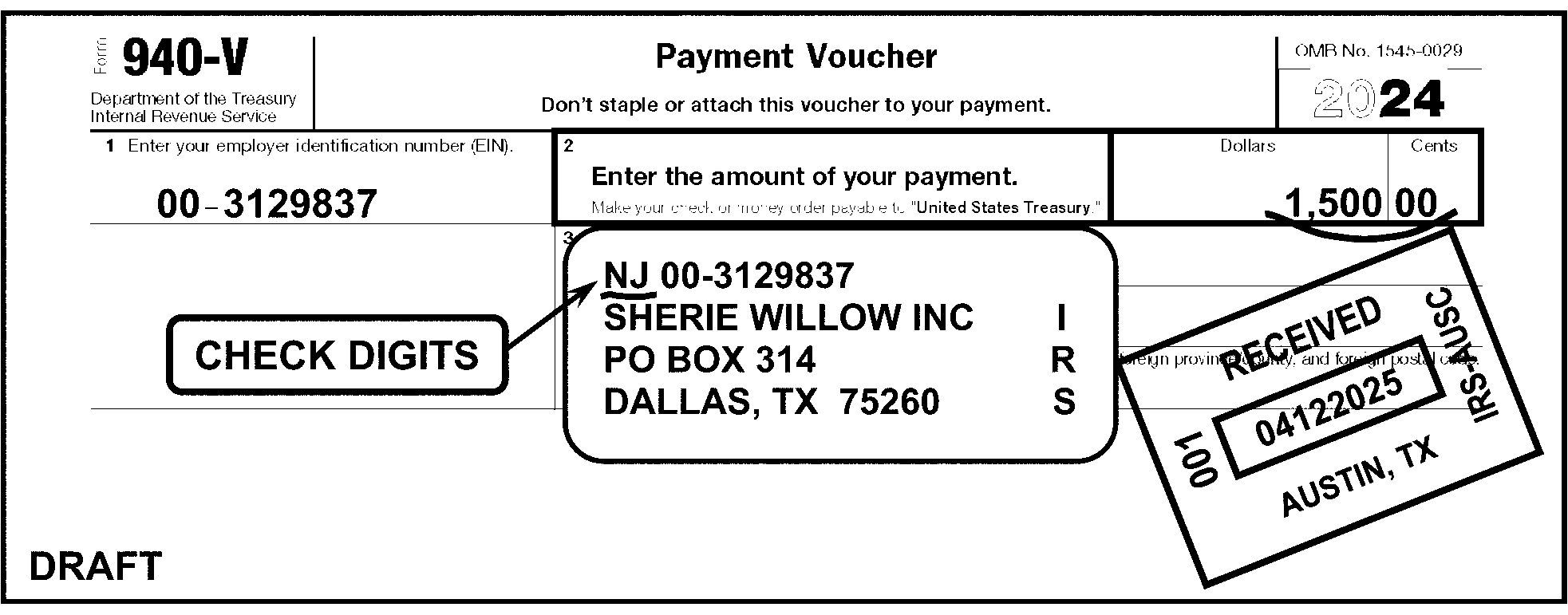
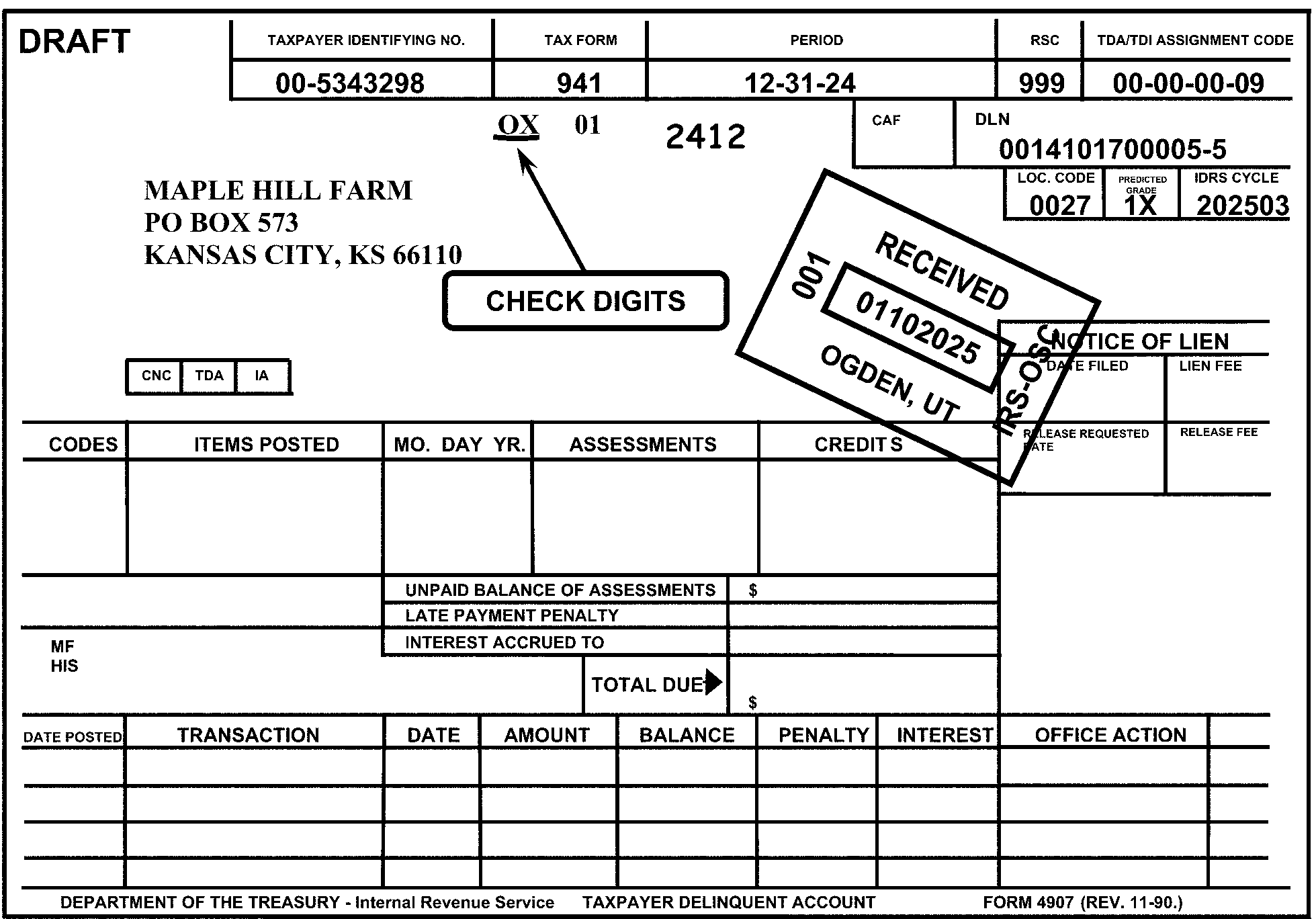
The check digits consist of two alpha characters present on an IRS preprinted label or an IRS computer generated notice. (See Figure 3.11.10-2.)
-
Check Digits are printed to the immediate left or right of the TIN, with the exception of the electronically-generated TDA/Taxpayer Delinquent Account form, where they appear in the general entity area. (See Figure 3.11.10-3.)
Note:
The electronically-generated TDA/Taxpayer Delinquent Account form superseded the former Form 4907, TDA/Taxpayer Delinquent Account (obsolete since December 19, 2002). This electronic document contains BMF filing requirements on TDAs.
-
Underline the check digits if present.
-
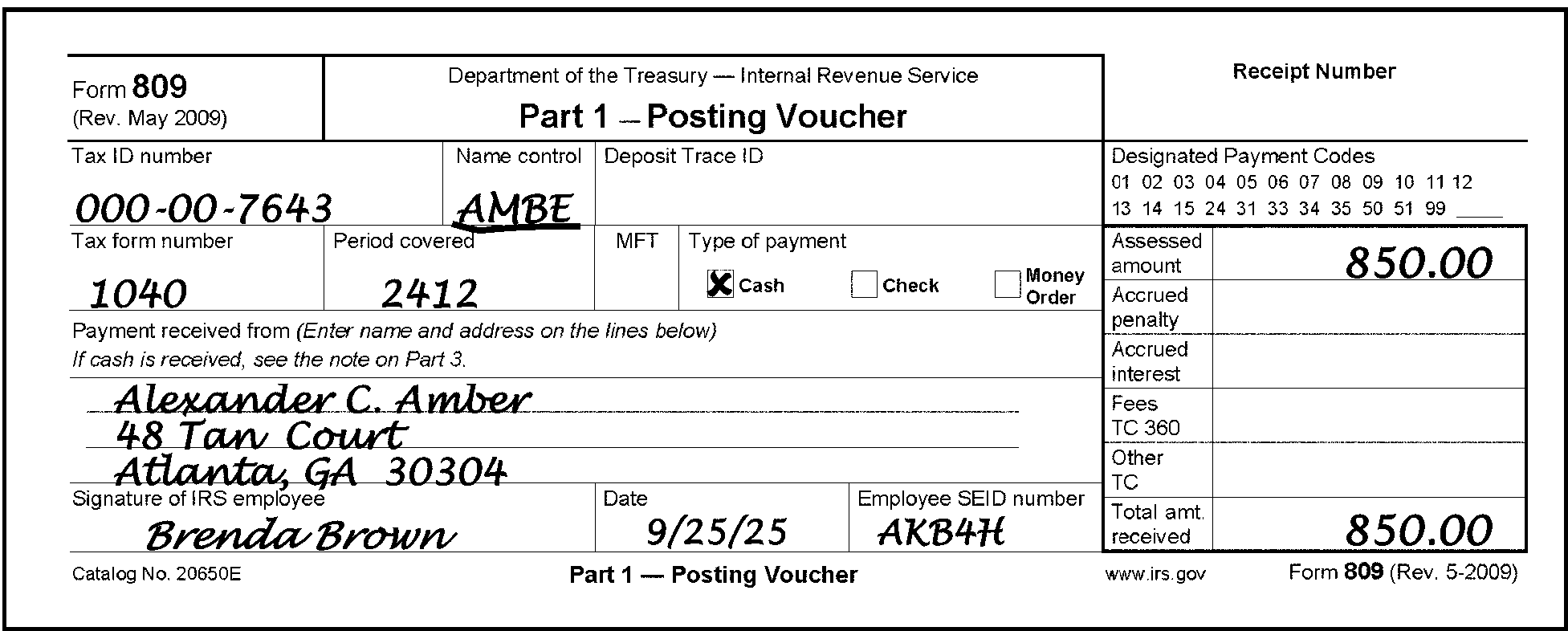
If Check Digits are not present, underline the Name Control using the following general procedures. Refer to Document 7071, Name Control Job Aid for Individual Master File (IMF) Taxpayers, or Document 7071-A, Name Control Job Aid - For Use Outside of the Entity Area, for the specific Name Control procedures.
-
-
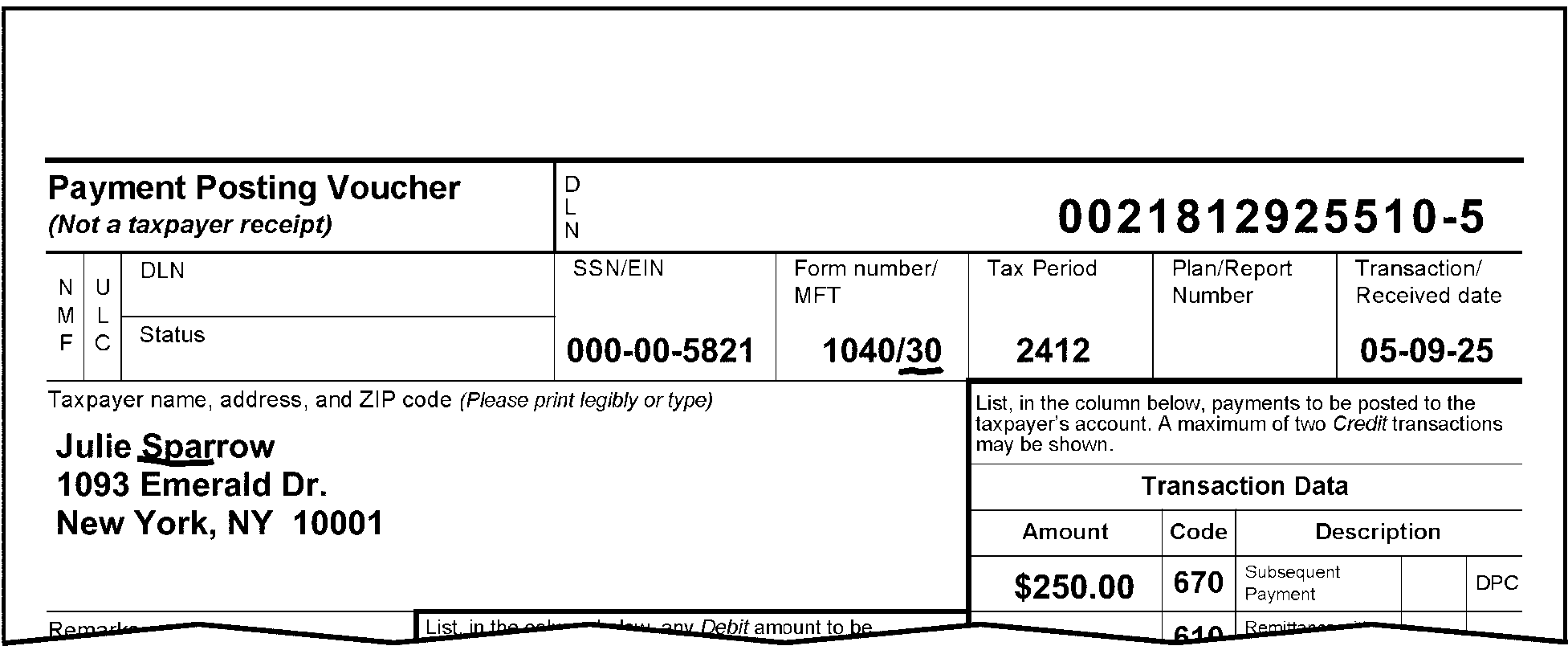
The Name Control consists of no more than four characters and is underlined if no Check Digits are present. (See Figure 3.11.10-4.)
-
The valid characters for the Name Control are alpha, numeric, ampersand (&), hyphen (-), and blank.
-
If the document is IMF, or BMF MFT 13, 17, 51, 52, 58, 63, 76, or 78 with a Social Security Number (SSN): (See Figure 3.11.10-5.)
-
The first character of the Name Control must be alphabetic.
-
The remaining characters may be alpha, hyphen, ampersand or blank.
-
The Name Control can have less, but no more than, four characters. Blanks may be present only at the end of the Name Control.
-
-
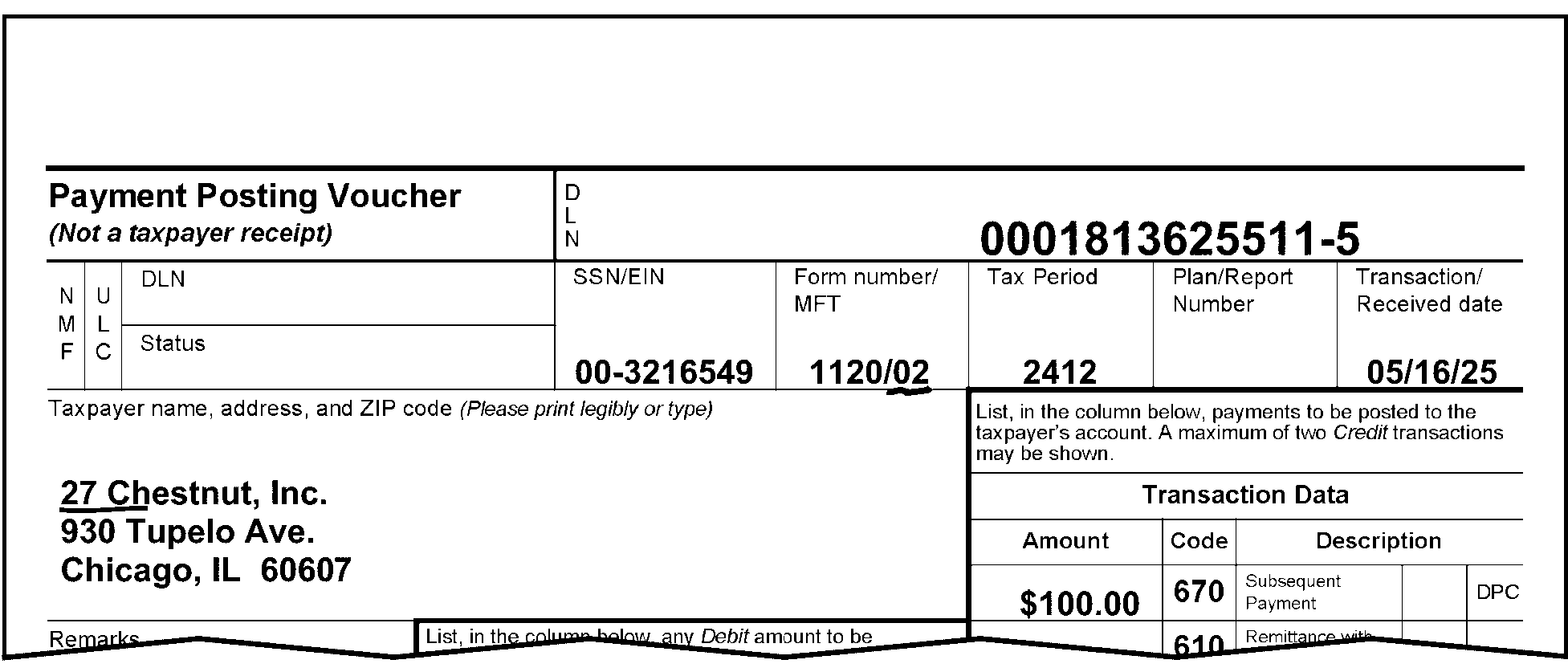
If the document is BMF with an EIN:
-
The first character of the Name Control may be alpha or numeric.
-
The remaining characters may be alpha, numeric, hyphen, ampersand, or blank.
-
The Name Control can have less, but no more than, four characters. Blanks may be present only at the end of the Name Control. (See Figure 3.11.10-6.)
-
-
If a name is not present or the Name Control can't be decided, check attachments for a valid name/Name Control. If a Name Control can't be decided, edit the document with Action Code 320 (Entity Control).
-
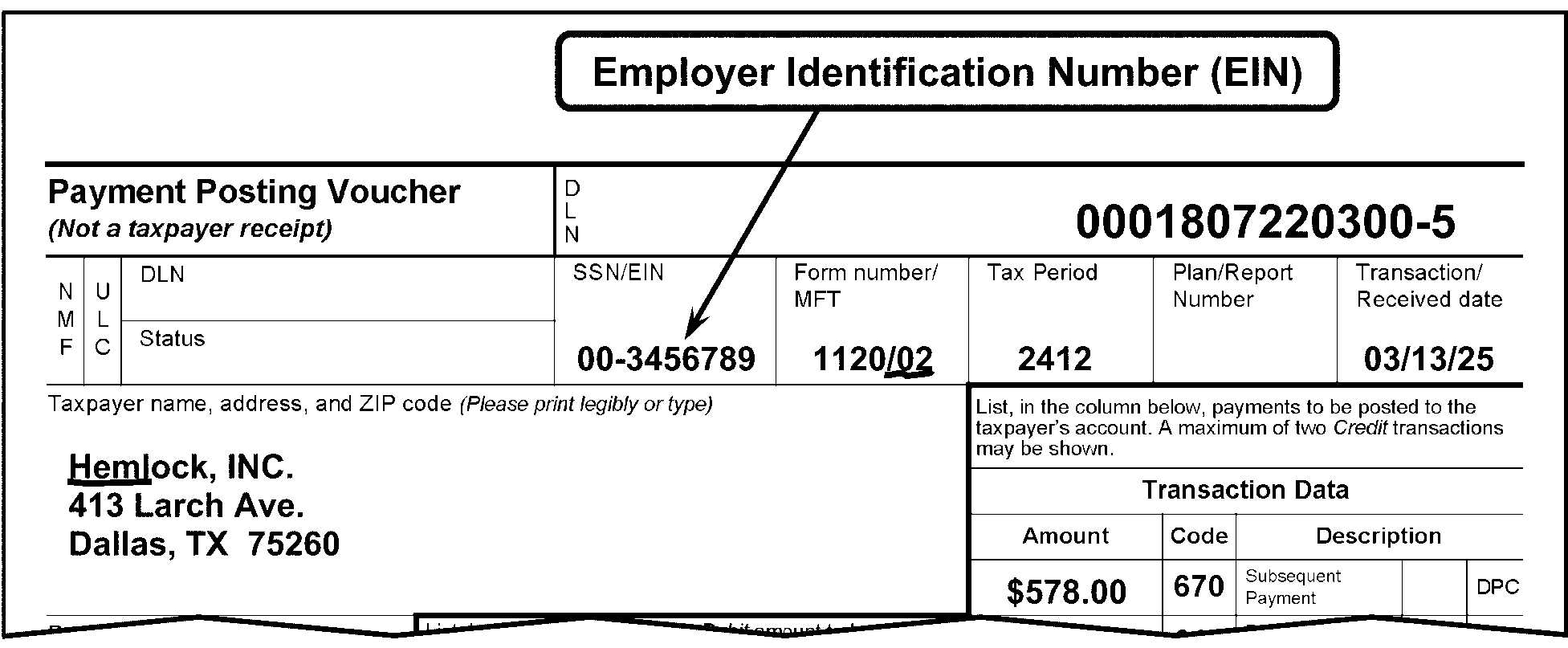
The TIN consists of nine digits and must be present.
-
If the TIN is an Employer Identification Number (EIN):
-
It can't be all zeros (0) or all nines (9).
-
The first two digits can't be 07–09, 17–19, 28–29, 49, or 89. (See Figure 3.11.10-7.)
-
-
If the TIN is a Social Security Number (SSN), XXX-XX-XXXX format:
-
It can't be all zeros (0), or all nines (9).
-
Valid range for the first three digits is 001–899.
-
If the primary SSN begins with a "9" (in an SSN format) this is an indication of a temporarily assigned identification number:
.
i. ITIN - the 4th and 5th digit for an ITIN will range between 50-65, 70-88, 90-92 or 94-99; or
ii. IRS Number (IRSN) - the 4th and 5th digit for an IRSN will be 01, 02, 03, 04, 05, 06, 07, 08, 09, 10, 17, 18, 19, 28, 29, 37, 38, 39, 49, 66, or 89, depending on the campus which issued it. -
If the BMF MFT is 13, 17, 50, 58, 63, 76, or 78, edit with TIN-Type Indicator "0" following the TIN/SSN.
-
If the TIN is missing or invalid, search the document and attachments for another TIN. If found, edit it in the proper position for transcription.
-
If there is no valid TIN present, edit Action Code 320.
-
-
Special to Secondary (or, Spouse’s) Social Security Number (SSN) Only:
-
It can't be all zeros (0), or all nines (9).
-
Valid range for the first three digits is 001–899.
-
The Secondary SSN can't have either 000 or 666 in Positions 1 through 3.
-
The Secondary SSN can't have "00" in Positions 4 through 5.
-
The Secondary SSN can't have "0000" in Positions 6 through 9.
-
-
If the TIN is missing or invalid, search the document and attachments for another TIN. If found, edit it in the proper position for transcription.
-
If there is no valid TIN present, edit Action Code 320 (Entity Control).
-
The tax period is a four-digit element representing the year and month in which the tax period ended, in most cases.
-
When it requires editing, it is edited in YYMM format.
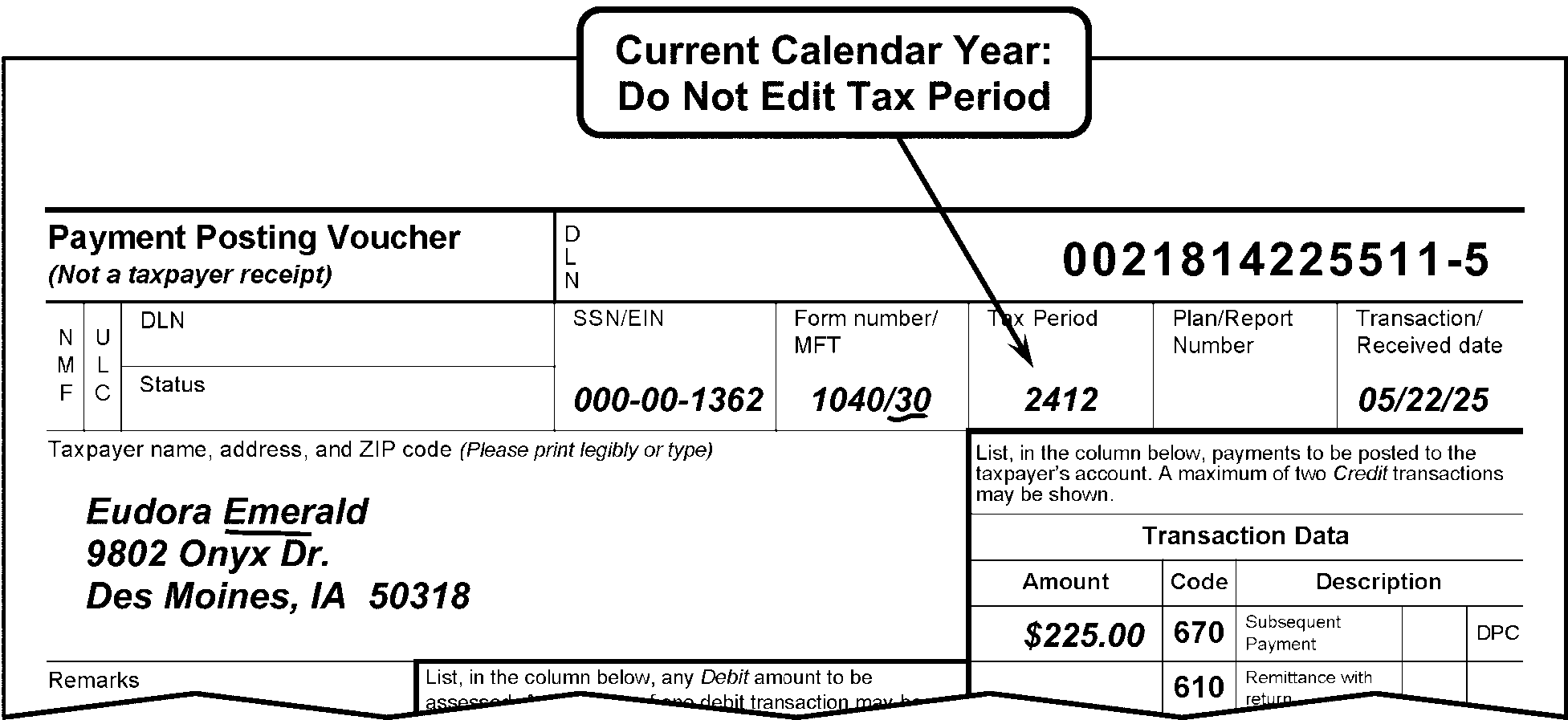
-
It is not necessary to edit a tax period if the document is for the current calendar year. (See Figure 3.11.10-8.)
-
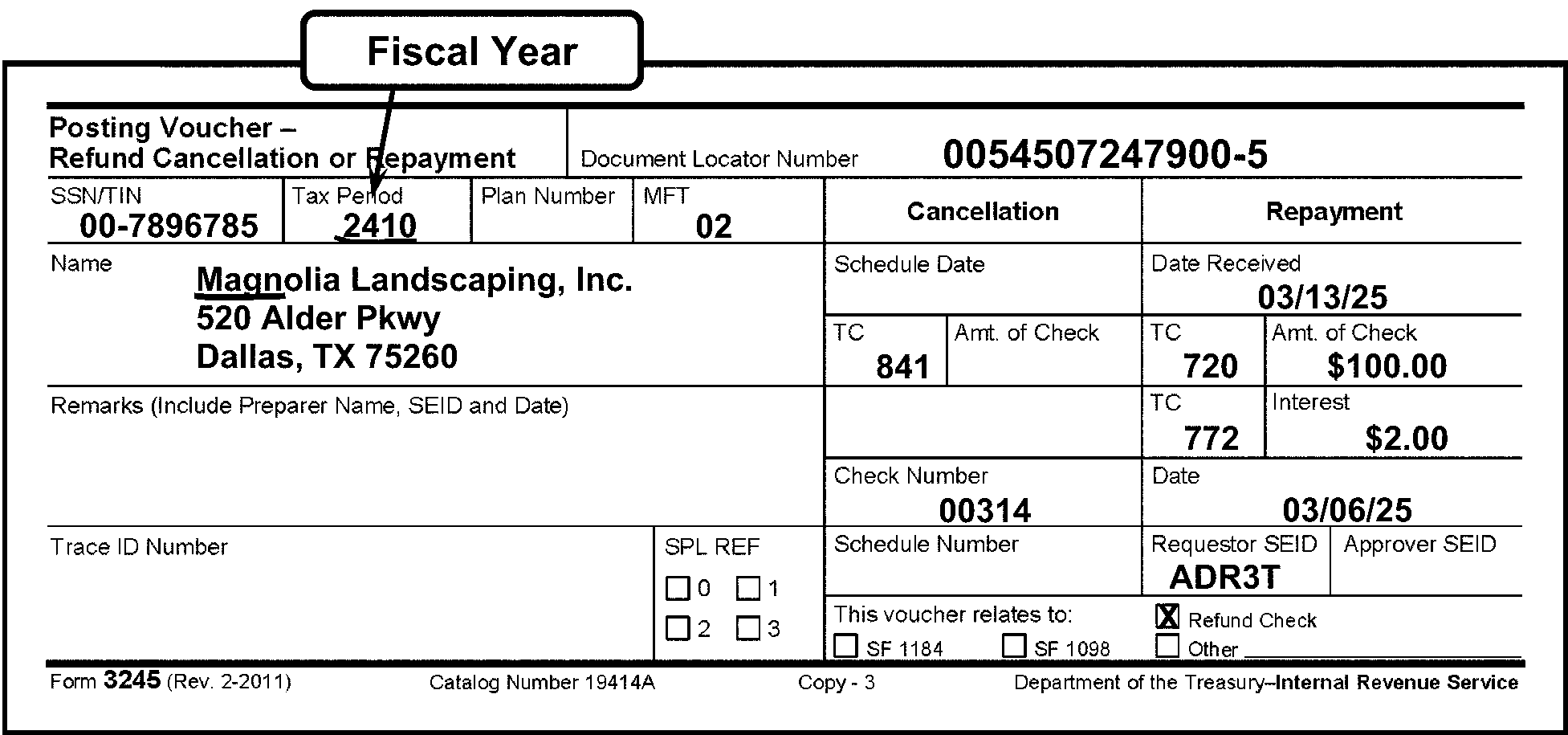
It is necessary to edit a tax period for all fiscal and prior year documents. (See Figure 3.11.10-9.)
-
In addition, the following specific topics are discussed in this section.
-
Editing a Calendar Year. See IRM 3.11.10.6.3.1 for more information.
-
Editing a Fiscal Year. See IRM 3.11.10.6.3.2 for more information.
-
Editing a Prior Year. See IRM 3.11.10.6.3.3 for more information.
-
Special Instructions (BMF). See IRM 3.11.10.6.3.4 for more information.
-
-
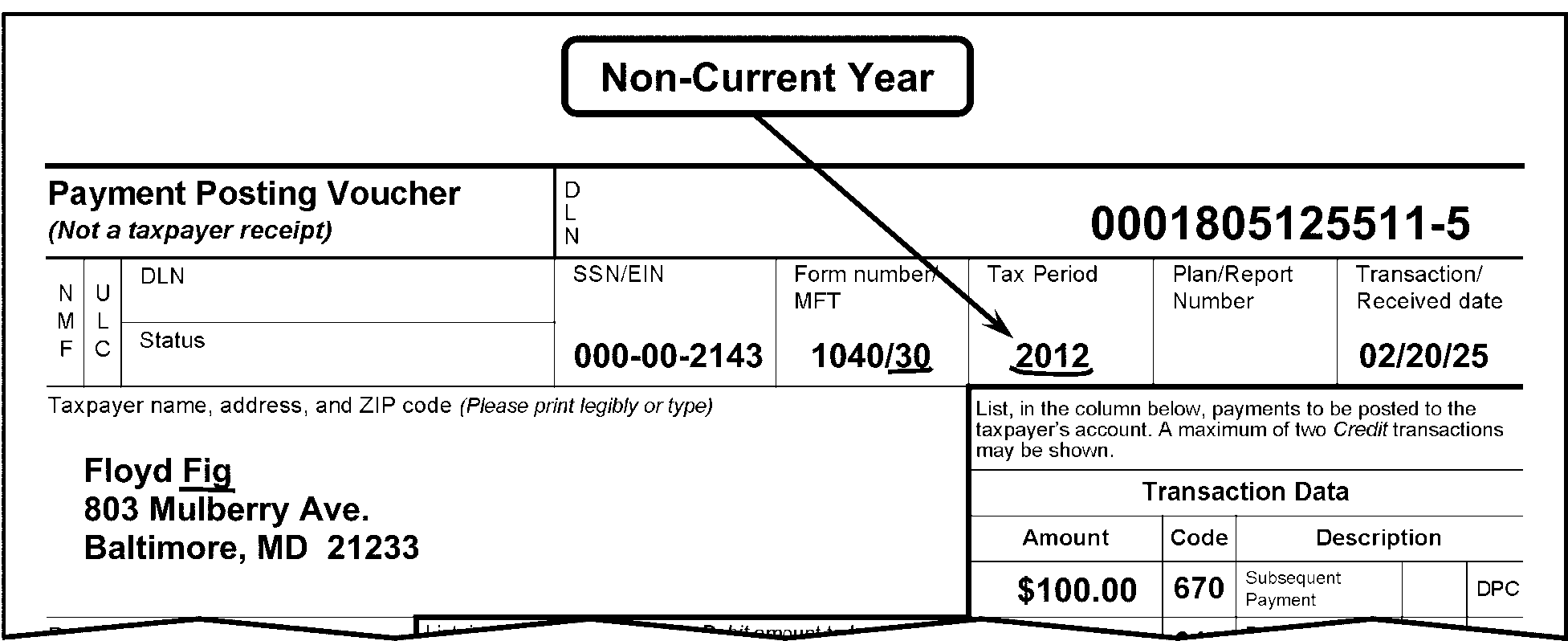
If the document is for other than a current calendar year, edit the year and month in YYMM format to the right of the tax year designation in the top center of the form, or in the applicable area. (See Figure 3.11.10-10.)
-
Unless it is clearly stated, all voucher forms should be considered for the current processing period.
-
A fiscal year is 12 full months ending in the last day of any month other than December. Edit the month and year in YYMM format on all fiscal year documents.
-
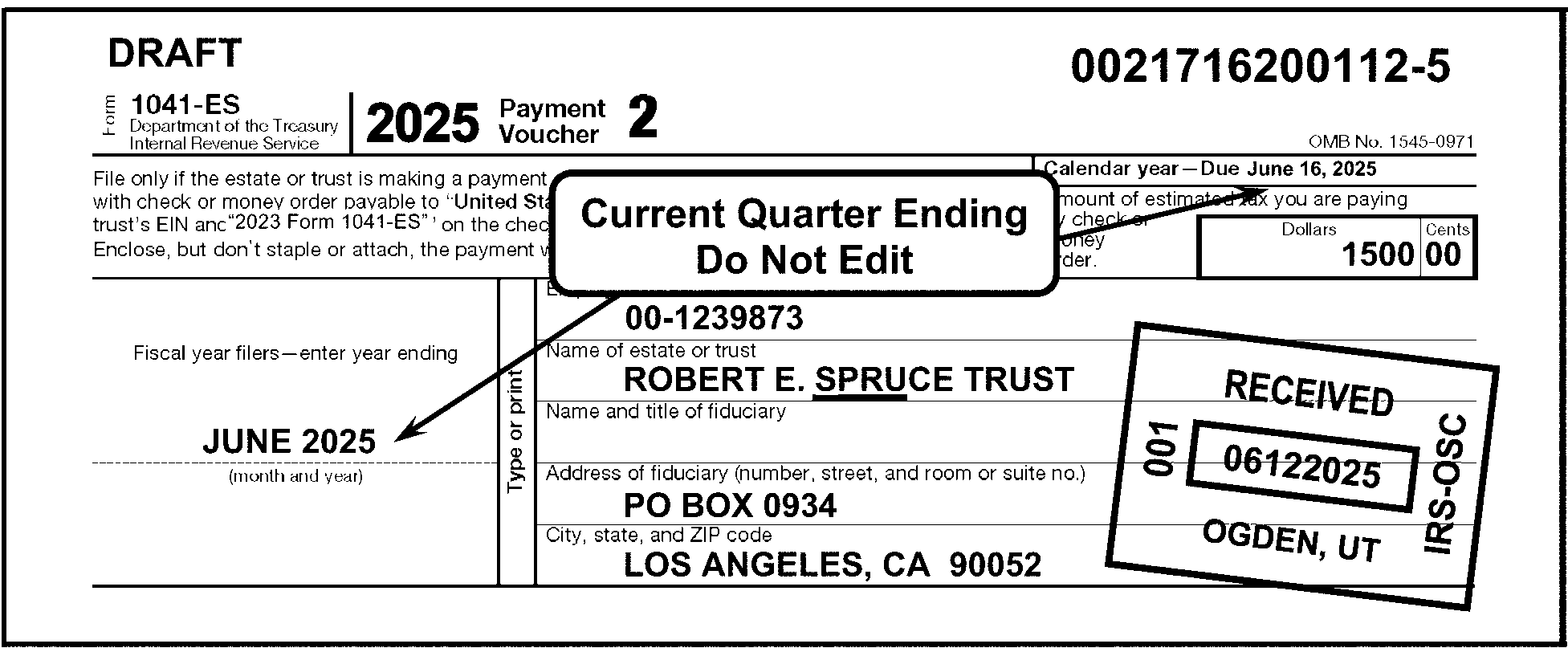
Form 1041-ES, Estimated Income Tax for Estates and Trusts, payments are made on a quarterly basis for a calendar year. Therefore, do not edit this form for a month ending in 04 (due April 15), 06 (due June 15), or 09 (due September 15), the months these payments are due, unless specifically stated. (See Figure 3.11.10-11.)
-
A document is considered a prior year if the tax period ending date falls eight months or more prior to the current date.
-
Edit the prior year tax period on a document unless it is a pre-ADP tax period which must be processed as Non-Master File (NMF). See (3) below.
-
Pre-ADP tax periods are:
-
IMF — prior to 196212.
-
BMF — prior to 196112.
Exception:
MFT 08 — prior to 200412.
MFT 13 — prior to 198012.
MFT 14 — prior to 200612.
MFT 16 — prior to 199412.
MFT 17 — prior to 200512.
MFT 40 — prior to 200401.
MFT 46 — prior to 198412.
MFT 49 — prior to 200602.
MFT 74 — prior to 199101.
MFT 76 — prior to 198412.
MFT 83 — prior to 201712 (No ANMF Section 965 processing equivalent).
MFT 84 — prior to 200712.
MFT 85 — prior to 200902.
MFT 86 — prior to 200812.
-
-
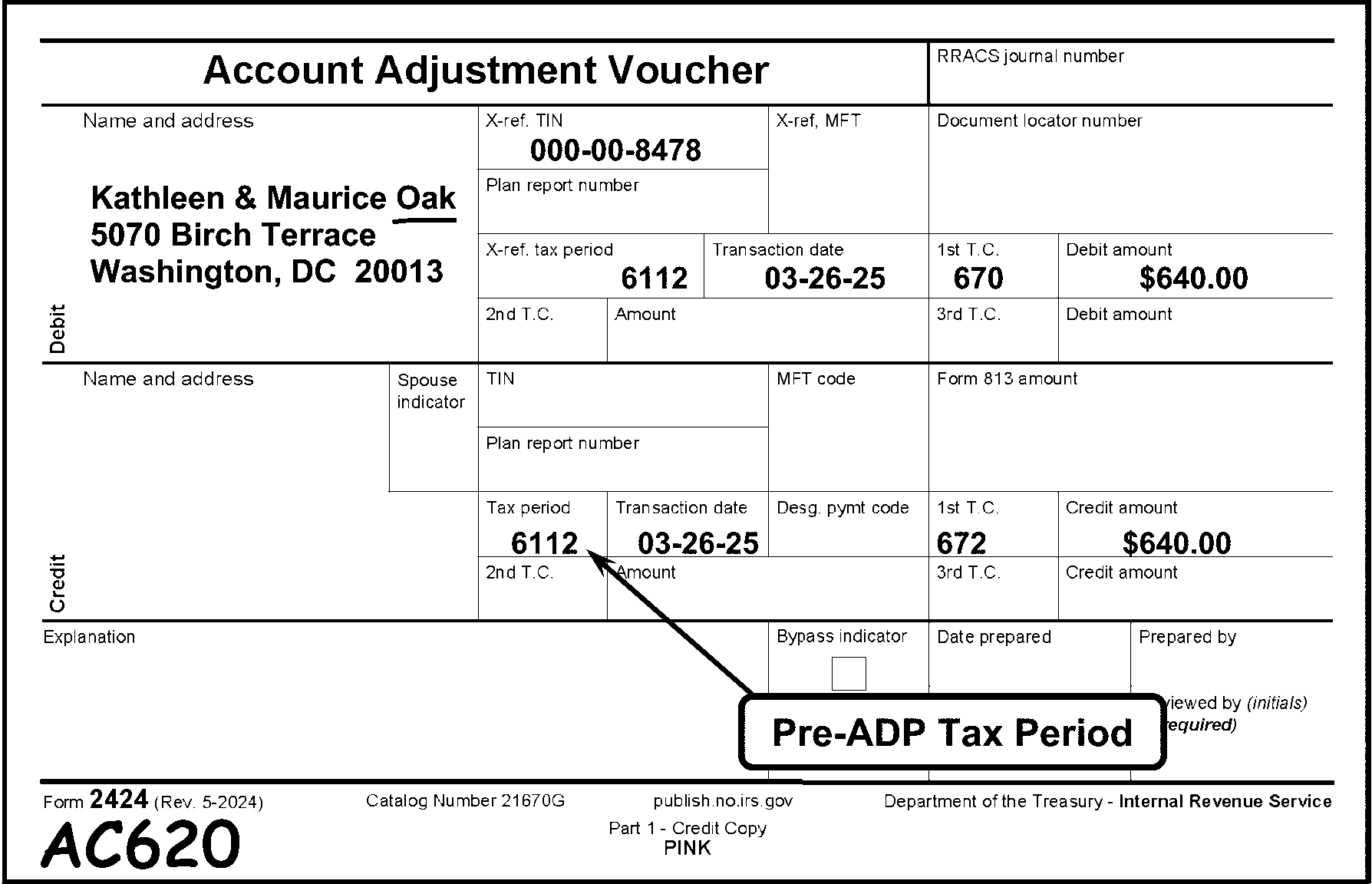
If the tax period is Pre-ADP, edit Action Code 620 on the bottom left margin. (See Figure 3.11.10-12.)
-
On MFT 51 (Form 709) documents, the returns for 1971 through 1981 have a fiscal month ending of 03, 06, 09 and 12. For calendar year 1970 and prior and 1982 and later, the month is always 12.
-
On MFT 09 (Form CT–1), tax periods from 196203 through 197512 must have a fiscal month ending of 03, 06, 09, or 12. On documents for 1976 and later, the ending month must be 12.
-
On MFT 05 (Form 1041), TC 660 (Estimated Tax Payment, Form 1041-ES) requires a tax period of 198712 or later. Any other TC with MFT 05 requires a tax period of 196112 or later.
-
On MFT 08 (Form 8804 and Form 8813) the tax period can't be earlier than 200412.
-
On MFT 13 (Form 8278) the tax period can't be earlier than 198012.
-
On MFT 14 (Form 944) the tax period can't be earlier than 200612.
-
On MFT 15 (Form 8752) the tax period can't be earlier than 199012.
-
On MFT 16 (Form 945) the tax period can't be earlier than 199412.
-
On MFT 17 (Form 8288) the tax period can't be earlier than 200512.
-
On MFT 40 (Form 8849) the tax period can't be earlier than 200401.
-
On MFT 46:
-
For Form 8038 and Form 8328, the tax period can't be earlier than 198412.
-
For Form 8038-CP, the tax period can't be earlier than 200902 (specifically, 02/17/2009).
-
-
On MFT 49 (Form 8872 assessments) the tax period can't be earlier than 200602.
-
On MFT 74 (Form 5500 assessments) the tax period can't be earlier than 199101.
-
On MFT 76 (Form 5330) the tax period can't be earlier than 198412.
-
On MFT 82 (Repatriation Tax or Transfer (Section 965) - IMF) the tax period can't be earlier than 201712.
-
On MFT 83 (Repatriation Tax or Transfer (Section 965) - BMF) the tax period can't be earlier than 201712.
-
On MFT 84 (Form 8703) the tax period can't be earlier than 200712.
-
On MFT 85 (Form 8038-B assessments) the tax period can't be earlier than 200902.
-
On MFT 86 (Form 8038-TC assessments) the tax period can't be earlier than 03.
-
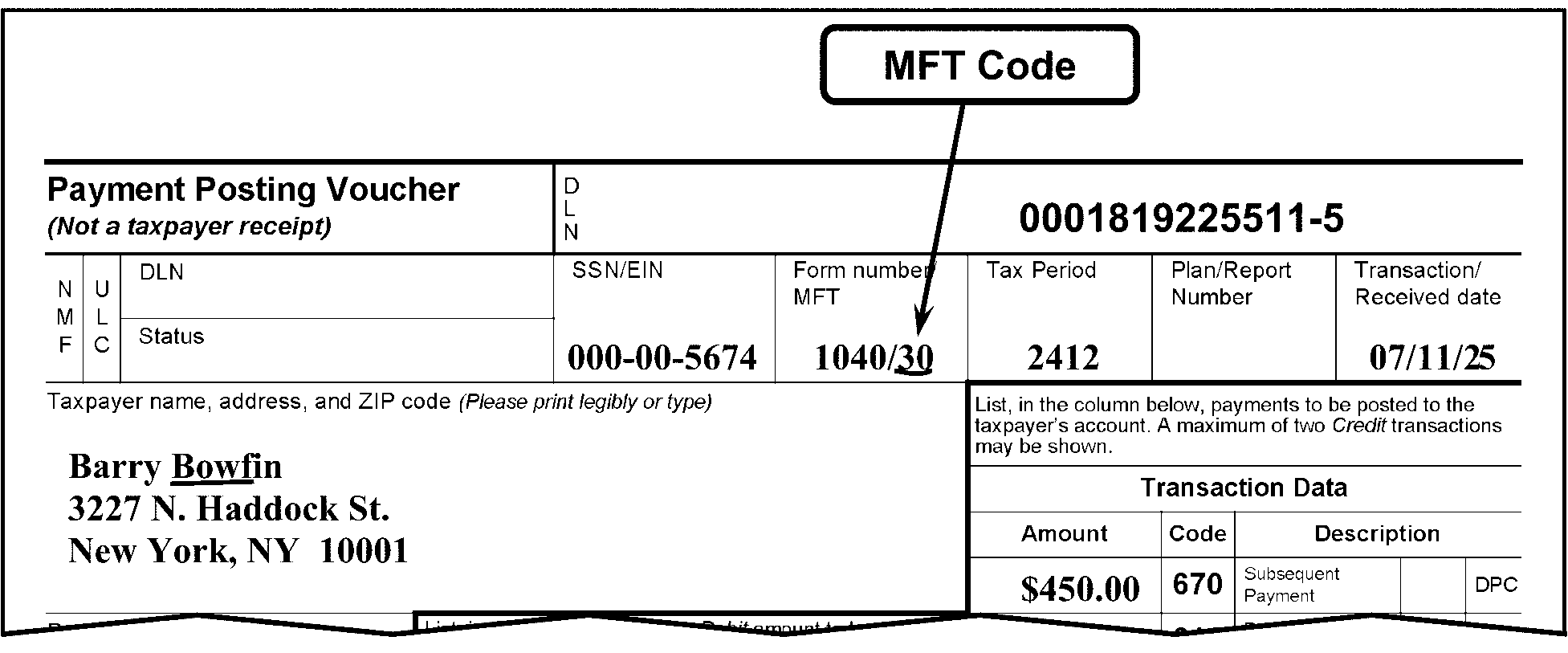
The MFT is a two-digit code which is normally preprinted or manually entered during the preparation of in-house documents. (See Figure 3.11.10-13.)
-
The valid MFT codes for IMF are 29, 30, 31, 35, 55, 65, and 82.
-
The valid MFT codes for BMF are 01, 02, 03, 04, 05, 06, 07, 08, 09, 10, 11, 12, 13, 14, 15, 16, 17, 33, 34, 36, 37, 40, 43, 44, 46, 49, 50, 51, 52, 58, 60, 61, 62, 63, 64, 67, 74, 75, 76, 77, 78, 83, 84, 85, and 86.
-
-
The MFT code must be compatible with the TC and the document code (from the DLN). See Exhibit 3.11.10-2, Valid Transaction Codes --- Document Codes Table, for compatible document codes and MFT codes, and Exhibit 3.11.10-3, Valid Transaction Codes (TCs) By MFT, for compatible Transaction Codes (TCs) and MFT codes.
-
Underline the correct MFT. Do not underline any NMF cross reference MFT codes.
-
If the MFT code is "05" or "06" there must be a "05" or "06" in the upper right corner of the Form 813, Document Register, date box or in the upper right corner of the Form 3893, Re-Entry Document Control.
-
MFTs 51 and 52 are valid for tax class 5, doc codes 17, 18, 19, 24, and 87.
-
If the control document has been renumbered, the MFT must be compatible to the new DLN. See Exhibit 3.11.10-3, Valid Transaction Codes (TCs) By MFT. Edit the proper MFT.
-
If the MFT code is not present on the control document, enter the MFT from the first document in the block.
-
A Plan/Report Number consists of three digits and must be present if the MFT is 46, 74, 75, 76, 84, 85, or 86. The Plan/Report Number must be edited near the MFT block. If a Plan/Report number is not present, check attachments. See Figure 3.11.10-14.
-
The transaction date must always be present on a Revenue Receipt document.
-
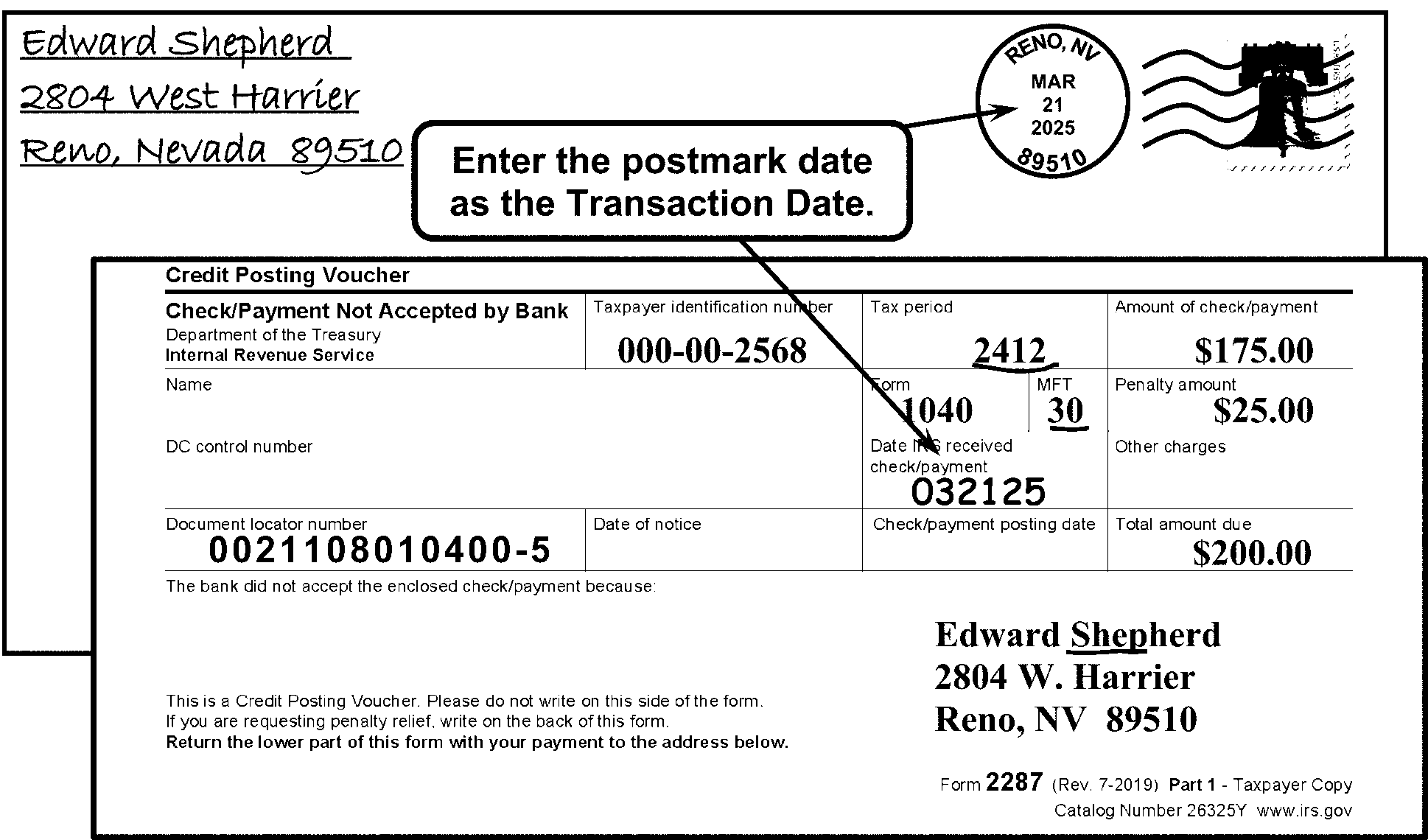
If there is no transaction date stamped or edited on the document, search the document for a postmarked envelope or any other indication of a transaction date. (See Figure 3.11.10-15.)
Note:
If both U.S. Postal Service and private meter marks are present, honor the U.S. Postal Service marks.
-
If a valid transaction date is located on an attachment, edit in MMDDYY format onto the document.
-
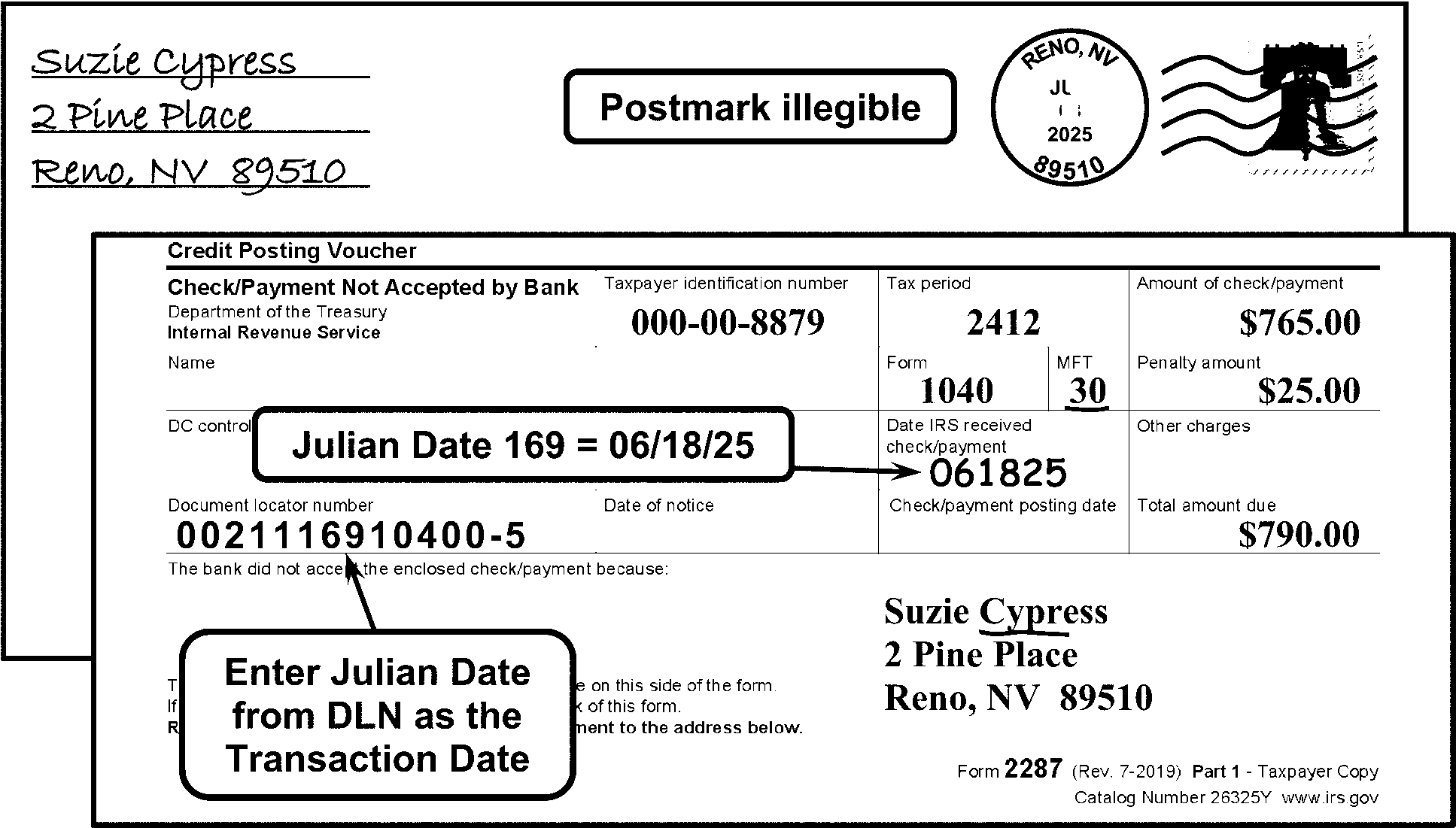
If a valid transaction date can't be located, edit onto the document in MMDDYY format, the DLN Julian Date. (See Figure 3.11.10-16.) See Exhibit 3.11.10-4, Julian Date Calendar, Perpetual and Leap Year, to decide the Julian Date.
-
If a document has multiple stamped dates, the earliest stamped date is to be used.
-
-
For International BMF tax due notice documents (AUSC only)—edit as the transaction date, the stamped received date minus one month, or the notice date, whichever is later.
-
Most documents have only a single three-digit transaction code (TC). However, the program permits up to three transactions, with their specific codes, to be input simultaneously from the same source document.
-
The TCs are identified as the primary, secondary, or tertiary (third) TCs.
-
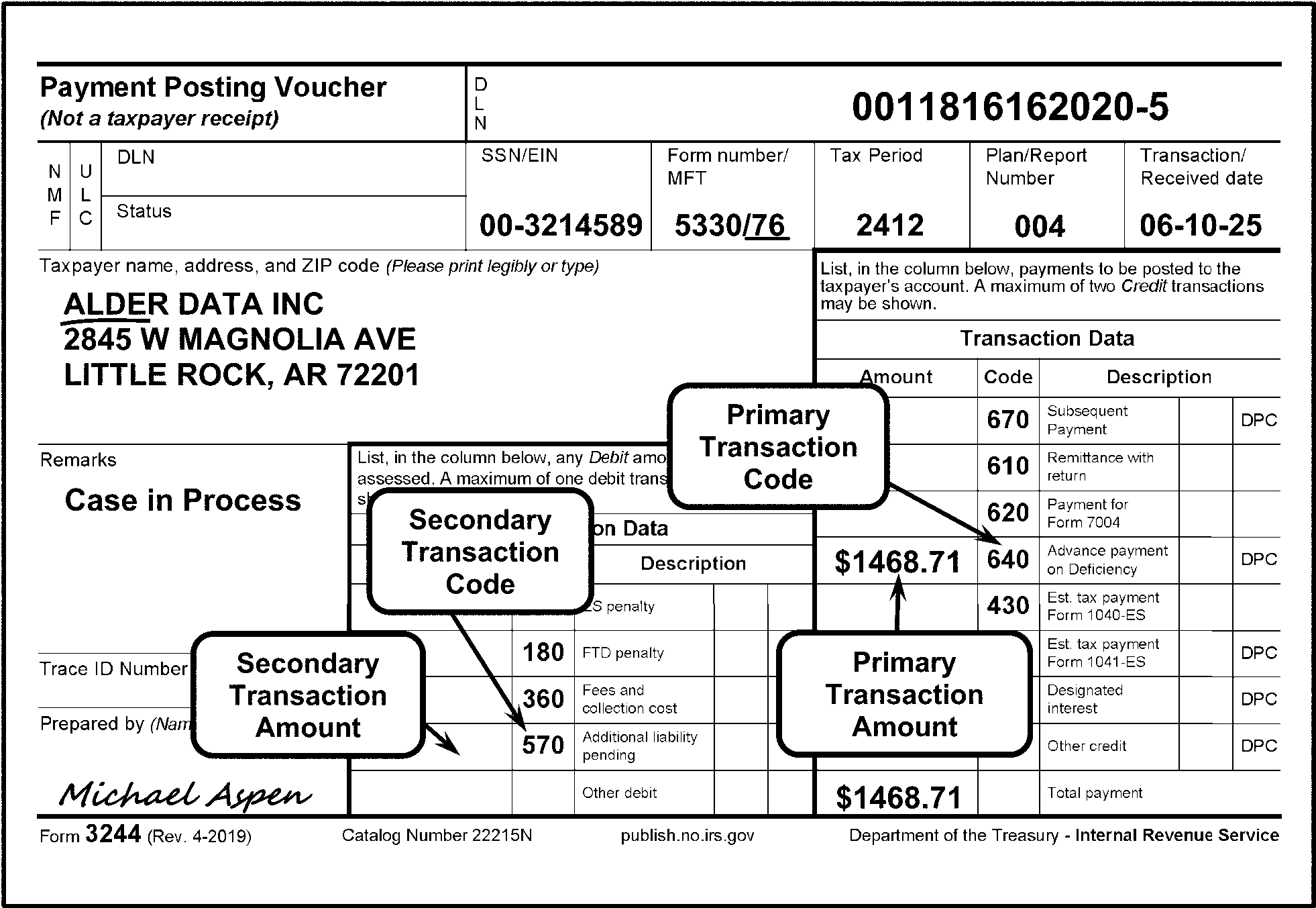
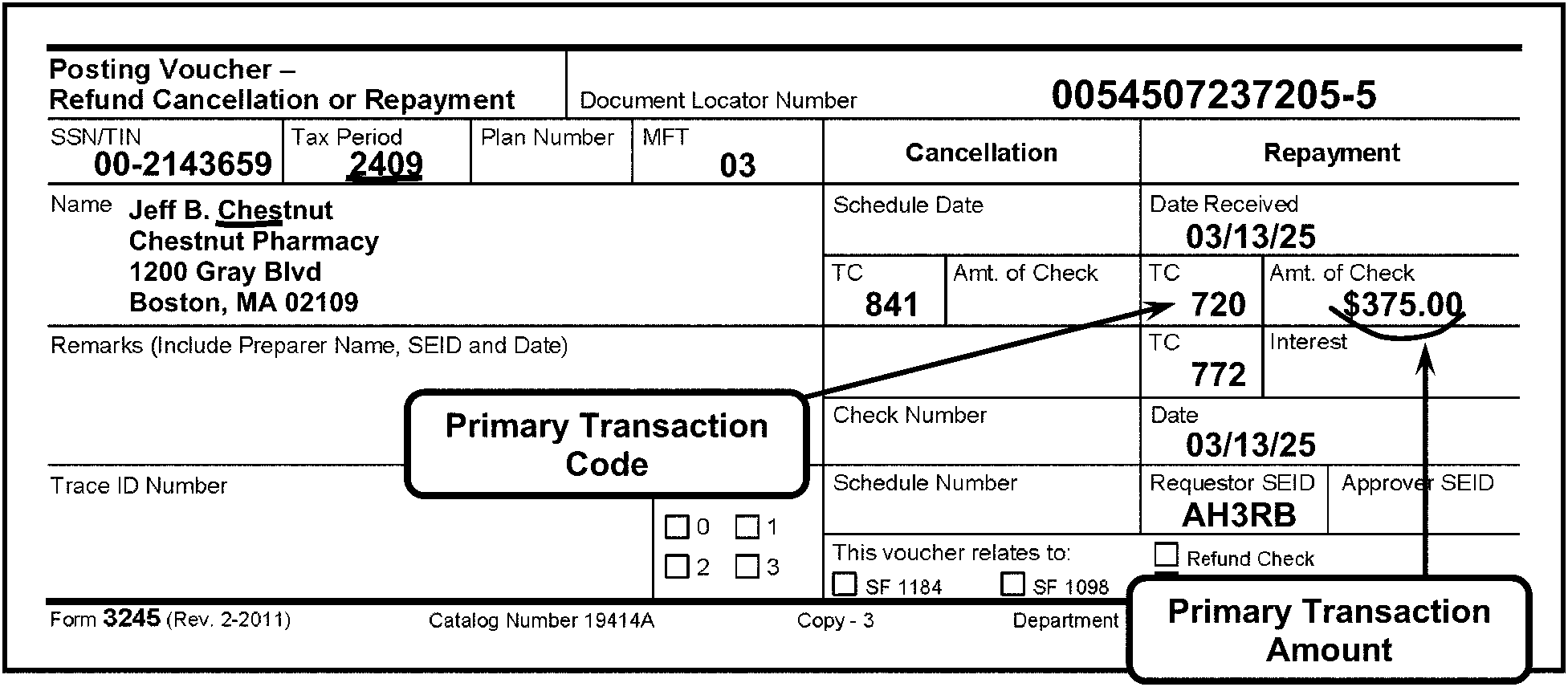
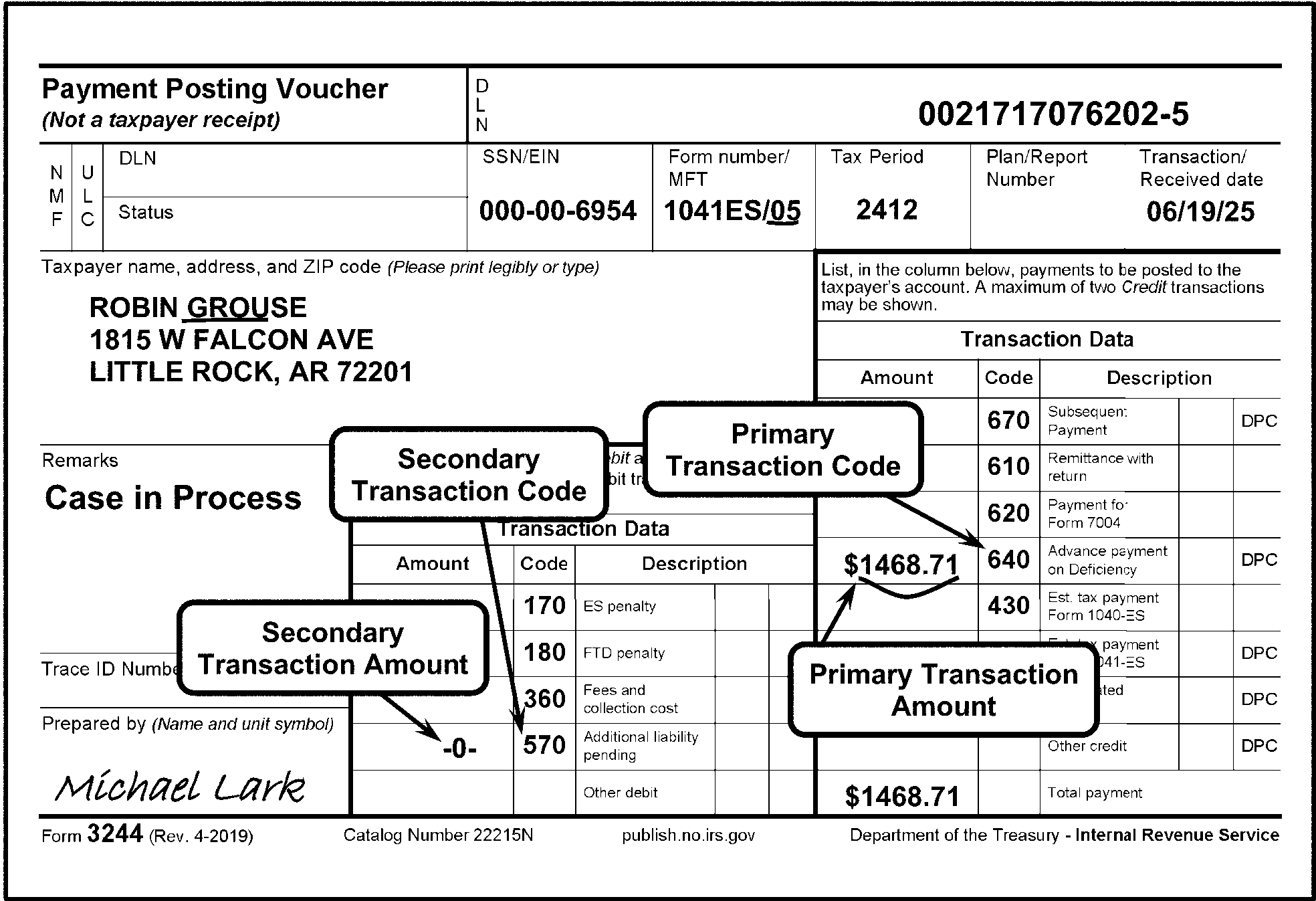
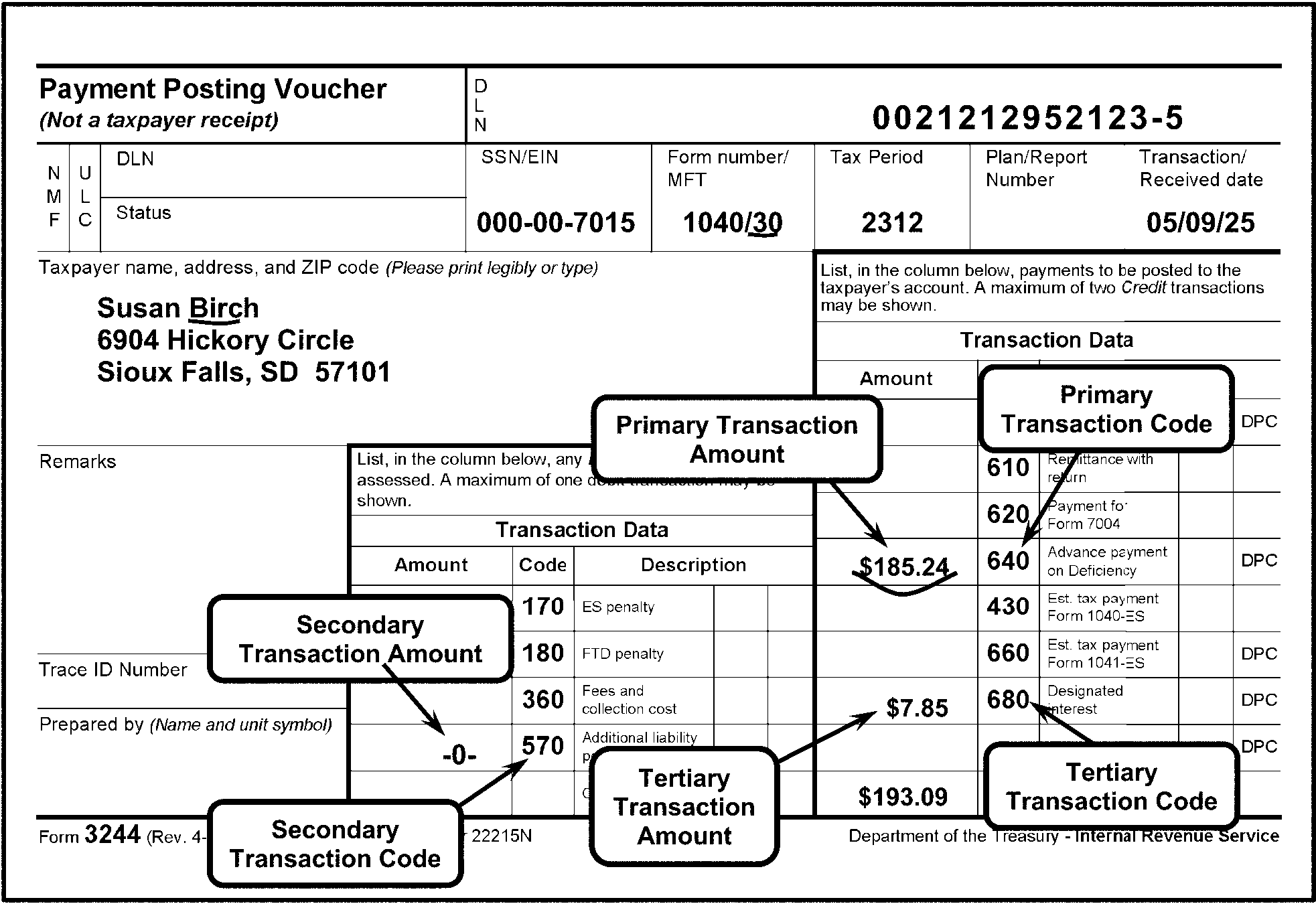
The primary TC is used for all single transactions and can be either a debit or a credit. (See Figure 3.11.10-17.)
-
The secondary TC is usually an adjustment such as penalty or interest. A secondary TC is sometimes used without a secondary transaction amount to signify a status code. (See Figure 3.11.10-18.)
-
The tertiary (third) TC is a payment, adjustment, credit transfer or reversal. (See Figure 3.11.10-19.) A zero amount in the tertiary transaction amount is not valid. The tertiary TC is not valid on the Individual Retirement Account File (IRAF).
-
-
Amounts in the primary and tertiary (third) fields must equal the amount listed on the Form 813 in green pencil. The secondary amount should appear on the Form 813 enclosed in brackets beside the debit or credit amount. The total of all secondary TCs should be enclosed in brackets on the total line of the Form 813. If the secondary amount total is not listed on the Form 813, you must edit it. However, do not change the block total for the primary and tertiary (third) amounts, under any circumstances.
-
The maximum number of transactions which may be coded on a single input document is two (2) credits and one (1) debit. Documents coded with more than two credit transactions and one debit transaction must be rejected from processing. Edit Action Code "360" in the bottom margin of the document, preceded by the letters "AC" . Attach Form 4227, Intra-SC Reject or Routing Slip, to the document and notate the presence of more than the number of TCs permitted.
-
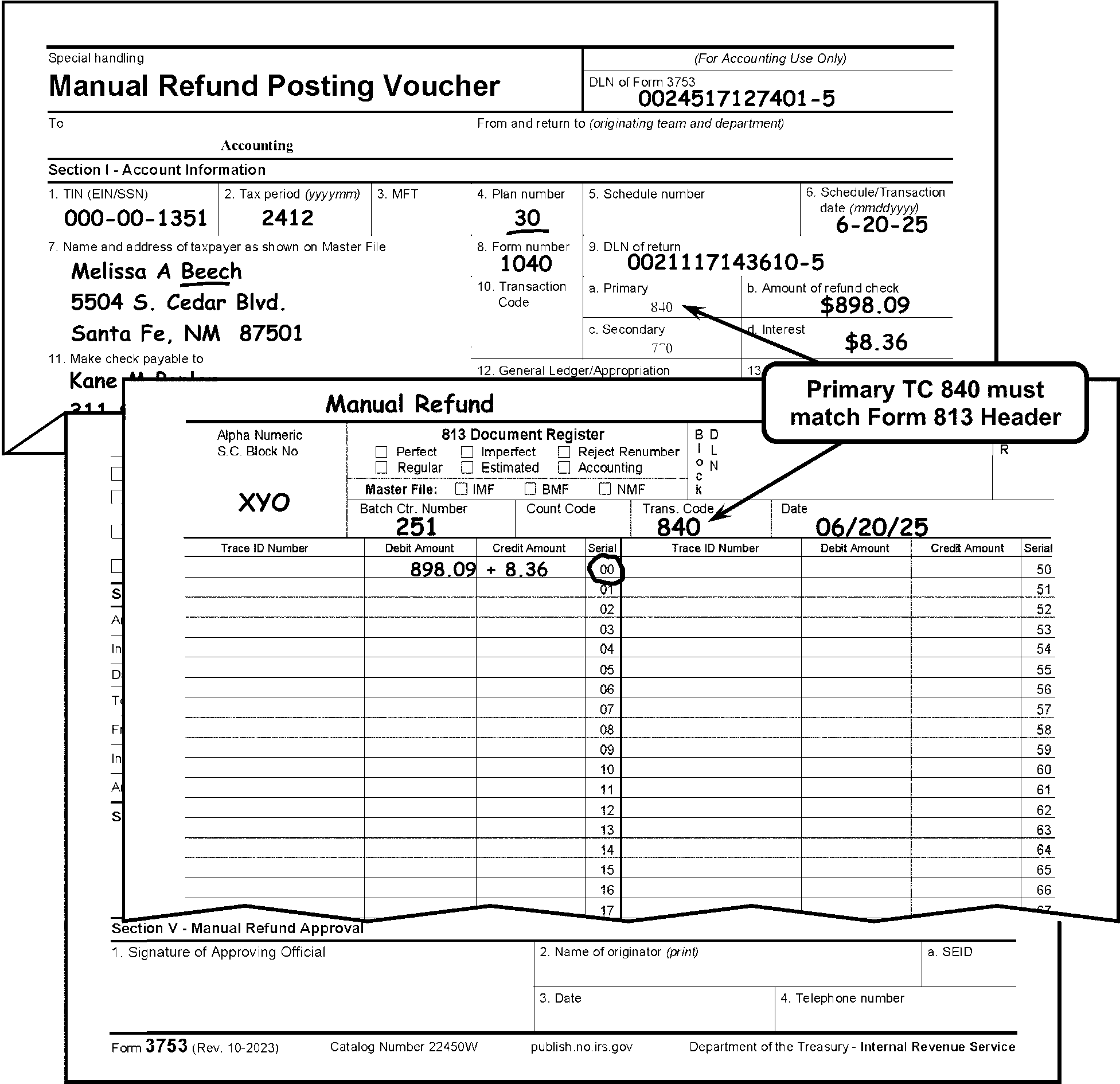
If the block header on the Form 813 Transaction Code Field has TC 840 (Manual Refund), all the documents in the block must have a Primary TC 840, or vice versa. (See Figure 3.11.10-20.)
-
Transaction Codes (TCs) 400 (Account Transfer-Out), 721 (Dishonored Refund Repayment), 840 (Manual Refund) and 843 (Check Cancellation Reversal) are valid only as Primary TCs.
-
Only TC 170, 180, 200, 270, 280, 340, 360, 460, 472, 570, 770, and 772 are valid as secondary TCs and may not be used as primary or tertiary TCs.
-
TC 770 (Credit Interest Due Taxpayer) is only valid when the primary TC is 721, 722, 832, or 840.
-
TC 772 (Correction of 770 Processed in Error or Interest Netting) is valid only with primary TC 720 (Refund Repayment).
-
A secondary TC of 280 (Bad Check Penalty) is valid only when the primary TC is 611, 621, 641, 661, 671, 681, 691, or 721.
-
A secondary TC of 340 (Restricted Interest Assessment) is only valid when the primary TC is 670 (Subsequent Payment).
-
A secondary TC of 460 (Extension of Time for Filing) is only valid when the primary TC is 670, the MFT is 51, and the tax period ends in 12.
-
-
For MFT 29, Doc Code 45 is not valid with TC 280: Doc Code 48 is not valid with TC 570.
-
Secondary TC 460 is valid only with primary TC 670 with a Doc Code of 17. The associated transaction amount must always be blank. The Area Office Code can't be 66 or 98, and the transaction date can't be later than 04–22–XX (current processing year).
-
Only zero (0) transaction amount is valid for primary TC 400.
-
Secondary TC 170, 180, 270, 280, 460, 472, 550, 570 and 770 are valid with a zero transaction amount. All other secondary TCs must have a transaction amount other than zero (0).
-
If a tertiary TC is present, there must be a tertiary transaction amount. Zero is not valid as a tertiary transaction amount.
-
A Designated Payment Code (DPC) is used with input of TCs 640, 670, 680, 690, 694, and 700. If these TCs are input, the DPC will be coded as follows:
-
TC 640 (Advance Payment of Determined Deficiency or Underreporter Proposal), DPC must be 00, 01, 02, 12, 29, 36, 43, or 99.
-
TC 670 (Subsequent Payment), DPC must be 00 through 11, 26, 29, 36, 64, 70, 71, 72, 73, 74, 75, or 99.
-
TC 680 (Designated Payment of Interest), DPC must be 00, 01, 03, 06, 07, 26, 36, 64, or 99.
-
TC 690 (Designated Payment of Penalty), DPC must be 00, 01, 03, 06, 07, 09, 26, 36, 64, or 99.
-
TC 694 (Designated Payment of Fees and Collection Costs), DPC must be 00, 01, 03, 06. 07, 36, or 64.
-
TC 700 (Credit Applied), DPC must be 00 or 06.
-
-
For this program, the valid DPCs are 00 through 24, 26, 29, 31, 33 through 36, 43, 50, 51, 53, 55 through 59, 63, 64, 65, 70, 71, 72, 73, 74, 75, and 99.
-
DPCs 01 and 02 may only be input when MFT is 01, 03, 09, 11, 12, 16, or 55.
-
DPC 13 is valid only with MFT 30 for tax periods 199312 through 199411.
-
DPC 26 may only be input when MFT is 31 and TCs are 670, 680, or 690 and the transaction date is greater than 20100816.
-
DPC 29 may only be input when MFT is 13 or 55 and TCs are 640 or 670.
-
DPC 31 may only be input when MFT is 31.
-
DPC 36 is valid for tax periods 201412 and subsequent and may only be input when MFT is 35 or MFT is 65.
-
DPC 43 is valid for tax periods 201512 and subsequent and may only be input when MFT is 43.
-
DPCs 44, 45, 46, and 52 are valid with MFT 55 (IMF) for tax period YYYY01.
-
DPCs 49, 50 and 51 are valid with MFT 13 (BMF) for tax period YYYY12 and with MFT 55 (IMF) for tax period YYYY01.
-
DPC 63 is valid for tax periods 202112 and subsequent.
-
DPC 64 is valid for tax periods 201712 and subsequent and may be input when MFT is 02, 05, 06, 30, 34, 82 and 83.
-
DPC 65 is valid for tax periods 202112 and subsequent.
-
DPC 71 is valid for tax periods 201712 and subsequent and may be input when MFT is 02, 05, 06, 30, and 34.
-
DPC 72 is valid for tax periods 201712 and subsequent and may be input when MFT is 02, 05, 06, 30, and 34.
-
DPC 73 is valid for tax periods 201712 and subsequent and may be input when MFT is 02, 05, 06, 30, and 34.
-
DPC 74 is valid for tax periods 201712 and subsequent and may be input when MFT is 02, 05, 06, 30, and 34.
-
DPC 75 is valid for tax periods 201712 and subsequent and may be input when MFT is 02, 05, 06, 30, and 34.
-
DPC 76 is valid for tax periods 201712 and subsequent and may be input when MFT is 02, 05, 06, 30, and 34.
-
The following DPCs are valid for revenue receipt processing:
DPC MEANING 00 Designated payment indicator is not present on posting voucher. 01 Non-Trust Fund - Payment is to be applied first to the non-trust fund portion of the tax. 02 Trust Fund - Payment is to be applied first to the trust fund portion of the tax. 03 Bankruptcy, undesignated payment (undesignated bankruptcy payment). 04 Levied on state income tax refund (State Income Tax Levy Program (SITLP)) (prior to 07/22/1998). 05 Notice of levy (Other levy proceeds) used only for levy proceeds received from a third party in response to a Notice of Levy and does not include payments from the taxpayer as a result of a levy. 06 Seizure and sale. 07 Payment received expressly for full or partial payoff of the liability secured by the Notice of Federal tax lien. 08 Suits (Non-Bankruptcy). 09 Offer in compromise. 10 Installment agreement (Manually Monitored Installment Agreements). 11 Bankruptcy, designated to trust fund. 12 Cash bond credit (allowed with TC 640 only). 13 Payment in response to reminder notice, OBRA 1993. 14 Authorization given by taxpayer to apply payment ("CSED expired, taxpayer authorized payment" ). 15 Payments caused by Form 8519 (Taxpayer’s Copy of Notice of Levy). 16 Federal EFT levy payment. 17 Federal EFT payroll deduction installment agreement payment. 18 Federal Payment Levy Program (FPLP) payment for the Primary TIN. Payments are received electronically (via EFTPS) from Financial Management Service (FMS). 19 FPLP payment for the Secondary TIN. Payments are received electronically (via EFTPS) from FMS. 20 State Income Tax Levy Program (SITLP) receipt - systemically applied. 21 SITLP receipt (used exclusively for manually applied payments). 22 Alaska Permanent Fund Dividend Levy Program (AKPFD) receipt - systemically applied. 23 Alaska Permanent Fund Dividend Levy Program (AKPFD) receipt (used exclusively for manually applied payments). 24 Payment received with an amended return. 26 Court Ordered Criminal Restitution Payments - Used to access and track restitution ordered payable to the IRS in a criminal case. 29 Return Preparer Penalties - Used as a mechanism for measuring the volume of payments received by the Return Preparer Office as opposed to subsequent collection and communication actions. 31 Exclude payment from systemic cross-reference processing to allow treatment of each spouse differently on a joint return. 33 Offer in Compromise $205.00 application fee 34 Offer in Compromise 20% lump sum/initial periodic payment. 35 Offer in Compromise subsequent payments made during the offer investigation. 36 Individual Shared Responsibility Payment (Affordable Care Act (ACA)). 43 Employers Shared Responsibility Payment (Affordable Care Act (ACA)). 44 OPA (On-Line Payment Agreement) Direct Debit Installment Agreement (DDIA) Origination Fee (IMF MFT 55). RETIRED BY COLLECTION 45 OPA Non-Direct Debit Installment Agreement Origination Fee (Regular (new) Fee) (IMF MFT 55). RETIRED BY COLLECTION 46 OPA Installment Agreement (IA) Reinstatement or Restructure Fee (fee intended for future use; amount to be determined) (IMF MFT 55). RETIRED BY COLLECTION 47 Installment Agreement Reduced Origination User Fee (Installment Agreement Origination Fee reduced for low income taxpayer). RETIRED BY COLLECTION 48 Direct Debit Reduced Origination User Fee (Installment Agreement Direct Debit User Fee reduced for low income taxpayer). RETIRED BY COLLECTION 49 Direct Debit Installment Agreement (DDIA) Origination User Fee. RETIRED BY COLLECTION 50 Installment Agreement (IA) Origination User Fee (IAUF). 51 Installment Agreement (IA) Revision/Reinstatement User Fee (IAUF). 52 Installment Agreement (IA) Reinstatement or Restructure Reduced User Fee- (Low-Income) (IMF MFT 55). RETIRED BY COLLECTION 53 Discharges 55 Subordinations 56 Withdrawals 57 JUD Foreclosures; NONJUD Foreclosures 58 Redemptions; Release of Right of Redemptions. 59 706 Liens; Decedent Estate Proof of Claim (POC). 63 Advance Child Tax Credit (ACTC) 64 Section 965 (revised by The Tax Cuts and Jobs Act, signed by the President December 22, 2017). 65 Economic Impact Payment (EIP) 70 Payment of BBA Imputed Underpayment Amount submitted with BBA Administrative Adjustment Requests (BBA AAR) filed by a partnership not related to an examination, modification or a push out elected after issuance of a notice of Final Partnership Adjustments (FPA). 71 Payment of BBA Imputed Underpayment Amount submitted by pass-through partner in Push Out elected as a result of a BBA AAR (Form 8985 will be filed by the pass-through partner with "AAR" box checked). 72 Payment of BBA Imputed Underpayment Amount by Audited Partnership. 73 Payment of Tax submitted with partner amended returns to reduce the BBA Imputed Underpayment amount via Modification. 74 Payment of BBA Imputed Underpayment Amount submitted by a pass-through partner in tiered Exam Push Out (Form 8985 will be filed by the pass-through partner with "BBA Audit" box checked). 75 Prepayments (estimated payments) by (terminal) partners before they report their portion of the BBA partnership adjustment on their next filed return. 76 Payment of BBA Imputed Underpayment Amount---Partner Payment for Proportionate Share of BBA Imputed Underpayment. 99 Miscellaneous payment other than above.
-
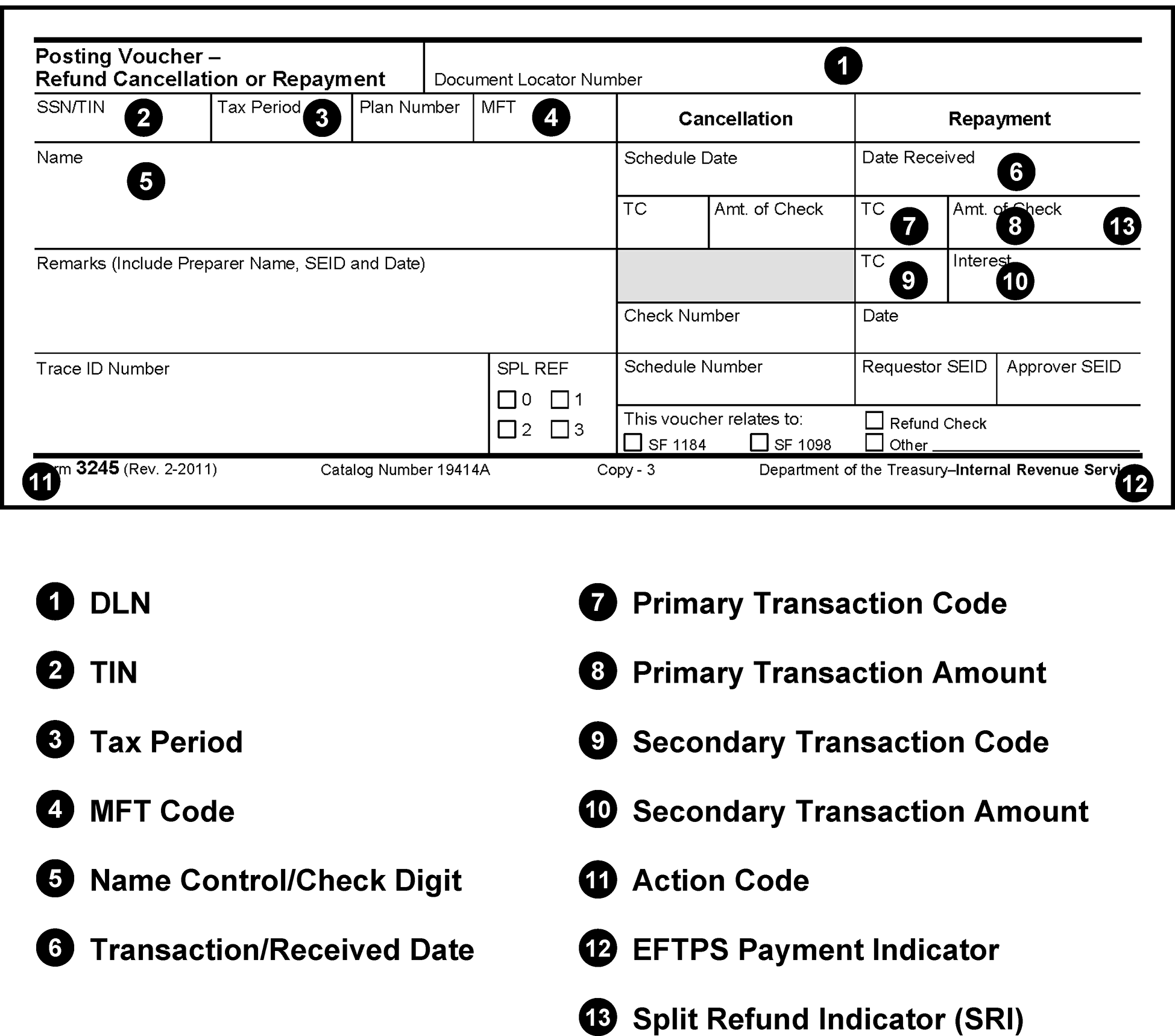
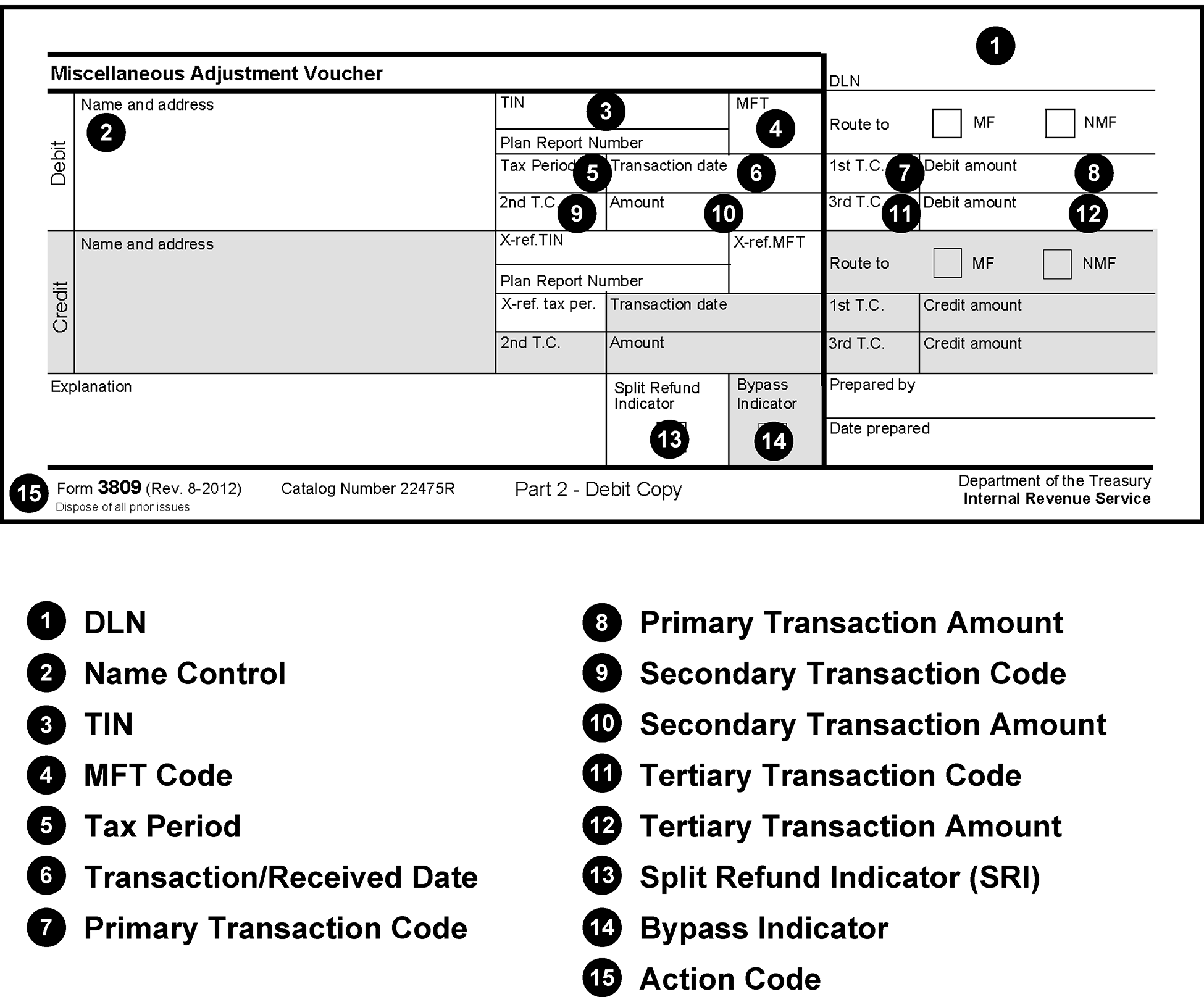
IMPORTANT: This reference was included pursuant to campus examiners' request for a text description. The edited Split Refund Indicator (SRI) is displayed on the Form 3245 (Posting Voucher - Refund Cancellation or Payment) and Form 3809 (Miscellaneous Adjustment Voucher) shown in text Exhibits.
-
Taxpayers have the option to split their refunds in up to three separate accounts. The Split Refund Indicator (SRI) will appear on revenue receipt transactions originating at the Regional Finance Centers. This information is based upon information submitted by taxpayers on Form 8888, Direct Deposit of Refund to More Than One Account, which must be submitted with the taxpayer’s Form 1040 series return.
-
Preparers in the proper functional areas (i.e., Deposit Activity, Accounting, Accounts Management, etc.) must edit this indicator in the right margin of the following forms, next to the Primary Credit Amount:
-
Form 3245, Posting Voucher, Refund Cancellation or Repayment (See Exhibit 3.11.10-21).
-
Form 3809, Miscellaneous Adjustment Voucher (See Exhibit 3.11.10-24).
-
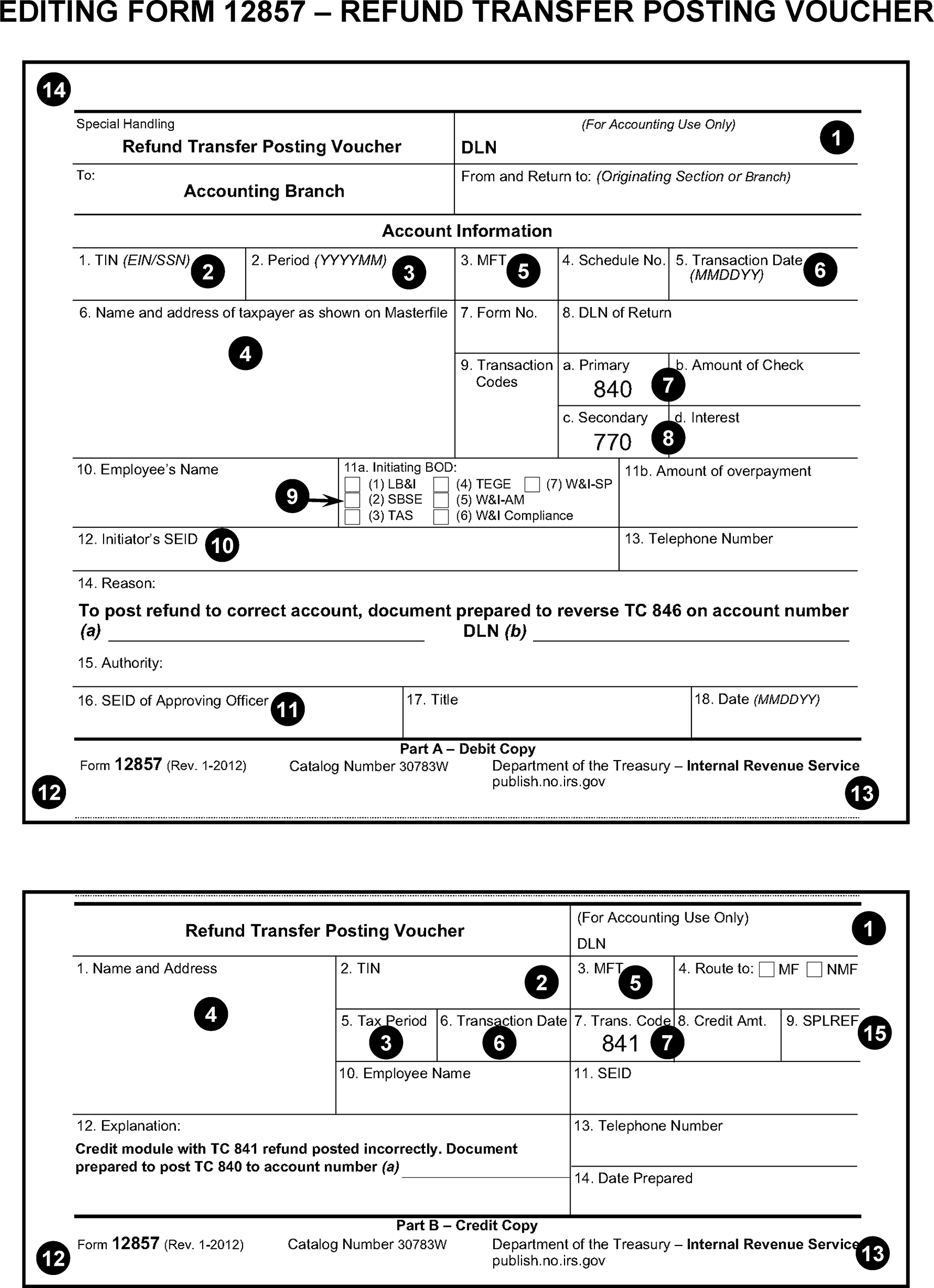
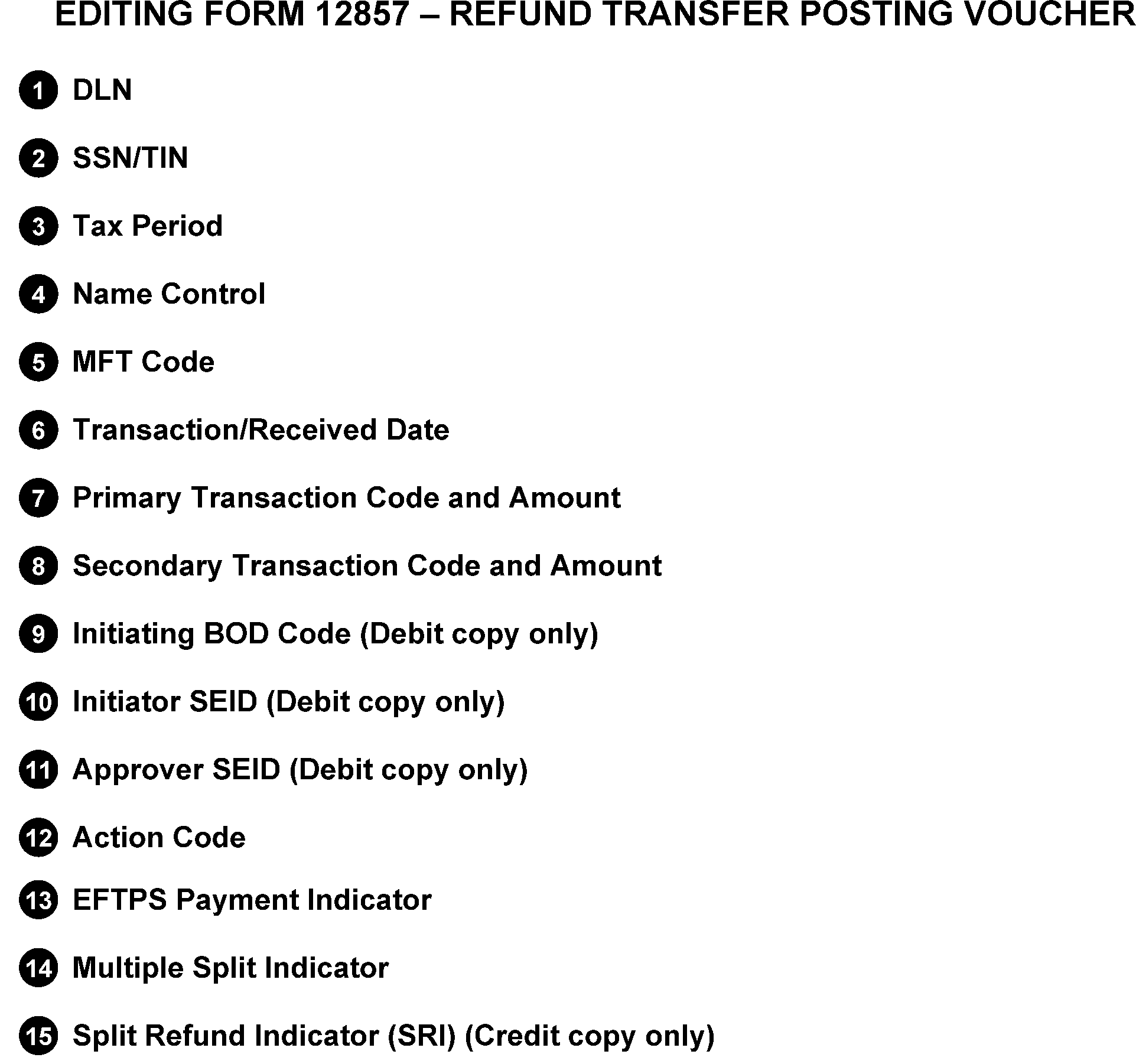
Form 12857, Refund Transfer Posting Voucher (See Exhibit 3.11.10-33).
-
-
The valid codes are provided as follows:
-
0---One refund; no split
-
1---First refund of a multiple split
-
2---Second refund of a multiple split
-
3---Third refund of a multiple split
-
4---Fourth refund of a multiple split
-
5---Fifth refund of a multiple split
-
6---Sixth refund of a multiple split
-
-
See Exhibit 3.11.10-21 , Form 3245, Posting Voucher—Refund Cancellation or Repayment, for information showing where to edit the Split Refund Indicator on the Form 3245 (Posting Voucher - Refund Cancellation or Payment). See Exhibit 3.11.10-24, Form 3809, Miscellaneous Adjustment Voucher, for information showing where to edit the Split Refund Indicator on the Form 3809 (Miscellaneous Adjustment Voucher). See Exhibit 3.11.10-33, Form 12857, Refund Transfer Posting Voucher, for information showing where to edit the Split Refund Indicator on the Form 12857, Refund Transfer Posting Voucher.
-
Since January 2008, all Deposit Tickets (DTs) and Debit Vouchers (DVs) must be assigned a 20-digit Trace ID Number, which is used as a tracking mechanism to identify each DT with its corresponding payments and each DV with its corresponding debits.
-
These numbers are a tool developed by the Custodial Detail Data Base (CDDB) as a means of addressing a material weakness discovered in the Service’s custodial accounting systems by the General Accountability Office (GAO). Trace ID numbers will permit systemic reconciliation of pre-posted to posted payments and pre-posted and posted payments to deposit records.
-
The CDDB, an enhancement arm to the Financial Management Information System (FMIS), was created to track all individual payments which comprise a DT. The CDDB also balances the individual transactions against the DT totals which have been entered into the Interim Revenue Accounting Control System (IRACS) general ledger. The unique Trace ID Number allows all payments to be identified and added to the CDDB.
-
All input payment systems (i.e., EFTPS, Lockbox) automatically assign a 20-digit Trace ID number to each DT.
-
For Manual DTs, The Trace ID Number is assigned by the Batch, Blocking, and Transmittal System (BBTS). The first 14 digits are the Trace ID Number (for the DT or DV) and the last six digits are the Transaction Sequence Number for the individual payment(s) comprising the DT. The Transaction Sequence Number begins with "000001" , and is sequentially assigned to payments within a DT.
-
Although most Trace ID numbers are assigned through BBTS, it is possible that some remittance documents will have handwritten numbers assigned on various remittance documents submitted for processing by some functions handling smaller volumes of manually processed forms.
-
Code and Edit examiners will not be required to edit, perfect, or assign trace ID numbers to payments or any payment documents input through the Integrated Submission and Remittance Processing (ISRP) system prior to Transcription entry.
-
For more information on Trace IDs, refer to instructions in IRM 3.12.10, Revenue Receipts.
-
This section provides specific instructions on procedures for examining and editing various forms, and omitted green marked or written amounts on tax documents.
-
Currently, electronically-generated TDA/Taxpayer Delinquent Account forms are issued via IDRS to the campuses, containing BMF filing requirements on TDA/Taxpayer Delinquent Accounts. Primarily these documents represent Field TDA collections deposited by area offices to the credit of the Campus Director.
-
If the document reflects a transaction code (TC) for the amount entered, accept the codes as shown except as follows:
-
Always enter a red "X" to the left of a TC 160, Failure to File Penalty on IMF and BMF.
-
Enter a red "X" to the left of TC 680 (IMF/BMF) Designated Payment of Interest, if present, unless the TC and or transaction amount are underlined by the collection function.
-
Enter a red "X" to the left of TC 270 (IMF/BMF) Failure to Pay Penalty, if present, unless the code and or amount is underlined in red or green per local campus procedures.
-
-
If the document does not reflect a TC for an amount entered, decide the correct code from the entry on the document as follows:
-
If a penalty amount other than non-underlined Failure to Pay Penalty (IMF/BMF) is shown on the form, enter the correct TC to the immediate left of the related amount and identify it as a secondary code. Use TC 360 (Manual Assessment of Fees and Collection Costs) for a collection cost or a lien fee. Use TC 180 (BMF) for an FTD (Federal Tax Deposit) penalty. This secondary TC is a debit to be assessed.
-
Do not treat a Failure to Pay Penalty as a secondary TC unless it is underlined.
-
-
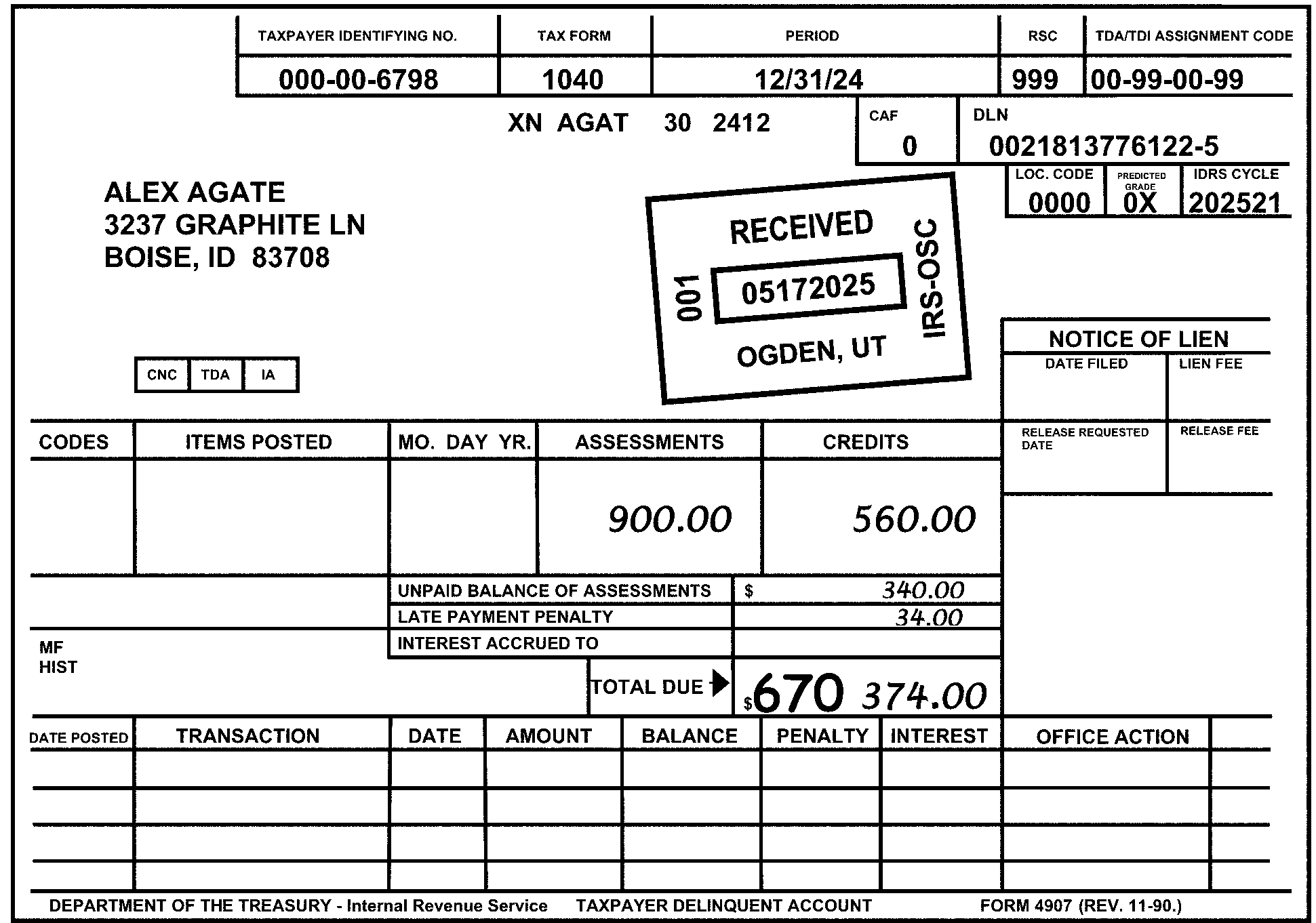
After all amount entries have been coded or "X" ed, add any secondary amount, any "X" ed Failure to Pay, or "X" ed interest amount to the TC 670 amount. Be sure that the total of the TC 670 (Subsequent Payment) and any non "X" ed amount equals the green-edited (Remittance) amount. (See Figure 3.11.10-21 .)
-
In most cases, the green edited (Remittance) amount should not be altered. Forms 3244, Payment Posting Voucher, with Doc Code 18 are specifically excluded from the above requirements.
-
When a document or posting voucher with the remittance not green-rockered is discovered in a block of remittance documents, compare the balance due amount on the document with the Form 813, Document Register listing. If the amounts agree, green-rocker the amount on the document. If the amounts do not agree, take no action. The error will be identified during computer processing as block out of balance, and will be corrected by the Blocks Out of Balance (BOB) function.
-
When a manual refund is issued through IDRS, a Form 3753 (Manual Refund Posting Voucher) is prepared to update the Master File.
-
These documents are numbered with Doc Code 45. Blocking series 200–299 are used for regular manual refund and 300–399 are used for issuing refunds from Form 4466, Corporation Application for Quick Refund of Overpayment of Estimated Tax. (See Exhibit 3.11.10-26.)
-
Form 3753, Manual Refund Posting Voucher, is preprinted with primary TC 840 (Manual Refund) and secondary TC 770 (Credit Interest Due Taxpayer).
-
TC 840 must be underlined in red. It must also be present on the Form 813 which has the block.
-
If the TC 770 has been deleted ("X" ed or circled) by another function using other than red ink, repeat the editing in red. If the TC 770 has not been previously deleted, underline the transaction code.
-
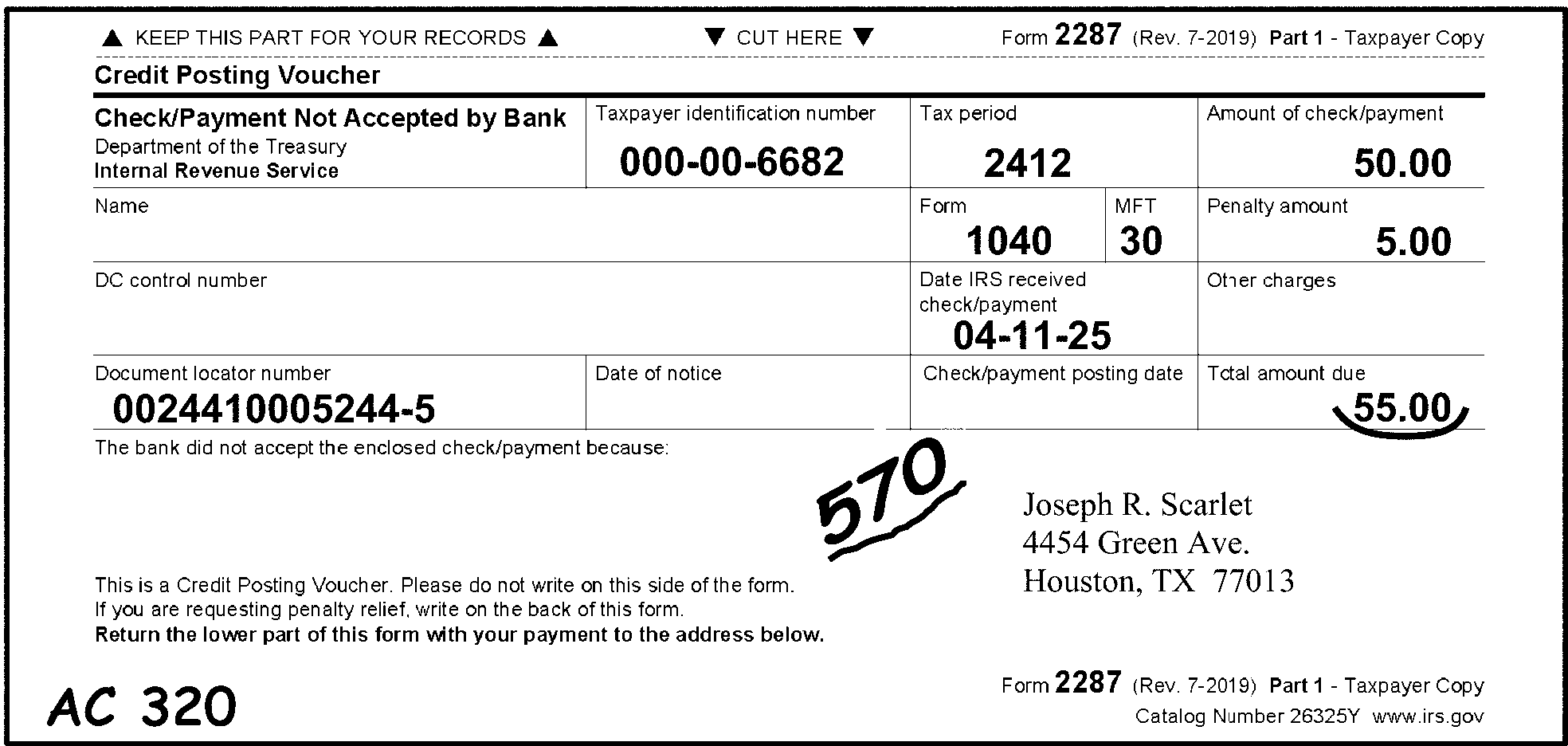
These transactions are received on Form 2287, Check/Payment Not Accepted by Bank, from the Accounting Operations. Accept the coding and amounts as entered on the document.
-
Whenever the tax module has an original electronic payment, EFTPS Payment Indicator should be used.
-
Enter "1" for EFTPS Payment Indicator in the lower right corner of the Form 2287 (or of any revenue receipts document for a payment that was originally processed electronically). Electronic payments can be identified from the original Document Locator Number (DLN) or other information on the source document.
-
See Exhibit 3.11.10-16, Form 2287, Check/Payment Not Accepted by Bank, listing the data (i.e., Name, TIN, MFT, etc.) contained and codes applied on this form (along with the location(s) of this information on the form).
-
-
The Electronic Federal Tax Payment System (EFTPS), is the government’s current system for accepting federal tax payments electronically.
-
EFTPS is not limited to accepting only FTD deposits, but can accept all tax payments.
-
EFTPS was certified for operation October 18, 1996, at the Tennessee Computing Center (now Enterprise Computing Center).
-
-
IMPORTANT: Cross referenced to this form is the CP 587, Check Not Accepted by Bank (also known as Form 2287(CG), Check Not Accepted by the Bank). The purpose of the form and or the CP notice are to notify a taxpayer that a check or payment was not accepted by the bank (due to insufficient funds or being non-negotiable).
-
Form 3809, Miscellaneous Adjustment Voucher, may be used to transfer payments from Excess Collection paper file into the Master File. Prepare Form 8758, Excess Collections File Addition, when a credit is located in the Excess Collection File (XSF) on IDRS.
-
Whenever the tax module has an original electronic payment, EFTPS Payment Indicator should be used. Currently only FLC 81 is involved. Enter 1 for EFTPS Payment Indicator.
-
See Exhibit 3.11.10-24 for Form 3809.
-
See Exhibit 3.11.10-31 for Form 8758.
-
-
Most refund cancellations are processed on a Standard Form (SF) 1098, Schedule of Cancelled or Undeliverable Checks, listing received with one or more Forms 813.
-
Coding should be done by the Accounting Operations. Be sure that the two-digit return period column has been converted to four numeric digits (YYMM). If this has not been done, follow the directions below:
-
Precede the first digit with a "7" , "8" , "9" , "0" or "1" to develop an acceptable year.
-
Precede the second digit (the month code) with a zero if the month is 1–8. Convert a blank month code to "09" , an "A" to "10" , a "J" to 11, and an "S" to 12.
-
-
The preprinted amount column should be headed with TC 841.
-
Form 3245, Posting Voucher - Refund Check Cancellation or Repayment, is used to input refund payments and occasionally cancellations. It should be pre-coded.
-
Code Form 514–B, Credit Transfer Voucher, with TC 400 (Account Transfer Out) near the transfer amount which must be zero. This is used to transfer a zero-balance account.
-
Normally, these are computer-coded preprinted settlement notices with Doc Code 17. Other acceptable posting documents, including Form 3244A, Payment Posting Voucher-Examination, Form 3244, Payment Posting Voucher, and Form 2287(CG), Check Not Accepted by Bank, require more processing.
-
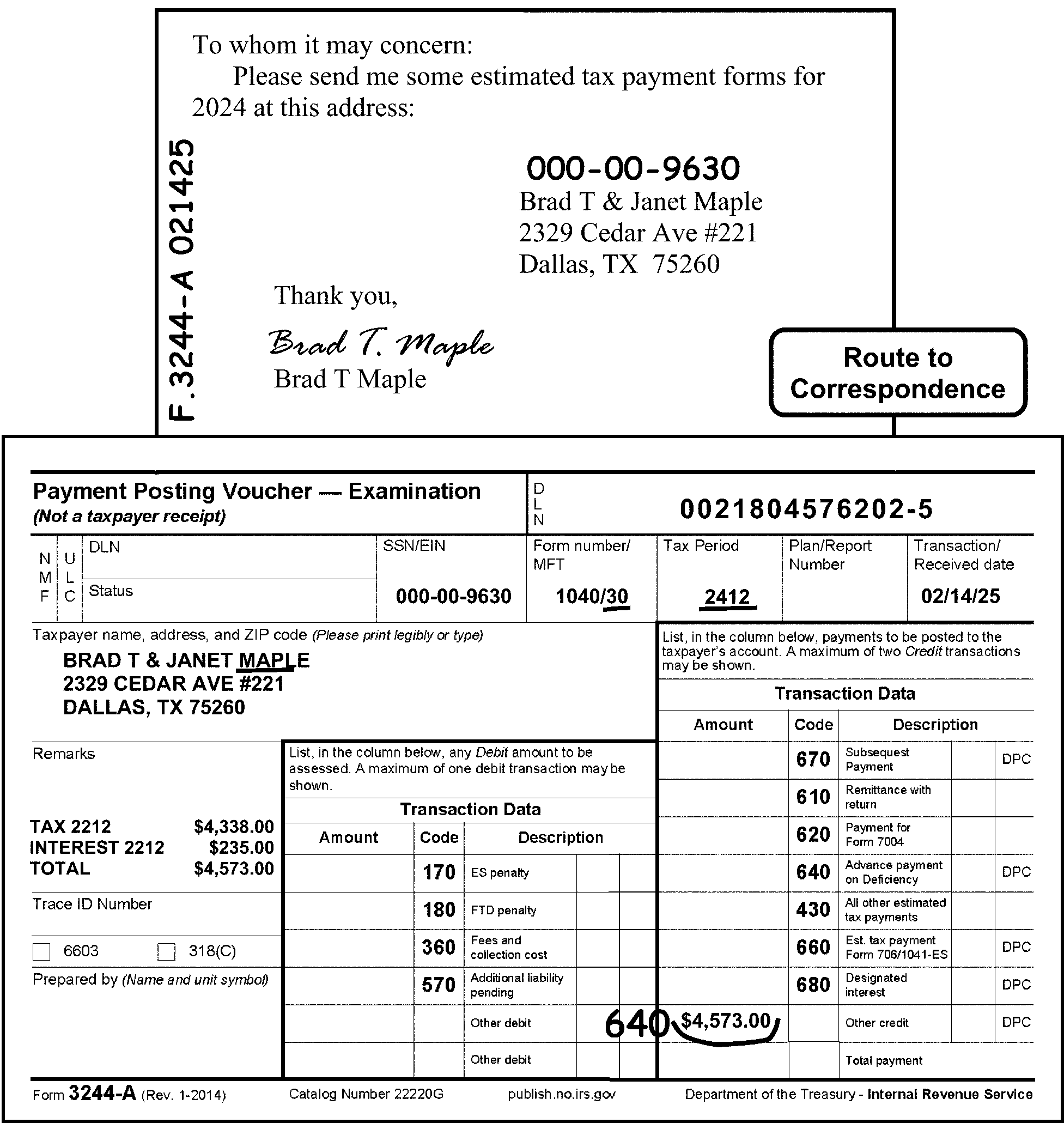
The Campus Clearing and Deposit function will route the correspondence items to the correspondence function. However, if there are attachments to posting vouchers which should be routed to correspondence, detach them and take the proper action. (See Figure 3.11.10-22.)
-
Enter secondary TC 570 (Additional Liability Pending and/or Credit Hold) on Form 2287(CG).
-
If there is no primary TC present on the document, edit TC 670 (Subsequent Payment) to the immediate left of the green-rockered remittance amount. If the document is Form 3244A, enter a primary TC 640 (Advanced Payment of Determined Deficiency or Underreporter Proposal) if the primary TC is not specified (See Figure 3.11.10-22.)
-
Code any secondary amount with the correct code unless a code is already present, e.g., TC 360 (for Fees and Collection Costs), TC 180 (for FTD Penalty), TC 270 (for underlined Failure to Pay Penalty), etc.
-
When TC 892 (IMF), Correction of TC 890 Processed in Error, is present on Form 2424, Account Adjustment Voucher, to transfer credit from an IRAF account to a joint IMF account, a one-digit code must be present in the upper right-hand corner. If it is not, enter a "1" if the Individual Retirement Account (IRA) account is for the primary taxpayer, or a "2" if the IRA account is for the secondary taxpayer. Enter "1" for EFTPS Payment Indicator. (See Exhibit 3.11.10-18, Form 2424, Account Adjustment Voucher, for location of payment indicator.)
-
Form 1041-ES, Estimated Income Tax for Estates and Trusts, is processed under MFT 05, Doc Codes 17/19, and TC 660 (Estimated Tax Payment).
-
Under certain conditions, a fiduciary administering trust account may be required to make estimated payments electronically. The transaction record on the electronic payment will have a Doc Code 97, TC 660 and FLC 81.
-
Form 1040-V, Payment Voucher, is processed under MFT 30, Doc Code 70/76, and TC 610 (Remittance with Return).
-
The Form 1040-V is used as follows:
-
To send in a payment when a taxpayer has a balance due on Line 37 of Form 1040,U. S. Individual Income Tax Return, OR
-
To send in a payment when a taxpayer has a balance due on Line 37 of Form 1040-NR,U. S. Nonresident Alien Income Tax Return.
-
The voucher will enable us to process the payment more accurately and efficiently.
-
-
Taxpayers can make a Form 1040 or Form 1040-NR payment electronically by direct debit or credit card. Paying electronically eliminates the need for the taxpayer to submit a paper Form 1040-V, Payment Voucher.
-
Form 1040-ES, Estimated Tax for Individuals, is filed by any U.S. citizen or resident who expects to owe, after subtracting withholding and credits, at least $1,000 in taxes for a subsequent tax year, and expects their withholding and credits to be less than the smaller of 90% of the tax shown on the current year tax return or 100% of the tax shown on the tax return for the preceding taxable year (110% if you are not a farmer or fisherman and the adjusted gross income shown on the return for the preceding taxable year is more than $150,000.00, or if married filing separately for the current year, more than $75,000.00).
-
Taxpayers can make a Form 1040-ES payment electronically by direct debit or credit card. Paying electronically eliminates the need for the taxpayer to submit a paper Form 1040-ES.
-
Form 1040-C, U.S. Departing Alien Income Tax Return, is used by aliens who intend to leave the United States to (1) report income received, or expected to be received, for the entire taxable year, and, (2) if required, to pay the expected tax liability on that income. Although the Form 1040-C must be filed before an alien leaves the United States, it does not count as a final return. The alien is still required to file a final return (i.e., depending upon whether they are a resident alien (Form 1040) or non-resident alien (Form 1040-NR) after their tax year ends.
-
Form 1040-ES is processed under MFT 30, Document Code 20, and TC 430 (I), Estimated Tax Declaration, OR Entity Created by TC 430.
-
Document Perfection will receive any Form 1040-ES, Estimated Tax For Individuals, which has:
-
Correspondence attached;
-
A change to the Primary SSN or Name Control; or
-
Anything that makes it unacceptable for RPS/ISRP (Remittance Processing System/Integrated Submission and Remittance Processing) processing.
-
-
All Forms 1040-C, U.S. Departing Alien Income Tax Return, will be processed as long entity. Form 1040-ES, Estimated Tax For Individuals, are processed according to the type of change that is made to the entity.
-
Some tax preparers are given permission by the IRS to submit returns on substitute forms and schedules. These substitutes must closely resemble the official forms in format. Above all, they must be acceptable to the transcription function. If the items to be transcribed are not readily recognizable for transcription, consult your supervisor.
-
If a schedule is not suitable for transcribing, transfer the necessary information to a dummy form.
-
The following sections provide information on the coding and editing of Form 1040-ES, Estimated Tax for Individuals, and Form 1040-C, U.S. Departing Alien Income Tax Return
-
The tax period is shown at the top of the form.
-
If the document or payment is for other than a current calendar year, edit the year and month, in YYMM format, to the right of the tax year designation at the top of the form. (See Figure 3.11.10-23.)
-
Always check the upper left and right area or Line 2 for the tax year ending. (See Figure 3.11.10-24.) This could be the best indication of a fiscal year or a calendar year that is not current. However, some taxpayers enter the quarter ending rather than the current year ending. If the taxpayer has entered the quarter ending that is current, disregard the information and follow the instructions (2) above. (See Figure 3.11.10-25.)
-
A document is considered a prior year if the tax period is eight (8) months or more prior to the current processing date. For example, until August 31, 2026, a 2025 Form 1040-ES is considered a current year.
-
If a prior year Form 1040-ES is discovered in the block, edit with Action Code 611 (Remittance Renumber) to have it renumbered as Document Code 17, TC 670.
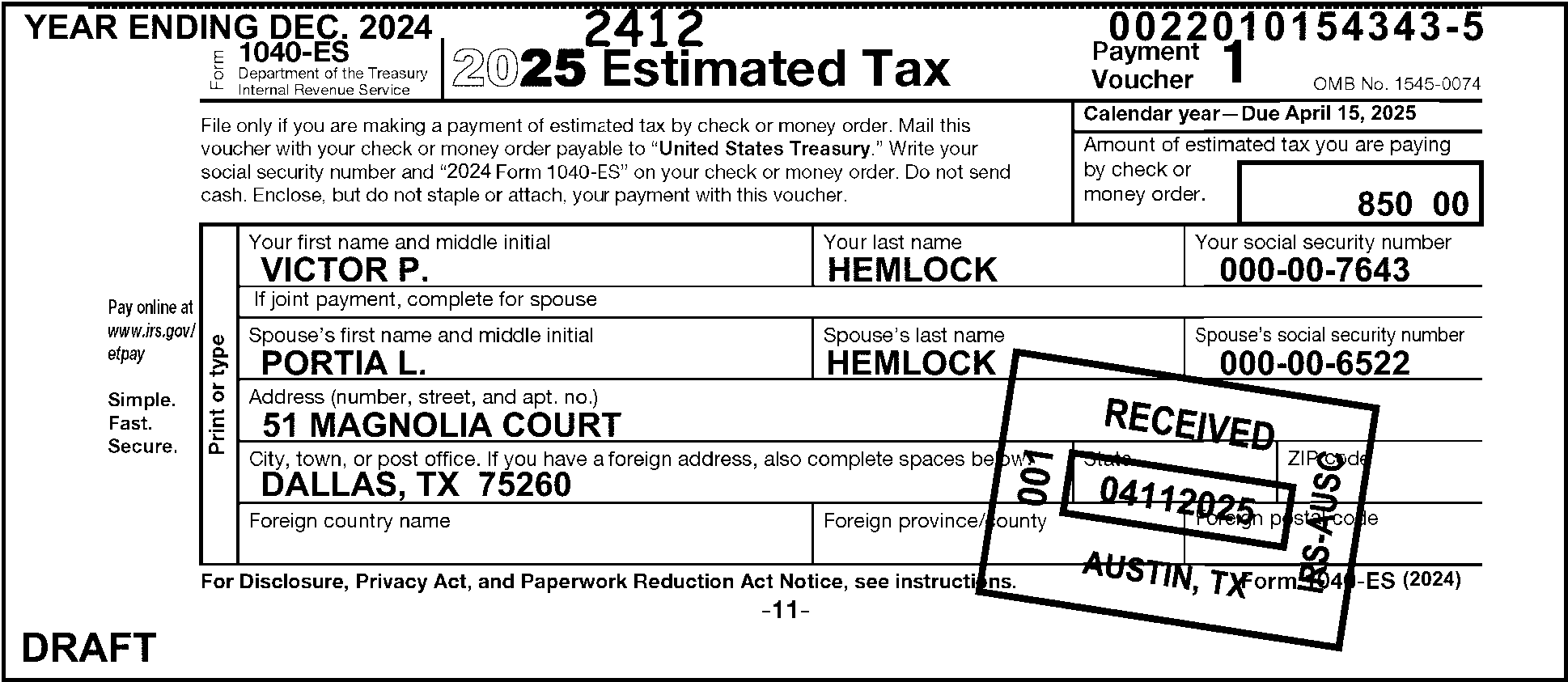
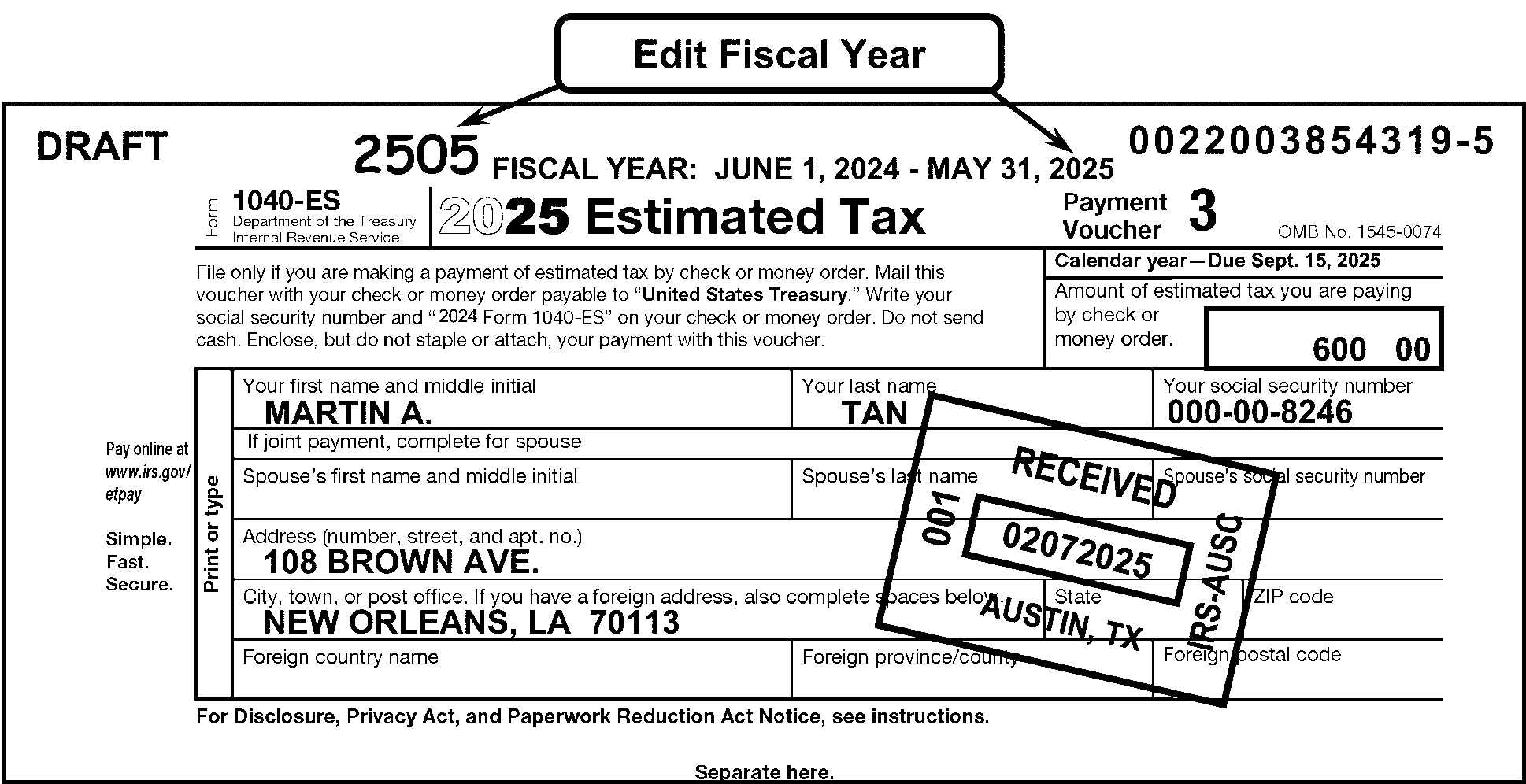
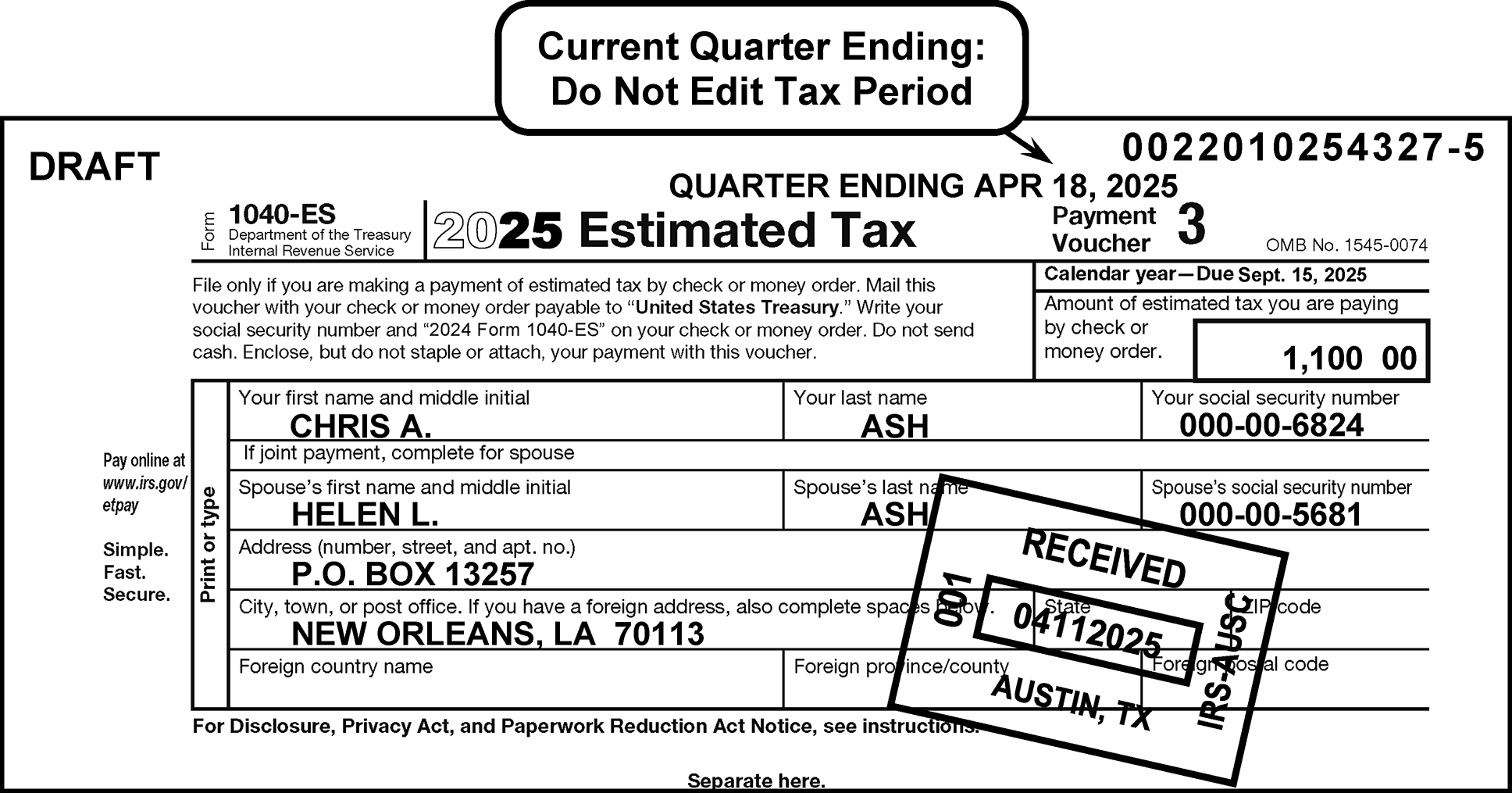
-
When editing Form 1040-ES , Estimated Tax for Individuals, with an IRS label there are five types of entity which may be used. The type of entity is decided by the name, address and SSN information supplied by the taxpayer. These five types of entity are as follows:
-
Short Entity. See IRM 3.11.10.9.2.1 for more information.
-
Partial Entity. See IRM 3.11.10.9.2.2 for more information.
-
Exception Entity. See IRM 3.11.10.9.2.3 for more information.
-
Intermediate Entity. See IRM 3.11.10.9.2.4 for more information.
-
Long Entity. See IRM 3.11.10.9.2.5 for more information.
-
-
A Form 1040-ES document is edited as a short entity when it has an IRS label with no changes, or a change only to the secondary SSN. No editing is needed for the Name Control. (See Figure 3.11.10-26.)
-
Edit the secondary SSN to the proper box on the document. If the taxpayer has written the secondary SSN in the proper place for transcription, underline it. (See Figure 3.11.10-27.)
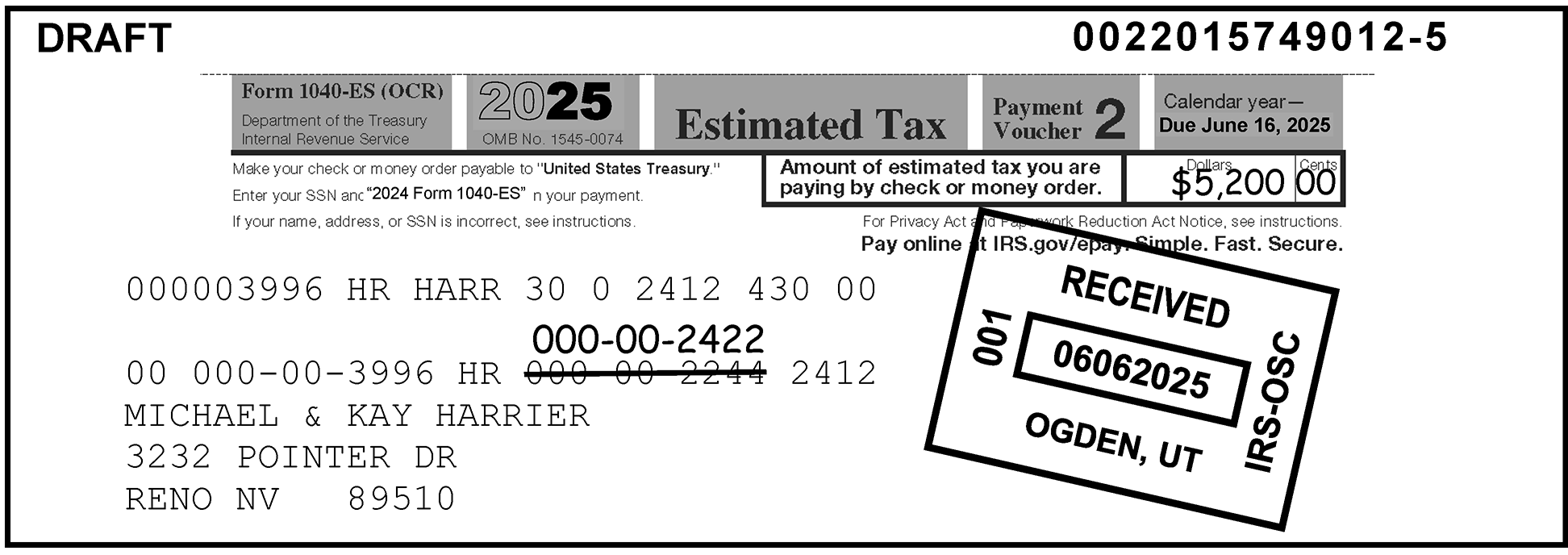
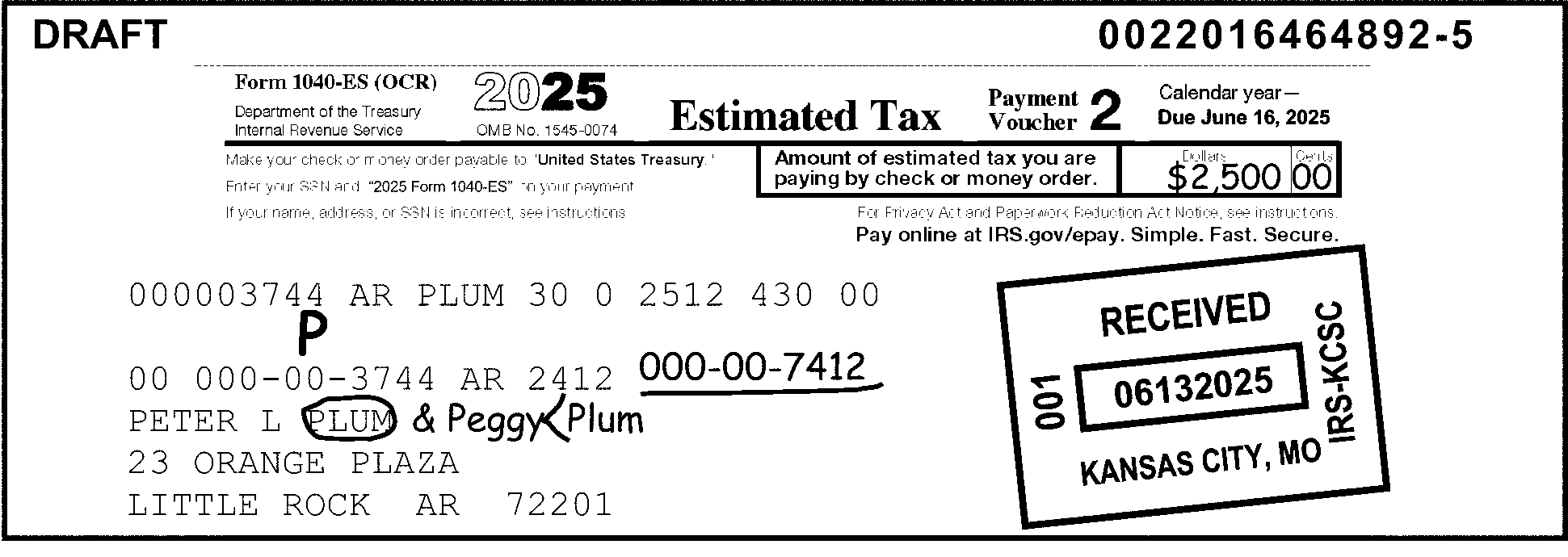
-
A Form 1040-ES document is edited as a partial entity when it has an IRS label with a change to the first name line other than to the Name Control, or a deletion or change to the second name line, but no change to the primary SSN. (See Figure 3.11.10-27.)
-
Edit a "P" above the primary SSN and a bracket in front of the last name. Underline a second name line if present.
-
A Form 1040-ES document is edited as an exception entity when it has an IRS label with a change to the primary Name Control, but no change to the primary SSN.
-
Edit an "E" above the primary SSN and a bracket in front of the new Name Control. Underline a second name line if present. (See Figure 3.11.10-28.)
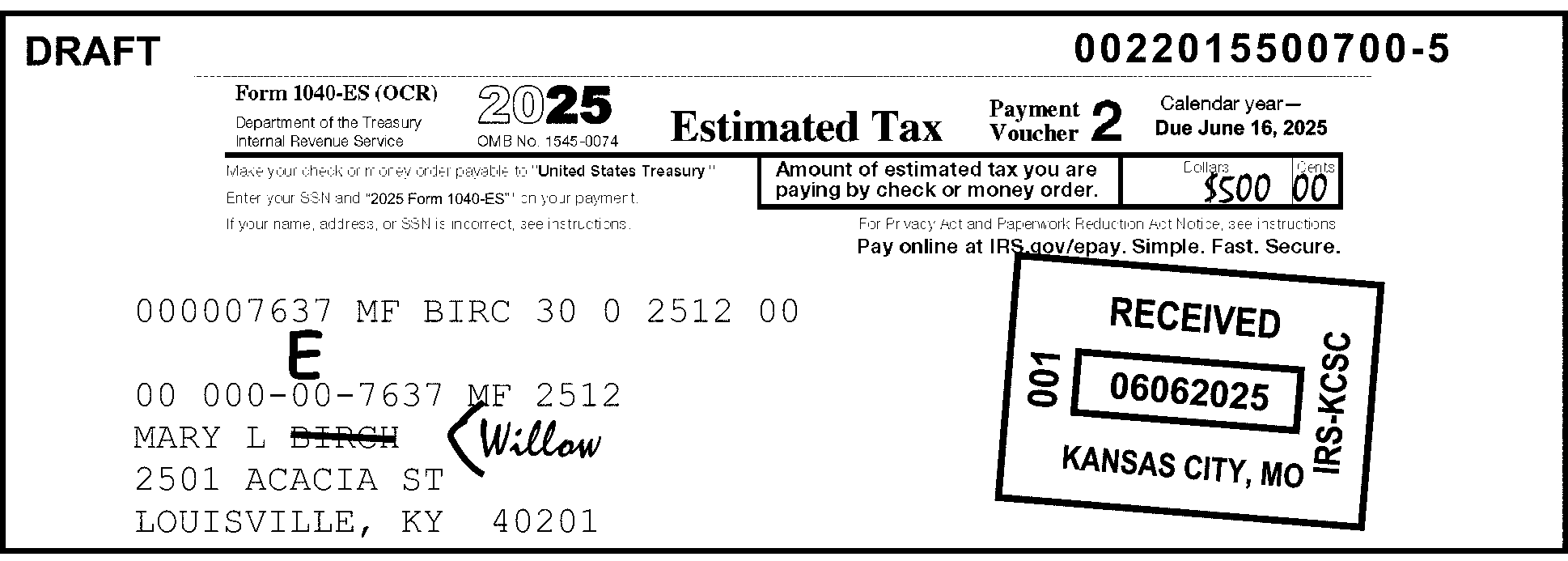
-
A Form 1040-ES document is edited as an intermediate entity when it has an IRS label with a change only to the street address, city, state, or ZIP Code.
-
Edit a check mark above the primary SSN. (See Figure 3.11.10-29.)
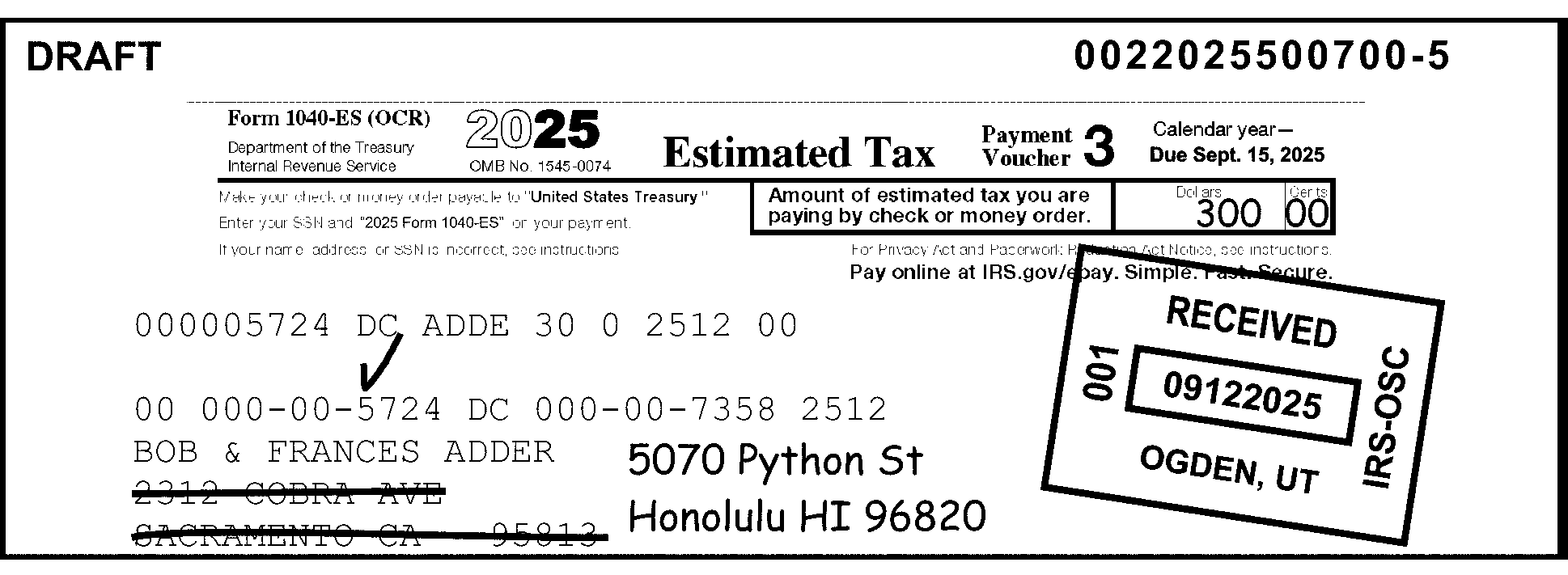
-
A Form 1040-ES document is edited as a long entity when it has an IRS label with a change in the primary SSN. (See Figure 3.11.10-30.)
-
Edit an open bracket before the last name (surname). If a suffix such as Junior is present, edit a closed bracket after the last name. (See Figure 3.11.10-31.)
-
If the primary taxpayer name is crossed off the label, circle the primary name, SSN, and Check Digits. Edit for long entity using the secondary entity data. (See Figure 3.11.10-32.) If this situation occurs for the secondary taxpayer, delete the secondary name and SSN, and edit for partial entity. (See Figure 3.11.10-33.)
-
If the taxpayer is adding a spouse to the label and selects the addition is to be used as the primary SSN, circle out the Check Digits and edit for long entity.
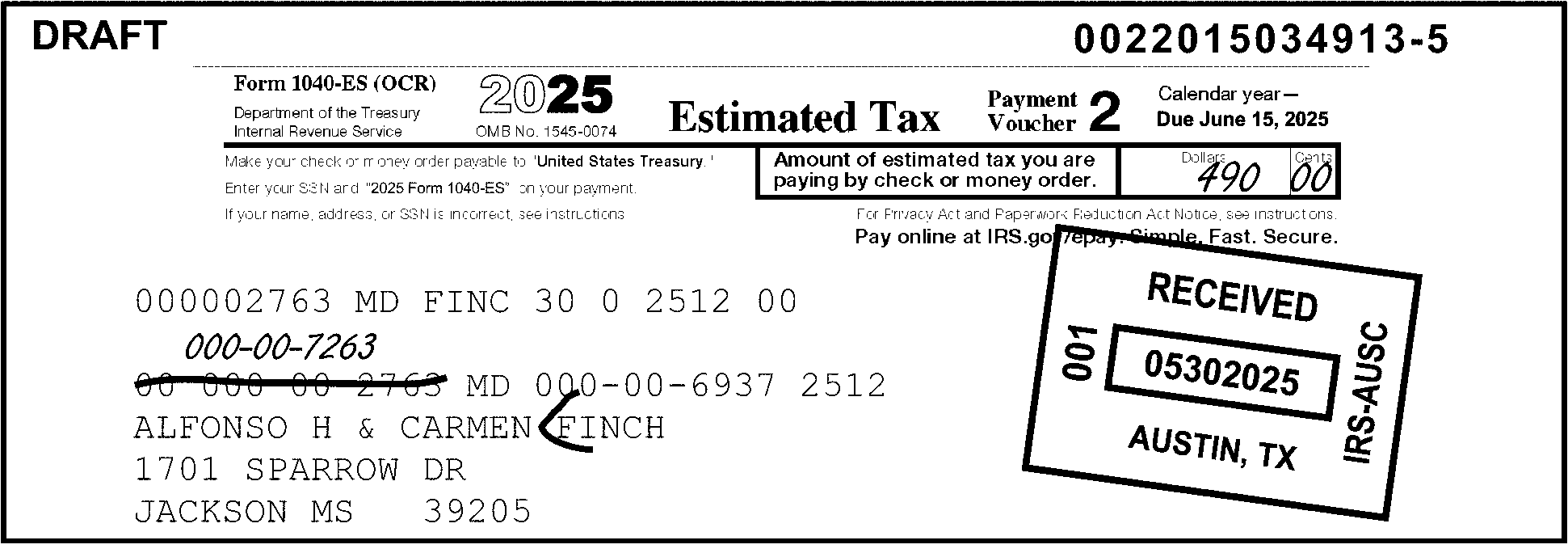
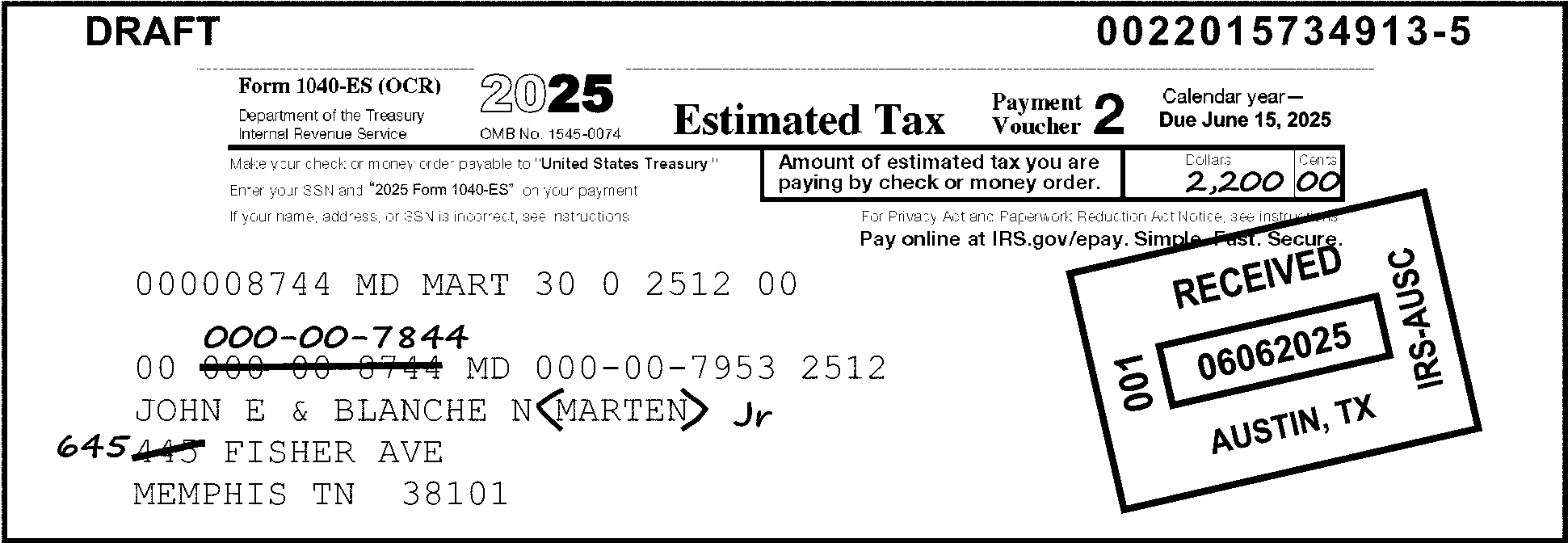
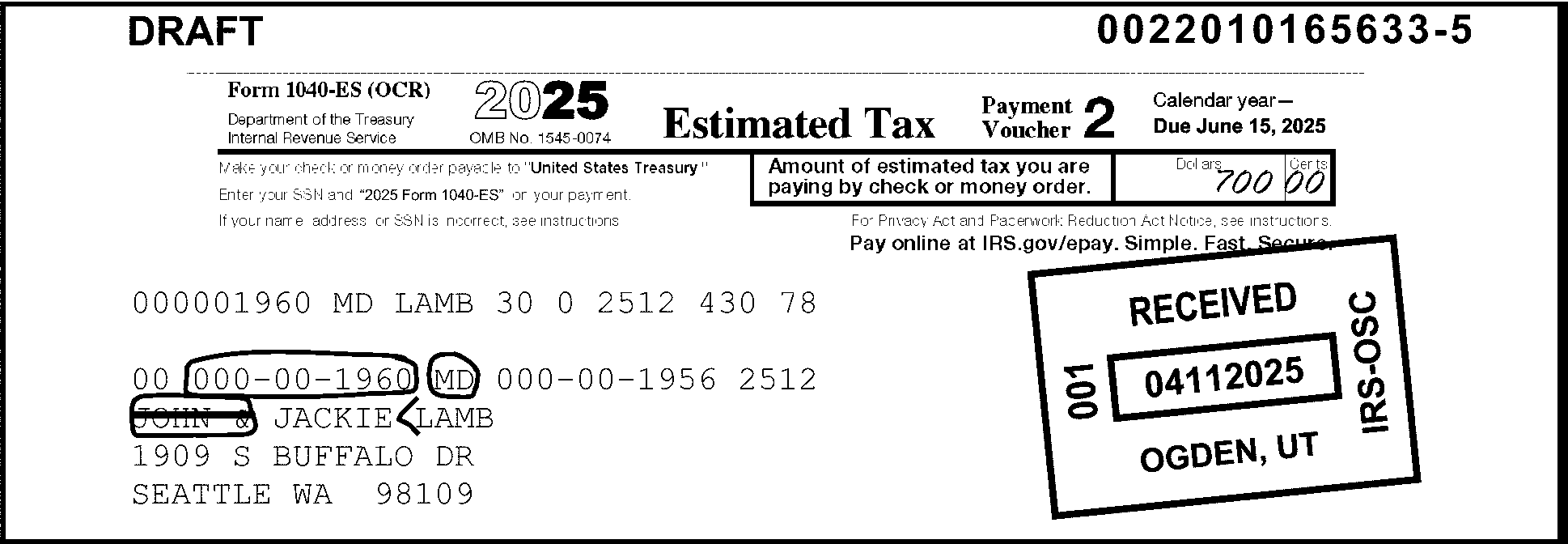
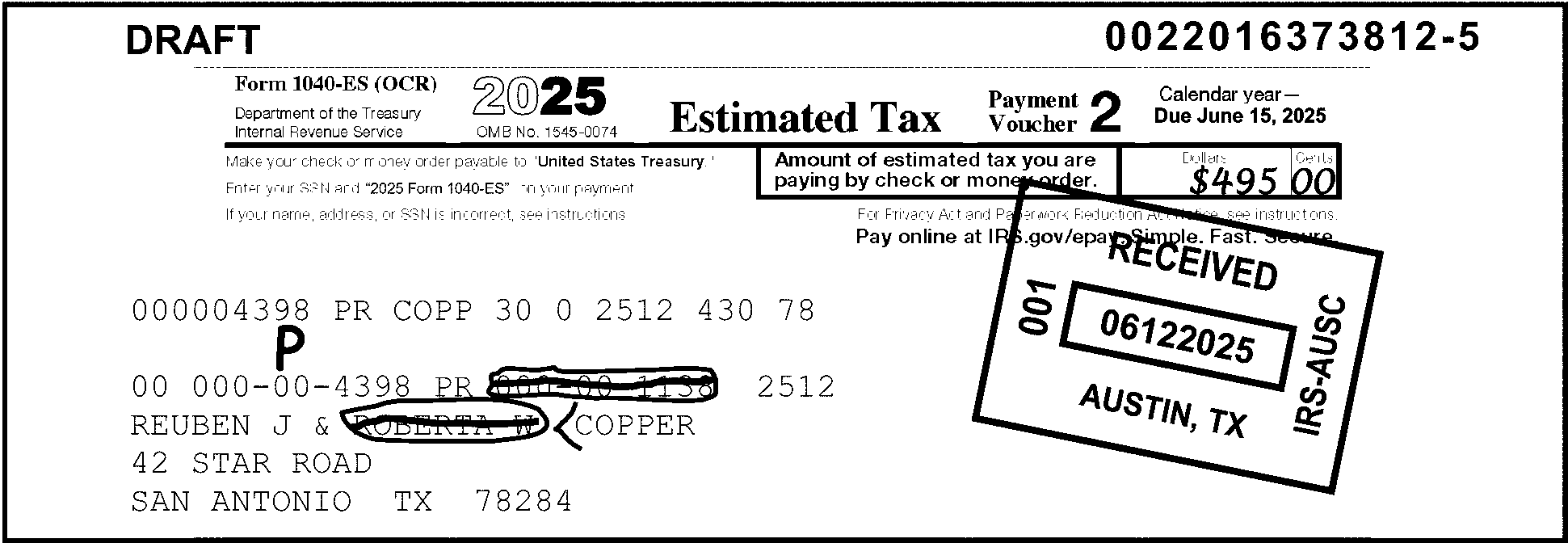
-
When editing a Form 1040-ES document without an IRS label, changes may be required for various reasons, to either the name line, social security number, and or the address.
-
When editing the name line of a Form 1040-ES document without an IRS label, edit an open bracket before the taxpayer's last name (surname).
-
If the voucher is jointly filed and the last names are different, edit brackets around the primary taxpayer's surname. For example, John E. (Holly) & Mary J. Palm. (See Figure 3.11.10-34.)
-
If the taxpayer's last name is shown first, arrow it to appear last. (See Figure 3.11.10-35.)
-
Edit the name line to 35 characters by using the initials for middle names, if necessary.
-
Always underline the second name line (AIL), i.e., c/o name. (See Figure 3.11.10-36.)
-
If the taxpayer enters an EIN instead of an SSN, edit Action Code 320 (Entity Control) in the bottom margin of the voucher.
-
If Form 1040-ES is being used for an Estate, Trust or Corporation it must be rejected to be renumbered. Edit Action Code 611 (Remittance Renumber) in the bottom margin of the voucher. (See Figure 3.11.10-37.)
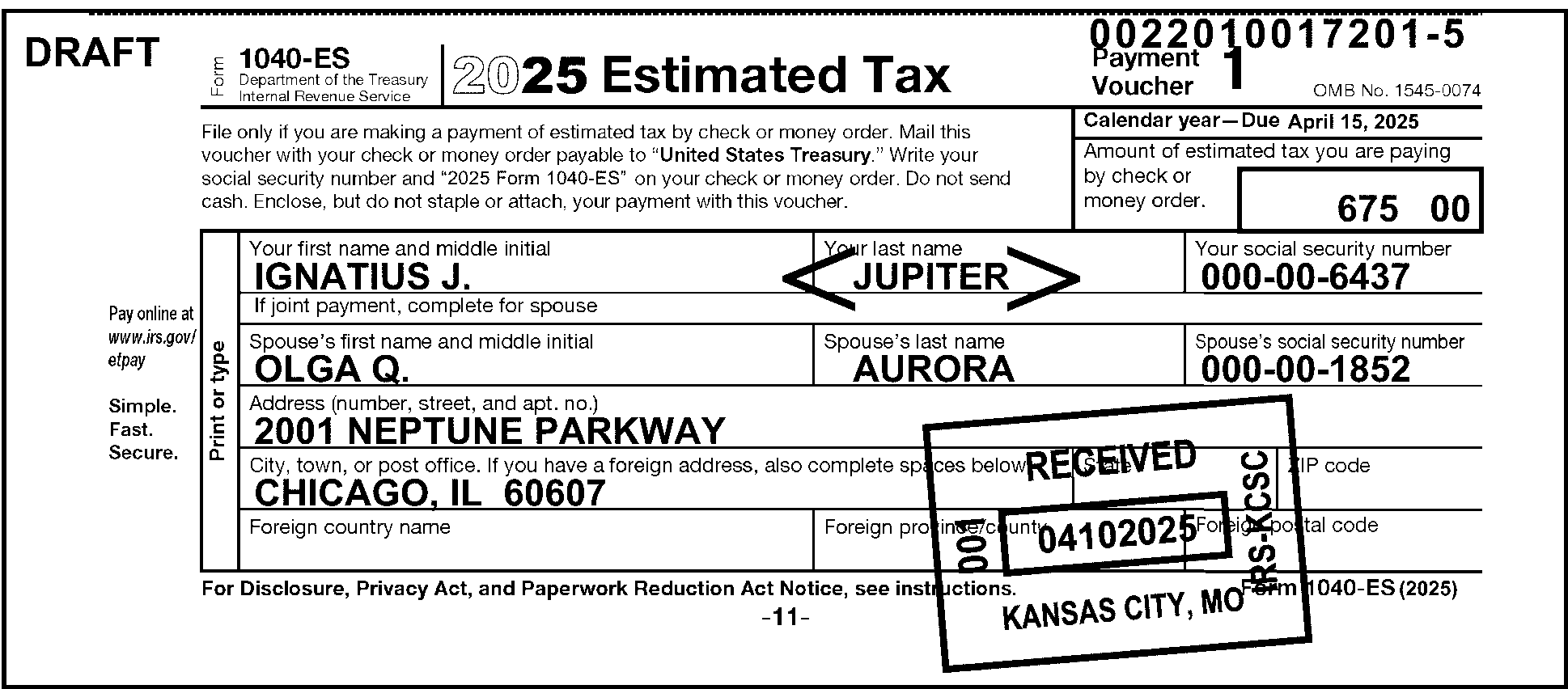
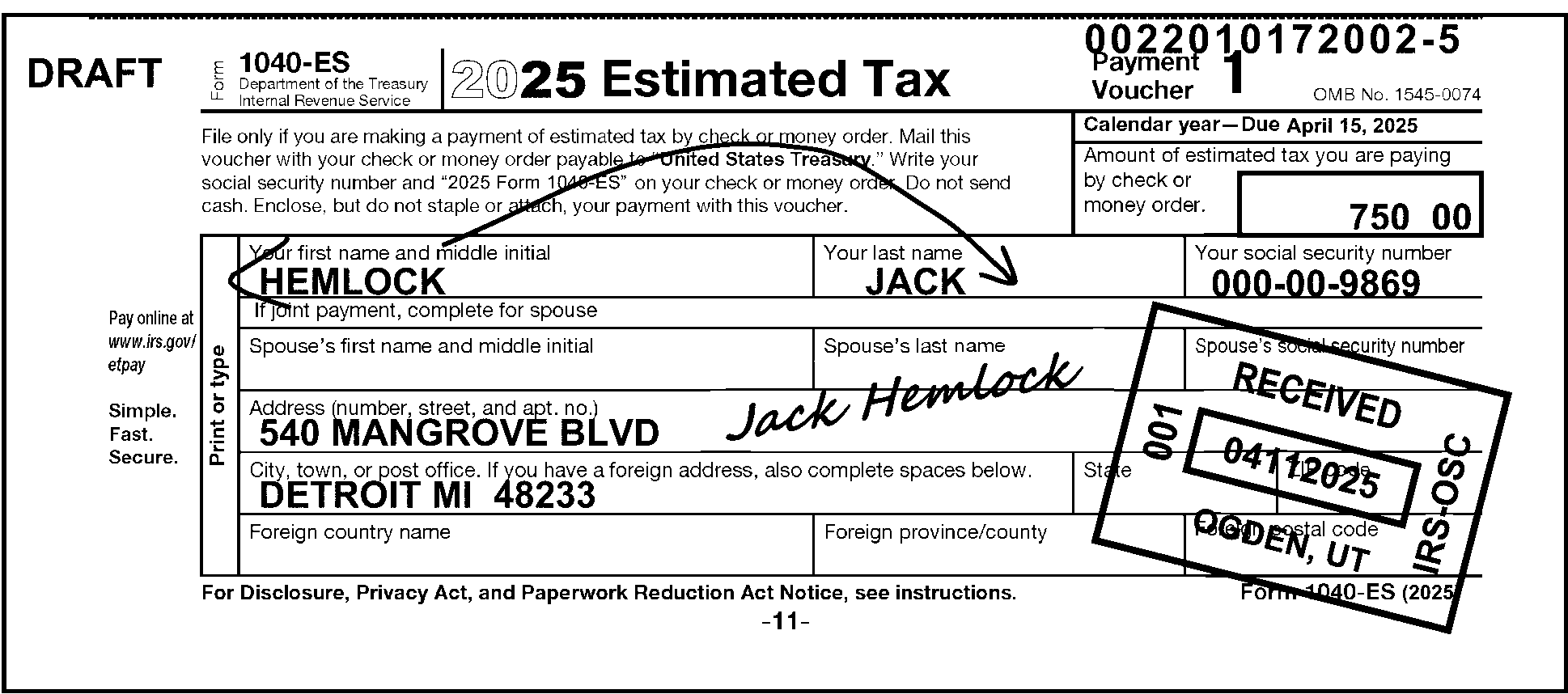
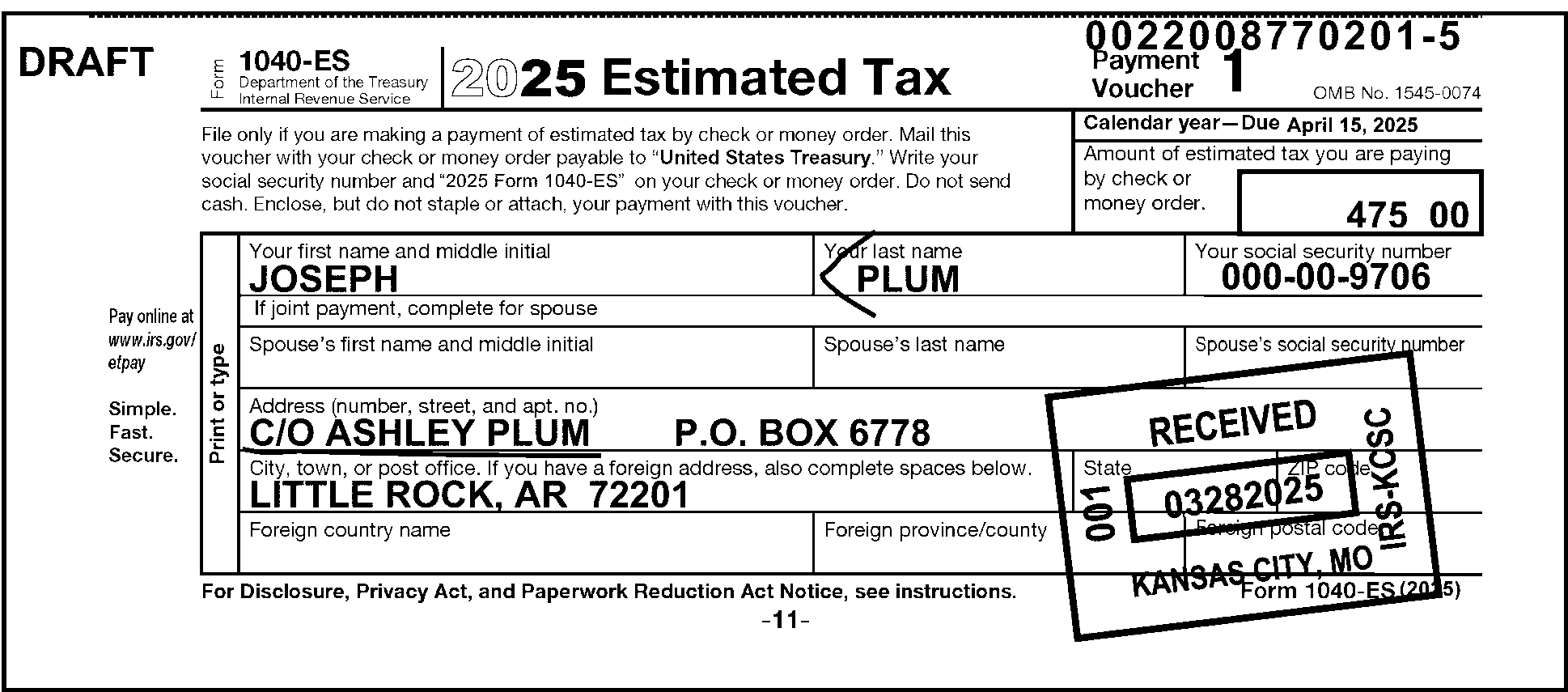
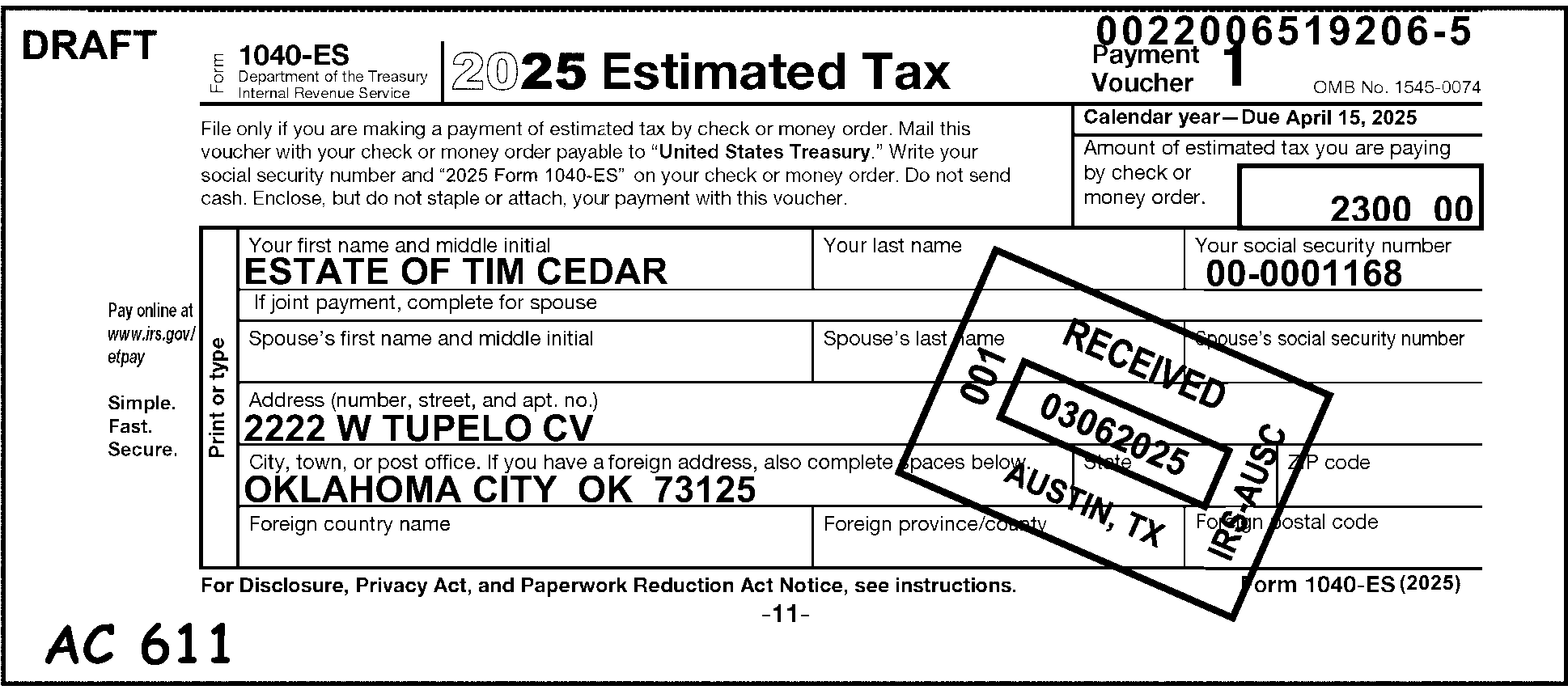
-
If there is an indication that either the primary taxpayer or spouse died during the current year, i.e., date of death given or "decd" written after the taxpayer's name on a IRS pre-printed label, edit "DECD" after the taxpayer's given name on a joint caption voucher or after the surname on a single caption voucher. Close bracket the last name on a single caption voucher. (See Figure 3.11.10-38.)
-
Edit any legal representative name if present to the second name line and underline it. (See Figure 3.11.10-39.)
-
If there is an indication that the primary taxpayer died prior to the current year or is crossed off an IRS pre-printed label by the taxpayer, delete the primary SSN, name, and Check Digits. Edit for long entity and edit the secondary SSN to the primary SSN block.
-
If there is an indication that the secondary taxpayer died prior to the current year or is crossed off the label, circle out the secondary SSN and name. Edit for partial entity.
-
If the date of death is not shown, treat the same as a current year death.
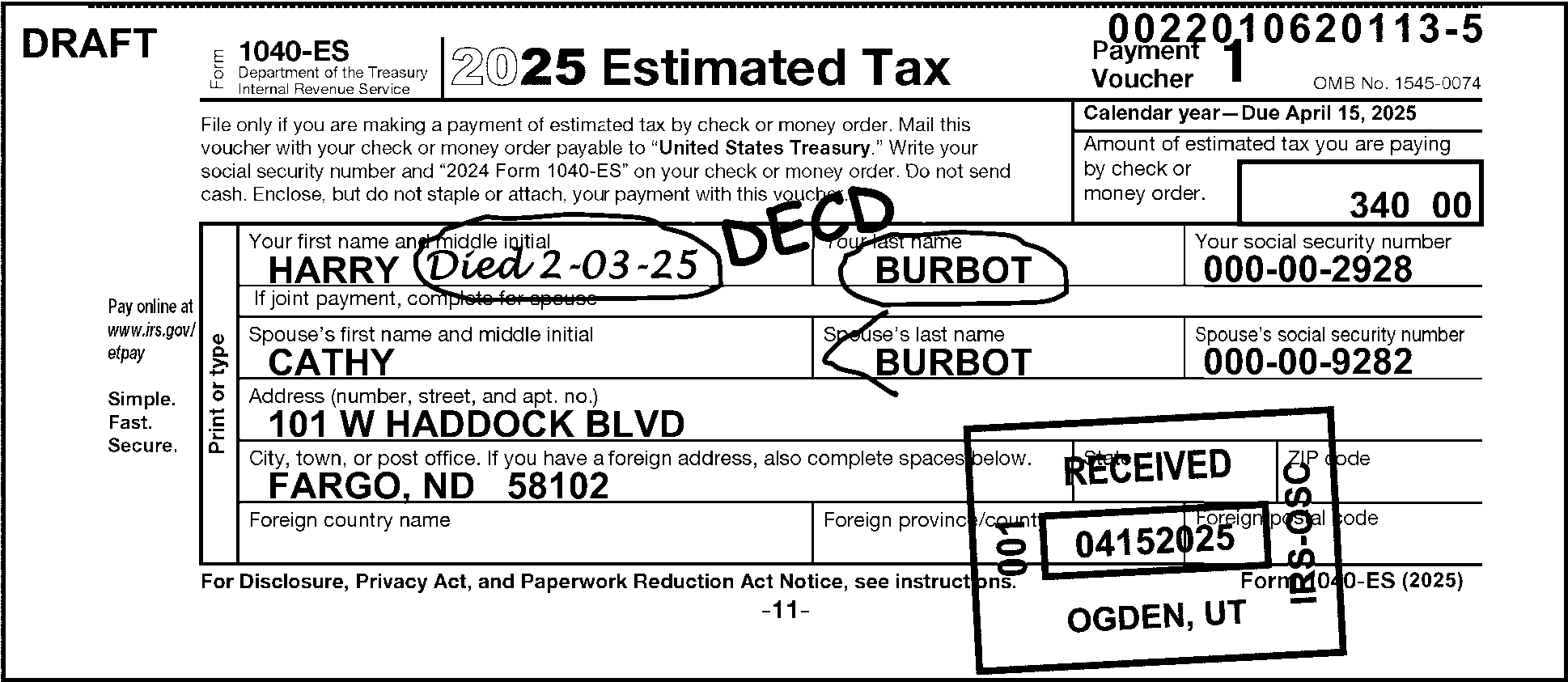
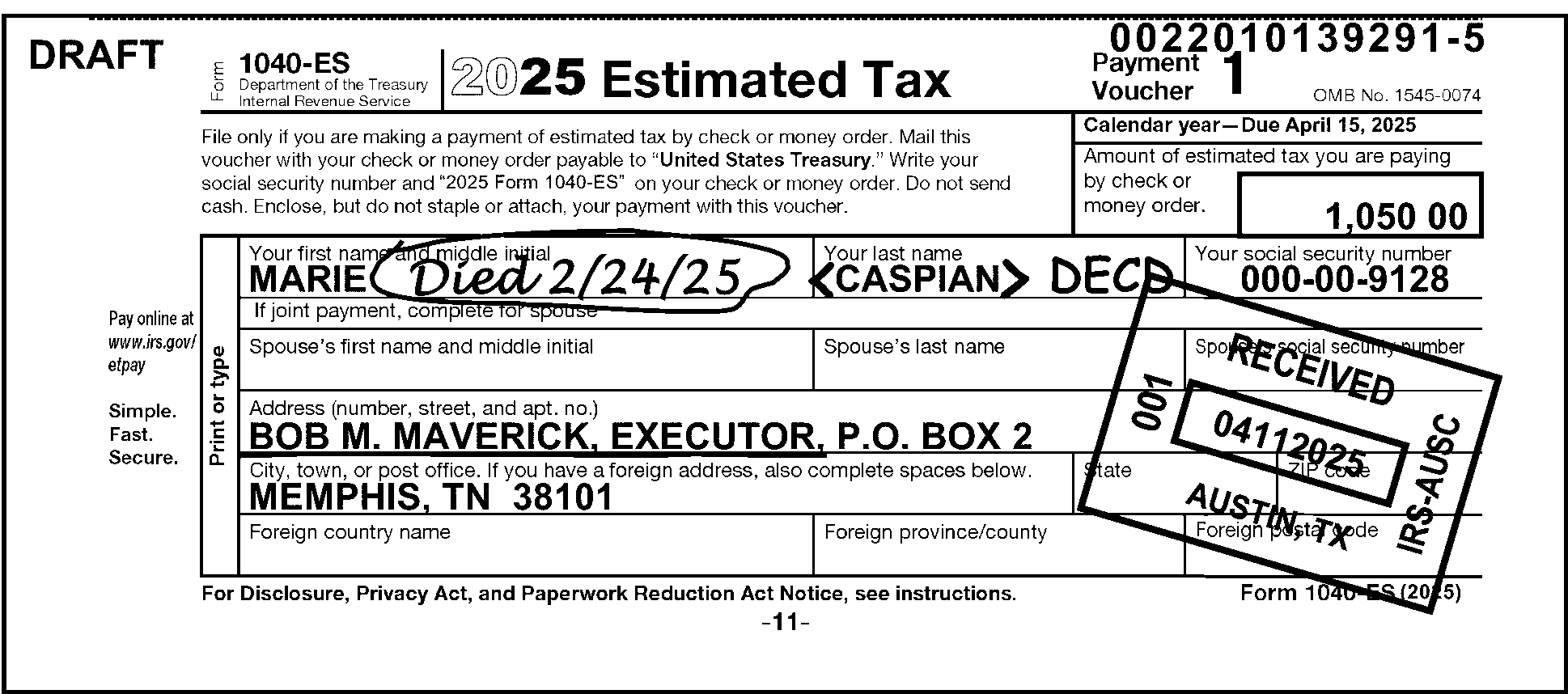
-
SSNs must be 9 numeric digits in an SSN format, XXX-XX-XXXX. The valid ranges for the first 3 digits of the SSN are 001–899.
-
If the primary SSN begins with a "9" (in an SSN format) this is an indication of a temporarily assigned identification number:
-
ITIN - the 4th and 5th digit for an ITIN will range between 50-65, 70-88, 90-92 or 94-99; or
-
IRS Number (IRSN) - the 4th and 5th digit for an IRSN will be 01, 02, 03, 04, 05, 06, 07, 08, 09, 10, 17, 18, 19, 28, 29, 37, 38, 39, 49, 66, or 89, depending on the campus which issued it.
-
-
If the primary SSN is invalid or missing, search the document and attachments for another valid SSN, and edit it in the proper position for transcription.
-
If a valid SSN is not present, request IDRS research using Command Code (CC) NAMEI/NAMES for the name and address on the voucher. If an SSN can't be found through research, edit Action Code 320 (Entity Control) in the bottom margin of the voucher.
-
If an Air/Army Post Office (APO)/Fleet Post Office (FPO)/Diplomatic Post Office (DPO) address appears on the street address line, circle it and edit the 5-digit zip code into the zip code area.
-
Form 1040-ES vouchers due in January, with only an address change (street, city, state, ZIP) will be edited as short entity. The address change will be perfected when Form 1040 is filed.
-
If home address is missing, search attachments and edit if found.
-
The Postal Service established new address requirements for APO/FPO addresses. If the old address appears (i.e., APO New York, NY 091XX) it must be converted to the new state code abbreviation based on the Zip Code (i.e., the previous example would be converted to APO AE 091XX). "APO" or "FPO" only in the city name.
Designation State Code Geographic Location ZIP Code Range APO/FPO AA Americas 340XX APO/FPO AE Europe 090XX–098XX APO/FPO AP Pacific 962XX–966XX -
Foreign Address—If a foreign address is found on a document in any campus other than the Austin Campus, process as short entity.
-
Austin Campus only—Edit the foreign country in the city and state field with a slash (/) before and after the country, followed by a $.
-
Underline the Address as the AIL.
-
Edit the foreign country with a slash (/) before and after the country followed by a dollar sign ($).
-
-
See IRM 3.21.3, Individual Income Tax Returns, for more instructions on editing an AIL, foreign address and country abbreviation.
-
See Exhibit 3.11.10-1, Valid Tax Class---BMF/IMF MFT Code Transaction Codes---Tax Period Tables, through Exhibit 3.11.10-3, Valid Transaction Codes (TCs) By MFT, to illustrate the valid relationships throughout Project 710--Revenue Receipts.
-
The Valid Tax Class-MFT Codes—Tax Period Table (see Exhibit 3.11.10-1, Valid Tax Class--BMF/IMF MFT Code---Tax Period Tables, illustrates the different taxes which are processed through Revenue Receipts. It also illustrates the valid tax class, tax return identification (number), MFT code, the tax period ending, format code and the earliest ending tax period.
-
The Valid Transaction Codes—Document Codes Table (see Exhibit 3.11.10-2, Valid Transaction Codes---Document Codes Table, lists all valid combinations of the transaction codes with document codes as they relate to Revenue Receipts.
-
The Valid Transaction Code—MFT Code Table (see Exhibit 3.11.10-3, Valid Transaction Codes (TCs) By MFT, lists all valid combinations of the transaction codes with MFT codes as they relate to Revenue Receipts.
-
The Julian Date Calendar, Perpetual and Leap Year (see Exhibit 3.11.10-4) lists the entire list of three-digit numbers assigned to the individual days of the year for the correct perpetual calendar. The numbers range from 001 to 365 for a 365-day Perpetual calendar year (or from 001 to 366, for the correct leap year calendar). This exhibit provides cross reference chart information by month and date to decide the Julian Date for the sixth, seventh, and eighth digits for in the processing document's DLN.
-
The following table shows the valid tax class, MFT code and tax period of the BMF Master File (BMF) forms information processed through Revenue Receipts. The table lists the following items: the BMF Master File Form Number; the MFT Code; the Tax Class; the Document Code; the Tax Period Ending Month (MM); the tax Year Format, such as YYYYMM; and the earliest Ending Tax Period.
VALID TAX CLASS--BMF MFT CODES--TAX PERIOD TABLE
| BMF FORM NUMBER | MFT CODE | TAX CLASS | DOC CODE | TAX PERIOD ENDING (MM) | TAX YEAR FORMAT CODE | EARLIEST ENDING TAX PERIOD |
|---|---|---|---|---|---|---|
| CT-1 | 09 | 7 | 11 | 03, 06, 09, 12 (Prior to 197601) |
YYYYMM | 196203 |
| CT-1 | 09 | 7 | 11 | 12 (197612 and after) |
YYYY12 | 197612 |
| 11 | 61 | 4 | 11 | 01 - 12 | YYYYMM | N/A |
| 11-B | 62** | 4 | N/A | 01 - 12 | YYYYMM | N/A |
| 11-C | 63*** | 4 | 03 | 01 - 12 | YYYYMM | 196101 |
| 706 | 52 | 5 | 06 | 00 | 000000 | 198212 |
| 706GS(D) | 78* | 5 | 59 | 12 | YYYY12 | 198612 |
| 706GS(T) | 77 | 5 | 29 | 12 | YYYY12 | 198612 |
| 706NA | 52 | 5 | 05 | 00 | 000000 | N/A |
| 709 | 51 | 5 | 09 | 12 (Prior to 197101) |
YYYY12 | 196112 |
| 709 | 51 | 5 | 09 | 03, 06, 09, 12 (After 197012 and Prior to 198201) |
YYYYMM | 197103 |
| 709 | 51 | 5 | 09 | 12 (After 198112) |
YYYY12 | 198212 |
| 709-NA | 51 | 5 | 08 | 12 (After 202312) |
YYYYMM | 202412 |
| 720 | 03 | 4 | 20 | 03, 06, 09, 12 | YYYYMM | 196203 |
| 730 | 64*** | 4 | 13 | 01 - 12 | YYYYMM | 196101 |
| 940 | 10 | 8 | 39, 40 | 12 | YYYY12 | 196112 |
| 940-EZ | 10 | 8 | 38 | 12 | YYYY12 | 198912 |
| 940-EZ(V) | 10 | 8 | 70, 76 | 12 | YYYY12 | 199112 |
| 940PR | 10 | 8 | 40 | 12 | YYYY12 | 196112 |
| 940-V | 10 | 8 | 70, 76 | 12 | YYYY12 | 199112 |
| 941 | 01 | 1 | 41 | 03, 06, 09, 12 | YYYYMM | 196203 |
| 941 | 01 | 1 | 41 | 03, 06, 09, 12 | YYYYMM | 0000*** |
| 941 FEDTAX | 01*** | 1 | 19 | 03, 06, 09, 12 | YYYYMM | 199203 |
| 941PR | 01 | 1 | 41 | 03, 06, 09, 12 | YYYYMM | 196203 |
| 941SS | 01 | 1 | 41 | 03, 06, 09, 12 | YYYYMM | 196203 |
| 941V | 01 | 1 | 70 | 03, 06, 09, 12 | YYYYMM | 199103 |
| 943 | 11 | 1 | 43 | 12 | YYYY12 | 196112 |
| 943PR | 11 | 1 | 43 | 12 | YYYY12 | 196112 |
| 943-SS | 11 | 1 | 43 | 12 | YYYY12 | 196112 |
| 943-V | 11 | 1 | 70, 76 | 12 | YYYY12 | 199112 |
| 944 | 14 | 1 | 17, 19 | 12 | YYYY12 | 200612 |
| 945 | 16 | 1 | 44 | 12 | YYYY12 | 199412 |
| 945-V | 16 | 1 | 70, 76 | 12 | YYYY12 | 199412 |
The following table is a continuation showing the valid tax class, MFT code and tax period of the forms information processed through Revenue Receipts. The table lists the following items: the BMF Master File Form Number; the MFT Code; the Tax Class; the Document Code; the Tax Period Ending Month (MM); the Tax Year Format, such as YYYYMM; and the earliest Ending Tax Period.
VALID TAX CLASS--BMF MFT CODES--TAX PERIOD TABLE
| BMF FORM NUMBER | MFT CODE | TAX CLASS | DOC CODE | TAX PERIOD ENDING (MM) | TAX YEAR FORMAT CODE | EARLIEST ENDING TAX PERIOD |
|---|---|---|---|---|---|---|
| 990 | 67 | 4 | 90, 09 | 01 - 12 | YYYYMM | 197012 |
| 990-C | 02 | 3 | 92 | 01 - 12 | YYYYMM | 196112 |
| 990-EZ | 67 | 4 | 09 | 01 - 12 | YYYYMM | 197012 |
| 990-PF | 44 | 4 | 91 | 01 - 12 | YYYYMM | 197001 |
| 990-T | 34 | 3 | 93 | 01 - 12 | YYYYMM | 196112 |
| 1041 | 05 | 2 | 44 | 01 - 12 | YYYYMM | 196112 |
| 1041-ES | 05 | 2 | 17, 19 | 01 - 12 | YYYYMM | 198712 |
| 1041-A | 36 | 4 | 81 | 01 - 12 | YYYYMM | 197012 |
| 1042 | 12 | 1 | 25 | 12 | YYYY12 | 198512 |
| 1065 | 06 | 2 | 65 | 01 - 12 | YYYYMM | 196112 |
| 1066 | 07 | 3 | 60 | 12 | YYYY12 | 198712 |
| 1120 | 02 | 3 | 10, 11 | 01 - 12 | YYYYMM | 196112 |
| 1120-A | 02 | 3 | 09 | 01 - 12 | YYYYMM | 196112 |
| 1120-C | 02 | 3 | 92 | 01 - 12 | YYYYMM | 196112 |
| 1120-F | 02 | 3 | 66, 67 | 01 - 12 | YYYYMM | 196112 |
| 1120FSC | 02 | 3 | 07 | 01 - 12 | YYYYMM | 196112 |
| 1120-ND | 02 | 3 | 08 | 01 - 12 | YYYYMM | 196112 |
| 1120PC | 02 | 3 | 13 | 01 - 12 | YYYYMM | 198701 |
| 1120REIT | 02 | 3 | 12 | 01 - 12 | YYYYMM | 198701 |
| 1120RIC | 02 | 3 | 05 | 01 - 12 | YYYYMM | 198701 |
| 1120-S | 02 | 3 | 16 | 01 - 12 | YYYYMM | 196112 |
| 1120SF | 02 | 3 | 06 | 01 - 12 | YYYYMM | 198408 |
| 2290 | 60*** | 4 | 95 | 01 - 12 | YYYYMM | 196101 |
| 4638 | 58* | 4 | N/A | 01 - 12 | YYYYMM | 197007 |
| 4720 | 50 | 4 | 71 | 01 - 12 | YYYYMM | 197001 |
| 5227 | 37 | 4 | 83 | 01 - 12 | YYYYMM | 197001 |
| 5330 | 76 | 4 | 35 | 01 - 12 | YYYYMM | 198412 |
| 5500 | 74 | 4 | 17, 19, 51 | 01 - 12 | YYYYMM | 199101 |
| 8038 | 46 | 3 | 61 | 01 - 12 | YYYYMM | 198412 |
| 8038-G | 46 | 3 | 62 | 01 - 12 | YYYYMM | 198412 |
| 8038-GC | 46 | 3 | 72 | 01 - 12 | YYYYMM | 198412 |
| 8038-T | 46 | 3 | 74 | 01 - 12 | YYYYMM | 198412 |
| 8038-CP | 46 | 3 | 88 | 01 - 12 | YYYYMM | 200902 |
| 8038-B | 85 | 3 | 85 | 01 - 12 | YYYYMM | 200902 |
| 8038-TC | 86 | 3 | 86 | 01 - 12 | YYYYMM | 200812 |
The following table is another continuation showing the valid tax class, MFT code and tax period of the forms information processed through Revenue Receipts. The table lists the following items: the BMF Master File Form Number; the MFT Code; the Tax Class; the Document Code; the Tax Period Ending Month (MM); the Tax Year Format, such as YYYYMM; and the earliest Ending Tax Period.
VALID TAX CLASS--BMF MFT CODES--TAX PERIOD TABLE
| BMF FORM NUMBER | MFT CODE | TAX CLASS | DOC CODE | TAX PERIOD ENDING (MM) | TAX YEAR FORMAT CODE | EARLIEST ENDING TAX PERIOD |
|---|---|---|---|---|---|---|
| 8278 | 13, 55 | 2, 3 | 17, 19 | 12 | YYYY12 | 198012 |
| 8288 | 17 | 1 | 17, 19, 70, 76 | 01 - 12 | YYYYMM | 200512 |
| 8328 | 46 | 3 | 75 | 01 - 12 | YYYYMM | 198701 |
| 8609 | 48 | 3 | 02 | 01 - 12 | YYYYMM | 198701 |
| 8610 | 48 | 3 | 02 | 01 - 12 | YYYYMM | 198701 |
| 8693 | 48 | 3 | 27 | 01 - 12 | YYYYMM | 198701 |
| 8752 | 15 | 2 | 23 | 12 | YYYY12 | 199012 |
| 8813 | 08 | 1 | 17, 19 | 01 - 12 | YYYYMM | 200412 |
| 8823 | 48 | 3 | 28 | 01 - 12 | YYYYMM | 198701 |
| 8849 | 40 | 4 | 17, 19 | 01 - 12 | YYYYMM | 200401 |
| 8872 | 49 | 4 | XX | 01 - 12 | YYYYMM | 200602 |
| 8955-SSA | 75 | 4 | 33 | 01 - 12 | YYYYMM | 201201 |
| 12857 | 43 | 4 | 45 | 12 | YYYYMM | 201512 |
The following table provides explanations of the items with asterisks (*) in the above tables.
TABLE EXPLAINING ASTERISKED (*) NOTES IN ABOVE TABLES:
| * ITEM | FORM | LEGEND/EXPLANATION |
|---|---|---|
| 58* | 4638 | Zero prefix if the Taxpayer Identification Number (TIN) is a Social Security Number (SSN). Not valid after 198009. |
| 78* | 706GS(D) | Zero prefix if the Taxpayer Identification Number (TIN) is a Social Security Number (SSN). Not valid after 198009. |
| 62** | 11-B | Not valid after 198006 |
| 63*** | 11C | Transaction Code 652 (Correction of FTD (Federal Tax Deposit) Posted in Error) and Transaction Code 662 (Correction of 660 (Federal Tax Deposit) Processed in Error) |
| 64*** | 730 | Transaction Code 652 (Correction of FTD (Federal Tax Deposit) Posted in Error) and Transaction Code 662 (Correction of 660 (Federal Tax Deposit) Processed in Error) |
| 0000*** | 941 | Earliest Tax Period 0000 Transaction Code 652 (Correction of FTD (Federal Tax Deposit) Posted in Error) and Transaction Code 662 (Correction of 660 (Federal Tax Deposit) Processed in Error) |
| 01*** | 941FEDTAX | Transaction Code 652 (Correction of FTD (Federal Tax Deposit) Posted in Error) and Transaction Code 662 (Correction of 660 (Federal Tax Deposit) Processed in Error) |
| 60*** | 2290 | Transaction Code 652 (Correction of FTD (Federal Tax Deposit) Posted in Error) and Transaction Code 662 (Correction of 660 (Federal Tax Deposit) Processed in Error) |
| N/A | 8278 | Please note that Form 8278, Assessment and Abatement of Miscellaneous Civil Penalties, may be processed EITHER under IMF (MFT 55, Tax Class 2) or BMF (MFT 13, Tax Class 3). |
The following is an Individual Master File (IMF) table showing the valid tax class, MFT code and tax period of the IMF forms information processed through Revenue Receipts. The table lists the following items: the IMF Master File Form Number; the MFT Code; the Tax Class; the Document Code; the Tax Period Ending Month (MM); the Tax Year Format, such as YYYYMM; and the earliest Ending Tax Period.
VALID TAX CLASS--IMF MFT CODES--TAX PERIOD TABLE
| IMF FORM NUMBER | MFT CODE | TAX CLASS | DOC CODE | TAX PERIOD ENDING (MM) | TAX YEAR FORMAT CODE | EARLIEST ENDING TAX PERIOD |
|---|---|---|---|---|---|---|
| W-7 | 88 | 2 | 96 | 12 | YYYY12 | 199612 |
| 1040 | 30 | 2 | 11, 12, 21, 22 | 01 - 12 | YYYYMM | 196212 |
| 1040A | 30 | 2 | 09, 10 | 12 | YYYYMM | 196212 |
| 1040C | 30 | 2 | 18, 61 | 01 - 12 | YYYYMM | 196212 |
| 1040-ES | 30 | 2 | 20 | 01 - 12 | YYYYMM | 196212 |
| 1040EZ | 30 | 2 | 07, 08 | 12 | YYYYMM | 198212 |
| 1040EZ-T | 30 | 2 | 08 | 12 | YYYYMM | 200612 |
| 1040NR | 30 | 2 | 72, 73 | 01 - 12 | YYYYMM | 196212 |
| 1040PC | 30 | 2 | 05, 06 | 01 - 12 | YYYYMM | 199212 |
| 1040PR | 30 | 2 | 27 | 01 - 12 | YYYYMM | 196212 |
| 1040SS | 30 | 2 | 26 | 01 - 12 | YYYYMM | 197512 |
| 1040T | 30 | 2 | 05, 06 | 01 - 12 | YYYYMM | 199512 |
| 1040-V | 30 | 2 | 70 | 00 - 12 | YYYYMM | 199412 |
| 4868 | 30 | 2 | 17, 19 | 00 - 12 | YYYYMM | 199412 |
| 5329 | 29 | 0 | 11. 12, 21, 22, 73 | 01 - 12 | YYYYMM | 197512 |
| 8278 | 55 | 2 | 17, 19 | 01 - 12 | YYYYMM | 197512 |
| 12857 | 35 | 2 | 51, 52 | 12 | YYYYMM | 201412 |
| 12857 | 65 | 2 | 51, 52 | 12 | YYYYMM | 201512 |
Displayed below is a table showing the valid transaction codes and document codes used in revenue receipt processing. The table lists the following columns/items: the Transaction Code (TC); the Debit (DR) or Credit (CR) status; the description of the transaction code (as "Title Abbreviation" ); the Document Codes (Doc Codes 17 through 87); the Master Files, IMF or BMF; and the Primary (PRI), Secondary (SEC), or Tertiary (TE) Transaction Code status. The "X" shows the valid items under each category for each transaction code. An "N/A" shows this cell’s TC EITHER is not valid for use with this Doc. Code OR for use in this manner as a Primary, Secondary, or Tertiary Transaction Code.
Valid Transaction Codes TC-170 through TC-622 - Doc. Codes 17 through 87
| Trans Code | DR/CR | Title Abbreviation | 17 | 18 | 19 | 24 | 45 | 48 | 58 | 70 | 76 | 87 | IMF | BMF | PRI | SEC | TE |
|---|---|---|---|---|---|---|---|---|---|---|---|---|---|---|---|---|---|
| 170 | DR | ES PEN | X | X | X | X | N/A | N/A | N/A | N/A | N/A | N/A | X | X | N/A | X | N/A |
| 180 | DR | DEP PEN | X | X | X | X | N/A | X | X | N/A | N/A | N/A | N/A | X | N/A | X | N/A |
| 200 | DR | TIN PEN | X | X | X | X | N/A | N/A | X | N/A | N/A | N/A | X | N/A | N/A | X | N/A |
| 270 | DR | FTP TX PEN | X | X | X | X | N/A | X | N/A | N/A | N/A | N/A | X | X | X | X | N/A |
| 280 (a) | DR | BAD CHK PEN | N/A | N/A | N/A | X | X | N/A | X | N/A | N/A | X | X | X | X | X | N/A |
| 340 (b) | DR | RES INT AS | X | X | X | X | N/A | N/A | X | N/A | N/A | N/A | X | X | X | X | N/A |
| 360 | DR | FEES, COSTS | X | X | X | X | N/A | X | X | N/A | N/A | N/A | X | X | X | X | N/A |
| 400 | CR | ACCT TRANS OUT | N/A | N/A | N/A | N/A | N/A | N/A | N/A | N/A | N/A | N/A | X | X | X | N/A | N/A |
| 460 (c) | N/A | EXT FILNG | X | N/A | X | N/A | N/A | N/A | N/A | N/A | N/A | N/A | X | X | N/A | X | N/A |
| 472 | N/A | REV CL PEND | N/A | N/A | N/A | X | N/A | X | N/A | N/A | N/A | N/A | X | X | X | X | N/A |
| 570 | N/A | A LIAB PEND | X | X | X | X | N/A | X | X | N/A | N/A | N/A | X | X | X | X | N/A |
| 610 | CR | PAYT W RET | X | X | X | X | N/A | N/A | X | X | X | N/A | X | X | X | N/A | X |
| 611 | DR | BD CK RET | N/A | N/A | X | X | N/A | N/A | X | N/A | N/A | X | X | X | X | N/A | X |
| 612 | DR | ER PAYT RET | N/A | N/A | X | X | N/A | N/A | N/A | N/A | N/A | N/A | X | X | X | N/A | X |
| 620 | CR | PAYMT 7004 | X | X | X | X | N/A | N/A | X | N/A | N/A | N/A | N/A | X | X | N/A | X |
| 621 | DR | BD CK 7004 | N/A | N/A | X | X | N/A | N/A | X | N/A | N/A | X | N/A | X | X | N/A | X |
| 622 | DR | ER PA 7004 | N/A | N/A | X | X | N/A | N/A | X | N/A | N/A | N/A | N/A | X | X | N/A | X |
Displayed below is a continuation of the table showing the valid transaction codes and document codes used in revenue receipt processing. The table also lists the following columns/items: the Transaction Code (TC); the Debit (DR) or Credit (CR) status; the description of the transaction code (as "Title Abbreviation" ); the Document Codes (Doc Codes 17 through 87); the Master Files, IMF or BMF; and the Primary (PRI), Secondary (SEC), or Tertiary (TE) Transaction Code status. The "X" shows the valid items under each category for each transaction code. An "N/A" shows this cell’s TC EITHER is not valid for use with this Doc. Code OR for use in this manner as a Primary, Secondary, or Tertiary Transaction Code.
Valid Transaction Codes TC-640 through TC-702 - Doc. Codes 17 through 87
| Trans Code | DR/CR | Title Abbreviation | 17 | 18 | 19 | 24 | 45 | 48 | 58 | 70 | 76 | 87 | IMF | BMF | PRI | SEC | TE |
|---|---|---|---|---|---|---|---|---|---|---|---|---|---|---|---|---|---|
| 640 | CR | ADV PMT DEF | X | X | X | X | N/A | N/A | X | X | X | N/A | X | X | X | N/A | X |
| 641 | DR | BD CK ADVPMT | N/A | N/A | X | X | N/A | N/A | X | N/A | N/A | X | X | X | X | N/A | X |
| 642 | DR | ERR ADV PMT | N/A | N/A | X | X | N/A | N/A | N/A | N/A | N/A | N/A | X | X | X | N/A | X |
| 650 (d) | CR | FTD CR | N/A | N/A | X | X | N/A | N/A | X | N/A | N/A | N/A | N/A | X | X | N/A | X |
| 651 | DR | INVALID FTD | N/A | N/A | X | X | N/A | N/A | N/A | N/A | N/A | X | N/A | X | X | N/A | X |
| 652 | DR | ERR FTD CK/POST | N/A | N/A | X | X | N/A | N/A | N/A | N/A | N/A | N/A | N/A | X | X | N/A | X |
| 660 (e) | CR | ES TAX PYMT OR FTD* | X | N/A | X | X | N/A | N/A | X | X | X | N/A | X | X | X | N/A | X |
| 661 | DR | FTD BAD CK/ES PYMT | N/A | N/A | X | X | N/A | N/A | X | N/A | N/A | X | X | X | X | N/A | X |
| 662 | DR | ERR ES OR FTD | N/A | N/A | X | X | N/A | N/A | X | N/A | N/A | X | X | X | X | N/A | X |
| 670 | CR | SBSQNT PYMT | X | X | X | X | N/A | N/A | X | X | X | N/A | X | X | X | X | X |
| 671 | DR | DSH SUB PYMT | N/A | N/A | X | X | N/A | N/A | X | N/A | N/A | X | X | X | X | N/A | X |
| 672 | DR | ERRS SBSQNT PYMT | N/A | N/A | X | X | N/A | N/A | N/A | N/A | N/A | N/A | X | X | X | N/A | X |
| 678 | CR | CR TRS BNDS | X | N/A | X | X | N/A | N/A | X | N/A | N/A | N/A | N/A | X | X | N/A | X |
| 679 | DR | RV CR TR BNDS | N/A | N/A | N/A | X | N/A | N/A | X | N/A | N/A | N/A | N/A | X | X | N/A | X |
| 680 | CR | DSGNTD PYMT/INT | X | X | X | X | N/A | N/A | N/A | N/A | N/A | N/A | X | X | X | N/A | X |
| 681 | DR | DSH DSGNTD INT PYMT | N/A | N/A | X | X | N/A | N/A | X | N/A | N/A | X | X | X | X | N/A | X |
| 682 | DR | 680 PRC IN ERR | N/A | N/A | X | X | N/A | N/A | X | N/A | N/A | X | X | X | X | N/A | X |
| 690 | CR | DSG PEN PYMT | X | X | X | X | N/A | N/A | X | N/A | N/A | N/A | X | X | X | N/A | X |
| 691 | DR | BD CK DSG PYMT | N/A | N/A | X | X | N/A | N/A | X | N/A | N/A | X | X | X | X | N/A | X |
| 692 | DR | 690 PRC IN ERR | N/A | N/A | X | X | N/A | N/A | N/A | N/A | N/A | N/A | X | X | X | N/A | X |
| 694 | CR | DSGNTD FEES, COLL COSTS | X | X | X | X | N/A | N/A | X | N/A | N/A | N/A | X | X | X | N/A | X |
| 695 | DR | REV FEES, COLL COSTS | N/A | N/A | X | X | N/A | N/A | N/A | N/A | N/A | X | X | X | X | N/A | X |
| 700 | CR | OP CR APPLIED | N/A | N/A | N/A | X | N/A | N/A | X | N/A | N/A | N/A | X | X | X | N/A | X |
| 701 | DR | RV GOP CR APPL | N/A | N/A | N/A | X | N/A | N/A | N/A | N/A | N/A | N/A | X | X | X | N/A | X |
| 702 | DR | ERR OP CR APPL | N/A | N/A | N/A | X | N/A | N/A | X | N/A | N/A | N/A | X | X | X | N/A | X |
Displayed below is another continuation of the table showing the valid transaction codes and document codes used in revenue receipt processing. This table also lists the following columns/items: the Transaction Code (TC); the Debit (DR) or Credit (CR) status; the description of the transaction code (as "Title Abbreviation" ); the Document Codes (Doc Codes 17 through 87); the Master Files, IMF or BMF; and the Primary (PRI), Secondary (SEC), or Tertiary (TE) Transaction Code status. The "X" shows the valid items under each category for each transaction code. An "N/A" shows this cell’s TC EITHER is not valid for use with this Doc. Code OR for use in this manner as a Primary, Secondary, or Tertiary Transaction Code.
Valid Transaction Codes TC-710 through TC-843 - Doc. Codes 17 through 87
| Trans Code | DR/CR | Title Abbreviation | 17 | 18 | 19 | 24 | 45 | 48 | 58 | 70 | 76 | 87 | IMF | BMF | PRI | SEC | TE |
|---|---|---|---|---|---|---|---|---|---|---|---|---|---|---|---|---|---|
| 710 | CR | OVPMT CR ELEC | N/A | N/A | N/A | N/A | N/A | X | X | N/A | N/A | N/A | X | X | X | N/A | X |
| 712 | DR | 710 PRC IN ERR | N/A | N/A | N/A | N/A | N/A | X | N/A | N/A | N/A | N/A | X | X | X | N/A | X |
| 720 | CR | RFND RPYMT | N/A | N/A | N/A | N/A | X | X | N/A | N/A | N/A | N/A | X | X | X | N/A | X |
| 721 | DR | DSH RFND RPYMT | N/A | N/A | N/A | N/A | X | N/A | N/A | N/A | N/A | N/A | X | X | X | N/A | N/A |
| 722 | DR | 720 PRC IN ERR | N/A | N/A | N/A | N/A | N/A | X | N/A | N/A | N/A | N/A | X | X | X | N/A | X |
| 730 | CR | OVPMT INT APPL | N/A | N/A | N/A | X | N/A | N/A | X | N/A | N/A | N/A | X | X | X | N/A | X |
| 732 | DR | 730 PRC IN ERR | N/A | N/A | N/A | X | N/A | N/A | X | N/A | N/A | N/A | X | X | X | N/A | X |
| 740 | CR | UNDLVRD RFN CK RDEP | N/A | N/A | N/A | N/A | X | N/A | N/A | N/A | N/A | N/A | X | X | X | N/A | N/A |
| 742 | DR | 740 PRC IN ERR | N/A | N/A | N/A | N/A | X | X | N/A | N/A | N/A | N/A | X | X | X | N/A | X |
| 760 | CR | SBSQNT CR PYMT ALLWNC | N/A | N/A | N/A | N/A | N/A | X | N/A | N/A | N/A | N/A | X | X | X | N/A | X |
| 762 | DR | 760 PRC IN ERR | N/A | N/A | N/A | N/A | N/A | X | N/A | N/A | N/A | N/A | X | X | X | N/A | X |
| 770 (f) | CR | CR INT DUE TP | N/A | N/A | N/A | N/A | X | X | N/A | N/A | N/A | N/A | X | X | X | X | N/A |
| 772 (g) | DR | 770 PRC IN ERR | N/A | N/A | N/A | N/A | X | X | N/A | N/A | N/A | N/A | X | X | X | X | N/A |
| 790 (h) | CR | MNL OP APPL FM IMF | N/A | N/A | N/A | X | N/A | N/A | N/A | N/A | N/A | N/A | X | X | X | N/A | X |
| 792 (i) | DR | 790 PRC IN ERR | N/A | N/A | N/A | X | N/A | N/A | N/A | N/A | N/A | N/A | X | X | X | N/A | X |
| 800 | CR | CR 4 W/H TAXES | N/A | N/A | N/A | N/A | N/A | X | N/A | N/A | N/A | N/A | X | X | X | N/A | X |
| 802 | DR | 800 PRC IN ERR | N/A | N/A | N/A | N/A | N/A | X | N/A | N/A | N/A | N/A | X | X | X | N/A | X |
| 820 | DR | CREDIT TRNSFD | N/A | N/A | N/A | X | N/A | N/A | X | N/A | N/A | N/A | X | X | X | N/A | X |
| 821 | CR | RV OVP CR TRNS | N/A | N/A | N/A | X | N/A | N/A | N/A | N/A | N/A | N/A | X | X | X | N/A | X |
| 822 | CR | 820 PRC IN ERR | N/A | N/A | N/A | X | N/A | N/A | X | N/A | N/A | N/A | X | X | X | N/A | X |
| 830 | DR | OPMT CR ELEC | N/A | N/A | N/A | N/A | N/A | X | N/A | N/A | N/A | N/A | X | X | X | N/A | X |
| 832 | CR | 830 PRC IN ERR | N/A | N/A | N/A | N/A | N/A | X | X | N/A | N/A | N/A | X | X | X | N/A | X |
| 840 | DR | MANUAL REFUND | N/A | N/A | N/A | N/A | X | N/A | N/A | N/A | N/A | N/A | X | X | X | N/A | N/A |
| 841 | CR | CANCEL/REF CH DPSTD | N/A | N/A | N/A | N/A | X | X | N/A | N/A | N/A | N/A | X | X | X | N/A | N/A |
| 843 | CR | CK CNCL RVRSL | N/A | N/A | N/A | N/A | X | N/A | N/A | N/A | N/A | N/A | X | X | X | N/A | N/A |
Displayed is another continuation of the table showing the valid transaction codes and document codes used in revenue receipt processing. This table also lists the following columns/items: the Transaction Code (TC); the Debit (DR) or Credit (CR) status; the description of the transaction code (as "Title Abbreviation" ); the Document Codes (Doc Codes 17 through 87); the Master Files, IMF or BMF; and the Primary (PRI), Secondary (SEC), or Tertiary (TE) Transaction Code status. The "X" shows the valid items under each category for each transaction code. An N/A shows this cell’s TC EITHER is not valid for use with this Doc. Code OR for use in this manner as a Primary, Secondary, or Tertiary Transaction Code.
Valid Transaction Codes TC-850 through TC-892 - Doc. Codes 17 through 87
| Trans Code | DR/CR | Title Abbreviation | 17 | 18 | 19 | 24 | 45 | 48 | 58 | 70 | 76 | 87 | IMF | BMF | PRI | SEC | TE |
|---|---|---|---|---|---|---|---|---|---|---|---|---|---|---|---|---|---|
| 850 | DR | OVPMT CR ELEC | N/A | N/A | N/A | X | N/A | N/A | X | N/A | N/A | N/A | X | X | X | N/A | X |
| 851 | CR | OP CR ELEC RV | N/A | N/A | N/A | X | N/A | N/A | N/A | N/A | N/A | N/A | X | X | X | N/A | X |
| 852 | CR | ERR ADV PA | N/A | N/A | N/A | X | N/A | N/A | X | N/A | N/A | N/A | X | X | X | N/A | X |
| 890 | DB | MANUAL TRNSFR CR TO BMF | N/A | N/A | N/A | X | N/A | N/A | N/A | N/A | N/A | N/A | X | N/A | X | N/A | X |
| 892 | CR | 890 PRC IN ERR | N/A | N/A | N/A | X | N/A | N/A | N/A | N/A | N/A | N/A | X | N/A | X | N/A | X |
Listed below is a footnote table explaining the items earmarked throughout Exhibit 3.11.10-2:
FOOTNOTE TABLE TO ITEMS LISTED IN EXHIBIT 3.11.10-2
| FOOTNOTE ITEM | DESCRIPTION |
|---|---|
| 280(a) | Secondary TC 280 is valid only with Primary Transaction Codes 611, 621, 641, 661, 671, 691, and 721 |
| 340(b) | Secondary TC 340 and TC 460 are valid only with Primary TC 670 |
| 460(c) | Secondary TC 340 and TC 460 are valid only with Primary TC 670 |
| 650(d) | Doc Code 19 is valid with Transaction Code 650 for Federal Tax only |
| 660 (e) | Not valid with Doc Code 17 on IMF |
| 770 (f) | Secondary Transaction Code (TC) 770 is valid only with Primary TCs 721, 722, 832, and 840 |
| 772 (g) | Secondary Transaction Code 772 is valid only with Primary TC 720 |
| 790 (h) | TC 790 is valid only for MFT 29 on IMF |
| 792 (i) | TC 790 is valid only for MFT 29 on IMF |
The following are valid MFT/transaction code tables used in Revenue Receipts processing. The tables list the following columns: Transaction Codes (TCs); their Debit (DR) or Credit (CR) status and Title Abbreviations, and columns listing each MFT code. An "X" in the column shows the TC is valid for that MFT. "N/A" shows the TC is NOT valid for that MFT. This is the first page of a ten-page table.
MFT 01 through MFT 11 - Transaction Codes (TCs) 170 through 682
| TRANS CODE | DR CR | Title Abbreviation | 01 | 02 | 03 | 04 | 05 | 06 | 07 | 08 | 09 | 10 | 11 |
|---|---|---|---|---|---|---|---|---|---|---|---|---|---|
| 170 | DR | ES PENALTY | N/A | X | N/A | N/A | X | X | N/A | X | N/A | N/A | N/A |
| 180 | DR | DEPOSIT PENALTY | X | N/A | X | N/A | N/A | N/A | N/A | N/A | X | X | X |
| 200 | DR | TIN PENALTY | N/A | N/A | N/A | N/A | N/A | N/A | N/A | N/A | N/A | N/A | N/A |
| 270 | DR | FTP TAX PENALTY | X | X | X | X | X | X | X | X | X | X | X |
| 280 | DR | BAD CHECK PENALTY | X | X | X | X | X | X | X | X | X | X | X |
| 340 | DR | RES INT AS | N/A | N/A | N/A | N/A | X | X | X | X | N/A | N/A | N/A |
| 360 | DR | FEES, COSTS | X | X | X | X | X | X | X | X | X | X | X |
| 400 | CR | ACCT TRNS OUT | X | X | X | X | X | X | X | X | X | X | X |
| 430 | CR | EST TX DCL | N/A | N/A | N/A | N/A | N/A | N/A | N/A | N/A | N/A | N/A | N/A |
| 460 | N/A | EST FILING | N/A | N/A | N/A | N/A | N/A | N/A | N/A | N/A | N/A | N/A | N/A |
| 472 | N/A | REV TP CL PEND | X | X | X | X | X | X | X | X | X | X | X |
| 570 | N/A | A LIAB PEND | X | X | X | X | X | X | X | X | X | X | X |
| 610 | CR | PAYT W RTN | X | X | X | X | X | X | X | X | X | X | X |
| 611 | DR | BAD CK RTN | X | X | X | X | X | X | X | X | X | X | X |
| 612 | DR | ERR PAYT RTN | X | X | X | X | X | X | X | X | X | X | X |
| 620 | CR | PAYMT 7004 | N/A | X | N/A | N/A | X | N/A | X | N/A | N/A | N/A | N/A |
| 621 | DR | BD CK 7004 | N/A | X | N/A | N/A | X | N/A | X | N/A | N/A | N/A | N/A |
| 622 | DR | ER PA 7004 | N/A | X | N/A | N/A | X | N/A | X | N/A | N/A | N/A | N/A |
| 640 | CR | ADV PA DEF | X | X | X | X | X | X | X | X | X | X | X |
| 641 | DR | BD CK ADVPAYT | X | X | X | X | X | X | X | X | X | X | X |
| 642 | DR | ERR ADV PAY | X | X | X | X | X | X | X | X | X | X | X |
| 650 | CR | FTD | X | N/A | X | N/A | N/A | N/A | N/A | N/A | X | X | X |
| 651 | DR | INVALID FTD | X | N/A | X | N/A | N/A | N/A | N/A | N/A | X | X | X |
| 652 | DR | ERR FTD CH | X | N/A | X | N/A | N/A | N/A | N/A | N/A | X | X | X |
| 660 | CR | ES TAX/FTD | N/A | X | N/A | N/A | X | X | N/A | N/A | N/A | N/A | N/A |
| 661 | DR | FTD BD CK/ES PAY | N/A | X | N/A | N/A | X | X | N/A | N/A | N/A | N/A | N/A |
| 662 | DR | ERR ES/FTD | X | X | N/A | N/A | X | X | N/A | N/A | N/A | N/A | N/A |
| 670 | CR | SUBS PAYT | X | X | X | X | X | X | X | X | X | X | X |
| 671 | DR | BD CK PAYT | X | X | X | X | X | X | X | X | X | X | X |
| 672 | DR | ERRS S PAYT | X | X | X | X | X | X | X | X | X | X | X |
| 678 | CR | CR TR BDS | N/A | N/A | N/A | N/A | N/A | N/A | N/A | N/A | N/A | N/A | N/A |
| 679 | DR | RV CR TR BDS | N/A | N/A | N/A | N/A | N/A | N/A | N/A | N/A | N/A | N/A | N/A |
| 680 | CR | DSG INT PD | X | X | X | X | X | X | X | X | X | X | X |
| 681 | DR | BD CK I PD | X | X | X | X | X | X | X | X | X | X | X |
| 682 | DR | ERR INT PD | X | X | X | X | X | X | X | X | X | X | X |
The following are valid MFT/transaction code tables used in Revenue Receipts processing. The tables list the following columns: Transaction Codes (TCs); their Debit (DR) or Credit (CR) status and Title Abbreviations, and columns listing each MFT code. An "X" in the column shows the TC is valid for that MFT. "N/A" shows the TC is NOT valid for that MFT. This is the second page of a ten-page table.
MFT 12 through MFT 34 - Transaction Codes (TCs) 170 through 682
| TRANS CODE | DR CR | Title Abbreviation | 12 | 13 | 14 | 15 | 16 | 17 | 29 | 30 | 31 | 33 | 34 |
|---|---|---|---|---|---|---|---|---|---|---|---|---|---|
| 170 | DR | ES PENALTY | N/A | N/A | N/A | N/A | N/A | X | N/A | X | X | X | X |
| 180 | DR | DEPOSIT PENALTY | X | N/A | X | N/A | X | N/A | N/A | N/A | N/A | N/A | N/A |
| 200 | DR | TIN PENALTY | N/A | N/A | N/A | N/A | N/A | N/A | X | X | X | N/A | N/A |
| 270 | DR | FTP TAX PENALTY | X | N/A | X | X | X | X | X | X | X | X | X |
| 280 | DR | BAD CHECK PENALTY | X | X | X | X | X | X | X | X | X | X | X |
| 340 | DR | RES INT AS | N/A | X | N/A | N/A | N/A | X | X | X | X | N/A | N/A |
| 360 | DR | FEES, COSTS | X | X | X | X | X | X | X | X | X | X | X |
| 400 | CR | ACCT TRNS OUT | X | X | X | X | X | X | X | X | X | X | X |
| 430 | CR | EST TX DCL | N/A | N/A | N/A | N/A | N/A | N/A | N/A | N/A | N/A | N/A | N/A |
| 460 | N/A | EST FILING | X | N/A | N/A | N/A | N/A | N/A | X | X | X | N/A | N/A |
| 472 | N/A | REV CL PEND | X | N/A | X | X | X | X | X | X | X | X | X |
| 570 | N/A | A LIAB PEND | X | X | X | X | X | X | X | X | X | X | X |
| 610 | CR | PAYT W RTN | X | N/A | X | X | X | X | N/A | X | X | X | X |
| 611 | DR | BAD CK RTN | X | N/A | X | X | X | X | N/A | X | X | X | X |
| 612 | DR | ER PAYT RTN | X | N/A | X | X | X | X | N/A | X | X | X | X |
| 620 | CR | PAYMT 7004 | N/A | N/A | N/A | N/A | N/A | N/A | N/A | N/A | N/A | X | X |
| 621 | DR | BD CK 7004 | N/A | N/A | N/A | N/A | N/A | N/A | N/A | N/A | N/A | X | X |
| 622 | DR | ER PA 7004 | N/A | N/A | N/A | N/A | N/A | N/A | N/A | N/A | N/A | X | X |
| 640 | CR | ADV PA DEF | X | X | X | X | X | X | X | X | X | X | X |
| 641 | DR | BD CK ADVPAYT | X | X | X | X | X | X | X | X | X | X | X |
| 642 | DR | ERR ADV PAY | X | X | X | X | X | X | X | X | X | X | X |
| 650 | CR | FTD | X | N/A | X | X | X | N/A | N/A | N/A | N/A | N/A | N/A |
| 651 | DR | INVALID FTD | X | N/A | X | X | X | N/A | N/A | N/A | N/A | N/A | N/A |
| 652 | DR | ERR FTD CH | X | N/A | X | X | X | N/A | N/A | N/A | N/A | N/A | N/A |
| 660 | CR | ES TAX/FTD | N/A | N/A | N/A | N/A | N/A | N/A | N/A | X | X | X | X |
| 661 | DR | FTD BD CK/ES PAY | N/A | N/A | N/A | N/A | N/A | N/A | N/A | X | X | X | X |
| 662 | DR | ERR ES/FTD | N/A | N/A | N/A | N/A | X | N/A | N/A | X | X | X | X |
| 670 | CR | SUBS PAYT | X | X | X | X | X | X | X | X | X | X | X |
| 671 | DR | BD CK PAYT | X | X | X | X | X | X | X | X | X | X | X |
| 672 | DR | ERRS S PAYT | X | X | X | X | X | X | X | X | X | X | X |
| 678 | CR | CR TR BDS | N/A | N/A | N/A | N/A | N/A | N/A | N/A | N/A | N/A | N/A | N/A |
| 679 | DR | RV CR TR BDS | N/A | N/A | N/A | N/A | N/A | N/A | N/A | N/A | N/A | N/A | N/A |
| 680 | CR | DSG INT PD | X | X | X | X | X | X | X | X | X | X | X |
| 681 | DR | BD CK I PD | X | X | X | X | X | X | X | X | X | X | X |
| 682 | DR | ERR INT PD | X | X | X | X | X | X | X | X | X | X | X |
The following are valid MFT/transaction code tables used in Revenue Receipts processing. The tables list the following columns: Transaction Codes (TCs); their Debit (DR) or Credit (CR) status and Title Abbreviations, and columns listing each MFT code. An "X" in the column shows the TC is valid for that MFT. "N/A" shows the TC is NOT valid for that MFT. This is the third page of a ten-page table.
MFT 35 through MFT 52 - Transaction Codes (TCs) 170 through 682
| TRANS CODE | DR CR | Title Abbreviation | 35 | 36 | 37 | 40 | 43 | 44 | 46 | 49 | 50 | 51 | 52 |
|---|---|---|---|---|---|---|---|---|---|---|---|---|---|
| 170 | DR | ES PENALTY | N/A | N/A | N/A | N/A | X | X | N/A | N/A | N/A | N/A | N/A |
| 180 | DR | DEPOSIT PENALTY | N/A | N/A | N/A | N/A | X | N/A | N/A | N/A | N/A | N/A | N/A |
| 200 | DR | TIN PENALTY | N/A | N/A | N/A | N/A | N/A | N/A | N/A | N/A | N/A | N/A | N/A |
| 270 | DR | FTP TAX PENALTY | N/A | N/A | X | X | N/A | X | X | N/A | X | X | X |
| 280 | DR | BAD CHECK PENALTY | X | X | X | X | X | X | X | N/A | X | X | X |
| 340 | DR | RES INT AS | X | N/A | N/A | X | X | N/A | N/A | X | N/A | N/A | X |
| 360 | DR | FEES, COSTS | X | X | X | X | X | X | X | N/A | X | X | X |
| 400 | CR | ACCT TRNS OUT | X | X | X | X | X | X | X | N/A | X | X | X |
| 430 | CR | EST TX DCL | N/A | N/A | N/A | N/A | N/A | N/A | N/A | N/A | N/A | N/A | N/A |
| 460 | N/A | EST FILING | N/A | N/A | N/A | N/A | X | N/A | N/A | N/A | N/A | X | N/A |
| 472 | N/A | REV CL PEND | X | X | X | X | X | X | N/A | N/A | X | X | X |
| 570 | N/A | A LIAB PEND | X | X | X | X | X | X | N/A | X | X | X | X |
| 610 | CR | PAYT W RTN | N/A | X | X | N/A | N/A | X | X | N/A | X | X | X |
| 611 | DR | BAD CK RTN | N/A | X | X | N/A | N/A | X | X | N/A | X | X | X |
| 612 | DR | ER PAYT RTN | N/A | X | X | N/A | N/A | X | X | N/A | X | X | X |
| 620 | CR | PAYMT 7004 | N/A | X | X | N/A | X | X | X | N/A | X | N/A | N/A |
| 621 | DR | BD CK 7004 | N/A | X | X | N/A | X | X | X | N/A | X | N/A | N/A |
| 622 | DR | ER PA 7004 | N/A | X | X | N/A | X | X | X | N/A | X | N/A | N/A |
| 640 | CR | ADV PA DEF | X | N/A | X | X | X | X | X | X | X | X | X |
| 641 | DR | BD CK ADVPAYT | X | N/A | X | X | X | X | X | X | X | X | X |
| 642 | DR | ERR ADV PAY | X | N/A | X | X | X | X | X | X | X | X | X |
| 650 | CR | FTD | N/A | N/A | N/A | N/A | X | N/A | N/A | N/A | N/A | N/A | N/A |
| 651 | DR | INVALID FTD | N/A | N/A | N/A | N/A | X | N/A | N/A | N/A | N/A | N/A | N/A |
| 652 | DR | ERR FTD CH | N/A | N/A | N/A | N/A | X | N/A | N/A | N/A | N/A | N/A | N/A |
| 660 | CR | ES TAX/FTD | N/A | N/A | N/A | N/A | X | X | N/A | N/A | N/A | N/A | X |
| 661 | DR | FTD BD CK/ES PAY | N/A | N/A | N/A | N/A | X | X | N/A | N/A | N/A | N/A | X |
| 662 | DR | ERR ES/FTD | X | N/A | N/A | N/A | X | X | N/A | N/A | N/A | N/A | X |
| 670 | CR | SUBS PAYT | X | X | X | X | X | X | X | X | X | X | X |
| 671 | DR | BD CK PAYT | X | X | X | X | X | X | X | X | X | X | X |
| 672 | DR | ERRS S PAYT | X | X | X | X | X | X | X | X | X | X | X |
| 678 | CR | CR TR BDS | N/A | N/A | N/A | N/A | N/A | N/A | X | N/A | N/A | N/A | X |
| 679 | DR | RV CR TR BDS | N/A | N/A | N/A | N/A | N/A | N/A | X | N/A | N/A | N/A | X |
| 680 | CR | DSG INT PD | X | X | X | X | X | X | X | X | X | X | X |
| 681 | DR | BD CK I PD | X | X | X | X | X | X | X | X | X | X | X |
| 682 | DR | ERR INT PD | X | X | X | X | X | X | X | X | X | X | X |
The following are valid MFT/transaction code tables used in Revenue Receipts processing. The tables list the following columns: Transaction Codes (TCs); their Debit (DR) or Credit (CR) status and Title Abbreviations, and columns listing each MFT code. An "X" in the column shows the TC is valid for that MFT. "N/A" shows the TC is NOT valid for that MFT. This is the fourth page of a ten-page table.
MFT 55 through MFT 75 - Transaction Codes (TCs) 170 through 682
| TRANS CODE | DR CR | Title Abbreviation | 55 | 58 | 60 | 61 | 62 | 63 | 64 | 65 | 67 | 74 | 75 |
|---|---|---|---|---|---|---|---|---|---|---|---|---|---|
| 170 | DR | ES PENALTY | N/A | N/A | N/A | N/A | N/A | N/A | N/A | N/A | N/A | N/A | N/A |
| 180 | DR | DEPOSIT PENALTY | N/A | N/A | N/A | N/A | N/A | N/A | N/A | N/A | N/A | N/A | N/A |
| 200 | DR | TIN PENALTY | N/A | N/A | N/A | N/A | N/A | N/A | N/A | N/A | N/A | N/A | N/A |
| 270 | DR | FTP TAX PENALTY | N/A | X | X | X | X | X | X | N/A | N/A | X | X |
| 280 | DR | BAD CHECK PENALTY | X | X | X | X | X | X | X | X | X | X | X |
| 340 | DR | RES INT AS | X | X | X | N/A | N/A | N/A | N/A | X | N/A | N/A | X |
| 360 | DR | FEES, COSTS | X | X | X | X | X | X | X | X | X | X | X |
| 400 | CR | ACCT TRNS OUT | X | X | X | X | X | X | X | X | X | X | X |
| 430 | CR | EST TX DCL | N/A | N/A | N/A | N/A | N/A | N/A | N/A | N/A | N/A | N/A | N/A |
| 460 | N/A | EST FILING | N/A | N/A | N/A | N/A | N/A | N/A | N/A | N/A | N/A | N/A | N/A |
| 472 | N/A | REV CL PEND | N/A | X | X | X | X | X | X | X | X | X | X |
| 570 | N/A | A LIAB PEND | X | X | X | X | X | X | X | X | X | X | X |
| 610 | CR | PAYT W RTN | N/A | X | X | X | X | X | X | N/A | X | X | X |
| 611 | DR | BAD CK RTN | N/A | X | X | X | X | X | X | N/A | X | X | X |
| 612 | DR | ER PAYT RTN | N/A | X | X | X | X | X | X | N/A | X | X | X |
| 620 | CR | PAYMT 7004 | N/A | N/A | N/A | N/A | N/A | N/A | N/A | X | X | X | X |
| 621 | DR | BD CK 7004 | N/A | N/A | N/A | N/A | N/A | N/A | N/A | X | X | X | X |
| 622 | DR | ER PA 7004 | N/A | N/A | N/A | N/A | N/A | N/A | N/A | X | X | X | X |
| 640 | CR | ADV PA DEF | X | X | X | X | X | X | X | X | N/A | X | X |
| 641 | DR | BD CK ADVPAYT | X | X | X | X | X | X | X | X | N/A | X | X |
| 642 | DR | ERR ADV PAY | X | X | X | X | X | X | X | X | N/A | X | X |
| 650 | CR | FTD | N/A | N/A | N/A | N/A | N/A | N/A | N/A | N/A | N/A | N/A | N/A |
| 651 | DR | INVALID FTD | N/A | N/A | N/A | N/A | N/A | N/A | N/A | N/A | N/A | N/A | N/A |
| 652 | DR | ERR FTD CH | N/A | N/A | N/A | N/A | N/A | N/A | N/A | N/A | N/A | N/A | N/A |
| 660 | CR | ES TAX/FTD | N/A | N/A | N/A | N/A | N/A | N/A | N/A | N/A | N/A | N/A | X |
| 661 | DR | FTD BD CK/ES PAY | N/A | N/A | N/A | N/A | N/A | N/A | N/A | N/A | N/A | N/A | X |
| 662 | DR | ERR ES/FTD | N/A | N/A | N/A | N/A | N/A | N/A | N/A | N/A | N/A | N/A | X |
| 670 | CR | SUBS PAYT | X | X | X | X | X | X | X | X | X | X | X |
| 671 | DR | BD CK PAYT | X | X | X | X | X | X | X | X | X | X | X |
| 672 | DR | ERRS S PAYT | X | X | X | X | X | X | X | X | X | X | X |
| 678 | CR | CR TR BDS | N/A | N/A | N/A | N/A | N/A | N/A | N/A | N/A | N/A | N/A | N/A |
| 679 | DR | RV CR TR BDS | N/A | N/A | N/A | N/A | N/A | N/A | N/A | N/A | N/A | N/A | N/A |
| 680 | CR | DSG INT PD | X | X | X | X | X | X | X | X | X | X | X |
| 681 | DR | BD CK I PD | X | X | X | X | X | X | X | X | X | X | X |
| 682 | DR | ERR INT PD | X | X | X | X | X | X | X | X | X | X | X |
The following are valid MFT/transaction code tables used in Revenue Receipts processing. The tables list the following columns: Transaction Codes (TCs); their Debit (DR) or Credit (CR) status and Title Abbreviations, and columns listing each MFT code. An "X" in the column shows the TC is valid for that MFT. "N/A" shows the TC is NOT valid for that MFT. This is the fifth page of a ten-page table.
MFT 76 through MFT 86 - Transaction Codes (TCs) 170 through 682
| TRANS CODE | DR CR | Title Abbreviation | 76 | 77 | 78 | 82 | 83 | 85 | 86 |
|---|---|---|---|---|---|---|---|---|---|
| 170 | DR | ES PENALTY | N/A | N/A | N/A | N/A | N/A | N/A | N/A |
| 180 | DR | DEPOSIT PENALTY | N/A | N/A | N/A | N/A | N/A | N/A | N/A |
| 200 | DR | TIN PENALTY | N/A | N/A | N/A | N/A | N/A | N/A | N/A |
| 270 | DR | FTP TAX PENALTY | X | X | X | X | X | X | X |
| 280 | DR | BAD CHECK PENALTY | X | X | X | X | X | X | X |
| 340 | DR | RES INT AS | X | X | X | X | X | N/A | N/A |
| 360 | DR | FEES, COSTS | X | X | X | X | X | X | X |
| 400 | CR | ACCT TRNS OUT | X | X | X | X | X | X | X |
| 430 | CR | EST TX DCL | N/A | N/A | N/A | N/A | N/A | N/A | N/A |
| 460 | N/A | EST FILING | X | X | X | N/A | N/A | N/A | N/A |
| 472 | N/A | REV CL PEND | X | X | X | X | X | N/A | X |
| 570 | N/A | A LIAB PEND | X | X | X | X | X | N/A | N/A |
| 610 | CR | PAYT W RTN | X | X | X | N/A | N/A | X | X |
| 611 | DR | BAD CK RTN | X | X | X | N/A | N/A | X | X |
| 612 | DR | ER PAYT RTN | X | X | X | N/A | N/A | X | X |
| 620 | CR | PAYMT 7004 | N/A | N/A | N/A | N/A | X | X | X |
| 621 | DR | BD CK 7004 | N/A | N/A | N/A | N/A | X | X | X |
| 622 | DR | ER PA 7004 | N/A | N/A | N/A | N/A | X | X | X |
| 640 | CR | ADV PA DEF | X | X | X | X | X | X | X |
| 641 | DR | BD CK ADVPAYT | X | X | X | X | X | X | X |
| 642 | DR | ERR ADV PAY | X | X | X | X | X | X | X |
| 650 | CR | FTD | N/A | N/A | N/A | N/A | N/A | N/A | N/A |
| 651 | DR | INVALID FTD | N/A | N/A | N/A | N/A | N/A | N/A | N/A |
| 652 | DR | ERR FTD CH | N/A | N/A | N/A | N/A | N/A | N/A | N/A |
| 660 | CR | ES TAX/FTD | N/A | N/A | N/A | N/A | N/A | N/A | N/A |
| 661 | DR | FTD BD CK/ES PAY | N/A | N/A | N/A | N/A | N/A | N/A | N/A |
| 662 | DR | ERR ES/FTD | N/A | N/A | N/A | N/A | N/A | N/A | N/A |
| 670 | CR | SUBS PAYT | X | X | X | X | X | X | X |
| 671 | DR | BD CK PAYT | X | X | X | X | X | X | X |
| 672 | DR | ERRS S PAYT | X | X | X | X | X | X | X |
| 678 | CR | CR TR BDS | N/A | N/A | N/A | N/A | N/A | X | X |
| 679 | DR | RV CR TR BDS | N/A | N/A | N/A | N/A | N/A | X | X |
| 680 | CR | DSG INT PD | X | X | X | X | X | X | X |
| 681 | DR | BD CK I PD | X | X | X | X | X | X | X |
| 682 | DR | ERR INT PD | X | X | X | X | X | X | X |
The following are valid MFT/transaction code tables used in Revenue Receipts processing. The tables list the following columns: Transaction Codes (TCs); their Debit (DR) or Credit (CR) status and Title Abbreviations, and columns listing each MFT code. An "X" in the column shows the TC is valid for that MFT. "N/A" shows the TC is NOT valid for that MFT. This is the sixth page of a ten-page table.
MFT 01 through MFT 11 - Transaction Codes (TCs) 690 through 892
| TRANS CODE | DR CR | Title Abbreviation | 01 | 02 | 03 | 04 | 05 | 06 | 07 | 08 | 09 | 10 | 11 |
|---|---|---|---|---|---|---|---|---|---|---|---|---|---|
| 690 | CR | DSN PEN PD | X | X | X | X | X | X | X | X | X | X | X |
| 691 | DR | BD CHK P PD | X | X | X | X | X | X | X | X | X | X | X |
| 692 | DR | ERR PEN PD | X | X | X | X | X | X | X | X | X | X | X |
| 694 | CR | COL FEE PD | X | X | X | X | X | X | X | X | X | X | X |
| 695 | DR | REV FEE PD | X | X | X | X | X | X | X | X | X | X | X |
| 700 | CR | OP CR APPL | X | X | X | X | X | X | X | X | X | X | X |
| 701 | DR | RV OP CR A | X | X | X | X | X | X | X | X | X | X | X |
| 702 | DR | ER OP CR A | X | X | X | X | X | X | X | X | X | X | X |
| 710 | CR | OP CR ELEC | X | X | X | X | X | X | N/A | X | X | X | X |
| 712 | DR | ERR OP CR ELEC | X | X | X | X | X | X | N/A | X | X | X | X |
| 720 | CR | RFND REPAY | X | X | X | X | X | X | X | X | X | X | X |
| 721 | DR | BD CK REF REPAY | X | X | X | X | X | X | N/A | X | X | X | X |
| 722 | DR | ERR REF R | X | X | X | X | X | X | X | X | X | X | X |
| 730 | CR | OP INT APL | X | X | X | X | X | X | X | X | X | X | X |
| 731 | DR | RV GOP IN A | X | X | X | X | X | X | X | X | X | X | X |
| 732 | DR | ERR OP IN A | X | X | X | X | X | X | X | X | X | X | X |
| 740 | CR | UNDL RFCK | X | X | X | X | X | X | X | X | X | X | X |
| 742 | DR | ERR UNDL R | X | X | X | X | X | X | N/A | X | X | X | X |
| 760 | CR | SUB CR ALL | X | X | X | X | X | X | X | X | X | X | X |
| 762 | DR | ERR SCR AL | X | X | X | X | X | X | X | X | X | X | X |
| 770 | CR | INT DUE TP | X | X | X | X | X | X | X | X | X | X | X |
| 772 | DR | ERR INT DUE | X | X | X | X | X | X | X | X | X | X | X |
| 790 | CR | MOP FR IMF | X | N/A | X | X | N/A | X | X | X | X | X | X |
| 792 | DR | ER MOP MBF | X | N/A | X | X | N/A | X | X | X | X | X | X |
| 800 | CR | CR WT&FICA | N/A | N/A | N/A | N/A | X | N/A | N/A | N/A | N/A | N/A | N/A |
| 802 | DR | ER WT&FICA | N/A | N/A | N/A | N/A | X | N/A | N/A | N/A | N/A | N/A | N/A |
| 820 | CR | CR TR FR | X | X | X | X | X | X | X | X | X | X | X |
| 821 | DR | RV GEN CRT | X | X | X | X | X | X | X | X | X | X | X |
| 822 | CR | ERR OP TRF | X | X | X | X | X | X | X | X | X | X | X |
| 824 | DR | NON-MF TRF | X | X | X | X | X | X | X | X | X | X | X |
| 830 | DR | CR ELEC TR | X | X | X | N/A | X | N/A | N/A | X | X | X | X |
| 832 | CR | ERR CRE TR | X | X | X | N/A | X | N/A | N/A | X | X | X | X |
| 840 | DR | MANL REF | X | X | X | X | X | X | X | X | X | X | X |
| 841 | CR | CREF CK DP | X | X | X | X | X | X | X | X | X | X | X |
| 843 | DR | CK CANC REV | X | X | X | X | X | X | X | X | X | X | X |
| 850 | DR | OP INT TRF | X | X | X | X | X | X | X | X | X | X | X |
| 851 | CR | REV GOP IT | X | X | X | X | X | X | X | X | X | X | X |
| 852 | CR | C 850 ERR | X | X | X | X | X | X | X | X | X | X | X |
| 890 | DR | MT OC BMF | N/A | N/A | N/A | N/A | N/A | N/A | N/A | N/A | N/A | N/A | N/A |
| 892 | CR | CORR 890 ER | N/A | N/A | N/A | N/A | N/A | N/A | N/A | N/A | N/A | N/A | N/A |
The following are valid MFT/transaction code tables used in Revenue Receipts processing. The tables list the following columns: Transaction Codes (TCs); their Debit (DR) or Credit (CR) status and Title Abbreviations, and columns listing each MFT code. An "X" in the column shows the TC is valid for that MFT. "N/A" shows the TC is NOT valid for that MFT. This is the seventh page of a ten-page table.
MFT 12 through MFT 34 - Transaction Codes (TCs) 690 through 892
| TRANS CODE | DR CR | Title Abbreviation | 12 | 13 | 14 | 15 | 16 | 17 | 29 | 30 | 31 | 33 | 34 |
|---|---|---|---|---|---|---|---|---|---|---|---|---|---|
| 690 | CR | DSN PEN PD | X | X | X | X | X | X | N/A | X | X | X | X |
| 691 | DR | BD CHK P PD | X | X | X | X | X | X | N/A | X | X | X | X |
| 692 | DR | ERR PEN PD | X | X | X | X | X | X | N/A | X | X | X | X |
| 694 | CR | COL FEE PD | X | X | X | X | X | X | X | X | X | X | X |
| 695 | DR | REV FEE PD | X | X | X | X | X | X | X | X | X | X | X |
| 700 | CR | OP CR APPL | X | X | X | X | X | X | X | X | X | X | X |
| 701 | DR | RV OP CR A | X | X | X | N/A | X | X | N/A | X | X | X | X |
| 702 | DR | ER OP CR A | X | X | X | X | X | X | X | X | X | X | X |
| 710 | CR | OP CR ELEC | X | N/A | X | N/A | X | X | N/A | X | X | X | X |
| 712 | DR | ERR OP CR ELEC | X | N/A | X | N/A | X | X | N/A | X | X | X | X |
| 720 | CR | RFND REPAY | X | X | X | X | X | X | X | X | X | X | X |
| 721 | DR | BD CK REF REPAY | X | X | X | X | X | X | X | X | X | X | X |
| 722 | DR | ERR REF R | X | X | X | X | X | X | X | X | X | X | X |
| 730 | CR | OP INT APL | X | X | X | N/A | X | X | X | X | X | X | X |
| 731 | DR | RV GOP IN A | X | X | X | N/A | X | X | N/A | X | X | X | X |
| 732 | DR | ERR OP IN A | X | X | X | N/A | X | X | X | X | X | X | X |
| 740 | CR | UNDL RFCK | X | X | X | X | X | X | X | X | X | X | X |
| 742 | DR | ERR UNDL R | X | X | X | X | X | X | X | X | X | X | X |
| 760 | CR | SUB CR ALL | X | X | X | X | X | X | X | X | X | X | X |
| 762 | DR | ERR SCR AL | X | X | X | X | X | X | X | X | X | X | X |
| 770 | CR | INT DUE TP | X | X | X | X | X | X | X | X | X | X | X |
| 772 | DR | ERR INT DUE | X | X | X | X | X | X | X | X | X | X | X |
| 790 | CR | MOP FR IMF | X | N/A | X | N/A | X | X | X | N/A | N/A | N/A | N/A |
| 792 | DR | ER MOP MBF | X | N/A | X | N/A | X | X | X | N/A | N/A | N/A | N/A |
| 800 | CR | CR WT&FICA | N/A | N/A | N/A | N/A | N/A | N/A | N/A | X | X | N/A | N/A |
| 802 | DR | ER WT&FICA | N/A | N/A | N/A | N/A | N/A | N/A | N/A | X | X | N/A | N/A |
| 820 | CR | CR TR FR | X | X | X | X | X | X | X | X | X | X | X |
| 821 | DR | RV GEN CRT | X | X | X | N/A | X | X | N/A | X | X | X | X |
| 822 | CR | ERR OP TRF | X | X | X | X | X | X | X | X | X | X | X |
| 824 | DR | NON-MF TRF | X | X | X | X | X | X | N/A | X | X | X | X |
| 830 | DR | CR ELEC TR | X | N/A | X | N/A | X | X | N/A | X | X | X | X |
| 832 | CR | ERR CRE TR | X | N/A | X | N/A | X | X | N/A | X | X | X | X |
| 840 | DR | MANL REF | X | X | X | X | X | X | X | X | X | X | X |
| 841 | CR | CREF CK DP | X | X | X | X | X | X | X | X | X | X | X |
| 843 | DR | CK CANC REV | X | X | X | X | X | X | X | X | X | X | X |
| 850 | DR | OP INT TRF | X | X | X | N/A | X | X | X | X | X | X | X |
| 851 | CR | REV GOP IT | X | X | X | N/A | X | X | N/A | X | X | X | X |
| 852 | CR | C 850 ERR | X | X | X | N/A | X | X | X | X | X | X | X |
| 890 | DR | MT OC BMF | N/A | N/A | N/A | N/A | N/A | N/A | N/A | X | X | N/A | N/A |
| 892 | CR | CORR 890 ER | N/A | N/A | N/A | N/A | N/A | N/A | N/A | X | X | N/A | N/A |
The following are valid MFT/transaction code tables used in Revenue Receipts processing. The tables list the following columns: Transaction Codes (TCs); their Debit (DR) or Credit (CR) status and Title Abbreviations, and columns listing each MFT code. An "X" in the column shows the TC is valid for that MFT. "N/A" shows the TC is NOT valid for that MFT. This is the eighth page of a ten-page table.
MFT 35 through MFT 52 - Transaction Codes (TCs) 690 through 892
| TRANS CODE | DR CR | Title Abbreviation | 35 | 36 | 37 | 40 | 43 | 44 | 46 | 49 | 50 | 51 | 52 |
|---|---|---|---|---|---|---|---|---|---|---|---|---|---|
| 690 | CR | DSN PEN PD | X | X | X | X | X | X | X | X | X | X | X |
| 691 | DR | BD CHK P PD | X | X | X | X | X | X | X | X | X | X | X |
| 692 | DR | ERR PEN PD | X | X | X | X | X | X | X | X | X | X | X |
| 694 | CR | COL FEE PD | X | X | X | X | X | X | X | X | X | X | X |
| 695 | DR | REV FEE PD | X | X | X | X | X | X | X | X | X | X | X |
| 700 | CR | OP CR APPL | X | X | X | X | X | X | X | X | X | X | X |
| 701 | DR | RV OP CR A | X | X | X | X | X | X | X | X | X | X | X |
| 702 | DR | ER OP CR A | X | X | X | X | X | X | X | X | X | X | X |
| 710 | CR | OP CR ELEC | N/A | N/A | N/A | X | X | X | N/A | N/A | N/A | N/A | N/A |
| 712 | DR | ERR OP CR ELEC | N/A | N/A | N/A | X | X | X | N/A | N/A | N/A | N/A | N/A |
| 720 | CR | RFND REPAY | X | X | X | X | X | X | X | X | X | X | X |
| 721 | DR | BD CK REF REPAY | X | X | X | X | X | X | X | X | X | X | X |
| 722 | DR | ERR REF R | X | X | X | X | X | X | X | X | X | X | X |
| 730 | CR | OP INT APL | X | X | X | X | X | X | X | X | X | X | X |
| 731 | DR | RV GOP IN A | X | X | X | X | X | X | X | X | X | X | X |
| 732 | DR | ERR OP IN A | X | X | X | X | X | X | X | X | X | X | X |
| 740 | CR | UNDL RFCK | X | X | X | X | X | X | X | X | X | X | X |
| 742 | DR | ERR UNDL R | X | X | X | X | X | X | X | X | X | X | X |
| 760 | CR | SUB CR ALL | X | X | X | X | X | X | X | N/A | X | X | X |
| 762 | DR | ERR SCR AL | X | X | X | X | X | X | X | N/A | X | X | X |
| 770 | CR | INT DUE TP | X | X | X | X | X | X | X | X | X | X | X |
| 772 | DR | ERR INT DUE | X | X | X | X | X | X | X | X | X | X | X |
| 790 | CR | MOP FR IMF | X | N/A | N/A | X | X | N/A | N/A | N/A | N/A | N/A | N/A |
| 792 | DR | ER MOP MBF | X | N/A | N/A | X | X | N/A | N/A | N/A | N/A | N/A | N/A |
| 800 | CR | CR WT&FICA | N/A | N/A | N/A | N/A | X | N/A | N/A | N/A | N/A | N/A | N/A |
| 802 | DR | ER WT&FICA | N/A | N/A | N/A | N/A | X | N/A | N/A | N/A | N/A | N/A | N/A |
| 820 | CR | CR TR FR | X | X | X | X | X | X | X | X | X | X | X |
| 821 | DR | RV GEN CRT | X | X | X | X | X | X | X | X | X | X | X |
| 822 | CR | ERR OP TRF | X | X | X | X | X | X | X | X | X | X | X |
| 824 | DR | NON-MF TRF | X | X | X | X | X | X | X | X | X | X | X |
| 830 | DR | CR ELEC TR | N/A | N/A | N/A | X | X | X | N/A | N/A | N/A | N/A | N/A |
| 832 | CR | ERR CRE TR | N/A | N/A | N/A | X | X | X | N/A | N/A | N/A | N/A | N/A |
| 840 | DR | MANL REF | X | X | X | X | X | X | X | X | X | X | X |
| 841 | CR | CREF CK DP | X | X | X | X | X | X | X | X | X | X | X |
| 843 | DR | CK CANC REV | X | X | X | X | X | X | X | X | X | X | X |
| 850 | DR | OP INT TRF | X | X | X | X | X | X | X | N/A | X | X | X |
| 851 | CR | REV GOP IT | X | X | X | X | X | X | X | N/A | X | X | X |
| 852 | CR | C 850 ERR | X | X | X | X | X | X | X | N/A | X | X | X |
| 890 | DR | MT OC BMF | X | N/A | N/A | N/A | N/A | N/A | N/A | N/A | N/A | N/A | N/A |
| 892 | CR | CORR 890 ER | X | N/A | N/A | N/A | N/A | N/A | N/A | N/A | N/A | N/A | N/A |
The following are valid MFT/transaction code tables used in Revenue Receipts processing. The tables list the following columns: Transaction Codes (TCs); their Debit (DR) or Credit (CR) status and Title Abbreviations, and columns listing each MFT code. An "X" in the column shows the TC is valid for that MFT. "N/A" shows the TC is NOT valid for that MFT. This is the ninth page of a ten-page table.
MFT 55 through MFT 75 - Transaction Codes (TCs) 690 through 892
| TRANS CODE | DR CR | Title Abbreviation | 55 | 58 | 60 | 61 | 62 | 63 | 64 | 65 | 67 | 74 | 75 |
|---|---|---|---|---|---|---|---|---|---|---|---|---|---|
| 690 | CR | DSN PEN PD | X | X | X | X | X | X | X | X | X | X | X |
| 691 | DR | BD CK P PD | X | X | X | X | X | X | X | X | X | X | X |
| 692 | DR | ERR PEN PD | X | X | X | X | X | X | X | X | X | X | X |
| 694 | CR | COL FEE PD | X | X | X | X | X | X | X | X | X | X | X |
| 695 | DR | REV FEE PD | X | X | X | X | X | X | X | X | X | X | X |
| 700 | CR | OP CR APPL | X | X | X | X | X | X | X | X | X | X | X |
| 701 | DR | RV OP CR A | X | X | X | X | X | X | X | X | X | X | X |
| 702 | DR | ER OP CR A | X | X | X | X | X | X | X | X | X | X | X |
| 710 | CR | OP CR ELEC | N/A | N/A | N/A | N/A | N/A | N/A | N/A | N/A | N/A | X | X |
| 712 | DR | ERR OP CR ELEC | N/A | N/A | N/A | N/A | N/A | N/A | N/A | N/A | N/A | X | X |
| 720 | CR | RFND REPAY | X | X | X | X | X | X | X | X | X | X | X |
| 721 | DR | BD CK REF REPAY | X | X | X | X | X | X | X | X | X | X | X |
| 722 | DR | CORR 720 PR IN ERR | X | X | X | X | X | X | X | X | X | X | X |
| 730 | CR | OP INT APPL | X | X | X | X | X | X | X | X | X | X | X |
| 731 | DR | RV GOP IN A | X | X | X | X | X | X | X | X | X | X | X |
| 732 | DR | CORR 730 PR IN ERR | X | X | X | X | X | X | X | X | X | X | X |
| 740 | CR | UNDL RFCK RDPOSITED | X | X | X | X | X | X | X | X | X | X | N/A |
| 742 | DR | CORR 740 PR N ERR | X | X | X | X | X | X | X | X | X | X | N/A |
| 760 | CR | SUB CR PMT ALL | X | X | X | X | X | X | X | X | X | X | X |
| 762 | DR | ERR SCR AL | X | X | X | X | X | X | X | X | X | X | X |
| 770 | CR | INT DUE TP | X | X | X | X | X | X | X | X | X | X | X |
| 772 | DR | ERR INT DUE | X | X | X | X | X | X | X | X | X | X | X |
| 790 | CR | MOP FR IMF | N/A | X | X | X | X | X | X | X | N/A | X | X |
| 792 | DR | ER MOP IMF | N/A | X | X | X | X | X | X | X | N/A | X | X |
| 800 | CR | CR WT&FICA | N/A | N/A | N/A | N/A | N/A | N/A | N/A | N/A | N/A | N/A | X |
| 802 | DR | ER WT&FICA | N/A | X | N/A | N/A | X | N/A | N/A | N/A | N/A | N/A | X |
| 820 | CR | CR TR FR | X | X | X | X | X | X | X | X | X | X | X |
| 821 | DR | RV GEN CRT | X | X | X | X | X | X | X | X | X | X | X |
| 822 | CR | ERR OP TRF | X | X | X | X | X | X | X | X | X | X | X |
| 824 | DR | NON-MF TRF | X | X | X | X | X | X | X | X | X | X | X |
| 830 | DR | CR ELEC TR | N/A | N/A | N/A | N/A | N/A | N/A | N/A | N/A | N/A | X | X |
| 832 | CR | ERR CRE TR | N/A | N/A | N/A | N/A | N/A | N/A | N/A | N/A | N/A | X | X |
| 840 | DR | MANL REF | X | X | X | X | X | X | X | X | X | X | X |
| 841 | CR | CREF CK DP | X | X | X | X | X | X | X | X | X | X | X |
| 843 | DR | CK CANC REV | X | X | X | X | X | X | X | X | X | X | X |
| 850 | DR | OP INT TRF | X | X | X | X | X | X | X | X | X | X | X |
| 851 | CR | REV GOP IT | X | X | X | X | X | X | X | X | X | X | X |
| 852 | CR | C 850 ERR | X | X | X | X | X | X | X | X | X | X | X |
| 890 | DR | MT OC BMF | N/A | N/A | N/A | N/A | N/A | N/A | N/A | X | N/A | N/A | N/A |
| 892 | CR | CORR 890 ER | N/A | N/A | N/A | N/A | N/A | N/A | N/A | X | N/A | N/A | N/A |
The following are valid MFT/transaction code tables used in Revenue Receipts processing. The tables list the following columns: Transaction Codes (TCs); their Debit (DR) or Credit (CR) status and Title Abbreviations, and columns listing each MFT code. An "X" in the column shows the TC is valid for that MFT. "N/A" shows the TC is NOT valid for that MFT. This is the tenth page of a ten-page table.
MFT 76 through MFT 86 - Transaction Codes (TCs) 690 through 892
| TRANS CODE | DR CR | Title Abbreviation | 76 | 77 | 78 | 82 | 83 | 85 | 86 |
|---|---|---|---|---|---|---|---|---|---|
| 690 | CR | DSN PEN PD | X | X | X | X | X | X | X |
| 691 | DR | BD CHK P PD | X | X | X | X | X | X | X |
| 692 | DR | ERR PEN PD | X | X | X | X | X | X | X |
| 694 | CR | COL FEE PD | X | X | X | X | X | X | X |
| 695 | DR | REV FEE PD | X | X | X | X | X | X | X |
| 700 | CR | OP CR APPL | X | X | X | X | X | X | X |
| 701 | DR | RV OP CR A | X | X | X | X | X | X | X |
| 702 | DR | ER OP CR A | X | X | X | X | X | X | X |
| 710 | CR | OP CR ELEC | X | N/A | N/A | X | X | N/A | N/A |
| 712 | DR | ERR OP CR ELEC | X | N/A | N/A | X | X | N/A | N/A |
| 720 | CR | RFND REPAY | X | X | X | X | X | X | X |
| 721 | DR | BD CK REF REPAY | X | X | X | X | X | X | X |
| 722 | DR | ERR REF R | X | X | X | X | X | X | X |
| 730 | CR | OP INT APL | X | X | X | X | X | X | X |
| 731 | DR | RV GOP IN A | X | X | X | X | X | X | X |
| 732 | DR | ERR OP IN A | X | X | X | X | X | X | X |
| 740 | CR | UNDL RFCK | X | X | X | X | X | X | X |
| 742 | DR | ERR UNDL R | X | X | X | X | X | X | X |
| 760 | CR | SUB CR ALL | X | X | X | X | X | X | X |
| 762 | DR | ERR SCR AL | X | X | X | X | X | X | X |
| 770 | CR | INT DUE TP | X | X | X | X | X | X | X |
| 772 | DR | ERR INT DUE | X | X | X | X | X | X | X |
| 790 | CR | MOP FR IMF | X | X | X | X | X | N/A | N/A |
| 792 | DR | ER MOP MBF | X | X | X | X | X | N/A | N/A |
| 800 | CR | CR WT&FICA | N/A | N/A | N/A | N/A | N/A | N/A | N/A |
| 802 | DR | ER WT&FICA | N/A | N/A | N/A | N/A | N/A | N/A | N/A |
| 820 | CR | CR TR FR | X | X | X | X | X | X | X |
| 821 | DR | RV GEN CRT | X | X | X | X | X | X | X |
| 822 | CR | ERR OP TRF | X | X | X | X | X | X | X |
| 824 | DR | NON-MF TRF | X | X | X | X | X | X | X |
| 830 | DR | CR ELEC TR | N/A | N/A | N/A | X | X | N/A | N/A |
| 832 | CR | ERR CRE TR | N/A | N/A | N/A | X | X | N/A | N/A |
| 840 | DR | MANL REF | X | X | N/A | X | X | X | X |
| 841 | CR | CREF CK DP | X | X | X | X | X | X | X |
| 843 | DR | CK CANC REV | X | X | X | X | X | X | X |
| 850 | DR | OP INT TRF | X | X | X | X | X | X | X |
| 851 | CR | REV GOP IT | X | X | X | X | X | X | X |
| 852 | CR | C 850 ERR | X | X | X | X | X | X | X |
| 890 | DR | MT OC BMF | N/A | N/A | N/A | X | N/A | N/A | N/A |
| 892 | CR | CORR 890 ER | N/A | N/A | N/A | X | N/A | N/A | N/A |
The Julian Date is the number of the day of the year (out of the total days in the year). For Example: 43 of 365 (366 if a leap year).
-
To decide the month and day given a DLN Julian Date of 043, follow the column up for the month (February), then follow the row with the number (043) for the day (12). Julian Date 043 = February 12.
-
To decide the Julian Date given for the month (February) and day (12), follow the month column down and the day across to where they intersect, February 12 = Julian Date 043.
JULIAN DATE CALENDAR-Perpetual, 365 Days (For use in 2017, 2018, 2019, 2021, 2022, 2023, 2025, 2026 and 2027)
| DAY | JAN | FEB | MAR | APR | MAY | JUN | JUL | AUG | SEP | OCT | NOV | DEC |
|---|---|---|---|---|---|---|---|---|---|---|---|---|
| 1 | 001 | 032 | 060 | 091 | 121 | 152 | 182 | 213 | 244 | 274 | 305 | 335 |
| 2 | 002 | 033 | 061 | 092 | 122 | 153 | 183 | 214 | 245 | 275 | 306 | 336 |
| 3 | 003 | 034 | 062 | 093 | 123 | 154 | 184 | 215 | 246 | 276 | 307 | 337 |
| 4 | 004 | 035 | 063 | 094 | 124 | 155 | 185 | 216 | 247 | 277 | 308 | 338 |
| 5 | 005 | 036 | 064 | 095 | 125 | 156 | 186 | 217 | 248 | 278 | 309 | 339 |
| 6 | 006 | 037 | 065 | 096 | 126 | 157 | 187 | 218 | 249 | 279 | 310 | 340 |
| 7 | 007 | 038 | 066 | 097 | 127 | 158 | 188 | 219 | 250 | 280 | 311 | 341 |
| 8 | 008 | 039 | 067 | 098 | 128 | 159 | 189 | 220 | 251 | 281 | 312 | 342 |
| 9 | 009 | 040 | 068 | 099 | 129 | 160 | 190 | 221 | 252 | 282 | 313 | 343 |
| 10 | 010 | 041 | 069 | 100 | 130 | 161 | 191 | 222 | 253 | 283 | 314 | 344 |
| 11 | 011 | 042 | 070 | 101 | 131 | 162 | 192 | 223 | 254 | 284 | 315 | 345 |
| 12 | 012 | 043 | 071 | 102 | 132 | 163 | 193 | 224 | 255 | 285 | 316 | 346 |
| 13 | 013 | 044 | 072 | 103 | 133 | 164 | 194 | 225 | 256 | 286 | 317 | 347 |
| 14 | 014 | 045 | 073 | 104 | 134 | 165 | 195 | 226 | 257 | 287 | 318 | 348 |
| 15 | 015 | 046 | 074 | 105 | 135 | 166 | 196 | 227 | 258 | 288 | 319 | 349 |
| 16 | 016 | 047 | 075 | 106 | 136 | 167 | 197 | 228 | 259 | 289 | 320 | 350 |
| 17 | 017 | 048 | 076 | 107 | 137 | 168 | 198 | 229 | 260 | 290 | 321 | 351 |
| 18 | 018 | 049 | 077 | 108 | 138 | 169 | 199 | 230 | 261 | 291 | 322 | 352 |
| 19 | 019 | 050 | 078 | 109 | 139 | 170 | 200 | 231 | 262 | 292 | 323 | 353 |
| 20 | 020 | 051 | 079 | 110 | 140 | 171 | 201 | 232 | 263 | 293 | 324 | 354 |
| 21 | 021 | 052 | 080 | 111 | 141 | 172 | 202 | 233 | 264 | 294 | 325 | 355 |
| 22 | 022 | 053 | 081 | 112 | 142 | 173 | 203 | 234 | 265 | 295 | 326 | 356 |
| 23 | 023 | 054 | 082 | 113 | 143 | 174 | 204 | 235 | 266 | 296 | 327 | 357 |
| 24 | 024 | 055 | 083 | 114 | 144 | 175 | 205 | 236 | 267 | 297 | 328 | 358 |
| 25 | 025 | 056 | 084 | 115 | 145 | 176 | 206 | 237 | 268 | 298 | 329 | 359 |
| 26 | 026 | 057 | 085 | 116 | 146 | 177 | 207 | 238 | 269 | 299 | 330 | 360 |
| 27 | 027 | 058 | 086 | 117 | 147 | 178 | 208 | 239 | 270 | 300 | 331 | 361 |
| 28 | 028 | 059 | 087 | 118 | 148 | 179 | 209 | 240 | 271 | 301 | 332 | 362 |
| 29 | 029 | 088 | 119 | 149 | 180 | 210 | 241 | 272 | 302 | 333 | 363 | |
| 30 | 030 | 089 | 120 | 150 | 181 | 211 | 242 | 273 | 303 | 334 | 364 | |
| 31 | 031 | 090 | 151 | 212 | 243 | 304 | 365 |
JULIAN DATE CALENDAR-Leap Year, 366 Days (For use in 2016, 2020, 2024, 2028, and 2032)
| DAY | JAN | FEB | MAR | APR | MAY | JUN | JUL | AUG | SEP | OCT | NOV | DEC |
|---|---|---|---|---|---|---|---|---|---|---|---|---|
| 1 | 001 | 032 | 061 | 092 | 122 | 153 | 183 | 214 | 245 | 275 | 306 | 336 |
| 2 | 002 | 033 | 062 | 093 | 123 | 154 | 184 | 215 | 246 | 276 | 307 | 337 |
| 3 | 003 | 034 | 063 | 094 | 124 | 155 | 185 | 216 | 247 | 277 | 308 | 338 |
| 4 | 004 | 035 | 064 | 095 | 125 | 156 | 186 | 217 | 248 | 278 | 309 | 339 |
| 5 | 005 | 036 | 065 | 096 | 126 | 157 | 187 | 218 | 249 | 279 | 310 | 340 |
| 6 | 006 | 037 | 066 | 097 | 127 | 158 | 188 | 219 | 250 | 280 | 311 | 341 |
| 7 | 007 | 038 | 067 | 098 | 128 | 159 | 189 | 220 | 251 | 281 | 312 | 342 |
| 8 | 008 | 039 | 068 | 099 | 129 | 160 | 190 | 221 | 252 | 282 | 313 | 343 |
| 9 | 009 | 040 | 069 | 100 | 130 | 161 | 191 | 222 | 253 | 283 | 314 | 344 |
| 10 | 010 | 041 | 070 | 101 | 131 | 162 | 192 | 223 | 254 | 284 | 315 | 345 |
| 11 | 011 | 042 | 071 | 102 | 132 | 163 | 193 | 224 | 255 | 285 | 316 | 346 |
| 12 | 012 | 043 | 072 | 103 | 133 | 164 | 194 | 225 | 256 | 286 | 317 | 347 |
| 13 | 013 | 044 | 073 | 104 | 134 | 165 | 195 | 226 | 257 | 287 | 318 | 348 |
| 14 | 014 | 045 | 074 | 105 | 135 | 166 | 196 | 227 | 258 | 288 | 319 | 349 |
| 15 | 015 | 046 | 075 | 106 | 136 | 167 | 197 | 228 | 259 | 289 | 320 | 350 |
| 16 | 016 | 047 | 076 | 107 | 137 | 168 | 198 | 229 | 260 | 290 | 321 | 351 |
| 17 | 017 | 048 | 077 | 108 | 138 | 169 | 199 | 230 | 261 | 291 | 322 | 352 |
| 18 | 018 | 049 | 078 | 109 | 139 | 170 | 200 | 231 | 262 | 292 | 323 | 353 |
| 19 | 019 | 050 | 079 | 110 | 140 | 171 | 201 | 232 | 263 | 293 | 324 | 354 |
| 20 | 020 | 051 | 080 | 111 | 141 | 172 | 202 | 233 | 264 | 294 | 325 | 355 |
| 21 | 021 | 052 | 081 | 112 | 142 | 173 | 203 | 234 | 265 | 295 | 326 | 356 |
| 22 | 022 | 053 | 082 | 113 | 143 | 174 | 204 | 235 | 266 | 296 | 327 | 357 |
| 23 | 023 | 054 | 083 | 114 | 144 | 175 | 205 | 236 | 267 | 297 | 328 | 358 |
| 24 | 024 | 055 | 084 | 115 | 145 | 176 | 206 | 237 | 268 | 298 | 329 | 359 |
| 25 | 025 | 056 | 085 | 116 | 146 | 177 | 207 | 238 | 269 | 299 | 330 | 360 |
| 26 | 026 | 057 | 086 | 117 | 147 | 178 | 208 | 239 | 270 | 300 | 331 | 361 |
| 27 | 027 | 058 | 087 | 118 | 148 | 179 | 209 | 240 | 271 | 301 | 332 | 362 |
| 28 | 028 | 059 | 088 | 119 | 149 | 180 | 210 | 241 | 272 | 302 | 333 | 363 |
| 29 | 029 | 060 | 089 | 120 | 150 | 181 | 211 | 242 | 273 | 303 | 334 | 364 |
| 30 | 030 | 090 | 121 | 151 | 182 | 212 | 243 | 274 | 304 | 335 | 365 | |
| 31 | 031 | 091 | 152 | 213 | 244 | 305 | 366 |