)
or https:// means you've safely connected to the .gov website. Share sensitive information only on official, secure websites.
)
or https:// means you've safely connected to the .gov website. Share sensitive information only on official, secure websites.


- 3.0.167 Losses and Shortages
- 3.0.167.1 Program Scope and Objectives
- 3.0.167.1.1 Background
- 3.0.167.1.2 Authority
- 3.0.167.1.3 Roles and Responsibilities
- 3.0.167.1.4 Program Control
- 3.0.167.1.5 Terms and Acronyms
- 3.0.167.1.6 Related Resources
- 3.0.167.1.7 Annual Clearance of IRM
- 3.0.167.2 Internal Controls
- 3.0.167.2.1 Statutory Requirements
- 3.0.167.2.2 Management and Congressional Needs
- 3.0.167.2.3 Technical Requirements
- 3.0.167.3 Accountability
- 3.0.167.3.1 Integrity
- 3.0.167.3.2 Accountable Officer
- 3.0.167.3.3 Certifying Officer
- 3.0.167.3.4 Liability of Accountable Officers
- 3.0.167.3.5 Responsibilities of Accountable Officers
- 3.0.167.3.6 Accountability of the Campus Field Director, Submission Processing
- 3.0.167.3.7 Field Director, Submission Processing Signature Authorization
- 3.0.167.4 Remittance Security
- 3.0.167.4.1 Remittance Security Coordinator
- 3.0.167.4.2 Control
- 3.0.167.4.3 Coordination
- 3.0.167.4.3.1 Treasury Inspector General for Tax Administration (TIGTA)
- 3.0.167.4.3.2 Losses and Shortages Analyst
- 3.0.167.4.3.3 Receipt Loss Coordinator
- 3.0.167.4.3.4 Lockbox Coordinator
- 3.0.167.4.4 Protection
- 3.0.167.4.5 Reports
- 3.0.167.5 Receipt Loss Requirements
- 3.0.167.5.1 General Ledger Accounts for Receipt Losses
- 3.0.167.5.1.1 7610 Account - Embezzlement and Thefts
- 3.0.167.5.2 Receipt Loss Reporting Requirements
- 3.0.167.5.2.1 Counterfeit Currency Reporting Requirements
- 3.0.167.5.3 Altered Remittances
- 3.0.167.5.4 Negligence
- 3.0.167.5.5 Embezzlement
- 3.0.167.5.6 IRC 7804(c)
- 3.0.167.5.6.1 IRC 7804(c) Procedures
- 3.0.167.5.6.2 IRC 7804(c) Assessment Payments
- 3.0.167.5.7 Court Case
- 3.0.167.5.8 Preliminary Reports
- 3.0.167.5.9 Supplemental Reports
- 3.0.167.5.10 Case File
- 3.0.167.5.11 Relief - Receipt Losses
- 3.0.167.5.11.1 Relief Request
- 3.0.167.5.11.2 Clearing the 7610 Account - Embezzlements and Thefts
- 3.0.167.5.12 Claim for Repaid Losses or Embezzlement
- 3.0.167.5.1 General Ledger Accounts for Receipt Losses
- 3.0.167.6 Unexplained Losses or Shortages
- 3.0.167.6.1 General Ledger Accounts for Unexplained Losses or Shortages
- 3.0.167.6.1.1 7620 Account, Unexplained Losses
- 3.0.167.6.1.2 6900 Account, Adjustments or Corrections of Revenue Receipts
- 3.0.167.6.2 Relief - Unexplained Losses
- 3.0.167.6.2.1 Relief Request
- 3.0.167.6.2.2 Clearing the 7620 Account - Unexplained Losses
- 3.0.167.6.1 General Ledger Accounts for Unexplained Losses or Shortages
- 3.0.167.7 Deposit Discrepancies
- 3.0.167.7.1 General Ledger Accounts for Deposit Discrepancies
- 3.0.167.7.1.1 7649 Account - Electronic Check Processing (ECP) Deposit Discrepancies
- 3.0.167.7.1.2 7650 Account - Deposit Discrepancies
- 3.0.167.7.1.3 6900 Account - Adjustments or Corrections of Revenue Receipts
- 3.0.167.7.1.4 6901 Account - Electronic Check Processing (ECP) Adjustments or Corrections of Revenue Receipts
- 3.0.167.7.2 Types of Deposit Discrepancies
- 3.0.167.7.2.1 Taxpayer Identified Deposit Discrepancies
- 3.0.167.7.2.2 Cash Bonded Courier Bank Identified Deposit Discrepancies
- 3.0.167.7.3 Halting Collection Action
- 3.0.167.7.4 Resolving Deposit Discrepancies
- 3.0.167.7.4.1 Case File
- 3.0.167.7.4.2 Administrative Resolution - Deposit Discrepancies
- 3.0.167.7.4.3 Clearing the 7650 Account - Deposit Discrepancies
- 3.0.167.7.5 Resolving Electronic Check Processing (ECP) Deposit Discrepancies
- 3.0.167.7.5.1 Case File
- 3.0.167.7.5.2 Administrative Resolution - Electronic Check Processing (ECP) Deposit Discrepancies
- 3.0.167.7.5.3 Clearing 7649 Account - Electronic Check Processing (ECP) Deposit Discrepancies
- 3.0.167.7.1 General Ledger Accounts for Deposit Discrepancies
- 3.0.167.8 Disbursement Losses
- 3.0.167.8.1 General Ledger Accounts for Erroneous Refunds
- 3.0.167.8.1.1 1530 Account - Court Case Erroneous Refund
- 3.0.167.8.1.2 1535 Account - Criminal Investigation (CI) Court Ordered Restitution Erroneous Refund (Kansas City Only)
- 3.0.167.8.1.3 1540 Account - Non-Court Case Erroneous Refund
- 3.0.167.8.1.4 1543 Account - Payment Over Cancellation (POC) Erroneous Refund
- 3.0.167.8.1.5 1545 Account - Identity (ID) Theft Erroneous Refund
- 3.0.167.8.1.6 1547 Account - Return Preparer Misconduct (RPM) Erroneous Refund
- 3.0.167.8.1.7 4910 Account - Disbursement Loss
- 3.0.167.8.1.8 6905 Account - Identity (ID) Theft Erroneous Refund Write-off
- 3.0.167.8.1.9 6907 Account - Return Preparer Misconduct (RPM) Erroneous Refund Write-off
- 3.0.167.8.1.10 6920 Account - Disbursement Write-off
- 3.0.167.8.2 Preliminary Reports - Employee Fraud Only
- 3.0.167.8.3 Supplemental Reports - Employee Fraud Only
- 3.0.167.8.4 Erroneous Refund Administrative Resolution/Relief
- 3.0.167.8.4.1 Administrative Resolution - Erroneous Refund Procedures
- 3.0.167.8.4.2 Relief - Erroneous Refund Procedures Employee Fraud Only
- 3.0.167.8.4.3 Clearing the 4910 Account - Disbursement Losses
- 3.0.167.8.4.4 Administrative Resolution - Identity (ID) Theft Erroneous Refund Procedures
- 3.0.167.8.4.5 Clearing 1545 Account - Identity (ID) Theft Erroneous Refund
- 3.0.167.8.1 General Ledger Accounts for Erroneous Refunds
- 3.0.167.9 Annual Report of Administratively Resolved Irregularities
- 3.0.167.10 Losses in Transit
- 3.0.167.10.1 Government Losses in Shipment Act (GLISA)
- 3.0.167.10.2 Losses in Transit Procedures
- 3.0.167.10.3 Tracer Action on Unacknowledged Deposit
- 3.0.167.10.4 Lost Accounting Packages
- 3.0.167.10.5 Relief - Losses in Shipment
- 3.0.167.11 Indemnity Agreements
- 3.0.167.11.1 Submission Processing Procedures
- 3.0.167.12 Unclaimed Funds
- 3.0.167.13 Transfer of Submission Processing Field Director's Accountability
- 3.0.167.13.1 Accountability for Revenue Receipts
- 3.0.167.13.2 Transfer of Accountability Closeout Considerations
- 3.0.167.13.3 Accounting Procedures for Transfer of Submission Processing Director's Accountability
- 3.0.167.13.4 Accountability Package
- 3.0.167.13.5 Ceremony
- Exhibit 3.0.167-1 List of Accountable Officers
- Exhibit 3.0.167-2 Sample Receipt Loss Preliminary Report
- Exhibit 3.0.167-3 ≡ ≡ ≡ ≡ ≡ ≡ ≡ ≡ ≡ ≡ ≡ ≡ ≡ ≡ ≡ ≡ ≡ ≡ ≡ ≡ ≡ ≡ ≡ ≡ ≡ ≡
- Exhibit 3.0.167-4 ≡ ≡ ≡ ≡ ≡ ≡ ≡ ≡ ≡ ≡ ≡ ≡ ≡ ≡ ≡ ≡ ≡ ≡ ≡ ≡ ≡ ≡ ≡ ≡ ≡ ≡ ≡ ≡
- Exhibit 3.0.167-5 Sample Receipt Loss Supplemental Report
- Exhibit 3.0.167-6 ≡ ≡ ≡ ≡ ≡ ≡ ≡ ≡ ≡ ≡ ≡ ≡ ≡ ≡ ≡ ≡ ≡ ≡ ≡ ≡ ≡ ≡ ≡ ≡ ≡ ≡ ≡ ≡ ≡ ≡
- Exhibit 3.0.167-7 ≡ ≡ ≡ ≡ ≡ ≡ ≡ ≡ ≡ ≡ ≡ ≡ ≡ ≡ ≡ ≡ ≡ ≡ ≡ ≡ ≡
- Exhibit 3.0.167-8 ≡ ≡ ≡ ≡ ≡ ≡ ≡ ≡ ≡ ≡ ≡ ≡ ≡ ≡ ≡ ≡ ≡
- Exhibit 3.0.167-9 ≡ ≡ ≡ ≡ ≡ ≡ ≡ ≡ ≡ ≡ ≡ ≡ ≡ ≡ ≡ ≡ ≡ ≡ ≡ ≡ ≡ ≡ ≡ ≡ ≡ ≡ ≡
- Exhibit 3.0.167-10 ≡ ≡ ≡ ≡ ≡ ≡ ≡ ≡ ≡ ≡ ≡ ≡ ≡ ≡ ≡ ≡ ≡ ≡ ≡ ≡ ≡ ≡ ≡ ≡ ≡ ≡ ≡
- Exhibit 3.0.167-11 Sample SP Memorandum and Case Listing for Administrative Resolution of Erroneous Refund Losses
- Exhibit 3.0.167-12 Administrative Disbursement Loss Relief Request Checklist
- Exhibit 3.0.167-13 Sample Employee Fraud Preliminary Report
- Exhibit 3.0.167-14 Sample Employee Fraud Supplemental Report
- Exhibit 3.0.167-15 ≡ ≡ ≡ ≡ ≡ ≡ ≡ ≡ ≡ ≡ ≡ ≡ ≡ ≡ ≡ ≡ ≡ ≡ ≡ ≡ ≡
- Exhibit 3.0.167-16 Sample Memo for Requesting Information from Banks
- Exhibit 3.0.167-17 Director's Accountability Transfer Checklist
- Exhibit 3.0.167-18 Remittance Security Coordinator (RSC) Report
- Exhibit 3.0.167-19 Sample Memo for Biannual Program Contact Information with BFS
- Exhibit 3.0.167-20 Acronyms
- Exhibit 3.0.167-21 Sample 7804C Assessment Letter To Employee
- Exhibit 3.0.167-22 Sample 7804C Assessment Memo to Management
- Exhibit 3.0.167-23 Employee Embezzlement Request for Relief Over $10,000.00
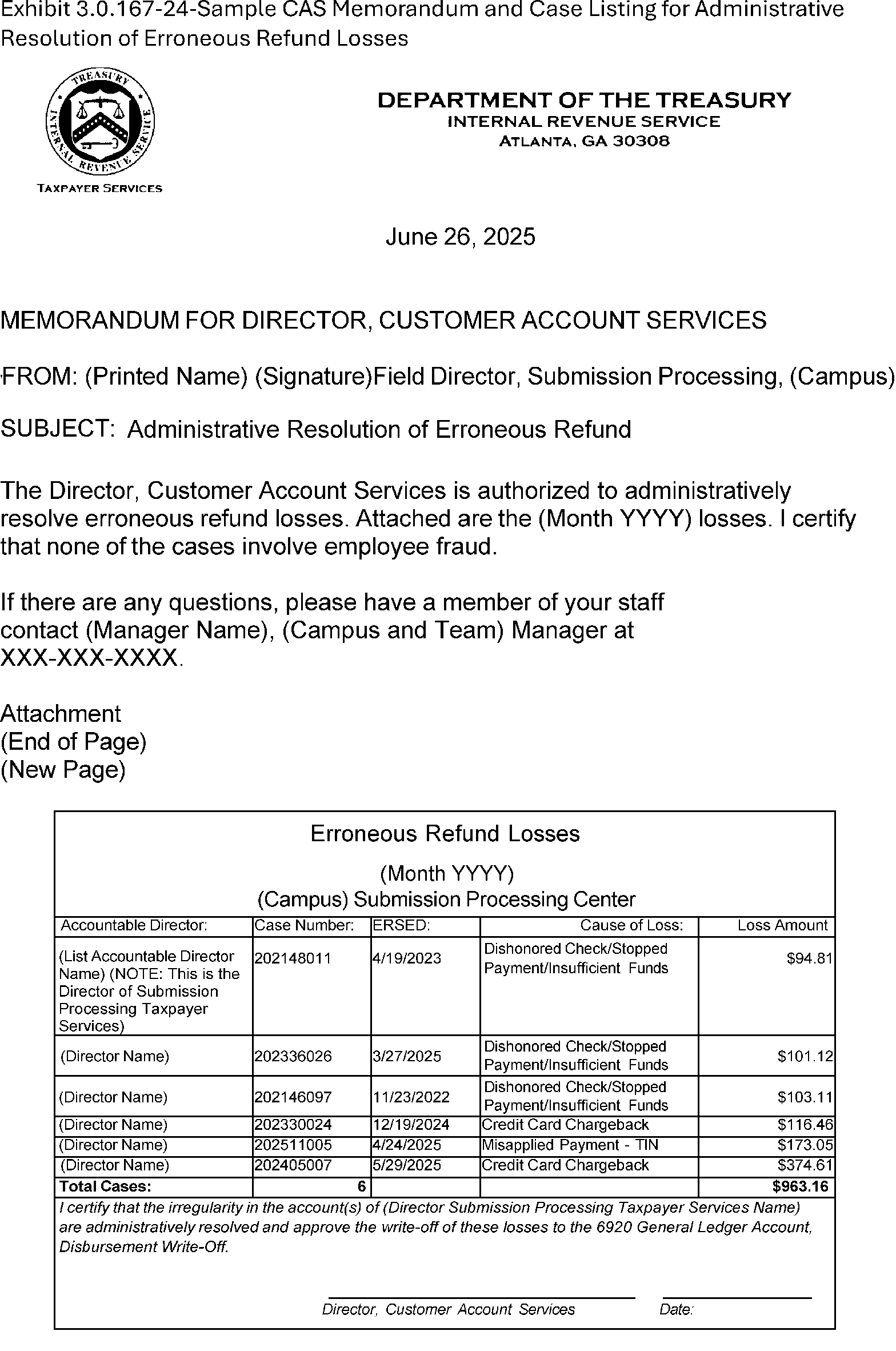
- Exhibit 3.0.167-24 Sample CAS Memorandum and Case Listing for Administrative Resolution of Erroneous Refund Losses
- 3.0.167.1 Program Scope and Objectives
Part 3. Submission Processing
Chapter 0. General
Section 167. Losses and Shortages
3.0.167 Losses and Shortages
Manual Transmittal
October 15, 2025
Purpose
(1) This transmits revised IRM 3.0.167, General - Losses and Shortages.
Material Changes
(1) IRM 3.0.167.1.4, Changed section title to Program Control.
(2) IRM 3.0.167.4(5), removed reference to Manager Security Handbook as it no longer applies.
(3) IRM 3.0.167.8.1.1(2), Added the Letter 3414C as an additional case document on the 1530 account file.
(4) IRM 3.0.167.8.1.3(2), Added the Letter 3414C as an additional case document on the 1530 account file.
(5) IRM 3.0.167.8.1.4(2), Added the Letter 3414C as an additional case document on the 1530 account file.
(6) IRM 3.0.167-1, IPU24U1212 issued 12-13-2024 Added new Austin Campus Director to Director Accountability List
(7) IRM 3.0.167-1, IPU25U0064 issued 01-16-2025, Added new Ogden Campus Director to Director Accountability List
(8) IRM 3.0.167-1, IPU25U0108 issued 01-27-2025, Added new Ogden Campus Director to the Director Accountability List
(9) IRM 3.0.167-1, IPU25U3301 issued 05-19-2025, Added new Kansas City Director to the Director Accountability List
(10) IRM 3.0.167-1, IPU25U3347 issued 06-02-2025, Added new Ogden Director to the Director Accountability List
(11) IRM 3.0.167-1, Fixed the exhibit and reformatted as a table for all campuses.
(12) IRM 3.0.167-2 through 16 and 19, reformatted to graphic files and added description for use.
(13) IRM 3.0.167-17, 18 and 20, reformatted and added description for use.
(14) IRM 3.0.167-21 through 24, added graphic files.
(15) Editorial comments have been updated throughout the IRM, such as new Director name, phone numbers and stop numbers, grammar, spelling and year specific information.
Effect on Other Documents
IRM 3.0.167, General - Losses and Shortages, dated June 2, 2025 (effective December 4, 2024) is superseded. The following IRM Procedural Updates have been incorporated: IPU24U1212 issued December 13, 2024, IPU25U0064 issued January 16, 2025, IPU25U0108 issued January 27, 2025, IPU25U3301 issued May 19, 2025 and IPU25U3347 issued June 2, 2025.Audience
Submission Processing in Taxpayer ServicesEffective Date
(12-01-2025)Scott Wallace
Director, Submission Processing
Taxpayer Services
-
Losses and shortages include tax collections, seized property and disbursement losses (uncollected erroneous refunds) incurred by the Service. These procedures do not resolve losses arising from a lockbox arrangement (IRM 3.0.230, Lockbox Processing Procedures).
-
Purpose: These procedures provide guidelines and requirements for the loss or shortage of collections, employee restitution, transfer of accountability and requesting relief for accountable officers.
-
Audience: All business operating divisions within the IRS which impact the director’s accountability. These procedures reference instructions that are contained in other operating manuals which impact the director's accountability.
-
Policy Owner: Director, Submission Processing and Director, Customer Account Services.
-
Program Owner: Submission Processing (SP) Accounting Control Section.
-
Program Goals: Monitoring and reporting of all losses/shortages to ensure proper accounting.
-
IRM deviations must be submitted in writing following instructions from IRM 1.11.2.2.3, Internal Management Documents System - Internal Revenue Manual (IRM) Process, IRM Standards, When Procedures Deviate from the IRM, and elevated through proper channels for executive approval.
-
IRM 3.0.167, Losses and Shortages, provides guidelines for reviewing the facts and evaluating the circumstances surrounding losses and shortages. These procedures contain requirements for obtaining restitution, resolution and/or relief for losses or shortages.
-
The authority for these policies are:
-
Delegation Order 1-6, Certification and Approval of Internal Revenue Collection
-
Delegation Order 1-17, Audit and Settlement of Accountable Officer’s Accounts - Revenue Accounting and Submission Processing
-
Delegation Order 1-18, Settlement of Accounts and Relief of Accountable Officers - Administrative Accounts
-
Delegation Order 1-20, Collections from Employees of the Internal Revenue Service
-
Delegation Order 1-25, Termination of Collection Action against Federal Depositaries
-
Treasury Directive 32-04, Settlement of Accounts and Relief of Accountable Officers
-
Treasury Directive 34-02, Credit Management and Treasury Debt Collection Program
-
-
The Losses and Shortages Analyst oversees the Losses and Shortages program.
-
The Remittance Security Coordinator is the individual responsible for centralized control, coordination and protection of the taxpayer for potential embezzlement/theft cases.
-
The Receipt Loss Coordinator is the individual responsible for the control, coordination and monitoring of receipt loss cases for resolution.
-
The Lockbox Coordinator is the individual responsible for the control, coordination and resolution of lockbox losses.
-
An Accountable Officer is any government employee or officer who, by reason of employment, is responsible for or has custody of government funds. Accountable Officers are held accountable for losses occurring within their accounting jurisdictions until restitution is made or relief is granted.
-
The Losses and Shortages Analyst, as required by Treasury Directive 32-04, maintains a central control record of administratively resolved cases. This information is used to prepare an annual report to the Commissioner, Internal Revenue for review.
-
Program Reviews are mission critical to the health of accounting and deposit programs to ensure integrity of the general ledger accounts and accuracy of the financial statements. It is essential that each function conducts its operations with an emphasis on mitigating risks, identifying best practices, and adhering to IRM requirements. An objective assessment of program compliance, including all applicable procedures and guidelines, is necessary to ensure that adequate internal controls are in place.
-
Program Effectiveness: The program effectiveness includes conducting reviews and analysis to detect and identify material or significant deficiencies that could adversely impact IRS audits and/or financial statements. These reviews are necessary to ensure Submission Processing is conducting business as prescribed in the governing IRM's and are designed to identify potential internal control deficiencies that may impair the integrity of the general ledger accounts and/or financial reporting.
-
Program Reviews: A program review ensures actions are in accordance with IRM procedures. SP HQ Accounting and Deposit Section conducts program reviews to verify compliance with IRM requirements, address TIGTA/GAO findings, identify risks to internal controls, address error trends, and training needs, as needed. In addition, the reviews ensure IRM procedures are applicable, adequate, and adhere to Department of the Treasury and/or IRS guidelines.
-
Program reviews will be planned and conducted based on business needs and priorities.
-
Notification will be provided to the SP campus leadership in advance.
-
Reviews will be conducted to evaluate program delivery and conformance to administrative and/or IRM compliance requirements.
-
The program review summary report will outline observations and recommendations for program guidance, corrective actions, and/or mitigation strategies, as appropriate.
-
A memorandum signed by the Director, SP will be forwarded to the Field Director, SP with a high-level overview of the areas of improvement.
-
Functional areas will retain a copy of the report and all applicable supporting documentation in a centralized location.
-
-
Corrective Action Plan: The Corrective Action Plan is a plan of action that is developed to resolve the condition that resulted in noncompliance with IRM requirements. In addition, an effective Corrective Action Plan identifies the root cause of problems to minimize or eliminate their recurrence. Corrective actions are developed, implemented, managed, and monitored to promote program improvement. As part of the Program Review process, functional areas are required to provide a written Corrective Action Plan response to the review recommendations within 30 days of receiving the program review summary report. The Corrective Action Plan must include:
-
Date of Review
-
Program Reviewed
-
Recommendation/Risk Identified
-
Corrective Action
-
Completion Date
-
-
A copy of the Program Review and Corrective Action Plan must be retained as substantive documentation and evidence of mitigation and/or remedy of the noncompliance.
-
SP HQ Accounting and Deposit will follow-up up to ensure corrective actions have been taken and to provide any additional and/or ongoing support, as needed.
-
Vulnerability Assessments: A vulnerability identifies, quantifies, and prioritizes the vulnerabilities of government programs and assets including systems/technology, property, funds, and employees. Vulnerability assessments may be conducted on any business process to assess the risks of business failure and/or weakness caused by internal or external factors.
-
See Exhibit 3.0.167-20 for commonly used acronyms and their definitions.
-
IRM 1.2.2.2.6, Delegation Order 1-6, Certification and Approval of Internal Revenue Collections
-
IRM 1.2.2.2.15, Delegation Order 1-17, Audit and Settlement of Accountable Officer’s Accounts - Revenue Accounting and Submission Processing
-
IRM 1.2.2.2.16, Delegation Order 1-18, Settlement of Accounts and Relief of Accountable Officers - Administrative Accounts
-
IRM 1.2.2.2.17, Delegation Order 1-20, Collections from Employees of the Internal Revenue Service
-
IRM 1.2.2.2.22, Delegation Order 1-25, Termination of Collection Action against Federal Depositaries
-
Treasury Directive 32-04, dated October 4, 2022
-
Treasury Directive 34-02, dated February 25, 2016
-
The IRM is updated and published annually after review and concurrence by impacted stakeholders according to the clearance process established in IRM 1.11.9, Internal Management Documents, Clearing and Approving the Internal Revenue Manual (IRM).
-
Functional areas are responsible for reviewing the information in this IRM annually to ensure accuracy, consistency, and to promote effective program administration.
-
Management has the primary responsibility for providing a system of internal controls. Management is held accountable for internal controls. Management is liable for losses where it does not provide proper internal controls. However, all personnel have a responsibility for understanding and ensuring that internal controls are functioning as intended.
-
All Service employees must take care to protect sensitive but unclassified (SBU) data (including Personally Identifiable Information (PII) and tax information) as any loss could result in information being compromised to commit identity theft. SBU data must be encrypted on computers and email with IT-approved encryption, which includes secure messaging or password-protected encrypted attachments. See IRM 10.5.1, Privacy Policy, for more details on privacy policy and protections. If you suspect or know of a potential information loss, report it to your manager and:
-
Treasury Inspector General for Tax Administration (TIGTA) at ≡ ≡ ≡ ≡ ≡ ≡ ≡.
-
Office of Privacy, Governmental Liaison and Disclosure (PGLD) Incident Management (IM) Office (PGLD/IM) at PII Breach Reporting Form. Call ≡ ≡ ≡ ≡ ≡ ≡ ≡ ≡ ≡ if you have any problems with the online form or have questions about completing the online form.
-
Computer Security Incident Response Center (CSIRC) using the Computer Security Incident Reporting Form or by calling CIRSC at ≡ ≡ ≡ ≡ ≡ ≡ ≡ ≡ ≡.
-
-
All applicable laws relating to funds and appropriations must be complied with; each fund or appropriation can only be used for the purpose authorized by law. Accounting records must be designed to show compliance with this requirement.
-
The accounting system must provide financial records consistent with standards set by other agencies and the Department of the Treasury in connection with its central accounting and reporting responsibilities. The financial data must be accurate and reported timely to meet the needs of the President and Congress for budget activities.
-
Each accounting system must maintain complete and reliable records for all funds, property, and other assets, as well as liabilities, obligations, receipts, and revenues. All financial transactions must have documents supporting a summary record and financial report. Procedures implemented in carrying out the operation must be simple, efficient, practicable, and must apply all legal and regulatory requirements. The responsibility for each accounting function, such as preparing documents, preparing journals, posting ledgers, reviewing, and balancing must be performed by separate units within the Accounting Operation to provide internal checks and minimize opportunities for fraudulent, unauthorized, or irregular acts.
-
The organizational structure, operating procedures and administrative practices are adopted throughout management to provide reasonable assurance that programs and administrative activities are effectively carried out.
-
The highest standards of truthfulness and honesty must be applied in accounting for the receipt, disbursement, and application of public funds. Management and the Congress must be able to rely on the accuracy of all transactions in future planning. To meet these standards competent leadership and qualified technicians are of prime importance.
-
An Accountable Officer is any government employee or officer who, by reason of employment, is responsible for or has custody of government funds.
-
The Federal Accounting Standards Advisory Board (FASAB) establishes accounting concepts and standards. The Federal Financial Management Improvement Act (FFMIA) of 1996 prescribes that agencies’ implementation and maintenance of financial management systems substantially comply with Federal Financial Management Systems requirements, applicable Federal Accounting Standards and U. S. Government Standard General Ledger at transaction level and audits to report compliance.
-
The Field Director, Submission Processing, is normally the Accountable Officer for the campus accounting system. The Field Director, Submission Processing, usually delegates the authority for carrying out the accounting function. However, the ultimate responsibility remains with the Field Director, Submission Processing who can be held financially responsible if proper controls are not maintained. The Accountable Officer ensures principles and standards are met in maintaining the accounting system.
-
A Certifying Officer is one of several types of Accountable Officers.
-
A Certifying Officer is a government officer or employee whose job is or includes certifying vouchers for payment. This means verifying and certifying that payments made by the agency are legal, proper and correct.
-
A Certifying Officer is different from other accountable officers in one important way: a Certifying Officer does not have physical custody of public funds. Despite this fact, the accountability for public funds rests primarily with the Certifying Officer.
-
Collecting officers are those who receive or collect money for the government, such as certain officers of the Service. Officers who receive or collect money for the government are accountable to the government for all money collected. Service employees who receive or collect money for the government are responsible for the physical safety of taxes collected. These employees must surrender to the government all taxes collected and repay any money lost, stolen, burned, etc., while in their custody, unless relieved.
-
Under Delegation Order 1-20 (formerly DO 152, Rev. 4), IRM 1.2.2.2.17, the Commissioner has delegated to the Field Directors, Submission Processing, the authority to certify and approve Internal Revenue Collections as an Accountable Officer. Other officials can be designated by a Division Commissioner.
-
Accountable Officers who have physical custody of Government funds are held to a standard of strict liability. They are, in effect, insurers of the public funds in their custody and are excusable only for losses due to acts of God or the public enemy.
-
An Accountable Officer is automatically liable when either a physical loss occurs, or an erroneous payment is made. The fact that a loss or deficiency has occurred raises a presumption of liability on the part of the accountable officer, and the burden of proof to rebut this presumption rests with the officer who has sustained the loss.
-
Treasury Directive 32-04, dated October 4, 2022, establishes requirements and responsibilities.
-
When entrusted with or statutorily made responsible for public funds, government employees are, in effect, trustees for the taxpayers. These accountable officers encompass such officials as authorized certifying officers, civilian and military disbursing officers, collecting officers, and other employees who, by virtue of their employment, are responsible for or have custody of government funds. These officials are personally liable for the loss or improper payment of the funds for which they are accountable.
-
Directors are held accountable for losses occurring within their accounting jurisdictions until employee restitution is made or relief is granted.
-
It is important to distinguish between liability and relief. The basic legal liability of the accountable officer is strict, and automatic. Lack of fault or negligence does not remove liability but may provide a basis for "relief" under the relief statutes discussed.
-
Exhibit 3.0.167-1, List of Accountable Officers, contains a list of directors who have been designated under Delegation Order 1–18 (formerly DO-125, Rev 5, DO-185, Rev 1 and DO-235, Rev 1), IRM 1.2.2.2.16 as Accountable Officers.
-
These instructions provide the minimum requirements and general guidelines for Losses and Shortages.
-
The Field Director, Submission Processing, is authorized to sign memorandum to request relief of irregularities in the account of Accountable Officers, administrative resolution of physical/disbursement losses and deficiencies and/or reimbursement from an appropriation of funds available for the activity in which the loss occurred.
-
Memorandum requesting relief and/or resolution, with the required supporting documentation/attachments (case file, history sheets, checklists, account transcripts, correspondence, case listing, etc.), must contain a written or digital signature when submitted to the Director, Submission Processing for review and approval (for example, Deposit Discrepancies, Employee Embezzlement, Employee Fraud, Disbursement Losses, 7804(c) Assessment, etc.).
-
Memorandum requesting more information, assistance and/or providing notification of an irregularity, may be digitally signed by the Field Director, Submission Processing (for example, Internal Controls, Preliminary Report, Supplemental Report, Counsel, etc.). These documents are generally considered supporting documentation for relief and/or resolution requests.
Exception:
Digital signatures are not acceptable for documents sent to the general public (for example, see Exhibit # 3.0.167-3 # , Sample Correspondence 7804(c) Assessment Memo, Exhibit 3.0.167-21, Sample Correspondence 7804(c) Assessment Letter to Employee, Exhibit 3.0.167-22 , Sample Correspondence 7804(c) Assessment Memo to Management, and Exhibit 3.0.167-16 , Sample Memo for Requesting Information from Banks).
-
Remittance Security is the physical security controls over remittances. Adequate security equipment and facilities must be provided to safeguard money, securities, etc. This ensures remittances are secured to protect taxpayer information in all remittance operations.
-
Key duties of remittance processing and reviewing or changing tax accounts are divided or segregated among different people to reduce the risk of error, fraud, theft or embezzlement.
-
Fraud, theft or embezzlement may include, but are not limited to:
-
Altered Remittances - Endorsed and/or made payable to someone other than the IRS. This may include change to the money amount.
-
Stolen Remittances - Instrument negotiated for cash or to steal the identity of the taxpayer.
-
Counterfeit Currency - Imitation currency produced without the legal sanction of the federal government.
-
-
All Service employees must protect SBU data (including personally identifiable information (PII) and tax information). IRM 10.5.1, Privacy Policy provides this guidance.
-
Each Submission Processing campus selects a member of the Planning and Analysis (P&A) staff as the Remittance Security Coordinator (RSC).
-
The RSC is the individual responsible for centralized control, coordination and protection of the taxpayer for potential embezzlement/theft cases.
-
The RSC ensures reporting of any losses of personally identifiable information (PII) to the Office of Privacy, Governmental Liaison and Disclosure (PGLD)/Incident Management (IM) Office (PGLD/IM) for cases reported on the Remittance Security Report. The RSC ensures when a potential loss is identified, PGLD/IM is immediately notified.
Note:
PGLD/IM reviews all PII Breach Reporting Forms and alerts the Records and Information Management (RIM) Program Office if official records have been reported as lost, stolen, or destroyed on the PII Breach Reporting Form, in accordance with 36 Code of Federal Regulations (CFR) 1230, Unlawful or Accidental Removal, Defacing, Alteration, or Destruction of Records. Upon receipt of the Records Loss Report from the IM office, the RIM Program office will contact the reporting point of contact to complete Form 15035, Records Loss Reporting. The RIM Program office will conduct an intake and risk assessment process. Unauthorized disposition of records in an employee’s custody or the IRS’ custody must be reported to the Records Specialist or IRS Records Officer. See IRM 1.15.3.4, Unauthorized Disposition of Records. Visit the Records Management page in the Disclosure and Privacy Knowledge Base Site or contact the RIM staff at *Records Management for more information about records.
-
Report lost remittances that contain no Personally Identifiable Information (PII), to Situational Awareness Management Center (SAMC) using SAMC’s Incident Reporting Link and selecting the button, Report a New Physical Incident. The Incident Type must be one of the following:
-
Loss or Theft of Sensitive Data (for example, 809 Receipt Books or packages lost during shipping)
-
Counterfeit Currency
-
Loss of Remittance (including SmartSafe)
-
Theft Lockbox
-
Theft Tax Remittance
-
-
Report lost remittances that contain PII, using the PGLD/IM PII Breach Reporting Form.
-
Submit the PGLD/IM Breach Report via the website. You will receive a confirmation email with a Breach Tracking Number. Forward the email with a brief explanation of the breach to the Losses and Shortages Analyst.
Note:
If the incident/breach involves the loss or theft of an IRS IT (Information Technology) asset (for example, an IRS issued computer, laptop, router, printer, removable media, CD/DVD, flash drive, floppy, cell phones, Blackberry, etc.), report the incident to the Computer Security Incident Response Center (CSIRC) using the Computer Security Incident Reporting Form, or by calling CIRSC at ≡ ≡ ≡ ≡ ≡ ≡ ≡ .
-
The following are examples of situations that could potentially involve loss of PII.
IF remittance is. . . THEN it . . . Lost in Transit (IRS to IRS) Must be reported Lost or stolen in house Must be reported Altered check or Money Order Must be reported Misapplied Payment Must not be reported Payment sent to another agency by taxpayer Must not be reported A Lockbox issue or theft Will be reported by the bank -
The Remittance Security Coordinator Information page provides contacts for each campus. RSC changes must be sent to the Headquarters Losses and Shortages Analyst.
-
The Remittance Security Coordinator will establish a new case on the SP Submission Processing Losses and Shortages SharePoint site when they are notified of a potential loss or theft. The case will be maintained on SharePoint and must include:
-
All supporting documentation
-
Details of the potential loss
-
Evidence of incident and TIGTA reporting
-
Description of actions taken
-
-
The Remittance Security Coordinator will ensure that cases are controlled (Hardcore Payment Tracer Unit) while potential embezzlement/theft cases are investigated, see IRM 3.17.5.9.5, Altered and/or Stolen Taxpayer Payments.
-
The Remittance Security Coordinator receives a Form 3210, Document Transmittal, or Taxpayer Advocate Service (TAS) may send an Operations Assistance Request (OAR), from the area that identified an altered remittance or potential embezzlement/theft.
-
The Remittance Security Coordinator ensures that the account(s) are controlled until notified by TIGTA there is no embezzlement/theft or until the proper credit has been applied from the 7610 Account or the lockbox bank.
-
The Remittance Security Coordinator expedites a TIGTA request for refund from the Special Agent-In-Charge (SAC) for IRS reimbursement of TIGTA seeding remittance (Imprest Fund). The TIGTA memo must be signed by the SAC and include the Imprest Fund Checking Account Number and the Bank Routing Number. The RSC will submit the request as a manual refund using Form 3753, Manual Refund Posting Voucher, from the Unidentified Remittance (4620) Account to be made payable via direct deposit to the Imprest Fund Cashier.
-
The Remittance Security Coordinator will receive via UPS from the TIGTA SAC under Form 3210, Document Transmittal, cover sheet and memorandum, a cashier’s check or money order for tax remittance money seized by TIGTA during an investigation and forfeited by the court to TIGTA. The Remittance Security Coordinator will hand carry the check or money order to the Receipt and Control Deposit function. The funds will be deposited into the Treasury General Fund and credited to the affected taxpayer’s account.
-
-
The Remittance Security Coordinator (RSC) coordinates cases and potential cases with the Treasury Inspector General for Tax Administration's (TIGTA) Office of Investigations, Headquarters Losses and Shortages Analyst, Receipt Loss Coordinator, local Lockbox Field Coordinator, Field Office Payment Processing Campus Manager, Erroneous Refund function and the Hardcore Payment Tracer function.
-
The Remittance Security Coordinator is the TIGTA contact.
-
The Remittance Security Coordinator:
-
Receives memorandum from TIGTA.
-
Contacts the Special Agent provided in the memorandum if more information is needed.
-
Receives the Report of Investigation (ROI) from TIGTA (Final Report).
-
Coordinates cases between Receipt Loss Coordinator (formerly 7600 Coordinator) and Lockbox Field Coordinator.
-
Coordinates with the Erroneous Refund function when TIGTA provides a memorandum indicating employee fraud (disbursement losses – refunds).
-
-
The Remittance Security Coordinator follows up with TIGTA as needed on open outstanding cases.
-
The Remittance Security Coordinator is the Losses and Shortages Analyst contact.
-
The Remittance Security Coordinator:
-
Receives PGLD/IM Breach Reports.
-
Updates Remittance Security Coordinator changes on the Remittance Security Coordinator Information website.
-
Prepares the Quarterly Remittance Security Report and forwards to Government Accountability Office (GAO).
-
-
Each campus is required to have an assigned Receipt Loss Coordinator and must notify the HQ Losses and Shortages Analyst of any changes in assignment of that role.
-
For all Losses and Shortages cases (including theft, embezzlement, counterfeit, unexplained losses and deposit discrepancies) referred to the Receipt Loss Coordinator, they will establish a new case on the SP Submission Processing Losses and Shortages SharePoint site. The case will be maintained on SharePoint and must include all supporting documentation as outlined in the IRM for the specific type of loss case.
-
When credit from the appropriate 76XX Account is required, the Receipt Loss Coordinator will:
-
Verify the Form 2424, Account Adjustment Voucher, has the correct account, money amount and payment date.
-
Hand deliver Form 2424 to expedite processing.
-
Once the account has been properly credited, close the control base.
-
-
Coordinate with the Remittance Security Coordinator to determine number of cycles required for Command Code (CC) STAUP, if required.
and IRM 2.4.28.2, CC STAUP Notice Requests. -
Monitor the account to determine if another CC STAUP is required. See IRM 3.0.167.4.4, Protection.
-
Credit from the Lockbox Bank (Lockbox Field Coordinator):
-
Verify that the report to the Headquarters Lockbox Coordinator is accurate and complete.
-
After 10 days, contact the Headquarters Lockbox Coordinator for the date Bureau of Fiscal Service (BFS), formerly Financial Management Service (FMS), was contacted.
-
Once the account has been properly credited, close the control base.
-
-
The Remittance Security Coordinator will ensure that taxpayers are protected while potential embezzlement/theft cases are investigated.
-
To protect taxpayers from incorrect notices, the Remittance Security Coordinator will:
-
Ensure that the Hardcore Payment Tracer function inputs the proper Command Code (CC) STAUP to stop incorrect notices.
-
Ensure that any Installment Agreements (indicated by TC 971 AC 063) do not default.
-
If necessary, prepare manual billing for accounts if the potential loss was applied to the account, ≡ ≡ ≡ ≡ ≡ ≡ ≡ ≡ ≡ ≡ ≡ ≡ ≡ ≡ ≡ ≡ ≡ ≡ ≡
-
-
Losses that are the responsibility of the Receipt Loss Coordinator (formerly the 7600 Coordinator) require a Preliminary Report of Loss from the Field Director, Submission Processing. The report is due within 10 days of receipt of the memorandum from TIGTA.
-
Preliminary Report information can be found in IRM 3.0.167.5.8, Preliminary Reports.
-
When TIGTA discovers more embezzlements or perpetrators and when full employee restitution is received after the Preliminary Report has been forwarded, a Supplemental Report is submitted by the Field Director, Submission Processing to the Director, Submission Processing Taxpayer Services.
-
Supplemental Reports information can be found in IRM 3.0.167.5.9, Supplemental Report.
-
The Remittance Security Coordinator will provide the Headquarters Losses and Shortages Analyst an immediate email report of all lockbox or direct deposit refund (employee fraud) losses and Campus or Field Office losses of ≡ ≡ ≡ ≡ ≡ ≡ ≡ ≡ ≡ ≡ ≡ ≡.
-
The Remittance Security Coordinator will provide the Headquarters Losses and Shortages Analyst a quarterly report by the fifth (5th) workday of the following months: April, July, October, and January. See Exhibit 3.0.167-18, Remittance Security Coordinator (RSC) Report.
-
This subsection establishes procedures for handling tax receipt losses in the 7610 Account that are the result of embezzlement, theft, shortage or counterfeit bills.
-
Receipt losses are controlled in the following general ledger accounts:
-
7610 Account, Embezzlement and Theft
-
-
7610 Account, Embezzlement and Thefts, is used to record cash shortages of collections, losses from robbery or theft, embezzlement of collections, and counterfeit bills. The balance in this account represents the total amount of such losses or shortages for which restitution or reimbursement may be obtained, or for which relief may be granted.
-
This account is supported by reports and case history files covering the details of each recorded collection loss or shortage. Case history files will include complete documentation.
-
This account is included in the accountability of the Accountable Officer.
-
Items in the 7610 Account are captured on RRACS Report 0577, Loss and Shortage Recovery Support List.
-
The Doc-ID for the 7610 Account is the TIGTA Case number.
Note:
No TIGTA memo will be received for counterfeit bill cases. For counterfeit cases, the Doc-ID is the Trace ID number (located on the debit voucher) plus the letter “C”. If no debit voucher is received, use the Trace ID on the original deposit ticket plus the letter “C” (for example, XX111111111111111111C).
-
Employees identifying a revenue receipt shortage must immediately notify their supervisor of the shortage.
-
Supervisors upon receiving notification of a revenue receipt shortage, must immediately contact their Manager, Department Manager, TIGTA and the local Remittance Security Coordinator.
-
Losses of tax collections involving these specific circumstances must also be reported in writing immediately:
-
Losses involving suspected thefts or embezzlements by employees.
-
Losses caused by robbery, burglary or natural disaster, (for example, fire, flood, etc.)
-
Losses involving acceptance of counterfeit bills or raised notes.
-
Losses where the cash is less than the receipts (including SmartSafe).
-
Checks lost during processing.
-
Lost 809 Receipt Books or blank 809 Receipts. (If any 809 Receipts are recovered, this must also be reported to TIGTA)
-
Losses caused by non-receipt of a United Postal Service (UPS) or courier package.
-
-
The supervisor must record differences, overages and shortages of each employee engaged in handling currency dealing with collections. The supervisor must report the shortages to the Submission Processing Campus Receipt and Control function by memorandum with the daily deposit. The memorandum includes the amount of the loss and identifies the type of tax (Tax Class) and injured taxpayer, if known, and where the loss appears to have occurred. When the TIGTA memorandum identifies an injured taxpayer or requests the transfer, the Manager, Accounting Control/Services Operation will satisfy the injured taxpayer's loss using the 7610 Account.
-
Supervisors must require the responsible employee(s) to write a detailed report within five days after the loss occurred. The report must contain the office location, functional area, date occurred or discovered, the name(s) and position title(s), amount, kind of tax or fund, circumstances and proper documents.
-
The supervisor will determine if there was negligence on the part of any employee regarding the loss or shortage. If the employee was negligent, they will be requested to make restitution. Supervisors must forward their employee's loss report with their own report, within 10 workdays to the Field Director, Submission Processing through the Remittance Security Coordinator. The report will include a summary of internal controls, procedures and supervisory responsibilities in effect at the time the loss occurred.
-
Submission Processing Field Directors must report employee embezzlement losses to required officials and other agencies. All lost cash receipts will be referred to TIGTA regardless of the dollar amount. Forward preliminary reports of losses, within 10 days of the receipt of TIGTA's memorandum, as well as subsequent follow-up reports to the Director, Submission Processing Taxpayer Services. See Exhibit 3.0.167-2 , Sample Receipt Loss Preliminary Report.
-
Employees identifying counterfeit currency must immediately notify their supervisor of the shortage.
-
Supervisors upon receiving notification of counterfeit currency, must immediately contact their Manager, Department Manager and the local Remittance Security Coordinator.
-
If a counterfeit bill is discovered, this must also be reported to the Secret Service. Contact phone numbers for your local Secret Service can be found athttp://www.secretservice.gov/contact/field-offices/
-
When the counterfeit currency is discovered by the bank, the debit is handled by Campus Accounting. No further action is required by the field office. Accounting must not contact the field office.
-
When the debit voucher and Secret Service Report (SSF 1604) are received, the Manager, Accounting Control/Services Operation will satisfy the injured taxpayer's loss using the 7610 Account and request immediate relief.
-
A taxpayer complains that a remittance, sent or given to the IRS has been altered. The matter is referred to TIGTA when a photocopy of both sides of the original negotiating instrument was endorsed and/or made payable to someone other than the IRS. In the case of money orders, cashier's checks, etc. the taxpayer provides a photocopy of the customer's receipt and a written statement that the original instrument was payable to the Treasury and/or sent to the IRS. The taxpayer is encouraged to provide sufficient identifying data, including a telephone number where they may be contacted at home and work.
-
In these cases, the employee/unit handling the complaint must input Transaction Code (TC) 470 with no closing code and forward the taxpayer's correspondence to the nearest TIGTA Special Agent.
-
If the remittance was mailed to the IRS but is taken by a Postal or other government employee, the Service is not legally obligated to credit a taxpayer's account under such circumstances. Therefore, the 7610 Account is not used. The taxpayer's recourse is against the payor bank as it is held strictly liable to the true owner if it pays on a forged instrument.
-
Do not use the 7610 Account if the remittance was processed through a lockbox bank. Contact the Lockbox Field Coordinator.
-
Supervisors, based on the TIGTA Report of Investigation (ROI), will determine if there was negligence on the part of the employee regarding the loss or shortage. If the employee was negligent, the supervisor must request the employee make restitution. Supervisors must forward their employees' loss report with their own report about their knowledge of the loss and determination regarding negligence to the Department Manager and Operation Manager. The report will include a summary of internal controls, procedures and supervisory responsibilities in effect at the time the loss occurred. Management is held accountable for internal controls. Management is liable for losses where they failed to provide or enforce proper internal controls.
-
The Field Director, Submission Processing, based on the TIGTA ROI and the case file, will determine whether the loss was a result of negligence on the part of the accountable officer. Although the principles of law involved are simply stated, their application to a given case requires a careful analysis of the particular facts. Several factors may bear on the conclusion in any given case, and the results will be determined by the interrelationship of these factors. The Field Director, Submission Processing and the Director, Submission Processing Taxpayer Services ensure that the proper factors have been considered.
-
In evaluating the facts to determine whether the accountable officer was negligent for purposes of applying the relief statute, apply the standard of "reasonable care" . This is the standard of simple or ordinary negligence, not gross negligence. This standard has been stated as what the reasonable, prudent, and careful person would have done to take care of their own property of like description under like circumstances. This is an objective standard, that is, it does not vary with such factors as the age and experience of the particular accountable officer.
-
If the facts indicate negligence on the part of an employee, then the employee is ordered to make restitution. If the negligent employee does not make restitution or a court case against the employee is not pursued, the employee is assessed using IRC 7804(c) procedures. See IRM 3.0.167.5.6, IRC 7804(c).
-
Embezzlement of tax collections can occur at any point within the Service. Caution must be taken to ensure that adequate internal controls exist to minimize or prevent instances of embezzlement. Adequate security, equipment, and facilities must be provided for the safeguarding of money, securities, etc. handled in the Deposit Function.
-
Local TIGTA controls and coordinates embezzlement cases. The Special Agents Handbook contains detailed instructions for "Recovering Unjust Enrichments" and for "Coordination with the Service in Theft or Embezzlement Cases." TIGTA sends a memorandum to the Campus Field Director, Submission Processing on embezzlement cases, involving both Field Office and Campus employees. Injured taxpayer's account(s) are credited from the 7610 Account. The 7610 Account is debited for the loss amount. If the "injured" taxpayer is not identified, credit the Unidentified Account. The TIGTA memorandum provides the assigned case number, taxpayer's name, identification number, type of tax, period ending, amount and date of payment and the name and telephone number of the Special Agent conducting the investigation.
-
At the proper time when an employee has been identified as having embezzled government funds, and in concurrence with the Department of Justice/Assistant United States Attorney (DOJ/AUSA), TIGTA sends a memorandum to flag the employee's retirement. TIGTA keeps the U.S. Attorney's office informed so that criminal prosecution is not impacted.
-
TIGTA sends the Final Case Information Report of Investigation (ROI) to the Field Director, Submission Processing. TIGTA will provide the U.S. Attorney's office the Submission Processing Campus Accounting addresses for application of restitution payments. Mailing labels will be provided. These addresses are in the Special Agent's Handbook.
-
The Field Director, Submission Processing is authorized by the TIGTA memorandum to debit Account 7610 and credit the injured taxpayer's account(s). The case number provided on the memorandum must be used on the case file and as the Document Identification (ID) when opening the case on the Redesigned Revenue Accounting Control System (RRACS). See IRM 3.17.64, Accounting Control General Ledger Policies and Procedures, for the specific journal instructions. The Field Director, Submission Processing forwards a copy of the memorandum to the Director, Submission Processing Taxpayer Services (TS) as part of the preliminary notification. The case is suspended until the ROI is received. The case is reviewed monthly by the Receipt Loss Coordinator and followed-up as needed with TIGTA.
-
A TIGTA memo will not be received for counterfeit bill cases. Instead, a Secret Service Counterfeit Report (SSF 1604) is needed to establish the case in the 7610 account. This report must be sent to the campus by the depository when the debit voucher is received. If this report is not received, Accounting must contact the depository and get a copy of this report prior to opening the case in the 7610 account.
-
-
≡ ≡ ≡ ≡ ≡ ≡ ≡ ≡ ≡ ≡ ≡ ≡ ≡ ≡ ≡ ≡ ≡ ≡ ≡ ≡ ≡ ≡ ≡ ≡ ≡ ≡ ≡ ≡ ≡ ≡ ≡ ≡ ≡ ≡ ≡ ≡ ≡ ≡ ≡ ≡ ≡ ≡ ≡ ≡ ≡ ≡ ≡ ≡ ≡ ≡ ≡ ≡ ≡ ≡ ≡ ≡ ≡ ≡ ≡ ≡ ≡ ≡ ≡ ≡ ≡ ≡ ≡ ≡ ≡ ≡ ≡ ≡ ≡ ≡ ≡ ≡ ≡ ≡ ≡ ≡ ≡ ≡ ≡ ≡ ≡ ≡ ≡ ≡ ≡ ≡ ≡ ≡ ≡ ≡ ≡ ≡ ≡ ≡ ≡ ≡ ≡ ≡ ≡ ≡ ≡ ≡ ≡ ≡ ≡ ≡ ≡ ≡ ≡ ≡ ≡ ≡ ≡ ≡ ≡ ≡ ≡ ≡ ≡ ≡ ≡ ≡ ≡ ≡ ≡ ≡ ≡ ≡ ≡ ≡ ≡ ≡ ≡ ≡ ≡ ≡ ≡ ≡ ≡ ≡ ≡ ≡ ≡ ≡ ≡ ≡ ≡ ≡ ≡ ≡ ≡ ≡
-
Upon receipt of the TIGTA Final Case Information Report, the Receipt Loss Coordinator will initiate recovery.
-
The Receipt Loss Coordinator sends a memorandum from the Field Director, Submission Processing to the area that has the loss requesting a copy of the internal controls in place when the loss occurred. See ≡ ≡ ≡ ≡ ≡ ≡ ≡ ≡ ≡ ≡ ≡ ≡ ≡≡ ≡ ≡ ≡ ≡ ≡ ≡ ≡ ≡ ≡ ≡ ≡ ≡ ≡ ≡ ≡ ≡ ≡ ≡ ≡ ≡ ≡ ≡ ≡ ≡ ≡ ≡ ≡, for a sample memo. The response must include deficiencies or changes made and copies of the controls in place.
-
IRC 7804(c) assessment is for a case that does NOT go to trial and court cases where the court sentence orders restitution by 7804(c) assessment. IRC 7804(c) imposes liability against any officer or employee of the Department of Treasury who does not account for and pay over any amount of money or property collected or received by him/her in connection with the Internal Revenue laws. Management is held liable for lack of proper internal controls. The statute does not require any specific intent or intentional misconduct such as willfulness. Thus, the Service will issue a notice and demand and a resulting assessment as soon as there is evidence of loss of money or property and evidence that the employee had a duty to account and pay over such money or property. If the employee does not make payment, the Service will exercise its broad administrative powers to collect the amount owed as if it were a tax.
-
The rights of the employee are not violated by such summary collection action since they can challenge the assessment by filing a claim and suit for refund of any amount collected under IRC 7804(c).
-
Delegation Order 1–20 (formerly DO-152, Rev. 4), IRM 1.2.2.2.17 determines who can order a 7804(c) assessment.
-
If authorized and there is not a court case, the Receipt Loss Coordinator will prepare a notice and demand as shown in Exhibit # 3.0.167-3 #, Sample Correspondence 7804(c) Assessment, Exhibit 3.0.167-21, Sample Correspondence 7804(c) Assessment Letter to Employee, Exhibit 3.0.167-22 , Sample Correspondence 7804(c) Assessment Memo to Management. A return envelope addressed to the Accounting Operation is provided for payments or response. The notice and demand is issued prior to 7804(c) assessment to afford the employee the opportunity to pay the liability before the assessment billing. The amount of the notice is the full amount of the loss. The amount of the notice must also include any charges that are the result of any offset. The amount offset will be short by that amount. As every case is unique, the notice and demand letter is tailored to suit the case. The notice reflects interest from the loss date to the notice date. The notice indicates the year of loss as a tax year. A separate 7804(c) is issued for each tax year. If full payment is received, it clears the 7610 Account loss and will not be assessed. The interest is deposited as General Fund Receipts.
-
After 30 days from the date of the notice and no response, a copy of the notice will be sent to Redesigned Revenue Accounting Control System (RRACS) to journal the assessment. The notice is the assessment document. The notice will be coded to reflect a Transaction Code (TC) 290 for the entire amount of the loss and a TC 340 for interest computed from the loss date to the 23c date.
-
A partial payment is used to reduce the 7610 Account loss. The notice is coded to reflect the balance. A TC 290 is input for the amount due and TC 340 for the interest computed from the loss date to the 23c date.
-
-
7804(c) assessment is Non-Master File (NMF). Letters will be numbered as Tax Class 6, Document Code 54, Blocking Series is designated by tax class with 200 series for individual and MFT 20 Abstract 004.
-
The Non-Master File assessment is mailed to:
Internal Revenue Service
Kansas City Submission Processing Center
333 W. Pershing Rd
Kansas City, MO 64108 -
The employee is sent the final notice of intent to levy. The Taxpayer Delinquent Account (TDA) will then be accelerated to Collection. The employee is not sent the notices as with normal TDA's. At the time of the TDA preparation, the Kansas City Non-Master File (NMF) unit contacts the Receipt Loss Coordinator at the Campus requesting the assessment and a memorandum to accompany the TDA.
-
The memorandum explains the circumstances surrounding the case.
-
It advises Collection that this is not a normal case.
-
Collection cannot declare the case uncollectible (53d) without contact with the Receipt Loss Coordinator.
-
≡ ≡ ≡ ≡ ≡ ≡ ≡ ≡ ≡ ≡ ≡ ≡ ≡ ≡ ≡ ≡ ≡ ≡ ≡ ≡ ≡ ≡ ≡ ≡ ≡ ≡ ≡ ≡ ≡ ≡ ≡ ≡ ≡ ≡ ≡ ≡ ≡ ≡ ≡
-
The normal levy source information is not secured.
-
The case is established on the Integrated Data Retrieval System (IDRS) and must be controlled.
-
Collection sends the Manager, Accounting Control/Services Operation, Attention: Receipt Loss Coordinator, a copy of the collection actions taken.
-
-
A Transaction Code (TC) 130 is input on the perpetrator's account to offset any future Master File refund. Payments received by Receipt and Control are numbered with a Tax Class 6 Document Code 27 Document Locator Number (DLN); 200 blocking series and controlled on a separate 813. Form 3244, Payment Posting Voucher, is prepared if copy of letter is not attached and deposited as individual income tax 20-0110. The deposit package is forwarded to Accounting.
-
The NMF Unit contacts the Receipt Loss Coordinator (formerly the 7600 Coordinator) for each payment posted to the NMF account and the coordinator works with RRACS to journal the transaction.
-
Debit 2120 Account, Individual Income, Revenue Receipts, Direct; Credit 4440 Account, Assessment and Abatement Suspense NMF
-
Debit 4440 Account, Assessment and Abatement Suspense NMF; Credit 1324 Account, NMF Taxpayer Delinquent Accounts Deferral Under Tolerance ≡ ≡ ≡ ≡ ≡ ≡ ≡ ≡ ≡ ≡ ≡ ≡ ≡ ≡ ≡ ≡ ≡ ≡ ≡ ≡or Credit Account 1322 NMF Taxpayer Delinquent Accounts Deferral ≡ ≡ ≡ ≡ ≡ ≡ ≡ ≡ ≡ ≡ ≡ ≡ ≡ ≡ ≡ ≡ ≡ ≡ ≡ ≡ ≡
-
Debit 6900 Account, Adjustment to Revenue Receipts: Credit 7610 Account, Embezzlement and Thefts.
-
-
Where a court has ordered restitution on an employee embezzlement case (7610 Account), a memorandum is sent to the Kansas City Department of Justice Lockbox Coordinator at:
IRS-DOJ/Criminal Restitution
Attn: Mail Stop 6261 P-L
333 W. Pershing Road
Kansas City, MO 64108 -
The memorandum provides the name and social security number (SSN) of all persons ordered to make restitution, amount of restitution payments and the case number. Employee embezzlement cases are monitored monthly by the Receipt Loss Coordinator to ensure that payments are made. If payments are not received, contact TIGTA Special Agent in Charge (SAC). If payments are made but not transferred from Kansas City Department of Justice Lockbox, secure the payment information from the probation officer (use the TIGTA SAC) and contact the Kansas City Department of Justice Lockbox Coordinator at 816-499-6001.
-
When the court does not order restitution, ≡ ≡ ≡ ≡ ≡ ≡ ≡ ≡ ≡ ≡ ≡ ≡ ≡ ≡ ≡ ≡ ≡ ≡ ≡ ≡ ≡ ≡ ≡ ≡
-
When the court orders administrative recovery, IRC 7804(c) assessment procedures are followed. See IRM 3.0.167.5.6.2, IRC 7804(c) Assessment Payments.
-
Preliminary reports are sent from the Field Director, Submission Processing to the Director, Submission Processing Taxpayer Services. See Exhibit 3.0.167-2, Sample Receipt Loss Preliminary Report.
-
Preliminary reports require documentation that all injured taxpayers accounts were corrected. A managerial review is required 120 days after the credit is transferred from the 7610 Account to insure that injured taxpayer's accounts are properly corrected.
-
Include documentation showing correction of all identified "injured" taxpayers accounts.
-
The signed Preliminary Report must be sent via email to the HQ Losses and Shortages Tax Analyst.
-
The Losses and Shortages Analyst will open a case file for the preliminary report.
-
Supplemental reports are submitted by the Field Director, Submission Processing to the Director, Submission Processing Taxpayer Services when TIGTA discovers more embezzlements or perpetrators and when full employee restitution is received after the Preliminary Report has been forwarded. If TIGTA issues another memorandum, this information is sent forward. See Exhibit 3.0.167-5, Sample Receipt Loss Supplemental Report.
-
The signed Supplemental Report must be sent via email to the HQ Losses and Shortages Tax Analyst.
-
It is the responsibility of the Receipt Loss Coordinator to obtain all documents required for the case file, as applicable. The case file documents the case and attempts to collect the loss. Documents include:
-
TIGTA Memorandum.
-
TIGTA Report of Investigation (ROI).
-
Secret Service Report (SSF 1604) for counterfeit bill cases.
-
Copy of document transferring credit to the injured taxpayer's account.
-
Transcript of injured taxpayer's account showing the credit from the 7610 Account.
-
Copy of the Preliminary Report and any Supplemental Reports.
-
Copy of the internal controls in place at the time of the loss.
-
Any internal control changes made.
-
Copy of court documents.
-
A list of any payments made or offsets.
-
History of contacts with TIGTA, Court, DOJ, Kansas City DOJ lockbox and any other areas/agencies.
-
7804(c) assessment documents (non-court case).
-
-
Relief is requested upon determination that the loss amount is not collectible. ≡ ≡ ≡ ≡ ≡ ≡ ≡ ≡ ≡ ≡ ≡ ≡ ≡ ≡ ≡ ≡ ≡ ≡ ≡ ≡ ≡ ≡ ≡ ≡ ≡ ≡ ≡ ≡ ≡ ≡ ≡
-
Relief is granted to a present or former accountable officer for the physical loss or deficiency of public money (or securities) when the head of the agency (or their designee) determines:
-
the accountable officer was carrying out official duties when the loss or deficiency occurred, or the loss or deficiency occurred because of an act or failure to act by a subordinate of the accountable officer.
-
the loss or deficiency was not the result of fault or negligence by the accountable officer.
-
and the loss or deficiency was not the result an illegal or incorrect payment.
-
-
Within the scope of jurisdiction, the Director, Submission Processing Taxpayer Services is authorized by Delegation Order 1-17 (formerly DO-115, Rev. 10), IRM 1.2.2.2.15, and Treasury Directive 32–04 http://www.treasury.gov/about/role-of-treasury/orders-directives/Pages/td32-04.aspx to administratively resolve irregularities (including embezzlements) ≡ ≡ ≡ ≡ ≡ ≡ ≡ ≡ ≡ ≡ ≡ ≡ ≡ ≡ ≡ ≡.
-
The 7610 Account is monitored to ensure timeliness of relief requests.
-
Review relief requests to ensure that proper documents support the type of loss incurred and are attached. See Exhibit # 3.0.167-7 #, Sample Relief Request Documentation. Incomplete case files will be returned for further development. The Accountable Officer is determined by when the loss occurred. Determine if negligence is involved, proper collection action taken, and include the TIGTA ROI or the Secret Service Report for counterfeit bill cases. Include a copy of internal controls that were in place when the loss occurred and identify any deficiencies or changes made.
-
Relief requests require documentation that all injured taxpayers accounts were corrected. A managerial review is required 120 days after the credit is transferred from the 7610 Account to insure that injured taxpayers accounts are properly corrected. The results of this review are part of the relief request.
-
The memorandum to the Director, Submission Processing Taxpayer Services (TS) contains a complete explanation of how the loss occurred, the circumstances surrounding it, when it was discovered, internal controls in place, changes to internal controls, court information, efforts taken to collect and why the loss is uncollectible. Complete the Losses and Shortages Documentation Check Sheet, Exhibit # 3.0.167-7 #, Sample Relief Request Documentation, to ensure the case file is complete. The memorandum for cases administratively resolved will contain the statement authorizing the resolution and a signature block for the Director, Submission Processing Taxpayer Services. See ≡ ≡ ≡ ≡ ≡ ≡ ≡ ≡ ≡ ≡ ≡ ≡≡ ≡ ≡ ≡ ≡ ≡ ≡ ≡ ≡ ≡ ≡ ≡ ≡ ≡ ≡ ≡ ≡ ≡ ≡ ≡ ≡ ≡ ≡ ≡ ≡ ≡ ≡ ≡ ≡ ≡ ≡ ≡ ≡and ≡ ≡ ≡ ≡ ≡ ≡ ≡ ≡ ≡ ≡≡ ≡ ≡ ≡ ≡ ≡ ≡ ≡ ≡ ≡ ≡ ≡ ≡ ≡ ≡ ≡ ≡ ≡ ≡ ≡ ≡ ≡ ≡ ≡ ≡ ≡ ≡ ≡ ≡ ≡ ≡ ≡ ≡.
-
Scan and email the signed memorandum and the complete relief request case file, including supporting documentation and Check Sheet to the HQ Losses and Shortages Tax Analyst.
-
If the above-mentioned documents are being sent by email, be sure to identify the purpose of the documents (for example, Relief Request for March 20XX) within the Subject line of the email message.
-
Clearing the 7610 Account, Embezzlements and Thefts, when the amount of the loss is charged to the appropriation or fund available for the expenses of the accountable function at the time of the restoration or adjustment.
-
The Sub-Object Codes (SOC) are 4207 for losses less than $10,000.00 and 4208 for losses of $10,000.00 or more.
-
The Headquarters Losses and Shortages Analyst will request the funds from the Beckley Finance Center.
-
The Beckley Finance Center will utilize the Intra-Governmental Payment and Collection System (IPAC) to send the credit to the correct Submission Processing Campus.
-
When the credit is received, the following journal actions are required to clear the 7610 Account:
-
Debit RRACS 2910 Account (IPAC Receipts); Credit RRACS 4985 Account (IPACR Suspense)
-
Debit RRACS 4985 Account (IPACR Suspense); Credit RRACS 4420 Account (SC Suspense for NMF), 4620 Account (Unidentified Remittances) or 6800 Account (Excess Collection)
-
Debit RRACS 4420 Account (SC Suspense for NMF), 4620 Account (Unidentified Remittances) or 6800 Account (Excess Collection); Credit 7610 Account, Embezzlements and Thefts
-
Debit RRACS 21XX Account (Revenue Receipts); Credit 2910 Account (IPAC Receipts)
-
-
A Form 843, Claim for Refund and Request for Abatement, for repaid loss or embezzlement is coordinated with TIGTA on a case by case basis for processing. These claims are not processed without authorization from Office of Chief Counsel.
-
When a claim is received for a repaid loss or embezzlement, prepare a memorandum to counsel requesting an opinion be rendered concerning the individual claim.
-
≡ ≡ ≡ ≡ ≡ ≡ ≡ ≡ ≡ ≡ ≡ ≡ ≡ ≡ ≡ ≡ ≡ ≡ ≡ ≡ ≡ ≡ ≡ ≡ ≡ ≡ ≡ ≡ ≡ ≡≡ ≡ ≡ ≡ ≡≡ ≡ ≡ ≡ ≡ ≡ ≡ ≡ ≡ ≡ ≡ ≡ ≡ ≡ ≡ ≡ ≡ ≡ ≡ ≡ ≡ ≡ ≡ ≡ ≡ ≡ ≡ ≡ ≡ ≡ ≡ ≡ ≡ ≡
-
If Counsel’s response is to deny the claim, a Letter 105C, Claim Disallowed, must be sent to inform the individual that the claim is denied.
-
-
An example of an "unexplained loss" is where there is an apparent deposit discrepancy; however, collection under the Federal Claims Collection Act (FCCA) is inappropriate. For instance, where items were missing from the Form 813, Document Register, and could not be reconstructed or traced to individual taxpayer accounts, the deposit could not be reconciled with the bank. Another example is, one hundred items went to good tape; however, only 93 were deposited. We cannot establish the bank's liability; the loss is "unexplained" and requires approval by Treasury if ≡ ≡ ≡ ≡ ≡ ≡ ≡ ≡ ≡ ≡ ≡ ≡
-
Unexplained losses are controlled in 7620 Account.
-
Unexplained losses or shortages are controlled in the following general ledger accounts:
-
7620 Account, Unexplained Losses
-
6900 Account, Adjustments or Corrections of Revenue Receipts
-
-
7620 Account, Unexplained Losses, is used to record unexplained losses. An unexplained loss includes deposit discrepancies that cannot be collected under the Federal Claims Collection Act. When the Service cannot establish the bank's liability for a deposit discrepancy, the loss is considered unexplained.
-
This account is supported by reports and case history files covering the details of each recorded collection loss or shortage. Case history files will include complete documentation.
-
This account is included in the accountability of the Accountable Officer.
-
Items in the 7620 Account are captured on RRACS Report 0577, Loss and Shortage Recovery Support List.
-
The Doc-ID for the 7620 Account is the deposit ticket number.
-
6900 Account, Adjustment to Revenue Receipts, is for adjustments or corrections of revenue receipts, and for reclassification of revenue receipts to and from other general ledger accounts. This account records relief granted by the Service or Treasury for losses and shortages of collections without reimbursement (See 31 U.S.C. 3527 and 31 U.S.C 3528).
-
This account also covers special cases for adjustments or corrections in revenue receipts. These would include shortages that have been assessed against an employee or former employee, under IRC 7804(c) of the Code, and payment was reported as tax instead of relief from shortages.
-
This account may also be used for other items authorized by Treasury or Chief Financial Officer (CFO), such as reclassification of funds between the revenue receipt accounts, and the Anti-Drug Special Fund, and the Informant Reward Special Fund.
-
Relief is requested upon determination that the loss amount is not collectible. ≡ ≡ ≡ ≡ ≡ ≡ ≡ ≡ ≡ ≡ ≡ ≡ ≡ ≡ ≡ ≡ ≡ ≡ ≡ ≡ ≡ ≡ ≡ ≡ ≡ ≡ ≡ ≡ ≡ ≡ ≡
-
Relief is granted to a present or former accountable officer for the physical loss or deficiency of public money (or securities) when the head of the agency (or their designee) determines: the accountable officer was carrying out official duties when the loss or deficiency occurred, or the loss or deficiency occurred because of an act or failure to act by a subordinate of the accountable officer; the loss or deficiency was not the result of fault or negligence by the accountable officer; and the loss or deficiency was not the result an illegal or incorrect payment.
-
Within the scope of jurisdiction, the Director, Submission Processing Taxpayer Services is authorized by Delegation Order 1-17 (formerly DO-115 Rev. 10), IRM 1.2.2.2.15, and Treasury Directive 32–04 to administratively resolve irregularities (including embezzlements) ≡ ≡ ≡ ≡ ≡ ≡ ≡ ≡ ≡ ≡ ≡ ≡ ≡ ≡ ≡ ≡.
-
The 7620 Account is monitored to ensure timeliness of relief requests.
-
Review relief requests to ensure that proper documents support the type of loss incurred and are attached. Incomplete case files will be returned for further development. The Accountable Officer is determined by when the loss occurred. Determine if negligence is involved, proper collection action taken, and include the TIGTA ROI. Include a copy of internal controls that were in place when the loss occurred and identify any deficiencies or changes made.
-
Relief requests require documentation that all injured taxpayers accounts were corrected. A managerial review is required 120 days after the credit is transferred from the 7620 Account to insure that injured taxpayer's accounts are properly corrected. The results of this review are part of the relief request.
-
The memorandum to the Director, Submission Processing Taxpayer Services (TS) contains a complete explanation of how the loss occurred, the circumstances surrounding it, when it was discovered, internal controls in place, changes to internal controls, court information, efforts taken to collect and why the loss is uncollectible. The memorandum for cases resolved by the Director, Submission Processing Taxpayer Services contains a statement authorizing resolution and a signature block.
-
Clear the 7620 Account, Unexplained Losses, when relief is granted. An adjustment is made to revenue receipts.
-
Debit RRACS 6900 Account, Adjustments or Corrections of Revenue Receipts.
-
Credit RRACS 7620 Account, Unexplained Losses.
-
-
Depository banks forward SF 215-A or OTCnet voucher because of errors made in original deposit tickets. Unresolved Debit Vouchers (SF 5515) received from depository banks may indicate discrepancies (other than checks on which payment has been refused) between the Deposit Ticket (SF 215-A)/OTCnet voucher and the supporting checks such as:
-
Encoding errors
-
Slipped blocks
-
Piggy backs
-
Improper SF 5515 charge backs
Note:
Lockbox banks implemented Electronic Check Processing (ECP), which converts the check image and corresponding data to generate an electronic transfer of funds. Lockbox sites send electronic check images through the ECP system to the Federal Reserve Bank of Cleveland (FRB-C). The Federal Reserve Bank of Cleveland will be the bank of first deposit for all lockbox payments.
-
-
The Integrated Submission and Remittance Processing (ISRP) system deployed electronic check processing through OTCnet at Submission Processing Centers in Fiscal Year 2021. ISRP sends electronic check images through OTCnet to the Federal Reserve Bank of Cleveland for deposit.
-
To resolve discrepancies with the depository banks, a general knowledge of the banking system and the contractual requirements of the depositaries is necessary. Therefore, the Treasury Financial Manual (TFM) must be available to the Accounting Operation.
-
IRM 3.8.44, Campus Deposit Activity, IRM 3.8.45 Manual Deposit Process, IRM 3.8.47, Manual Deposit for Field Office Payment Processing, and IRM 21.3.4, Field Assistance, contains various quality checks to ensure a quality deposit to reduce the number of deposit discrepancies. Receipt and Control managers are responsible for deposit preparation, reconciliation and release as balanced. Out of balance conditions are not released to the depositaries. Management performs regular reviews of reconciled work accumulated in the staging areas. Managers conduct 100 percent review of a deposit, prior to its release. Meetings are held between Receipt and Control and the Accounting function to discuss any discrepancies that occur for the 100 percent review dates.
-
Deposit discrepancies are controlled in the following general ledger accounts:
-
7649 Account, Electronic Check Processing (ECP) Deposit Discrepancies
-
7650 Account, Deposit Discrepancies
-
6900 Account, Adjustments or Corrections of Revenue Receipts
-
6901 Account, Electronic Check Processing (ECP) Adjustments or Corrections to Revenue Receipts
-
-
The external subsidiary record for these accounts are reports and case history files covering the details of each recorded collection loss or shortage. Case history files must include complete documentation.
-
The 7649 Account, Electronic Check Processing (ECP) Deposit Discrepancies, is used to record amounts of ECP deposit discrepancies which are discovered by the lockbox depositories only. These items are considered true deposit shortages for accountability purposes. The balance in this account represents the total amount of such losses or shortages for which reimbursement may be obtained, or for which approval may be granted.
-
The 7649 Account is supported by reports and/or case history files covering the details of each recorded collection loss or shortage. Case history files will include complete documentation.
-
This account is NOT included in the accountability of the Accountable Officer.
-
Items in the 7649 Account are captured on RRACS Report 0576, Electronic Check Processing (ECP) Deposit Discrepancy Support List.
-
The 7650 Account, Deposit Discrepancies, is used to record amounts of deposit discrepancies which are discovered by the depositories. This account may also be used when the Payment Tracer function has unresolved encoding errors, where extensive research has been completed, and the credit cannot be located. These items are considered true deposit shortages for accountability purposes. The balance in this account represents the total amount of such losses or shortages for which restitution or reimbursement may be obtained, or for which relief may be granted.
-
The 7650 Account is supported by reports and case history files covering the details of each recorded collection loss or shortage. Case history files will include complete documentation.
-
This account is included in the accountability of the Accountable Officer.
-
Items in the 7650 Account are captured on RRACS Report 0577, Loss and Shortage Recovery Support List.
-
The Doc-ID for the 7650 Account is the debit voucher number.
-
The 6900 Account, Adjustment to Revenue Receipts, is for adjustments or corrections of revenue receipts, and for reclassification of revenue receipts to and from other general ledger accounts. This account records relief granted by the Service or Treasury for losses and shortages of collections without reimbursement (See 31 U.S.C. 3527 and 3528).
-
This account also covers special cases for adjustments or corrections in revenue receipts. These would include shortages that have been assessed against an employee or former employee, under IRC 7804(c) of the Code, and payment was reported as tax instead of relief from shortages.
-
This account may also be used for other items authorized by Treasury or CFO, such as reclassification of funds between the revenue receipt accounts, and the Anti-Drug Special Fund, and the Informant Reward Special Fund.
-
There are basically three types of deposit discrepancies:
-
Deposit Discrepancies that are immediately identifiable discrepancies between IRS and the depository.
-
Deposit Discrepancies that are identified because of a taxpayer inquiry.
-
Cash courier deposit discrepancies identified by the depository.
-
-
Some errors made during processing of payments are not detected either by IRS or its depository. Usually, the error is detected by the taxpayer or their bank and corrected at that point. The deposit discrepancy occurs when the corresponding credit never reaches the IRS to correct the taxpayer's tax account. It is not until we bill the taxpayer, and they respond that we know of the error. Taxpayer identified deposit discrepancies usually originate through the payment tracer function.
-
The taxpayer's account is credited and 7649 Account, ECP Deposit Discrepancies, or 7650 Account, Deposit Discrepancies, are debited for these cases. 6570 Account cannot be used since there is no "absolute proof" of receipt of payment. In fact, the IRS has not received the credit at all.
-
Some errors on cash deposited through bonded couriers servicing Taxpayer Assistance Centers (TAC) are detected by the bank after deposit(s) at the bank or branch are verified. The discrepancies may have occurred during transit with the courier or internally at the bank. These couriers sign for dollar amounts picked up for deposit using Form 10160, Receipt for Transport of IRS Deposit.
-
The case is resolved by contacting the TAC manager for documentation and determining the dollar amount picked up and deposited to the bank.
≡ ≡ ≡ ≡ ≡ ≡ ≡ ≡ ≡ ≡ ≡ ≡ ≡ ≡ ≡ ≡ ≡ ≡ ≡ ≡ ≡ ≡ ≡ ≡ ≡ ≡ ≡ ≡ ≡ ≡ ≡ ≡ ≡ ≡ ≡ ≡ ≡ ≡ ≡ ≡ ≡ ≡ ≡ ≡ ≡ ≡ ≡ ≡ ≡ ≡ ≡ ≡ ≡ ≡ ≡ ≡ ≡ ≡ ≡ ≡ ≡ ≡ ≡ ≡ ≡ ≡ ≡ ≡ ≡ ≡ ≡ ≡ ≡ ≡ ≡ ≡ ≡ ≡ ≡ ≡ ≡ ≡ ≡ ≡ ≡ ≡ ≡ ≡ ≡ ≡ ≡ ≡ ≡ ≡ ≡ ≡ ≡ ≡ ≡ ≡ ≡ ≡ ≡ ≡ ≡ ≡ ≡ ≡ ≡ ≡ ≡ ≡ ≡ ≡ ≡ ≡ ≡ ≡ ≡ ≡ ≡ ≡ ≡ ≡ ≡ ≡ ≡ ≡ ≡ ≡ ≡ ≡ ≡ ≡ ≡ ≡ ≡ ≡ ≡ ≡ ≡ ≡ ≡ ≡ ≡ ≡ ≡ ≡ ≡ ≡ ≡ ≡ ≡ ≡ ≡ ≡ ≡ ≡ ≡ ≡ ≡ ≡
-
Treasury Directive 34–02 http://www.treasury.gov/about/role-of-treasury/orders-directives/Pages/td34-02.aspx authorizes the Commissioner to compromise, suspend or terminate collection action against federal depositaries for deposit discrepancies of ≡ ≡ ≡ ≡ ≡ ≡ ≡ ≡ ≡ ≡ ≡ ≡ ≡. In Delegation Order 1-25 (formerly DO-229 Rev. 3), IRM 1.2.2.2.22, the Commissioner has delegated this authority to the Director, Submission Processing Taxpayer Services.
-
The Director, Submission Processing Taxpayer Services authorizes termination, compromise, or suspension of collection on claims for deposits when records indicate that credit is due from the depositary but can't be proven because of the unavailability of bank records and the amount is ≡ ≡ ≡ ≡ ≡ ≡ ≡ ≡ ≡ ≡ ≡ ≡ ≡, Office of Chief Counsel's recommendation is needed for amounts ≡ ≡ ≡ ≡ ≡ ≡ ≡ ≡ ≡ ≡ ≡ ≡ ≡.
Exception:
The Field Director, Submission Processing is not accountable for Electronic Check Processing (ECP) Deposit Discrepancy losses. Therefore, authorization for termination, compromise, or suspension of collection by the Director, Submission Processing is not required. Authority is delegated to a level no lower than the Accounting Operation manager.
-
IRM 3.17.10, Dishonored Check File (DCF) and Unidentified Remittance File (URF), establishes the time frames for resolving deposit discrepancies. Encoding errors, piggy backs and improper charge backs are resolved within 45 calendar days of identification. Slipped blocks require all avenues of research exhausted within 150 calendar days of identification. At the end of these periods, unresolved debits are transferred into the 7650 Account.
-
Once the deposit discrepancy is transferred to the 7650 Account effort is taken to correct errors and/or recover the loss. The following actions must be taken within 30 calendar days of transfer to the 7650 Account.
-
Do not duplicate previous research.
-
Send letter to the depositary bank requesting credit. Follow-up letter is sent if a response is not received within 30 days. After another 30 days if no response, a second follow-up letter must be sent by the Field Director, Submission Processing. Banks will only research for 1 year after the date of the deposit.
-
Review 7650 Account monthly to make sure bank contact is timely and identify discrepancies that require relief.
-
Unresolved cases ≡ ≡ ≡ ≡ ≡ ≡ ≡ ≡ ≡ ≡ ≡ are sent to Office of Chief Counsel for a recommendation to file suit or stop collection action against the depositary. If Office of Chief Counsel recommends termination of collection action, administrative resolution under IRM1.2.2.2.22, Delegation Order 1-25 (formerly DO-229, Rev. 3), Termination of Collection Action against Federal Depositaries, or the Department of Justice (DOJ) is requested.
-
-
The case file documents attempts to resolve the deposit discrepancy. The case file may include:
-
Copy of the Debit Voucher
-
Copy of the Deposit Ticket
-
Copy of the OTCnet Voucher
-
Copy of Form 813
-
Correspondence to/from depository
-
Correspondence to/from drawee bank (See Exhibit 3.0.167-16, Sample Memo for Requesting Information from Banks, for sample)
-
Copy of Taxpayer's check (front/back)
-
Transcript of the taxpayers' account
-
Historical record of attempts to resolve the discrepancy
-
-
The Director, Submission Processing Taxpayer Services has the authority to resolve deposit discrepancies ≡ ≡ ≡ ≡ ≡ ≡ ≡ ≡ ≡ without Office of Chief Counsel's recommendation and discrepancies of ≡ ≡ ≡ ≡ ≡ ≡ ≡ ≡ ≡ ≡ ≡ ≡ with Counsel's recommendation (See ≡ ≡ ≡ ≡ ≡ ≡ ≡ ≡ ≡ ≡ ≡ ≡ ≡≡ ≡ ≡ ≡ ≡ ≡ ≡ ≡ ≡ ≡ ≡ ≡ ≡ ≡ ≡ ≡ ≡ ≡ and ≡ ≡ ≡ ≡ ≡ ≡ ≡ ≡ ≡ ≡ ≡ ≡ ≡ ≡≡ ≡ ≡ ≡ ≡ ≡ ≡ ≡ ≡ ≡ ≡ ≡ ≡ ≡ ≡ ≡ ≡ ≡ ≡ ≡ ≡ ≡ ≡ ≡ ≡ ≡ ≡ ≡ ≡ ≡). The Department of Justice (DOJ) has the authority to resolve deposit discrepancies ≡ ≡ ≡ ≡ ≡ ≡ ≡ ≡ ≡ ≡ ≡ (See ≡ ≡ ≡ ≡ ≡ ≡ ≡ ≡ ≡ ≡ ≡ ≡ ≡≡ ≡ ≡ ≡ ≡ ≡ ≡ ≡ ≡ ≡ ≡ ≡ ≡ ≡ ≡ ≡ ≡ ≡ ≡ ≡ ≡ ≡ ≡ ≡ ≡ ≡ ≡ ≡ ≡ ≡ ≡).
-
Documentation for cases resolved by the Director, Submission Processing Taxpayer Services is the same as for cases submitted to DOJ. The memorandum contains a complete explanation of how the discrepancy occurred, the circumstances, when it was discovered, and efforts taken to resolve. Complete the Losses and Shortages Documentation Check Sheet - Deposit Discrepancy (See Exhibit # 3.0.167-7 #, Sample Relief Request Documentation) to ensure the case file is complete. The memorandum for cases resolved by the Director, Submission Processing Taxpayer Services contains a statement authorizing resolution and a signature block.
-
Scan and email the signed memorandum and the complete relief request case file, including supporting documentation to the HQ Losses and Shortages Tax Analyst.
-
Use procedures in IRM 3.0.167.7.4.3, Clearing the 7650 Account - Deposit Discrepancies, when relief is granted.
-
Clear the 7650 Account, Deposit Discrepancies, when relief is granted. An adjustment is made to revenue receipts.
-
Debit RRACS 6900 Account, Adjustments or Corrections of Revenue Receipts.
-
Credit RRACS 7650 Account, Deposit Discrepancies.
-
-
The Field Director, Submission Processing is not accountable for Electronic Check Processing (ECP) Deposit Discrepancy losses. Therefore, authorization for termination, compromise, or suspension of collection by the Director, Submission Processing is not required. Authority is delegated to a level no lower than the Accounting Operation manager.
-
The case file documents attempts to resolve the deposit discrepancy. The case file may include:
-
Copy of the Debit Voucher.
-
Copy of the Deposit Ticket.
-
Copy of Form 813.
-
Correspondence to/from depository.
-
Correspondence to/from drawee bank (See Exhibit 3.0.167-16, Sample Memo for Requesting Information from Banks, for sample).
-
Copy of Taxpayer's check (front/back).
-
Transcript of the taxpayers' account.
-
Historical record of attempts to resolve the discrepancy.
-
-
The Field Director, Submission Processing is not accountable for ECP Deposit Discrepancy losses. Therefore, authorization for termination, compromise, or suspension of collection by the Director, Submission Processing is not required. Authority is delegated to a level no lower than the Accounting Operation manager.
-
Documentation for cases resolved by the Manager, Accounting Operation, is the same as for cases submitted to the Director, Submission Processing Taxpayer Services and DOJ. The memorandum contains a complete explanation of how the discrepancy occurred, the circumstances, when it was discovered, and efforts taken to resolve. Complete the Deposit Discrepancy Check Sheet (see Exhibit # 3.0.167-7 #, Sample Relief Request Documentation) to ensure the case file is complete.
-
Use procedures in IRM 3.0.167.7.5.3, Clearing 7649 Account - Electronic Check Processing (ECP) Deposit Discrepancies, when approval is granted.
-
Clear the 7649 Account, Deposit Discrepancies, when approval is granted. An adjustment is made to revenue receipts:
-
Debit RRACS 6901 Account, ECP Adjustments or Corrections of Revenue Receipts
-
Credit RRACS 7649 Account, ECP Deposit Discrepancies
-
-
Disbursement losses are unrecoverable erroneous refunds. An erroneous refund is any refund that the taxpayer was not entitled to receive. Unrecoverable erroneous refunds (disbursement losses) require administrative relief of the accountable officer. Procedures for erroneous refund control, collection, and taxpayer relief are in IRM 3.17.80 Working and Monitoring Category D, Erroneous Refund Cases in Accounting Operations. IRM 3.0.167, Losses and Shortages contains procedures for reports and administrative relief of the Accountable Officer.
-
Erroneous refunds resulting from administrative errors such as, misapplied payments, issuing duplicate refunds, direct deposit errors, and incorrect tax adjustments are classified as Category "D" Erroneous Refunds and are maintained in the Erroneous Refund function.
-
Erroneous refunds are controlled in the following general ledger accounts:
-
1530 Account, Court Case Erroneous Refund
-
1535 Account, Criminal Investigation (CI) Court Ordered Restitution Erroneous Refund
-
1540 Account, Non-Court case Erroneous Refund
-
1543 Account, Payment Over Cancellation (POC) Erroneous Refund
-
1545 Account, Identity Theft Erroneous Refunds
-
1547 Account, Return Preparer Misconduct (RPM) Erroneous Refund
-
4910 Account, Disbursement Losses
-
6905 Account, Identity (ID) Theft Erroneous Refund Write-off
-
6907 Account, Return Preparer Misconduct (RPM) Erroneous Refund Write-off
-
6920 Account, Disbursement Write-off
-
-
The external subsidiary record for these accounts is Form 3809, Miscellaneous Adjustment Voucher, which will be used to debit and credit the accounts as needed to control and track erroneous refunds.
-
Each case is controlled with a unique document number on Form 3809. This document number allows for the tracking of an individual case from its inception to completion.
-
The 1530 Account, Court Case Erroneous Refund, records erroneous refund receivables that result in a court case.
-
A case is transferred from the 1540 Account, Non-Court Case Erroneous Refund, or 1543 Account, Payment Over Cancellation (POC) Erroneous Refund, to this account when it is determined that the case is going to court.
-
A case is transferred to the 4910 Account, Disbursement Loss Account, when the case is determined uncollectible. Documentation will explain why the case is uncollectible.
-
-
The 1530 Account will be supported by copies of bills, Letter 510C, Refund in Error; Return Check or Letter 3414C, Individual Requesting Repayment for a Refund Sent in Error, court documents, and TIGTA reports, debit vouchers, or other documents showing the name of each debtor, amounts receivable, and details of the transaction creating the indebtedness.
-
Criminal Investigation and employee fraud cases are controlled in this account.
-
The access to these cases must be limited.
-
Items in the 1530 Account are captured on RRACS Report 0131, Erroneous Refund Report.
-
The 1535 Account, Criminal Investigation (CI) Court Ordered Restitution Erroneous Refund, records erroneous refund receivables that result in a criminal investigation court case.
-
A case is transferred to the 1535 Account when it is determined that the Criminal Investigation case is going to court.
-
A case is transferred to the 4910 Account, Disbursement Loss Account, when the case is determined uncollectible. Documentation will explain why the case is uncollectible.
-
-
The 1535 Account will be supported by copies of Form 3809, and a TXMOD print reflecting the erroneous refund, or a copy of the payment voucher received from Criminal Investigation (CI) in Ogden.
-
Items in the 1535 Account are captured on RRACS Report 0131, Erroneous Refund Report.
-
The 1540 Account, Non-Court Case Erroneous Refund, records erroneous refund receivables that are NOT court cases. This account represents erroneous refund receivables that have NOT resulted in court cases nor have been collected, assessed or determined uncollectible.
-
A case is transferred to the 1540 Account when it is determined that the case is a Non-Court Case Erroneous Refund.
-
A case is transferred to the 4910 Account, Disbursement Loss Account when the statute expires.
-
A case determined uncollectible before the statute expiration or ≡ ≡ ≡ ≡ ≡ ≡ ≡ is transferred to the 4910 Account.
-
-
The 1540 Account is supported by copies of bills, Letter 510C, Refund in Error; Return Check or Letter 3414C, Individual Requesting Repayment for a Refund Sent in Error, debit vouchers or other documents showing the name of each debtor, amount receivable and details of the transaction creating the indebtedness.
-
Items in the 1540 Account are captured on RRACS Report 0131, Erroneous Refund Report.
-
Effective August 25, 2014, 1543 Account, Payment Over Cancellation Erroneous Refund, records erroneous refund receivables that are the result of Payment Over Cancellation erroneous refunds that are NOT court cases. This account represents erroneous refund receivables that have NOT resulted in court cases nor have been collected, assessed or determined uncollectible.
-
A case is transferred to the 1543 Account when it is determined that the case is a Payment Over Cancellation erroneous refund.
-
A case is transferred to the 4910 Account, Disbursement Loss Account at the expiration of the 5-year statute period.
-
A case determined uncollectible before the statute expiration or ≡ ≡ ≡ ≡ ≡ is transferred to the 4910 Account.
-
-
The 1543 Account is supported by copies of bills, Letter 510C, Refund in Error; Return Check or Letter 3414C (Individual Requesting Repayment for a Refund Sent in Error), debit vouchers, FMSForm 3858, Claims Document, FMSForm 1133 , Claim Against the United States for the Proceeds of a Government Check, and/or other documents showing the name of each debtor, amount receivable and details of the transaction creating the indebtedness.
-
Items in the 1543 Account are captured on RRACS Report 0156, Payment Over Cancellation Inventory Report.
-
Effective June 25, 2012, 1545 Account, Identity (ID) Theft Erroneous Refund, records erroneous refund receivables caused by identity theft. This account represents erroneous refund receivables that are attributable to identity theft and deemed "Induced by Fraud or Misrepresentation of a Material Fact" .
-
A case is transferred to the 1545 Account when it is determined that the case is an ID Theft erroneous refund.
-
ID Theft Erroneous Refunds are considered "Induced by Fraud or Misrepresentation of a Material Fact" and must be transferred to the 6905 Account, ID Theft Erroneous Refund Write-off, at the expiration of the 5-year statute period. See IRM 3.17.80.3, BMF Identity Theft (IDT) Erroneous Refunds Forms 3809.
-
-
The 1545 Account is supported by copies of Form 3809, account transcripts, return and/or return information, and details of the transaction creating the indebtedness.
-
This account is NOT included in the accountability of the Accountable Officer.
-
Items in the 1545 Account are captured on the following RRACS report(s):
-
RRACS Report 0155A - Identity Theft Erroneous Refund Monthly Activity Report
-
RRACS Report 0155B - Identity Theft Erroneous Refund Summary Report
-
RRACS Report 0155C - Identity Theft Erroneous Refund Open Cases Report
-
-
Effective July 1, 2015, 1547 Account, Return Preparer Misconduct Erroneous Refund, records erroneous refund receivables caused by return preparer misconduct. This account represents erroneous refund receivables that are attributable to return preparer misconduct and deemed Induced by Fraud or Misrepresentation of a Material Fact.
-
A case is transferred to the 1547 Account when it is determined that the case is a return preparer misconduct erroneous refund.
-
Return Preparer Misconduct Erroneous Refunds are considered Induced by Fraud or Misrepresentation of a Material Fact and will be systemically transferred to the 6907 Account, Return Preparer Misconduct Erroneous Refund Write-off, at the expiration of the 5-year statute period.
-
-
Cases created via the new IDRS Command Codes RPM48 and RPM58 will be supported by EOD 1640, EOD 1624 and batch posting 172 report.
-
Cases processed prior to the systemic process will be supported by copies of Form 3809, account transcripts, return and/or return information, and details of the transaction creating the indebtedness.
-
This account is NOT included in the accountability of the Accountable Officer.
-
Items in the 1547 Account are captured on RRACS Report 0157, Return Preparer Misconduct Erroneous Refund Inventory Report.
-
The 4910 Account, Disbursement Loss, provides internal control for disbursement losses (unrecoverable erroneous refunds). Cases are maintained in this account while requesting administrative resolution for the Accountable Officer. Once administrative resolution is granted, cases must be moved to 6920 Account, Disbursement Write-off (see IRM 3.0.167.8.1.10).
-
Management must review the 1530 Account, 1535 Account, 1540 Account and 1543 Account monthly to ensure that expired cases are timely identified. Once approved for write-off, cases are placed on the erroneous refund write-off listing then transferred to the 4910 Account. A memorandum is prepared requesting administrative resolution from the Director, Submission Processing and/or Director, Customer Account Services.
Note:
Cases in the 4910 Account must be on the erroneous refund write-off listing submitted to the Losses & Shortages Analyst.
-
A case is transferred from the 1530 Account when the case is determined to be unrecoverable. Documentation explains why the case is unrecoverable.
-
A case is transferred from the 1535 Account when the case is determined to be unrecoverable. Documentation explains why the case is unrecoverable.
-
A case is transferred from the 1540 Account when the case is uncollectible, ≡ ≡ ≡ ≡ ≡ ≡ or the statute expires. Documentation will explain why the case is unrecoverable.
-
A case is transferred from the 1543 Account when the case is uncollectible, ≡ ≡ ≡ ≡ ≡ ≡ or the statute expires. Documentation will explain why the case is unrecoverable.
-
The case documentation is used to support the relief request.
-
-
When relief is authorized by the Director, Submission Processing Taxpayer Services, refer to IRM 3.0.167.8.4.3, Clearing the 4910 Account - Disbursement Losses, for journaling instructions.
-
The subsidiary supporting documentation for 4910 Account include:
-
Form 3809, Miscellaneous Adjustment Voucher in each case file.
-
A copy of the memorandum requesting administrative resolution maintained in each case file.
-
One copy of the erroneous refund listing maintained with the batch of case files.
-
-
The 6905 Account, ID Theft Erroneous Refund Write-off, provides internal control and tracking for identity theft erroneous refunds. This account will be debited to provide credit to the 1545 Account, ID Theft Erroneous Refund when the loss is deemed uncollectible.
-
The 6907 Account, Return Preparer Misconduct Erroneous Refund Write-off, provides internal control and tracking for return preparer misconduct erroneous refunds. This account will be debited to provide credit to the 1547 Account, Return Preparer Misconduct Erroneous Refund when the loss is deemed uncollectible.
-
The 6920 Account, Disbursement Write-Off, provides internal control and accountability for disbursement losses. This account will be debited to provide credit to the 4910 Account, Disbursement Loss when administrative resolution is authorized.
-
The subsidiary supporting documentation for 6920 Account include:
-
Form 3809, Miscellaneous Adjustment Voucher
-
A copy of the approved erroneous refund listing, signed by the Director, Submission Processing or Director, Customer Account Services, with the corresponding case highlighted in each case file
-
-
The unauthorized movement of money, filing of returns, making of adjustments, or requesting refunds that is calculated to cause illegitimate gain to an employee is fraud. The Field Director, Submission Processing ensures reporting of these erroneous refunds.
-
Employee fraud is the only preliminary report required for disbursement losses. If fraud is suspected, contact TIGTA immediately.
-
The preliminary reports will contain a statement of facts, including type of irregularity, date and amount. Include the name of the Accountable Officer and information on any repayments already made. See Exhibit 3.0.167-13, Sample Employee Fraud Preliminary Report.
-
Preliminary reports from the Field Director, Submission Processing are sent to the Director, Submission Processing Taxpayer Services.
-
The signed Preliminary Report must be sent via email to the HQ Losses and Shortages Tax Analyst.
-
When TIGTA discovers more disbursement losses or perpetrators and when full employee restitution is received after the Preliminary Report has been forwarded, a Supplemental Report is submitted by the Field Director, Submission Processing to the Director, Submission Processing Taxpayer Services. See Exhibit 3.0.167-14, Sample Employee Fraud Supplemental Report.
-
Administrative resolution/relief is requested when the erroneous refund is not recoverable, including employee fraud and identity (ID) theft. The civil suit statute expiration date will determine that the account is not recoverable for most non-court cases.
-
Management ensures administrative resolution for erroneous refunds is requested monthly.
-
Management ensures administrative resolution for identity (ID) theft cases is requested at the expiration of the 5-year statute period.
-
Management ensures relief for employee fraud is requested timely.
-
≡ ≡ ≡ ≡ ≡ ≡ ≡ ≡ ≡ ≡ ≡ ≡ ≡ ≡ ≡ ≡ ≡ ≡ ≡ ≡ ≡ ≡ ≡ ≡ ≡ ≡ ≡ ≡ ≡ ≡ ≡ ≡ ≡ ≡ ≡ ≡ ≡ ≡ ≡ ≡ ≡ ≡ ≡ ≡ ≡ ≡ ≡ ≡ ≡ ≡ ≡ ≡ ≡ ≡ ≡ ≡ ≡ ≡ ≡ ≡ ≡ ≡ ≡ ≡ ≡ ≡ ≡ ≡ ≡ ≡ ≡ ≡ ≡ ≡ ≡ ≡ ≡ ≡ ≡ ≡ ≡ ≡ ≡ ≡ ≡ ≡ ≡ ≡ ≡ ≡ ≡ ≡ ≡ ≡ ≡ ≡ ≡ ≡ ≡ ≡ ≡ ≡ ≡ ≡ ≡ ≡ ≡ ≡ ≡ ≡ ≡ ≡ ≡ ≡ ≡ ≡ ≡ ≡ ≡ ≡ ≡ ≡ ≡ ≡ ≡ ≡ ≡ ≡ ≡ ≡ ≡ ≡ ≡ ≡ ≡ ≡ ≡ ≡ ≡ ≡ ≡ ≡ ≡ ≡ ≡ ≡ ≡ ≡ ≡ ≡ ≡ ≡ ≡ ≡ ≡ ≡ ≡ ≡ ≡ ≡ ≡ ≡ ≡ ≡ ≡ ≡ ≡ ≡ ≡ ≡ ≡ ≡ ≡ ≡ ≡ ≡ ≡ ≡ ≡ ≡ ≡ ≡ ≡ ≡ ≡ ≡ ≡ ≡ ≡ ≡ ≡ ≡ ≡ ≡ ≡ ≡ ≡ ≡ ≡ ≡ ≡ ≡ ≡ ≡ ≡ ≡ ≡ ≡ ≡ ≡ ≡ ≡ ≡ ≡ ≡ ≡ ≡ ≡ ≡ ≡≡ ≡ ≡ ≡ ≡ ≡ ≡ ≡ ≡ ≡ ≡ ≡ ≡ ≡ ≡ ≡ ≡ ≡ ≡ ≡ ≡ ≡ ≡ ≡ ≡ ≡ ≡ ≡ ≡ ≡ ≡ ≡ ≡ ≡ ≡ ≡ ≡ ≡ ≡ ≡ ≡ ≡ ≡ ≡ ≡ ≡ ≡ ≡ ≡ ≡ ≡ ≡ ≡ ≡ ≡ ≡ ≡ ≡ ≡ ≡ ≡ ≡ ≡ ≡ ≡ ≡ ≡ ≡≡ ≡ ≡ ≡ ≡ ≡ ≡ ≡
-
Requests MUST be emailed and include two attachments. The first attachment must include a scanned Memorandum with the signature and date of the Field Director, Submission Processing in PDF format. The second attachment, the Erroneous Refund Listing, must be in Microsoft Excel Format.
-
There must be one signed memo for each listing submitted. Stated in the body of the memo must be the specific month and year the listing is for.
-
The Erroneous Refund Listing must include the specific month and year the listing is for, Accountable Director, Case Number (not SSN/EIN), Loss Amount, Cause of Loss and the Erroneous Refund Statute Expiration Date (ERSED). See Exhibit 3.0.167-11, Sample SP Memorandum and Case Listing for Administrative Resolution of Erroneous Refund Losses and Exhibit 3.0.167-24, Sample CAS Memorandum and Case Listing for Administrative Resolution of Erroneous Refund Losses.
-
The Director, Submission Processing Taxpayer Services may administratively resolve these losses and authorize the movement of these losses from the 4910 Account, Disbursement Loss, to the 6920 Account, Disbursement Write-Off.
-
The Director, Submission Processing Taxpayer Services cannot administratively resolve a loss for which they are liable. Per Delegation Order 1-17, "Where any delegate is disqualified from taking action due to a financial conflict of interest under 18 U.S.C. Section 208 or other disqualifying condition under 5 C.F.R. Part 2635 Subpart E, the action must be taken by the delegate's superior." Disbursement losses incurred by the Director, Submission Processing Taxpayer Services must be administratively resolved by the Director, Customer Account Services.
Exception:
Identity theft erroneous refund losses are administratively resolved at a level no lower than the Accounting Operation Manager. See IRM 3.0.167.8.4.4, Administrative Resolution - Identity (ID) Theft Erroneous Refund Procedures, for Identity (ID) Theft Administrative Resolution procedures.
-
Use one of the following acceptable terms:
-
Bankruptcy
-
Credit Card Charge-back
-
Dishonored Check/Stopped Payment/Insufficient Funds
-
Duplicate Filed Return
-
Duplicate Refund (TC 840 and TC 846 - TC 840 in error)
-
Duplicate Refund (TC 840 and TC 846 - TC 846 in error)
-
Duplicate Refund (Two TC 840's)
-
Duplicate Refund Systemic
-
Encoding Error
-
Fraudulent Return (TC 840/841)
-
Health Coverage Tax Credit (HCTC)
-
ID Theft - Taxpayer Benefitted
-
ID Theft - Thief Benefitted
-
Incorrect Adjustment
-
Incorrect Hold Code
-
Incorrect Credit Interest
-
Incorrect Credit Transfer
-
Incorrect Manual Refund (TC 840)
-
Incorrect Withholding
-
Internet Tax Scheme
-
Misapplied Payment - TIN
-
Misapplied Payment - MFT
-
Misapplied Payment - Tax Year
-
Misapplied Payment - Routing Number
-
Misapplied Payment - Account Number
-
Misapplied Payment Lockbox - TIN
-
Misapplied Payment Lockbox - MFT
-
Misapplied Payment Lockbox - Tax Year
-
Misapplied Payment Lockbox - Routing Number
-
Misapplied Payment Lockbox - Account Number
-
Mixed Entity
-
Omitted or Improper Monitoring
-
Other - Field Error (describe in detail)
-
Other - Service Center Error (describe in detail)
-
Payment Over Cancellation
-
Return Preparer Misconduct - Taxpayer Benefitted
-
Refund Before Assessment
-
Refund Intercept Processing Error
-
Resequencing - Not Systemic
-
Statute Expired Credit Release
-
Systemic Causes (describe)
Reminder:
Employee fraud erroneous refund cases should not be included in the monthly requests for administrative resolution. Refer to IRM 3.0.167.8.4.2 for relief procedures.
Note:
No case on the listing will have an ERSED date later than the memorandum date. All cases on the listing must have a specific cause of loss for each case and an ERSED. ≡ ≡ ≡ ≡ ≡ ≡ ≡ ≡ ≡ ≡ ≡ ≡ ≡ ≡ ≡ ≡ ≡ ≡ ≡ ≡ ≡ ≡ ≡ ≡ ≡ ≡ ≡ ≡ ≡ ≡ ≡ ≡ ≡ ≡ ≡ ≡ ≡ ≡ ≡ ≡ ≡ ≡ ≡ ≡ ≡"≡ ≡ ≡ ≡ ≡ ≡ ≡ ≡ ≡ ≡ ≡ ≡ ≡ ≡ ≡ ≡ ≡ ≡ ≡ ≡ ≡ ≡ ≡ ≡ ≡ ≡ ≡ ≡ ≡ ≡"
-
-
Statute barred erroneous refunds should also be included in the monthly administrative resolution request but on its own listing since no credit was taken from the 1540 Account, so no transfer will take place to the 4910 or 6920 Accounts. See IRM 3.17.80.1.29, Write-Off Procedures for Unrecoverable Erroneous Refunds, for more information.
-
The Disbursement Loss Relief Request Checklist is completed for each case. The checklist is part of the case file for all cases. See Exhibit 3.0.167-12, Disbursement Loss Relief Request Check List.
-
Campuses will expect to receive the approved erroneous refund write-off requests back within four to five weeks from the due date to the HQ Losses and Shortages Analyst.
-
When administrative resolution is authorized, the procedures in IRM 3.0.167.8.4.3, Clearing the 4910 Account - Disbursement Losses, are followed to clear the 4910 Account.
-
The Director, Submission Processing Taxpayer Services is authorized to grant relief for all losses caused by employee fraud. The accountable officer for employee fraud is the director at the time the loss occurred. When the employee fraud case is determined to be uncollectible, prepare a memorandum from the Field Director, Submission Processing to the Director, Submission Processing Taxpayer Services. The memorandum contains a complete explanation of how the loss occurred and the circumstances surrounding it. State what internal controls were in place at the time of the loss and any changes made because of the loss. State what action was taken to recover the loss and why it is uncollectible. A recommendation is made to grant relief to the Accountable Officer. This recommendation is supported by the case documentation. A statement granting relief is part of the memorandum. Include a statement of how the loss will be resolved when relief is granted. See ≡ ≡ ≡ ≡ ≡ ≡ ≡ ≡ ≡ ≡ ≡ ≡≡ ≡ ≡ ≡ ≡ ≡ ≡ ≡ ≡ ≡ ≡ ≡ ≡ ≡ ≡ ≡ ≡ ≡ ≡ ≡ ≡ ≡ ≡ ≡ ≡.
-
The Disbursement Loss Relief Request Checklist is completed for each case. The checklist is part of the case file for all cases. See Exhibit 3.0.167-13, Sample Employee Fraud Preliminary Report.
-
Scan and email the signed memorandum and the complete relief request case file, including supporting documentation to the HQ Losses and Shortages Tax Analyst.
-
When relief is granted, the procedures in IRM 3.0.167.8.4.3, Clearing the 4910 Account - Disbursement Losses, are followed to clear the 4910 account.
-
Clear the 4910 Account within 10 business days when administrative resolution or relief is granted.
-
The following journal action is required to clear the 4910 account:
-
Debit RRACS 6920 Account, Disbursement Write-off
-
Credit RRACS 4910 Account, Disbursement Loss
-
-
The Field Director, Submission Processing is not accountable for identity (ID) theft losses. Therefore, request for administrative resolution by the Director, Submission Processing is not required. Authority is delegated to a level no lower than the Manager, Accounting Control/Services Operation.
-
An extract will be pulled from the Custodial Detail Database (CDDB) identifying accounts that have been identified as meeting the 5-year statute expiration date.
-
Each campus will receive an extract on a monthly basis on approximately the 8th working day of each month. The extract will identify expired statute cases by campus using the DLN associated with the corresponding campus.
-
The extract will contain both TC 841/TC 700 and have a total volume and amount at the end of the spreadsheet.
-
There may be one or more signed memo for the monthly extracts. See IRM 3.17.80-19, Write-off Cover Memorandum.
-
The Manager, Accounting Control/Services Operation, may administratively resolve these losses and authorize the movement of these losses from the 1545 Account, Identity (ID) Theft Erroneous Refund, to the 6905 Account, Identity (ID) Theft Erroneous Refund Write-off.
-
When administrative resolution is authorized, the procedures in IRM 3.0.167.8.4.5, Clearing 1545 Account - Identity (ID) Theft Erroneous Refund, are followed to clear the 1545 Account.
-
The journalization each month must be completed by end of month processing.
-
Clear the 1545 Account, when administrative resolution is granted. The following journal action is required to clear the 1545 account:
-
Debit RRACS 6905 Account, Identity (ID) Theft Erroneous Refund Write-off
-
Credit RRACS 1545 Account, Identity (ID) Theft Erroneous Refund
-
-
The Losses and Shortages Analyst, as required by Treasury Directive 32-04, maintains a central control record of administratively resolved cases. This information is used to prepare an annual report to the Commissioner for review. It is due to the Commissioner by November 15th. A copy of the report is sent to the Deputy Commissioner for Service and Enforcement, Commissioner, Small Business/Self Employed Division, Commissioner, Tax Exempt and Government Entities Division, Commissioner, Large and Mid-Size Division, Chief Financial Officer and TIGTA. The report is available for review by the General Accountability Office (GAO) and Treasury audit and investigative personnel.
-
≡ ≡ ≡ ≡ ≡ ≡ ≡ ≡ ≡ ≡ ≡ ≡ ≡ ≡ ≡ ≡ ≡ ≡ ≡ ≡ ≡ ≡ ≡ ≡ ≡ ≡ ≡ ≡ ≡ ≡ ≡ ≡ The Postal Service or other carrier is the agent of the sender, and funds in shipment remain in the "custody" of the accountable officer who shipped them until delivered, notwithstanding the fact that they are in the physical possession of the carrier. Thus, a loss in shipment is a physical loss for which an accountable officer is liable.
-
When a deposit is not received by a depositary bank for the campus, it is the responsibility of the Submission Processing Campus to determine if a deposit in transit has been lost and report accordingly.
-
When a deposit is not received by a depositary bank for the TAC's, it is the responsibility of the TAC Manager to determine if a deposit in transit has been lost and report accordingly.
-
The Government Losses in Shipment Act, 40 USC 17303, provides for reimbursement to federal agencies suffering loss, damage or destruction of valuables in transit to the consignee designated to receive their shipment.
-
The Government Losses in Shipment Act (GLISA), 40 USC 17306, authorizes the issuance of indemnity agreements by the Bureau of Public Debt (BPD) to replace negotiable securities or instruments, such as cashier's checks, money orders, Treasury Bonds, etc. if the taxpayer has actually paid the money.
-
Most situations occur in a TAC when the taxpayer presents payment for tax, and it is lost by an IRS employee or by UPS in route to the Submission Processing Campus. TAC employees are responsible for notifying the taxpayer of the loss and aiding in recovering the payment. If form of payment was made by cashier's checks, money orders, Treasury Bonds, etc., an indemnity agreement may need to be signed to assist the taxpayer in recovering the lost payment.
-
Commercial banks are requesting signatures on indemnity for cashier's checks. These requests are sent for replacement cashier's checks that were not received by IRS or lost by IRS and have not been submitted for payment to the issuing institution. The bank will not issue a replacement check until an indemnity agreement is issued by BPD.
-
Submission Processing or Area Office receives notice or determines that a deposit was lost, destroyed or damaged in transit to the federal depository and the deposit contains ≡ ≡ ≡ ≡ ≡ ≡ ≡ ≡ ≡ ≡ ≡, a report by wire is transmitted to the Bureau of Public Debt (BPD) followed by a written report. The report includes date of shipment, amount and kind of valuables lost, destroyed or damaged, name and address of the consignee, method of transportation, name of carrier and location from which shipped. Also, provide the registry or receipt number of the carrier bill of lading and cause of the loss, destruction or damage, if known.
-
Submission Processing or Area Office immediately reports the loss, destruction or damage to TIGTA. If you suspect or know of a potential loss of PII also report it to the Office of Privacy, Governmental Liaison and Disclosure (PGLD) Incident Management (IM) Office (PGLD/IM). Call 267-466-0777 if you have any problems with the online form or have questions about completing the online form. See IRM 10.5.1, Privacy Policy, for more details on privacy policy and protections.
-
A copy of the wire or report is used by the Accounting Operation as the authority to establish a control while the deposit is being reconstructed.
-
The Secretary of the Treasury is authorized to replace lost, destroyed or damaged valuables, or their value, under GLISA. Claims for replacement for losses are sent through proper administrative channels to the Commissioner Taxpayer Services.
-
A claim under GLISA is sent to the Director, Submission Processing Taxpayer Services. The request for replacement is accompanied by a copy of the report of the loss, proof of shipment, copy of the receipt, bill of lading or other record and proof of loss, destruction or damage including a statement of the circumstances and condition in which a shipment was received. Also needed are affidavits about the loss from the depository and carrier, statement and recommendation of the investigating officers, statement regarding all actions taken to recover the loss and a copy of depository and carrier contract, if available.
-
Accounting must follow up with the depositary on any deposits not confirmed within nine calendar days. A second contact will be made five days after the first contact.
-
If the deposit is still unconfirmed five days after the second contact, the Accounting Operation managers will notify Supervisors; the Field Director, Submission Processing; Receipt and Control function, and the area office that an area office deposit is missing. TIGTA and the Director, Submission Processing Taxpayer Services are also contacted.
-
If the deposit is traced to the depositary via receipt of transmittal, the loss is the responsibility and liability of the bank. 7650 Account is not debited. The Taxpayer Services Staff will coordinate with the bank representatives to resolve. If necessary, Office of Chief Counsel is contacted for assistance in receiving proper credit from the bank. Bureau of Fiscal Service (BFS) can aid in problems arising with financial institutions. BFS has an automated system that assesses interest to the financial institution when the deposit ticket date differs from the current date. Therefore, IRS must verify that the financial institution is reporting the date correctly on the confirmed deposit tickets. IRS does not receive this payment of interest. This could also apply when resolving "routine" deposit discrepancies.
-
If the deposit cannot be traced to the depositary bank, take the following recovery actions; credit the Revenue Receipt Accounts in the General Ledger for the amount of each missing SF-215A and debit the 7650 Account (Losses and Shortage) and request returns or payment documents from files. DLNs are determined from the accounting package. Returns pulled from files are timely released upon completion of research. While the returns are charged out, they are maintained in a searchable order so that other requesters can have access to the return information when necessary. If some items are missing from these blocks, initiate special search procedures to locate them.
-
Request MFTRA to determine account status. Command Code (CC) IMFOL/BMFOL is used to research account status also. Check IDRS for payments which did not post. This identifies rejected or unpostable items. Alert the Reject or Unpostable functions on any items discovered. All credits post before they are moved to satisfy the 7650 Account.
-
Prepare a list of taxpayers' names, DLNs, and the credits remitted that are reflected on each return or payment document. Balance the individual amounts on the list to the applicable Form 813 and the deposit tickets. Determine whether the remittances were made by check, money order, or cash.
-
When it is determined that cash was tendered, contact the Director, Submission Processing Taxpayer Services, do not debit the taxpayer's account for lost cash deposits.
-
When the remittance is a cashier's check or money order, follow the indemnity agreement procedures to secure a replacement.
-
When the remittance is a personal check, send a letter to each taxpayer explaining that their check was lost prior to deposit, the taxpayer must stop payment on the original check and reissue a new check. Furnish the taxpayer with a name, telephone number and mailing address of the person to contact for more assistance.
-
Freeze the taxpayer's account so that no notices or refunds are sent. Replacement remittances must be deposited daily on a separate deposit ticket and the amounts of the deposit controlled.
-
When taxpayers reduce their remittances for expenses incurred for the "stop payment" action, or if they claim reimbursement for these expenses, but have not reduced their remittances, the procedures for Form 8546, Claim for Reimbursement of Bank Charges, is followed.
-
Replacement checks may become dishonored because of the "stop payment" action. Contact the taxpayer by phone, or by letter and request that the bank be advised to remove the "stop payment" on the replacement check. Hold the dishonored checks three days if contact is by phone, or seven days if contact is by letter and redeposit.
-
If a replacement check is not received within 60 days of the date of the first letter, or if it is dishonored for other than "stop payment" , debit the taxpayer's account and remove freezes etc. to allow issuance of a balance due notice.
-
Because of the possibility of litigation or future correspondence, each taxpayer involved must have a folder prepared to receive all information pertaining to their account. These will be retained 3 years and disposed of according to the Document 12990 (Wage and Investment Records), Records Control Schedule.
-
If an accounting package is lost, an exhaustive search of the Submission Processing Campus or Area Office, as needed, will be conducted. If the package is not found, it will be reconstructed from the documents, by contact with the area office and with the bank, as necessary.
-
≡ ≡ ≡ ≡ ≡ ≡ ≡ ≡ ≡ ≡ ≡ ≡ ≡ ≡ ≡ ≡ ≡ ≡ ≡ ≡ ≡ ≡ ≡ ≡ ≡ ≡ ≡ ≡ ≡ ≡ ≡ ≡ ≡ ≡ ≡ ≡ ≡ ≡ ≡ ≡ ≡ ≡ ≡ ≡ ≡ ≡ ≡ ≡ ≡ ≡ ≡ ≡ ≡ ≡ ≡ ≡ ≡ ≡ ≡ ≡ ≡ ≡ ≡ ≡ ≡ ≡ ≡ ≡ ≡ ≡ ≡ ≡ ≡ ≡ ≡ ≡ ≡ ≡ ≡ ≡ ≡ ≡ ≡ ≡ ≡ ≡ ≡ ≡ ≡ ≡ ≡ ≡ ≡ ≡ ≡ ≡ ≡ ≡ ≡ ≡ ≡ ≡ ≡ ≡ ≡ ≡ ≡ ≡ ≡ ≡ ≡ ≡ ≡ ≡ ≡ ≡ ≡ ≡ ≡ ≡ ≡ ≡ ≡ ≡ ≡ ≡ ≡ ≡ ≡ ≡ ≡ ≡ ≡ ≡ ≡ ≡ ≡ ≡ ≡ ≡ ≡ ≡ ≡ ≡ ≡ ≡ ≡ ≡ ≡ ≡ ≡ ≡ ≡ ≡ ≡ ≡ ≡ ≡ ≡ ≡ ≡ ≡ ≡ ≡ ≡ ≡ ≡ ≡ ≡ ≡ ≡ ≡ ≡ ≡ ≡ ≡ ≡ ≡ ≡ ≡ ≡ ≡ ≡ ≡ ≡ ≡ ≡ ≡ ≡ ≡ ≡ ≡ ≡ ≡ ≡ ≡ ≡ ≡ ≡ ≡ ≡ ≡ ≡ ≡ ≡ ≡ ≡ ≡ ≡ ≡ ≡ ≡ ≡ ≡ ≡ ≡ ≡ ≡ ≡ ≡ ≡ ≡ ≡ ≡ ≡ ≡ ≡ ≡ ≡ ≡ ≡ ≡ ≡ ≡ ≡ ≡ ≡ ≡ ≡ ≡ ≡ ≡ ≡ ≡ ≡ ≡ ≡ ≡ ≡ ≡ ≡ ≡ ≡ ≡ ≡ ≡ ≡ ≡ ≡ ≡ ≡"≡ ≡ ≡ ≡ ≡ ≡ ≡ ≡ ≡ ≡" ≡ ≡ ≡ ≡ ≡ ≡ ≡ ≡ ≡ ≡ ≡ ≡ ≡ ≡ ≡ ≡ ≡ ≡ ≡ ≡ ≡ ≡ ≡ ≡ ≡ ≡ ≡ ≡ ≡ ≡ ≡ ≡ ≡ ≡ ≡ ≡ ≡ ≡ ≡ ≡ ≡ ≡ ≡ ≡ ≡ ≡ ≡ ≡ ≡ ≡ ≡ ≡ ≡ ≡ ≡ ≡ ≡ ≡ ≡ ≡ ≡ ≡ ≡ ≡ ≡ ≡ ≡ ≡ ≡ ≡ ≡ ≡ ≡ ≡ ≡ ≡ ≡ ≡ ≡ ≡ ≡ ≡ ≡ ≡ ≡ ≡ ≡ ≡ ≡ ≡ ≡ ≡ ≡ ≡ ≡ ≡ ≡ ≡ ≡ ≡ ≡ ≡ ≡ ≡ ≡ ≡ ≡ ≡ ≡ ≡ ≡ ≡ ≡ ≡ ≡ ≡ ≡ ≡ ≡ ≡ ≡ ≡ ≡ ≡ ≡ ≡ ≡ ≡ ≡ ≡ ≡ ≡ ≡ ≡ ≡ ≡ ≡ ≡ ≡ ≡ ≡ ≡ ≡ ≡ ≡ ≡ ≡ ≡ ≡ ≡ ≡ ≡ ≡ ≡ ≡ ≡ ≡ ≡ ≡ ≡ ≡ ≡ ≡ ≡ ≡ ≡ ≡ ≡ ≡ ≡"≡ ≡ ≡ ≡ ≡ ≡ ≡" ≡ ≡ ≡ ≡ ≡ ≡ ≡ ≡ ≡ ≡ ≡ ≡ ≡ ≡ ≡ ≡ ≡ ≡ ≡ ≡ ≡ ≡ ≡ ≡ ≡ ≡ ≡ ≡ ≡ ≡ ≡ ≡ ≡ ≡ ≡ ≡ ≡ ≡ ≡ ≡ ≡ ≡ ≡ ≡ ≡ ≡ ≡ ≡ ≡ ≡ ≡ ≡ ≡ ≡ ≡ ≡ ≡ ≡ ≡ ≡ ≡ ≡ ≡ ≡ ≡ ≡ ≡ ≡ ≡ ≡ ≡ ≡ ≡ ≡ ≡ ≡ ≡ ≡
-
If a loss in shipment occurs, the agency must first explore the possibility of filing a claim under the GLISA and must consider requesting relief only if this fails. Denial of a claim under GLISA will cause deeper inquiry upon request for relief since it suggests the possibility that someone at the point of shipment may have been negligent, but it will not automatically preclude the granting of relief.
-
The Government Losses in Shipment Act (GLISA), 40 USC 17306, authorizes the issuance of indemnity agreements by the Bureau of Public Debt (BPD) to replace negotiable securities or instruments, such as cashier's checks, money orders, Treasury Bonds, etc. where the taxpayer has actually paid the money. Indemnity agreements are not provided for personal checks.
-
Replacement for the loss must be obtained without an indemnity agreement when possible. Many taxpayers use postal money orders which can be traced, and a replacement can be obtained by completing Postal Form PS 6401. A replacement is issued within three weeks without an indemnity agreement.
-
Commercial Banks are requesting signatures on indemnity for cashier checks. These requests are sent for a replacement cashier's check that IRS never received or was lost by IRS. The bank will not issue a replacement check until an indemnity agreement is issued by Bureau of Public Debt (BPD).
-
Responsibility for controlling and working indemnity agreements is in the Accounting Operation Submission Processing, Taxpayer Advocate Service or Area Office.
-
Once a formal request for an indemnity is received from the bank, notify the taxpayer that it will take 60 to 90 days to process an indemnity agreement.
-
Prepare a memorandum, addressed to the Chief, Accounting and Tax Payment Branch, requesting an indemnity Agreement. The memorandum must be signed by the Field Director, Submission Processing, Taxpayer Advocate Service or Area Office Director and must contain the following information:
-
Taxpayer name
-
Taxpayer Identification Number (TIN)
-
Date the instrument was issued
-
Description and amount of the instrument
-
The financial institution name and address
-
Address where to mail the replacement check
-
-
A formal request for an indemnity must also include:
-
The efforts to obtain a replacement
-
Written request for an indemnity agreement from the financial institution
-
A copy of the negotiable security or instrument
-
-
Control the case, input Transaction Code (TC) 470 with no closing code and monitor the account until it is properly credited.
-
Submit the complete package to the Headquarters Losses and Shortages Analyst by scan and email to the HQ Losses and Shortages Tax Analyst.
-
The replacement check must be issued payable to the United States Treasury. Under no circumstance will it be reissued payable to the taxpayer.
-
The Field Director, Submission Processing is authorized to sign for unclaimed funds that were made payable to the Internal Revenue Service, or entity such as IRS, that were intended for their accounting jurisdiction.
-
Any inquiries received from any State Agency regarding unclaimed funds being held for the IRS are to be sent to:
U.S. Department of the Treasury
Bureau of the Fiscal Service
Program Resolution Branch
Attn: H. J. Phillips
P.O. Box 149058
Austin, TX 78714-9058 -
The Field Director, Submission Processing is authorized to sign the necessary documents to recover seized money/assets that were paid, collected or disbursed under Internal Revenue Laws.
-
On a biannual basis the Losses and Shortages Analyst, on behalf of the IRS, will contact the BFS Unclaimed Assets Analyst via memorandum to exchange program contact information. A memo must be sent by April 15th and October 15th each year. See Exhibit 3.0.167-19, Sample Memo for Unclaimed Funds Program Contacts.
-
Transfer of Field Director accountability occurs at the highest executive levels of the organization and often involve decisions from the Executive Resource Board and Department of the Treasury, to name a few.
-
In accordance with the General Accountability Office's (GAO) Accounting Principles and Standards http://www.gao.gov/index.html, accountable officers are required to render complete accounting documentation covering the full extent of their financial accountability, as of the last day as the accountable officer for their jurisdiction.
-
Transfer of director's accountability will generally coincide with the Personnel Action Request (PAR) action for both the incoming and outgoing Director's. However, Executive Services will ultimately determine the effective dates.
-
Documentation must be maintained in the Submission Processing Campus GAO Site Audit File. Exhibit 3.0.167-17, Director's Accountability Transfer Checklist, provides a checklist to assist in the preparation of an action plan for the transfer of accountability. This checklist is only a guide and must be modified to fit needs.
-
Delegation Order 1-6 (formerly DO-29, Rev. 5), IRM 1.2.2.2.6, delegates to Field Directors (Submission Processing), Director (Customer Account Services), Director (Custodial Accounting) the authority to certify and approve as accountable officers Internal Revenue Collections.
-
Deposit Tickets prepared by Submission Processing Campus, Taxpayer Assistance Centers and Lockbox Banks use the Agency Locator Code for the campus. Field Directors are accountable for all tax collections received within their accounting jurisdiction. They are accountable for Losses and Shortages of collections, Treasury Bond Deposits, as well as debit vouchers and assets seized in lieu of tax payments.
-
Area offices must provide information on Losses and Shortages, Seized/Acquired Property and Collateral Held to Submission Processing to ensure that proper accountability is maintained.
Note:
Seized/Acquired Property and Collateral is centralized in the Ogden Submission Processing accounting jurisdiction.
-
Offices are required to report losses and/or shortages to the Accounting Operation by memorandum.
-
Area offices receive a monthly copy of the District Office Inventory Summary Report which accounts for the balance of Seized Property, Acquired Property and Collateral Held. The report is used to confirm or reconcile any differences.
-
Semi-annual District Office Detail Report supports the District Office Inventory Summary Report. A two-way memo is sent to each office requesting confirmation of the inventory or a list of any discrepancies.
-
The financial accountability requires the physical presence of the Field Director, Submission Processing. Prudent financial management requires a person designated as the accountable officer if the director is on detail or extended leave more than sixty (60) days.
-
-
Transfer of Field Director accountability occur at the highest executive levels of the organization and, although month-end processing is considered, it is not a determining factor when these executive changes are made.
-
If the transfer of accountability coincides with the end of the month:
-
RRACS month-end processing will be completed.
-
The Classification Transaction and Accountability (CTA) for the departing director will be marked "FINAL" .
-
The CTA submitted the following month under the accountability of the new director will be marked "FIRST" .
-
-
If the transfer of accountability does not occur at the end of the month:
-
Closeout procedures must be completed for the date of closeout. This date will generally be a Saturday to coincide with the PAR action and agency processing.
-
Due to the implementation of Customer Accounts Data Engine (CADE) II, it may be necessary to closeout director's accountability on Saturday to include weekend batch posting (for example, 103, 105, 162, 170 and 180).
-
Generate the CTA but do not enter into the Central Accounting Reporting System (CARS) or transmit to Bureau of Fiscal Service (BFS). Include the CTA in the accountability package. RRACS cumulates the CTA so these figures will be included in the end of month CTA sent to the Bureau of Fiscal Service (BFS).
-
-
A representative is designated to ensure that the procedures necessary to transfer accountability are followed and documented.
-
Support Services must change vault/safe combinations the outgoing director had access to, replace form letters bearing the outgoing directors name, change signature stamps and review Delegation of Authority Orders.
-
Accounting Operation must ensure all debits and credits are journalized under the correct director's accountability.
-
These instructions provide the minimum requirements and general guidelines for Accounting.
Note:
The checklist, Exhibit 3.0.167-17, Director's Accountability Transfer Checklist, is intended as a guideline and must be modified to each individual campus needs in the development of their action plan (part of the Accountability Package).
-
Notify the Director, Submission Processing Taxpayer Services and the appropriate field offices of any emergency situation or existing condition which could jeopardize an orderly transfer of accountability. Resolve the conditions hindering the transfer process as soon as possible.
-
Notify the appropriate field offices and the Submission Processing Campus Receipt and Control function of the name and phone number of the Accounting Contact Person.
-
Review Delegation of Authority Orders to ensure the proper title of the position is reflected.
-
All Deposit Tickets and Debit Vouchers dated through the date of transfer must be input to RRACS. Use Collections Information Repository (CIR) as a tool to secure and resolve any outstanding Deposit Tickets and to journalize all outstanding Debit Vouchers to the 1720 Account, Dishonored Checks, Adjustments.
-
Include all collections received through the transfer date under the outgoing director. Input to 7500 Account, Undeposited Collections, memo copies of Deposit Tickets (DT) marked "Undeposited Collections" to cover tax payments received on the transfer date but not submitted to the depositary that day. Prepare a list and make copies of all Undeposited Collection deposit tickets.
-
Reflect Undeposited Collections under the outgoing director. Input these deposits to 7500 Account, so that the General Ledger Trial Balance (secured at the end of the transfer date) reflects these items. Upon deposit of these collections, transfer to revenue receipts. The outgoing director is responsible for these collections although they are deposited under the incoming director.
Note:
Below are examples of specific timeframes.
1. These undeposited collections deposit tickets must be journalized into the RRACS 7500 account (Window 906) prior to or on the last day of the current director's accountability if the transfer occurs at any time during the month except the last day of the calendar month.
Example 1: The last day of accountability for the outgoing director is February 19th and the first day of accountability for the incoming director is February 20th. The undeposited collections deposit tickets must be journalized into the RRACS system prior to or on February 19th.
2. If the transfer occurs on the last day of the calendar month, the undeposited collections deposit tickets must be journalized into the RRACS system prior to the RRACS system closing for the month end, which is the second workday of the following month.
Example 2: The last day of accountability for the outgoing director is February 28th and the first day of accountability for the incoming director is March 1st. RRACS closes for February accounting period on March 3rd. The undeposited collections deposit tickets must be journalized to the 7500 account on or before March 3rd, the closing day for RRACS for the February accounting period.
3. If the Transfer of Accountability occurs on the last day of the calendar month, do not journalize any undeposited collections deposit tickets out of the RRACS 7500 account (Window 907) to revenue receipts until the RRACS system opens for the new accounting period. (Usually, RRACS opens for the new accounting month on the third working day of the next month).
Example 3: The last day of accountability for the outgoing director is February 28th and the first day of accountability for the incoming director is March 1st. RRACS closes for the February accounting period on March 3rd. Do not journalize the undeposited collections deposit tickets out of the 7500 account to revenue receipts until March 4th when RRACS opens for the new accounting period of March.
4. If the transfer of accountability occurs at any time of the month other than the last day, then journalize the undeposited collections deposit tickets out of the RRACS 7500 account (Window 907) to revenue receipts on the first working day following the transfer under the incoming director.
Example 4: The last day of accountability for the outgoing director is February 19th and the first day of accountability for the incoming director is February 20th. Do not journalize the Undeposited Collections deposit tickets out of the 7500 account to revenue receipts until February 20th when the incoming director is accountable. -
Reconcile the totals of the District Office Inventory Detail Report and Loss/Shortage Report with the totals in the related general ledger accounts. Accelerate posting of all transactions for these accounts. Outstanding losses and shortages must be separated according to the director accountable for them.
-
Verify the District Office Inventory Detail Report and Loss/Shortage Report with the area field office and accounting records. Control and transmit copies of these reports to the appropriate offices with sufficient time for their review and concurrence with the listing as of the date of transfer. Copies of these listings must be signed by responsible officials and included in the accountability package maintained in the GAO Site Audit File.
-
The RRACS Database Administrator (DBA) will change the director's name on RRACS to the incoming director’s name on the first day they become the accountable officer if the transfer takes place any time during the month except the last day. If the transfer takes place on the last day of the month, change the RRACS system on the 1st day RRACS is open for the following month.
Example:
The last day of accountability for the outgoing director is February 19th and the first day of accountability for the incoming director is February 20th. Change the RRACS system at beginning of day on February 20th.
Example:
The last day of accountability for the outgoing director is February 28th and the first day of accountability for the incoming director is March 1st. RRACS closes for the February accounting period, on the 2nd workday of the month, March 3rd. After month end reports have been completed, change the RRACS system to the new accounting period of March, and change the director’s name.
-
Dishonored Check debit vouchers must be added to the 1710 Account, Dishonored Check, daily. All debit vouchers that are added must be dated prior to or on the transfer date and must be journalized.
-
-
(Ogden only) 3200 Account (Collateral Held), 3300 Account (Seized Property, and 7100 Account (Property Acquired in Payment of Taxes) must be balanced before the end of the month of the date of transfer and included on Form 3997 even if it is not at the end of a quarter.
-
After assuring that all transactions have been posted to RRACS, prepare an Accountability Package. This package must include information for both outgoing and incoming directors. The following documents are required for the package:
Note:
The format of this package is an 81/1 X 11 binder titled ____Campus Transfer of Accountability, ____(Name outgoing director), ____(Name of incoming director), date of transfer.
-
General Ledger Trial Balance secured from RRACS as of the transfer date.
-
A listing of amounts included in 7500 Account as deposited on the transfer date. Include copies of the Deposit Tickets after the deposit is made.
-
District Office Inventory Detail Report reconciled and verified as of the date of transfer.
-
Loss/Shortage Report reconciled and verified as of the date of transfer.
-
A Revenue Receipts Summary (Form 3996), using the transfer date, for the month in which the transfer of accountability occurred.
-
Reconciliation of General Ledger Accounts (Form 3997), using the transfer date, for the month in which the accountability transfer occurred.
-
The Classification Transaction and Accountability (CTA), using the transfer, for the month in which the accountability transfer occurred.
-
Final action plan.
-
Copy of the "Record of Contents of Safes/Vaults" spreadsheet. (This can be obtained from the SP Planning and Analysis Staff).
-
-
Prepare a memorandum from both Field Directors to the Director, Submission Processing Taxpayer Services with a statement that both officials have reviewed their records of accountability. Provide a concurrence line for both officials' signatures on the memorandum. A copy of the documents in the accountability package will be provided to either official, if requested.
-
A complete original accountability package will be maintained in the GAO Site Audit File.
-
Prepare a copy of the accountability package for the Director, Submission Processing Taxpayer Services. Upload the accountability package to the SharePoint site.
-
Send an email to the Headquarters Losses and Shortages Analyst when the upload is complete.
-
Completed accountability packages must be received by the Headquarters Losses and Shortages Analyst within 60 days of the date of transfer.
-
Public support, understanding and cooperation are vital to the successful administration of our self-assessment tax system. Certain public ceremonies tend to promote our objectives. The incoming director will discuss ceremonial options with the Commissioner Taxpayer Services.
-
Informal induction may be limited to an informal meeting with the Division Commissioner swearing in the new appointee. Generally, the audience will be made up of the local staff with possible attendance of heads of professional groups. News coverage would be limited to distribution of a prepared news release. However, the extent of planned coverage will be on a case-by-case basis.
-
Develop a proposed general schedule of events and coordinate with the incoming Director and the Division Commissioner.
-
Prepare an announcement for employees. Coordinate with the incoming director and secure a recent photograph for the announcement.
-
Prepare a news release announcing the ceremony and arrange for photographers if they are part of the news release.
-
Develop a list of individuals who will be invited to the ceremony and/or reception.
-
If guests from outside the Service are invited, obtain the director's approval of the list and invitations.
-
Arrange for space in which the oath of office is to be administered.
-
Arrange for space and supplies for a reception if one is held.
-
Develop a list of individuals the director must meet.
-
Finalize schedule of events, identify specific dates and actions and obtain approval from the director.
-
Distribute announcement to employees. Include a schedule for the reception if all employees are invited.
-
Distribute news release on the appropriate date.
-
Notify Service personal who will attend the ceremony of the time and place. Issue invitations to non-Service persons.
-
-
Formal induction includes a formal swearing in by a Federal Judge in a courtroom setting. An appropriate guest list and media coverage are necessary.
-
Make initial contact with the Clerk of the Court to determine availability of judges and courtrooms. Additionally, determine the courtroom seating capacity, restrictions on media coverage, parking facilities, lead time required for arrangement of courtroom facilities. If possible, schedule a tentative date for the director and judge to meet.
-
The director must meet with the Clerk of the Court and the judge who will administer the oath and agree upon the specific date and time for the ceremony and publicity photographs.
-
The director and the judge need to have an agreement on recognizing distinguished guests.
-
Arrange for the planning of the program if one is to be distributed at the ceremony. Contents must be confined to identification of the participants, text of the oath of office and a brief schedule of events.
-
The below tables reference each IRS Campus, along with the Accountable Director and dates they were accountable.
| ANDOVER | |
|---|---|
| THOMAS M. QUINN | 09/01/85 - 07/31/99 |
| CAROL STENDER-LARKIN | 08/01/99 - 06/30/05 |
| KATHLEEN BUSHNELL | 07/01/05 - 01/22/06 |
| NANCY AIELLO | 01/23/06 - 05/31/07 |
| AMY STANTON | 06/01/07 - 10/08/07 |
| NANCY AIELLO | 10/09/07 - 08/31/09 |
| Director accountability transfer to Fresno - 09/01/2009 | |
| Director accountability transfer to Kansas City - 03/04/2020 | |
| AUSTIN | |
|---|---|
| CAROLYN K. LEONARD | 01/23/78 - 11/10/83 |
| ROBERT E. WENZEL | 11/11/83 - 01/13/84 |
| G. WILLIAM GRABO | 01/14/84 - 06/30/85 |
| HENRY H. PHILCOX | 07/01/85 - 09/30/85 |
| LARRY G. WESTFALL | 10/01/85 - 05/31/91 |
| CHARLES PEOPLES | 06/01/91 - 03/03/97 |
| JERALD H. HESCHEL | 03/04/97 - 05/31/97 |
| GWEN KRAUSS | 10/01/98 - 01/02/99 |
| ESTELLE R. TUNLEY | 01/03/99 - 10/20/00 |
| REGINALD B. MCFADDEN | 10/21/00 - 11/30/02 |
| STACY WILLIAMS | 12/01/02 - 03/31/03 |
| DAVID BOOSE | 04/01/03 - 12/31/06 |
| KATHLEEN BUSHNELL | 01/01/07 - 05/23/09 |
| KENNETH CORBIN | 05/24/09 - 07/14/12 |
| PAMELA CARLSON | 07/15/12 - 06/30/14 |
| DAGOBERTO GONZALEZ | 07/01/14 - 05/09/2020 |
| ANDREW J. BELL | 05/10/2020 - 02/13/2021 |
| TAMARA J. POWELL | 02/14/2021 - 01/29/2022 |
| MELANIE PIZZO | 01/30/2022 - 07/29/2023 |
| ANDREW D. BECKWITH | 07/30/2023 - 08/24/2024 |
| MICHELLE L. MOMSEN | 08/25/2024 - PRESENT |
| BROOKHAVEN | |
|---|---|
| BOB G. HUGHES | 01/08/84 - 10/03/93 |
| CAROL LANDY | 10/04/93 - 09/30/99 |
| JAMES GAITHER | 10/01/99 - 11/30/03 |
| Director accountability transfer to Cincinnati - 12/01/2003 | |
| Director accountability transfer to Ogden - 09/05/2019 |
| CINCINNATI | |
|---|---|
| FREDERIC P. WILLIAMS | 02/27/87 - 07/16/93 |
| DON WILLIAMS | 07/17/93 - 09/13/93 |
| JOHN RESSLER | 09/14/93 - 08/02/97 |
| JIMMY L. SMITH | 08/03/97 - 09/30/98 |
| WAYNE HICKS | 10/01/98 - 02/28/02 |
| MARILYN A. SOULSBURG | 03/01/02 - 09/27/02 |
| RICHARD GOINS | 09/28/02 - 01/05/03 |
| PEGGY BOGADI | 01/06/03 - 10/01/05 |
| RICHARD GOINS | 10/02/05 - 10/31/05 |
| SUSAN HANSEN | 11/01/05 - 07/04/09 |
| RICHARD GOINS | 07/05/09 - 11/07/09 |
| NANCY AIELLO | 11/08/09 - 07/14/2012 |
| JAMES E. ROGERS JR. | 07/15/2012 - 02/18/2017 |
| JAMES L. FISH | 02/19/2017 - 09/04/2019 |
| Director accountability transfer to Ogden - 09/05/2019 |
| FRESNO | |
|---|---|
| THERON POLIVKA | 12/16/79 - 05/03/95 |
| PAUL CORDOVA | 05/04/95 - 08/04/95 |
| ROBERT E. WENZEL | 08/05/95 - 02/28/98 |
| WAYNE HICKS | 03/01/98 - 04/11/98 |
| RONDA HON | 04/12/98 - 09/30/99 |
| JIM GRIMES | 10/01/99 - 09/30/00 |
| ELLEN B. MOORADIAN | 10/01/00 - 05/31/02 |
| BONNIE LEWIS | 06/01/02 - 09/30/02 |
| ELLEN B. MOORADIAN | 10/01/02 - 08/31/06 |
| JAMES GAITHER | 09/01/06 - 10/01/2011 |
| JAMES L. FISH | 10/02/2011 - 11/01/2014 |
| CHRISTINA L. NAVARRETE-WASSON | 11/02/2014 - 08/06/2016 |
| JON D. SCHWARTZ | 08/07/2016 - 11/30/2017 |
| SCOTT WALLACE | 12/01/2017 - 07/20/2018 |
| CRAIG STEVENS | 07/21/2018 - 09/02/2021 |
| Director accountability transfer to Kansas City - 09/03/2021 |
| KANSAS CITY | |
|---|---|
| EVERETTE LOURY | 03/14/86 - 05/19/93 |
| JAMES VINER | 05/20/93 - 07/08/93 |
| LADD ELLIS JR. | 07/09/93 - 01/31/98 |
| BARBARA OLBERDING | 02/01/98 - 05/31/00 |
| PENNY SLAUGHTER | 06/01/00 - 10/14/00 |
| DIANE H. WHITBY | 10/15/00 - 03/31/01 |
| RICK SEABORN | 04/01/01 - 09/28/01 |
| DIANE H. WHITBY | 09/29/01 - 12/31/03 |
| FREDERICK HODGE | 01/01/04 - 08/31/06 |
| LACINDA BOWMAN | 09/01/06 - 12/31/06 |
| PAMELA WALKER | 01/01/07 - 10/14/07 |
| JOHNNY WITT | 10/15/07 - 01/01/08 |
| ROBIN CANADY | 01/02/08 - 10/28/08 |
| JEFFREY COOPER | 10/29/08 - 02/28/09 |
| JOHNNY WITT | 03/01/09 - 10/08/2011 |
| LINDA J. ANDRIST/LINDA J. BROWN | 10/09/2011 - 01/23/2016 |
| CURTIS W. RUETER | 01/24/2016 - 03/19/2016 |
| JUANITA A. WUELLER | 03/20/2016 - 02/04/2017 |
| GWEN M. GARREN | 02/05/2017 - 12/09/2017 |
| RICK BAKER | 12/10/2017 - 08/10/2018 |
| SCOTT WALLACE | 08/11/2018 - 11/24/2018 |
| LORI MINGS | 11/25/2018 - 2/28/2023 |
| TRACY CHADWICK | 03/01/2023 - 5/18/2024 |
| DARRYL JENKINS | 05/19/2024 - 05/17/2025 |
| LEA MADDY | 05/18/2025 - CURRENT |
| MEMPHIS | |
|---|---|
| RAYMOND P. KEENAN | 01/08/84 - 06/17/89 |
| RICHARD W. MARSH | 06/18/89 - 12/31/96 |
| CHARLES WASHINGTON, JR. | 01/01/97 - 04/18/97 |
| THOMAS H. DEGA | 04/19/97 - 05/31/97 |
| ESTELLE R. TUNLEY | 06/01/97 - 07/19/97 |
| JERALD H. HESCHEL | 07/20/97 - 09/21/00 |
| BRENDA ROBINSON | 09/22/00 - 01/15/01 |
| HUGH DAVIS JR. | 01/16/01 - 08/31/05 |
| Director accountability transfer to Cincinnati - 09/01/2005 | |
| Director accountability transfer to Ogden - 09/05/2019 |
| OGDEN | |
|---|---|
| ROBERT E. WENZEL | 06/01/86 - 02/29/92 |
| MIKE BIGELOW | 03/01/92 - 09/02/95 |
| DEBORAH S. DECKER | 09/03/95 - 09/30/99 |
| RICHARD M. CREAMER | 10/01/99 - 10/31/00 |
| LINDA WEISKOPF | 11/01/00 - 06/03/04 |
| KEITH HARRIS | 06/04/04 - 09/30/04 |
| JERALD H. HESCHEL | 10/01/04 - 09/27/08 |
| PAUL MAMO | 09/28/08 - 08/14/10 |
| JEFFREY COOPER | 08/15/10 - 01/02/2014 |
| CHRISTINA NAVARETTE-WASSON | 01/03/2014 - 05/17/2014 |
| DARREN K. JAMES | 05/18/2014 - 10/19/2014 |
| DENISE M. LAGE | 10/20/2014 - 09/29/2018 |
| RYAN KINIKIN | 09/30/2018 - 01/05/2019 |
| DARREN K. JAMES | 01/06/2019 - 10/10/2020 |
| KATHRYN THORNTON-WIATT | 10/11/2020 - 11/21/2020 |
| SCOTT WALLACE | 11/22/2020 - 05/18/2024 |
| TRACY CHADWICK | 05/19/2024 - 01/11/2025 |
| BRETT BEMENDERFER | 01/12/2025 - 01/25/2025 |
| JAMIE SHAW | 01/26/2025 - 05/31/2025 |
| ROBERT FELTY | 06/01/2025 - PRESENT |
| PHILADELPHIA | |
|---|---|
| JOSEPH H. CLOONAN | 05/01/85 - 09/30/99 |
| CHRIS EGGER | 10/01/99 - 03/31/07 |
| SHARON BLOUNT | 04/01/07 - 05/31/07 |
| NANCY AIELLO | 06/01/07 - 08/31/07 |
| Director accountability transfer to Ogden - 09/01/2007 |
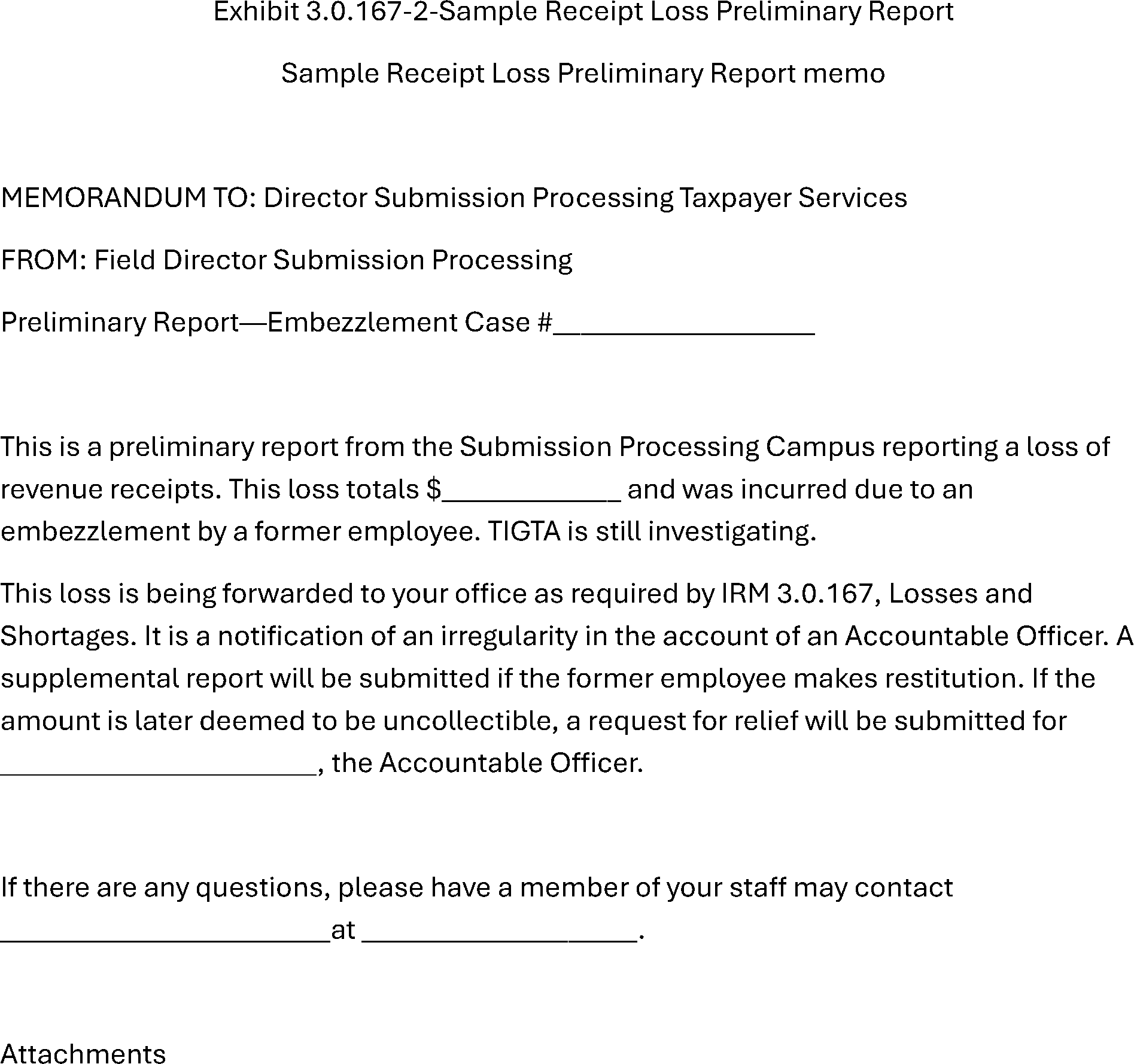

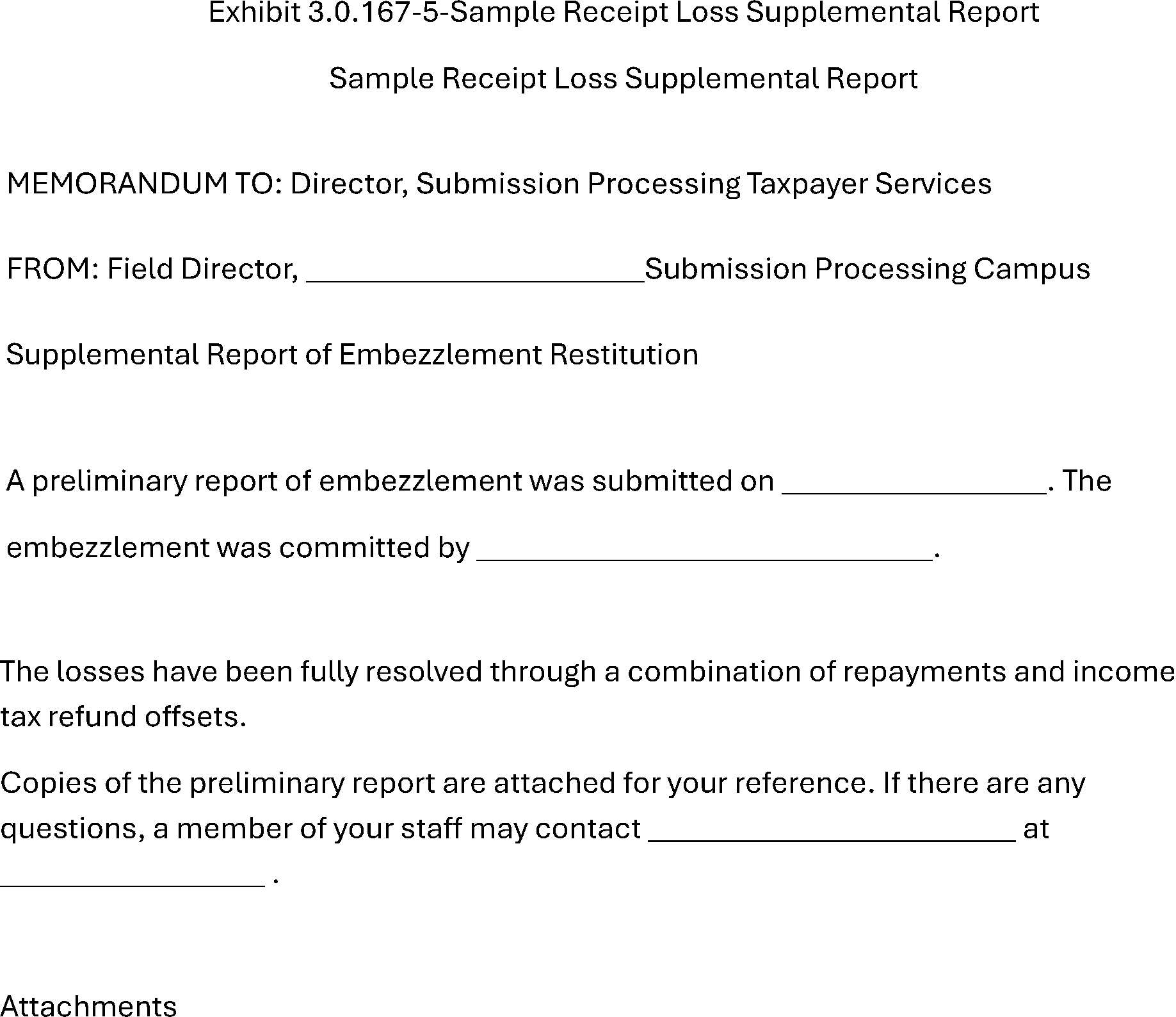
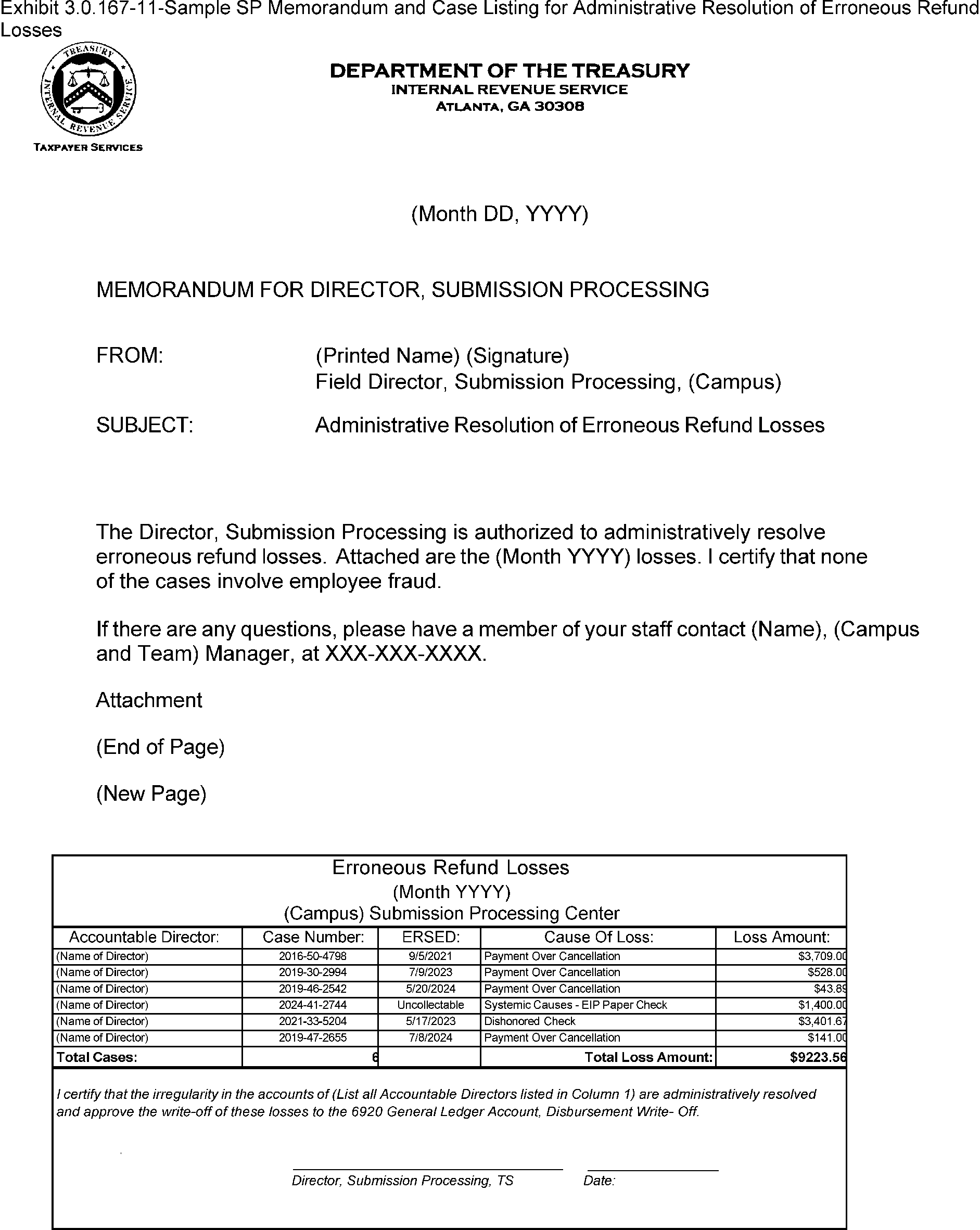
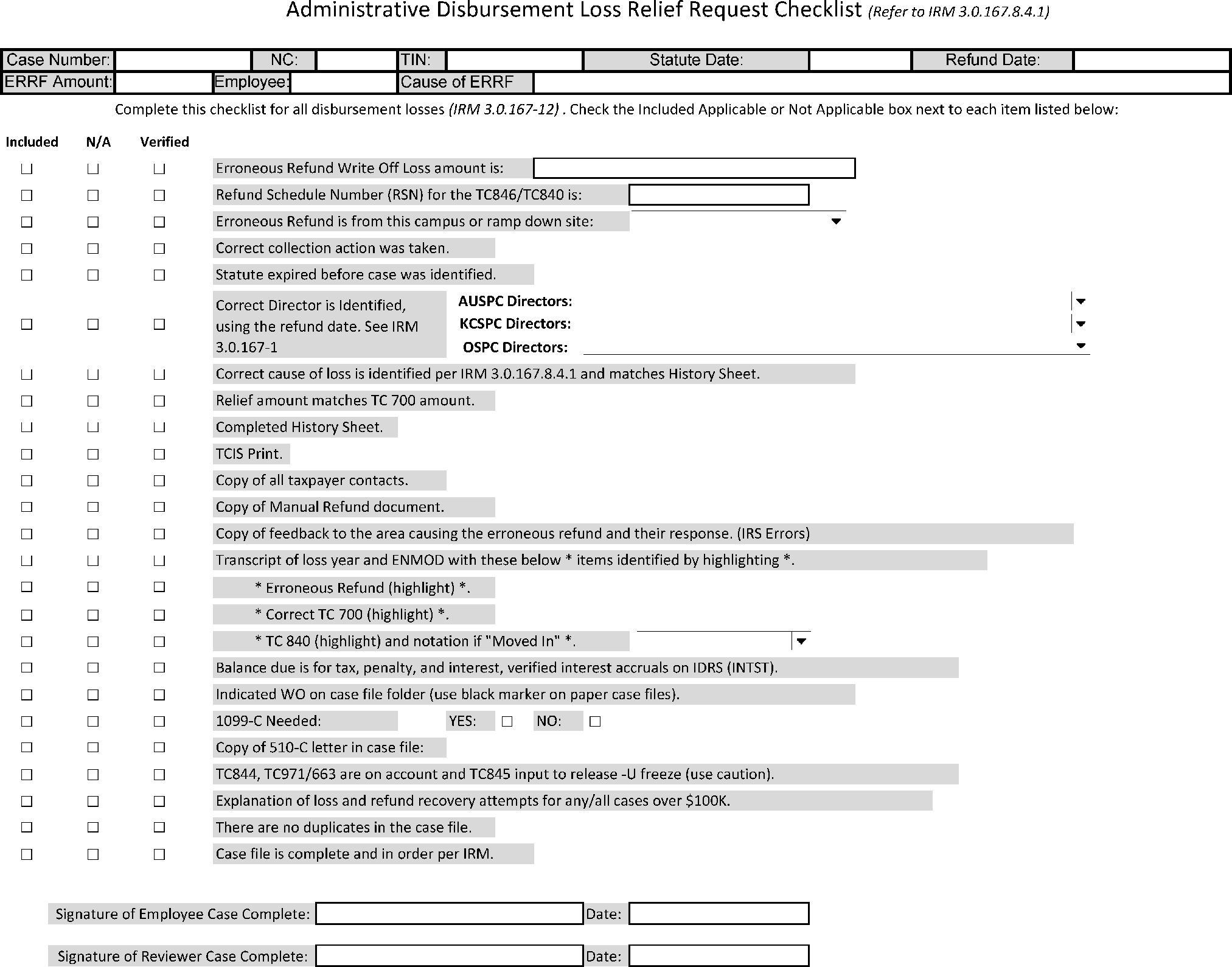
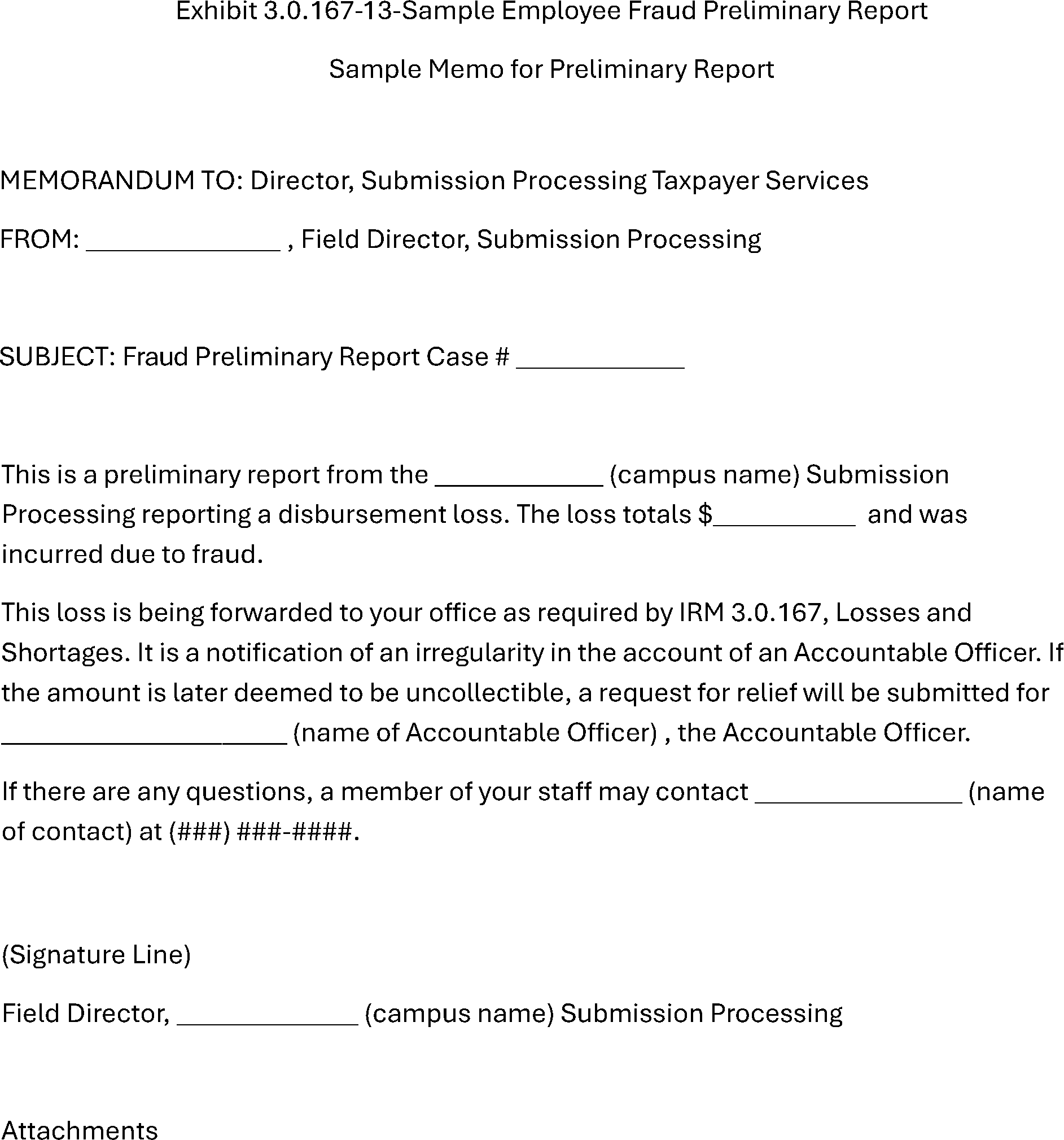
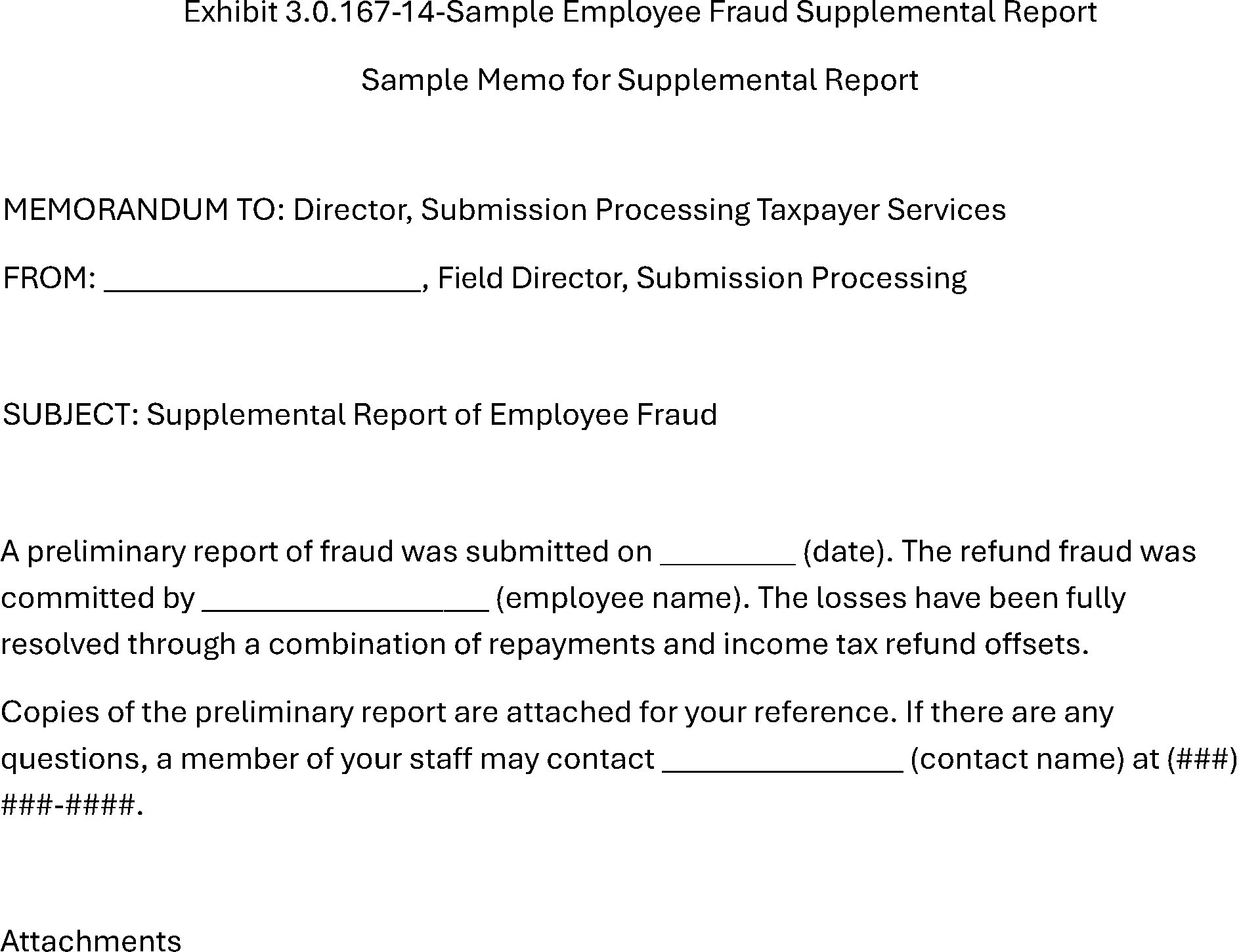
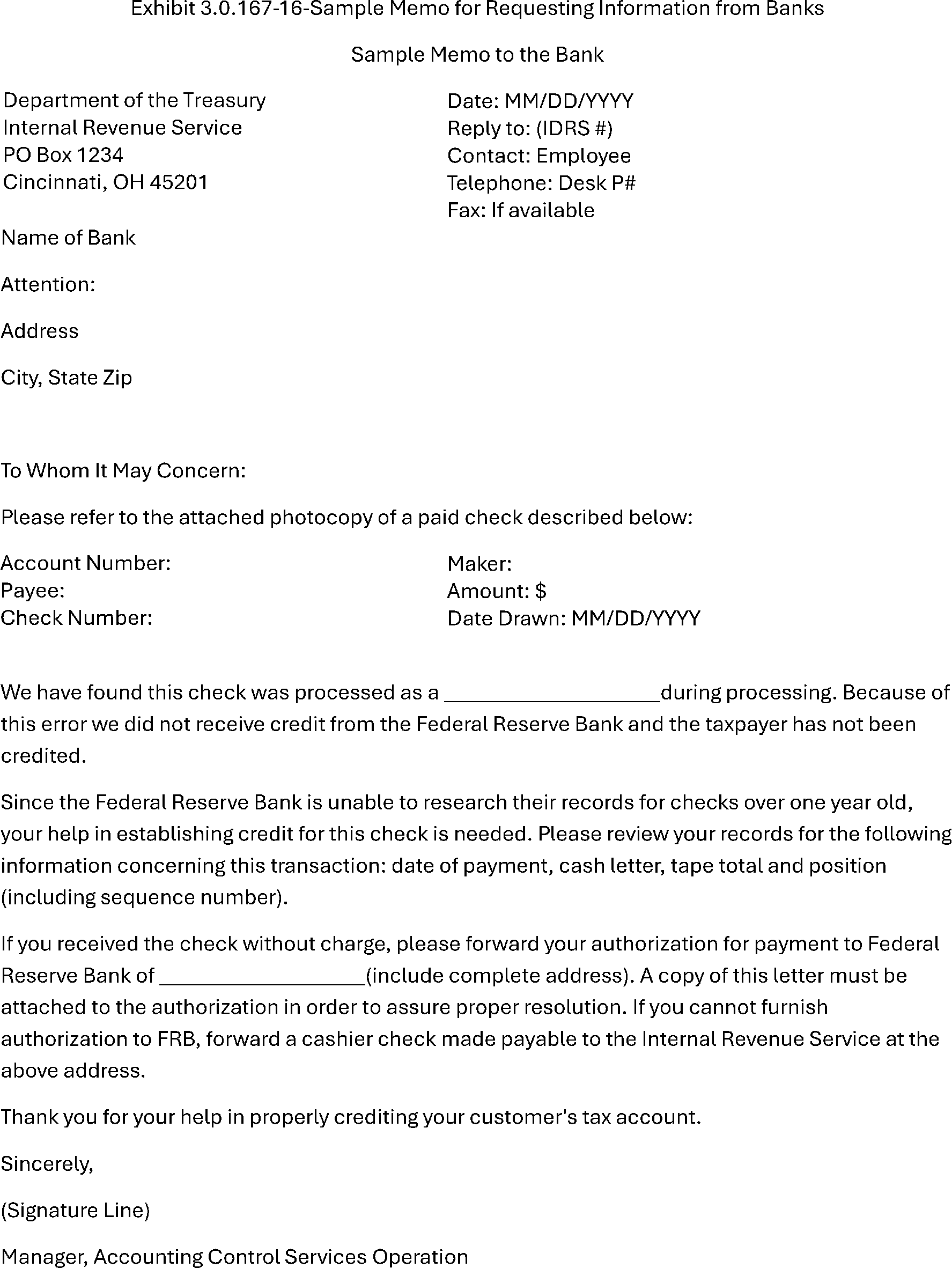
This checklist is used to verify all actions have been taken by the campus employee when a Field Director is leaving the campus.
| Action Item | Assigned to | Completed (initial/date) |
|---|---|---|
| 1. Identify coordinators under your accounting jurisdiction. | Assigned to | Completed (initial/date) |
| 2. Complete Record of Contents of Safes/Vaults Spreadsheet. | Assigned to | Completed (initial/date) |
| 3. Change vault/safe combination. | Assigned to | Completed (initial/date) |
| 4. Review and update list of employees with vault combination. | Assigned to | Completed (initial/date) |
| 5. Order signature stamp with new director's name. | Assigned to | Completed (initial/date) |
| 6. Dispose of stamps bearing name/signature of outgoing director. | Assigned to | Completed (initial/date) |
| 7. Dispose of form letters bearing outgoing director's signature. | Assigned to | Completed (initial/date) |
| 8. Change name on system, notices, and letters from outgoing director to the incoming director. | Assigned to | Completed (initial/date) |
| 9. Verify that systems, notices and letters have the correct director's name and signature. | Assigned to | Completed (initial/date) |
| 10. Review and revise Delegations of Authority. | Assigned to | Completed (initial/date) |
| 11. Payments received on the transfer date, not included in the regular deposit, will have separate deposit tickets prepared and marked UNDEPOSITED COLLECTIONS, the undeposited DT's are included in the package. | Assigned to | Completed (initial/date) |
| 7. Dispose of form letters bearing outgoing director's signature. | Assigned to | Completed (initial/date) |
| 8. Change name on system, notices, and letters from outgoing director to the incoming director. | Assigned to | Completed (initial/date) |
| 9. Verify that systems, notices and letters have the correct director's name and signature. | Assigned to | Completed (initial/date) |
| 10. Review and revise Delegations of Authority. | Assigned to | Completed (initial/date) |
| 11. Payments received on the transfer date, not included in the regular deposit, will have separate deposit tickets prepared and marked UNDEPOSITED COLLECTIONS, the undeposited DT's are included in the package. | Assigned to | Completed (initial/date) |
| 12. Dishonored Checks - Inform Dishonored Check Unit the last date for offset deposit tickets requests is one week prior to the transfer. Dishonored Check DV's are added to the 1710 Account. DCF-03 are balanced daily and RRACS journalizes under the correct accountability. | Assigned to | Completed (initial/date) |
| 13. District Office Inventory (DOI) - Advance verification and reconciliation. Final DOI certified and included in the package (Ogden Only). | Assigned to | Completed (initial/date) |
| 14. Losses and Shortages - Contact the Remittance Security Coordinator for any new cases affecting accountability. | Assigned to | Completed (initial/date) |
| 15. CIR - Verify all DTs and DVs dated on or prior to the transfer date are journaled. Resolve outstanding deposit tickets. Journal outstanding DVs to 1720 Account. | Assigned to | Completed (initial/date) |
| 16. Include General Ledger trial balance in the package. | Assigned to | Completed (initial/date) |
| 17. Month end balance for date of transfer for Accounts 3200, 3300, and 7100 to be included on the Form 3997 (Ogden only). | Assigned to | Completed (initial/date) |
| 18. Prepare Form 3996, 3997 and SF224 for the transfer date. Note:Do not enter SF224 into CARS or transmit to Bureau of Fiscal Service (BFS). Upload a copy of the Form 3996 and Form 3997 to SharePoint. | Assigned to | Completed (initial/date) |
| 19. Prepare Accountability Package as instructed in IRM 3.0.167, Losses and Shortages. Original in GAO Site Audit file copies to both Directors, Campus Accounting and Director, Submission Processing TS | Assigned to | Completed (initial/date) |
| 20. Prepare a memorandum from both directors to the Director, Submission Processing TS stating that both have reviewed their records of accountability and concur with the results. | Assigned to | Completed (initial/date) |
This spreadsheet is used to a log and track all Remittance Security cases each year.
| Site | Case Num | Amount | TIGTA Date | IRS Date | Memo Rcvd | Loss Date | RSC Date | Source Referral Date | Date Reported to PGLD /IM | Status | Comments |
-
Site — Submission Processing Campus or Taxpayer Assistance Center (TAC) where the loss occurred
-
Case Number — Case number assigned to the loss by TIGTA (or CSIRC number, if not available)
-
Amount — Amount of Loss
-
TIGTA Date — Date TIGTA was informed of a loss or potential loss
-
IRS Date — Date IRS was aware of the loss or potential loss
-
Memo Received — Date IRS received the TIGTA Memorandum reporting the loss and identifying the injured taxpayers needing accounts credited, if applicable
-
Loss Date — Date the remittance was lost or stolen
-
RSC Date — Date the Remittance Security Coordinator was informed of a loss or potential loss
-
Source/Referred to RSC — Where the loss or potential loss occurred or where the remittance was mailed: Lockbox Bank (Bank Name), Campus (Campus), Field Office (Field), or if NOT stolen by IRS or Lockbox employee (Non-IRS)/Who referred the case to the RSC: TIGTA (0), Customer Service (1), TAS (2), Field (3), Lockbox Bank (4), Lockbox Coordinator (5), Receipt Loss Coordinator (6), Field Office Payment Processing (7) and Other (8), identify in comments
-
Date Reported to PGLD/IM — Date the RSC reported the loss to PGLD/IM (if Lockbox is the source, use N/A)
-
Status - Status of the case listed as open or closed
-
Comments — Any information that explains the case, number of taxpayers (if more than 1), specific office if Taxpayer Assistance Center, date the case was closed or cycle the credit posted to correct the account
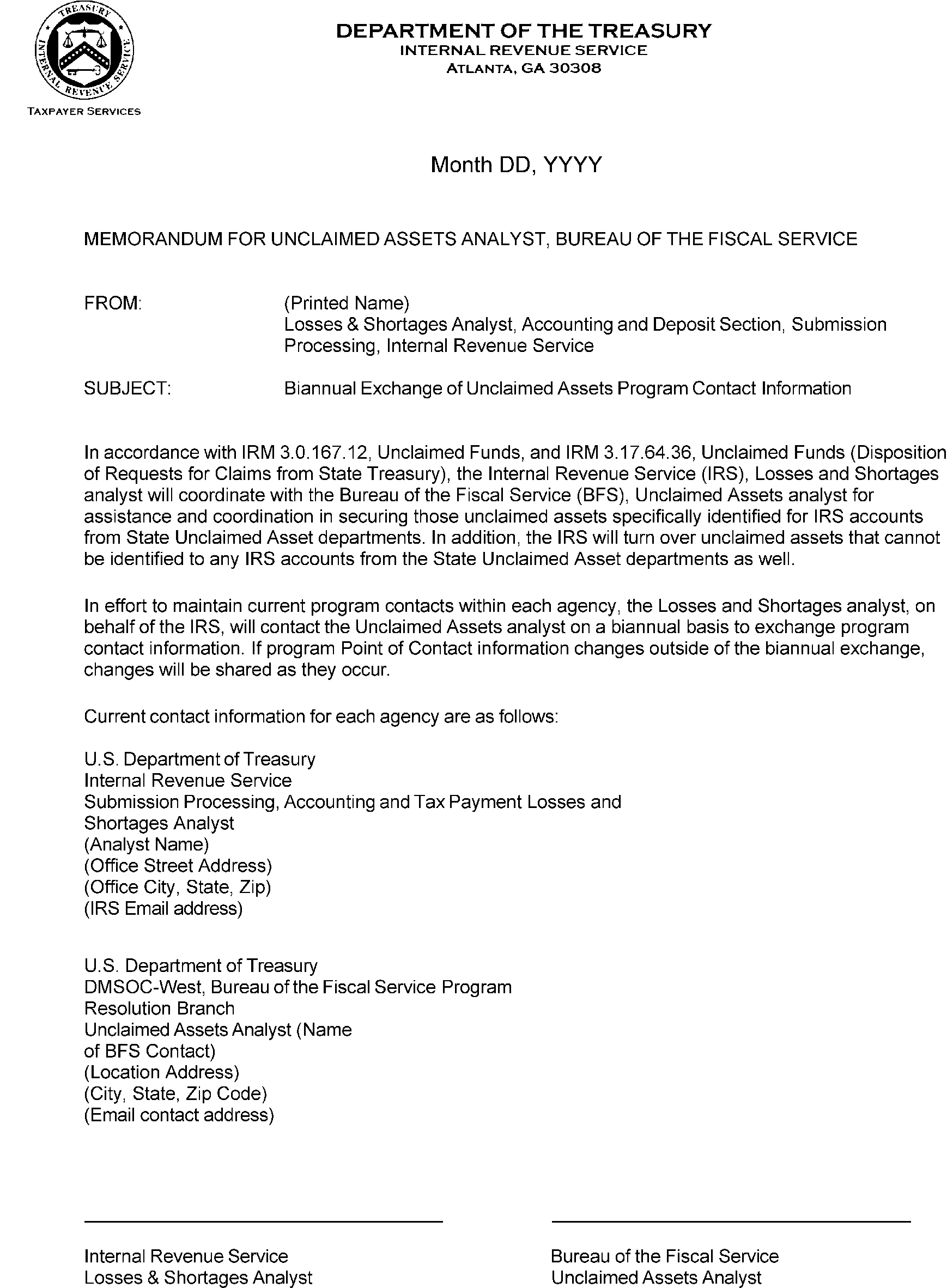
| Acronym | Definition |
|---|---|
| AUSA | Assistant United States Attorney |
| BPD | Bureau of Public Debt |
| BFS | Bureau of Fiscal Service |
| CADE | Customer Accounts Data Engine |
| CARS | Central Accounting Reporting System |
| CC | Command Code |
| CDDB | Custodial Detail Database |
| CFO | Chief Financial Officer |
| CI | Criminal Investigation |
| CTA | Classification Transaction and Accountability |
| CSIRC | Computer Security Incident Response Center |
| DCF | Dishonored Check File |
| DO | Delegation Order |
| DOJ | Department of Justice |
| DLN | Document Locator Number |
| ECP | Electronic Check Processing |
| FASAB | Federal Accounting Standards Advisory Board |
| FCCA | Federal Claims Collection Act |
| FFMIA | Federal Financial Management Improvement Act |
| FRB | Federal Reserve Bank |
| GAO | Government Accountability Office |
| GLISA | Government Losses in Shipment Act |
| HQ | Headquarters |
| IDT | Identity Theft |
| IPAC | Intra-Governmental Payment and Collections |
| IPACR | Intra-Governmental Payment and Collections Receipts |
| IRM | Internal Revenue Manual |
| IT | Information Technology |
| NMF | Non-Masterfile |
| OAR | Operations Assistance Request |
| PAR | Personnel Action Request |
| PGLD/IM | Office of Privacy, Governmental Liaison and Disclosure (PGLD) Incident Management (IM) |
| PII | Personally Identifiable Information |
| POC | Payment over Cancellation |
| ROI | Report of Investigation |
| RPM | Return Preparer Misconduct |
| RRACS | Redesigned Revenue Accounting Control System |
| RSC | Remittance Security Coordinator |
| SAC | Special Agent In Charge |
| SAMC | Situational Awareness Management Center |
| SOC | Sub-Object Code |
| SF | Standard Form |
| SP | Submission Processing |
| TAC | Taxpayer Assistance Center |
| TAS | Taxpayer Advocate Service |
| TC | Transaction Code |
| TD | Treasury Directive |
| TDA | Tax Delinquent Account |
| TIGTA | Treasury Inspector General for Tax Administration |
| TFM | Treasury Financial Manual |
| TS | Taxpayer Services |
| U.S.C. | United States Code |