


 )
or https:// means you've safely connected to the .gov website. Share sensitive information only on official, secure websites.
)
or https:// means you've safely connected to the .gov website. Share sensitive information only on official, secure websites.


- HIGHLIGHTS OF THIS ISSUE
- Part I
- Part III
- Notice of Intent to Issue Regulations with Respect to Saver’s Match Contributions
- Guidance on Section 324 of the SECURE 2.0 Act with Respect to Rollovers
- Application Procedures for Letter Rulings and Nonbank Trustee Approval Letters from IRS Employee Plans
- Part IV
- Definition of Terms
- Numerical Finding List1
- Finding List of Current Actions on Previously Published Items1
- How to get the Internal Revenue Bulletin
Internal Revenue Bulletin: 2026-35
August 24, 2026
These synopses are intended only as aids to the reader in identifying the subject matter covered. They may not be relied upon as authoritative interpretations.
This notice provides the inflation adjustment factor for the section 43 enhanced oil recovery credit taxable years beginning in calendar year 2026. The inflation adjustment factor is used for determining the phase-out amount, if any, of the credit. The inflation adjustment factor is a fraction where the numerator is the GNP implicit price deflator for the preceding calendar year and the denominator is the GNP implicit price deflator for 1990. Section 43(b)(1) phases out the credit by an amount which bears the same ratio to the credit as the amount by which the reference price for the preceding calendar year exceeds the inflation adjusted $28, bears to $6. The Section 43 credit is partially phased out for the 2026 calendar year.
Special Use Value: Farms: Interest Rates.
The 2026 interest rates to be used in computing the special use value of farm real property for which an election is made under section 2032A of the Code are listed for estate of decedents.
26 CFR 20.2032A-4: Method of valuing farm real property.
This announcement notifies the public that the IRS intends to issue opinion letters on August 31, 2026, or as soon as possible thereafter, for defined contribution qualified pre-approved plans that were updated for changes in plan qualification requirements listed in the 2023 Cumulative List and that were filed with the IRS during the fourth remedial amendment cycle (Cycle 4) under the remedial amendment cycle system for pre-approved plans. This announcement also provides a deadline for when an employer intending to maintain a Cycle 4 defined contribution qualified pre-approved plan must adopt that plan, and sets forth the period during which the IRS will accept an application for an individual determination letter from an adopting employer of a Cycle 4 defined contribution qualified pre-approved plan that is eligible to submit a determination letter request.
This notice informs taxpayers that the Treasury Department and the IRS intend to propose regulations providing guidance under section 6433 of the Internal Revenue Code with respect to Saver’s Match contributions. In addition, this notice discusses Executive Order 14403 and its interaction with Saver’s Match contributions. It addresses certain questions related to Saver’s Match contributions that the Treasury Department and the IRS intend to address in those proposed regulations. It also contains a request for comments regarding Saver’s Match contributions, including whether the methods for claiming and paying Saver’s Match contributions that are under consideration should be simplified or revised to ease the burden of implementing Saver’s Match contributions.
This notice provides guidance in accordance with section 324 of the SECURE 2.0 Act of 2022. The notice applies to rollovers between retirement plans and individual retirement accounts (IRAs), but not to IRA-to-IRA transfers. Section II of this notice sets forth general background information on the rollover process. In section III of this notice, the Department of the Treasury (Treasury Department) and the Internal Revenue Service (IRS) propose a series of sample forms and proposed rollover procedures, attached as an Appendix to this Notice, intended to comply with section 324. Section IV of this notice sets forth additional guidance under consideration by the Treasury Department and the IRS. Section V of this notice provides instructions on how to submit comments on this notice and any other aspect of section 324.
This revenue procedure updates the application procedures in Rev. Proc. 2026-4 for requesting letter rulings and nonbank trustee approval letters issued by the IRS Tax Exempt and Government Entities Division, Employee Plans Rulings and Agreements Office. The modifications to Rev. Proc. 2026-4 will streamline these application procedures by requiring that applications be submitted electronically, rather than by mail or hand delivery, on pay.gov using Form 15662.
Provide America’s taxpayers top-quality service by helping them understand and meet their tax responsibilities and enforce the law with integrity and fairness to all.
The Internal Revenue Bulletin is the authoritative instrument of the Commissioner of Internal Revenue for announcing official rulings and procedures of the Internal Revenue Service and for publishing Treasury Decisions, Executive Orders, Tax Conventions, legislation, court decisions, and other items of general interest. It is published weekly.
It is the policy of the Service to publish in the Bulletin all substantive rulings necessary to promote a uniform application of the tax laws, including all rulings that supersede, revoke, modify, or amend any of those previously published in the Bulletin. All published rulings apply retroactively unless otherwise indicated. Procedures relating solely to matters of internal management are not published; however, statements of internal practices and procedures that affect the rights and duties of taxpayers are published.
Revenue rulings represent the conclusions of the Service on the application of the law to the pivotal facts stated in the revenue ruling. In those based on positions taken in rulings to taxpayers or technical advice to Service field offices, identifying details and information of a confidential nature are deleted to prevent unwarranted invasions of privacy and to comply with statutory requirements.
Rulings and procedures reported in the Bulletin do not have the force and effect of Treasury Department Regulations, but they may be used as precedents. Unpublished rulings will not be relied on, used, or cited as precedents by Service personnel in the disposition of other cases. In applying published rulings and procedures, the effect of subsequent legislation, regulations, court decisions, rulings, and procedures must be considered, and Service personnel and others concerned are cautioned against reaching the same conclusions in other cases unless the facts and circumstances are substantially the same.
The Bulletin is divided into four parts as follows:
Part I.—1986 Code. This part includes rulings and decisions based on provisions of the Internal Revenue Code of 1986.
Part II.—Treaties and Tax Legislation. This part is divided into two subparts as follows: Subpart A, Tax Conventions and Other Related Items, and Subpart B, Legislation and Related Committee Reports.
Part III.—Administrative, Procedural, and Miscellaneous. To the extent practicable, pertinent cross references to these subjects are contained in the other Parts and Subparts. Also included in this part are Bank Secrecy Act Administrative Rulings. Bank Secrecy Act Administrative Rulings are issued by the Department of the Treasury’s Office of the Assistant Secretary (Enforcement).
Part IV.—Items of General Interest. This part includes notices of proposed rulemakings, disbarment and suspension lists, and announcements.
The last Bulletin for each month includes a cumulative index for the matters published during the preceding months. These monthly indexes are cumulated on a semiannual basis, and are published in the last Bulletin of each semiannual period.
This revenue ruling contains a list of the average annual effective interest rates on new loans under the Farm Credit System. This revenue ruling also contains a list of the states within each Farm Credit System Bank Territory.
Under § 2032A(e)(7)(A)(ii) of the Internal Revenue Code, rates on new Farm Credit System Bank loans are used in computing the special use value of real property used as a farm for which an election is made under § 2032A. The rates in Table 1 of this revenue ruling may be used by estates that value farmland under § 2032A as of a date in 2026.
Average annual effective interest rates, calculated in accordance with § 2032A(e)(7)(A) and § 20.2032A-4(e) of the Estate Tax Regulations, to be used under § 2032A(e)(7)(A)(ii), are set forth in the accompanying Table of Interest Rates (Table 1). The states within each Farm Credit System Bank Territory are set forth in the accompanying Table of Farm Credit System Bank Territories (Table 2).
Rev. Rul. 81-170, 1981-1 C.B. 454, contains an illustrative computation of an average annual effective interest rate. The rates applicable for valuation in 2025 are in Rev. Rul. 2025-16, 2025-35 I.R.B. 342. For rate information for years prior to 2025, see Rev. Rul. 2024-16, 2024-35 I.R.B. 534, and other revenue rulings that are referenced therein.
The principal author of this revenue ruling is Lane Damazo of the Office of the Associate Chief Counsel (Passthroughs, Trusts, and Estates). For further information regarding this revenue ruling, contact Lane Damazo at (202) 317-4628 (not a toll-free call).
REV. RUL. 2026-14 TABLE 1
| TABLE OF INTEREST RATES (Year of Valuation 2026) | |
| Farm Credit System Bank Servicing State in Which Property is Located | Rate |
| AgFirst, FCB | 6.88 |
| AgriBank, FCB | 6.47 |
| CoBank, ACB | 6.41 |
| Texas, FCB | 6.83 |
REV. RUL. 2026-14 TABLE 2
| TABLE OF FARM CREDIT SYSTEM BANK TERRITORIES | |
| Farm Credit System Bank | Location of Property |
| AgFirst, FCB | Delaware, District of Columbia, Florida, Georgia, Maryland, North Carolina, Pennsylvania, South Carolina, Virginia, West Virginia. |
| AgriBank, FCB | Arkansas, Illinois, Indiana, Iowa, Kentucky, Michigan, Minnesota, Missouri, Nebraska, North Dakota, Ohio, South Dakota, Tennessee, Wisconsin, Wyoming. |
| CoBank, ACB | Alaska, Arizona, California, Colorado, Connecticut, Hawaii, Idaho, Kansas, Maine, Massachusetts, Montana, New Hampshire, New Jersey, New Mexico, New York, Nevada, Oklahoma, Oregon, Rhode Island, Utah, Vermont, Washington. |
| Texas, FCB | Alabama, Louisiana, Mississippi, Texas. |
Section 43(a) of the Internal Revenue Code provides that for purposes of section 38, the enhanced oil recovery credit for any taxable year is an amount equal to 15 percent of the taxpayer’s qualified enhanced oil recovery costs (qualified costs) for such taxable year.
Section 43(b)(1) provides that the amount of the credit determined under § 43(a) for any taxable year shall be reduced by an amount which bears the same ratio to the amount of such credit (determined without regard to this paragraph) as — (A) the amount by which the reference price for the calendar year preceding the calendar year in which the taxable year begins exceeds $28, bears to (B) $6. The term reference price is defined in § 43(b)(2) as, with respect to any calendar year, the reference price determined for such calendar year under § 45K(d)(2)(C). Section 45K(d)(2)(C) provides that, with respect to a calendar year, the reference price is the Secretary’s estimate of the annual average wellhead price per barrel for all domestic crude oil the price of which is not subject to regulation by the United States.
Section 43(b)(3)(A) provides that, for taxable years beginning in a calendar year after 1991, the $28 amount in § 43(b)(1)(A) is adjusted for inflation by multiplying that amount by the inflation adjustment factor for that calendar year. Section 43(b)(3)(B) defines the term inflation adjustment factor as, with respect to any calendar year, a fraction the numerator of which is the GNP implicit price deflator for the preceding calendar year and the denominator of which is the GNP implicit price deflator for 1990. The term GNP implicit price deflator means the first revision of the implicit price deflator for the gross national product, as computed and published by the Secretary of Commerce.
For calendar year 2026, the GNP implicit price deflator for the preceding calendar year (2025) is 128.888 and the GNP implicit price deflator for 1990 is 59.266, yielding an inflation adjustment factor of 2.1747. Accordingly, the $28 amount in § 43(b)(1)(A) is adjusted to $60.892.
Based on data published by the United States Energy Information Administration, domestic first purchase crude oil prices averaged $63.40 per barrel in calendar year 2025. Accordingly, the reference price for calendar year 2025 is $63.40.
Because the reference price for calendar year 2025 ($63.40) exceeds $60.892 by $2.508 (that is, an amount less than $6), a portion of the enhanced oil recovery credit for qualified costs paid or incurred in 2026 is phased out using the following ratio:
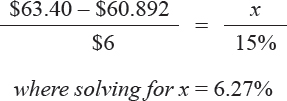
Therefore, the enhanced oil recovery credit is an amount equal to 8.73% (15% – 6.27%) of qualified costs paid or incurred in 2026.
Table 1 contains the GNP implicit price deflator used for calendar year 2026, as well as the previously published GNP implicit price deflators used for calendar years 1991 through 2025.
Notice 2026-46 TABLE 1 GNP IMPLICIT PRICE DEFLATORS
| Calendar Year GNP | Implicit Price Deflator |
|---|---|
| 1990 | 112.9 (used for 1991) |
| 1991 | 117.0 (used for 1992) |
| 1992 | 120.9 (used for 1993) |
| 1993 | 124.1 (used for 1994) |
| 1994 | 126.0 (used for 1995)* |
| 1995 | 107.5 (used for 1996) |
| 1996 | 109.7 (used for 1997)** |
| 1997 | 112.35 (used for 1998) |
| 1998 | 112.64 (used for 1999)*** |
| 1999 | 104.59 (used for 2000) |
| 2000 | 106.89 (used for 2001) |
| 2001 | 109.31 (used for 2002) |
| 2002 | 110.63 (used for 2003) |
| 2003 | 105.67 (used for 2004)**** |
| 2004 | 108.23 (used for 2005) |
| 2005 | 112.129 (used for 2006) |
| 2006 | 116.036 (used for 2007) |
| 2007 | 119.656 (used for 2008) |
| 2008 | 122.407 (used for 2009) |
| 2009 | 109.764 (used for 2010)***** |
| 2010 | 110.654 (used for 2011) |
| 2011 | 113.347 (used for 2012)****** |
| 2012 | 115.387 (used for 2013) |
| 2013 | 106.710 (used for 2014)******* |
| 2014 | 108.407 (used for 2015)******** |
| 2015 | 109.868 (used for 2016) |
| 2016 | 111.528 (used for 2017) |
| 2017 | 113.500 (used for 2018) |
| 2018 | 110.308 (used for 2019)********* |
| 2019 | 112.257 (used for 2020) |
| 2020 | 113.586 (used for 2021) |
| 2021 | 118.586 (used for 2022)********** |
| 2022 | 127.194 (used for 2023) |
| 2023 | 122.179 (used for 2024)*********** |
| 2024 | 125.139 (used for 2025) |
| 2025 | 128.888 (used for 2026) |
* Beginning in 1995, the GNP implicit price deflator was rebased relative to 1992. The 1990 GNP implicit price deflator used to compute the 1996 § 43 inflation adjustment factor is 93.6.
** Beginning in 1997, two digits follow the decimal point in the GNP implicit price deflator. The 1990 GNP price deflator used to compute the 1998 § 43 inflation adjustment factor is 93.63.
*** Beginning in 1999, the GNP implicit price deflator was rebased relative to 1996. The 1990 GNP implicit price deflator used to compute the 2000 § 43 inflation adjustment factor is 86.53.
**** Beginning in 2003, the GNP implicit price deflator was rebased, and the 1990 GNP implicit price deflator used to compute the 2004 § 43 inflation adjustment factor is 81.589.
***** Beginning in 2009, the GNP implicit price deflator was rebased, and the 1990 GNP implicit price deflator used to compute the 2010 § 43 inflation adjustment factor is 72.199.
****** Beginning in 2011, the 1990 GNP implicit price deflator used to compute the 2012 § 43 inflation adjustment factor is 72.260.
******* Beginning in 2013, the GNP implicit price deflator was rebased, and the 1990 GNP implicit price deflator used to compute the 2014 § 43 inflation adjustment factor is 66.803.
******** Beginning in 2014, the 1990 GNP implicit price deflator used to compute the 2015 § 43 inflation adjustment factor is 66.732.
********* Beginning in 2018, the 1990 GNP implicit price deflator used to compute the 2019 § 43 inflation adjustment factor is 63.637.
********** Beginning in 2021, the 1990 GNP implicit price deflator used to compute the 2022 § 43 inflation adjustment factor is 63.604.
*********** Beginning in 2023, the 1990 GNP implicit price deflator used to compute the 2024 § 43 inflation adjustment factor is 59.266.
Table 2 contains the inflation adjustment factor and the phase-out amount for taxable years beginning in calendar year 2026 as well as the previously published inflation adjustment factors and phase-out amounts for taxable years beginning in calendar years 1991 through 2025.
Notice 2026-46 TABLE 2 INFLATION ADJUSTMENT FACTORS AND PHASE-OUT AMOUNTS
| Calendar Year | Inflation Adjustment Factor | Phase-out Amount |
|---|---|---|
| 1991 | 1.0000 | 0 |
| 1992 | 1.0363 | 0 |
| 1993 | 1.0708 | 0 |
| 1994 | 1.0992 | 0 |
| 1995 | 1.1160 | 0 |
| 1996 | 1.1485 | 0 |
| 1997 | 1.1720 | 0 |
| 1998 | 1.1999 | 0 |
| 1999 | 1.2030 | 0 |
| 2000 | 1.2087 | 0 |
| 2001 | 1.2353 | 0 |
| 2002 | 1.2633 | 0 |
| 2003 | 1.2785 | 0 |
| 2004 | 1.2952 | 0 |
| 2005 | 1.3266 | 0 |
| 2006 | 1.3743 | 100 percent |
| 2007 | 1.4222 | 100 percent |
| 2008 | 1.4666 | 100 percent |
| 2009 | 1.5003 | 100 percent |
| 2010 | 1.5203 | 100 percent |
| 2011 | 1.5326 | 100 percent |
| 2012 | 1.5686 | 100 percent |
| 2013 | 1.5968 | 100 percent |
| 2014 | 1.5974 | 100 percent |
| 2015 | 1.6245 | 100 percent |
| 2016 | 1.6464 | 0 |
| 2017 | 1.6713 | 0 |
| 2018 | 1.7008 | 1.069 percent |
| 2019 | 1.7334 | 100 percent |
| 2020 | 1.7640 | 100 percent |
| 2021 | 1.7849 | 0 |
| 2022 | 1.8607 | 100 percent |
| 2023 | 1.9998 | 100 percent |
| 2024 | 2.0615 100 percent | |
| 2025 | 2.1115 100 percent | |
| 2026 | 2.1747 | 6.27 percent |
This notice informs taxpayers that the Department of the Treasury (Treasury Department) and the Internal Revenue Service (IRS) intend to propose regulations providing guidance with respect to section 6433 of the Internal Revenue Code (Code), as added by section 103 of Division T of the Consolidated Appropriations Act, 2023, Pub. L. 117-328, 136 Stat. 4459 (2022), known as the SECURE 2.0 Act of 2022 (SECURE 2.0 Act), enacted on December 29, 2022. For taxable years beginning after December 31, 2026, section 6433 of the Code allows certain low- and moderate-income individuals who make qualified retirement savings contributions to receive matching contributions of up to $1,000 (Saver’s Match contributions) paid by the Secretary of the Treasury or the Secretary’s delegate (Secretary) to applicable retirement savings vehicles.
Section II of this notice provides a brief overview of Saver’s Match contributions, a description of Notice 2024-65, 2024-39 IRB 633 (requesting comments on Saver’s Match contributions under section 103 of the SECURE 2.0 Act1), and a brief summary of Executive Order No. 14403, 91 FR 24329 (2026) (facilitating Saver’s Match contributions).
Section III of this notice provides more detailed statutory background information regarding Saver’s Match contributions.
Section IV of this notice addresses certain questions related to Saver’s Match contributions that the Treasury Department and the IRS intend to address in the forthcoming proposed regulations. The Treasury Department and the IRS expect that the forthcoming proposed regulations will be consistent with the rules described in section IV of this notice.2
Section V of this notice contains a request for comments regarding Saver’s Match contributions under section 6433 of the Code and section 103 of the SECURE 2.0 Act,3 including whether the methods under consideration for claiming and paying Saver’s Match contributions described in Q&As E-2 and E-3 of this notice should be simplified or revised to ease the burden of implementing Saver’s Match contributions. Comments received will be considered in drafting the forthcoming proposed regulations.
A. Overview
Saver’s Match contributions are matching contributions made by the Treasury Department to an applicable retirement savings vehicle for eligible individuals.4 Saver’s Match contributions are equal to up to 50 percent of $2,000 of qualified retirement savings contributions made by an eligible individual to an employer-sponsored retirement plan or an individual retirement account or annuity under section 408(a) or (b) of the Code (IRA) for taxable years beginning after December 31, 2026. See Q&As B-1 through B-4 of this notice regarding eligibility for Saver’s Match contributions, Q&As C-1 through C-3 of this notice regarding how to calculate Saver’s Match contributions, Q&A D-1 of this notice regarding what types of retirement plans and IRAs are applicable retirement savings vehicles, and Q&As E-1 through E-3 of this notice regarding processes under consideration for claiming and paying Saver’s Match contributions.
B. Notice 2024-65
On September 5, 2024, the Treasury Department and the IRS issued
Notice 2024-65, which requested comments on all aspects of Saver’s Match contributions and asked specific questions on a variety of Saver’s Match contribution topics. In response to the request, comments were received from a variety of stakeholders, including individual taxpayers, tax preparation services, benefits industry trade groups, retirement plan administrators, and recordkeepers. The Treasury Department and the IRS have taken these comments into account in providing this notice.
C. Executive Order No. 14403
On April 30, 2026, President Trump issued Executive Order No. 14403, titled “Promoting Retirement-Savings Access for American Workers by Establishing TrumpIRA.gov.” The Executive Order states that it is the policy of the United States to increase public awareness of Saver’s Match contributions and to facilitate participation in eligible retirement savings vehicles that provide diversified, index-based investment options.
The Executive Order directs the Secretary, by January 1, 2027, to establish a website, TrumpIRA.gov, to provide individuals with information about high-quality, low-cost IRAs, with a particular focus on independent contractors, self-employed individuals, and other workers who do not have access to an employer-sponsored retirement plan. The Executive Order notes that individuals who contribute to IRAs, and who are otherwise eligible, are entitled to a Saver’s Match contribution.
Pursuant to the Executive Order, it is anticipated that TrumpIRA.gov will list financial institutions that offer IRAs, accept Saver’s Match contributions, and satisfy other criteria established by the Secretary consistent with applicable law. In addition, it is anticipated that the website will explain applicable cost and quality criteria for listed IRAs, allow individuals to filter and select IRAs based on those criteria, and provide information regarding the opportunity to receive a Saver’s Match contribution. It is anticipated that, later in 2026, more information will be available for IRA providers that want to be listed on TrumpIRA.gov.
Section 103 of the SECURE 2.0 Act added section 6433 to the Code. For taxable years beginning after December 31, 2026, Saver’s Match contributions replace the Retirement Savings Contributions Credit (Saver’s Credit) under section 25B with respect to elective contributions to qualifying retirement plans and IRAs.5
Section 6433(a)(1) of the Code provides that any eligible individual who makes qualified retirement savings contributions for a taxable year will be allowed a matching contribution for that taxable year in an amount equal to a specified applicable percentage of so much of the qualified retirement savings contributions made by the eligible individual for the taxable year as does not exceed $2,000. Section 6433(a)(2)(A) provides that a Saver’s Match contribution will be allowed as a credit payable as a contribution to the eligible individual’s applicable retirement savings vehicle as soon as practicable after an eligible individual files a tax return making a claim for the contribution. Section 6433(a)(2)(B) provides that an individual who is eligible for a Saver’s Match contribution of greater than zero but less than $100 may elect for the amount of the Saver’s Match contribution to be treated as a refundable income tax credit allowed by subpart C of part IV of subchapter A of chapter 1 of the Code (rather than contributed to the individual’s applicable retirement savings vehicle).
Section 6433(b)(1) provides that the maximum applicable percentage for an eligible individual is 50 percent. Section 6433(b)(2) provides that an eligible individual’s applicable percentage is reduced (but not below zero) by the number of percentage points that bears the same ratio to 50 percentage points as (1) the excess of (a) the eligible individual’s modified adjusted gross income (MAGI) for the taxable year, over (b) the applicable dollar amount, bears to (2) the phaseout range. The applicable dollar amount and the end of the phaseout range for an eligible individual are both determined based on the eligible individual’s taxpayer filing status. Under section 6433(b)(3)(A), for individuals who are either married filing jointly or surviving spouses, the phaseout range is $30,000, beginning at the applicable dollar amount of $41,000 and ending at $71,000. Under section 6433(b)(3)(B)(i), for heads of household, the phaseout range is $22,500 (calculated as ¾ of the $30,000 phaseout range), beginning at the applicable dollar amount of $30,750 (calculated as ¾ of the $41,000 applicable dollar amount) and ending at $53,250. Under section 6433(b)(3)(B)(ii), for individuals who are not married filing jointly, heads of household, or surviving spouses, the phaseout range is $15,000 (calculated as ½ of the $30,000 phaseout range), beginning at the applicable dollar amount of $20,500 (calculated as ½ of the $41,000 applicable dollar amount) and ending at $35,500. For any taxable year beginning in a calendar year after 2027, the applicable dollar amount (and, thus, the beginning and end of the phaseout range) is subject to inflation adjustments under section 6433(h).
Under section 6433(c), an eligible individual for a taxable year is an individual who has attained age 18 as of the close of the taxable year, other than an individual who is (1) a student as defined in section 152(f)(2),6 (2) claimed as a dependent on another taxpayer’s return for a taxable year beginning in the calendar year in which the individual’s taxable year begins, or (3) a nonresident alien (unless the individual has made an election under section 6013(g) or (h) to be treated as a U.S. resident)).
Section 6433(d)(1) provides that the term “qualified retirement savings contributions” means, with respect to any taxable year, the sum of: (1) the amount of the qualified retirement contributions (as defined in section 219(e))7 made by an eligible individual; (2) the amount of (i) any elective deferrals (as defined in section 402(g)(3))8 of the individual and (ii) any elective deferrals of compensation by the individual under a governmental section 457(b) plan; and (3) the amount of voluntary employee contributions by the individual to any qualified retirement plan (as defined in section 4974(c)).9 Qualified retirement savings contributions do not include any amount attributable to a payment of Saver’s Match contributions under section 6433(a)(2).
Section 6433(d)(2)(A) provides that qualified retirement savings contributions are reduced (but not below zero) by the aggregate distributions received by the individual during a specified testing period from any IRA, plan, or annuity of a type to which qualified retirement savings contributions may be made. Section 6433(d)(2)(B) provides that the testing period, with respect to a taxable year, is the period that includes (1) the taxable year during which qualified retirement savings contributions are made, (2) the two preceding taxable years, and (3) the period after the taxable year during which qualified retirement savings contributions are made and before the due date (including extensions) for filing the tax return for that taxable year. Section 6433(d)(2)(C) provides that certain distributions made during the testing period are not taken into account for purposes of determining whether a taxpayer received a distribution under section 6433(d)(2)(A). Distributions not taken into account include (1) any distribution referred to in section 72(p), 401(k)(8), 401(m)(6), 402(g)(2), 404(k), or 408(d)(4), (2) any distribution to which section 408(d)(3) or 408A(d)(3) applies, and (3) any portion of a distribution if the portion is transferred or paid in a rollover contribution (as defined in section 402(c), 403(a)(4), 403(b)(8), 408A(e), or 457(e)(16)) to an account or plan to which qualified retirement savings contributions can be made. Section 6433(d)(2)(D) provides that any distribution received by the spouse of an eligible individual is treated as received by that eligible individual if the eligible individual and spouse file a joint return for the taxable year for which the Saver’s Match contribution is claimed and for the taxable year during which the spouse receives the distribution.
Under section 6433(e)(1) and (2), an applicable retirement savings vehicle to which Saver’s Match contributions may be made for an eligible individual is an account or plan elected by the individual that (1) is (a) the portion of a plan that is a governmental section 457(b) plan, a qualified cash or deferred arrangement (within the meaning of section 401(k)), or an annuity contract described in section 403(b) that is purchased under a salary reduction agreement, and does not consist of a qualified Roth contribution program (as defined in section 402A(b)), or (b) an individual retirement plan that is not a Roth IRA, (2) is for the benefit of an eligible individual, (3) accepts Saver’s Match contributions, and (4) is designated by the eligible individual, in such form and manner as the Secretary may provide.
Section 6433(f)(1) provides that the term “modified adjusted gross income” (MAGI) means adjusted gross income for a taxable year determined without regard to sections 911 (citizens or residents of the United States living abroad), 931 (income from sources within Guam, American Samoa, or the Northern Mariana Islands), and 933 (income from sources within Puerto Rico), and determined without regard to any exclusion or deduction allowed for any qualified retirement savings contribution made during the taxable year.
Section 6433(f)(2)(A) provides that if contributed to an applicable retirement savings vehicle, a Saver’s Match contribution is treated as an elective deferral made by an eligible individual or as an IRA contribution made by an eligible individual (as applicable), except as provided by the Secretary under regulations. Section 6433(f)(2)(B) provides that a Saver’s Match contribution will not be taken into account with respect to any applicable limitation under section 402(g)(1), 403(b), 408(a)(1), 408(b)(2)(B), 408A(c)(2), 414(v)(2), 415(c), or 457(b)(2), and will be disregarded for purposes of sections 401(a)(4), 401(k)(3), 401(k)(11)(B)(i)(III), and 416. In addition, under section 6433(f)(2)(C), an eligible individual’s Saver’s Match contribution is not treated as an amount that may be paid, made available, or distributable to the eligible individual under section 401(k)(2)(B)(i)(IV) or 403(b)(7)(A)(i)(V) (hardship distributions), or section 457(d)(1)(A)(iii) (unforeseeable emergency distributions).
Section 6433(f)(3) provides that any applicable retirement savings vehicle to which a Saver’s Match contribution is made will not be treated as violating any requirements under section 401, 403, 408, or 457, as applicable, solely by reason of accepting that contribution. Section 6433(f)(4)(A) provides that, if any contribution is erroneously paid under section 6433(a)(2) (including a payment that is not made to an applicable retirement savings vehicle), the amount of that erroneous payment will be treated as an underpayment of tax, other than for purposes of part II of subchapter A of chapter 68 (accuracy-related and fraud penalties), for the taxable year in which the Secretary determines the payment is erroneous. Section 6433(f)(4)(B)(i) provides that, in the case of a contribution to which section 6433(f)(4)(A) applies, section 402(a), 403(a)(1), 403(b)(1), 408(d)(1), or 457(a)(1), whichever is applicable, will not apply to any distribution of the contribution, and section 72(t) will not apply to the distribution of the contribution or any income attributable to the distribution, if the distribution is received not later than the day prescribed by law (including extensions of time) for filing the individual’s return for the taxable year. Section 6433(f)(4)(B)(ii) provides that any plan or arrangement from which a distribution is made under section 6433(f)(4)(B) will not be treated as violating any requirement under section 401, 403, or 457 solely by reason of making the distribution.
Section 6433(f)(5) provides that any payment made to any individual under section 6433 is not subject to reduction or offset under section 6402(c), (d), (e), or (f) or any similar authority permitting offset and is not reduced or offset by other assessed federal taxes that would otherwise be subject to levy or collection.
Section 6433(f)(6) provides that, in the case of an applicable retirement savings vehicle to which contributions have been made under section 6433(a)(2) and from which a specified early distribution has been made during the taxable year, if the aggregate amount of those contributions exceeds the account balance of that savings vehicle at the end of the taxable year, an additional tax applies (Saver’s Match recovery tax). Section 6433(f)(6)(A) and (D) provides that this Saver’s Match recovery tax is equal to the amount of the excess described in the prior sentence, reduced by (1) the amount of the 10 percent additional tax on early distributions under section 72(t)(1) that applies to the distribution and (2) allocable investment losses (pursuant to such rules prescribed by the Secretary as may be appropriate). Section 6433(f)(6)(B) provides that a specified early distribution is any portion of a distribution (1) that is made from the applicable retirement savings vehicle to which Saver’s Match contributions have been made, (2) that is includible in gross income, and (3) to which the 10 percent additional tax on early distributions under section 72(t)(1) applies.
Section 6433(f)(6)(C) provides that an eligible individual may also reduce the Saver’s Match recovery tax (but not below zero) for a taxable year during which a specified early distribution has been made by making additional contributions not in excess of the amount of the specified early distribution to an applicable retirement savings vehicle to which rollover contributions may be made. The Saver’s Match recovery tax is reduced to the extent of the additional contributions. The additional contributions must be made by the due date (including extensions) of the eligible individual’s tax return for the taxable year for which the Saver’s Match recovery tax would otherwise be owed. In addition, an eligible individual’s additional contributions to an applicable retirement savings vehicle that is not an IRA may be made to the vehicle only if the individual is otherwise eligible to make contributions to the vehicle. Under section 6433(f)(6)(C)(iv) and (v), these additional contributions are treated as having been transferred in a direct trustee-to-trustee transfer within 60 days of the specified early distribution.
Section 6433(g) provides that in the case of an amount elected by an eligible individual to be contributed to an account or plan under section 6433(e)(2), the Secretary will provide general guidance applicable to the custodian of the account or the plan sponsor detailing the treatment of the contribution under section 6433(f)(2) and the reporting requirements with respect to the contribution under section 6058, particularly as the requirements are modified pursuant to section 103(c)(2)10 of the SECURE 2.0 Act.
Section 6433(h)(1) of the Code provides that for any taxable year beginning in a calendar year after 2027, the $41,000 amount in section 6433(b)(3)(A)(i) will be increased by an amount equal to $41,000, multiplied by the cost-of-living adjustment determined under section 1(f)(3) for the calendar year in which the taxable year begins, determined by substituting “calendar year 2026” for “calendar year 2016” in section 1(f)(3)(A)(ii).11 Section 6433(h)(2) provides that any such increase will be rounded to the nearest multiple of $1,000.
Section 103(c)(2) of the SECURE 2.0 Act provides for the amendment of forms to require separate reporting of the aggregate amount of Saver’s Match contributions received by an applicable retirement savings vehicle. Section 103(c)(2)(A) provides for the amendment of forms required under section 6058 of the Code for reporting the aggregate amount of Saver’s Match contributions received by a retirement plan during a plan year. Section 103(c)(2)(B) of the SECURE 2.0 Act provides for similar reporting with respect to IRAs.
The Treasury Department and the IRS intend to propose regulations consistent with the answers to the questions set forth in this section IV.
A. Saver’s Match Contributions – Comparison to Saver’s Credit; Tax Treatment
Q. A-1: How do Saver’s Match contributions differ from the Saver’s Credit?
A. A-1: In general, for taxable years beginning after December 31, 2026, Saver’s Match contributions will replace the Saver’s Credit under section 25B of the Code with respect to elective contributions to qualifying retirement plans and IRAs.12 However, the Saver’s Credit continues to be available after December 31, 2026, with respect to contributions made to ABLE accounts described in section 529A.
Saver’s Match contributions are amounts that are generally paid directly to an eligible individual’s applicable retirement savings vehicle, even if the individual has no income tax liability. In contrast, the Saver’s Credit is a nonrefundable tax credit that cannot exceed the amount of an individual’s tax liability. Another difference between Saver’s Match contributions and the Saver’s Credit is that ABLE account contributions may not be taken into account for Saver’s Match contributions, but ABLE account contributions may continue to be taken into account for the Saver’s Credit after December 31, 2026. Also, there are differences in income thresholds for eligibility, differences in the way income changes affect Saver’s Match contributions and Saver’s Credit amounts, and other income calculation differences. In addition, section 6433(c)(3) provides that the definition of eligible individual does not include any nonresident alien for any portion of the taxable year who is not treated as a resident of the United States for the taxable year for purposes of chapter 1 of the Code by reason of an election under section 6013(g) or (h).13 See Q&As C-1 through C-3 of this notice for further details regarding Saver’s Match contribution calculations.
Finally, for taxable years beginning after December 31, 2026, Saver’s Match contributions would be claimed on a new (not yet published) Form 8880-A, Saver’s Match for Qualified Retirement Savings Contributions (or a successor form). It is anticipated that, with respect to contributions to ABLE accounts, the Saver’s Credit would continue to be claimed on Form 8880, Credit for Qualified Retirement Savings Contributions (which will be revised to reflect section 103 of the SECURE 2.0 Act and section 70116 of OBBBA).
Q. A-2: What are the income tax rules with respect to Saver’s Match contributions?
A. A-2: Saver’s Match contributions are not includible in gross income when they are contributed to an applicable retirement savings vehicle of an eligible individual. However, distributions from an applicable retirement savings vehicle attributable to Saver’s Match contributions are subject to income tax for the year of distribution (unless they are rolled over or transferred through a trustee-to-trustee transfer into another retirement plan or IRA). If the eligible individual has not attained age 59½ on the date of distribution, a 10 percent additional tax on early distributions under section 72(t)(1) of the Code and a Saver’s Match recovery tax under section 6433(f)(6) may apply. See Publication 575, Pension and Annuity Income, under the heading “Tax on Early Distributions,” and Publication 590-B, Distributions from Individual Retirement Arrangements (IRAs), under the heading “Early Distributions,” for more information about the 10 percent additional tax on early distributions under section 72(t)(1) and the exceptions to that tax.
B. Eligibility for Saver’s Match Contributions
Q. B-1: Who is an eligible individual for purposes of claiming a Saver’s Match contribution?
A. B-1: In general, an eligible individual for purposes of claiming a Saver’s Match contribution is an individual who is at least age 18 before the end of the taxable year for which the individual makes qualified retirement savings contributions on which the claim for a Saver’s Match contribution is based. However, an eligible individual does not include an individual who is a student under section 152(f)(2) for the taxable year, an individual claimed as a dependent on another taxpayer’s tax return for the taxable year, or a nonresident alien who is not treated for such taxable year as a resident of the United States by reason of an election under section 6013(g) or (h).
Q. B-2: What are qualified retirement savings contributions for a taxable year that are taken into account for purposes of determining an eligible individual’s Saver’s Match contribution for the taxable year?
A. B-2: In general, an eligible individual’s qualified retirement savings contributions of up to $2,000 for a taxable year that are taken into account for purposes of determining the individual’s Saver’s Match contribution for the taxable year consist of the following four types of contributions:
(1) contributions to a traditional or Roth IRA;
(2) elective deferrals (as defined in section 402(g)(3)), such as elective deferrals to a section 401(k) plan (including a SIMPLE 401(k) plan), section 403(b) plan, governmental section 457(b) plan, section 408(p) SIMPLE IRA plan, or section 408(k) SEP arrangement;
(3) voluntary after-tax employee contributions to a qualified retirement plan described in section 4974(c); and
(4) contributions to a section 501(c)(18) plan.14
In general, for qualified retirement savings contributions to be taken into account in calculating Saver’s Match contributions for a taxable year, the qualified retirement savings contributions must be made by the end of that taxable year. However, contributions made to a new or already-existing IRA after the end of the taxable year may be made as late as the tax filing deadline (without extensions) for the taxable year as long as the contributions are designated as being made for the prior taxable year.15 As described in footnote 14 of this notice, an individual entitled to receive a tax refund for a taxable year can make qualified retirement savings contributions by requesting on Form 8888 that the individual’s tax refund be contributed to an IRA. However, that tax-refund contribution must be made by the IRS by the tax filing deadline for that taxable year in order for the tax refund to be deemed contributed for that taxable year. If the tax-refund contribution is not made by the tax filing deadline for the taxable year for the return with which the Form 8888 is filed, the contribution cannot be taken into account as a qualified retirement savings contribution for that year, but it can be taken into account as a qualified retirement savings contribution for the taxable year in which it is made.
Qualified retirement savings contributions do not include rollover contributions or trustee-to-trustee transfers into a retirement plan or IRA from another retirement plan or IRA, or Saver’s Match contributions into a retirement plan or IRA. In addition, certain distributions from an individual’s retirement plan or IRA reduce the qualified retirement savings contributions that are taken into account for purposes of determining the individual’s Saver’s Match contribution. See Q&A C-3 of this notice for more information about the impact of distributions on amounts treated as qualified retirement savings contributions.
Q. B-3: What is an individual’s MAGI for a taxable year for purposes of applying the eligibility income threshold and phaseout rules for Saver’s Match contributions for the taxable year?
A. B-3: An individual’s MAGI for a taxable year for purposes of applying the eligibility income threshold and phaseout rules for Saver’s Match contributions for the taxable year equals the sum of the following amounts:
(1) Adjusted gross income,16
(2) Pre-tax elective deferrals and other salary reduction contributions to retirement plans,17
(3) Deductible contributions to traditional IRAs,18 and
(4) Foreign source income excluded from income under section 911, income from sources within Guam, America Samoa, or the Northern Mariana Islands excluded from income under section 931, and income earned from sources within Puerto Rico excluded from income under section 933.
As described in Q&A I-1 of this notice, which addresses Saver’s Match contribution rules for eligible individuals whose filing status is married filing jointly, the MAGI for an eligible individual whose filing status is married filing jointly equals the combined MAGI of both spouses for purposes of applying income eligibility and phaseout rules.
Q. B-4: What is the maximum MAGI that an eligible individual can earn for a taxable year and still be entitled to claim a Saver’s Match contribution for the taxable year?
A. B-4: An eligible individual is not entitled to claim a Saver’s Match contribution for the 2027 taxable year if the individual’s MAGI equals or exceeds the amount listed in the following table for the individual’s filing status:
| Filing Status | Maximum MAGI |
|---|---|
| Single | $35,500 |
| Married Filing Jointly | $71,000 |
| Surviving Spouse | $71,000 |
| Head of Household | $53,250 |
| Married Filing Separately | $35,500 |
For taxable years beginning in a calendar year after 2027, these maximum MAGI amounts will be adjusted for inflation.
C. Calculating Saver’s Match Contributions
Q. C-1: How is the amount of an eligible individual’s Saver’s Match contribution for a taxable year calculated?
A. C-1: The amount of an eligible individual’s Saver’s Match contribution for a taxable year is calculated by multiplying the amount of the eligible individual’s qualified retirement savings contributions for the taxable year (up to $2,000, not adjusted for cost-of-living increases) by the applicable percentage described in Q&A C-2 of this notice.
Q. C-2: How is the applicable percentage determined for purposes of calculating an individual’s Saver’s Match contribution for a taxable year?
A. C-2: In general, the applicable percentage is 50% for purposes of calculating an individual’s Saver’s Match contribution for a taxable year. The applicable percentage is reduced over a phaseout range as an eligible individual’s MAGI for the taxable year approaches the maximum MAGI that the individual can earn for the taxable year and still be eligible for a Saver’s Match contribution. In particular, section 6433(b) provides that the applicable percentage is reduced (but not below zero) by the number of percentage points that bears the same ratio to 50 percentage points as (1) the excess of (a) the eligible individual’s MAGI for the taxable year, over (b) the applicable dollar amount, bears to (2) the phaseout range.19 In other words, an eligible individual’s percentage point reduction is determined using the following formula:
Percentage point reduction = 50 percentage points x ((MAGI - applicable dollar amount) ÷ phaseout range)
After an eligible individual’s percentage point reduction is calculated for a taxable year, it is rounded down to the next lowest whole percentage point and subtracted from 50% (the unreduced applicable percentage) to determine the eligible individual’s reduced applicable percentage for the taxable year. An eligible individual’s applicable dollar amount and phaseout range for the 2027 taxable year can be determined using the table below:
| Filing Status | Applicable Dollar Amount | Phaseout Range |
|---|---|---|
| Single | $20,500 | $15,000 |
| Married Filing Jointly | $41,000 | $30,000 |
| Surviving Spouse | $41,000 | $30,000 |
| Head of Household | $30,750 | $22,500 |
| Married Filing Separately | $20,500 | $15,000 |
To determine an individual’s filing status, see the Instructions to Form 1040.20 The applicable dollar amount for each type of filing status is adjusted for inflation for taxable years beginning after 2027, but the phaseout ranges are not adjusted for inflation.
The following examples demonstrate how Saver’s Match contributions for a taxable year would be calculated for single individuals and individuals whose filing status is married filing jointly:
Example 1: Taxpayer A is a single filer who made a $1,500 contribution to Taxpayer A’s traditional IRA in 2027. Taxpayer A’s MAGI for 2027 is $30,000. Taxpayer A is eligible to receive a Saver’s Match contribution and makes a claim for a Saver’s Match contribution for 2027. Taxpayer A’s Saver’s Match contribution for 2027 is $285, calculated as follows:
Percentage point reduction = 50 percentage points x (($30,000 - $20,500) ÷ $15,000) = 31.6667
Percentage point reduction rounded down to the nearest percentage point = 31
50% - 31 percentage points = 19%
$1,500 x 19% = $285
Example 2: Taxpayers B and C are married, and their filing status is married filing jointly.21 Taxpayer B made a $1,000 contribution to Taxpayer B’s traditional IRA in 2027, and Taxpayer C made a $2,000 contribution to Taxpayer C’s traditional IRA in 2027. Taxpayer B’s and Taxpayer C’s joint MAGI for 2027 is $63,000. Taxpayers B and C are each eligible to claim a Saver’s Match contribution, and they each make a claim for a Saver’s Match contribution for 2027. Taxpayer B’s Saver’s Match contribution for 2027 is $140, calculated as follows:
Percentage point reduction = 50 percentage points x (($63,000 - $41,000) ÷ $30,000) = 36.6667
Percentage point reduction rounded down to the nearest percentage point = 36
50% - 36 percentage points = 14%
$1,000 x 14% = $140
Taxpayer C’s Saver’s Match contribution for 2027 is $280, calculated as follows:
Percentage point reduction = 50 percentage points x (($63,000 - $41,000) ÷ $30,000) = 36.6667
Percentage point reduction rounded down to the nearest percentage point = 36
50% - 36 percentage points = 14%
$2,000 x 14% = $280
Q. C-3: Do distributions received by an eligible individual (or the eligible individual’s spouse) from a retirement plan or IRA reduce the amount of the individual’s qualified retirement savings contributions for a taxable year that are taken into account in calculating the individual’s Saver’s Match contribution for the taxable year?
A. C-3: In general, the amount of an eligible individual’s qualified retirement savings contributions for a taxable year is reduced by the amount distributed to the eligible individual or the eligible individual’s spouse from a retirement plan or IRA of a type to which qualified retirement savings contributions may be made.22 However, a distribution reduces the amount of an eligible individual’s qualified retirement savings contributions for a taxable year only if:
(1) the distribution is received by the eligible individual during a specified testing period, or
(2) the distribution is received by the eligible individual’s spouse during the testing period (and the eligible individual filed jointly with that spouse both for the year during which the distribution was made and the year for which the qualified retirement savings contributions were made).
The specified testing period consists of the taxable year for which the qualified retirement savings contributions were made, the period after the end of that taxable year and before the due date (with extensions) for filing the eligible individual’s tax return for that taxable year, and the two taxable years that precede the taxable year for which the qualified retirement savings contributions were made.
An amount does not count as a distribution for purposes of the reduction on account of distributions if the amount is a distribution (or portion of a distribution) that is:
(1) Referred to in section 72(p) (plan loans treated as distributions); 401(k)(8) (excess contributions); 401(m)(6) (excess aggregate contributions distributed before the end of the following plan year); 402(g)(2) (distribution of excess deferrals); 404(k) (deduction for dividends paid on certain employer securities); or 408(d)(4) (contributions returned before due date of return);
(2) A trustee-to-trustee transfer or an indirect or direct rollover to an eligible retirement plan under section 408(d)(3) or 408A(d)(3); or
(3) Transferred or paid in a rollover contribution (as defined in section 402(c), 403(a)(4), 403(b)(8), 408A(e), or 457(e)(16)) to an account or retirement plan to which qualified retirement savings contributions can be made.
For example, if an eligible individual contributes $2,000 to a 401(k) plan during 2027, but had taken a $500 IRA withdrawal during that year and a $900 IRA withdrawal during 2026, neither of which was rolled over or moved in a trustee-to-trustee transfer, the amount of the individual’s 2027 qualified retirement savings contributions on which Saver’s Match contributions can be based is $600 ($2,000 - $500 - $900), instead of the $2,000 maximum amount that would have been the amount of the qualified retirement savings contributions on which Saver’s Match contributions could have been based if no withdrawals had been taken.
D. Destination of Saver’s Match Contributions
Q. D-1: What types of retirement plans and IRAs are applicable retirement savings vehicles that are permitted to receive Saver’s Match contributions directly from the Treasury Department?
A. D-1: Applicable retirement savings vehicles that are permitted to receive Saver’s Match contributions directly from the Treasury Department are: (1) the portion of a retirement plan that (a) is described in section 402(c)(8)(B)(v) (a governmental section 457(b) plan), is a qualified cash or deferred arrangement (within the meaning of section 401(k)), or is an annuity contract described in section 403(b) that is purchased under a salary reduction agreement, and (b) does not consist of a qualified Roth contribution program (as defined in section 402A(b)), and (2) an individual retirement plan that is not a Roth IRA.23 In order for an applicable retirement savings vehicle to receive Saver’s Match contributions directly from the Treasury Department for an eligible individual, it must (1) be for the benefit of the eligible individual, (2) accept Saver’s Match contributions, and (3) be designated by the eligible individual, in such form and manner as the Secretary may provide.
Q. D-2: If an eligible individual’s Saver’s Match contribution would be less than $100 for a taxable year, does the individual have the option for the Saver’s Match contribution to be treated as a refundable tax credit (rather than for the contribution to be paid to an applicable retirement savings vehicle)?
A. D-2: Yes. An eligible individual may elect for a Saver’s Match contribution that would be less than $100 for a taxable year to be treated as a refundable tax credit rather than to be paid to an applicable retirement savings vehicle. This election would be made on the same form used to claim a Saver’s Match contribution (see Q&A E-1 of this notice for information regarding the form used for claiming a Saver’s Match contribution). This $100 limit is applied on an individual basis. Thus, for example, for individuals whose filing status is married filing jointly, the election would be available to each spouse who is entitled to a Saver’s Match contribution that would be less than $100.
E. Claiming and Payment of Saver’s Match Contributions
Q. E-1: How would an eligible individual claim a Saver’s Match contribution?
A. E-1: To claim a Saver’s Match contribution for a taxable year, an eligible individual would need to file an income tax return for that taxable year and claim the Saver’s Match contribution on a separate Form 8880-A for that taxable year. As part of a claim for a Saver’s Match contribution, an eligible individual would need to demonstrate eligibility for the Saver’s Match contribution by providing information about the eligible individual’s MAGI, filing status, qualified retirement savings contributions, and distributions described in Q&A C-3 of this notice.
Q. E-2: How would an eligible individual direct payment of a Saver’s Match contribution to an IRA?
A. E-2: The method by which an eligible individual would direct payment of a Saver’s Match contribution to an IRA is still under development and would depend on whether the individual chooses for the Saver’s Match contribution to be directed to a traditional IRA or to a Roth IRA. The Treasury Department and the IRS are considering the two methods described in paragraphs (a) and (b) of this Q&A E-2. As noted in section V of this notice, comments are requested on the best way to implement anticipated traditional and Roth IRA registration and designation processes, including whether they should be facilitated in connection with TrumpIRA.gov and whether there are other ways to streamline the claiming of Saver’s Match contributions.
(a) Saver’s Match contributions directed to traditional IRA. An eligible individual who wants to direct payment of a Saver’s Match contribution to a traditional IRA would need to provide, on the eligible individual’s Form 8880-A claiming the Saver’s Match contribution, an IRA tracking number that identifies the eligible individual’s chosen traditional IRA provider. An IRA tracking number would be available only with respect to a traditional IRA provider that has registered with the Treasury Department and the IRS. The IRA tracking number associated with a particular traditional IRA provider would be generated by the Treasury Department and the IRS through the registration process. An eligible individual would be able to learn the IRA tracking number associated with the individual’s chosen traditional IRA provider either through a government website or directly from the traditional IRA provider. If the eligible individual provides an IRA tracking number on the individual’s Form 8880-A with respect to a traditional IRA provider, the eligible individual’s Saver’s Match contribution would be paid directly to the individual’s chosen traditional IRA.
An eligible individual would need to establish the traditional IRA with the traditional IRA provider before submitting a Form 8880-A in order to receive the IRA tracking number.24 More information about how an eligible individual who wants to direct payment of a Saver’s Match contribution to a traditional IRA would implement that choice, and how a traditional IRA provider that is willing to accept Saver’s Match contributions would register with the Treasury Department and the IRS, will be provided in the future.
(b) Saver’s Match contributions directed to Roth IRA. The process for directing Saver’s Match contributions to a Roth IRA would be similar to the process for directing Saver’s Match contributions to a traditional IRA, except that the Treasury Department would not make the Saver’s Match contribution directly to the Roth IRA.25 Instead, the Treasury Department would establish a conduit traditional IRA for the eligible individual, and there would be an immediate trustee-to-trustee transfer from the conduit IRA to the eligible individual’s chosen Roth IRA. This transfer would be a Roth IRA conversion that would be subject to federal income tax and reporting described in Treas. Reg. § 1.408A-4. In addition, the transfer would be subject to the withholding rules under section 3405. Payments made through a transfer from a conduit IRA to a Roth IRA would not be treated as contributions made directly from the Treasury Department. As described in Q&A I-4 of this notice regarding rules that apply following a rollover or trustee-to-trustee transfer, this type of trustee-to-trustee transfer would be treated like any other trustee-to-trustee transfer and would not be subject to special Saver’s Match contribution rules.
An eligible individual would need to establish a Roth IRA with a Roth IRA provider that is registered with the Treasury Department and the IRS before submitting a Form 8880-A in order to receive the IRA tracking number.26 More information about how an eligible individual who wants to direct payment of a Saver’s Match contribution to a Roth IRA would make that choice and how a Roth IRA provider that is willing to accept Saver’s Match contributions would register with the Treasury Department and the IRS will be provided in the future.
Q. E-3: How would an eligible individual direct payment of a Saver’s Match contribution to a retirement plan?
A. E-3: An eligible individual who wants to direct a Saver’s Match contribution to a retirement plan would be able to choose that result on the eligible individual’s Form 8880-A claiming the Saver’s Match contribution. The Treasury Department and the IRS are considering at least three paths for a Saver’s Match contribution to be directed to an eligible individual’s chosen retirement plan as described in paragraphs (a), (b), and (c) of this Q&A E-3. As noted in section V of this notice, comments are requested on the best way for eligible individuals to direct Saver’s Match contributions to a chosen retirement plan, including whether retirement plans (or recordkeepers or service providers for the plans) should provide registration information to the Treasury Department and the IRS, and whether there are other ways to streamline the claiming of Saver’s Match contributions.
(a) Registration Path. The Registration Path would allow retirement plans that accept rollover contributions (or recordkeepers or service providers for those plans) to provide registration information directly to the Treasury Department and the IRS to facilitate payment of Saver’s Match contributions on behalf of an eligible individual. Under this Registration Path, the Treasury Department would automatically establish a conduit IRA for that individual, and the conduit IRA would then immediately roll over the Saver’s Match contribution to the retirement plan that has registered with the Treasury Department and the IRS. Comments are also requested as to whether there are ways to update informational returns that are required to be filed with the IRS to streamline the payment of Saver’s Match contributions under the Registration Path.
Payments made through a rollover from a conduit IRA to a retirement plan under the Registration Path would not be treated as contributions made directly from the Treasury Department. As described in Q&A I-4 of this notice regarding rules that apply following a rollover or trustee-to-trustee transfer, this type of rollover would be treated like any other rollover and would not be subject to special Saver’s Match contribution rules.
(b) Automatic Match Path. The Automatic Match Path would allow retirement plans (or recordkeepers or service providers) to provide plan-level and participant-level information to the Treasury Department and the IRS to facilitate payment of Saver’s Match contributions on behalf of any eligible individual. This information could be similar to the information provided by retirement plans to implement existing auto-portability of an inactive participant’s retirement account from a former employer’s retirement plan to the participant’s active account in a new employer’s retirement plan, as contemplated by section 120 of the SECURE 2.0 Act. Under this Automatic Match Path, a Saver’s Match contribution would be automatically paid directly to the retirement plan that has provided the plan-level and participant-level information that facilitates a match between the eligible individual and the retirement plan.
(c) Rollover Path. The Rollover Path would allow the Treasury Department to establish a conduit IRA and the eligible individual to initiate a rollover of Saver’s Match contributions from the conduit IRA to a retirement plan chosen by the individual. Under this path, (1) the IRS would provide a Saver’s Match Confirmation Number to an individual who makes a claim for, and demonstrates eligibility for, a Saver’s Match contribution, (2) the individual would provide the IRS-provided Saver’s Match Confirmation Number to the individual’s chosen retirement plan, and (3) the chosen retirement plan would provide identifying information to the Treasury Department about the individual and the retirement plan. Then, based on that identifying information, the Treasury Department would pay the Saver’s Match contribution to a conduit IRA established by the Treasury Department, and the conduit IRA would immediately roll over the Saver’s Match contribution to the individual’s chosen retirement plan.
Payments made through a rollover from a conduit IRA to a retirement plan under the Rollover Path would not be treated as contributions made directly from the Treasury Department. As described in Q&A I-4 of this notice regarding rules that apply following a rollover or trustee-to-trustee transfer, this type of rollover would be treated like any other rollover and would not be subject to special Saver’s Match contribution rules.
F. Reporting
Q. F-1: Would any special reporting obligations apply with respect to retirement plans that receive Saver’s Match contributions directly from the Treasury Department?
A. F-1: Pursuant to reporting changes directed by section 103(c)(2) of the SECURE 2.0 Act, a form in the Form 5500 series27 that is filed with respect to a retirement plan that receives Saver’s Match contributions directly from the Treasury Department during a plan year would need to include the aggregate amount of Saver’s Match contributions to the retirement plan received directly from the Treasury Department for all eligible individuals during the plan year. Also, if that retirement plan subsequently makes a distribution, the distribution would need to be reported on Form 1099-R, Distributions from Pensions, Annuities, Retirement or Profit-Sharing Plans, IRAs, Insurance Contracts, etc., in the same manner as a distribution of other pre-tax contributions. However, no additional Form 1099-R reporting would be needed (for instance, no additional boxes or lines on Form 1099-R would need to be completed) merely because a retirement plan has received Saver’s Match contributions directly from the Treasury Department with respect to an individual and a distribution to the individual from the retirement plan might be subject to the Saver’s Match recovery tax. See Q&A H-2 of this notice relating to the reporting of distributions of erroneous Saver’s Match contributions.
Q. F-2: Would any special reporting obligations apply to IRAs because they receive Saver’s Match contributions directly from the Treasury Department?
A. F-2: Pursuant to reporting changes directed by section 103(c)(2)(B) of the SECURE 2.0 Act, a Form 5498, IRA Contribution Information, that is filed with respect to an IRA that receives Saver’s Match contributions directly from the Treasury Department during a calendar year would need to include the aggregate amount of Saver’s Match contributions to the IRA received directly from the Treasury Department during the calendar year. Also, if that IRA subsequently makes a distribution, the distribution would need to be reported on Form 1099-R in the same manner as a distribution of other pre-tax contributions. Thus, for example, no additional Form 1099-R reporting would be needed (for instance, no additional boxes or lines on Form 1099-R would need to be completed) merely because the IRA has received Saver’s Match contributions directly from the Treasury Department and a distribution from the IRA might be subject to the Saver’s Match recovery tax. See Q&A H-2 of this notice relating to the reporting of distributions of erroneous Saver’s Match contributions.
G. Treatment of Saver’s Match Contributions for Purposes of Determining an Applicable Retirement Savings Vehicle’s Favorable Tax Status
Q. G-1: How are Saver’s Match contributions received by a retirement plan directly from the Treasury Department treated for purposes of determining the retirement plan’s favorable tax status?
A. G-1: Under section 6433(f)(2)(A)(i) of the Code, an eligible individual’s Saver’s Match contribution directly paid by the Treasury Department to an applicable retirement savings vehicle that is a retirement plan generally is treated as an elective deferral made by the individual to the retirement plan. For example, a Saver’s Match contribution is treated as an elective deferral for the following purposes: determining whether the retirement plan must offer an election to a participant for a direct rollover under section 401(a)(31)(A); determining whether a participant’s accrued benefit exceeds the dollar limit for involuntary distributions under section 411(a)(11); determining a participant’s nonforfeitable account balance to be used in determining the amount of a loan that the participant may request; and applying qualified joint and survivor annuity, required minimum distribution, and in-plan Roth rollover rules.
In addition, a Saver’s Match contribution received directly from the Treasury Department: (1) is not taken into account with respect to any elective deferral and catch-up limitations that apply to 401(k), 403(b), or governmental section 457(b) plans; (2) is disregarded for nondiscrimination testing under section 401(a)(4), the actual deferral percentage (ADP) test for 401(k) plans, nonelective contributions for SIMPLE 401(k) plans, and the top-heavy test under section 416; and (3) is not treated as an amount that may be paid, made available, or distributable to an eligible individual on account of hardship or unforeseeable emergency under section 401(k)(2)(B)(i)(IV), 403(b)(7)(A)(i)(V), or 457(d)(1)(A)(iii). See Q&A I-5 of this notice regarding hardship and unforeseeable emergency distribution restrictions applicable to certain Saver’s Match contributions.
Q. G-2: How are Saver’s Match contributions received by an IRA directly from the Treasury Department with respect to an eligible individual treated for purposes of determining the IRA’s favorable tax status?
A. G-2: Under section 6433(f)(2)(A)(ii), a Saver’s Match contribution received by an IRA directly from the Treasury Department with respect to an eligible individual generally is treated as an individual retirement plan contribution made by the eligible individual. However, section 6433(f)(2)(B) provides that Saver’s Match contributions are not taken into account with respect to any applicable IRA contribution limitation that applies to traditional and Roth IRAs.
Q. G-3: For purposes of applying the limit on retirement plan loans under section 72(p)(2)(A), are Saver’s Match contributions received directly from the Treasury Department and attributable earnings included in the determination of the present value of an individual’s nonforfeitable accrued benefit?
A. G-3: For purposes of applying the limit on retirement plan loans under section 72(p)(2)(A), Saver’s Match contributions received directly from the Treasury Department and attributable earnings are included in the determination of the present value of an individual’s nonforfeitable accrued benefit.
H. Improper Saver’s Match Contributions
Q. H-1: What is an erroneous payment of a Saver’s Match contribution?
A. H-1: An erroneous payment of a Saver’s Match contribution is an improper payment of a Saver’s Match contribution that is subsequently determined by the Secretary to be erroneous. For example, the Secretary may determine that a Saver’s Match contribution was improperly paid to a destination other than an applicable retirement savings vehicle, to an individual with MAGI above the applicable eligibility threshold, or to an ineligible individual (for example, a student or ineligible nonresident alien). An improper payment of a Saver’s Match contribution with respect to an individual is treated as an erroneous payment on the date the Secretary issues to the individual a written notification that the payment of the Saver’s Match contribution was erroneous.
Q. H-2: What special rules apply with respect to a Saver’s Match contribution made to an applicable retirement savings vehicle if the contribution is later determined to be erroneous?
A. H-2: Several special rules apply with respect to a Saver’s Match contribution made to an applicable retirement savings vehicle for an individual if the contribution is later determined to be erroneous. First, an erroneous contribution (determined without regard to attributable earnings or losses) is treated as an underpayment of tax, other than for purposes of accuracy-related and fraud penalties, for the taxable year in which the Secretary determines the contribution is erroneous. Second, if an erroneous contribution with respect to an individual is distributed from a retirement plan or IRA not later than the day prescribed by law (including extensions) for filing the individual’s return for the taxable year of the erroneous-contribution determination, then the distribution is not treated as taxable. The distribution of an erroneous contribution is not required to include attributable earnings, but, if the distribution includes attributable earnings, those earnings are treated as taxable. Third, if an erroneous contribution with respect to an individual is distributed from a retirement plan or IRA not later than the day prescribed by law (including extensions) for filing the individual’s return for the taxable year of the erroneous-contribution determination, then the distribution is not subject to the 10 percent additional tax on early distributions under section 72(t)(1) (and, if the distribution of the erroneous contribution includes attributable earnings, those attributable earnings would also not be subject to the 10 percent additional tax on early distributions under section 72(t)(1)). An individual may request a distribution (including any attributable earnings) from a retirement plan or IRA of an erroneous contribution by submitting to the retirement plan or IRA a copy of the written notification from the IRS that the Saver’s Match contribution was erroneous.28
The IRS is considering adding a code to the Form 1099-R for distributions of erroneous contributions that are made no later than the day prescribed by law (including extensions) for filing the individual’s return for the taxable year of the erroneous-contribution determination by the IRS. If a code is added, the Form 1099-R would indicate that neither the distribution of erroneous contributions nor any attributable earnings are subject to the 10 percent additional tax on early distributions under section 72(t)(1), and that only the portion of the distribution attributable to earnings is subject to income tax. An applicable retirement savings vehicle that makes a distribution of an erroneous payment is not treated as violating any requirement under section 401, 403, or 457 solely by reason of the distribution (without regard to whether the distribution is made on or before the day prescribed by law (including extensions) for filing the individual’s return for the taxable year of the erroneous-contribution determination by the IRS).
A retirement plan or IRA that receives a rollover or a trustee-to-trustee transfer from an applicable retirement savings vehicle that has received a Saver’s Match contribution directly from the Treasury Department would not be required to follow the reporting requirements described in the prior paragraph. However, if the distribution of an erroneous contribution is made from the retirement plan or IRA not later than the day prescribed by law (including extensions) for filing the individual’s return for the taxable year of the erroneous-contribution determination by the IRS, the individual would be permitted to claim that the distribution is not subject to income tax or to the 10 percent additional tax on early distributions under section 72(t)(1) and that any earnings attributable to the erroneous contribution are not subject to the 10 percent additional tax.
I. Miscellaneous Information
Q. I-1: How do Saver’s Match contribution rules apply to eligible individuals whose filing status is married filing jointly?
A. I-1: In general, if an individual’s filing status is married filing jointly, eligibility to claim Saver’s Match contributions is determined independently for the individual and the individual’s spouse. Thus, for example, Spouse X may be able to qualify for up to a $1,000 Saver’s Match contribution by making contributions to Spouse X’s retirement plan or IRA and designating Spouse X’s retirement plan or IRA as a destination for the Saver’s Match contribution, and Spouse Y may also be able to qualify for up to a $1,000 Saver’s Match contribution by making contributions to Spouse Y’s retirement plan or IRA and designating Spouse Y’s retirement plan or IRA as a destination for the Saver’s Match contribution. However, for an individual whose filing status is married filing jointly, the individual’s MAGI is determined as the combined MAGI of both spouses for purposes of applying income eligibility and phaseout rules. See Q&A C-2 of this notice for an example of Saver’s Match contribution calculations for individuals whose filing status is married filing jointly.
Q. I-2: Are retirement plans or IRAs required to accept Saver’s Match contributions directly from the Treasury Department?
A. I-2: Neither retirement plans nor IRAs are required to accept Saver’s Match contributions directly from the Treasury Department.29 However, because Saver’s Match contributions represent a new approach to promoting retirement savings and an important opportunity to improve the long-term financial security for low- to moderate-income Americans, the Treasury Department and the IRS encourage retirement plans and IRAs to consider accepting such contributions. If a retirement plan or traditional IRA accepts Saver’s Match contributions directly from the Treasury Department, acceptance of the Saver’s Match contributions would not cause the retirement plan or traditional IRA to be treated as violating any requirement under section 401, 403, 408, or 457 solely by reason of accepting the contribution. As described in Q&A I-4 of this notice, rollovers and trustee-to-trustee transfers from retirement plans or traditional IRAs that have previously received Saver’s Match contributions directly from the Treasury Department are treated like any other rollover or trustee-to-trustee transfer and are not subject to special Saver’s Match contribution rules.
Q. I-3: May a retirement plan administrator include language about Saver’s Match contributions in an annual notice describing an eligible employee’s opportunity to make elective contributions under the retirement plan?
A. I-3: Yes. A retirement plan administrator may include language about Saver’s Match contributions in an annual notice describing an eligible employee’s opportunity to make elective contributions.30 This Q&A I-3 provides model safe harbor language about Saver’s Match contributions that could be included in an annual notice for 2027.
A new financial incentive to save for retirement
Under the federal government’s new Saver’s Match program to promote retirement savings, the federal government will contribute as much as $1,000 to a retirement plan or IRA of a qualifying low- or moderate-income individual who saves for retirement. For 2027, the income limit for receiving any Saver’s Match is $35,500 for a single individual and $71,000 for a married filing jointly individual. If you qualify, your Saver’s Match will be up to 50% of $2,000 of your annual contributions to your plan or IRA.
You will be able to claim your Saver’s Match by filing an IRS Form 8880-A with your 2027 tax return. The Form 8880-A and related instructions will explain in detail how to complete your claim. You will be able to go to those instructions for more details about the Saver’s Match program, including income thresholds, phaseout ranges, and eligibility rules.
In general, when you file your 2027 Form 8880-A, you will be able to choose the retirement plan or IRA where your Saver’s Match will end up. Alternatively, if your Saver’s Match is less than $100, you will have the option to instead have your Saver’s Match treated as a refundable income tax credit. You will be able to go to the 2027 Instructions to Form 8880-A for details about choosing where your Saver’s Match will end up.
Q. I-4: How are rollovers and trustee-to-trustee transfers to a retirement plan or IRA from an applicable retirement savings vehicle that has received Saver’s Match contributions directly from the Treasury Department treated for tax purposes?
A. I-4: Rollovers and trustee-to-trustee transfers to a retirement plan or IRA from an applicable retirement savings vehicle (including trustee-to-trustee transfers from a conduit IRA that are described in Q&As E-2 and E-3 of this notice) that has received Saver’s Match contributions directly from the Treasury Department are treated like any other rollovers or trustee-to-trustee transfers. The special tax rules applicable to Saver’s Match contributions do not carry over to retirement plans and IRAs that accept these rollovers and trustee-to-trustee transfers. Thus, for example, the special reporting rules applicable to Saver’s Match contributions as described in Q&As F-1 and F-2 of this notice, the hardship and unforeseeable emergency distribution restrictions applicable to Saver’s Match contributions received by an applicable retirement savings vehicle that is a retirement plan as described in Q&A I-5 of this notice, and the recovery tax rules would not apply with respect to amounts held in a retirement plan or IRA that are attributable to rollovers and trustee-to-trustee transfers received from an applicable retirement savings vehicle that had previously received Saver’s Match contributions directly from the Treasury Department. In addition, see Q&A H-2 of this notice regarding reporting with respect to rollovers and trustee-to-trustee transfers received by a retirement plan or IRA from an applicable retirement savings vehicle that had previously received Saver’s Match contributions directly from the Treasury Department that are determined to be erroneous.
Q. I-5: Must a retirement plan that accepts Saver’s Match contributions directly from the Treasury Department impose any restrictions on the distribution of those Saver’s Match contributions that do not apply to elective deferrals generally?
A. I-5: Section 6433(f)(2)(C) provides that Saver’s Match contributions are not treated as amounts that may be paid, made available, or distributable to an eligible individual in the case of a hardship distribution in a section 401(k) or 403(b) plans, or an unforeseeable emergency distribution in a governmental section 457(b) plan. However, earnings attributable to Saver’s Match contributions are not subject to these hardship and unforeseeable emergency distribution restrictions. These restrictions also do not apply with respect to other in-service distributions (such as emergency personal expense distributions permitted to be distributed pursuant to section 72(t)(2)(I)(viii) and qualified disaster recovery distributions permitted to be distributed pursuant to section 72(t)(11)(G)(ii)). In order to implement the restriction on hardship and unforeseeable emergency distributions, retirement plans that allow hardship distributions would need to separately account for Saver’s Match contributions.
For purposes of applying the hardship and unforeseeable emergency distribution restrictions of section 6433(f)(2)(C), the type of distribution requested by the individual controls whether the restriction applies. For example, if an individual requests a qualified disaster recovery distribution (and the distribution could have been requested as a hardship distribution) and the retirement plan includes Saver’s Match contributions in the requested distribution, the distribution would not violate the distribution restriction under section 6433(f)(2)(C).
Q. I-6: May a retirement plan or IRA include reasonable conditions on acceptance of Saver’s Match contributions directly from the Treasury Department?
A. I-6: A retirement plan or IRA may include reasonable conditions on acceptance of an eligible individual’s Saver’s Match contributions directly from the Treasury Department. For example, a retirement plan may provide for acceptance of Saver’s Match contributions only with respect to participants who are currently employed by a participating employer or with respect to participants who have account balances under the retirement plan.
Q. I-7: Must a retirement plan be amended in order to accept Saver’s Match contributions directly from the Treasury Department?
A. I-7: Yes. A retirement plan must be amended in order to accept Saver’s Match contributions directly from the Treasury Department. The amendment would be a discretionary amendment. Under section 6.02 of Rev. Proc. 2022-40, 2022-47 IRB 487, the deadline for the adoption of a discretionary amendment is generally the end of the plan year in which the retirement plan amendment is operationally put into effect. For example, in general, for a calendar-year qualified retirement plan that begins accepting Saver’s Match contributions during 2028, the deadline for the adoption of the amendment would be December 31, 2028. However, in the case of a governmental plan within the meaning of section 414(d) or an applicable collectively bargained plan, a later deadline may apply as described in Q&A J-1 of Notice 2024-2, 2024-2 IRB 316. The Treasury Department and the IRS anticipate providing model language relating to acceptance of Saver’s Match contributions directly from the Treasury Department.
A retirement plan that accepts rollover contributions generally would not need to be amended to accept rollovers from an applicable retirement savings vehicle that has received Saver’s Match contributions directly from the Treasury Department (including a rollover from a conduit IRA that is described in Q&A E-3 of this notice).
Q. I-8: May a retirement plan that accepts Saver’s Match contributions directly from the Treasury Department be amended prospectively to no longer accept Saver’s Match contributions with respect to qualified retirement savings contributions made after the effective date of the amendment?
A. I-8: Yes. A retirement plan that accepts Saver’s Match contributions directly from the Treasury Department may be amended prospectively to no longer accept Saver’s Match contributions with respect to qualified retirement savings contributions made after the effective date of the amendment. Such an amendment would not violate the anti-cutback rules of section 411(d)(6) of the Code and section 204(g) of ERISA.31
The Treasury Department and the IRS request comments on the issues addressed in this notice. Comments are particularly requested on the following topics:
Implementing the Saver’s Match recovery tax, including methods of determining losses in an individual’s account.
-
Implementing methods by which an eligible individual would direct payment of a Saver’s Match contribution to an IRA, including:
o The best way to implement anticipated traditional and Roth IRA registration and designation processes, including whether they should be facilitated in connection with TrumpIRA.gov; and
o Whether there are ways to update informational returns that are required to be filed with the IRS (including the Form 5498) to streamline the payment of Saver’s Match contributions with respect to an IRA and so that the IRS can validate that a particular IRA will accept Saver’s Match contributions.
Implementing an eligible individual’s choice for Saver’s Match contributions to be directed to a chosen retirement plan. Paths under consideration are described in Q&A E-3 of this notice. In particular, comments are also requested as to whether there are ways to update informational returns (including the Form W-2) that are required to be filed with the IRS to streamline the payment of Saver’s Match contributions under the Registration Path.
Implementing additional procedures for financial institutions if they receive improper Saver’s Match contributions from the Treasury Department that are not determined by the Secretary to be erroneous contributions, for example, if a Saver’s Match contribution is paid to an account of an individual who was not intended to receive it.
Comments should be submitted in writing on or before October 5, 2026, and should include a reference to Notice 2026-48. Comments may be submitted electronically via the Federal eRulemaking Portal at www.regulations.gov (type “IRS Notice 2026-48” in the search field on the Regulations.gov home page to find this notice and submit comments). Alternatively, comments may be submitted by mail to:
Internal Revenue Service
Attn: CC:PA:01:PR (Notice 2026-48), Room 5503
P.O. Box 7604
Ben Franklin Station
Washington, D.C. 20044.
All commenters are strongly encouraged to submit comments electronically. The Treasury Department and the IRS will publish for public availability any comment submitted electronically, or on paper, to its public docket on regulations.gov.
The principal author of this notice is the Office of Associate Chief Counsel (Employee Benefits, Exempt Organizations, and Employment Taxes). Employees of the Treasury Department and the IRS also participated in the drafting of this notice. For further information regarding this notice, please call (202) 317-6700 (not a toll-free number).
1 Notice 2024-65 also requested comments under section 104 of the SECURE 2.0 Act, which addresses steps to increase public awareness of Saver’s Match contributions.
2 The intended collection of certain information addressed in this notice will be subject to the Paperwork Reduction Act (PRA), 44 USC 3507. No collection of information will be required until approved by the Office of Management and Budget (OMB) under the PRA.
3 This notice does not address section 103(b) of the SECURE 2.0 Act, which includes Treasury Department funding provisions applicable to the U.S. territories. The Treasury Department and the IRS are coordinating with the U.S. territories regarding the implementation of an equivalent Saver’s Match contribution in each U.S. territory. The IRS anticipates updating Publication 570, Tax Guide for Individuals with Income from U.S. Territories, to include more detailed information about these funding provisions.
4 Special rules apply to Saver’s Match contributions of less than $100 for a taxable year. See Q&A D-2 of this notice.
5 The Saver’s Credit continues to be available for taxable years beginning after December 31, 2026, with respect to contributions made to Achieving a Better Life Experience (ABLE) accounts described in section 529A. See section 70116 of Public Law 119-21, 139 Stat. 72 (July 4, 2025), commonly known as the One, Big, Beautiful Bill Act (OBBBA).
6 Section 152(f)(2) provides that a student is an individual who, during each of five months during the calendar year in which the taxable year of the individual begins, (1) is enrolled full-time at a school that has a regular teaching staff, course of study, and regularly enrolled body of students in attendance, or (2) is taking an on-farm training course full-time given by an accredited agent of a school described in clause (1), or a state or political subdivision of a state, county, or local government.
7 Under section 219(e), a qualified retirement contribution is: (1) any amount paid in cash for the taxable year by or on behalf of an individual to an individual retirement plan (including a traditional or Roth IRA) for such individual’s benefit, and (2) any amount contributed on behalf of any individual to a plan described in section 501(c)(18).
8 Under section 402(g), an elective deferral is, with respect to any taxable year, the sum of: (1) any employer contribution under a qualified cash or deferred arrangement (as defined in section 401(k)) to the extent not includible in gross income for the taxable year under section 402(e)(3) (determined without regard to section 402(g)); (2) any employer contribution to the extent not includible in gross income for the taxable year under section 402(h)(1)(B) (determined without regard to section 402(g)); (3) any employer contribution to purchase an annuity contract under section 403(b) under a salary reduction agreement (within the meaning of section 3121(a)(5)(D)); and (4) any elective employer contribution under section 408(p)(2)(A)(i).
9 A qualified retirement plan under section 4974(c) is: (1) a plan described in section 401(a) which includes a trust exempt from tax under section 501(a); (2) an annuity plan described in section 403(a); (3) an annuity contract described in section 403(b); (4) an individual retirement account described in section 408(a); or (5) an individual retirement annuity described in section 408(b).
10 Section 6433(g) refers to section 102(c)(2) of the SECURE 2.0 Act, but this appears to be a clerical error as that provision does not exist.
11 Under section 6433(b), $41,000 is the applicable dollar amount used to determine the beginning of the applicable percentage phaseout range for individuals whose filing status is either married filing jointly or surviving spouses, and it is the starting point for calculating the applicable dollar amount for other individuals. Thus, the beginning and end of the phaseout range (but not the phaseout range itself) are subject to the cost-of-living adjustment.
12 For an IRA contribution made after December 31, 2026, and not later than the due date of an eligible individual’s 2026 tax return (without extensions), the eligible individual may designate the IRA contribution as being made for the 2026 taxable year and claim a Saver’s Credit for the 2026 taxable year based on the contribution, or as being made for the 2027 taxable year and claim a Saver’s Match for the 2027 taxable year based on the contribution.
13 The Justice Department’s Office of Legal Counsel (OLC) has opined that Saver’s Match contributions are “federal public benefits” within the meaning of the Personal Responsibility and Work Opportunity Reconciliation Act of 1996, Pub. L. 104-193, 110 Stat. 2105 (PRWORA). See Memorandum Opinion for the General Counsel, Department of the Treasury, from Lanora C. Pettit, Deputy Assistant Attorney General, Office of Legal Counsel, re: Status of the Refundable Portion of Certain Tax Credits as Federal Public Benefits, 49 Op. O.L.C. __, at 2 (Nov. 19, 2025), available at https://www.justice.gov/olc/media/1419131/dl. PRWORA generally prohibits aliens who are not qualified aliens from being eligible to receive a federal public benefit. See 8 USC § 1611(a) and (c)(1). The Treasury Department and the IRS anticipate addressing the applicability of PRWORA to Saver’s Match contributions in forthcoming proposed regulations.
14 The four types of qualified retirement savings contributions include elective deferrals and voluntary after-tax contributions to a governmental plan within the meaning of section 414(d), a church plan within the meaning of section 414(e), or the Thrift Savings Fund for federal employees referenced in section 7701(j). Qualified retirement savings contributions also include tax refunds contributed to an IRA pursuant to an individual’s request on Form 8888, Allocation of Refund.
15 See Publication 590-A, Contributions to Individual Retirement Arrangements (IRAs), for information regarding the due date for making contributions to a traditional or Roth IRA.
16 This amount appears on line 11a on the 2025 Form 1040, U.S. Individual Income Tax Return.
17 For example, for an eligible individual who makes pre-tax elective deferrals to a section 401(k) plan, this amount generally appears in Box 12 with code D, on the 2025 Form W-2, Wage and Tax Statement.
18 For an eligible individual who makes a deductible contribution to a traditional IRA, this amount appears on schedule 1, line 20 (IRA deduction) on the 2025 Form 1040.
19 This statutory reduction method can be described using the following formula:

20 References to the Form 1040 also include the Form 1040-SR, U.S. Income Tax Return for Seniors.
21 As described in Q&A I-1 of this notice, if an individual’s filing status is married filing jointly, eligibility to claim Saver’s Match contributions is determined independently for the individual and the individual’s spouse, but income is determined as the combined MAGI of both spouses for purposes of applying income eligibility and phaseout rules.
22 Distributions from an inherited IRA by a non-spousal beneficiary are not from a retirement plan or IRA of a type to which qualified retirement savings contributions may be made.
23 An applicable retirement savings vehicle that is permitted to receive Saver’s Match contributions directly from the Treasury Department includes governmental plans (within the meaning of section 414(d)) and church plans (within the meaning of section 414(e)) that are 401(k) plans, 403(b) plans, or governmental section 457(b) plans, and the Thrift Savings Fund for federal employees referenced in section 7701(j).
24 If an eligible individual has a traditional IRA maintained by a traditional IRA provider that is not registered with the Treasury Department and the IRS, and the individual wants to direct a Saver’s Match contribution to that pre-existing traditional IRA, then the individual could establish a traditional IRA with a traditional IRA provider that has registered before filing a Form 8880-A and provide on the Form 8880-A an IRA tracking number associated with the traditional IRA provider that has registered. After the eligible individual’s Saver’s Match contribution is directly paid to that traditional IRA, the individual could direct a trustee-to-trustee transfer to the traditional IRA associated with the traditional IRA provider that is not registered.
25 An IRA provider that will accept Saver’s Match contributions both with respect to traditional IRAs and with respect to Roth IRAs would need to register both as a traditional IRA provider and a Roth IRA provider, and distinct IRA tracking numbers would be generated with respect to the provider’s traditional IRAs and Roth IRAs.
26 If an eligible individual has a Roth IRA maintained by a Roth IRA provider that is not registered with the Treasury Department and the IRS, and the individual wants to direct a Saver’s Match contribution to that pre-existing Roth IRA, then the individual would need to establish a traditional IRA with a traditional IRA provider that has registered before filing a Form 8880-A and would need to provide on the Form 8880-A an IRA tracking number associated with the traditional IRA provider that has registered. After the eligible individual’s Saver’s Match contribution is directly paid to that traditional IRA, the individual could direct a trustee-to-trustee transfer to the Roth IRA associated with the Roth IRA provider that is not registered. This transfer would be a Roth IRA conversion.
27 This includes Form 5500, Annual Return/Report of Employee Benefit Plan, Form 5500-EZ, Annual Return of a One-Participant (Owners/Partners and Their Spouses) Retirement Plan or A Foreign Plan, and Form 5500-SF, Short Form Annual Return/Report of Small Employee Benefit Plan.
28 An individual that receives a distribution of an erroneous payment later than the day prescribed by law (including extensions) for filing the individual’s return for the taxable year of the determination will be subject to regular taxation rules, including the 10 percent additional tax on early distributions under section 72(t)(1), on such distribution (even though the erroneous payment has been treated as an underpayment of tax).
29 In addition, section 6433 does not impose any consistency or uniformity requirements for retirement plans and IRAs that choose to accept Saver’s Match contributions. For example, a multi-employer plan under section 413(b) or a multiple employer plan under section 413(c) may allow each participating employer to choose independently whether to accept Saver’s Match contributions.
30 The Department of Labor has advised the Treasury Department and the IRS that language describing Saver's Match contributions must be included in a Summary Plan Description or a Summary of Material Modifications if a plan that is subject to Title I of the Employee Retirement Income Security Act of 1974, Pub. L. 93-406, 88 Stat. 829, as amended (ERISA) accepts Saver’s Match contributions. See 29 CFR § 2510.3-3 and 29 CFR § 2510.104b-3.
31 Section 411(d)(6) generally prohibits retirement plan amendments that decrease accrued benefits. Section 204(g) of ERISA provides parallel rules to the rules of section 411(d)(6) of the Code. The Secretary has interpretive authority over section 204(g) of ERISA pursuant to Reorganization Plan No. 4 of 1978, 5 USC App.
Section 324 of Division T of the Consolidated Appropriations Act, 2023, Pub. L. 117-328, 136 Stat. 4459 (2022), known as the SECURE 2.0 Act of 2022 (SECURE 2.0 Act) provides that the Secretary of the Treasury or the Secretary’s delegate must develop and issue guidance, in the form of sample forms (including relevant procedures and protocols), to simplify, standardize, facilitate, and expedite the completion of rollovers to eligible retirement plans and trustee-to-trustee transfers from individual retirement plans.
This notice provides guidance in accordance with section 324 of the SECURE 2.0 Act. Section II of this notice sets forth general background information on the rollover process. In section III of this notice, the Department of the Treasury (Treasury Department) and the Internal Revenue Service (IRS) propose a series of sample forms and proposed rollover procedures, attached as an Appendix to this notice, intended to comply with section 324 of the SECURE 2.0 Act. Section IV of this notice sets forth additional guidance under consideration by the Treasury Department and the IRS. Section V of this notice provides instructions on how to submit comments on this notice and any other aspect of section 324 of the SECURE 2.0 Act.
A. Legal Background
Section 401(a)(31) of the Internal Revenue Code (Code) provides that a trust does not constitute a qualified trust unless the plan of which the trust is a part provides that, if the distributee of any eligible rollover distribution elects to have the distribution paid directly to an eligible retirement plan and specifies the eligible retirement plan to which the distribution is to be paid, the distribution will be made in the form of a direct trustee-to-trustee transfer.
Section 402(a) provides, generally, that any amount distributed from a trust described in section 401(a) that is exempt from tax under section 501(a) is taxable under section 72 in the taxable year of the distributee in which distributed.
Section 402(c) provides tax rules for an amount that is rolled over from a qualified trust to an eligible retirement plan. Section 402(c)(1) provides, generally, that if any portion of an eligible rollover distribution from a section 401(a) qualified retirement plan is transferred into an eligible retirement plan, the portion of the distribution so transferred shall not be includible in gross income in the taxable year in which paid.
Under section 402(c)(2), the maximum portion of an eligible rollover distribution that may be rolled over in a transfer to which section 402(c)(1) applies generally cannot exceed the portion of the distribution that is otherwise includible in gross income. However, under section 402(c)(2)(A) and (B), the general rule does not apply to such distribution to the extent that (A) such portion is transferred in a direct trustee-to-trustee transfer to a qualified trust or to an annuity contract described in section 403(b) and such trust or contract provides for separate accounting for amounts so transferred (and earnings thereon), including separately accounting for the portion of such distribution which is includible in gross income and the portion of such distribution which is not so includible, or (B) such portion is transferred to an individual retirement account described in section 408(a) or an individual retirement annuity described in section 408(b) (other than an endowment contract).
Section 402(c)(3) provides that section 402(c)(1) will not apply to any transfer of a distribution made after the 60th day following the day on which the distributee received the property distributed.
Section 402(c)(4) defines an eligible rollover distribution as a distribution to an employee of all or any portion of the balance to the credit of the employee in a qualified trust other than a distribution that is (A) one of a series of substantially equal periodic payments (not less frequently than annually) made for the life (or life expectancy) of the employee or the joint lives (or joint life expectancies) of the employee and the employee’s designated beneficiary or for a specific period of 10 years or more, (B) a distribution required under section 401(a)(9), or (C) a distribution made on account of the employee’s hardship.
Section 402(c)(8)(B) defines an eligible retirement plan as an individual retirement account described in section 408(a) or individual retirement annuity described in section 408(b), a qualified trust described in section 401(a), an annuity plan described in section 403(a), or an annuity contract described in section 403(b). An eligible retirement plan also includes an eligible deferred compensation plan under section 457(b) that is maintained by a State, political subdivision of a State, or any agency or instrumentality of a State or political subdivision of a State.
Section 402(e)(6) provides that any amount transferred in a direct trustee-to-trustee transfer in accordance with section 401(a)(31) will not be includible in gross income for the taxable year of such transfer.
Section 408(d)(1) provides that any amount distributed from an individual retirement account or individual retirement annuity (IRA) generally is included in the gross income of the payee or distributee under section 72. However, section 408(d)(3)(A)(ii) provides that, subject to certain limitations, an amount distributed from an IRA that is paid into an eligible retirement plan (as described in section 402(c)(8)) is not included in gross income if it is paid into the eligible retirement plan not later than the 60th day after the day on which the payment or distribution is received.
Section 408(d)(3)(A)(ii) further provides that the maximum amount which may be paid from an IRA into an eligible retirement plan (other than an IRA) as a rollover contribution may not exceed the portion of the distribution that otherwise would have been includible in income.
Section 1.401(a)(31)-1, Q&A-3, provides, in relevant part, that a direct rollover may be accomplished by any reasonable means of direct payment, including a wire transfer or the mailing of a check to the trustee, custodian, or issuer of the eligible retirement plan to which the rollover is being made. If the payment is made by wire transfer, the wire transfer must be directed only to the trustee, custodian, or issuer of the eligible retirement plan. If the payment is made by check, the check must be negotiable only by the trustee, custodian, or issuer of the eligible retirement plan.
Section 1.401(a)(31)-1, Q&A-4, provides that a trustee of a plan may accomplish a direct rollover by providing a distributee with a check made payable to the trustee, custodian, or issuer of another eligible retirement plan for the benefit of the distributee and instructing the distributee to deliver the check to the eligible retirement plan.
Section 1.401(a)(31)-1, Q&A-6(a), provides that, except as provided in Q&A-6(b), a plan administrator may prescribe any reasonable procedure for a distributee to elect a direct rollover, including any reasonable requirement for information or documentation from the distributee in addition to the items of adequate information specified in § 31.3405(c)-1(b), Q&A-7. As an example, Q&A-6(a) provides that it would be reasonable for the plan administrator to require that the distributee provide a statement from the designated recipient plan that the plan will accept the direct rollover for the benefit of the distributee and that the recipient plan is, or is intended to be, an individual retirement account, an individual retirement annuity, a qualified annuity plan described in section 403(a), or a qualified trust described in section 401(a), as applicable.
Section 1.401(a)(31)-1, Q&A-6(b), provides that a plan will fail to satisfy section 401(a)(31) if the plan administrator prescribes any unreasonable procedure, or requires information or documentation, that effectively eliminates or substantially impairs the distributee’s ability to elect a direct rollover. As an example, Q&A-6(b) provides that it would effectively eliminate or substantially impair the distributee’s ability to elect a direct rollover if the plan administrator prescribed any unreasonable procedure, or required information or documentation, that effectively eliminated or substantially impaired the distributee’s ability to elect a direct rollover. Q&A-6(b) provides the following as examples: (1) the recipient plan required the distributee to obtain an opinion of counsel stating that the eligible retirement plan receiving the rollover is a qualified plan or individual retirement account; (2) the distributing plan required a letter from the recipient plan stating that, upon request by the distributing plan, the recipient plan will automatically return any direct rollover amount that the distributing plan advises the recipient plan was paid incorrectly; and (3) the distributing plan required, as a condition for making a direct rollover, a letter from the recipient plan indemnifying the distributing plan for any liability arising from the distribution.
Section 1.401(a)(31)-1, Q&A-14(a), provides that if a plan accepts an invalid rollover contribution, the contribution will be treated, for purposes of applying the qualification requirements of section 401(a) or 403(a) to the receiving plan, as if it were a valid rollover contribution if two conditions are satisfied. First, when accepting the amount from the employee as a rollover contribution, the plan administrator of the receiving plan must reasonably conclude that the contribution is a valid rollover contribution. Second, if the plan administrator of the receiving plan later determines that the contribution was an invalid rollover contribution, the plan administrator must distribute the amount of the invalid rollover contribution, plus any earnings attributable thereto, to the employee within a reasonable time after such determination.
Under § 1.401(a)(31)-1, Q&A-14(b)(1), an invalid rollover contribution is an amount that is accepted by a plan as a rollover within the meaning of §1.402(c)-2 (or as a rollover contribution within the meaning of section 408(d)(3)(A)(ii)) but that is not an eligible rollover distribution from a qualified plan (or an amount described in section 408(d)(3)(A)(ii)) or that does not satisfy the other requirements of section 401(a)(31), 402(c), or 408(d)(3) for treatment as a rollover or rollover contribution. Under § 1.401(a)(31)-1, Q&A-14(b)(2), a valid rollover contribution is a contribution that is accepted by a plan as a rollover within the meaning of § 1.402(c)-2(a)(1)(v), or as a rollover contribution within the meaning of section 408(d)(3), and that satisfies the requirements of section 401(a)(31), 402(c), or 408(d)(3) for treatment as a rollover or rollover contribution.
Section 1.401(a)(31)-1, Q&A-14(c), provides several examples illustrating situations in which an administrator of a receiving plan may reasonably conclude that a distributing plan is a qualified plan and that a potential rollover contribution is a valid rollover contribution.
Revenue Ruling 2014-9, 2014-17 IRB 975, describes two factual scenarios under which, absent any evidence to the contrary, a plan administrator may reasonably conclude that a potential rollover contribution is a valid rollover contribution. In the first scenario, the receiving plan administrator relies on the coding in the distributing plan’s Form 5500 that indicates the distributing plan administrator’s representation that the distributing plan is intended to be a plan qualified under § 401, 403, or 408. In the second scenario, the receiving plan administrator determines that the source of the funds is a traditional, non-inherited IRA where the IRA trustee issued a check payable to “IRA of Employee A,” the IRA owner certified that the distribution included no after-tax amounts, and the IRA owner had not attained the age to begin receiving minimum required distributions.
B. Section 324 of the SECURE 2.0 Act
Section 324 of the SECURE 2.0 Act provides that the guidance in the form of sample forms must be written in a manner calculated to be understood by the average person and used by both transferring individual retirement plans and eligible retirement plans (distributing plans) and individual retirement plans and eligible retirement plans that receive the transfer (receiving plans). In developing this guidance, the Treasury Department must obtain relevant information from participants and plan sponsor representatives and consider potential coordination with sections 319 and 336 of the SECURE 2.0 Act.1
C. GAO Reports
The Treasury Department and the IRS reviewed reports released by the Governmental Accountability Office (GAO) that discuss the rollover process in developing this guidance. Certain GAO reports were particularly relevant, including the March 7, 2013, report 401(k) Plans: Labor and IRS Could Improve the Rollover Process for Participants, GAO-13-30 (2013 GAO Report).
The 2013 GAO Report indicates that the direct rollover process is inefficient because, lacking uniformity as to what they require to verify and complete rollovers, retirement plans do not have standard rollover procedures.2 This lack of uniformity may lead to confusion and frustration for participants, who are frequently burdened with completing the rollover, and who serve as the intermediary between a distributing plan and a receiving plan.3
The 2013 GAO Report also recommends that the IRS revise existing Treasury Regulations that permit a retirement plan to mail paper checks to participants as part of the rollover process. Permitting a distributing plan to mail a paper check to a participant puts the onus on the participant to transmit the check to the receiving plan, and in the process, the check may be lost or misplaced. In addition, this indirect process can take significant time, during which a participant’s retirement account does not receive interest or dividends.4 The 2013 GAO Report indicates that the “practice of sending direct rollover checks to participants appears archaic when communications are increasingly conducted electronically.”5 The 2013 GAO Report suggests that the IRS revise the rules so that direct rollover checks would be sent only “to the receiving entities to which the checks are written.”6
Building on previous reporting, the January 18, 2024, report 401(k) Plans: Additional Federal Actions Would Help Participants Track and Consolidate Their Retirement Savings, GAO-24-103577 (2024 GAO Report), describes a GAO survey of 401(k) plan participants who recently completed a rollover and found that some participants continue to view the rollover process as challenging.7 The 2024 GAO Report also states that nearly one-third of participants receive paper checks that they must then send to a receiving plan.8 The 2024 GAO Report notes that resolving challenges in the rollover process is as important as ever, because “workers may change jobs up to 10 or more times during a 40-year career and accumulate as many retirement accounts that they would need to track and manage.”9
In conversations with the Treasury Department and the IRS, several stakeholders described issues and concerns similar to those included in the GAO reports. In particular, stakeholders mentioned that the rollover process suffers from a lack of efficiency, consistency, and uniformity, and is burdensome to participants. Stakeholders also mentioned that it is common for plans to send and receive paper checks in the rollover process.
D. IRA-to-IRA Transfers
The GAO Reports focus on rollovers to or from retirement plans and do not focus on IRA-to-IRA transfers. IRA-to-IRA transfers usually are completed through the Automated Customer Account Transfer Service (ACATS), which is an electronic transfer system developed to automate and standardize account transfers. In conversations with the Treasury Department and the IRS, several stakeholders described the advantages of ACATS, including its uniformity and efficiency. The Financial Industry Regulatory Authority (FINRA) has created a standard, uniform protocol for electronic transfers via ACATS that all FINRA member organizations must agree to utilize before transferring assets via ACATS.10 Among other things, these rules require members to “expedite and coordinate activities with respect to the transfer,” which allows the receiving organization to initiate the transfer directly and electronically without involvement of the participant.11
The Treasury Department and the IRS have developed guidance in the form of sample forms, which are attached as an Appendix to this notice. These sample forms are intended to simplify, standardize, facilitate, and expedite the completion of direct rollovers to or from a retirement plan. The forms are not intended to be used for IRA-to-IRA rollovers or transfers, but may be used for rollovers to or from an IRA.
The sample forms are designed to effectuate the following protocols: 1) protecting participants’ personal identifying information (PII)12 by the use of encrypted data transfers and the creation of a unique “rollover identification number” (RIN)—assigned by the receiving plan—in all communications between the plans with respect to a rollover; 2) requiring coordination and communication between plans to facilitate rollovers and to minimize participants’ burden; 3) utilizing a standard set of data so that common terms are used throughout the rollover process; 4) requiring plans to verify the accuracy of information with respect to a participant’s rollover request and the legitimacy of the rollover before transferring funds; and 5) requiring electronic communications and rollover transfers to the maximum extent possible.
Consistent with federal policy that favors the use of electronic payments,13 plans are encouraged to complete rollovers electronically. Although the forms suggest use of electronic rollover transfers when possible, they also include protocols if a distributing plan is unable to complete the rollover electronically. In that instance, the distributing plan is directed to make the check payable to the participant’s receiving plan “for the benefit” of the participant and to mail or send the check directly to the receiving plan.
Plans are encouraged to program the forms, or the procedures and protocols included in the forms, into an Application Programming Interface (API) or for use on a clearinghouse or other electronic platform. In programming their own forms, plans are encouraged to standardize and streamline the rollover process by using the same data, procedures, and protocols (including use of a RIN and protection of participants’ PII) as used in the sample forms and described in this guidance.
Use of the sample forms and proposed rollover procedures is optional. As described in section IV of this notice, the Treasury Department and the IRS are considering additional guidance on rollover procedures. The Treasury Department and the IRS are not currently providing safe harbors based on the use of the sample forms and proposed rollover procedures. Stakeholders are encouraged to provide comments on the sample forms and proposed rollover procedures, as discussed in section V of this notice. After considering these comments, the Treasury Department and the IRS will consider providing safe harbors based on the use of the sample forms and proposed rollover procedures, as discussed in section IV of this notice.
The Treasury Department and the IRS are considering additional guidance on protocols or procedures that would simplify, standardize, facilitate, and expedite the rollover process in furtherance of section 324 of the SECURE 2.0 Act. This section describes the guidance under consideration, and section V of this notice requests comments on the issues raised.
1. Guidance amending (a) Treasury Regulations under § 1.401(a)(31)-1 to remove Q&A-4, which allows paper checks to be sent to participants to complete a direct rollover, and (b) Revenue Ruling 2014-9 to remove the safe harbor in Situation 2.
2. Guidance that would require administrators and trustees to complete rollovers via electronic transfers or paper checks mailed or sent directly to the receiving plan.
3. Guidance providing for new safe harbors based on the use of sample forms similar to the sample forms attached as an Appendix to this Notice. For example, this guidance could indicate that if the sample forms are used, the receiving administrator or trustee is permitted, absent any evidence to the contrary, to reasonably conclude that the distributing plan is tax-qualified and that the potential rollover contribution is a valid rollover contribution. Similarly, the guidance could include a safe harbor that the distributing administrator or trustee is permitted, absent any evidence to the contrary, to reasonably conclude that no withholding on the rollover contribution is necessary. However, these safe harbors would apply only to the transferability of a rollover and not to any requirements that apply to a distributing plan in making a distribution, for example, obtaining spousal consent or making a required minimum distribution.
4. Guidance providing that certain practices constitute impermissible procedures, in addition to those listed under § 1.401(a)(31)-1, Q&A-6(b). For example, this guidance could clarify that requiring use of a Medallion Signature Guarantee or distribution letters and other burdensome requests would be impermissible. In addition, guidance could provide that it is impermissible for a distributing plan to prevent a participant from choosing to complete a rollover via electronic transfer to a receiving plan, assuming both plans have capability for such an electronic transfer.
The Treasury Department and the IRS acknowledge that any guidance requiring electronic transfers or eliminating the use of transfers by paper check would require administrators and trustees to update administrative procedures for processing rollover requests and distributions. The Treasury Department and the IRS also acknowledge that completing rollovers via electronic transfers may require electronic infrastructure and processes that have not been built or established at this time. Accordingly, any such guidance would not be effective until administrators and trustees have been given sufficient time to implement changes to their systems to comply with such guidance.
The Treasury Department and the IRS invite comments and suggestions regarding the matters discussed in section IV of this notice, the sample forms in the Appendix, and any other aspect of section 324 of the SECURE 2.0 Act. In particular, the Treasury Department and the IRS request comments on section IV of this notice, including whether and how future guidance could foster the adoption of technology standards, platforms, or automated solutions that would simplify and facilitate the rollover process, and what time frames would be necessary to implement the guidance. The Treasury Department and the IRS seek comments on how stakeholders could be encouraged to develop new or expanded procedures that minimize administrative burdens for participants and protect them from unnecessary cost and confusion.
Comments should be submitted in writing on or before October 23, 2026, and should include a reference to Notice 2026-49. Comments may be submitted electronically via the Federal eRulemaking Portal at www.regulations.gov (type “IRS-2026-0100” in the search field on the Regulations.gov home page to find this notice and submit comments). Alternatively, comments may be submitted by mail to: Internal Revenue Service, Attn: CC:PA:01:PR (Notice 2026-49), Room 5503, P.O. Box 7604, Ben Franklin Station, Washington, DC 20044.
The Treasury Department and the IRS will publish for public availability any comment submitted electronically or on paper to their public docket.
The principal author of this notice is Gregory Burns of the Office of Associate Chief Counsel (Employee Benefits, Exempt Organizations, and Employment Taxes). However, other personnel from the Treasury Department and the IRS participated in the development of this guidance. For further information regarding this notice, contact Gregory Burns at (202) 317-6700 (not a toll-free number).
This appendix contains four sample forms and proposed rollover procedures for plan administrators and IRA trustees to use for purposes of completing an individual’s (Participant’s) request to roll over the Participant’s retirement savings from an employer plan or IRA (Distributing Plan) to another employer plan or IRA (Receiving Plan), where one or both plans is an employer plan and no more than one of the plans is an IRA. The forms are not intended to be used for IRA-to-IRA rollovers or transfers.
These sample forms contemplate five sequential proposed rollover procedures to complete a Participant’s rollover request:
Step 1: the Participant submits a rollover request to the Receiving Plan using Form 1 (Participant’s Rollover Request), including an executed Participant’s Rollover Request Authorization.
Step 2: the Receiving Plan submits the Participant’s rollover request to the Distributing Plan using Form 2 (Receiving Plan’s Request to Distributing Plan) with the Participant’s Rollover Request Authorization attached.
Step 3: the Distributing Plan verifies the accuracy of the information on Form 1. Following verification, the Distributing Plan uses Form 3 (Distributing Plan’s Rollover Certification) to transmit information to the Receiving Plan about the Participant’s Distributing Plan account, including the possible rollover transfer methods.
Step 4: the Receiving Plan verifies that it can receive the rollover. Following verification, the Receiving Plan uses Form 4 (Receiving Plan’s Rollover Acceptance) to accept the rollover and select one of the rollover transfer methods offered by the Distributing Plan.
Step 5: the Distributing Plan transfers the rollover to the Receiving Plan using the selected rollover transfer method.
Plans may modify the forms as necessary, including to comply with applicable law (for example, federal and state privacy laws). Plans may provide specific information supplementing or clarifying the information requested on the forms in the spaces provided or as an addendum to the forms. Plans may also program the forms into an API or for use on a clearinghouse or other electronic platform.
Use of the sample forms is optional. However, plans are encouraged to use the rollover procedures described in this Appendix, consistent with the procedures and protocols described in section III of this notice. Accordingly, plans are encouraged to include the rollover procedures and protocols when using any alternate programming or forms, especially because other plans may use the sample forms. If a plan elects to use the sample forms the plan should complete the form as fully as possible, to avoid unnecessary delay.
To the extent that information is transmitted electronically, plans should use a system that uses data encryption to protect a Participant’s personal identifying information (PII). For purposes of easily identifying a specific rollover requested by a Participant and reducing the transmission of the Participant’s PII, the forms require the use of a rollover identification number (RIN), which is generated by use of a unique code, such as a 20-digit alphanumeric combination. Plans should include the RIN on all forms and other communications with respect to the identified rollover request.
To protect a Participant’s PII, the forms must be transmitted securely. If a plan does not have the means to securely transmit a form, it should first contact the other plan to discuss how to securely transmit the information on the form.
The following are the steps of the proposed rollover procedure.
A Participant fills out Form 1 (Participant’s Rollover Request), including the Participant’s Rollover Request Authorization, and securely transmits that form to the Receiving Plan. The purpose of Form 1 is for the Receiving Plan to have enough information about the Distributing Plan so that it can establish a secure line of communication with the Distributing Plan regarding the requested rollover. A Participant should contact either the Distributing Plan or Receiving Plan if the Participant does not know or have access to the information required. The Receiving Plan should immediately inform the Participant if any necessary information on Form 1 is incomplete or if its administrator or trustee cannot accept the rollover.
Form 1 gives the Receiving Plan authorization to act on the Participant’s behalf to request a rollover from the Distributing Plan. Form 1 assumes that the Participant requesting the rollover already has an account in the Receiving Plan. To prevent unnecessary delay, the Receiving Plan may make Form 1 applicable only to existing accounts. Or it may permit the Participant to open an account in the plan at any time before the Receiving Plan securely transmits Form 4 to the Distributing Plan.
To simplify the rollover process, Receiving Plans are encouraged to make Form 1 available electronically, including by use of fillable PDFs or online form fields that are securely transmitted. Distributing Plans are also encouraged to include information necessary to complete Form 1 on their websites. In the alternative, plans are encouraged to inform Participants on their websites how they may request Form 1 and information necessary to complete Form 1.
Upon receiving Form 1 from a Participant, the Receiving Plan should (1) create a RIN and add it to the Participant’s Rollover Request Authorization (attached to Form 1) and (2) complete Form 2 (Receiving Plan’s Request to Distributing Plan). The Receiving Plan should then securely transmit Form 2, together with a copy of Participant’s Rollover Request Authorization (attached to Form 1), to the Distributing Plan.
On Form 2, the Receiving Plan selects one or more methods that may be used to securely communicate with the Receiving Plan. The Receiving Plan also selects one or more methods by which it can accept a rollover transfer from the Distributing Plan. The Receiving Plan should select electronic communications and rollover transfer methods that it can use. The Receiving Plan should also provide the name and contact information (including address, e-mail, and phone number) of a person who the Distributing Plan may contact to resolve any issues with respect to the rollover request.
Upon receiving Form 2 from the Receiving Plan, the Distributing Plan should take steps to independently verify the information on the form. This could include verifying that the Participant is eligible to take a distribution (including obtaining necessary spousal consent) and verify that the Participant’s name, last four digits of the Participant’s Social Security number (SSN), and the Participant’s date of birth match the plan’s records. The Distributing Plan should also take steps to ensure that the Participant has requested a rollover. For example, the plan could deploy phishing-resistant multi-factor authentication to validate the request. The plan could also work with an established financial intermediary to facilitate and verify the accuracy of the transfer request, similar to what is commonly used in ACATS transfers involving IRAs.
Upon verifying the rollover request, the Distributing Plan should complete Form 3 (Distributing Plan’s Rollover Certification) and securely transmit the form to the Receiving Plan. The Distributing Plan should use any of the communication methods selected by the Receiving Plan on Form 2 to transmit Form 3 and any other correspondence to the Receiving Plan with respect to the rollover request. The Distributing Plan should contact the Receiving Plan if it is unable to use any of the selected methods.
On Form 3, the Distributing Plan should select methods that it can use to transfer the rollover to the Receiving Plan and that match the methods selected by the Receiving Plan on Form 2. The Distributing Plan should select an electronic transfer method if it can use one. The Distributing Plan should also provide the name and contact information (including address, e-mail, and phone number) of a person who the Receiving Plan may contact to resolve any issues with respect to the rollover request.
These forms do not address other requirements that apply to the Distributing Plan in making a distribution, including compliance with spousal consent and required minimum distribution rules. If there is a need for additional information, a plan requirement to meet, or an issue to resolve before a rollover can occur, the Distributing Plan should contact the Receiving Plan to resolve the issue before completing Form 3. If the Distributing Plan cannot verify that the Participant has requested a rollover and is eligible to take a distribution (including obtaining necessary spousal consent), the Distributing Plan should notify the Receiving Plan of the issue without completing Form 3. The Receiving Plan should then notify the Participant of the issue.
Upon receiving Form 3 from the Distributing Plan, the Receiving Plan should complete Form 4 (Receiving Plan’s Rollover Acceptance) and securely transmit it to the Distributing Plan. On Form 4, the Receiving Plan selects the method that will be used to transfer the rollover from the Distributing Plan to the Receiving Plan, providing its account number or mailing address for the selected method. The Receiving Plan should select an electronic transfer method if the Distributing Plan has indicated on Form 3 that it can use one. The Receiving Plan selects the method of transfer so that it is aware to expect the transfer using that method. The Receiving Plan may permit more than one electronic method of transfer.
If a check is the only possible transfer method that both plans can use, the Receiving Plan should require that the check be payable to the Receiving Plan for the benefit of the Participant (including the RIN in the check memo) and mailed or sent directly to the Receiving Plan’s mailing address.
If there is a need for additional information, a plan requirement to meet, or an issue to resolve before a rollover can occur, the Receiving Plan should contact the Distributing Plan to resolve the issue before filling out Form 4.
Upon receiving Form 4, the Distributing Plan should promptly and securely transfer the Participant’s requested rollover to the Receiving Plan using the account number or mailing address provided by the Receiving Plan on Form 4. The Receiving Plan should contact the Distributing Plan if it does not receive the transfer within a reasonable time after the date the Receiving Plan transmitted Form 4 to the Distributing Plan.
Use this form if you (Participant) want to move your retirement savings currently held in an employer’s plan or an IRA (Distributing Plan) into an account in a different employer plan or IRA (Receiving Plan). (Do not use this form for an IRA-to-IRA transfer.) Contact either the Distributing Plan or Receiving Plan if you do not know or have access to the information required on this form.
1. PARTICIPANT INFORMATION
Full Name:
SSN last 4 digits:
Date of Birth:
Receiving Plan or IRA Account Number (if opened):
Address:
Preferred Contact (phone and/or e-mail):
2. DISTRIBUTING PLAN INFORMATION
Employer/Plan Name (if employer plan):
Plan Number and/or Account Number:
-
Administrator or Trustee Name:
o TIN (if provided):
o Address (if provided):
o Phone (if provided):
o Fax and/or e-mail (if provided):
o Contact Person’s Name (if provided):
3. DISTRIBUTING PLAN ACCOUNT TYPE (specify only one account type per form)
□ Qualified Plan (including 401(k) Plan)
□ 403(b) Plan
□ 457(b) Plan
□ Traditional IRA (including SEP or SIMPLE IRA)
4. AMOUNT AND TYPE IN DISTRIBUTING PLAN ACCOUNT TO MOVE (check all that apply)
□ Entire amount
□ Entire pre-tax amount
□ Entire Roth amount
□ Specific amount(s) (specify type and percentage): ______________________
[This page to be sent to Distributing Plan Administrator or Trustee.]
Participant’s Rollover Request Authorization
By signing below, I confirm that:
To the best of my knowledge, all information provided on this form is correct, and the distribution qualifies as an eligible rollover distribution.
I authorize and direct the Receiving Plan to contact the Distributing Plan administrator or trustee listed above.
I authorize and direct the administrator or trustee of the Distributing Plan to roll over the specified amount in the Distributing Plan to the Receiving Plan via an electronic transfer.
I authorize and direct the administrator or trustee of the Receiving Plan to coordinate with the administrator or trustee of the Distributing Plan to take any necessary steps required to achieve the rollover and to notify me if there are any issues.
I authorize and direct the Distributing Plan to take any necessary actions required to achieve the rollover, including liquidating any investment positions, closing the account, and assessing any fees under the terms of the Distributing Plan account.
I understand the type of retirement savings (pre-tax or Roth) remains the same.
I understand the Receiving Plan will invest the assets rolled into the Receiving Plan according to my investment election with the Receiving Plan (or the Receiving Plan’s default investment if I have not made an election).
Signature: ______________________________________ Date: ________________
Printed Name:
SSN last 4 digits:
Date of Birth:
Receiving Plan Name:
_________________________________________________________________________________________________________
TO BE ASSIGNED by Receiving Plan or IRA Administrator or Trustee
Rollover ID Number (RIN) for this rollover request:
On behalf of the plan participant or IRA owner named below (Participant), the plan or IRA named below (Receiving Plan) requests a rollover from the plan or IRA named below (Distributing Plan). This form confirms that the Receiving Plan will accept a retirement savings rollover from the Distributing Plan, as requested by the Participant in the attached Rollover Request Authorization, in accordance with applicable provisions of the Internal Revenue Code and the information Receiving Plan has received from the Participant, as provided on this form, pending the Distributing Plan’s certification that the rollover is eligible and the Distributing Plan is tax-qualified.
1. PARTICIPANT INFORMATION
Full Name:
SSN last 4 digits:
Date of Birth:
2. ROLLOVER ID NUMBER (RIN):
3. DISTRIBUTING PLAN NAME AND OTHER INFORMATION:
4. DISTRIBUTING PLAN ACCOUNT TYPE (specify only one account type per form)
□ Qualified Plan (including 401(k) Plan)
□ 403(b) Plan
□ 457(b) Plan
□ Traditional IRA (including SEP or SIMPLE IRA)
5. AMOUNT AND TYPE PARTICIPANT REQUESTED TO MOVE
□ Entire amount
□ Entire pre-tax/traditional IRA amount
□ Entire Roth amount
□ Specific amount(s) (specify type and percentage): _____________________
6. RECEIVING PLAN INFORMATION
Employer/Plan Name (if employer plan):
Plan Number and/or Account Number:
-
Administrator or Trustee Name:
o TIN:
o Address:
o Phone:
o Fax and/or e-mail:
o Name of Specific Person to Resolve Issues:
o Phone of Specific Person:
o E-mail of Specific Person:
o Address and Fax of Specific Person if different than above:
7. ACCEPTABLE ROLLOVER METHODS (check all that are possible)
□ ACH
□ Electronic Platform or Clearinghouse, as specified: ________________________
□ Other, as specified: _________________________________________________
8. PREFERRED COMMUNICATION METHODS (check or number preference order)
□ By e-mail: _____________________________________________________________________________________________
□ By fax: _______________________________________________________________________________________________
□ By secure portal or electronic platform: ______________________________________________________________________
□ Other: ________________________________________________________________________________________________
9. PROVIDE ANY ADDITIONAL INFORMATION:
10. CERTIFICATION
To the best of my knowledge, all information provided is correct, the Receiving Plan is tax-qualified, and these amounts are eligible for rollover to the Receiving Plan.
Print Name: ______________________________________________________________________________________________
Title: ____________________________________________________________________________________________________
Authorized Signature: ______________________________________________________________________________________
Date: ________________
Rollover ID Number: Plans must include the RIN assigned by the Receiving Plan on all correspondence with respect to this rollover.
Acceptable Rollover and Preferred Communication Methods: The Receiving Plan should indicate which methods it is able to use. The Distributing Plan should contact the Receiving Plan if it cannot use a method selected by the Receiving Plan.
Return Distributing Plan Certification (Form 3) to Receiving Plan: Once the Distributing Plan is ready to transfer the rollover funds to the Receiving Plan, the Distributing Plan should fill out and send Form 3 (separate from and before transferring the funds) to the Receiving Plan, using a preferred communication method of the Receiving Plan.
Do Not Transfer Rollover until Instructed: The Distributing Plan should not transfer the rollover funds until it receives the Receiving Plan’s confirmation on a separate form (Form 4) that it is ready to accept the rollover. Form 4 will include the Receiving Plan’s account number or mailing address for purposes of the transfer.
On behalf of the plan participant or IRA owner named below (Participant), the plan or IRA named below (Distributing Plan) has received a request from the plan or IRA named below (Receiving Plan) to roll over amounts held in the Distributing Plan, as requested by the Participant. This form confirms that the Distributing Plan is tax-qualified and that the amounts are eligible for rollover, using a rollover method selected below.
Participant Name:
Rollover ID Number (RIN):
Receiving Plan:
Receiving Plan Contact Person:
1. DISTRIBUTING PLAN INFORMATION
Employer/Plan Name (if employer plan):
Plan Number and/or Account Number:
-
Administrator or Trustee Name:
o TIN:
o Address:
o Phone:
o Fax and/or e-mail:
o Name of Specific Person to Resolve Issues:
o Phone of Specific Person:
o E-mail of Specific Person:
o Address and Fax of Specific Person if different than above:
2. DISTRIBUTING PLAN ACCOUNT TYPE (specify only one account type per form)
□ Qualified Plan (including 401(k) Plan)
□ 403(b) Plan
□ 457(b) Plan
□ Traditional IRA (including SEP or SIMPLE IRA)
3. ACCOUNT INFORMATION
| Type of Savings | Amount ($) |
|---|---|
| Total Amount | |
| Pre-tax Amount | |
| Roth Amount | |
| Roth Basis | |
| After-tax Amount | |
| After-tax Basis | |
| Year of Initial Roth Contributions |
3. ACCEPTABLE ROLLOVER METHODS (check all that are possible, or number preference order, and that match Receiving Plan’s acceptable rollover methods)
□ ACH
□ Electronic Platform or Clearinghouse, as specified: ____________________________________________________________
□ Other, as specified: ______________________________________________________________________________________
If none of the Distributing Plan’s possible rollover methods match the Receiving Plan’s acceptable rollover methods, contact the Receiving Plan to resolve.
4. PROVIDE ANY ADDITIONAL INFORMATION:
If there are any reasons that the rollover cannot be completed, Distributing Plan should contact the Receiving Plan to obtain the necessary information or resolve the issues before completing this form.
5. CERTIFICATION
To the best of my knowledge, all information provided is correct, the Distributing Plan is tax-qualified, and these amounts are eligible for rollover.
Print Name: ______________________________________________________________________________________________
Title: ____________________________________________________________________________________________________
Authorized Signature: ______________________________________________________________________________________
Date: ________________
Rollover ID Number: Plans must include the RIN assigned by the Receiving Plan on all correspondence with respect to this rollover.
Advise Other Plan of Issues to be Resolved: If there are any issues that need to be resolved, contact the Receiving Plan to resolve the issue before filling out this form.
Return Distributing Plan Certification (Form 3) to Receiving Plan: Once the Distributing Plan is ready to transfer the rollover funds to the Receiving Plan, the Distributing Plan should fill out and send Form 3 (separate from and before transferring the funds) to the Receiving Plan, using a preferred communication method of the Receiving Plan.
Do Not Transfer Rollover until Instructed: The Distributing Plan should not transfer the rollover funds until it receives the Receiving Plan’s confirmation on a separate form (Form 4) that it is ready to accept the rollover. Form 4 will include the Receiving Plan’s account number or mailing address for purposes of the transfer.
On behalf of the plan participant or IRA owner named below (Participant), the plan or IRA named below (Receiving Plan) has received certification from the plan or IRA named below (Distributing Plan) that it is ready to transfer the funds, as requested by the Participant. This form confirms that the Receiving Plan is now ready to accept the rollover from the Distributing Plan to the Receiving Plan’s account listed below.
Participant Name:
Rollover ID Number (RIN):
Distributing Plan:
Distributing Plan Contact Person:
1. RECEIVING PLAN INFORMATION
Employer/Plan Name (if employer plan):
Plan Number and/or Account Number:
-
Administrator or Trustee Name:
o TIN:
o Address:
o Phone:
o Fax and/or e-mail:
o Name of Specific Person to Resolve Issues:
o Phone of Specific Person:
o E-mail of Specific Person:
o Address and Fax of Specific Contact if different than above:
2. SELECTED ROLLOVER METHOD
The Receiving Plan will accept the rollover via the following specified method or platform:
□ ACH:
o Routing Number:
o Account Number:
□ Electronic Platform or Clearinghouse, as specified:_____________________________________________________________
□ Other, as specified: ______________________________________________________________________________________
3. PROVIDE ANY ADDITIONAL INFORMATION:
Print Name: ______________________________________________________________________________________________
Title: ____________________________________________________________________________________________________
Authorized Signature: ______________________________________________________________________________________
Date: ________________
FORM INSTRUCTIONS: Contact the Distributing Plan if there are any additional issues to be resolved before sending this form to the Distributing Plan. Contact the Distributing Plan if the transfer is not received within a reasonable time after sending this form.
1 Section 319 of the SECURE 2.0 Act requires the Treasury Department (along with the Department of Labor and the Pension Benefit Guaranty Corporation) to review existing reporting and disclosure requirements for retirement plans under the Employee Retirement Income Security Act of 1974, Pub. L. 93-406, 88 Stat. 829, as amended, and to provide a report to Congress on the effectiveness of the applicable reporting and disclosure requirements. Under Section 336 of the SECURE 2.0 Act, the Governmental Accountability Office (GAO) was required to analyze the notice provided by retirement plan administrators to plan participants in accordance with Code section 402(f) and provide a report to Congress. The GAO published a report under Section 336 of the SECURE 2.0 Act on May 22, 2024. See GAO, 401(k) Retirement Plan Tax Notices: Federal Actions Can Help Participants Understand Their Distribution Options, GAO-24-107167 (May 22, 2024).
2 2013 GAO Report at 18.
3 Id. at 19 and 21.
4 Id. at 20.
5 Id. at 45.
6 Id. at 47.
7 2024 GAO Report.
8 Id. at 66.
9 Id. at 87.
10 FINRA Rule 11870.
11 Id.
12 The Department of Labor has noted that it is a best practice for recordkeepers and other service providers responsible for plan-related IT systems and data to encrypt sensitive data stored and in transit. The Labor Department notes that these IT systems “should implement current, prudent standards for encryption keys, message authentication and hashing to protect the confidentiality and integrity of the data at rest or in transit.” See Department of Labor, Cybersecurity Program Best Practices, https://www.dol.gov/agencies/ebsa/key-topics/retirement-benefits/cybersecurity/best-practices.
13 This policy is reflected in Executive Order 14247, Modernizing Payments To and From America’s Bank Account, signed on March 25, 2025, which directed the Treasury Department, in coordination with the IRS and other federal agencies, to transition to fully electronic federal payments. The purposes of EO 14247 are to defend against financial fraud and improper payments, increase efficiency, reduce costs, and enhance the security of federal payments. For example, EO 14247 states that Treasury Department checks are over 16 times more likely to be lost, stolen, altered, or delayed than electronic payments. For more information, see “Modernizing payments to and from America’s bank account” on the IRS website.
This revenue procedure modifies the procedures in Rev. Proc. 2026-4, 2026-1 IRB 160, for requesting letter rulings and nonbank trustee approval letters (collectively, Letter Rulings) under the jurisdiction of the Commissioner, Tax Exempt and Government Entities Division, Employee Plans Rulings and Agreements Office (Employee Plans Rulings and Agreements). This revenue procedure provides that, effective September 4, 2026, requests for Letter Rulings under Rev. Proc. 2026-4 must be submitted using Form 15662, Application for Private Letter Rulings. Additionally, this revenue procedure requires the use of an electronic submission process on the pay.gov website for all such Letter Ruling requests submitted on or after September 4, 2026.
.01 Rev. Proc. 2026-4 provides detailed instructions on how taxpayers can submit requests for Letter Rulings from the Internal Revenue Service (IRS) on issues under the jurisdiction of Employee Plans Rulings and Agreements. Although the IRS issued Form 15662 in 2025 to simplify and standardize the submission process for Letter Rulings requested from Employee Plans Rulings and Agreements, Rev. Proc. 2026-4 does not require the use of a single, standardized form for all Letter Ruling submissions, nor does that revenue procedure provide for payment of user fees for Letter Rulings through the www.pay.gov portal.
.02 Rev. Proc. 2026-4 generally requires taxpayers to mail or hand deliver requests for Letter Rulings to a specified address along with a paper check for the applicable user fee. This revenue procedure amends the submission process to require that a request for a Letter Ruling (including Form 15662, information required by Rev. Proc. 2026-4 or any successor thereto, and the applicable user fee) be submitted using pay.gov.
.01 The third paragraph of section 6.03(3) of Rev. Proc. 2026-4 is modified to read as follows:
A request for expedited handling of a request for a letter ruling will not be forwarded to the appropriate group for action until the user fee, in the correct amount, is received.
.02 Section 27.08 of Rev. Proc. 2026-4 is modified to read as follows:
Additional information can be sent by fax, Taxpayer Digital Communications Secure Messaging, the IRS Document Upload Tool, or to the address provided by the Service representative who requested the information. The additional information should include the name and room number of the Service representative who requested the information and the taxpayer’s name and the case control number (which the Employee Plans Rulings and Agreements representative can provide).
.03 Section 30.07(4) of Rev. Proc. 2026-4 is deleted in its entirety and replaced with the following:
(4) Payment of user fees for letter ruling and nonbank trustee approval letter requests. User fees for letter ruling and nonbank trustee approval letter requests must be paid using www.pay.gov. The Service no longer accepts checks for letter ruling and nonbank trustee approval letter submissions.
.04 Section 30.08 of Rev. Proc. 2026-4 is modified to add the following paragraph after section 30.08(2):
(3) Letter ruling and nonbank trustee approval letter requests must be made to the Service on www.pay.gov using Form 15662, Application for Private Letter Rulings.
.05 The first sentence of section 31.01 of Rev. Proc. 2026-4 is modified to read as follows:
.01 Requests should be submitted in the manner prescribed in section 31.01(1), mailed to the address provided in section 31.01(2), or mailed or hand delivered to the appropriate address provided in section 31.01(3).
.06 Section 31.01(1) is modified to read as follows:
(1) Employee plans letter rulings and nonbank trustee approval letters under Rev. Procs. 87-50, 90-49, 2003-16, 2010-52, 2017-57, 2024-32, or this revenue procedure:
Requests for letter rulings and nonbank trustee approval letters must be submitted on www.pay.gov and may not be mailed to the Service. If a paper submission is mailed, the submission will be returned to the applicant, including any submitted paper checks.
Requests for reconsideration of user fees under section 30.11 for letter rulings and nonbank trustee approval letters should be mailed to:
Internal Revenue Service Attention: EP Letter Rulings SE:T:EP:RA:T:A2, IR-6213 1111 Constitution Avenue, NW Washington, DC 20224-0002
.07 Section 31.01(3) is modified to read as follows:
(3) Requests for employee plans opinion letters described in section 31.01(2) of this revenue procedure that are shipped by Express Mail or a delivery service should be sent to:
Internal Revenue Service Attention: EP Opinion Letters TE/GE Stop 31A Team 105 7940 Kentucky Drive Florence, KY 41042
Note: Hand-delivered requests must be marked OPINION LETTER SUBMISSION. The delivery should be made to the following address between the hours of 8:30 a.m. and 4:00 p.m., where a receipt will be given:
Courier’s Desk Internal Revenue Service Attention: EP Opinion Letters TE/GE Stop 31A Team 105 7940 Kentucky Drive Florence, KY 41042
.08 Appendix D of Rev. Proc. 2026-4 is modified to delete the following address information appearing toward the top center of the Appendix:
P.O. Box 12192 TE/GE Stop 31A Team 105 Covington, KY 41012-0192
.09 On the second page of Appendix D, section F.2.c is modified to read as follows:
c. The required user fee has been paid through pay.gov. [See section 6.02(15).]
.10 The first paragraph of Appendix E of Rev. Proc. 2026-4 is modified to read as follows:
The Service will be able to respond more quickly to your letter ruling request if it is carefully prepared and complete. To ensure that your request is in order, use this checklist. Complete the four items of information requested before the checklist. Answer each question by circling “Yes,” “No,” or “N/A.” If a question contains a place for a page number, insert the page number (or numbers) of the request that gives the information called for by a yes answer to a question. Sign and date the checklist (as taxpayer or authorized representative) and attach it as the first document of your request.
.11 Question 23 of the checklist of Appendix E of Rev. Proc. 2026-4 is modified to read as follows:
Have you included the correct user fee with the request? See section 6.02(15) and section 30 and Appendix A for the correct amount and additional information on user fees.
The Paperwork Reduction Act of 1995 (44 U.S.C. §§ 3501-3520) requires that a Federal agency obtain the approval of the Office of Management and Budget (OMB) before collecting information from the public, whether such collection of information is mandatory, voluntary, or required to obtain or retain a benefit. A Federal agency may not conduct or sponsor, and a person is not required to respond to, a collection of information unless the collection of information displays a valid control number.
Section 3.04 of this revenue procedure mentions the submission of Form 15662. Form 15662 is approved by the OMB under control number 1545-1520. This revenue procedure requires Form 15662 to be used and requires it to be submitted electronically but does not change the information collected by Form 15662. Therefore, this revenue procedure does not change the existing OMB approval for control number 1545-1520.
The principal author of this revenue procedure is Jordan D. Kohl of the Office of the Associate Chief Counsel (Employee Benefits, Exempt Organizations, and Employment Taxes). For further information regarding this revenue procedure, please contact IRS Employee Plans at (202) 317-5984.
The Internal Revenue Service (IRS) intends to issue opinion letters for defined contribution qualified pre-approved plans that were updated for changes in plan qualification requirements listed in the 2023 Cumulative List in Notice 2024-3, 2024-2 IRB 338 and that were filed with the IRS during the fourth remedial amendment cycle (Cycle 4) under the remedial amendment cycle system for pre-approved plans established under Rev. Proc. 2023-37, 2023-51 IRB 1491. The IRS expects to issue the letters on August 31, 2026, or as soon as possible thereafter.
This announcement provides a deadline for when an employer intending to maintain a Cycle 4 defined contribution qualified pre-approved plan must adopt that plan. In addition, the announcement sets forth the period during which the IRS will accept an application for an individual determination letter from an adopting employer of a Cycle 4 defined contribution qualified pre-approved plan that is eligible to submit a determination letter request.
Rev. Proc. 2023-37 describes a recurring remedial amendment cycle system for pre-approved plans. The revenue procedure provides separate remedial amendment cycles for defined contribution qualified pre-approved plans, defined benefit qualified pre-approved plans, and section 403(b) pre-approved plans.1
Section 8 of Rev. Proc. 2023-37 provides that the schedules for pre-approved plan cycles are available at https://www.irs.gov/retirement-plans/determination-opinion-and-advisory-letters-6-year-cycle-for-pre-approved-plans-plans. Section 8 further provides that the IRS may revise the schedules to respond to changing circumstances and the needs of adopting employers, and that any such revision will be reflected in guidance published in the IRB (either in a revenue procedure, an announcement, or in the applicable cumulative list).
In order to receive opinion letters with respect to Cycle 4, Rev. Proc. 2023-37 and the 2023 Cumulative List require that providers update their defined contribution qualified pre-approved plans for changes in plan qualification requirements set forth in the 2023 Cumulative List.
Section 5.02 of Rev. Proc. 2023-37 provides that when the review process for a cycle of pre-approved plans is near completion, the IRS will announce the employer adoption window for that cycle and the adopting employer must adopt a newly approved pre-approved plan during that window. The employer adoption window is also generally the period during which an adopting employer of a newly approved pre-approved plan may file for a determination letter, if applicable, pursuant to section 25 of Rev. Proc. 2023-37. As described in section 5.02 of Rev. Proc. 2023-37, the deadline to adopt a newly approved pre-approved plan is expected to be a uniform date that will apply to all adopting employers, and it is expected that the employer adoption window will provide virtually all employers approximately two years to adopt a newly approved pre-approved plan and file for a determination letter, if applicable.
The end of Cycle 4 for defined contribution qualified pre-approved plans is September 30, 2028. An adopting employer that has a defined contribution qualified pre-approved plan that is eligible for the remedial amendment cycle system under section 5 of Rev. Proc. 2023-37, and that adopts a newly approved pre-approved plan on or before September 30, 2028, will be considered to have adopted the plan within Cycle 4.
An adopting employer of a newly approved defined contribution qualified pre-approved plan may apply for an individual determination letter (if otherwise eligible) during the period beginning October 1, 2026, and ending September 30, 2028. Additional information regarding individual determination letter applications for pre-approved plans, including guidance on employer eligibility to apply for a determination letter for a pre-approved plan and the requirements for applications filed on Form 5307, Application for Determination for Adopters of Modified Nonstandardized Pre-Approved Plans (or Form 5300, Application for Determination for Employee Benefit Plan, if applicable), may be found in Rev. Proc. 2026-4, 2026-1 IRB 160, including sections 8, 12, and 13.
The collection of information contained in Rev. Proc. 2023-37 relating to the pre-approved plan program has been reviewed and approved by the Office of Management and Budget (OMB) under OMB Control Number 1545-1674 in accordance with the Paperwork Reduction Act (44 U.S.C. 3507). This announcement does not create any new or additional information collection requirements.
The principal author of this announcement is Isaac Stein of the Office of Associate Chief Counsel (Employee Benefits, Exempt Organizations, and Employment Taxes). For further information regarding this announcement, contact Employee Plans at (513) 975-6319 (not a toll-free number).
1 The terms “remedial amendment cycle,” “qualified pre-approved plan,” “section 403(b) pre-approved plan,” “adopting employer,” and “employer adoption window” have the same meaning as “Remedial Amendment Cycle,” “Qualified Pre-approved Plan,” “Section 403(b) Pre-approved Plan, “Adopting Employer,” and “Employer Adoption Window” as used in sections 4.01(17), 4.02(2), 4.03(7), 4.01(1), and 4.01(6) of Rev. Proc. 2023-37, respectively.
Revenue rulings and revenue procedures (hereinafter referred to as “rulings”) that have an effect on previous rulings use the following defined terms to describe the effect:
Amplified describes a situation where no change is being made in a prior published position, but the prior position is being extended to apply to a variation of the fact situation set forth therein. Thus, if an earlier ruling held that a principle applied to A, and the new ruling holds that the same principle also applies to B, the earlier ruling is amplified. (Compare with modified, below).
Clarified is used in those instances where the language in a prior ruling is being made clear because the language has caused, or may cause, some confusion. It is not used where a position in a prior ruling is being changed.
Distinguished describes a situation where a ruling mentions a previously published ruling and points out an essential difference between them.
Modified is used where the substance of a previously published position is being changed. Thus, if a prior ruling held that a principle applied to A but not to B, and the new ruling holds that it applies to both A and B, the prior ruling is modified because it corrects a published position. (Compare with amplified and clarified, above).
Obsoleted describes a previously published ruling that is not considered determinative with respect to future transactions. This term is most commonly used in a ruling that lists previously published rulings that are obsoleted because of changes in laws or regulations. A ruling may also be obsoleted because the substance has been included in regulations subsequently adopted.
Revoked describes situations where the position in the previously published ruling is not correct and the correct position is being stated in a new ruling.
Superseded describes a situation where the new ruling does nothing more than restate the substance and situation of a previously published ruling (or rulings). Thus, the term is used to republish under the 1986 Code and regulations the same position published under the 1939 Code and regulations. The term is also used when it is desired to republish in a single ruling a series of situations, names, etc., that were previously published over a period of time in separate rulings. If the new ruling does more than restate the substance of a prior ruling, a combination of terms is used. For example, modified and superseded describes a situation where the substance of a previously published ruling is being changed in part and is continued without change in part and it is desired to restate the valid portion of the previously published ruling in a new ruling that is self contained. In this case, the previously published ruling is first modified and then, as modified, is superseded.
Supplemented is used in situations in which a list, such as a list of the names of countries, is published in a ruling and that list is expanded by adding further names in subsequent rulings. After the original ruling has been supplemented several times, a new ruling may be published that includes the list in the original ruling and the additions, and supersedes all prior rulings in the series.
Suspended is used in rare situations to show that the previous published rulings will not be applied pending some future action such as the issuance of new or amended regulations, the outcome of cases in litigation, or the outcome of a Service study.
The following abbreviations in current use and formerly used will appear in material published in the Bulletin.
A—Individual.
Acq.—Acquiescence.
B—Individual.
BE—Beneficiary.
BK—Bank.
B.T.A.—Board of Tax Appeals.
C—Individual.
C.B.—Cumulative Bulletin.
CFR—Code of Federal Regulations.
CI—City.
COOP—Cooperative.
Ct.D.—Court Decision.
CY—County.
D—Decedent.
DC—Dummy Corporation.
DE—Donee.
Del. Order—Delegation Order.
DISC—Domestic International Sales Corporation.
DR—Donor.
E—Estate.
EE—Employee.
E.O.—Executive Order.
ER—Employer.
ERISA—Employee Retirement Income Security Act.
EX—Executor.
F—Fiduciary.
FC—Foreign Country.
FICA—Federal Insurance Contributions Act.
FISC—Foreign International Sales Company.
FPH—Foreign Personal Holding Company.
F.R.—Federal Register.
FUTA—Federal Unemployment Tax Act.
FX—Foreign corporation.
G.C.M.—Chief Counsel’s Memorandum.
GE—Grantee.
GP—General Partner.
GR—Grantor.
IC—Insurance Company.
I.R.B.—Internal Revenue Bulletin.
LE—Lessee.
LP—Limited Partner.
LR—Lessor.
M—Minor.
Nonacq.—Nonacquiescence.
O—Organization.
P—Parent Corporation.
PHC—Personal Holding Company.
PO—Possession of the U.S.
PR—Partner.
PRS—Partnership.
PTE—Prohibited Transaction Exemption.
Pub. L.—Public Law.
REIT—Real Estate Investment Trust.
Rev. Proc.—Revenue Procedure.
Rev. Rul.—Revenue Ruling.
S—Subsidiary.
S.P.R.—Statement of Procedural Rules.
Stat.—Statutes at Large.
T—Target Corporation.
T.C.—Tax Court.
T.D.—Treasury Decision.
TFE—Transferee.
TFR—Transferor.
T.I.R.—Technical Information Release.
TP—Taxpayer.
TR—Trust.
TT—Trustee.
U.S.C.—United States Code.
X—Corporation.
Y—Corporation.
Z—Corporation.
Bulletin 2026–35
Notices:
| Article | Issue | Link | Page |
|---|---|---|---|
| 2026-39 | 2026-27 I.R.B. | 2026-27 | 1 |
| 2026-38 | 2026-28 I.R.B. | 2026-28 | 30 |
| 2026-40 | 2026-28 I.R.B. | 2026-28 | 33 |
| 2026-41 | 2026-29 I.R.B. | 2026-29 | 39 |
| 2026-42 | 2026-29 I.R.B. | 2026-29 | 41 |
| 2026-43 | 2026-29 I.R.B. | 2026-29 | 42 |
| 2026-21 | 2026-30 I.R.B. | 2026-30 | 51 |
| 2026-44 | 2026-32 I.R.B. | 2026-32 | 143 |
| 2026-28 | 2026-34 I.R.B. | 2026-34 | 177 |
| 2026-46 | 2026-35 I.R.B. | 2026-35 | 182 |
| 2026-48 | 2026-35 I.R.B. | 2026-35 | 185 |
| 2026-49 | 2026-35 I.R.B. | 2026-35 | 198 |
1 A cumulative list of all revenue rulings, revenue procedures, Treasury decisions, etc., published in Internal Revenue Bulletins 2026–27 through 2026–52 is in Internal Revenue Bulletin 2025–52, dated December 21, 2025.
The Introduction at the beginning of this issue describes the purpose and content of this publication. The weekly Internal Revenue Bulletins are available at www.irs.gov/irb/.
If you have comments concerning the format or production of the Internal Revenue Bulletin or suggestions for improving it, we would be pleased to hear from you. You can email us your suggestions or comments through the IRS Internet Home Page www.irs.gov) or write to the
Internal Revenue Service, Publishing Division, IRB Publishing Program Desk, 1111 Constitution Ave. NW, IR-6230 Washington, DC 20224.