


 )
or https:// means you've safely connected to the .gov website. Share sensitive information only on official, secure websites.


Internal Revenue Bulletin: 2026-44
October 26, 2026
These synopses are intended only as aids to the reader in identifying the subject matter covered. They may not be relied upon as authoritative interpretations.
General Rules and Specifications for Substitute Forms and Schedules.
This procedure provides guidelines and general requirements for the development, printing, and approval of the 2026 substitute tax forms. This procedure will be reproduced as the next revision of Publication 1167. Rev. Proc. 2025-27 is superseded.
NOTE. This revenue procedure will be reproduced as the next revision of IRS Publication 1167, General Rules and Specifications for Substitute Forms and Schedules.
This document contains temporary regulations regarding general requirements for Trump accounts, the establishment of an initial Trump account (including automatic enrollment by the Secretary of the Treasury), and qualified general contributions (including qualified stock contributions), which are a special type of contribution made to Trump accounts.
26 CFR 1.530A-1T and 1.530A-7T
These final regulations amend the current regulations to increase the amount of the user fee for authorized persons who wish to request the issuance of IRS Letter 627, also referred to as an estate tax closing letter. Pursuant to the guidelines in OMB Circular A-25, the IRS has calculated its cost of providing the estate tax closing letter to be $76. REG-103193-26
CFR part 300
This document contains proposed regulations regarding general requirements for Trump accounts, the establishment of an initial Trump account (including automatic enrollment by the Secretary of the Treasury) and qualified general contributions (including qualified stock contributions), which are a special type of contribution made to Trump accounts. This document also withdraws a prior notice of proposed rulemaking (REG-117270-25) containing proposed regulations regarding the election to establish an initial Trump account and reproposes the regulations as CC-00226466-26.
These proposed regulations would affect taxpayers who sell or exchange qualified farmland property to a qualified farmer during taxable years beginning after July 4, 2025, and elect to pay the tax on the gain from that sale or exchange in four equal annual installments. These regulations define qualified farmland property, qualified farmer, and other statutory requirements to help taxpayers determine whether they are eligible to make this election. Finally, these regulations provide information on how to make an election, how to calculate the amount of tax payable in installments, and what constitutes acceleration events.
This notice grants relief under section 7508A for persons that the Secretary of the Treasury has determined to be affected by the 2025-2026 terroristic action in the State of Israel. The notice postpones deadlines for certain time-sensitive taxpayer acts, such as filing and paying taxes, and government acts, such as assessing and collecting taxes, for affected taxpayers for a full year, until September 30, 2027. The covered area includes the State of Israel, the West Bank and Gaza. The separate determination of terroristic action and grant of relief in this notice will also postpone the taxpayer acts and government acts that were postponed by Notice 2025-53 (or by Notice 2025-53, Notice 2024-72, and Notice 2023-71) until September 30, 2027, for taxpayers eligible for relief under both (or all) notices.
Provide America’s taxpayers top-quality service by helping them understand and meet their tax responsibilities and enforce the law with integrity and fairness to all.
The Internal Revenue Bulletin is the authoritative instrument of the Commissioner of Internal Revenue for announcing official rulings and procedures of the Internal Revenue Service and for publishing Treasury Decisions, Executive Orders, Tax Conventions, legislation, court decisions, and other items of general interest. It is published weekly.
It is the policy of the Service to publish in the Bulletin all substantive rulings necessary to promote a uniform application of the tax laws, including all rulings that supersede, revoke, modify, or amend any of those previously published in the Bulletin. All published rulings apply retroactively unless otherwise indicated. Procedures relating solely to matters of internal management are not published; however, statements of internal practices and procedures that affect the rights and duties of taxpayers are published.
Revenue rulings represent the conclusions of the Service on the application of the law to the pivotal facts stated in the revenue ruling. In those based on positions taken in rulings to taxpayers or technical advice to Service field offices, identifying details and information of a confidential nature are deleted to prevent unwarranted invasions of privacy and to comply with statutory requirements.
Rulings and procedures reported in the Bulletin do not have the force and effect of Treasury Department Regulations, but they may be used as precedents. Unpublished rulings will not be relied on, used, or cited as precedents by Service personnel in the disposition of other cases. In applying published rulings and procedures, the effect of subsequent legislation, regulations, court decisions, rulings, and procedures must be considered, and Service personnel and others concerned are cautioned against reaching the same conclusions in other cases unless the facts and circumstances are substantially the same.
The Bulletin is divided into four parts as follows:
Part I.—1986 Code. This part includes rulings and decisions based on provisions of the Internal Revenue Code of 1986.
Part II.—Treaties and Tax Legislation. This part is divided into two subparts as follows: Subpart A, Tax Conventions and Other Related Items, and Subpart B, Legislation and Related Committee Reports.
Part III.—Administrative, Procedural, and Miscellaneous. To the extent practicable, pertinent cross references to these subjects are contained in the other Parts and Subparts. Also included in this part are Bank Secrecy Act Administrative Rulings. Bank Secrecy Act Administrative Rulings are issued by the Department of the Treasury’s Office of the Assistant Secretary (Enforcement).
Part IV.—Items of General Interest. This part includes notices of proposed rulemakings, disbarment and suspension lists, and announcements.
The last Bulletin for each month includes a cumulative index for the matters published during the preceding months. These monthly indexes are cumulated on a semiannual basis, and are published in the last Bulletin of each semiannual period.
DEPARTMENT OF TREASURY Internal Revenue Service 26 CFR Part 300
Estate Tax Closing Letter User Fee Update
AGENCY: Internal Revenue Service (IRS), Treasury.
ACTION: Final rule.
SUMMARY: This document contains final regulations relating to the imposition of a user fee on authorized persons requesting the issuance of IRS Letter 627, also referred to as an estate tax closing letter. The final regulations, which adopt without change the text of the proposed regulations, increase the amount of the user fee imposed on a request for the issuance of an estate tax closing letter from $56 to $76. The Independent Offices Appropriations Act of 1952 authorizes the charging of user fees. The final regulations affect persons who request an estate tax closing letter.
DATES: Effective date: These regulations are effective on October 26, 2026.
Applicability date: For date of applicability, see §300.12(d).
FOR FURTHER INFORMATION CONTACT: Concerning the final regulations, Juli Ro Kim at (202) 317-6859; concerning cost methodology, CFO Cost and User Fees at (202) 317-6400 (not toll-free numbers).
SUPPLEMENTARY INFORMATION:
This document contains amendments to 26 CFR part 300 regarding user fees for authorized persons who request the issuance of an estate tax closing letter (IRS Letter 627).
The Independent Offices Appropriations Act of 1952 (IOAA) (31 U.S.C. 9701) authorizes each agency to prescribe regulations that establish user fees for services provided by the agency. The IOAA provides that regulations implementing user fees are subject to policies prescribed by the President; these policies are set forth in the Office of Management and Budget Circular A-25, 58 FR 38142 (July 15, 1993) (OMB Circular A-25).
The IOAA states that the services provided by an agency should be self-sustaining to the extent possible. Under OMB Circular A-25, agencies that provide services that confer special benefits on identifiable recipients beyond those accruing to the general public must identify those services, determine whether user fees should be assessed for those services, and, if so, establish user fees that recover the full cost of providing those services, unless an exception to the full cost requirement is granted. As required by the IOAA and OMB Circular A-25, agencies are to review user fees biennially and update them as necessary to reflect changes in the cost of providing the underlying services.
On June 2, 2026, the Department of the Treasury (Treasury Department) and the IRS published in the Federal Register (91 FR 32909) a notice of proposed rulemaking (proposed regulations) (REG-103193-26) proposing amendments to regulations under 26 CFR part 300 relating to the imposition of a user fee on authorized persons requesting the issuance of an estate tax closing letter. The proposed regulations proposed an increase of the user fee imposed on a request for the issuance of an estate tax closing letter from $56 to $76.
The preamble to the proposed regulations contains a detailed explanation of the legal background and user fee calculations supporting the amendment to these regulations. The Treasury Department and the IRS received one written public comment in response to the proposed regulations. The comment is available at https://www.regulations.gov or upon request. No public hearing on the proposed regulations was requested and accordingly no public hearing was held. After careful consideration of the comment received, the Treasury Department and the IRS adopt the text of the proposed regulations without change.
The single comment received addressed three central points.
The first point focused on the transparency of the specific cost model used to calculate the cost of providing a closing letter, including the derivation of the various assumptions, staff-hour estimates, and rates to which the cost model was applied. The comment requested that the IRS publicly release the 2025 Cost Model or supporting memorandum to evaluate how assumptions were derived, validated, and tested. Additionally, the comment requested that the IRS not move forward with these final regulations before the IRS provides this additional data and discloses it to the public.
The IOAA authorizes Federal government agencies to promulgate regulations establishing the charge for services provided by the agency. OMB Circular A-25 states that, when a service offered by a Federal agency provides special benefits to identifiable recipients beyond those accruing to the general public, the agency should establish a user fee to recover the full cost of providing the service. Section 6(d) of the OMB Circular A-25 provides specific directives to determine the full cost of the government service. Each agency is responsible for reviewing the user charges for agency programs biennially to assure that existing charges are adjusted to reflect unanticipated changes in costs. See OMB Circular A-25 section 8(e).
As explained in the preamble to the proposed regulations, the IRS’s cost methodology used in calculating the full cost of administering the estate tax closing letter program is in accordance with generally accepted accounting principles and the Statement of Federal Financial Accounting Standards (SFFAS) No. 4: Managerial Cost Accounting Standards and Concepts found in the Federal Accounting Standards Advisory Board Handbook of Federal Accounting Standards and Other Pronouncements, as amended. As the preamble to the proposed regulations states, the user fee calculation uses data from fiscal years 2023 through 2024 to determine the direct and indirect costs associated with the estate tax closing letter program. In accordance with the IOAA and OMB Circular A-25, the IRS conducted a biennial review of the estate tax closing letter program computing the full cost of issuing estate tax closing letters to authorized persons. The proposed regulations provide a detailed analysis of the full cost of providing the service of issuing estate tax closing letters to authorized persons based on operational activities of the IRS and the unit in charge of issuing estate tax closing letters. As the proposed regulations describe in detail, the increased user fee reflects the change in the IRS costs of administering the program as a result of changes in operational factors. The IRS has determined that the full cost to the IRS of overseeing the estate tax closing letter program is $76 per request. In accordance with the OMB Circular A-25, these final regulations increase the fee to bring it in line with actual costs based upon a recent review of the estate tax closing letter program. The IRS is in compliance with OMB Circular A-25 in its methodology for computation of the actual cost and will follow the directive providing for a biennial reevaluation of the fees.
Regarding the suggestion of publication of and public comment on the cost model and data, the cost model and data will not be part of the final regulations when issued. The data that was required to be included for public review and comment was included in the preamble to the proposed regulations.
The second central point raised by the comment concerned the cost of the rulemaking process. Specifically, the comment inquired whether or not the cost of the rulemaking process is accounted for in the 2025 Cost Model and whether “another administratively efficient approach would better serve full-cost recovery without repeatedly incurring rulemaking costs.”
OMB Circular A-25 Section 7(a) provides that “user charges will be instituted through the promulgation of regulations.” The IRS implemented the estate tax closing letter user fee in 2021 in TD 9957 (86 FR 53539), based on a 2019 Cost Model, in accordance with the OMB Circular A-25 requiring full cost recovery to provide a government service unless an exception is granted. OMB Circular A-25 requires the IRS to review the user fees it charges for special services in a biennial review to ensure that the fees are adjusted for cost. As required, the IRS continued to review the cost of the estate tax closing letter program and issued adjustments to the fee by regulation in TD 10031 (90 FR 21410) and TD 10038 (90 FR 55041).
As related to these proposed regulations, the IRS completed a 2025 Cost Model to satisfy the agency’s responsibility to review the user charges for the estate tax closing letter program. The IRS organizational unit responsible for the implementation and operation of the estate tax closing letter is the IRS Small Business/Self Employed (Examination). Unlike other user fee programs, such as the offer in compromise program, the Office of Chief Counsel does not perform any duties or specific tasks to provide the estate tax closing letter, which is the service for which the user fee is incurred. The service of providing an estate tax closing letter is solely performed by IRS employees; therefore, as explained in the OMB Circular A-25, the full cost of the service is computed by cost factors including the IRS employees’ direct and indirect personnel hours.
OMB Circular A-25 does not require the IRS to account for and describe activities unrelated to providing estate tax closing letters and administering the estate tax closing letter program that are not included in the costs recovered in the estate tax closing letter user fee. The costs associated with issuing the regulations required by the IOAA and OMB Circular A-25 to implement changes to the user fee are not such expenses and thus are not to be taken into account in calculating the cost. The IRS has accounted for all activities properly included in the estate tax closing letter user fee. As explained in detail in the proposed regulations, the estate tax closing letter user fee is consistent with these requirements.
The third point raised by the comment requested clarification of the Regulatory Flexibility Act as discussed in the Special Analyses section of the preamble. The comment requested that the IRS explain whether small professional fiduciaries, estate administration firms, law firms, accountants, or other small entities commonly request or absorb the fee in practice, and whether such burden is direct, indirect, or merely passed through to estates.
The final regulations increase the amount of the user fee to obtain an estate tax closing letter, which is imposed on requests made by decedents’ estates. As discussed in the Special Analyses section of this preamble, generally, decedent’s estates are not “small entities” for purpose of the Regulatory Flexibility Act under 5 U.S.C. 601(6). The Treasury Department and the IRS do not expect any of the costs to obtain an estate tax closing letter to be borne by small professional fiduciaries or other small entities. Moreover, the $76 user fee is not substantial enough to have a significant economic impact on any entities that could be affected by establishing such a fee. Accordingly, the Treasury Department and the IRS conclude that the rule is not expected to have a significant economic impact on a substantial number of small entities, and a regulatory flexibility analysis is not required.
After consideration of the comment, these final regulations adopt the text of the proposed regulations without change.
The OMB’s Office of Information and Regulatory Analysis has determined that these regulations are not subject to review under section 6(b) of Executive Order 12866.
Pursuant to the Regulatory Flexibility Act (5 U.S.C. chapter 6), it is hereby certified that these final regulations will not have a significant economic impact on a substantial number of small entities. These regulations, which amend the amount of a fee to obtain a particular service, affect decedents’ estates, which generally are not small entities as defined under 5 U.S.C. 601(6). Thus, these regulations have no economic impact on small entities. In addition, the final regulations will establish a $76 fee, which is not substantial enough to have a significant economic impact on any entities that could be affected by establishing such a fee. Accordingly, the Secretary certifies that the rule will not have a significant economic impact on a substantial number of small entities.
Section 202 of the Unfunded Mandates Reform Act of 1995 requires that agencies assess anticipated costs and benefits and take certain other actions before issuing a final rule that includes any Federal mandate that may result in expenditures in any one year by a State, local, or Tribal government, in the aggregate, or by the private sector, of $100 million in 1995 dollars, updated annually for inflation. These final regulations do not include any Federal mandate that may result in expenditures by State, local, or Tribal governments, or by the private sector in excess of that threshold.
Executive Order 13132 (Federalism) prohibits an agency from publishing any rule that has federalism implications if the rule either imposes substantial, direct compliance costs on State and local governments, and is not required by statute, or preempts State law, unless the agency meets the consultation and funding requirements of section 6 of the Executive order. These final regulations do not have federalism implications and do not impose substantial direct compliance costs on State and local governments or preempt State law within the meaning of the Executive order.
Pursuant to section 7805(f) of the Internal Revenue Code, the notice of proposed rulemaking that preceded these final regulations was submitted to the Chief Counsel for the Office of Advocacy of the Small Business Administration for comment on its impact on small business. No comments were received on the proposed regulations.
The principal author of these regulations is Juli Ro Kim of the Office of the Associate Chief Counsel (Passthroughs, Trusts, and Estates). Other personnel from the Treasury Department and the IRS participated in the development of the regulations.
Paragraph 1. The authority citation for part 300 continues to read as follows:
Authority: 31 U.S.C. 9701.
Par. 2. Section 300.12 is amended by revising paragraphs (b) and (d) to read as follows:
* * * * *
(b) Fee. The fee for issuing an estate tax closing letter is $76.
* * * * *
(d) Applicability date. This section applies to requests for estate tax closing letters received by the IRS after October 26, 2026.
Frank J. Bisignano, Chief Executive Officer.
Approved: September 2, 2026.
Kevin M. Salinger Assistant Secretary of the Treasury (Tax Policy).
(Filed by the Office of the Federal Register September 24, 2026, 8:45 a.m., and published in the issue of the Federal Register for September 25, 2026, 91 FR 60801)
DEPARTMENT OF THE TREASURY Internal Revenue Service 26 CFR Part 1
RIN 1545-BS27
Trump Accounts
AGENCY: Internal Revenue Service (IRS), Treasury.
ACTION: Temporary regulations.
SUMMARY: This document contains temporary regulations regarding general requirements for Trump accounts, the establishment of an initial Trump account (including automatic enrollment by the Secretary of the Treasury), and qualified general contributions (including qualified stock contributions), which are a special type of contribution made to Trump accounts. These temporary regulations affect trustees of Trump accounts, account beneficiaries of Trump accounts, responsible parties of Trump accounts, and eligible donors who fund qualified general contributions.
DATES: Effective date: These temporary regulations are effective on September 30, 2026.
Applicability date: For applicability and expiration dates, see §§ 1.530A-1T(g) and 1.530A-7T(f).
FOR FURTHER INFORMATION CONTACT: Concerning these temporary regulations, Isaac Stein at the Office of Associate Chief Counsel (Employee Benefits, Exempt Organizations, and Employment Taxes) at (202) 317-6320 (not a toll-free number).
SUPPLEMENTARY INFORMATION:
This document contains temporary amendments to the Income Tax Regulations (26 CFR part 1) to implement section 530A of the Internal Revenue Code (the Code). Section 530A(a) authorizes the Secretary of the Treasury or the Secretary’s delegate (Secretary) to prescribe exceptions to the general rule that a Trump account shall be treated for purposes of the Code in the same manner as an individual retirement account (IRA) under section 408(a) . Section 530A(b)(1)(A)(i) provides that an individual’s first Trump account (initial Trump account) is to be created or organized by the Secretary. Section 530A(b)(1)(B) provides that a Trump account must be designated (in such manner as the Secretary shall prescribe) at the time of the establishment of the account as a Trump account. Section 530A(b)(2)(C)(i) authorizes the Secretary to make an election to establish an initial Trump account for an eligible individual. Section 530A(b)(2)(C)(ii) authorizes the Secretary to prescribe rules regarding the time and manner for a person other than the Secretary to make an election to establish an initial Trump account for an eligible individual. Section 530A(f)(1)(A) defines a qualified general contribution as a contribution made by the Secretary pursuant to a general funding contribution. Section 530A(f)(3)(B) provides that a ‘qualified geographic area’ is any geographic area in which not less than 5,000 account beneficiaries reside and which is designated by the Secretary as a qualified geographic area. Section 530A(i)(1) provides, in relevant part, that the trustee of a Trump account will make reports to the Secretary and to the beneficiary, at such time and in such manner as may be required by the Secretary, with respect to such matters as the Secretary may require. Section 408(a)(2) authorizes the Secretary to approve as a nonbank trustee for an IRA a person who demonstrates to the satisfaction of the Secretary that the manner in which such other person will administer the trust will be consistent with the requirements of section 408. Section 7805(a) authorizes the Secretary to prescribe all needful rules and regulations for the enforcement of the Code, including all rules and regulations as may be necessary by reason of any alteration of law in relation to internal revenue.
Section 70204 of Public Law 119-21, 139 Stat. 72 (July 4, 2025), commonly referred to as the One, Big, Beautiful Bill Act (OBBBA), added new sections 530A, 128, 139J, and 6434 to the Code. Section 530A provides for the establishment of a Trump account for an eligible individual and rules regarding Trump accounts.
In accordance with section 7805(e)(1), concurrent with the publication of this Treasury Decision, the Department of the Treasury (Treasury Department) and the IRS are publishing in the Proposed Rules section of this issue of the Federal Register a notice of proposed rulemaking (CC-00226466-26) containing proposed regulations under section 530A at proposed §§ 1.530A-1 and 1.530A-7 (the proposed regulations), the text of which, except for the applicability provisions, is the same as the text of §§ 1.530A-1T and 1.530A-7T of the temporary regulations.
Interested persons are directed to the ADDRESSES and Comments and Requests for a Public Hearing sections of the preamble to CC-00226466-26 for information on submitting public comments or requesting a public hearing on the proposed regulations.
A Trump account is a type of traditional IRA established under section 530A for the exclusive benefit of an eligible individual or such eligible individual’s beneficiaries. An eligible individual is any individual (i) who has not attained age 18 before the close of the calendar year in which an election to establish an initial Trump account is made, (ii) for whom a social security number (within the meaning of section 24(h)(7)) has been issued before the date on which the election is made, and (iii) for whom an election is made either by the Secretary or, if the Secretary has not made an election, by a person other than the Secretary at the time and in the manner prescribed by the Secretary.
After an election is made, an initial Trump account is created or organized by the Secretary for the eligible individual. After an initial Trump account has been established, a subsequent Trump account (rollover Trump account) may be established for the account beneficiary during the period that begins when such initial Trump account is established and ends on December 31 of the calendar year in which the account beneficiary1 of the initial Trump account attains age 17 (growth period). A rollover Trump account must be funded by a qualified rollover contribution, which is a trustee-to-trustee transfer of the entire account balance from the account beneficiary’s existing Trump account.2
Section 530A(a) generally treats Trump accounts in the same manner as traditional IRAs under section 408(a), except as otherwise provided in section 530A or under regulations or guidance provided by the Secretary. Special rules contained in section 530A that do not apply to other traditional IRAs include rules regarding contributions, investments, distributions, and reporting. After the growth period, most of the special rules no longer apply and the rules under section 408 governing traditional IRAs generally apply.
One type of contribution permitted during the growth period is a qualified general contribution, which is a contribution made by the Secretary and funded by a general funding contribution from a State (or political subdivision thereof), the United States, the District of Columbia, an Indian Tribal government, or a section 501(c)(3) tax-exempt organization. The contribution is distributed to the Trump accounts of account beneficiaries who are members of a qualified class. Under section 530A(f), a qualified general contribution must be made pursuant to a general funding contribution, must be made to each account beneficiary in the qualified class, and must be made in an equal amount for each account beneficiary in that class. The statute provides broad, objective criteria to describe the qualified classes of account beneficiaries whose Trump accounts can receive the qualified general contribution.
Section 139J provides that qualified general contributions to a Trump account are not includible in the gross income of the account beneficiary when made.
On December 2, 2025, the Treasury Department and the IRS issued Notice 2025-68, 2025-52 IRB 856, which informed taxpayers that the Treasury Department and the IRS intend to propose regulations under section 530A and related provisions. The notice addressed initial questions regarding Trump accounts, including elections to establish initial Trump accounts, anticipated annual reporting, qualified rollover contribution reporting, trustee-to-trustee information, and account beneficiary disclosures. The notice also requested comments.
On March 9, 2026, the Treasury Department and the IRS published a notice of proposed rulemaking (NPRM) (REG-117270-25) in the Federal Register (91 FR 11194) containing proposed regulations (§§ 1.530A-1 through 1.530A-6) that would provide guidance on making an election to establish a Trump account and reserve additional sections for further guidance on Trump accounts (prior § 1.530A-1 NPRM). The NPRM published in the Proposed Rules section of this issue of the Federal Register withdraws the prior § 1.530A-1 NPRM.
On March 9, 2026, the Treasury Department and the IRS also published a notice of proposed rulemaking (REG-117002-25) in the Federal Register (91 FR 11203) containing a proposed regulation (§ 301.6434-1) that would provide guidance on the Trump accounts contribution pilot program under section 6434 under which the Trump accounts of eligible children can receive $1,000 pilot program contributions.
On July 13, 2026, the Treasury Department and the IRS published Rev. Proc. 2026-25, 2026-29 IRB 45, which provides a transfer tax safe harbor for certain individual donors who make one or more contributions to Trump accounts established under section 530A.
On August 11, 2026, the Treasury Department and the IRS published a notice of proposed rulemaking (REG-101355-26) in the Federal Register (91 FR 51611) containing proposed regulations (§§ 1.128-1 through 1.128-3, 1.129-1 and 1.129-2) that would provide guidance on employer contributions to Trump accounts under section 128, including applicable nondiscrimination rules, and the nondiscrimination rules for dependent care assistance programs under section 129.
On August 21, 2026, the Treasury Department and the IRS published a notice of proposed rulemaking (CC-00349938-26) in the Federal Register (91 FR 54280) containing a proposed regulation (§ 1.530A-3) that would provide guidance on eligible investments, which are the only assets in which Trump account funds may be invested during the growth period.
These temporary regulations provide rules regarding the establishment of an initial Trump account and qualified general contributions. Section 1.530A-1T provides general requirements for Trump accounts and rules for the establishment of an initial Trump account, including automatic enrollment by the Secretary, and for the administration and claiming of auto accounts. The prior § 1.530A-1 NPRM, which is being withdrawn, did not provide for broad automatic enrollment by the Secretary. After considering public comments and further addressing the legal and operational issues associated with automatic enrollment, the Treasury Department and the IRS have identified an administrable structure that permits broad automatic enrollment while protecting return information. See Section I.D.2 of this Explanation of Provisions. Section 1.530A-7T provides rules regarding qualified general contributions, including qualified general contributions that consist of qualified stock or that use an approved class.
A. Overview
Section 1.530A-1T provides definitions related to Trump accounts, general requirements for Trump accounts, rules for establishment of an initial Trump account, including auto enrollment by the Secretary, and rules for auto accounts and claiming an auto account.
B. Definitions
Section 1.530A-1T(b) includes definitions of the terms account beneficiary, eligible individual, qualified ABLE rollover contribution, qualified general contribution, qualified rollover contribution, Trump account, and Secretary that are consistent with sections 530A(b)(4), 530A(b)(2), 530A(d)(4)(B), 530A(f), 530A(e), 530A(b)(1), and 7701(a)(11)(B), respectively.
Section 1.530A-1T(b)(3) defines the term growth period as the period that begins when the account beneficiary’s initial Trump account described in § 1.530A-1T(b)(5)(i) or (ii) is established and ends on December 31 of the calendar year in which the account beneficiary attains age 17. This definition is provided for ease of reference and reflects the statutory concept of the period before the first day of the calendar year in which the account beneficiary attains age 18.
Section 1.530A-1T(b)(4) defines the term IRA as an individual retirement account under section 408(a), including a custodial account treated as a trust under section 408(h) but, consistently with section 530A(b)(1), does not include an individual retirement annuity under section 408(b).
Section 1.530A-1T(b)(5) defines the terms initial Trump account, auto account, and claimed initial Trump account. An initial Trump account is a Trump account created or organized by the Secretary pursuant to section 530A(b)(1)(A)(i) and maintained by a trustee selected by the Secretary pursuant to section 530A(g). The definition of initial Trump account covers three types of initial Trump accounts. The first type of initial Trump account is any Trump account that is established when a person other than the Secretary makes an election (using Form 4547, Trump Account Election(s), or successor form, or through an electronic application or webpage) and activates the account before auto enrollment by the Secretary. The second type of initial Trump account is an auto account, which is an initial Trump account created or organized pursuant to an election made by the Secretary under § 1.530A-1T(d)(2). The third type of initial Trump account is a claimed initial Trump account, which is an initial Trump account created or organized by the Secretary to receive a qualified rollover contribution from an auto account. These definitions identify the different ways in which a taxpayer can establish a Trump account created or organized by the Secretary, and also distinguish an initial Trump account from a rollover Trump account established under section 530A(b)(1)(A)(ii).
Section 1.530A-1T(b)(6) defines the term master group trust as a trust established by the Secretary for the exclusive benefit of account beneficiaries of auto accounts for the purpose of holding investments of auto accounts that meets the applicable requirements of Rev. Rul. 81-100, 1981-1 C.B. 326, as modified, and is exempt from taxation under section 408(e).3
Section 1.530A-1T(b)(10) provides that the term qualified stock contribution, which is a type of qualified general contribution, is defined in § 1.530A-7T(b)(9).
Section 1.530A-1T(b)(11) defines the term responsible party as the person who is authorized under the terms of the written governing instrument for a Trump account to act on behalf of the account beneficiary. A person’s status as a responsible party under the written governing instrument does not, by itself, establish that the person is entitled under section 6103 to inspect or receive the account beneficiary’s returns or return information.
Section 1.530A-1T(b)(12) defines the term rollover Trump account as a Trump account that is not an initial Trump account and that is created or organized in the United States and established for the account beneficiary during his or her growth period pursuant to section 530A(b)(1)(A)(ii). A rollover Trump account must first be funded by a qualified rollover contribution from the account beneficiary’s existing Trump account before receiving any other contribution. Because a qualified rollover contribution is a direct trustee-to-trustee transfer of the entire Trump account balance, an account beneficiary may have only one funded Trump account at a time.
Section 1.530A-1T(b)(14) defines the term traditional IRA as an IRA that is not a Roth IRA under section 408A.
C. General Requirements for a Trump Account
Section 1.530A-1T(c)(1) provides that a Trump account is a type of traditional IRA described in section 530A(b)(1) for the exclusive benefit of an eligible individual and, after the death of the individual, his or her beneficiaries. A Trump account can be either an initial Trump account or a rollover Trump account.
Section 1.530A-1T(c)(2) provides rules for the written governing instrument of a Trump account. Except as otherwise provided, the written governing instrument must satisfy the requirements of section 408(a)(1) through (6), which apply to other IRAs, and the requirements of section 530A(b)(1)(C)(i) through (iii), which apply only to Trump accounts. The written governing instrument must reflect both the rules that apply during the growth period and the rules that apply after the growth period.
Section 1.530A-1T(c)(2)(ii) also requires the written governing instrument to clearly designate the account as a Trump account at the time of its establishment. Accordingly, an existing account, such as an IRA that is not a Trump account, may not be amended to become a Trump account. In addition, the account must be titled to clearly identify the account as a Trump account for the benefit of the account beneficiary.
With respect to the growth period, the written governing instrument generally must restrict the timing and annual amount of contributions in accordance with section 530A(b)(1)(C)(i) and prohibit contributions under a Simplified Employee Pension (SEP) arrangement under section 408(k) or a Savings Incentive Match Plan for Employees (SIMPLE) IRA plan under section 408(p) in accordance with section 530A(h)(1). Additionally, the written governing instrument must prohibit distributions in accordance with section 530A(b)(1)(C)(ii), and require the funds in the account to be invested only in eligible investments in accordance with section 530A(b)(1)(C)(iii), as applied under § 1.530A-7T(d). A Trump account satisfies the cash contribution requirement in section 408(a)(1) if, except in the case of a qualified rollover contribution, the written governing instrument provides that no contribution will be accepted unless it is in cash or is qualified stock received in a qualified stock contribution described in § 1.530A-7T(d).
With respect to the period after the growth period, the written governing instrument must satisfy the requirements of section 408(a)(1) through (6) and the prohibition in section 530A(h)(1) against receiving contributions under a SEP arrangement under section 408(k) or a SIMPLE IRA plan under section 408(p), which continues to apply after the growth period.4
Section 1.530A-1T(c)(3) provides, under the authority of section 408(a)(2), that any person approved by the IRS as of December 31, 2025, to be a nonbank trustee of an IRA is automatically approved to be a nonbank trustee of a Trump account.
Section 1.530A-1T(c)(4) provides that a Trump account is subject to special rules that differ from the rules for other traditional IRAs, including rules relating to contributions, investments, distributions, and reporting. After the growth period, the rules under section 408 that apply to other traditional IRAs generally apply to Trump accounts, except as provided in section 530A(h).
For the avoidance of doubt, § 1.530A-1T(c)(5) provides that for purposes of section 530A, an individual attains an age on the individual’s birthday, and not the day before the individual’s birthday. For example, a child born on January 1, 2009, attains age 18 on January 1, 2027.
Section 1.530A-1T(c)(6) provides that a funded Trump account may not be closed during the growth period unless all assets have first been distributed in a distribution permissible under section 530A(b)(1)(C)(ii). The distribution restrictions of section 530A(b)(1)(C)(ii) do not apply after the growth period and therefore those restrictions do not prevent closing a Trump account after the growth period, whether funded or unfunded. It also provides that an unfunded Trump account that is not an auto account may be closed by the trustee after the growth period if provided by the terms of the written governing instrument.
D. Establishment of Initial Trump Accounts
1. Methods to establish an initial Trump account
Section 1.530A-1T(d)(1) explains the three methods by which an initial Trump account may be established. Under the first method provided in § 1.530A-1T(d)(1)(i), an auto account is established pursuant to an election by the Secretary to establish an auto account in accordance with section 530A(b)(2)(C)(i).
Under the second method provided in § 1.530A-1T(d)(1)(ii), an initial Trump account is established pursuant to an irrevocable election by a person other than the Secretary (such as by using Form 4547 or the electronic application or webpage made available by the Secretary) in accordance with section 530A(b)(2)(C)(ii). It is anticipated that elections under the first method will generally eliminate the need for any election by a person other than the Secretary; however, this second method is available for any rare exceptions. Section 1.530A-1T(d)(1)(iii) includes a deemed election to address situations where an election was made to establish an initial Trump account and the account was activated, but the election was not made by a person authorized to make the election under the applicable instructions. Under this provision, the Secretary is deemed to have made the election to establish the initial Trump account. Thus, the account does not cease to be a Trump account solely because the individual who submitted the election was not authorized to do so. Such an account is not an auto account.
Under the third method provided in § 1.530A-1T(d)(1)(iv), claiming an auto account pursuant to § 1.530A-1T(f) can result in the establishment of a claimed initial Trump account to receive the funds from the auto account. See section I.F. of this Explanation of Provisions regarding other methods to claim an auto account. The claimed initial Trump account is an entirely different account from the auto account. For example, an auto account can only receive qualified general contributions and the $1,000 pilot program contribution (if a pilot program election has been made by a pilot program-electing individual pursuant to section 6434) while a claimed initial Trump account can receive any contribution that is permitted to be made to a Trump account (such as a contribution from the family of the account beneficiary or from an employer).
2. Auto Enrollment
Under the prior § 1.530A-1 NPRM (91 FR at 11196), elections to establish an initial Trump account generally would be made by persons other than the Secretary pursuant to section 530A(b)(2)(C)(ii). Although the prior § 1.530A-1 NPRM acknowledged that section 530A(b)(2)(C)(i) authorizes the Secretary to make an election to establish an initial Trump account, those proposed regulations contemplated that the Secretary’s exercise of that authority would be limited to instances in which the Secretary is deemed to have made an election when an election was submitted by a person who was not authorized to make the election (91 FR at 11197). That proposed approach reflected the need to issue the proposed regulations promptly in order to implement Trump accounts by the July 4, 2026, date on which contributions could first be made. Given the limited time available, the Treasury Department and the IRS were unable to fully resolve the legal and administrative issues associated with implementing broad automatic enrollment, including the need to prevent the unauthorized disclosure of return information.
Many commenters expressed strong support for auto enrollment of initial Trump accounts. Commenters urged the Secretary to make an election for each individual who satisfies the statutory age and social security number requirements, using information available from tax returns, Social Security Administration records, and other authorized sources. Commenters stated that requiring an affirmative election by a person other than the Secretary would reduce participation, particularly among nonfilers, families unfamiliar with tax procedures, and families with limited time or resources to complete a separate enrollment process. Commenters also stated that an eligible individual should not lose the opportunity to receive contributions or investment growth merely because no adult completed an election.
Following the publication of the prior § 1.530A-1 NPRM, and after considering the public comments supporting automatic enrollment, the Treasury Department and the IRS further considered how to address the legal and operational issues identified in that NPRM. In coordination with the Treasury Department’s financial agent and other governmental agencies, the Treasury Department and the IRS have identified an administrable structure under which the Secretary can make elections for eligible individuals while preserving separate IRA ownership and protecting return information from disclosure. This change in approach therefore reflects the development of a different administrative structure, rather than a change in the Treasury Department and the IRS’s interpretation of the authority conferred by section 530A(b)(2)(C)(i).
Under this structure, a separate initial Trump account is established for each eligible individual pursuant to a separate written governing instrument, and separate account-level records are maintained for each account, which are referred to as auto accounts. Contributions are received and recorded by the individual auto account, and the assets attributable to auto accounts are invested collectively through a master group trust that is intended to satisfy the applicable requirements of Rev. Rul. 81-100, as modified. Each auto account holds an undivided proportionate beneficial interest in the investments held through the master group trust that are attributable to contributions allocated to qualified classes of which the account beneficiary was a member and any $1,000 pilot program contribution (if a pilot program election has been made by a pilot program-electing individual pursuant to section 6434) made to that account, and records maintained for the Trump accounts program identify the assets attributable to each auto account. The structure thus combines separate account ownership and account-level recordkeeping with collective investment and administration.
The master group trust addresses the concerns reflected in the prior § 1.530A-1 NPRM about disclosure of return information because investments are held and administered at the master-group-trust level.5 Thus, the trustee of the master group trust can execute transactions for the trust without receiving or disclosing account-identifying return information for each account beneficiary in connection with each transaction. Return information used to identify eligible individuals and establish auto accounts is retained in a safeguarded environment by the Secretary and his financial agent authorized to receive that information on the Secretary’s behalf.
In addition, a person seeking to claim an auto account must independently submit the information required by the Secretary, authenticate the person’s identity, establish the person’s legal authority to act with respect to the account and to receive the account beneficiary’s return information, and execute any consent required for disclosures necessary to process the claim and transfer the account balance. This process permits an authorized person to claim and control the account without disclosing protected account information before the person’s legal authority to that information has been established.
Accordingly, after considering the comments and developing this new administrable structure, § 1.530A-1T(d)(2)(i) provides for auto enrollment through the Secretary making the election to establish an initial Trump account. Section 1.530A-1T(d)(2)(ii) provides that any account established after auto enrollment has begun pursuant to an election under § 1.530A-1T(d)(1)(i) through (iii) will be an auto account. To effectuate auto enrollment, on or about October 1, 2026, the Secretary will make an election to establish an auto account for each individual who the Secretary has determined satisfies the age and social security number requirements and for whom no prior election has been made by a person other than the Secretary. An auto account shall be established for each such individual. Thereafter, the Secretary will make subsequent periodic elections to establish auto accounts for individuals who the Secretary determines satisfy those requirements and for whom no prior election has been made by a person other than the Secretary, and will establish auto accounts for eligible individuals for whom a Trump account has not been established. It is anticipated that such periodic elections will be frequent enough to generally eliminate the need for any election by a person other than the Secretary.
3. Account Activation Is Required to Establish the Initial Trump Account
Section 1.530A-1T(d)(3) clarifies that an election under § 1.530A-1T(d)(1)(ii) (for example, using Form 4547) does not by itself establish an initial Trump account (and contributions cannot be made until the account is established). In order to establish an initial Trump account that is not an auto account, the account must be activated by the person making the election or claim pursuant to instructions from the trustee after the election is made. Account activation (which includes signing the account agreement for the initial Trump account) is generally the last step in the establishment of an initial Trump account.
The Secretary, as the responsible party, is deemed to have activated each auto account with the trustee selected by the Secretary pursuant to section 530A(g), and no separate action by anyone is required for the auto account to be established.
Making a claim with respect to an auto account pursuant to § 1.530A-1T(f) (for example, using the electronic app) does not by itself establish a claimed initial Trump account. The qualified rollover contribution from the auto account or other contributions to the account cannot be made until the account is established. In order to establish a claimed initial Trump account, the account must be activated pursuant to instructions from the trustee after the claim is made. See section I.F. of this Explanation of Provisions regarding making a claim with respect to an auto account.
E. Administration of Auto Accounts
Section 1.530A-1T(e) provides rules regarding the administration of auto accounts.
During the growth period, an auto account may accept only qualified general contributions under section 530A(f), including qualified stock contributions, and a $1,000 pilot program contribution (if a pilot program election has been made by a pilot program-electing individual pursuant to section 6434). While the Secretary cannot make a pilot program election for the $1,000 pilot program contribution under section 6434, in limited circumstances where a pilot program election has been made by a pilot program-electing individual pursuant to section 6434, but an account was not activated, the auto account will be able to receive the $1,000 pilot program contribution. After the growth period, an auto account generally may not accept contributions. This limitation permits auto accounts to receive Treasury-administered contributions while the Secretary remains the responsible party and while account-identifying information is maintained in a safeguarded environment. It also avoids requiring disclosure of account information to a person seeking to act for the account beneficiary before that person’s identity, legal authority to act for the beneficiary, and entitlement under section 6103 to receive the beneficiary’s return information have been established.
Section 1.530A-1T(e)(3) provides that an auto account’s sole investment is its equitable interest in the master group trust, and the written governing instrument for the auto account must provide that the auto account adopts the provisions of the master group trust.6 The master group trust may hold only eligible investments described in section 530A(b)(3), cash to the extent permitted under section 530A(b)(1)(C)(iii), and qualified stock contributed pursuant to a qualified stock contribution described in § 1.530A-7T(d), including successor qualified stock. See section II.D. of this Explanation of Provisions regarding qualified stock contributions. With respect to the eligible investment requirement in section 530A(b)(1)(C)(iii), each auto account’s interest in the master group trust consists of its undivided proportionate beneficial interest in those investments of the master group trust that are attributable to contributions allocated to qualified classes of which the account beneficiary was a member and any $1,000 pilot program contribution (if a pilot program election has been made by a pilot program-electing individual pursuant to section 6434) made to that account.
It is anticipated neither the trustee of the master group trust nor the Secretary, acting in the Secretary’s capacity as responsible party, has discretion with respect to voting or other corporate actions involving those assets. This approach permits those matters to be administered on a uniform basis for all affected auto accounts without requiring individualized directions with respect to each account. The treatment of stock, cash, or other property received by reason of owning qualified stock is governed by § 1.530A-7T(d). See section II.D. of this Explanation of Provisions.
Section 1.530A-1T(e)(3)(ii) requires the trustee of the master group trust to sell qualified stock within a reasonable period after the end of the applicable minimum holding period described in § 1.530A-7T(d)(3) and promptly invest the proceeds in an eligible investment described in section 530A(b)(3). Providing a reasonable period for the sale, rather than requiring a sale on a specified date, permits the trustee to conduct an orderly disposition and reduces the potential market effects of predictable, concentrated sales. Investment of the proceeds is treated as prompt if it occurs within 30 calendar days after the sale.
Section 1.530A-1T(e)(4) provides rules for closing an unfunded auto account after its growth period or once the auto account has been claimed and funds have been transferred out (as in a trustee-to-trustee transfer). See § 1.530A-1T(c)(6) for rules regarding closing a Trump account that is not an auto account.
Section 1.530A-1T(e)(5) also provides that, if an account beneficiary dies during the growth period before the account beneficiary’s funded auto account has been claimed, the account will cease to be a Trump account on the day that the account beneficiary dies but will remain an IRA, which still may be claimed pursuant to § 1.530A-1T(f). The fact that the account remains an IRA even after the account ceases to be a Trump account is a special rule limited to the situation in which an account beneficiary of a funded auto account dies during the growth period. The estate of the account beneficiary will be the beneficiary of the auto account. However, if the auto account is unfunded when the account beneficiary dies, the account will be closed pursuant to § 1.530A-1T(e)(4).
The Treasury Department and the IRS anticipate that reporting rules for Trump accounts, including reporting rules relevant to auto accounts, will be addressed in future guidance.
F. Claiming an Auto Account
1. In General
Section 1.530A-1T(f) provides rules for claiming an auto account. A guardian or legal custodian having authority under applicable law to manage the account beneficiary’s property or financial affairs, or an account beneficiary with legal capacity (for example, having attained the age of majority, or become emancipated, under applicable State law), may claim an auto account through an electronic application or web page made available by the Secretary, in accordance with applicable instructions.
Claiming an auto account is the process by which a person establishes legal authority under applicable law to act with respect to an auto account and, before receiving protected account information, establishes authority under section 6103 to receive the account beneficiary’s return information. The information required to establish authority under section 6103 is more extensive than what is required by Form 4547. Because the existence of an auto account and account-identifying information maintained by the Secretary or an authorized agent in connection with administration of the account constitutes return information protected by section 6103, a person claiming an auto account must independently provide the information required by the Secretary, authenticate the person’s identity, establish the required legal authority under section 6103, and separately execute any consent required under section 6103(c) for disclosure of specified return information needed to process the claim and transfer the account balance to the receiving trustee.
During the growth period, claiming an auto account results in the entire balance of the auto account being transferred in a qualified rollover contribution to either a claimed initial Trump account of the account beneficiary (which is maintained by a trustee selected by the Secretary pursuant to section 530A(g)) or a rollover Trump account of the account beneficiary (which is maintained by a trustee other than the trustee(s) selected by the Secretary). After the growth period, claiming an auto account results in the entire balance of the auto account being transferred to an IRA of the account beneficiary.
As explained in section I.D.3. of this Explanation of Provisions, making a claim with respect to an auto account pursuant to § 1.530A-1T(f) does not by itself establish a claimed initial Trump account, and a qualified rollover contribution from the auto account or other contributions cannot be made until the account is established. In order to establish a claimed initial Trump account, the account must be activated (pursuant to instructions from the trustee to the person making the claim) after the claim is made.
If a claim is made under § 1.530A-1T(f)(1) but a receiving account is not yet established in accordance with applicable instructions (for example, if the claimed initial Trump account is not established because the account is not activated (that is, the account agreement is not signed pursuant to the trustee’s instructions)), the auto account balance will remain in the auto account until a receiving account is established and the transfer can be completed. Until a receiving account is established, another claim may be made under § 1.530A-1T(f)(1). In that case, the transfer will be made pursuant to the claim for which a receiving account is first established and ready to receive the transfer.
Section 1.530A-1T(f)(2) provides that, until there has been a transfer of funds from the auto account into a receiving account, another claim may be filed. If multiple claims are filed with respect to an auto account, the responsible party for the claimed initial Trump account will be the first person who activates the account.
Section 1.530A-1T(f)(3) provides a special rule for unfunded auto accounts that permits the claiming process to establish a claimed initial Trump account or rollover Trump account even if no contribution has yet been made to the auto account.
Section 1.530A-1T(f)(4) provides that, if a guardian or legal custodian having authority under applicable law to manage the account beneficiary’s property or financial affairs makes a claim for the auto account, that person generally will be the initial responsible party of the receiving Trump account when that account is established. To the extent provided under the written governing instrument and applicable law, the responsible party will have authority, while the account beneficiary does not have legal capacity, to select among eligible investments if more than one eligible investment is offered, direct a transfer for a qualified rollover contribution, direct a transfer for a qualified ABLE7 rollover contribution under section 530A(d)(4), and select a successor responsible party for the account.
Section 1.530A-1T(f)(5) provides that, if the account beneficiary dies before the auto account has been claimed, a person authorized under applicable law to act with respect to the account beneficiary’s estate or property may claim the funds through an electronic application or web page made available by the Secretary, in accordance with applicable instructions, provided that the person also establishes entitlement under section 6103(e)(3) and (7), or other applicable authority, to receive the decedent’s return information.
A. Overview
Section 1.530A-7T provides definitions related to qualified general contributions, rules for qualified general contributions (including qualified general contributions that use an approved class or that consist of qualified stock), and rules for determining whether a general funding contribution furthers an exempt purpose.
B. Definitions
Section 1.530A-7T(b)(1) defines the term approved class as a class consisting of not less than 5,000 account beneficiaries that includes all account beneficiaries who are still in their growth period when the contribution is made, reside in one or more States or other qualified geographic areas specified by the terms of and on the record date(s) provided in the Treasury acceptance agreement, and were born in one or more calendar years specified in the Treasury acceptance agreement.
Section 1.530A-7T(b)(2) defines the term eligible donor consistently with section 530A(f)(2)(A) as an entity described in section 170(c)(1) (other than a possession of the United States or a political subdivision of a possession), an Indian Tribal government, or an organization described in section 501(c)(3) and exempt from tax under section 501(a).
Section 1.530A-7T(b)(3) defines the term general funding contribution consistently with section 530A(f)(2), and treats an approved class as a qualified class for purposes of this definition. See section II.C. of this Explanation of Provisions regarding treatment of an approved class as a qualified class.
Section 1.530A-7T(b)(4) provides that the term minimum holding period requirement is the period of time described in § 1.530A-7T(d)(3) during which the qualified stock may not be sold or otherwise disposed of.
Section 1.530A-7T(b)(5) defines the term qualified class consistently with section 530A(f)(3), clarifying that a contribution is made when it is made to the Trump account. A contribution is made to the Trump account when it is received by the Trump account, and not when the contribution is announced by the eligible donor or when the general funding contribution is received by the Treasury Department.
Section 1.530A-7T(b)(6) defines the term qualified general contribution consistently with section 530A(f)(1) and § 1.530A-7T(c). In accordance with § 1.530A-7T(c)(3)(ii) and (iii) and (c)(4)(ii), it provides that a qualified general contribution includes an approved class contribution, which is a qualified general contribution that uses an approved class, and that a qualified general contribution includes a qualified stock contribution.
Section 1.530A-7T(b)(7) defines the term qualified geographic area as provided in section 530A(f)(3)(B).
Section 1.530A-7T(b)(8) defines the term qualified stock as stock that is publicly traded, issued by a domestic corporation, and not subject to any pre-existing transfer restrictions, such as being a restricted security as defined in 17 CFR 230.144(a)(3), in each case as determined when it is contributed to the Treasury Department as part of a general funding contribution.
Section 1.530A-7T(b)(9) defines the term qualified stock contribution as a qualified general contribution of qualified stock that satisfies the requirements of § 1.530A-7T(c) and (d).
Section 1.530A-7T(b)(10) defines the term record date as one or more dates specified in a Treasury acceptance agreement as of which the Secretary determines the account beneficiaries whose Trump accounts are eligible to receive a qualified general contribution.
Section 1.530A-7T(b)(11) defines the term Treasury acceptance agreement as the written agreement or other documentation pursuant to which the Secretary accepts a general funding contribution.
C. Qualified General Contributions
Section 1.530A-7T(c)(1) provides that a contribution is a qualified general contribution only if it satisfies the requirements in § 1.530A-7T(c)(2) through (4). These requirements track the requirements of section 530A(f)(1)(A) through (C) that the contribution be made by the Secretary pursuant to a general funding contribution, be made to the Trump accounts of account beneficiaries in a qualified class, and be made in an equal amount for each account beneficiary in that class.
In accordance with section 530A(f)(1)(A), § 1.530A-7T(c)(2) provides rules for the Secretary’s acceptance of a general funding contribution and the Secretary’s subsequent making of qualified general contributions to Trump accounts. First, an eligible donor seeking to make a general funding contribution submits a request on the form prescribed by the Secretary or through an electronic application or web page made available by the Secretary. Second, the Secretary reviews the request and may, in the Secretary’s sole discretion, approve the request after determining that the request satisfies the requirements of § 1.530A-7T and considering objective criteria, including the cost of implementation, the operational feasibility of the contribution, and the potential impact of other Federal laws (such as securities laws). Third, if the Secretary approves the request, the Secretary and the donor will enter into a Treasury acceptance agreement that contains information required by the Secretary, including the aggregate amount of funding, the qualified class, the record date, and, if applicable, information about the qualified stock.
Because the eligible donor makes a general funding contribution to the Secretary, and the Secretary then makes a qualified general contribution only to certain Trump accounts, there must be a clear process for acceptance, allocation, transfer, and overall administration. Section 1.530A-7T(c)(2) provides clear and administrable rules to implement these aspects of the two-step contribution structure contemplated by section 530A(f). These rules provide eligible donors and the Treasury Department with certainty and ensure consistent treatment of all members of the qualified class. The Treasury Department anticipates releasing more information about the request form.
In accordance with section 530A(f)(1)(B), § 1.530A-7T(c)(3)(i) provides that qualified general contributions can only be made to Trump accounts of account beneficiaries in a qualified class. The section clarifies that the qualified class must be the qualified class that is set forth in the Treasury acceptance agreement, even if the donor request form identified a different group of account beneficiaries.
Section 1.530A-7T(c)(3)(ii) and (c)(4)(ii) provides that, for purposes of section 530A(f)(1)(B) and (C), respectively, an approved class is treated as a qualified class. Section 530A(f) is designed to permit broad-based contributions to Trump accounts rather than contributions selected on an account-by-account basis. The approved-class rule implements that design by permitting only classes that are defined using a combination of objective criteria consisting of the qualified class-based criteria used in section 530A(f)(3): the account beneficiary must be in the growth period, must reside in one or more States or other qualified geographic areas specified in the Treasury acceptance agreement, and must have been born in one or more specified calendar years. The rule also requires the class to consist of not less than 5,000 account beneficiaries in order to be consistent with the same minimum class size requirement reflected in the qualified geographic area requirement of section 530A(f)(3)(B).
The Treasury Department and the IRS have determined that treating an approved class as a qualified class is consistent with section 530A(f) because the rule furthers the statutory objective of broad, equal-per-beneficiary funding while allowing contributions to be administered using objective criteria that can be verified from Treasury Department records. For example, a contribution for all account beneficiaries born in specified years and residing in a specified State or qualified geographic area may serve a broad class of account beneficiaries while permitting the eligible donor and the Secretary to define the class with enough specificity for administrable funding and allocation.
Section 1.530A-7T(c)(3)(iii) provides that a qualified general contribution generally must be made in cash to a Trump account. An exception applies for qualified stock contributed as part of a qualified stock contribution that satisfies § 1.530A-7T(d).
Section 1.530A-7T(c)(4) provides that a qualified general contribution must be made in an equal amount to the Trump account of each account beneficiary in the qualified class. Details regarding the form and amount of the qualified general contributions will be addressed in the Treasury acceptance agreement. The equal-amount requirement applies to all account beneficiaries in the qualified class as of the applicable record date and, if multiple record dates are used, across all applicable record dates. The account beneficiaries included in the qualified class are determined based on information obtained during the election process under § 1.530A-1T(d)(1)(i) and (ii), as updated by information reported to the Secretary under section 530A(i).
D. Qualified Stock Contributions
1. In General
To facilitate certain stock donations from eligible donors, the temporary regulations provide rules for qualified stock contributions. A qualified stock contribution is a contribution of qualified stock. Qualified stock is publicly traded stock that is issued by a domestic corporation and meets the other requirements set forth in § 1.530A-7T(b)(8).
Section 530A(b)(1)(C)(iii) provides that, during the growth period, the funds in a Trump account may be invested only in eligible investments described in section 530A(b)(3). Holding qualified stock received pursuant to a qualified stock contribution does not violate this restriction because no funds in the account are used to acquire the contributed stock. Rather, the stock is contributed directly into the individual Trump accounts for the beneficiaries in the designated qualified class.
Pursuant to the regulatory authority conferred in section 530A(a) to provide exceptions to the rules of section 408(a), the temporary regulations also provide an exception from the section 408(a)(1) requirement that non-rollover contributions to an IRA must be in cash for a qualified stock contribution. The Treasury Department and the IRS have determined that these limited exceptions for qualified stock contributions will facilitate more donations from eligible donors, and will help create a practical pathway for large-scale private giving to support the Trump account program and the account beneficiaries with Trump accounts.
Qualified stock that is contributed to a Trump account is subject to a minimum holding period requirement in § 1.530A-7T(d)(3). Pursuant to the minimum holding period requirement, the stock may not be sold before the earlier of (i) the date that is 5 years after the qualified stock contribution to the account, and (ii) the end of the growth period for the account beneficiary of that account. If the qualified stock is disposed of in violation of the minimum holding period requirement, the trustee must repurchase the same number of shares of the same class of qualified stock that were sold or otherwise disposed of as soon as practicable. However, the qualified stock may be disposed of during the required minimum holding period to effectuate a qualified ABLE rollover contribution, to effectuate a qualified rollover contribution when fractional shares cannot be transferred in kind (for example, if fractional shares cannot be transferred as part of a qualified rollover contribution, the transferring trustee may sell the fractional shares and transfer cash as part of the qualified rollover contribution instead), to accept a tender offer for the qualified stock at the direction of the responsible party, or if the issuer of the qualified stock is acquired for cash (by merger, purchase, or otherwise). See § 1.530A-7T(d)(3)(iv).
Section 1.530A-7T(d)(4) provides qualified stock treatment for certain stock received by the Trump account by reason of owning qualified stock (successor qualified stock).
Section 1.530A-7T(d)(5) and (d)(6) provides specific rules on the consequences of the qualified stock being delisted from a national securities exchange and the receipt of property from corporate distributions on the qualified stock, generally requiring that the trustee must promptly sell or dispose of the qualified stock or the property that was distributed, invest the net proceeds and any distributed cash in eligible investments described in section 530A(b)(3), and disclose how the proceeds were invested to the account beneficiary.
Section 1.530A-7T(d)(7) provides that an auto account’s equitable interest in qualified stock in the master group trust is treated as qualified stock.
E. Tax Implications of Contributions
A general funding contribution, by definition, is made to the Secretary for distribution to a broad class that is defined by objective criteria pursuant to the terms of a Treasury acceptance agreement meant to advance the Trump account program. Thus, § 1.530A-7T(e)(1) provides that with regard to a person making a contribution to an eligible donor that is an organization described in section 501(c)(3) and exempt from tax under section 501(a) to fund a general funding contribution satisfying the requirements of § 1.530A-7T, that person’s contribution is deductible under section 170, subject to the other requirements of that section. Similarly, § 1.530A-7T(e)(1) provides that, with regard to individuals making a gift to any organization qualifying as an eligible donor for purposes of section 530A, whether or not that eligible donor subsequently makes a general funding contribution, the gift is to an organization described in section 2522.
Section 1.530A-7T(e)(2)(i) provides that an organization described in section 501(c)(3) and exempt from tax under section 501(a) furthers one or more of its purposes described in section 501(c)(3) by providing a general funding contribution. These rules apply whether the organization provides the amount directly or provides the amount through a distribution from a donor advised fund. These rules provide certainty for eligible donors that funding contributions distributed to the qualified class or approved class outlined in the Treasury acceptance agreement will not affect that charity’s exempt purpose. The use of a qualified class or an approved class furthers this purpose because the class is broad, is defined using objective statutory criteria, and includes every account beneficiary satisfying those objective criteria.
Section 1.530A-7T(e)(2)(ii) provides that an eligible donor making a general funding contribution is making an expenditure for a purpose specified in section 170(c)(2)(B). Section 1.530A-7T(e)(2)(ii) also provides that a general funding contribution is neither a grant to an individual for purposes of section 4945 nor a distribution to a natural person for purposes of section 4966. Section 4945(d)(4) generally requires a private foundation to exercise expenditure responsibility with respect to certain grants. Similarly, section 4966(c)(1)(B)(ii) generally requires a sponsoring organization to exercise expenditure responsibility with respect to certain distributions from a donor advised fund. To provide certainty to eligible donors, § 1.530A-7T(e)(2)(ii) also provides that, to the extent that an obligation to exercise expenditure responsibility arises under sections 4945 or 4966, an eligible donor that makes a general funding contribution that satisfies the requirements of that section is treated, for purposes of sections 4945 and 4966, as exercising expenditure responsibility in accordance with section 4945(h). This treatment is based on the safeguards applicable to general funding contributions, including the requirements governing the Treasury acceptance agreement; the requirement that the contribution be made exclusively for one or more purposes specified in section 170(c)(2)(B) and further one or more exempt purposes described in section 501(c)(3); and the reporting requirements under sections 530A(i) and 4945(h)(3). These rules apply whether the donor makes the contribution directly or through a donor advised fund.
The temporary regulations under §§ 1.530A-1T and 1.530A-7T apply to taxable years beginning on or after January 1, 2026, and expire on September 30, 2029.
Section 553(b)(3)(B) of the Administrative Procedure Act (APA) (5 U.S.C. 553(b)(3)(B)) provides that advance notice and the opportunity for public comment are not required with respect to a rulemaking when an “agency for good cause finds (and incorporates the finding and a brief statement of reasons therefor in the rules issued) that notice and public procedure thereon are impracticable, unnecessary, or contrary to the public interest.” The Treasury Department and the IRS find that good cause exists for issuing these temporary regulations without prior notice-and-comment because following notice-and-comment procedures before these regulations take effect would be impracticable and contrary to the public interest.
OBBBA added section 530A to the Code. Section 70204 of OBBBA generally applies to taxable years beginning after December 31, 2025. Although contributions to Trump accounts were prohibited before July 4, 2026, contributions may now be made to Trump accounts.
OBBBA created a new statutory account structure for eligible individuals. The rules in § 1.530A-1T are necessary to implement that structure immediately. Section 530A provides that an initial Trump account must be created or organized by the Secretary and designated as a Trump account, and permits the Secretary to make the election to establish an initial Trump account. Section 1.530A-1T provides the procedures needed for the Secretary to exercise that authority, for trustees to identify whether an account is an initial Trump account or a rollover Trump account, for auto accounts to be established and administered, and for a guardian or legal custodian having authority under applicable law to manage the account beneficiary’s property or financial affairs, or an account beneficiary, if the account beneficiary has legal capacity, to claim an auto account and direct a permitted transfer. Without immediately effective rules, there would be no uniform framework for determining when an initial Trump account has been established, which account is the account beneficiary’s initial Trump account, how auto enrollment by the Secretary would work, how a responsible party is identified, or how an auto account may be claimed and transferred. Those issues must be resolved before trustees and the Secretary can administer Trump accounts as required by section 530A and before contributions can be accepted and properly directed.
Immediate effectiveness is particularly important for the auto account rules in § 1.530A-1T. After publication of the prior § 1.530A-1 NPRM, commenters urged the Treasury Department and the IRS to provide for broader auto enrollment of initial Trump accounts. Following the publication of the prior § 1.530A-1 NPRM, and after considering the public comments supporting automatic enrollment, the Treasury Department and the IRS identified an administrable structure under which the Secretary can make elections for eligible individuals while preserving separate IRA ownership and protecting return information from disclosure.
Under this structure, a separate initial Trump account is established for each eligible individual pursuant to a separate written governing instrument, and separate account-level records are maintained for each account, which are referred to as auto accounts. Contributions are received and recorded by the individual auto account, and the assets attributable to auto accounts are invested collectively through a master group trust that is intended to satisfy the applicable requirements of Rev. Rul. 81-100, as modified. Each auto account holds an undivided proportionate beneficial interest in the investments held through the master group trust that are attributable to contributions allocated to qualified classes of which the account beneficiary was a member and any $1,000 pilot program contribution (if a pilot program election has been made by a pilot program-electing individual pursuant to section 6434) made to that account, and records maintained for the Trump accounts program identify the assets attributable to each auto account. The structure thus combines separate account ownership and account-level recordkeeping with collective investment and administration.
The ability to use that structure depends on having a regulatory regime in effect governing Secretary elections, account establishment, trustee administration, the master group trust, responsible-party authority, claiming procedures, and transition rules for accounts and elections that predate auto enrollment. If the effective date of the regulations was delayed until after notice-and-comment procedures were completed, the Secretary would be unable to begin administering auto elections and auto accounts on a uniform basis, and eligible individuals may not have an account in which to receive qualified general contributions or a $1,000 pilot program contribution (if a pilot program election has been made by a pilot program-electing individual pursuant to section 6434). That result would be contrary to the public interest because it would delay making the accounts available for eligible individuals at the earliest practicable time, which in turn would shorten the growth period of such accounts.
The rules in § 1.530A-7T are also needed immediately. Section 530A(f) permits eligible donors to make general funding contributions for qualified classes of account beneficiaries, and section 530A contemplates that contributions may be made during the growth period. Section 1.530A-7T provides the procedures and standards needed for the Secretary to accept a general funding contribution, enter into a Treasury acceptance agreement, identify account beneficiaries, and determine the amount payable to each account. Until those rules are effective, eligible donors, trustees, and the Treasury Department would lack the operative framework for determining whether a proposed broad-based contribution qualifies under section 530A(f), which account beneficiaries are included, and the amount to be contributed to each account. Delaying these rules would prevent or significantly delay broad-based contributions, require donors and trustees to defer implementation or proceed under uncertain and potentially inconsistent terms, and could deprive account beneficiaries of contributions and associated investment returns during the first period in which Trump accounts are being established and funded.
The qualified stock contribution rules in § 1.530A-7T present an additional need for immediate guidance. Because section 408(a)(1) generally contemplates cash contributions to IRAs and section 530A(b)(1)(C)(iii) restricts investments during the growth period to eligible investments while section 530A(a) allows the Secretary to provide exceptions in guidance for a Trump account from treatment as an IRA, trustees and donors need rules before a stock contribution is accepted to determine whether stock may be transferred, what stock qualifies, how the minimum holding period applies, how corporate actions and successor stock are handled, and when cash proceeds or other property must be invested in eligible investments. Without immediate rules, an eligible donor seeking to make a qualified stock contribution could not reliably complete the contribution, and trustees could not accept and hold the stock without risking inconsistent treatment under the IRA and Trump account rules. Because these issues must be resolved before stock is accepted and allocated to accounts, post-hoc guidance issued only after completion of notice-and-comment procedures would not ensure that stock contributions can be made or that such contributions were treated equally.
The temporary regulations also reduce the risk of inconsistent account treatment and misdirected contributions during the transition to auto enrollment. The regulations specify how accounts established before auto enrollment are treated, how elections made before auto enrollment that have not resulted in established accounts are handled, and how an auto account may be claimed and transferred. Without immediately effective rules addressing the transition, the Secretary and trustees could receive overlapping elections, claims, funding requests, and transfer instructions for the same account beneficiaries without a uniform rule for how to resolve them. That uncertainty would impair orderly administration and could require corrective transfers or duplicative administrative actions.
The Treasury Department and the IRS have taken steps to provide advance information and opportunities for public input. Notice 2025-68 informed taxpayers that guidance would be issued under section 530A and requested comments. The Treasury Department and the IRS also published the prior § 1.530A-1 NPRM regarding elections to establish initial Trump accounts and considered comments on auto enrollment and account administration. In accordance with section 7805(e) of the Code, a cross-referenced notice of proposed rulemaking is being published concurrently with these temporary regulations, and the Treasury Department and the IRS will consider all timely comments before issuing final regulations.
For these reasons, the Treasury Department and the IRS find that delaying the effectiveness of §§ 1.530A-1T and 1.530A-7T to complete notice-and-comment procedures would be impracticable and contrary to the public interest. Accordingly, the Treasury Department and the IRS find good cause under 5 U.S.C. 553(b)(3)(B) to issue these temporary regulations without prior notice and comment.
The Treasury Department and the IRS also find good cause under 5 U.S.C. 553(d)(3) for these temporary regulations to become effective upon publication in the Federal Register. A 30-day delayed effective date would create the same problems described above: auto enrollment and auto accounts could not be administered on a uniform basis; claims and transfers could be delayed; and qualified general contributions or qualified stock contributions could be postponed or made under uncertain terms. Immediate effectiveness is therefore necessary to permit the Secretary, trustees, eligible donors, responsible parties, and account beneficiaries to apply the rules as Trump accounts are established, claimed, funded, and transferred.
Executive Orders 12866 and 13563 direct agencies to assess costs and benefits of available regulatory alternatives and, if regulation is necessary, to select regulatory approaches that maximize net benefits (including potential economic, environmental, public health and safety effects, distributive impacts, and equity). Executive Order 13563 emphasizes the importance of quantifying both costs and benefits, reducing costs, harmonizing rules, and promoting flexibility.
The temporary regulations have been designated by the Office of Management and Budget’s (OMB’s) Office of Information and Regulatory Affairs (OIRA) as subject to review under Executive Order 12866 pursuant to the Memorandum of Agreement (MOA, July 4, 2025) between the Treasury Department and the OMB regarding review of tax regulations. OIRA has determined that the rulemaking is economically significant and subject to review under section 3(f)(1) of Executive Order 12866 and section 1(c) of the MOA. Accordingly, the temporary regulations have been reviewed by OMB.
Need for Regulation
The temporary regulations define terms for the purpose of implementing section 530A and clarify how initial accounts will be created and claimed. The temporary regulations define terms and establish rules for general funding contributions and qualified general contributions.
The Statute and the Temporary Regulations
Public Law 119-21, commonly referred to as the One, Big, Beautiful Bill Act, added new sections 530A, 128, and 6434 to the Code. Section 530A describes Trump accounts, section 128 describes certain employer contributions to Trump accounts, and section 6434 describes the Trump accounts contribution pilot program. The temporary regulations implement rules under section 530A concerning account creation and contributions to a qualified class.
Section 530A defines a Trump account as a traditional individual retirement account (IRA) with some special rules. Most special rules that distinguish Trump accounts from other IRAs apply only during the growth period. The first day of the growth period is the day the account is established, and the final day of the growth period is December 31 of the calendar year in which the account beneficiary attains age 17. The rules for traditional IRAs generally apply after the growth period. A Trump account may be established for the benefit of a child prior to the calendar year in which the child attains age 18 if the child has been issued a social security number.
In general, distributions from Trump accounts are not permitted during the growth period. The entire balance of a Trump account may be rolled over in a direct trustee-to-trustee transfer to a new Trump account of the account beneficiary. The entire balance of a Trump account may be rolled over in a direct trustee-to-trustee transfer to an ABLE account of the account beneficiary in the calendar year the account beneficiary attains age 17.
During the growth period, cash in a Trump account must generally be invested in funds that track the returns of a broad index of equities in primarily U.S. companies for which regulated futures contracts are traded, do not use leverage, and do not have annual fees and expenses above 0.1%.
Trump accounts may receive contributions from nonprofits, governments, employers, and individuals. During the growth period, contributions to a Trump account generally are subject to an annual limit of $5,000, adjusted for inflation for taxable years after 2027.
Governments and nonprofits may fund contributions in equal amounts to the Trump accounts of every account beneficiary in a qualified class. A qualified class consists of all account beneficiaries in the growth period or all such account beneficiaries who meet specified geographic or birth year criteria. Contributions to a qualified class funded by governments and nonprofits are facilitated by the Treasury Department. A payment from a government or nonprofit to the Treasury Department for the purpose of funding contributions to a qualified class is defined by section 530A(f)(2) as a general funding contribution. A payment from the Treasury Department to the Trump account of an account beneficiary in a qualified class is defined by section 530A(f)(1) as a qualified general contribution. Contributions to a qualified class facilitated by the Treasury Department and funded by a government or nonprofit do not count towards the $5,000 annual contribution limit.
Section 128 sets rules for certain employer contributions to Trump accounts. Employers may contribute to the Trump account of an employee or an employee’s dependent. Section 128 employer contributions to a Trump account are excluded from the employee’s income, up to an annual limit of $2,500, adjusted for inflation for taxable years after 2027. Section 128 employer contributions count towards the $5,000 annual contribution limit.
Section 6434 describes the Trump accounts contribution pilot program. In the pilot program, the Secretary of the Treasury (Secretary) will pay $1,000 to the Trump accounts of eligible children. A U.S. citizen born in 2025, 2026, 2027, or 2028 who has been issued a social security number, for whom no request for a pilot program contribution has previously been processed, and for whom the pilot program-electing individual anticipates will be that individual’s qualifying child under section 152(c) for the year in which the election is made is eligible for a pilot program contribution. Pilot program contributions do not count towards the $5,000 annual contribution limit.
Other contributions to a Trump account during the growth period (other than qualified rollover contributions), including contributions from friends or family members, contributions from governments and nonprofits that are not facilitated by the Treasury Department, and employer contributions that are not Section 128 employer contributions, are contributions for which no deduction is allowed under section 219 (they create investment in the contract (basis) for purposes of applying section 72) and count towards the $5,000 annual contribution limit.
The temporary regulations (§§ 1.530A-1T and 1.530A-7T) are just one piece of the implementation of section 530A; prior proposed regulations addressed eligible investments (§ 1.530A-3), and future guidance will address other issues (§§ 1.530A-2, 1.530A-4, 1.530A-5, and 1.530A-6).
Under the temporary regulations, the following terms are defined for the purpose of implementing section 530A: IRA, traditional IRA, growth period, responsible party, initial Trump account, auto account, claimed initial Trump account, qualified rollover contribution, rollover Trump account, and master group trust. An IRA is an individual retirement account. A traditional IRA is an individual retirement account that is not a Roth IRA. Growth period is a concise term for the period described repeatedly by the statute as ‘‘the period before the first day of the calendar year in which the account beneficiary attains age 18.’’ A responsible party is the person authorized under the written governing instrument to act on behalf of the account beneficiary. An initial Trump account is an account that is created or organized by the Secretary. An auto account is an initial Trump account that is created following an election made by the Secretary. A claimed initial Trump account is an initial Trump account that receives a qualified rollover contribution from an auto account. A qualified rollover contribution is a direct trustee-to-trustee transfer of an account beneficiary’s entire Trump account balance to a different Trump account for the same account beneficiary. A rollover Trump account is a Trump account that is not an initial Trump account. A master group trust is a trust established by the Secretary to hold investments for the exclusive benefit of account beneficiaries of auto accounts.
Under the temporary regulations, these additional terms are defined for the purpose of implementing section 530A: Treasury acceptance agreement, eligible donor, approved class, record date, qualified stock, and qualified stock contribution. A Treasury acceptance agreement is a document that specifies the terms under which the Secretary accepts a general funding contribution. An eligible donor is a government or nonprofit that is eligible to make a general funding contribution. An approved class is a group of at least 5,000 account beneficiaries in the growth period who meet geographic and birth year criteria specified by a Treasury acceptance agreement. A record date is the date (or dates) when membership in a qualified class is determined as specified in a Treasury acceptance agreement. Qualified stock is publicly traded stock of a domestic corporation with no pre-existing transfer restrictions, such as being a restricted security as defined in 17 CFR 230.144(a)(3). A qualified stock contribution is a qualified general contribution of qualified stock.
Under the temporary regulations, the Secretary will create auto accounts for eligible children who do not have Trump accounts on or about October 1, 2026, and periodically thereafter. The Secretary is the responsible party for an auto account. An auto account may receive qualified general contributions and the $1,000 pilot program contribution. A person with legal authority to view the account beneficiary’s tax information, including a guardian or legal custodian or the account beneficiary after attaining age 18, may “claim” an auto account. When an auto account is claimed during the growth period, there is a qualified rollover contribution to a claimed initial Trump account or to a rollover account, and the individual claiming the account becomes the responsible party. When an auto account is claimed after the growth period, there is a trustee-to-trustee transfer to a traditional IRA for the benefit of the account beneficiary.
Under the temporary regulations, the terms of a general funding contribution must be specified in a Treasury acceptance agreement. A Treasury acceptance agreement must identify the donor, aggregate funding amount or commitment, geographic criteria of the qualified class (if any), age criteria of the qualified class (if any), record dates, donor-identity reporting, and other required information. An approved class will receive the same tax treatment and Treasury facilitation as a qualified class. The regulations clarify that a 501(c)(3) organization furthers exempt purposes by making a general funding contribution, including through a donor advised fund, and that a general funding contribution is neither a section 4945 grant to an individual nor a section 4966 distribution to a natural person.
Under the temporary regulations, a general funding contribution may consist of qualified stock. For a qualified stock contribution, the Treasury acceptance agreement must include the name and employee identification number (EIN) of the stock issuer, the number of shares, and other required information. Qualified stock that is contributed to a Trump account in a qualified general contribution must generally be held for five years, but there are exceptions to liquidate the stock at the end of the growth period, to initiate a qualified ABLE rollover, to permit cash in lieu of fractional shares that cannot be transferred in kind as part of a qualified rollover contribution, in the case of a tender offer, or if the issuer of the qualified stock is acquired (by merger, purchase, or otherwise). If qualified stock is disposed of improperly without an exception, equivalent stock must be repurchased.
Baseline
The Treasury Department and the IRS have assessed the benefits and costs of the temporary regulations relative to a no-action baseline reflecting anticipated Federal income tax-related behavior in the absence of these temporary regulations.
Affected Entities and Taxpayers
The temporary regulations are expected to affect 73 million children in 44 million families.
Economic Effects of the Temporary Regulations
The temporary regulations make several choices that increase the appeal of making general funding contributions. As a consequence, more eligible donors will make general funding contributions, more children will receive qualified general contributions, and the total value of class contributions will be larger.
The class contribution feature of Trump accounts is unprecedented in the domain of child savings accounts. This will be the first time the federal government facilitates private contributions for the benefit of individual American children. Because class contributions are charting new territory in charitable giving, there is no obvious basis for estimating the incremental impact of the temporary regulations.
One very instructive data point is the pledged contribution from the Michael & Susan Dell Foundation (MSDF). MSDF has been at the forefront of class contributions since Trump accounts were enacted into law. MSDF pledged $6.25 billion to children born between 2016 and 2024 who live in ZIP codes where household median income is below $150,000. Some individuals have announced similar donations with smaller regional footprints, and other individuals have expressed interest in similar donations. It is unclear whether this level of giving can be sustained in the long run or whether it is concentrated as Trump accounts are launching. The choices in the temporary regulations position class contributions to Trump accounts for sustained participation by nonprofits and governments, both large and small.
The temporary regulations are expected to increase the number of children who have Trump accounts in 2026 by more than 60 million. The future impact is more uncertain, but the temporary regulations are estimated to result in approximately two million additional accounts per birth year cohort into the future.
As a result of the temporary regulations, the incremental value of class contributions is expected to be billions of dollars per year, allocated across the Trump accounts of tens of millions of children.
The temporary regulations prescribe that the Secretary will create Trump accounts that are able to receive qualified general contributions on behalf of eligible children without any action required from parents or guardians. An alternative would be to require a parent or guardian to take some action to open a Trump account before an eligible child is able to receive a qualified general contribution. The Treasury Department and the IRS decided to create Trump accounts for eligible children because the benefit to Trump account beneficiaries of incremental general funding contributions was expected to exceed the cost to the Treasury Department and the IRS of incremental administrative burdens.
A previous version of these regulations, which was proposed and is being withdrawn, explained that the Treasury Department and the IRS believed at the time it was published that it was not possible for the Secretary to create Trump accounts for eligible children due to legal and administrative constraints. The Treasury Department and the IRS, in consultation with the financial agent, the initial trustee, and appropriate federal regulators, have found a path to overcome those constraints. A major innovation for overcoming those constraints is using a master group trust. Trump accounts, which are individual accounts, are able to hold eligible investments, indirectly through their interests in the master group trust, without disclosing taxpayer information.
The most informative precedent for estimating the impact of the Secretary creating Trump accounts, relative to requiring action from a parent or guardian, is the Alfond Grant program, which began offering $500 to every newborn in Maine starting in 2013. The Alfond Grant program initially had an opt-in structure where a parent or guardian was required to check a box on their state tax return, and enrollment during that period was around 40% of eligible families. Trump accounts have some advantages over the Alfond Grant program for opt-in enrollment: the initial grant is larger, Trump accounts are capable of accepting other employer, nonprofit and government contributions, and Trump accounts are more salient than the Alfond Grant program. Nevertheless, if the Treasury Department and the IRS had chosen to require a parent or guardian to take some action to open a Trump account, then ongoing enrollment would likely have been close to 50% of eligible families. Administrative data from early Trump account elections so far in 2026 support this inference from the Alfond Grant program. In contrast, when the Secretary begins creating Trump accounts, nearly 100% of eligible children will have Trump accounts.
In addition to the direct impact, which will be the creation of more than 60 million Trump accounts, the choice to have the Secretary create accounts will increase the appeal of funding contributions to classes of Trump account beneficiaries. Stakeholders have expressed that eligible donors prefer that their contributions reach all children, not just children whose parents have the awareness to opt in. Both nonprofits and governments will be more likely to make general funding contributions with the confidence that the Secretary creates Trump accounts for all eligible children.
Table 1 shows the approximate number of electronic Forms 4547 processed prior to July 30, 2026, and the estimated number of eligible children in 2026, by adjusted gross income. Proportionately, children in lower income groups are the biggest beneficiaries of the regulation requiring the Secretary to establish a Trump account for eligible children.
Table 1
| Adjusted Gross Income | Electronic Forms 4547 processed prior to July 30 (thousands) | Number of eligible children in 2026 (thousands) |
|---|---|---|
| No adjusted gross income or missing | 10 | 8,610 |
| $1 under $15,000 | 390 | 4,070 |
| $15,000 under $30,000 | 710 | 10,340 |
| $30,000 under $50,000 | 840 | 11,070 |
| $50,000 under $75,000 | 780 | 8,770 |
| $75,000 under $100,000 | 620 | 6,320 |
| $100,000 under $200,000 | 1,480 | 14,570 |
| $200,000 under $500,000 | 660 | 7,540 |
| $500,000 or more | 100 | 2,070 |
| Total | 5,600 | 73,370 |
Table 2 shows the approximate number of electronic Forms 4547 processed prior to July 30, 2026, and the estimated number of eligible children in 2026, by state. In most states, the number of processed electronic Forms 4547 was less than 10% of the estimated number of eligible children as of July 30.
Table 2
| State | Electronic Forms 4547 processed prior to July 30 (thousands) | Number of eligible children in 2026 (thousands) |
|---|---|---|
| Alabama | 80 | 1,000 |
| Alaska | 20 | 150 |
| Arizona | 130 | 1,410 |
| Arkansas | 60 | 630 |
| California | 450 | 7,210 |
| Colorado | 110 | 1,090 |
| Connecticut | 50 | 640 |
| Delaware | 20 | 190 |
| District of Columbia | 10 | 100 |
| Florida | 330 | 4,060 |
| Georgia | 180 | 2,230 |
| Hawaii | 20 | 250 |
| Idaho | 50 | 430 |
| Illinois | 180 | 2,390 |
| Indiana | 150 | 1,440 |
| Iowa | 70 | 660 |
| Kansas | 70 | 620 |
| Kentucky | 100 | 910 |
| Louisiana | 70 | 940 |
| Maine | 20 | 220 |
| Maryland | 90 | 1,200 |
| Massachusetts | 90 | 1,170 |
| Michigan | 170 | 1,870 |
| Minnesota | 110 | 1,180 |
| Mississippi | 50 | 610 |
| Missouri | 130 | 1,230 |
| Montana | 30 | 210 |
| Nebraska | 40 | 440 |
| Nevada | 50 | 610 |
| New Hampshire | 30 | 220 |
| New Jersey | 130 | 1,780 |
| New Mexico | 40 | 400 |
| New York | 250 | 3,510 |
| North Carolina | 200 | 2,100 |
| North Dakota | 20 | 170 |
| Ohio | 230 | 2,310 |
| Oklahoma | 90 | 850 |
| Oregon | 70 | 720 |
| Pennsylvania | 220 | 2,360 |
| Rhode Island | 20 | 180 |
| South Carolina | 100 | 1,050 |
| South Dakota | 20 | 200 |
| Tennessee | 160 | 1,410 |
| Texas | 540 | 6,780 |
| Utah | 80 | 840 |
| Vermont | 10 | 100 |
| Virginia | 160 | 1,680 |
| Washington | 160 | 1,460 |
| West Virginia | 40 | 310 |
| Wisconsin | 110 | 1,110 |
| Wyoming | 20 | 120 |
| Other or missing | 10 | 8,630 |
| Total | 5,600 | 73,370 |
The temporary regulations allow contributions to approved classes, which are defined by both age and geographic criteria, to receive the same tax treatment and facilitation by the Treasury Department and the IRS as contributions to qualified classes, which are defined by either age or geographic criteria. An alternative would be not to allow contributions to approved classes to receive the same tax treatment and facilitation by the Treasury Department and the IRS as contributions to qualified classes.
Stakeholders have expressed that eligible donors value the flexibility of using both age and geographic criteria. Notably, the eligibility criteria announced by the MSDF included both age and geographic criteria. This choice and several others increase the appeal of funding contributions to classes of Trump account beneficiaries.
The Treasury Department and the IRS used historical returns for a broad index of U.S. equities for birth cohorts ranging from 1926 to 2006 to quantify the benefit at age 18 of returns on investments made at various ages.8 Table 3 shows that while an earlier investment allows for more growth, there are still typically benefits at age 18 from making an investment even at age 17.
Table 3
| Value at age 18 of investment in broad index of U.S. equities | |||
|---|---|---|---|
| Investment scenario | 10th percentile | 50th percentile | 90th percentile |
| $1,000 at birth | 2,980 | 6,180 | 13,800 |
| $1,000 at age 1 | 2,860 | 5,690 | 11,990 |
| $1,000 at age 2 | 2,680 | 4,920 | 10,040 |
| $1,000 at age 3 | 2,400 | 4,750 | 9,030 |
| $1,000 at age 4 | 2,150 | 4,260 | 8,040 |
| $1,000 at age 5 | 2,020 | 3,990 | 7,110 |
| $1,000 at age 6 | 1,770 | 3,620 | 6,350 |
| $1,000 at age 7 | 1,660 | 3,280 | 5,380 |
| $1,000 at age 8 | 1,680 | 3,150 | 4,670 |
| $1,000 at age 9 | 1,480 | 2,740 | 4,110 |
| $1,000 at age 10 | 1,350 | 2,460 | 3,560 |
| $1,000 at age 11 | 1,340 | 2,350 | 3,040 |
| $1,000 at age 12 | 1,180 | 2,050 | 2,720 |
| $1,000 at age 13 | 1,050 | 1,890 | 2,390 |
| $1,000 at age 14 | 1,020 | 1,630 | 2,060 |
| $1,000 at age 15 | 990 | 1,400 | 1,810 |
| $1,000 at age 16 | 970 | 1,240 | 1,590 |
| $1,000 at age 17 | 900 | 1,160 | 1,330 |
Notes: Percentiles at age 18 are calculated based on birth cohorts 1926 through 2006. For a particular birth cohort, the value at age 18 of one dollar invested at birth is calculated as the gross 18-year market return for a broad index of U.S. equities.
The temporary regulations allow general funding contributions to be made with stock of publicly traded domestic corporations, which will be allocated by the Treasury Department to beneficiaries in the specified class and generally must be retained for at least five years. An alternative would be to require general funding contributions to be made with cash only. The Treasury Department and the IRS have concluded that qualified general contributions of publicly traded stock benefit Trump account beneficiaries because the benefit to Trump account beneficiaries of incremental general funding contributions was expected to exceed the cost to beneficiaries of riskier returns for general funding contributions that would have been received anyway but arrive as stock rather than cash.
For most ordinary investors comparing a diversified portfolio to a concentrated portfolio, the diversified portfolio will generally have the same expected return at lower risk. Reducing risk is generally beneficial for an investor, holding fixed expected returns. To the extent that general funding contributions would have been made in cash and will instead be made as stock, Trump account beneficiaries will bear some additional risk in the form of increased portfolio concentration.
On the other hand, Trump account beneficiaries are likely to receive more total contributions than they would if stock contributions were prohibited. The Treasury Department and the IRS have been informed that several eligible donors who would not otherwise make cash contributions are prepared to facilitate contributions of appreciated stock similar in magnitude to the general funding contribution of the MSDF. Donors are attracted by the hope that a stock contribution with a five-year holding period may lead recipients and their families to feel that they have a stake in the fate of the corporation to a greater extent than if the child’s holdings of the corporation were only through an index fund. This choice and several others increase the appeal of funding contributions to classes of Trump account beneficiaries.
The Treasury Department and the IRS have reviewed claims that allowing stock contributions is a method of facilitating tax deductions of appreciated stock for individuals funding those contributions. However, an individual who wants to fund a general funding contribution must act through an eligible donor, which would generally be a 501(c)(3) organization. The temporary rules have no impact on the deductibility of contributions of cash or appreciated stock to 501(c)(3) organizations. It might be more efficient for Trump account trustees to manage the orderly liquidation of donated stock after the five-year holding period, but 501(c)(3) organizations are also capable of managing orderly liquidations prior to a general funding contribution made in cash.
The major areas of discretion in the temporary regulations require the Secretary to create Trump accounts for eligible children, allow contributions to approved classes to receive the same treatment as contributions to qualified classes, and allow general funding contributions to be made with stock of publicly traded domestic corporations. All of these decisions increase the appeal of funding contributions to classes of Trump account beneficiaries and are expected to result in billions of additional dollars per year in general funding contributions, which will be allocated across the Trump accounts of tens of millions of children.
The Paperwork Reduction Act of 1995 (44 U.S.C. 3501-3520) generally requires that a Federal agency obtain the approval of the OMB before collecting information from the public, whether such collection of information is mandatory, voluntary, or required to obtain or retain a benefit. An agency may not conduct or sponsor, and a person is not required to respond to, a collection of information unless the collection of information displays a valid control number.
The collections of information in these temporary regulations contain reporting, third-party disclosure and recordkeeping requirements that are necessary for Trump account enrollment. These collections of information generally would be used by the Secretary to automatically enroll beneficiaries into Trump accounts.
The temporary regulations mention reporting requirements for making elections for Trump accounts by a person other than the Secretary, as detailed in 26 CFR 1.530A-1T(d)(1)(ii). This reporting requirement is already approved by the OMB under OMB Control Number 1545-2336 and is not being revised by this temporary regulation.
The temporary regulations mention reporting requirements for filing a general funding contribution request and entering into a Treasury acceptance agreement, as detailed in 26 CFR 1.530A-7T(c)(2). This reporting requirement is already approved by the OMB under OMB Control Number 1505-0285 and is not being revised by this temporary regulation.
The temporary regulations include reporting by account beneficiaries or responsible parties and third-party disclosures and associated recordkeeping requirements from trustees to account beneficiaries or responsible parties. These collections of information are necessary to allow account beneficiaries or responsible parties to claim accounts and to inform account beneficiaries or responsible parties of any required sales and investments related to qualified stock. IRS anticipates that the likely respondents are individuals, responsible parties, businesses, and for-profit organizations (trustees).
Table 1 provides a high-level description of the collection requirements created or changed within this regulation, and the regulatory sections that detail these requirements. Table 2 provides the estimated burden placed on respondents for each collection requirement. These collection requirements and their associated burdens will be approved by the OMB under OMB Control Number 1545-2336 under the emergency procedures in 5 CFR 1320.13 and will be renewed under the PRA procedures in 5 CFR 1320.10.
Table 1: Description of Collections
| OMB Control Number | Collection Type | New or Revised Collection | Description | Regulatory Section with Additional Details |
|---|---|---|---|---|
| 1545-2336 | Third-party Disclosure and Recordkeeping | New | Claiming an auto account | 26 CFR 1.530A-1T(f) |
| 1545-2336 | Third-party Disclosure and Recordkeeping | New | Beneficiary disclosure when stock held in a Trump account is either de-listed from a national securities exchange or generates property that is not successor qualified stock | 26 CFR 1.530A-7T(d)(5), (d)(6) |
Table 2: Estimated Burden
| Collection | Estimated number of respondents | Estimated frequency of responses | Estimated average annual burden per response | Estimated total annual burden hours |
|---|---|---|---|---|
| 26 CFR 1.530A-1T(f) | 63,360,000 | 1 | 6 minutes | 6,336,000 |
| 26 CFR 1.530A-7T(d)(5), (d)(6) | 5 | 27,717 | 1 minute | 2,310 |
For applicability of the Regulatory Flexibility Act, please refer to the cross-referenced notice of proposed rulemaking (CC-00226466-26) published elsewhere in this issue of the Federal Register.
Section 202 of the Unfunded Mandates Reform Act of 1995 (UMRA) requires that agencies assess anticipated costs and benefits and take certain other actions before issuing a final rule that includes any Federal mandate that may result in expenditures in any one year by a State, local, or Tribal government, in the aggregate, or by the private sector, of $100 million in 1995 dollars, updated annually for inflation. These temporary regulations do not include any Federal mandate that may result in expenditures by State, local, or Tribal governments, or by the private sector in excess of that threshold.
Executive Order 13132 (Federalism) prohibits an agency from publishing any rule that has federalism implications if the rule either imposes substantial, direct compliance costs on State and local governments, and is not required by statute, or preempts State law, unless the agency meets the consultation and funding requirements of section 6 of the Executive order. These temporary regulations do not have federalism implications and do not impose substantial direct compliance costs on State and local governments or preempt State law within the meaning of the Executive order.
Pursuant to section 7805(f) of the Code, these temporary regulations have been submitted to the Chief Counsel for Advocacy of the Small Business Administration for comment on their impact on small business.
Pursuant to the Congressional Review Act (5 U.S.C. 801 et seq.), the Office of Information and Regulatory Affairs designated this rule as a major rule as defined by 5 U.S.C. 804(2). For the reasons stated in the Good Cause section of this preamble, the Treasury Department and the IRS find good cause under 5 U.S.C. 808(2) for these temporary regulations to take effect upon publication, notwithstanding the delayed effective date otherwise applicable to a major rule under 5 U.S.C. 801(a)(3).
Revenue Rulings, Revenue Procedures, Notices, and other guidance cited in this document are published in the Internal Revenue Bulletin (or Cumulative Bulletin) and are available from the Superintendent of Documents, U.S. Government Publishing Office, Washington, DC 20402, or by visiting the IRS website at https://www.irs.gov.
The principal author of these temporary regulations is Isaac Stein of the Office of Associate Chief Counsel (Employee Benefits, Exempt Organizations, and Employment Taxes). Other personnel from the Treasury Department and the IRS participated in their development.
Accordingly, the Treasury Department and the IRS amend 26 CFR part 1 as follows:
Paragraph 1. The authority citation for part 1 is amended by adding entries for §§ 1.530A-1T and 1.530A-7T in numerical order to read, in part, as follows:
Authority: 26 U.S.C. 7805 * * *
* * * *
Section 1.530A-1T is also issued under 26 U.S.C. 408(a)(2), 530A(a), (b)(1)(A)(i), (b)(1)(B), (b)(2)(C)(i), (b)(2)(C)(ii), and (i)(1).
Section 1.530A-7T is also issued under 26 U.S.C. 530A(a), (f)(1)(A), and (f)(3)(B).
* * * * *
Par. 2. Section 1.530A-1T is added to read as follows:
(a) Overview. This section provides rules regarding the general requirements for Trump accounts, the establishment of an initial Trump account, auto enrollment, and auto accounts. Paragraph (b) of this section provides definitions related to Trump accounts. Paragraph (c) of this section provides general requirements for Trump accounts, including rules on initial Trump accounts and the written governing instrument. Paragraph (d) of this section provides rules for the establishment of an initial Trump account, including auto enrollment by the Secretary of the Treasury or the Secretary’s delegate. Paragraph (e) of this section provides rules for auto accounts. Paragraph (f) of this section provides rules for claiming auto accounts. Paragraph (g) of this section provides the applicability and expiration dates of this section.
(b) Definitions. For purposes of section 530A and the regulations thereunder, the following definitions apply—
(1) Account beneficiary. The term account beneficiary means the individual for whose benefit a Trump account was established.
(2) Eligible individual. The term eligible individual means any individual—
(i) Who has not attained age 18 before the end of the calendar year in which an election under paragraph (d) of this section is made;
(ii) For whom a social security number, within the meaning of section 24(h)(7), has been issued before the date on which an election under paragraph (d) of this section is made; and
(iii) For whom an election is made under paragraph (d) of this section.
(3) Growth period. The term growth period means, with respect to an account beneficiary, the period that begins when the initial Trump account under paragraph (b)(5)(i) or (ii) of this section is established and ends on December 31 of the calendar year in which the account beneficiary attains age 17. For example, a child born on October 1, 2025, would attain age 17 on October 1, 2042, and therefore the last day of the growth period with respect to the child would be December 31, 2042.
(4) IRA. The term IRA means an individual retirement account under section 408(a) and includes a custodial account that is treated as a trust pursuant to section 408(h). Accordingly, solely for purposes of section 530A and the regulations thereunder, the term IRA does not include an individual retirement annuity under section 408(b).
(5) Initial Trump account. The term initial Trump account means a Trump account created or organized by the Secretary pursuant to section 530A(b)(1)(A)(i) and maintained by a trustee selected by the Secretary pursuant to section 530A(g). An initial Trump account includes—
(i) An initial Trump account established pursuant to an election made by a person other than the Secretary (such as by using Form 4547, Trump Account Election(s), or successor form prescribed by the Secretary, or through an electronic application or webpage made available by the Secretary) as described in paragraph (d)(1)(ii) of this section;
(ii) An auto account, which is an initial Trump account created or organized by the Secretary as described in paragraph (d)(2) of this section and maintained by a trustee selected by the Secretary pursuant to section 530A(g). An auto account does not include an initial Trump account established pursuant to an election that the Secretary is deemed to have made as described in paragraph (d)(1)(iii) of this section if the account was established before auto enrollment began (as described in paragraph (d)(2)(i) of this section); and
(iii) A claimed initial Trump account, which is an initial Trump account created or organized by the Secretary to receive a qualified rollover contribution from an auto account as described in paragraph (f) of this section and maintained by a trustee selected by the Secretary pursuant to section 530A(g).
(6) Master group trust. The term master group trust means a trust that the Secretary establishes for the exclusive benefit of account beneficiaries of auto accounts for the purpose of holding investments of those auto accounts and that meets the applicable requirements of Revenue Ruling 81-100, 1981-1 C.B. 326, as modified from time to time, and is exempt from taxation under section 408(e).
(7) Qualified ABLE rollover contribution. The term qualified ABLE rollover contribution means a trustee-to-trustee transfer of the entire balance of a Trump account, made during the calendar year in which an account beneficiary attains age 17 to an ABLE account of that account beneficiary.
(8) Qualified general contribution. The term qualified general contribution is defined in section 530A(f) and § 1.530A-7T(b)(6).
(9) Qualified rollover contribution. The term qualified rollover contribution means a direct trustee-to-trustee transfer of an account beneficiary’s entire Trump account balance to a Trump account for the same account beneficiary. A qualified rollover contribution may be either—
(i) A transfer from an auto account to a claimed initial Trump account; or
(ii) A transfer from any Trump account to a rollover Trump account.
(10) Qualified stock contribution. The term qualified stock contribution is defined in § 1.530A-7T(b)(9).
(11) Responsible party. The term responsible party means the person who is authorized under the terms of the written governing instrument for a Trump account to act on behalf of the account beneficiary. A person’s status as a responsible party under the written governing instrument does not, by itself, establish that the person is entitled under section 6103 to inspect or receive the account beneficiary’s returns or return information.
(12) Rollover Trump account. The term rollover Trump account means a Trump account that is not an initial Trump account but is created or organized in the United States and established for the account beneficiary during his or her growth period pursuant to section 530A(b)(1)(A)(ii). A rollover Trump account must first be funded by a qualified rollover contribution from the account beneficiary’s existing Trump account before receiving any other contribution. However, see paragraph (f)(3) of this section for a special rule regarding a qualified rollover contribution from an unfunded auto account. An individual may have only one Trump account containing funds at a time.
(13) Secretary. The term Secretary means the Secretary of the Treasury or the Secretary’s delegate.
(14) Traditional IRA. The term traditional IRA means an IRA that is not a Roth IRA under section 408A.
(15) Trump account. The term Trump account means an account described in paragraph (c) of this section.
(c) Trump accounts—(1) In general. A Trump account is a type of traditional IRA described in section 530A(b)(1) for the exclusive benefit of an eligible individual and, after the death of the individual, his or her beneficiaries. A Trump account is subject to the same rules as other traditional IRAs, except as provided by section 530A or the regulations thereunder. For example, a Trump account is exempt from tax under section 408(e)(1) and subject to the prohibited transaction restrictions of section 408(e)(2). A Trump account can be either an initial Trump account or a rollover Trump account.
(2) Written governing instrument—(i) In general. Except as provided in this paragraph (c)(2) or in guidance published in the Internal Revenue Bulletin, the written governing instrument establishing a Trump account must meet the requirements of section 408(a)(1) through (6), which apply to other IRAs, as well as the requirements of section 530A(b)(1)(C)(i) through (iii), which apply only to Trump accounts. The written governing instrument generally must reflect both the rules that apply during the growth period and the rules that apply after the growth period.
(ii) Designation as a Trump account. The written governing instrument establishing a Trump account must clearly designate the account as a Trump account at the time of establishment. Accordingly, an existing account (such as an IRA that is not a Trump account) cannot be amended to become a Trump account. In addition, a Trump account must be titled to clearly identify the account as a Trump account for the benefit of the account beneficiary.
(iii) Growth period. With respect to the growth period, a written governing instrument establishing a Trump account must generally restrict the timing and annual amount of contributions to the Trump account in accordance with section 530A(b)(1)(C)(i) (and prohibit contributions under a Simplified Employee Pension (SEP) arrangement under section 408(k) or a Savings Incentive Match Plan for Employees (SIMPLE) IRA plan under section 408(p) in accordance with section 530A(h)(1)), prohibit distributions from the Trump account in accordance with section 530A(b)(1)(C)(ii), and require that the funds in the Trump account be invested only in an eligible investment in accordance with section 530A(b)(1)(C)(iii), as applied under § 1.530A-7T(d). Additionally, with respect to the growth period, the written governing instrument establishing a Trump account must meet the requirements of section 408(a)(1) through (6), except that a Trump account satisfies the cash contribution requirement in section 408(a)(1) if the written governing instrument establishing the Trump account meets the requirement that, except in the case of a qualified rollover contribution, no contribution will be accepted unless it is in cash or is qualified stock received in a qualified stock contribution described in § 1.530A-7T(d).
(iv) Post growth period. With respect to the period after the growth period, a written governing instrument establishing a Trump account must meet the requirements of section 408(a)(1) through (6), except that the section 530A(h)(1) prohibition against a Trump account receiving contributions under a SEP arrangement under section 408(k) or a SIMPLE IRA plan under section 408(p) continues to apply to a Trump account after the growth period.
(3) Automatic approval for certain nonbank trustees. Any person approved by the IRS as of December 31, 2025, to be a nonbank trustee of an IRA is automatically approved to be a nonbank trustee of a Trump account.
(4) Differences from other traditional IRAs—(i) During the growth period. During the growth period, there are special rules for Trump accounts with respect to—
(A) Contributions (see section 530A(c));
(B) Investments (see section 530A(b)(3));
(C) Distributions (see section 530A(d), including a qualified ABLE rollover contribution);
(D) Reporting (see section 530A(i));
(E) Coordination with IRA rules (see section 530A(h)); and
(F) Qualified general contributions (see section 530A(f)).
(ii) After the growth period. After the growth period (that is, starting January 1 of the year in which the account beneficiary attains age 18), the rules under section 408 that apply to other traditional IRAs are generally applicable to Trump accounts, except as provided in section 530A(h).
(5) Application of the birthday rule. For purposes of section 530A, an individual attains an age on his or her birthday. For example, a child who is born on January 1, 2009, attains age 18 on January 1, 2027.
(6) Closing a Trump account. A funded Trump account may not be closed during the growth period unless all funds in the account have first been distributed in a distribution permitted under section 530A(b)(1)(C)(ii). After the growth period, the distribution restrictions under section 530A(b)(1)(C)(ii) do not apply. Additionally, after the growth period, an unfunded Trump account that is not an auto account may be closed by the trustee if provided by the terms of the written governing instrument. See paragraph (e)(4) of this section for a trustee closing an unfunded auto account at the end of the growth period or upon death of the account beneficiary.
(d) Establishment of initial Trump accounts; auto enrollment—(1) Methods to establish an initial Trump account—(i) Election by the Secretary to establish an auto account. Pursuant to section 530A(b)(2)(C)(i), the Secretary may make an election to establish an auto account, if the Secretary determines, based on information available to the Secretary, that the individual for whom the account is to be established has met the requirements of paragraphs (b)(2)(i) and (ii) of this section to be an eligible individual, and no prior election has been made under paragraph (d)(1)(ii) of this section.
(ii) Election by a person other than the Secretary to establish an initial Trump account. Pursuant to section 530A(b)(2)(C)(ii), a person other than the Secretary may elect to establish an initial Trump account, as defined in paragraph (b)(5)(i) of this section, for an individual who has met the requirements of paragraphs (b)(2)(i) and (ii) of this section to be an eligible individual if the person files a completed Form 4547, Trump Account Election(s), or successor form prescribed by the Secretary, or otherwise provides required information through an electronic application or web page made available by the Secretary, in accordance with applicable instructions, and no prior election to establish an initial Trump account has been made for such individual by another person or the Secretary. Once the election is made, such election is irrevocable.
(iii) Deemed election. If an initial Trump account was established pursuant to an election under paragraph (d)(1)(ii) of this section, but the election was made by an individual who, under the applicable instructions, was not authorized to make the election at the time that the election was made, then the Secretary is deemed to have made the election to establish the initial Trump account pursuant to section 530A(b)(2)(C)(i) and the Trump account that was already established will not cease to be a Trump account. This deemed-election rule concerns the validity of the Trump account and does not itself establish that the person who submitted the original election was entitled under section 6103 to receive the account beneficiary’s return information or was authorized to execute a consent to disclosure on the beneficiary’s behalf.
(iv) Establishment of a claimed initial Trump account. A person may irrevocably claim an auto account pursuant to paragraph (f) of this section and the account may be activated pursuant to paragraph (d)(3) of this section. One way to claim an auto account is by establishing a claimed initial Trump account (which is a separate account from the auto account) and having the funds in the auto account transferred to the claimed initial Trump account. See paragraph (f) of this section for other ways to claim an auto account.
(2) Auto enrollment; establishment of an auto account—(i) In general. On or about October 1, 2026, the Secretary shall make an election under paragraph (d)(1)(i) of this section to establish an auto account for each individual who the Secretary has determined has met the requirements of paragraphs (b)(2)(i) and (ii) of this section to be an eligible individual, and for whom no prior election has been made under paragraph (d)(1)(ii) of this section. An auto account shall be established for each such individual. Thereafter, the Secretary shall make subsequent periodic elections under paragraph (d)(1)(i) of this section to establish auto accounts for individuals who the Secretary determines meet the requirements of paragraphs (b)(2)(i) and (ii) of this section to be an eligible individual and for whom no prior election has been made under paragraph (d)(1)(ii) of this section, and shall establish auto accounts for eligible individuals for whom a Trump account has not been established.
(ii) Account established after auto enrollment has begun. Any initial Trump account established after auto enrollment has begun pursuant to an election under paragraph (d)(1)(i), (ii), or (iii) of this section is an auto account, regardless of whether the election was made before, on, or after October 1, 2026. If an election under paragraph (d)(1)(ii) of this section was made before October 1, 2026, but an initial Trump account was not established pursuant to that election on or before September 30, 2026 (for example, because the account agreement was not signed and thus the account was not activated, as described in paragraph (d)(3) of this section), an auto account shall be established pursuant to that election.
(3) Account activation is required to establish the initial Trump account. An election under paragraph (d)(1)(ii) of this section (for example, using Form 4547) does not by itself establish an initial Trump account (and contributions cannot be made until the account is established). To establish an initial Trump account that is not an auto account, the account must be activated (which includes signing the account agreement for the initial Trump account), pursuant to instructions from the trustee, after the election is made. For any auto account, the Secretary (as the responsible party) is deemed to have activated the account. Making a claim with respect to an auto account pursuant to paragraph (f) of this section (for example, using the electronic app) also does not by itself establish a claimed initial Trump account (and the qualified rollover contribution from the auto account or other contributions cannot be made until the claimed initial Trump account is established). To establish a claimed initial Trump account, the account must be activated (pursuant to instructions from the trustee) after the claim is made, as described in paragraphs (d)(1)(iv) and (f)(2) of this section.
(e) Administration of auto accounts—(1) Responsible party. The Secretary is the responsible party for an auto account.
(2) Contributions. During the growth period, an auto account may only accept qualified general contributions under section 530A(f) and a $1,000 pilot program contribution, if a pilot program election has been made by a pilot program-electing individual pursuant to section 6434. After the growth period, the auto account generally may not accept contributions.
(3) Investment—(i) In general. An auto account’s sole investment must be its equitable interest in the master group trust, and the written governing instrument for the auto account must provide that the account adopts the provisions of the master group trust. The master group trust may hold only eligible investments described in section 530A(b)(3), cash to the extent permitted under section 530A(b)(1)(C)(iii), and qualified stock contributed pursuant to a qualified stock contribution described in § 1.530A-7T(d), including successor qualified stock. With respect to the eligible investment requirement under section 530A(b)(1)(C)(iii), each auto account’s interest in the master group trust consists of its undivided proportionate beneficial interest in those investments of the master group trust that are attributable to contributions allocated to qualified classes of which the account beneficiary was a member and any $1,000 pilot program contribution (if a pilot program election has been made by a pilot program-electing individual pursuant to section 6434) made to that account.
(ii) End of the minimum holding period for qualified stock. The trustee of the master group trust must sell any qualified stock as described in § 1.530A-7T(d) within a reasonable period of time after the end of the minimum holding period applicable to the auto account’s interest in that stock (as described in § 1.530A-7T(d)(3)). The proceeds of such sale must be promptly invested in an eligible investment, as described in section 530A(b)(3), pursuant to the requirement of section 530A(b)(1)(C)(iii). An investment under this paragraph (e)(3)(ii) will be considered prompt if it occurs within 30 calendar days after the sale of the qualified stock.
(4) Closing an auto account. When an auto account is claimed pursuant to paragraph (f) of this section, the trustee will close the auto account as soon as practicable after a claim and transfer of all account funds described in paragraph (f) of this section has been completed. At the end of the growth period of the account beneficiary or, if earlier, when the trustee has knowledge of the death of the account beneficiary, an unfunded auto account will be closed by the trustee as soon as practicable thereafter.
(5) Death of account beneficiary of a funded auto account during growth period. The account beneficiary’s estate is the beneficiary of the account beneficiary’s auto account. If an account beneficiary dies during the growth period before the account beneficiary’s funded auto account has been claimed pursuant to paragraph (f) of this section, the account will cease to be a Trump account on the day that the account beneficiary dies but will remain an IRA, which may be claimed pursuant to paragraph (f) of this section. However, if the auto account is unfunded when the account beneficiary dies, the account will be closed pursuant to paragraph (e)(4) of this section.
(f) Claiming an auto account—(1) In general. A guardian or legal custodian having authority under applicable law to manage the account beneficiary’s property or financial affairs or the account beneficiary, if the account beneficiary has legal capacity, may file a claim for an auto account by providing required information through an electronic application or web page made available by the Secretary, in accordance with applicable instructions. A guardian or legal custodian making the claim must authenticate their identity and establish entitlement to the account beneficiary’s return information to inspect or receive the account beneficiary’s return information. The guardian or legal custodian must also execute any consent required under section 6103(c) for disclosures necessary to process the claim and transfer the account balance. During the growth period, claiming an auto account results in the entire balance of the auto account being transferred in a qualified rollover contribution either to a claimed initial Trump account with a trustee selected by the Secretary pursuant to section 530A(g) or to a rollover Trump account with a trustee other than a trustee selected by the Secretary pursuant to section 530A(g) that has been established for the account beneficiary. The qualified rollover contribution will only occur once the receiving account is established (which, in the case of a claimed initial Trump account, will require activation of the account for the account to be established, see paragraph (d)(3) of this section). After the growth period, claiming an auto account results in the entire balance of the auto account being transferred into an IRA that is not a Trump account that has been established for the account beneficiary.
(2) Activation of claimed initial Trump account if there are multiple claims. Until there has been a transfer of funds from the auto account into a receiving account, another claim may be filed under paragraph (f)(1) of this section. If multiple claims are filed under paragraph (f)(1) of this section with respect to an auto account, the responsible party for the claimed initial Trump account will be the first person who is authorized under paragraph (f)(1) of this section to claim the auto account and activates the receiving account (see paragraph (d)(3) of this section).
(3) Claiming an unfunded auto account. If an unfunded auto account is claimed pursuant to paragraph (f)(1) of this section, a claimed initial Trump account or rollover Trump account may be created and treated as being first funded by a qualified rollover contribution from the auto account for purposes of section 530A(b)(1)(A)(ii)(II).
(4) Responsible party. In general, if a guardian or legal custodian having authority under applicable law to manage the account beneficiary’s property or financial affairs makes a claim for the auto account, that person will be the initial responsible party of the claimed initial Trump account or rollover Trump account that receives the qualified rollover contribution from the auto account when the account is established.
(5) Death of account beneficiary. If the account beneficiary dies before the auto account has been claimed, a person authorized under applicable law to act with respect to the account beneficiary’s estate or property may claim the funds in the account through an electronic application or web page made available by the Secretary, in accordance with applicable instructions, provided that the person also establishes entitlement under section 6103(e)(3) and (e)(7), or other applicable authority, to receive the decedent’s return information.
(g) Applicability and expiration dates. This section applies to taxable years beginning on or after January 1, 2026. This section expires on September 30, 2029.
Par. 3. Section 1.530A-7T is added to read as follows:
(a) Overview. This section provides rules for qualified general contributions and qualified stock contributions. Paragraph (b) of this section provides definitions related to qualified general contributions and qualified stock contributions. Paragraph (c) of this section provides rules specific to qualified general contributions. Paragraph (d) of this section provides rules specific to qualified stock contributions. Paragraph (e) of this section provides rules for determining whether a general funding contribution made by a section 501(c)(3) organization will further a charitable purpose. Paragraph (f) of this section provides the applicability and expiration dates of this section.
(b) Definitions. For purposes of section 530A and the regulations thereunder, the following definitions apply—
(1) Approved class. The term approved class means a class that consists of not less than 5,000 account beneficiaries and that includes all account beneficiaries who—
(i) Are still in their growth period when the contribution is made to the Trump account;
(ii) Reside in one or more States or other qualified geographic areas specified by the terms of and on the record date(s) provided in the Treasury acceptance agreement with respect to the general funding contribution; and
(iii) Were born in one or more calendar years specified by the terms of the Treasury acceptance agreement with respect to the general funding contribution.
(2) Eligible donor. The term eligible donor means—
(i) An entity described in section 170(c)(1) (other than a possession of the United States or a political subdivision thereof) or an Indian Tribal government, or
(ii) An organization described in section 501(c)(3) and exempt from tax under section 501(a).
(3) General funding contribution. The term general funding contribution means a contribution that—
(i) Is made by an eligible donor; and
(ii) Specifies a qualified class of account beneficiaries to whose Trump accounts such contribution is to be distributed. For this purpose, an approved class is treated as a qualified class.
(4) Minimum holding period requirement. The term minimum holding period requirement means the period of time described in paragraph (d)(3) of this section during which the qualified stock may not be sold or otherwise disposed of.
(5) Qualified class. The term qualified class means any of the following classes of account beneficiaries—
(i) All account beneficiaries who are still in their growth period when the contribution is made to the Trump account.
(ii) All account beneficiaries who—
(A) Are still in their growth period when the contribution is made to the Trump account; and
(B) Reside in one or more States or other qualified geographic areas specified by the terms of and on the record date(s) provided in the Treasury acceptance agreement with respect to the general funding contribution.
(iii) All account beneficiaries who—
(A) Are still in their growth period when the contribution is made to the Trump account; and
(B) Were born in one or more calendar years specified by the terms of the Treasury acceptance agreement with respect to the general funding contribution.
(6) Qualified general contribution. The term qualified general contribution means a contribution made by the Secretary of the Treasury or the Secretary’s delegate pursuant to a general funding contribution from an eligible donor and distributed to the Trump accounts of a qualified class of account beneficiaries in the manner described in paragraph (c) of this section. A qualified general contribution also includes a contribution made by the Secretary pursuant to a general funding contribution that specifies an approved class to whose Trump accounts the contribution is to be distributed, and otherwise satisfies the requirements of paragraph (c) of this section (approved class contribution). A qualified general contribution also includes a qualified stock contribution.
(7) Qualified geographic area. The term qualified geographic area means a geographic area in which not less than 5,000 account beneficiaries eligible to receive the applicable qualified general contribution reside as of the record date and that is designated by the Secretary as a qualified geographic area.
(8) Qualified stock—(i) In general. The term qualified stock means stock that meets the requirements in paragraph (b)(8)(ii) of this section.
(ii) Requirements for qualified stock—(A) Domestic corporation. The issuer of the stock is a corporation that is domestic within the meaning of section 7701(a)(3) and (4).
(B) Publicly traded. The stock is listed on a national securities exchange that is registered under section 6 of the Securities Exchange Act of 1934 (15 U.S.C. 78f). See § 1.1092(d)-1(b)(1)(i).
(C) Transferable without pre-existing restrictions. The stock is not subject to any pre-existing transfer restriction, such as being a restricted security as defined in 17 CFR 230.144(a)(3). For purposes of this paragraph (b)(8)(ii)(C), the minimum holding period requirement in paragraph (d)(3) of this section is not a pre-existing transfer restriction.
(D) Satisfaction of the requirements for qualified stock. To be treated as qualified stock, stock must satisfy the requirements in paragraphs (b)(8)(ii)(A) through (C) of this section at the time of contribution to the Treasury Department as part of the general funding contribution. Following the contribution, the stock will continue to be treated as qualified stock so long as the requirement in paragraph (b)(8)(ii)(B) of this section is satisfied.
(9) Qualified stock contribution. The term qualified stock contribution means a qualified general contribution of qualified stock that otherwise satisfies the requirements of paragraphs (c) and (d) of this section.
(10) Record date. The term record date means the date(s) specified in a Treasury acceptance agreement as of which the Secretary determines the account beneficiaries eligible to receive a qualified general contribution.
(11) Treasury acceptance agreement. The term Treasury acceptance agreement means the written agreement or other documentation under which the Secretary accepts a general funding contribution as described in paragraph (c)(2) of this section.
(c) Qualified general contributions—(1) In general. All qualified general contributions must meet the requirements of paragraphs (c)(2) through (4) of this section.
(2) Made by the Secretary pursuant to a general funding contribution—(i) In general. A qualified general contribution will only be made by the Secretary pursuant to a Treasury acceptance agreement, as described in paragraph (c)(2)(iv) of this section, that has been validly entered into by the eligible donor and the Secretary, and is made in accordance with the terms of that agreement.
(ii) Request to make a general funding contribution. An eligible donor may request to make a general funding contribution on the form prescribed by the Secretary or through an electronic application or web page made available by the Secretary.
(iii) Treasury Department approval. The Secretary will review the request and may, in the Secretary’s sole discretion, approve the request after determining that the request satisfies the requirements of this section and considering objective criteria, including the cost of implementation and operational feasibility of the contribution. If the request includes qualified stock, then the Secretary will consider the cost of transferring and administering the shares of qualified stock.
(iv) Treasury acceptance agreement. The Treasury acceptance agreement must identify the eligible donor, the aggregate funding amount or funding commitment, the qualified class, the record date or dates, whether the identity of the eligible donor will be reported to account beneficiaries, and any other information required by the Secretary. If the general funding contribution consists of qualified stock, the Treasury acceptance agreement must also include information about the name and employer identification number (EIN) of the issuer of the qualified stock, the number of shares of qualified stock that will be contributed, and any other information required by the Secretary.
(3) Made to a Trump account of an account beneficiary in the qualified class of account beneficiaries—(i) In general. A qualified general contribution is made to the Trump account of each account beneficiary in the qualified class of account beneficiaries specified in the Treasury acceptance agreement. The qualified class for a general funding contribution is the qualified class identified in the Treasury acceptance agreement. If the qualified class proposed in the eligible donor’s request differs from the qualified class identified in the Treasury acceptance agreement, the qualified class identified in the Treasury acceptance agreement controls.
(ii) Approved class contributions. For purposes of section 530A(f)(1)(B), an approved class used for an approved class contribution is treated as a qualified class.
(iii) Manner of contribution. A qualified general contribution must be made in cash to a Trump account, except in the case of qualified stock contributed as part of a qualified stock contribution.
(4) Is in an equal amount—(i) In general. A qualified general contribution must be made in an equal amount to the Trump account of each account beneficiary in the qualified class. Thus, every account beneficiary in the qualified class must receive the same amount, which may be provided in cash, shares of qualified stock, or a combination of cash and shares. Details regarding the form and amount of the qualified general contributions will be addressed in the Treasury acceptance agreement. The amount of the qualified general contribution made to the Trump account of each account beneficiary is determined based on the ratio of—
(A) The amount of the general funding contribution allocated under the Treasury acceptance agreement to the applicable record date; to
(B) The number of account beneficiaries in the qualified class who are determined under paragraph (c)(4)(iv) of this section to be eligible to receive the qualified general contribution on the applicable record date.
(ii) Approved class contributions. For purposes of section 530A(f)(1)(C), an approved class used for an approved class contribution is treated as a qualified class.
(iii) Multiple record dates. If eligibility is determined using multiple record dates, each account beneficiary who receives a qualified general contribution for any of the record dates pursuant to the general funding contribution must receive the same amount.
(iv) Determination of account beneficiaries in a qualified class—(A) In general. Whether an account beneficiary is part of a qualified class will be determined for each qualified general contribution based on the record date for that contribution, which may be a single date or multiple dates. For example, with respect to the first record date, contributions would be made to all account beneficiaries determined to be eligible as of that date, while with respect to subsequent record dates, contributions would be made only to those account beneficiaries who are eligible as of that subsequent record date and did not receive a contribution with respect to any preceding record date.
(B) Information based on Treasury Department records. The Secretary will determine who is an account beneficiary eligible to receive a qualified general contribution based on information obtained during the election process of § 1.530A-1T(d)(1)(i) and (ii), as updated by information reported to the Secretary under section 530A(i) as of the applicable record date.
(d) Qualified stock contributions—(1) Overview. This paragraph (d) provides rules for qualified stock contributions, including requirements and procedures for making a qualified stock contribution, and rules for the administration of qualified stock contributions.
(2) Eligible investment requirement of section 530A(b)(1)(C)(iii). The eligible investment requirement of section 530A(b)(1)(C)(iii) is not violated by the acceptance and holding of qualified stock received in a qualified stock contribution.
(3) Minimum holding period requirement—(i) In general. The minimum holding period requirement lasts until the earlier of—
(A) The date that is 5 years after the qualified stock contribution is received by the Trump account; and
(B) The end of the growth period for the account beneficiary of the Trump account.
(ii) Stock disposition during the minimum holding period. If qualified stock is disposed of in violation of the minimum holding period requirement, the trustee must repurchase a number of shares of the same class of qualified stock equal to the number of shares sold or otherwise disposed of as soon as practicable.
(iii) Satisfaction of the minimum holding period requirement. Upon satisfaction of the minimum holding period requirement, the qualified stock may be sold or otherwise disposed of. During the growth period, the proceeds of a sale or other disposition must be invested in an eligible investment. See the eligible investment requirement during the growth period in section 530A(b)(1)(C)(iii).
(iv) Exceptions to the minimum holding period requirement. The minimum holding period requirement does not prohibit a disposition required under paragraphs (d)(5) or (6) of this section. In addition, notwithstanding that requirement, qualified stock may be disposed of—
(A) To effectuate a qualified ABLE rollover contribution as defined in section 530A(d)(4)(B);
(B) To permit cash in lieu of fractional shares that cannot be transferred in kind as part of a qualified rollover contribution (for example, if fractional shares cannot be transferred as part of a qualified rollover contribution, the transferring trustee may sell the fractional shares and transfer cash as part of the qualified rollover contribution instead);
(C) If the responsible party directs the trustee to accept a tender offer for the qualified stock; or
(D) If the issuer of the qualified stock is acquired (by merger, purchase, or otherwise).
(v) Minimum holding period requirement with respect to qualified rollover contributions. A qualified rollover contribution does not change or reset the minimum holding period for qualified stock.
(4) Successor qualified stock. If the Trump account receives stock (new stock) by reason of owning qualified stock (original stock), the new stock will be treated as qualified stock if the new stock satisfies the requirements in paragraph (b)(8)(ii) of this section (successor qualified stock). New stock will be treated as successor qualified stock under this paragraph (d)(4) regardless of whether the new stock is received in a nonrecognition transaction (as defined in section 7701(a)(45)), and regardless of whether the new stock is issued by the same corporation as the original stock. Successor qualified stock is subject to the same minimum holding period as the original stock measured from the date of the contribution of the original stock (for example if Company A stock was received by the Trump account on date X, any successor qualified stock received by reason of owning Company A stock would be treated as having been received by the Trump account on date X).
(5) Consequences of notification of removal from listing. If the trustee becomes aware of the filing of a notification of removal of qualified stock that it holds from listing on a national securities exchange described in paragraph (b)(8)(ii)(B) of this section (see SEC Form 25), the trustee must promptly sell or dispose of the stock, invest the cash proceeds from that disposition in an eligible investment described in section 530A(b)(3), and disclose how the proceeds were invested to the account beneficiary (for an auto account, disclosure to the Secretary, as the responsible party, is not required). For purposes of this paragraph (d)(5), a sale or disposition of the stock and the investment of the proceeds will be considered prompt if the sale or disposition and investment of the proceeds occur as soon as practicable.
(6) Corporate distributions and other transactions. If, by reason of owning qualified stock, the Trump account receives cash or other property that is not successor qualified stock, then the trustee must promptly sell or dispose of the other property, invest the net proceeds (and the distributed cash) in eligible investments described in section 530A(b)(3), and disclose how the proceeds were invested to the account beneficiary. An investment under this paragraph (d)(6) will be considered prompt if it occurs within 30 calendar days of receiving the cash or other property.
(7) Qualified stock in the master group trust. If, as a result of a qualified general contribution, an auto account (through its equitable interest in the master group trust) owns an equitable interest in stock that meets all the qualified stock requirements in paragraph (b)(8)(ii) of this section, the applicable equitable interest is treated as qualified stock for purposes of this paragraph (d).
(e) Tax implications of contributions—(1) To the contributor to an eligible donor. Contributions made to an eligible donor that is an organization described in section 501(c)(3) and exempt from tax under section 501(a) to fund a general funding contribution satisfying the requirements of this section are deductible under section 170, subject to the other requirements of that section. With regard to individuals making a gift to an organization qualifying as an eligible donor for purposes of section 530A, whether or not that eligible donor subsequently makes a general funding contribution, the gift is to an organization described in section 2522.
(2) To the eligible donor—(i) An eligible donor described in section 501(c)(3) and exempt from tax under section 501(a) furthers one or more of its purposes described in section 501(c)(3) by providing a general funding contribution, including by providing such amount through a distribution from a donor advised fund.
(ii) By making a general funding contribution, the eligible donor is making an expenditure for a purpose specified in section 170(c)(2)(B). In addition, a general funding contribution is neither a grant to an individual for purposes of section 4945 nor a distribution to a natural person for purposes of section 4966. Additionally, to the extent that an obligation to exercise expenditure responsibility arises under sections 4945 and 4966, a donor that makes a general funding contribution satisfying the requirements of this section is treated as exercising expenditure responsibility in accordance with section 4945(h) with respect to that contribution.
(f) Applicability and expiration dates. This section applies to taxable years beginning on or after January 1, 2026. This section expires on September 30, 2029.
Approved: September 25, 2026.
Frank J. Bisignano, Chief Executive Officer.
Kevin M. Salinger Assistant Secretary of the Treasury (Tax Policy).
(Filed by the Office of the Federal Register September 29, 2026, 8:45 a.m., and published in the issue of the Federal Register for September 30, 2026, 91 FR 61705)
1 After an initial Trump account has been established for an eligible individual, the individual is referred to as the account beneficiary pursuant to section 530A(b)(4).
2 A qualified rollover contribution for a Trump account under section 530A(e) may be made only during the growth period and is different from and unrelated to a qualified rollover contribution for a Roth IRA under section 408A(e).
3 Although these regulations do not address State or local tax treatment, the Treasury Department and the IRS anticipate that, in a jurisdiction that conforms to section 408(e) and applies corresponding treatment to a group trust described in Rev. Rul. 81-100, a Trump account and the portion of the master group trust equitably attributable to that account generally would receive corresponding treatment for State income tax purposes. However, treatment under any particular State or local law depends on that law and is not determined by these regulations.
4 Notice 2025-68, Q&A A-10 addresses a contractual (not tax law requirement) provision in a written governing instrument for an automatic transfer of the account to a traditional IRA immediately after the growth period. In such instance, the written governing instrument does not need to reflect rules that would apply after the growth period because the Trump account would not remain open after the growth period. However, if the account remains a Trump account for any period of time after the growth period, including if there is a provision in the written governing instrument for an automatic transfer of the account to a traditional IRA when the account beneficiary turns 18 rather than at the end of the growth period, the written governing instrument must reflect the post-growth period requirements applicable to Trump accounts.
5 In connection with its establishment of auto accounts and the master group trust, Treasury has determined the eligible investment(s) and other assets to be held by the master group trust; at Treasury’s direction, the trustee of the master group trust effects any transactions by the master group trust.
6 Rev. Rul. 81-100 permits IRAs (including Trump accounts) and other eligible retirement arrangements to pool assets in a group trust if specific requirements are satisfied. If those requirements are satisfied, the Federal tax status of the group trust is derived from the tax status of the participating entities to the extent of their equitable interests in the group trust. Thus, the master group trust would be exempt from taxation under section 408(e) with respect to funds that equitably belong to auto accounts.
7 Section 529A was enacted by the Stephen Beck, Jr., Achieving a Better Life Experience Act of 2014, which was enacted as part of the Tax Increase Prevention Act of 2014, Public Law 113-295 (128 Stat. 4010).
8 Kenneth R. French Data Library. https://mba.tuck.dartmouth.edu/pages/faculty/ken.french/data_library.html.
This notice provides relief under section 7508A of the Internal Revenue Code1 for persons that the Secretary of the Treasury has determined to be affected by the terroristic action in the State of Israel throughout 2025 and 2026. For taxpayers who were “Affected Taxpayers” for purposes of Notice 2025-53, 2025-43 IRB 624 (October 20, 2025), including taxpayers whose acts were previously postponed under Notice 2024-72, 2024-43 IRB 1005 (October 21, 2024), or Notice 2023-71, 2023-44 IRB 1191 (October 30, 2023), the separate determination of terroristic action and grant of relief set forth in this notice will also postpone taxpayer acts and government acts already postponed by Notice 2025-53 if the taxpayer is eligible for relief under this notice and the applicable prior notice or notices.
Section 7508A(a) provides the Secretary of the Treasury or the Secretary’s delegate (Secretary) with authority to postpone the time (up to one year) for performing certain acts under the internal revenue laws for a taxpayer determined by the Secretary to be affected by a terroristic or military action as defined in section 692(c)(2). Section 692(c)(2) defines a terroristic action as “any terroristic activity which a preponderance of the evidence indicates was directed against the United States or any of its allies.”
Section 4.01(1) of Revenue Procedure 2004-26, 2004-1 C.B. 890, provides that prior to publishing a determination that an event outside the United States constitutes a terroristic action within the meaning of section 692(c)(2), the Secretary will ascertain whether the Department of State and the Department of Justice believe that a preponderance of the evidence indicates that the event resulted from terrorist activity directed against the United States or its allies. On September 30, 2026, in accordance with the procedures described in Rev. Proc. 2004-26, the Secretary of the Treasury determined that the terrorist activity throughout 2025 and 2026 against the State of Israel constitutes terroristic action within the meaning of section 692(c)(2).
With respect to taxpayers described in section III.A of this notice (affected taxpayers), this notice postpones the due dates for the actions described in section III.B and III.C of this notice until September 30, 2027.
A. Affected Taxpayers
Section 301.7508A-1(d)(1) describes several types of “affected taxpayers” eligible for relief under section 7508A. The Secretary of the Treasury has determined that the following types of taxpayers are affected taxpayers with respect to the terroristic action eligible for the relief provided in this notice:
– Any individual whose principal residence, and any business entity or sole proprietor whose principal place of business, is located in the State of Israel, the West Bank or Gaza (covered area);
– Any individual affiliated with a recognized government or philanthropic organization and who is assisting in the covered area, such as a relief worker;
– Any individual, business entity or sole proprietor, or estate or trust whose tax return preparer or records necessary to meet a deadline for postponed acts are located in the covered area;
– Any spouse of an affected taxpayer, solely with regard to a joint return of two married individuals; and
– Any individual visiting the covered area who was killed, injured, or taken hostage as a result of the terroristic action.
The IRS automatically identifies taxpayers whose principal residence or principal place of business is located in the covered area based on previously filed returns and applies relief. Affected taxpayers whose principal residence or principal place of business is not located in the covered area should call the IRS disaster hotline at (866) 562-5227 to request relief. Alternatively, international callers may call (267) 941-1000.
B. Postponement of Due Dates with Respect to Certain Taxpayer Acts
Affected taxpayers have until September 30, 2027 to file tax returns, make tax payments, and perform certain time-sensitive acts listed in § 301.7508A-1(c)(1) and Revenue Procedure 2018-58, 2018-50 IRB 990 (December 10, 2018), that are due to be performed on or after September 30, 2026 and before September 30, 2027. Any taxpayer acts that are due to be performed on September 30, 2026, and before September 30, 2027, are postponed until September 30, 2027. These acts include, but are not limited to:
– Filing any return of income tax, estate tax, gift tax, generation-skipping transfer tax, excise tax (other than firearms tax), harbor maintenance tax, or employment tax;
– Paying any income tax, estate tax, gift tax, generation-skipping transfer tax, excise tax (other than firearms tax), harbor maintenance tax, or employment tax, or any installment of those taxes;
– Making contributions to a qualified retirement plan;
– Filing a petition with the Tax Court;
– Filing a claim for credit or refund of any tax; and
– Bringing suit upon a claim for credit or refund of any tax.
This is not an exhaustive list. For further information, see § 301.7508A-1(c)(1) and Rev. Proc. 2018-58.
C. Postponement of Due Dates with Respect to Certain Government Acts
This notice also provides the IRS with additional time to perform certain time-sensitive actions with respect to affected taxpayers. Any government acts described in § 301.7508A-1(c)(2) that are due to be performed on or after September 30, 2026, and before September 30, 2027, are postponed until September 30, 2027. These acts include:
– Assessing any tax;
– Giving or making any notice or demand for the payment of any tax, or with respect to any liability to the United States in respect of any tax;
– Collecting by the IRS, by levy or otherwise, of the amount of any liability in respect of any tax; and
– Bringing suit by the United States, or any officer on its behalf, in respect of any liability in respect of any tax; and allowing a credit or refund of any tax.
Notice 2025-53 provided taxpayers affected by the terroristic action in the State of Israel throughout 2024 and 2025 until September 30, 2026, to perform acts due to be performed on or after September 30, 2025, and before September 30, 2026. For taxpayers eligible for the applicable prior notices, Notice 2025-53 also postponed until September 30, 2026, certain time-sensitive acts previously postponed by Notice 2024-72 and Notice 2023-71.
This notice provides taxpayers affected by the terroristic action in the State of Israel throughout 2025 and 2026 until September 30, 2027, to perform acts due to be performed on or after September 30, 2026, and before September 30, 2027. Because September 30, 2026, is the first day of the postponement period provided by this notice, taxpayer acts postponed by Notice 2025-53 (including, for taxpayers eligible for the applicable prior notices, acts previously postponed by Notice 2024-72 and Notice 2023-71) are further postponed until September 30, 2027, for taxpayers eligible for relief under this notice. Taxpayers eligible for relief under Notice 2025-53 who are not also eligible for relief under this notice have until September 30, 2026, to perform the time-sensitive acts postponed by Notice 2025-53.
Government acts that were postponed by Notice 2025-53 until September 30, 2026, and that are described in section III.C of this notice are also postponed until September 30, 2027, for taxpayers eligible for relief under both Notice 2025-53 and this notice.
In the absence of another separate determination and grant of relief before September 30, 2027, all time-sensitive acts postponed until September 30, 2027 under this notice, including acts previously postponed under Notice 2023-71, Notice 2024-72, or Notice 2025-53, must be performed by September 30, 2027.
The postponement period provided in this notice is not the same as an extension of time to file a tax return. Different extension-of-time-to-file rules apply depending on the return and the taxpayer’s circumstances. Taxpayers that require an extension beyond the applicable postponed filing deadline should consult the instructions for the applicable return. An extension of time to file is not an extension of time to pay, and may therefore result in interest or penalties for late payment.
The principal author of this notice is the Office of Associate Chief Counsel (Procedure and Administration). For further information regarding this notice, you may call (202) 317-3400 (not a toll-free number).
1 Unless otherwise specified, all "Section” or “§” references are to sections of the Internal Revenue Code or the Procedure and Administration Regulations (26 CFR part 301).
| Part 1 – INTRODUCTION TO SUBSTITUTE FORMS | |
| Section 1.1 – Overview of Revenue Procedure 2026-31 | 602 |
| Section 1.2 – IRS Contacts | 603 |
| Section 1.3 – What’s New | 604 |
| Section 1.4 – Definitions | 604 |
| Section 1.5 – Agreement | 606 |
| Part 2 – GENERAL GUIDELINES FOR SUBMISSIONS AND APPROVALS | |
| Section 2.1 – General Specifications for Approval | 607 |
| Section 2.2 – Highlights of Permitted Changes and Requirements | 609 |
| Section 2.3 – Vouchers | 609 |
| Section 2.4 – Restrictions on Changes | 612 |
| Section 2.5 – Guidelines for Obtaining IRS Approval | 612 |
| Section 2.6 – Office of Management and Budget (OMB) Requirements for All Substitute Forms | 615 |
| Part 3 – PHYSICAL ASPECTS AND REQUIREMENTS | |
| Section 3.1 – General Guidelines for Substitute Forms | 616 |
| Section 3.2 – Paper | 618 |
| Section 3.3 – Printing | 619 |
| Section 3.4 – Margins | 621 |
| Section 3.5 – Miscellaneous Information for Substitute Forms | 621 |
| Part 4 – ADDITIONAL RESOURCES | |
| Section 4.1 – Guidance From Other Revenue Procedures | 622 |
| Section 4.2 – Electronic Tax Products | 622 |
| Part 5 – REQUIREMENTS FOR SPECIFIC TAX RETURNS | |
| Section 5.1 – Tax Returns (Forms 1040, 1040-SR, 1120, etc.) | 623 |
| Section 5.2 – Changes Permitted to Graphics (Form 1040 or 1040-SR) | 624 |
| Part 6 – FORMAT AND CONTENT OF SUBSTITUTE RETURNS | |
| Section 6.1 – Acceptable Formats for Substitute Forms and Schedules | 626 |
| Section 6.2 – Additional Instructions for All Forms | 627 |
| Part 7 – MISCELLANEOUS FORMS AND PROGRAMS | |
| Section 7.1 – Specifications for Substitute Schedules K-1 | 629 |
| Section 7.2 – Guidelines for Substitute Forms 8655 | 635 |
| Section 7.3 – Guidelines for Substitute Image Character Recognition (ICR) Forms | 636 |
| Part 8 – ADDITIONAL INFORMATION | |
| Section 8.1 – Forms for Electronically Filed Returns | 637 |
| Section 8.2 – Effect on Other Documents | 637 |
| Section 8.3 – Exhibits | 638 |
This revenue procedure provides guidelines and general requirements for developing, printing, and approving 2026 substitute tax forms. Approval will be based on these guidelines. After review and approval, submitted forms will be accepted as substitutes for official IRS forms.
Certain unique specialized forms require the use of other publications that supplement this publication. See Part 4.
The IRS accepts quality substitute tax forms that are consistent with the official forms and have no adverse impact on processing. The IRS Substitute Forms Program (the Program) administers the formal acceptance and processing of these forms nationwide. While this Program deals with paper documents, it also reviews for approval other processing and filing forms used in electronic filing.
Only substitute forms that fully comply with these requirements are acceptable. This revenue procedure is updated as required to reflect pertinent tax year form changes and to meet processing and/or legislative requirements.
The following types of forms are covered by this revenue procedure.
IRS tax forms and their related schedules.
Worksheets as they appear in the instructions.
Applications for permission to file returns electronically and forms used as required documentation for electronically filed returns.
Powers of attorney.
Over-the-counter estimated tax payment vouchers.
Forms and schedules relating to partnerships, exempt organizations, and employee plans.
The following types of forms are not covered by this revenue procedure. Refer to the publication for questions.
W-2 and W-3. See Pub. 1141, General Rules and Specifications for Substitute Forms W-2 and W-3.
W-2c and W-3c. See Pub. 1223, General Rules and Specifications for Substitute Forms W-2c and W-3c.
941 and attached schedules. See Pub. 4436, General Rules and Specifications for Substitute Form 941, Schedule B (Form 941), Schedule D (Form 941), Schedule R (Form 941), and Form 8974.
1096, 1097-BTC, 1098 series, 1099 series, 3921, 3922, 5498 series, W-2G, and 1042-S. See Pub. 1179, General Rules and Specifications for Substitute Forms 1096, 1098, 1099, 5498, and Certain Other Information Returns.
1095-A, 1094-B, 1095-B, 1094-C, and 1095-C. See Pub. 5223, General Rules and Specifications for Affordable Care Act Substitute Forms 1095-A, 1094-B, 1095-B, 1094-C, and 1095-C.
8027. See Pub. 1239, Specifications for Electronic Filing of Form 8027, Employer’s Annual Information Return of Tip Income and Allocated Tips.
Forms 1040-ES (OCR) and 1041-ES (OCR), which may not be reproduced.
Form 5500 series (for more information on these forms, go to the Department of Labor website at https://www.efast.dol.gov).
Forms used internally by the IRS.
State tax forms.
Forms developed outside the IRS.
Send your substitute forms for approval to the following offices. Do not send forms with taxpayer data.
| Form | Office and address |
|---|---|
| 5500 | Check EFAST2 information at the Department of Labor website at https://www.efast.dol.gov. |
| Software developer vouchers (see Sections 2.3.7–2.3.9) | Internal Revenue Service Attn: Jason Lane 1100 Commerce St. Mail Code 6650, Room 1003, Office 10E10B Dallas, TX 75242 Jason.L.Lane@irs.gov |
| ACA Forms 1094-B, 1095-B, 1094-C, and 1095-C (for more information, see Pub. 5223), and Schedule K-1 forms must be emailed for scannability testing. | mailto:scrips@irs.gov |
| Schedule K-1 2-D bar-coded forms | For mailing addresses for sending Schedule K-1 2-D bar-coded forms for testing, see Section 7.1.6. |
| All others covered by this publication (see Section 1.1.4) | Internal Revenue Service Attn: Substitute Forms Program SE:W:CAR:MP:P:TP:TP ATSC 4800 Buford Highway Mail Stop: 061-N Chamblee, GA 30341 substituteforms@irs.gov |
A tax form (or related schedule) that differs in any way from the official version and is intended to replace the form that is printed and distributed by the IRS. This term also covers those approved substitute forms exhibited in this revenue procedure.
A form produced using conventional printing processes or a printed form that has been reproduced by photocopying or a similar process.
A printed form that has marginal perforations for use with automated and high-speed printing equipment.
A preprinted form in which the taxpayer’s tax entry information has been inserted by a computer, a computer printer, or other computer-type equipment.
A tax return or form that is entirely designed and printed using a computer printer on plain white paper. This return or form must conform to the physical layout of the corresponding IRS form, although the typeface may differ. The text should match the text on the officially printed form as closely as possible. Condensed text and abbreviations may be approved on a case-by-case basis.
Exception. All jurats (perjury statements) must be reproduced verbatim.
A preprinted reproduced form in which the taxpayer’s tax entry information is entered by an individual using a pen, a pencil, or other nonautomated equipment.
Parts of a printed tax form that are not tax amount entries or required text. Examples of graphics are line numbers, captions, shadings, special indicators, borders, rules, and strokes created by typesetting, photographics, photocomposition, etc.
A document providing detailed information to support a line entry on an official or approved substitute form and filed with (attached to) a tax return.
Note: A supporting statement is not a tax form and does not take the place of an official form.
The following specific terms are used throughout this revenue procedure in reference to all substitute forms: format, sequence, line reference, item caption, and data entry field.
Sequence is an integral part of the total format requirement. The substitute form should show the same numeric and logical placement order of data as shown on the official form.
The line numbers, letters, or alphanumerics used to identify each captioned line on an official form. These line references are printed to the immediate left of each caption and/or data entry field.
Designated areas for the entry of data such as dollar amounts, quantities, responses, and checkboxes.
A draft version of a new or revised form may be posted to the IRS website (https://www.irs.gov/draftforms) for information purposes. Substitute forms may be submitted based on these advance drafts, but any submitter who receives forms approval based on these early drafts is responsible for monitoring and revising forms to reflect any revisions in the final forms provided by the IRS.
Generally, approval may be provided in writing or presumed after 20 business days from the IRS’s receipt of forms that the IRS has not substantially changed. This does not apply to newly created or substantially revised IRS forms. However, the Program reserves the right to notify vendors of any inaccuracies even after 20 business days have lapsed.
The NACTP is a nonprofit association that represents tax processing software and hardware developers, electronic filing processors, tax form publishers, tax processing service bureaus, and payroll processors. The association promotes standards in tax processing to advance efficient and effective tax filing. For more information, go to https://www.nactp.org.
Any person or company who uses substitute forms and makes all or part of the changes specified in this revenue procedure agrees to the following stipulations.
The IRS presumes that any required changes are made in accordance with this revenue procedure and will not disrupt tax return processing.
Should any of the changes be disruptive to the IRS’s processing of the tax return, the person or company agrees to accept the determination of the IRS as to whether the form may continue to be filed.
The person or company agrees to work with the IRS in correcting noted deficiencies. Notification of deficiencies may be made by any combination of letter, email, or phone contact and may include the request for the resubmission of unacceptable forms.
The Program will email confirmation of receipt of your forms submission, if possible. Even if you do not receive emailed confirmation of receipt, you will receive an emailed “submission receipt,” which will provide feedback on your submission. If the Program anticipates problems in completing the review of your submission within the 20-business-day period, the Program will send an interim email notifying you of the extended period for review.
Once the substitute forms have been approved by the Program, you can release them after the final versions of the forms have been issued by the IRS. Before releasing the forms, you are responsible for updating forms approved as draft and for making form changes requested.
The policy has the following stipulations.
This 20-business-day policy applies to electronic submissions only. It does not apply to substitute submissions mailed to the Program.
The policy applies to submissions of 15 (optimal) or fewer items and submissions containing 75 pages or less. Submissions of more than 15 items may require additional review time.
If you send a large number of submissions within a short period of time, processing may be delayed.
Delays in processing could occur if the Program finds significant errors in your submission or has experienced an increase in submissions. The Program will send you an interim email in this case.
Any anticipated problems in processing your submission within the 20-business-day period will generate an interim email on or about the 15th business day.
If any significant inaccuracies are discovered after the 20-business-day period, the Program reserves the right to inform you and will require that changes be made to correct the inaccuracies.
The policy does not apply to substantially revised forms or to new forms created by the IRS for which you have already made an initial submission.
If you produce substitute tax forms that fully comply with the changes specifically outlined by the Program, you can generate your own substitute forms without further approval. Also, if your substitutes have received approval in the past, and there are no substantial formatting or text changes for the tax year, then changes can be made without additional approval. If your changes are more extensive, you must get IRS approval before using substitute forms. More extensive changes include changing font styles, decreasing or increasing the font size of caption titles, adjusting or omitting layout elements, changing page orientation, and repositioning line items, tables, or legends.
The Program accepts submissions of substitute forms for review and approval via email. The email address is substituteforms@irs.gov. Include the term “PDF Submissions” on the subject line.
Follow these guidelines.
The emailed submission should include all the forms you wish to submit in one Portable Document Format (PDF) file. Do not attach each form as a separate PDF.
The emailed submission should include a maximum of 3 PDF files to include a checksheet, a cover letter or accompanying statement, and a single PDF file that includes all of the forms listed on your checksheet, cover letter, or accompanying statement.
A submission should contain a maximum of 15 forms.
An approval checksheet listing the forms you are submitting should always be included in the PDF file along with the forms. Excluding the checksheet can slow the reviewing process down, which can result in a delayed response to your submission. See a sample checksheet in Exhibit B.
Optimize PDF files before submitting.
The maximum allowable email attachment is 2.5 megabytes.
The Program accepts zip files.
To alleviate delays during the peak time of September through December, submit advance draft forms as early as possible.
If the guidelines are not followed, you may need to resubmit.
Emailing PDF submissions will not expedite review and approval. Submitting your substitute forms package via email is the preferred and suggested method for submitting forms for review. If, for some reason, you are not able to email your submission(s), you can mail your submission(s) to:
Internal Revenue Service Attn: Substitute Forms Program SE:W:CAR:MP:P:TP:TP ATSC 4800 Buford Highway Mail Stop: 061-N Chamblee, GA 30341
Follow these basic guidelines for expediting the process.
Always include a checksheet for the Program’s response.
Include an accompanying statement identifying most, if not all, of the deviations your substitute forms may have from the official IRS versions.
Follow the guidance in this publication for general substitute form guidelines. Follow the guidance in specialized publications produced by the Program for other specific forms.
To spread out the workload, send in draft versions of substitute forms when they are posted. Note: Be sure to make any changes to approved drafts before releasing final versions.
Some schedules are considered to be an integral part of a complete tax return and must be submitted as part of the form. Other schedules may be submitted separately and do not need to be included with the tax form.
Form 706, United States Estate (and Generation-Skipping Transfer) Tax Return, is an example of this situation. For the Form 706 to be considered for approval, all schedules that affect or are applicable to any election or position taken by the filer, as well as all applicable schedules that affect the tax, must be submitted.
Schedules C, D, and E for Form 1040, U.S. Individual Income Tax Return, or Form 1040-SR, U.S. Tax Return for Seniors, are examples of schedules that can be submitted separately. Although printed by the IRS as a supplement to Form 1040 or 1040-SR, these schedules are not required to be submitted for approval with Form 1040 or 1040-SR. These schedules may be separated from Form 1040 or 1040-SR and submitted as substitute forms.
The IRS is continuing a program to identify and contact tax return preparers, forms developers, and software publishers who use or distribute unapproved forms that do not conform to this revenue procedure. The use of unapproved forms hinders the processing of the returns.
There are methods of reproducing IRS printed tax forms suitable for use as substitutes without prior approval.
You can photocopy most tax forms and use them instead of the official ones. The entire substitute form, including entries, must be legible.
You can reproduce any current tax form as cut sheets, snap sets, and marginally punched, pin- fed forms as long as you use an official IRS version as the master copy.
You can reproduce a form that requires a signature as a valid substitute form. Many tax forms (including returns) have a taxpayer signature requirement as part of the form layout. The jurat/perjury statement/signature line areas must be retained and worded exactly as on the official form. A signature requirement alone does not prohibit a tax form from being properly computer generated.
All payment vouchers (Forms 940-V, 941-V, 943-V, 944-V, 945-V, 1040-ES, 1040-V, 1041-V, and 2290-V) must be reproduced in conjunction with their forms. Substitute vouchers must be the same size as the officially printed vouchers. Vouchers that are prepared for printing on a laser printer may include a scan line.
| NNNNNNNNN | AA | XXXX | NN | N | NNNNNN | NNN | |
|---|---|---|---|---|---|---|---|
| Item: | A | B | C | D | E | F | G |
| A. | Social Security Number/Employer Identification Number/Individual Taxpayer Identification Number/Adoption Taxpayer Identification Number (SSN/EIN/ITIN/ATIN) has 9 numeric (N) spaces. | ||||||
| B. | Check Digits have 2 alpha (A) spaces. | ||||||
| C. | Name Control has 4 alphanumeric (X) spaces. | ||||||
| D. | Master File Tax (MFT) Code has 2 numeric (N) spaces (see Section 2.3.3). | ||||||
| E. | Taxpayer Identification Number (TIN) Type has 1 numeric (N) space (see Section 2.3.4). | ||||||
| F. | Tax Period has 6 numeric (N) spaces in year/month format (YYYYMM). | ||||||
| G. | Transaction Code has 3 numeric (N) spaces. | ||||||
Code Number for Forms:
1040 (family)—30,
940—10,
941—01,
943—11,
944—14,
945—16,
1041-V—05,
2290—60, and
4868—30.
Type Number for:
Form 1040 (family) and Form 4868—0; and
Forms 940, 941, 943, 944, 945, 1041-V, and 2290—2.
The voucher size must be exactly 8.0″ x 3.25″ (Forms 1040-ES and 1041-ES must be 7.625″ x 3.0″). The document scan line must be vertically positioned 0.25 inch from the bottom of the scan line to the bottom of the voucher. The last character on the right of the scan line must be placed 3.5 inches from the right leading edge of the document. The minimum required horizontal clear space between characters is 0.014 inch. The line to be scanned must have a clear band 0.25 inch in height from top to bottom of the scan line, and from border to border of the document. “Clear band” means no printing except for dropout ink.
Vouchers must be imaged in black ink using OCR A, OCR B, or Courier 10. These fonts may not be mixed in the scan line. The horizontal character pitch is 10 CPI. The preferred paper weight is 20 to 24 pound OCR bond.
Certain vouchers may be reproduced for use in the IRS lockbox system. These include the Forms 1040-V, 1040-ES, 1041-V, 94X series, and 2290 vouchers. Software developers must follow these specific guidelines to produce scannable vouchers strictly for lockbox purposes. Also see Exhibit A.
The total depth must be 3.25 inches.
The scan line must be 0.5 inch from the bottom edge and 1.75 inches from the left edge of the voucher and left justified.
Software developers’ vouchers must be 8.5 inches wide (instead of 8 inches with a cut line). Therefore, no vertical cut line is required.
Scan line positioning must be exact.
Do not add the scan line to an over-the-counter format voucher.
All scanned data must be in 12-point OCR A font.
The 4-digit NACTP ID code or IRS source code should be placed under the box designated for the payment dollar amount.
Windowed envelopes must not display the scan line in order to avoid disclosure and privacy issues.
Note: All software developers must ensure that their software uses OCR A font so taxpayers will be able to print the vouchers in the correct font.
Follow these line specifications for entering taxpayer data in the lockbox vouchers.
| Start row | Start column | Width | End column | |
|---|---|---|---|---|
| Line Specifications for Taxpayer Data: | ||||
| Taxpayer Name | 56 | 6 | 36 | 41 |
| Taxpayer Address, Apt. | 57 | 6 | 36 | 41 |
| Taxpayer City, State, ZIP | 58 | 6 | 36 | 41 |
| Foreign Country Name | 59 | 6 | 36 | 41 |
| Foreign Province/County | 60 | 6 | 17 | 22 |
| Foreign Postal Code | 60 | 26 | 16 | 41 |
| Line Specifications for Mail-To Data: | ||||
| Mail Name | 56 | 43 | 38 | 80 |
| Mail Address | 57 | 43 | 38 | 80 |
| Mail City, State, ZIP | 58 | 43 | 38 | 80 |
| Line Specifications for: | ||||
| Scan Line | 63 | 26 | n/a | n/a |
Send an approval sheet with each form type for IRS signature to Jason Lane at Jason.L.Lane@irs.gov. Include in the email an example of each voucher type the site will test. Note: Do not mail any test vouchers to Jason Lane.
You are required to send 25 voucher samples of each form in PDF format by December 4, 2026. You should email the test vouchers to Raul Mariduena at raul.t.mariduena@jpmorgan.com. You can also print the vouchers and send them to his mailing address at:
JP Morgan Chase Attn: Raul Mariduena 830 Tyvola Road, Suite 114 Charlotte, NC 28217
For further information, contact Jason Lane at Jason.L.Lane@irs.gov, or at 214-413-5105 (not toll free).
Unless this revenue procedure specifically permits it, you cannot change any IRS tax form or use your own nonapproved versions, including graphics, without prior IRS approval. See Sections 2.5.7 through 2.5.11.
You cannot adjust any of the graphics on Form 1040 or 1040-SR (except in those areas specified in Part 5 of this revenue procedure) without prior approval from the Program.
You cannot rearrange or redistribute data entry fields, and/or allow data entry fields to flow from one page onto the next (that is, each page of a substitute form must contain the exact number of data entry fields as there are on the official IRS form). The order of information on the substitute form must be identical to the IRS version of the form. Publications for specific substitute forms will state allowances for those respective forms.
Note: The 20-business-day turnaround policy may not apply to extensive changes.
Preparers who submit substitute privately designed, privately printed, computer-generated, or computer-prepared tax forms must develop these substitutes using the guidelines established in this part. These forms, unless there is an exception outlined by this revenue procedure, must be approved by the IRS before being filed.
The IRS cannot grant final approval of your substitute form until the official form has been published. However, the IRS posts advance draft forms on its website at https://www.irs.gov/draftforms.
Submission of proposed substitutes of these advance draft forms is encouraged, and conditional approval will be granted based solely on these early drafts. These advance drafts are subject to significant change before forms are finalized. If these advance drafts are used as the basis for your substitute forms, you will be responsible for subsequently updating your final forms to agree with the final official versions. These revisions need not be resubmitted for further approval.
Note: Approval of forms based on advance drafts will not be granted after the final version of an official form is published.
Follow these general guidelines when submitting substitute forms for approval.
Any alteration of forms must be within the limits acceptable to the IRS. It is possible that, from one filing period to another, a change in law or a change in internal need (processing, audit, compliance, etc.) may change the allowable limits for the alteration of the official form.
When approval of any substitute form (other than those exceptions specified in Part 1, Section 1.2) is requested, a sample of the proposed substitute form should be emailed for consideration to the Program at the address shown in Section 1.2.1.
Schedules and forms (for example, Forms 3468, 4136, etc.) that can be used with more than one type of return (for example, Forms 1040, 1040-SR, 1041, 1120, etc.) should be submitted only once for approval, without regard to the number of different tax returns with which they may be associated. Also, all pages of multi-page forms or returns should be submitted in the same package.
Because only the Program is authorized to approve substitute forms, unnecessary delays may occur if forms are sent to the wrong office. You may receive an interim letter about the delay. The Program may then coordinate the response with the originator responsible for revising that particular form. Such coordination may include allowing the originator to officially approve the form. No IRS office is authorized to allow deviations from this revenue procedure.
The IRS does not review or approve the logic of specific software programs, nor does the IRS confirm the calculations on the forms produced by these programs. The accuracy of the program remains the responsibility of the software package developer, distributor, or user.
The Program is primarily concerned with the pre-filing quality review of the final forms that are expected to be processed by IRS field offices. For this purpose, you should submit forms without including any taxpayer information such as names, addresses, monetary amounts, etc.
If the software used is programmed to produce copies with populated fields, then you must use dummy information. This will allow the Program to review and provide feedback or approval. Vendors should use “0” for all number values and “X” for any information that requires alpha characters.
Proposed substitutes, which are required to be submitted per this revenue procedure, should be sent as much in advance of the filing period as possible. This is to allow adequate time for analysis and response.
When submitting sample substitutes, include an accompanying statement that lists each form number and its changes from the official form (position, arrangement, appearance, line numbers, additions, deletions, etc.). For each item, include a detailed reason for the change.
When requesting approval, include a checksheet. Checksheets expedite the approval process. The checksheet may look like the example in Exhibit B displayed in the back of this revenue procedure or may be one of your own design. Include your email address on the checksheet.
The Program will email the checksheet or an approval letter to the originator, unless:
The requester has asked for a formal letter, or
Significant corrections to the submitted forms are required.
Notice of approval may impose qualifications before using the substitutes. Notices of unapproved forms may specify the changes required for approval and require resubmission of the form(s) in question. When appropriate, you will be contacted by telephone.
Most tax returns that require a signature and many related schedules and forms have the tax year printed in the upper-right corner. Approvals for these annual forms are usually good for 1 calendar year (January through December of the year of filing). Quarterly tax forms in the 94X series and Form 720 require approval for any quarter in which the form has been revised.
Because changes are usually made to an annual form every year, each new filing season generally requires a new submission of a substitute form. Very rarely is updating the preprinted year the only change made to an annual form. However, if no significant content, formatting, or layout changes were made to a tax form, then review and approval received for the prior tax year can be carried over into the current tax year.
Limited changes approved for one tax year may be allowed for the same form in the following tax year. Examples are the use of abbreviated words, revised form spacing, compressed text lines, shortened captions, etc., which do not change the integrity of lines or text on the official forms.
If the vendor or filer makes substantial changes to the form, new substitutes must be submitted for approval. If the vendor or filer makes only minor editorial changes to the form, or makes any changes that mirror changes the IRS makes to the form’s official version, the new substitute does not need to be submitted for approval. It is the responsibility of each vendor who has been granted permission to produce substitute forms to monitor and revise forms to mirror any revisions to the official forms made by the IRS. If there are any questions, contact the Program.
If you received approval for a specific change on a form last year, you may make the same change this year if the item is still present on the official form.
The new substitute form does not have to be submitted to the IRS, and approval based on that change is not required.
However, the new substitute form must conform to the official current-year IRS form in other respects, such as date, Office of Management and Budget (OMB) approval number, attachment sequence number, Paperwork Reduction Act Notice statement, arrangement, item caption, line number, line reference, data sequence, etc.
The new substitute form must also comply with changes to the guidelines in this revenue procedure. This revenue procedure may have eliminated, added to, or otherwise changed the guideline(s) that affected the change approved in the prior year.
An approved change is authorized only for the period from a prior tax year substitute form to a current tax year substitute form.
Exception. Forms with temporary, limited, or interim approvals (or with approvals that state a change is not allowed in any other tax year) are subject to review in subsequent years.
Generally, you must send us one copy of each form being submitted for approval. However, if you are producing forms for different computer platforms (for example, Microsoft vs. Apple), different tax preparation software (for example, TurboTax® vs. TaxSlayer®), or different types of printers (for example, inkjet vs. impact), and these forms differ significantly in appearance, submit one copy for each type of platform, tax preparation software, or printer.
Following receipt of an initial approval for a substitute forms package or a software output program to print substitute forms, it is the responsibility of the originator (designer or distributor) to provide client firms or individuals with forms that meet the IRS’s requirements for continuing acceptability. Examples of this responsibility include:
Using the prescribed print paper, font size, legibility, state tax data deletion, etc.; and
Informing all users of substitute forms of the legal requirements of the Paperwork Reduction Act Notice, which is generally found in the instructions for the official IRS forms.
The Program will assign a unique source code to each firm that submits substitute forms for approval. This source code will be a permanent identifier that must be used on every submission by a particular firm.
The source code consists of three alpha characters and should generally be printed under or to the left of the “Paperwork Reduction Act” statement. Vendors must ensure that the source code is not printed too close to or within the left or bottom 0.5-inch margin to avoid the source code from being cut off during printing.
There are legal requirements of the Paperwork Reduction Act of 1995 (the Act). Public Law 104-13 requires the following.
OMB approves all IRS tax forms that are subject to the Act.
Each IRS form contains (in the upper-right corner) the OMB number, if assigned.
Each IRS form (or its instructions) states why the IRS needs the information, how it will be used, and whether or not the information is required to be furnished to the IRS.
This information must be provided to every user of official or substitute IRS forms or instructions.
On forms that have been assigned OMB numbers:
All substitute forms must contain in the upper-right corner the OMB number that is on the official form, and
The required format is: OMB No. 1545-XXXX (preferred) or OMB # 1545-XXXX (acceptable).
You must inform the users of your substitute forms of the IRS use and collection requirements stated in the instructions for official IRS forms.
If you provide your users or customers with the official IRS instructions, each form must retain either the Paperwork Reduction Act Notice (or Disclosure, Privacy Act, and Paperwork Reduction Act Notice), or a reference to it as the IRS does on the official forms (usually in the lower-left corner of the forms).
This notice reads, in part, “We ask for tax return information to carry out the tax laws of the United States.”
Note: If no IRS instructions are provided to users of your forms, the exact text of the Paperwork Reduction Act Notice (or Disclosure, Privacy Act, and Paperwork Reduction Act Notice) must be furnished separately or on the form.
The OMB number and the Paperwork Reduction Act Notice, or references to it, may be found printed on an official form (or its instructions). The number and the notice are included on the official paper format and in other formats produced by the IRS.
The official form is the standard. Because a substitute form is a variation from the official form, you should know the requirements of the official form for the year of use before you modify it to meet your needs. To obtain the most frequently used tax forms, go to https://www.irs.gov/forms.
Each form must follow the design of the official form as to format arrangement, item caption, line numbers, line references, and sequence.
Generally, state tax information must not appear on the federal tax return, associated form, or schedule that is filed with the IRS. Exceptions occur when amounts are claimed on, or required by, the federal return (for example, state and local income taxes on Schedule A (Form 1040)).
| IF a form is to be... | THEN... |
|---|---|
| manually prepared and the official IRS form still has a separate cents entry field | 1. the entry column must have a vertical line or some type of indicator in the amount field to separate dollars from cents, and |
| 2. the cents column must be at least 0.3 inch wide. | |
| computer generated | 1. vertically align the amount entry fields where possible, and |
| 2. use one of the following amount formats. | |
| a. 0,000,000. | |
| b. 0,000,000.00. | |
| computer prepared | 1. you may remove the vertical line in the amount field that separates dollars from cents, and |
| 2. use one of the following amount formats. | |
| a. 0,000,000. | |
| b. 0,000,000.00. |
Many individual income tax forms have a required “attachment sequence number” located just below the year designation in the upper-right corner of the form. The IRS uses this number to indicate the order in which forms are to be attached to the tax return for processing. Some of the attachment sequence numbers may change from year to year.
The following apply to computer-prepared forms.
The sequence number may be printed in no less than 12-point boldface type and centered below the form’s year designation.
The sequence number may also be placed following the year designation for the tax form and separated with an asterisk.
The actual number may be printed without labeling it the “Attachment Sequence Number.”
When developing software or forms for use by others, inform your customers/clients that the order in which the forms are arranged may affect the processing of the package. A return must be arranged in the order indicated below.
| IF the form is... | THEN the sequence is... |
|---|---|
| Form 1040 or 1040-SR | • Form 1040 or 1040-SR, and schedules and forms in attachment sequence number order. |
| any other tax return (Form 1120, 1120-S, 1065, 1041, etc.) | • the tax returns, directly associated schedules (Schedule D, etc.), directly associated forms, additional schedules in alphabetical order, and additional forms in numerical order. |
Supporting statements should then follow in the same sequence as the forms they support. Additional information required should be attached last.
In this way, the forms are received in the order in which they must be processed. If you do not send returns to the IRS in order, processing may be delayed.
On Forms 1040, 1040-SR, and 1120, and any other applicable tax forms, the Paid Preparer Use Only area may not be rearranged or relocated. You may, however, add three extra lines to the paid preparer’s address area, and remove the horizontal rules in that area without prior approval.
Some reasons that substitute form submissions may require changes include the following.
Shading areas incorrectly.
Failing to include a reference to the location of the Paperwork Reduction Act Notice.
Not including parentheses for losses.
Not including “Attach Statement” when appropriate.
Including line references or entry spaces that do not match the official form.
Printing text that is different from the official form.
Altering the jurat (perjury statement).
Having an incorrect OMB number.
Including the IRS catalog number (Cat. No.) on the form.
Failing to include preprinted amounts in entry fields.
Missing IRS source code or NACTP software ID.
Missing 3-letter FFF code on paper Form 1040 returns produced by tax software companies that participate in the IRS Free File Program.
Incorrect dimensions.
The paper must be:
Chemical wood writing paper that is equal to or better than the quality used for the official form,
At least 18 pound (17″ x 22″, 500 sheets), or
At least 50-pound offset book (25″ x 38″, 500 sheets).
There are several kinds of paper prohibited for substitute forms. These are:
1. Carbon-bonded paper, and
2. Chemical transfer paper except when the following specifications are met.
a. Each ply within the chemical transfer set of forms must be labeled.
b. Only the top ply (ply one and white in color), the one that contains chemical on the back only (coated back), may be filed with the IRS.
Example. A set containing three plies would be constructed as follows: ply one (coated back), “Federal Return, File With IRS”; ply two (coated front and back), “Taxpayer’s copy”; and ply three (coated front), “Preparer’s copy.”
The file designation, “Federal Return, File With IRS” for ply one, must be printed in the bottom-right margin (just below the last line of the form) in 12-point boldface type.
It is not mandatory, but recommended, that the file designation “Federal Return, File With IRS” be printed in a contrasting ink for visual emphasis.
It is preferred that the color and opacity of paper substantially duplicate that of the original form. This means that your substitute must be printed in black ink and may be on white paper or on the colored paper the IRS form is printed on. Form 1040 or 1040-SR substitute reproductions may be in black ink without the colored shading. The only exception to this rule is Form 1041-ES, which should be printed with a PMS 100 yellow shading in the color-screened area. This helps the IRS quickly distinguish this form from the very similar Form 1040-ES.
The private printing of all substitute tax forms must be by conventional printing processes, photocopying, computer graphics, or similar reproduction processes.
All forms must have a high standard of legibility as to printing, reproduction, and fill-in matter. Entries of taxpayer data may be no smaller than 8 points. The IRS reserves the right to reject those with poor legibility. The ink and printing method used must ensure that no part of a form (including text, graphics, data entries, etc.) develops “smears” or similar quality deterioration. This standard must be followed for any subsequent copies or reproductions made from an approved master substitute form, either during preparation or during IRS processing.
Many federal tax forms are printed using Helvetica as the basic type font. It is preferred that you use this type font when composing substitute forms.
Substitute forms should be printed using a 6 lines/inch vertical print option. They should also be printed horizontally in 10-pitch pica (that is, 10 print characters per inch) or 12-pitch elite (that is, 12 print positions per inch).
The image size of a printed substitute form should be as close as possible to that of the official form. You may omit any text on both computer-prepared and computer-generated forms that is solely instructional.
To allow a large top margin for marginal printing and more lines per page, the title line(s) for all substitute forms (excluding the form’s year designation and sequence number, when present) may be photographically reduced by 40% or reset as a single line of type. When reset as a single line, the type size may be no smaller than 14 points. You may omit “Department of the Treasury—Internal Revenue Service” and all references to instructions in the form’s title area.
When privately printing substitute tax forms, the GPO symbol and/or jacket number must be removed. In the same place using the same type size, print the EIN of the printer or designer, or the IRS-assigned source code. (Preferably, this last number should be printed in the lower left area of the first page of each form.) Also, remove the IRS catalog number (Cat. No.) and the recycle symbol if the substitute is not produced on recycled paper.
Substitute single-page forms should be reproduced the same as IRS single-page forms. Other forms or schedules should not be printed on the back or on blank portions of a single-page form. However, printing instructions on the back or on blank portions of a single-page form is acceptable.
The IRS does not undertake to approve or disapprove the specific equipment or process used in reproducing official forms. Photocopies of forms must be entirely legible and satisfy the conditions stated in this and other revenue procedures.
Reproductions of official forms and substitute forms that do not meet the requirements of this revenue procedure may not be filed instead of the official forms. Illegible photocopies are subject to being returned to the filer for resubmission of legible copies.
Generally, you may remove references to instructions. No prior approval is needed. However, in some instances, you may be requested to include references to instructions.
Exception. The words “For Paperwork Reduction Act Notice, see separate instructions” must be retained, or a similar statement indicating the location of the Notice must be provided on each form.
The format of a reproduced tax form when printed on the page must have margins on all sides at least as large as the margins on the official form. This allows room for IRS employees to make necessary entries on the form during processing.
Maintain a margin of 0.25 to 0.5 inch at the top, bottom, and both sides of all substitute forms.
The marginal, perforated strips containing pin-fed holes must be removed from all forms prior to filing with the IRS.
Prior approval is not required for the marginal printing allowed when printed on an official form or on a photocopy of an official form.
With the exception of the actual tax return forms (for example, Forms 1040, 1040-SR, 1120, 940, 941, etc.), you may print in the left vertical margin and in the left half of the bottom margin.
Printing is never allowed in the top-right margin of the tax return form (for example, Forms 1040, 1040-SR, 1120, 940, 941, etc.). The IRS uses this area to imprint a Document Locator Number for each return. There are no exceptions to this requirement.
To be acceptable for filing, a substitute form must print out in a format that will allow the filer to follow the same instructions that accompany official forms. The form must be legible, must be on the appropriately sized paper, and must include a jurat (perjury statement) where one appears on the published form.
The IRS has received returns produced by software packages with approved output where either the form heading was altered or the lines were spaced irregularly. This produces an illegible or unrecognizable return or a return with the wrong number of pages. While many of these problems are caused by individual printer differences, they may delay input of return data and, in some cases, generate correspondence to the taxpayer. Therefore, in the instructions to the purchasers of your product, both individual and professional, stress that their returns will be processed more efficiently if they are properly formatted. This includes:
Having the correct form numbers, 6-digit form identifying numbers, and titles at the top of the returns; and
Submitting the same number of pages as if the form were an official IRS form with the line items on the proper pages.
If you are producing a software package that generates name and address data onto the tax return, do not program IRS preprinted check digits or practitioner-derived name controls to appear on returns filed with the IRS.
Whenever applicable:
Use only the following label information format for single filers: JOHN Q. DOE 000 OAK DRIVE HOMETOWN, STATE 00000;
Use only the following label information format for joint filers: JOHN Q. DOE MARY Q. DOE 000 OAK DRIVE HOMETOWN, STATE 00000; and
Use “0” for number values and “X” for alpha characters entered in data entry fields as dummy information.
The IRS publications listed below provide guidance for substitute tax forms not covered in this revenue procedure. These publications are available on the IRS website. Use the publication number listed below to search for the requested document.
Pub. 1141, General Rules and Specifications for Substitute Forms W-2 and W-3.
Pub. 1179, General Rules and Specifications for Substitute Forms 1096, 1098, 1099, 5498, and Certain Other Information Returns.
Pub. 1223, General Rules and Specifications for Substitute Forms W-2c and W-3c.
Pub. 4436, General Rules and Specifications for Substitute Form 941, Schedule B (Form 941), Schedule D (Form 941), Schedule R (Form 941), and Form 8974.
Pub. 5223, General Rules and Specifications for Affordable Care Act Substitute Forms 1095-A, 1094-B, 1095-B, 1094-C, and 1095-C.
Copies of tax forms, instructions, publications, fillable forms, and prior-year forms and publications are available at https://www.irs.gov/forms.
Draft forms and instructions may be found at https://www.irs.gov/draftforms.
Other tax-related information may be found at https://www.irs.gov.
Tax return forms (such as Forms 1040, 1040-SR, and 1120) require a signature and establish tax liability. Computer-generated versions are acceptable under the following conditions.
These substitute forms must be printed on plain white paper.
Substitute forms must conform to the physical layout of the corresponding IRS form although the typeface may differ. The text should match the text on the officially published form as closely as possible. Condensed text and abbreviations will be considered on a case-by-case basis. Caution: All jurats (perjury statements) must be reproduced verbatim. No text can be added, deleted, or changed in meaning.
Various computer graphic print media such as laser printing, inkjet printing, etc., may be used to produce the substitute forms.
The substitute form must be the same number of pages and contain the same text on the lines as the official form.
All substitute forms must be submitted for approval prior to their original use. You do not need approval for a substitute form if its only change is the preprinted year and you had received a prior-year approval letter. Exception. If the approval letter specifies a one-time exception for your form, the next year’s form must be approved.
The following are prohibited.
Computer-generated tax forms (for example, Form 1040, 1040-SR, etc.) on lined or color-barred paper.
Tax forms that differ from the official IRS forms in a manner that makes them nonstandard or unable to process.
Certain changes (listed in Section 5.2) are permitted to the graphics of the form without prior approval, but these changes apply only to acceptable preprinted forms. Changes not requiring prior approval are good only for the annual filing period, which is the current tax year. Such changes are valid in subsequent years only if the official form does not change.
You may make minor vertical and horizontal spacing adjustments to allow for computer or word-processing printing. This includes widening the amount columns or tax entry areas if the adjustments comply with other provisions stated in revenue procedures. No prior approval is needed for these changes.
Schedules 1–3 cannot be combined for filing purposes. For the client copy of the return, the numbered schedules may be printed two to a page (for example, Schedule 3 below Schedule 2, if both are completed as part of the return). If numbered schedules are combined on the client copy, it must include a statement that it is “Not for Filing.”
The horizontal rules and instructions within the name and address area may be removed and the entire area left blank. No lines or instructions may remain in the area. The heavy-ruled border (when present) that outlines the name, address area, and SSN must not be removed, relocated, expanded, or contracted.
When the name and address area is left blank, the following format must be used when printing the taxpayer’s name and address.
1st name line (35 characters maximum).
2nd name line (35 characters maximum).
In-care-of name line (35 characters maximum).
City, state (25 characters maximum), one blank character, and ZIP code.
When there is no in-care-of name line, the name and address will consist of only three lines (single filer) or four lines (joint filer).
Example of joint filer. Name and address (joint filer) with no in-care-of name line:
JOHN Q. DOE MARY Q. DOE 000 ANYWHERE ST., APT. 000 ANYTOWN, STATE 00000
Example of in-care-of name line. Name and address (single filer) with in-care-of name line:
JOHN Q. DOE C/O JOHN R. DOE 0000 SOMEWHERE AVE. SAMETOWN, STATE 00000
The broken vertical lines separating the format arrangement of the SSN/EIN may be removed. When the vertical lines are removed, the SSN and EIN formats must be 000-00-0000 or 00-0000000, respectively.
You may remove the vertical rule that separates the dollars from the cents if it is still included on the official IRS form.
All entries in the amount column should have a decimal point following the whole dollar amounts whether or not the vertical line that separates the dollars from the cents is present.
You may omit printing the cents, but all amounts entered on the form must follow a consistent format. You are strongly urged to round off the figures to whole dollar amounts, following the official form instructions.
When several amounts are added together, the total should be rounded off after addition (that is, individual amounts should not be rounded off for computation purposes).
When printing money amounts, you must use one of the following formats: (a) 0,000,000; or (b) 0,000,000.00.
If there is no entry for a line, leave the line blank.
No prior approval is needed for the following changes (for use with computer-prepared forms only). Specific line numbers in the following headings may have changed due to tax law changes.
The vertical lines separating “Dependent” columns (1) through (4) may be removed. The captions may be shortened to allow a one-line caption for each column.
Any other line with text that takes up two or more vertical lines may be compressed to one line by using contractions, etc., and by removing instructional references.
You may change the line caption to read “Tax” and computer print the words “Total includes tax from” and either “Form(s) 8814” or “Form 4972” or “962 election.” If both forms are used, print both form numbers. This specific line number may have changed.
It is not necessary to duplicate the color screening used on the official form. A substitute Form 1040 or 1040-SR may be printed in black and white only with no color screening.
Exhibit A is an acceptable format for Form 1040-ES.
If your computer-generated Form 1040-ES appears exactly like Exhibit A, no prior authorization is needed.
You may computer-generate forms not shown here, but you must design them by following the manner and style discussed in Part 3.
Take care to observe the other requirements and conditions in this revenue procedure. The IRS encourages the submission of all proposed forms covered by this revenue procedure.
The format of each substitute form or schedule must follow the format of the official form or schedule as to item captions, line references, line numbers, sequence, form arrangement and format, etc. Basically, try to make the form look like the official one, with readability and consistency being primary factors. You may use periods and/or other similar special characters to separate the various parts and sections of the form. Do not use alpha or numeric characters for these purposes. All line numbers and items must be printed even though an amount is not entered on the line.
When a line on an official form is designated by a number or a letter, use the same designation (reference code) on the substitute form. The reference code must be printed to the left of the text of each line and immediately preceding the data entry field, even if no reference code precedes the data entry field on the official form. If an entry field contains multiple lines and shows the line references once on the left and right sides of the form, use the same number of line references on the substitute form.
In addition, the reference code that is immediately before the data field must either be followed by a period or enclosed in parentheses. There must also be at least two blank spaces between the period or the right parenthesis and the first digit of the data field. (See Section 6.1.4.)
A decimal point (a period) should be used for each money amount regardless of whether the amount is reported in dollars and cents or in whole dollars, or whether or not the vertical line that separates the dollars from the cents is present. The decimal points must be vertically aligned when possible.
| Example. | ||
| 5 State and local taxes | ||
| 5a State and local income taxes..................... | 5a. | 000.00 |
| 5b State and local real estate taxes................ | 5b. | |
| 5c State and local personal property taxes.... | 5c. | 000.00 |
| or | ||
| 5a State and local income taxes..................... | (5a) | 000.00 |
| 5b State and local real estate taxes................ | (5b) | |
| 5c State and local personal property taxes.... | (5c) | 000.00 |
You may show the computer-prepared internal control numbers and identifying symbols on the substitute form if using such numbers or symbols is acceptable to the taxpayer and the taxpayer’s representative. Such information must not be printed in the top 0.5-inch clear area of any form or schedule requiring a signature. Except for the actual tax return form (Forms 1040, 1040-SR, 1120, 940, 941, etc.), you may print in the left vertical and bottom-left margins. The bottom-left margin you may use extends 3.5 inches from the left edge of the form. You may print internal control numbers in place of the removed IRS catalog number.
In the February 2009 Government Accountability Office (GAO) report, “Many Taxpayers Rely on Tax Software and IRS Needs to Assess Associated Risks” (GAO-09-297), the GAO recommended that the IRS require a software identification number on all individual returns to specifically identify the software package used to prepare each tax return. The IRS already has this capability for all e-filed returns. In addition, many tax preparation software firms already print an IRS-issued 3-letter source code on paper returns that are generated by their individual tax software. This source code was assigned when the firms were seeking substitute-forms approval under this publication.
In order to follow this GAO recommendation, the IRS will require that all tax preparation software firms include the 3-letter source code on all paper tax returns created by their individual tax preparation software. The many firms that currently have and display their source codes on paper returns generated from their software should continue to do so, and no change is necessary.
We have reviewed all software companies that passed Assurance Testing System (ATS) testing last filing season and have determined that some firms do not currently have source codes. To save you the burden of contacting us and for your convenience, we have assigned source codes to those firms.
You should program your source code to be placed in the bottom left-hand corner of page one of each paper form that will be generated by your individual tax return package. You do not need to apply for a new source code annually.
If you already use a 3-letter source code and we have issued you one in error, you are unsure if you were ever issued one, or you have other questions or concerns, you may contact Tax Forms and Publications Special Services Section at substituteforms@irs.gov.
The IRS requires tax preparation software firms that participate in the IRS Free File Program include the 3-letter FFF code on all paper Form 1040 returns created by their individual tax preparation software.
If you participate in the IRS Free File Program, you should program the 3-letter FFF code to be placed in the bottom left-hand corner of the first page of each paper Form 1040 that will be generated by your individual tax return package. The 3-letter FFF code and the 3-letter source code should be placed next to each other for consistency. If placing the 3-letter FFF code and the 3-letter source code next to each other is not possible, then above or below will be acceptable.
Example. The 3-letter FFF code and the 3-letter source code could be BCA-FFF or BCA FFF. A dash or a space is needed to separate the 3-letter FFF code and the 3-letter source code.
Descriptions for captions, lines, etc., appearing on the substitute forms may be limited to one print line by using abbreviations and contractions, and by omitting articles, prepositions, etc. However, sufficient keywords must be retained to permit ready identification of the caption, line, or item.
Explanatory detail and/or intermediate calculations for determining final line totals may be included on the substitute form. Preferably, such calculations should be submitted in the form of a supporting statement. If intermediate calculations are included on the substitute form, the line on which they appear may not be numbered or lettered. Intermediate calculations may not be printed in the right column. This column is reserved only for official numbered and lettered lines that correspond to the ones on the official form. Generally, you may choose the format for intermediate calculations or subtotals on supporting statements to be submitted.
Text on the official form, which is solely instructional (for example, “See instructions,” etc.), may generally be omitted from the substitute form.
Showing more than one form or schedule on the same printout page is prohibited. Both sides of the paper may be used for multi-page forms, but it is unacceptable to intermingle forms.
For instance, Schedule E can be printed on both sides of the paper because the official form is multi-page, with page 2 continued on the back. Do not print Schedule E on the front page and Schedule SE on the back page, or Schedule A on the front page and Form 8615 on the back page. Both pages of a substitute form must match the official form. The back page may be left blank if the back page of the official form contains only the instructions.
Identify all computer-prepared substitutes clearly. Print the form designation 0.5 inch from the top margin and 1.5 inches from the left margin. Print the title centered on the first line of print. Print the tax year and, where applicable, the sequence number on the same line 0.5 inch to 1 inch from the right margin.
Include the taxpayer’s name and TIN on all forms and attachments. Also print the OMB number as reflected on the official form.
Negative (or loss) amount entries should be enclosed in brackets or parentheses or include a minus sign. This assists in accurate computation and input of form data. The IRS preprints parentheses in negative data fields on many official forms. These parentheses should be retained or inserted on printouts of affected substitute forms.
Because of significant changes to improve processing, prior approval is now required for substitute Schedules K-1 that accompany Form 1041 (for estates and trusts), Form 1065 (for partnerships), or Form 1120-S (for S corporations). Substitute Schedules K-1 should be as close as possible to exact replicas of the official IRS schedules and follow the same process for submitting other substitute forms and schedules. Before releasing their substitute forms, software vendors are responsible for making any subsequent changes that have been made to the final official IRS forms after the draft forms have been posted.
Submit substitute Schedule K-1 forms, in PDF format, to scrips@irs.gov for scannability acceptance. Schedule K-1 forms that require testing do not need to be mailed to the Program. You must include information on the substitute forms that can be tested. This information should be dummy information. Use an “X” for alpha characters and “0” for numbers. The IRS will review and provide feedback of any changes needed so that your forms can be recognized correctly.
Include the 6-digit form ID code in the upper right of Schedules K-1 of Forms 1041, 1065, and 1120-S. Allow at least 0.25 inch of white space around the 6-digit code.
661117 for Form 1041.
651123 for Form 1065.
671124 for Form 1120-S.
Schedules K-1 that accompany Forms 1041, 1065, or 1120-S must meet all specifications. The specifications include, but are not limited to, the following requirements.
You will no longer be able to produce Schedules K-1 that contain only those lines or boxes that taxpayers are required to use. All lines must be included.
The words “* See attached statement for additional information.” must be preprinted in the lower right-hand side on Schedules K-1 of Forms 1041, 1065, and 1120-S.
All Schedules K-1 that are filed with the IRS should be printed on commercial standard size (8.5″ x 11″) paper (the international standard (A4) of 8.27″ x 11.69″ may be substituted).
10-point Helvetica Light Standard is preferred for all entries that are typed or made using a computer.
Submissions should include the IRS source code or NACTP vendor ID code printed on the lower-left corner of the form or in place of the IRS catalog number.
Each recipient’s information must be on a separate sheet of paper. Therefore, you must separate all continuously printed substitutes, by recipient, before filing with the IRS.
No carbon copies or pressure-sensitive copies will be accepted.
The Schedule K-1 must contain the name, address, and SSN or EIN of both the entity (estate, trust, partnership, or S corporation) and the recipient (beneficiary, partner, or shareholder).
The Schedule K-1 must contain the tax year, the OMB number, the schedule number (K-1), the related form number (1041, 1065, or 1120-S), and the official schedule name in substantially the same position and format as shown on the official IRS schedule.
The Schedule K-1 must contain all the line items as shown on the official form, except for the instructions, if any are printed on the back of the official Schedule K-1.
The line items or boxes must be in the same order and arrangement as those on the official form.
The amount of each recipient’s share of each item must be shown. A partial percent should be reflected as a decimal (for example, 50½% should be 50.5%). Furnishing a total amount of each item and a percentage (or decimal equivalent) to be applied to such total amount by the recipient does not satisfy the law and the specifications of this revenue procedure.
State or local tax-related information may not be included on the Schedules K-1 filed with the IRS.
The entity may have to pay a penalty if substitute Schedules K-1 are filed that do not conform to specifications.
Additionally, the IRS may consider the Schedules K-1 that do not conform to specifications as not being able to be processed and may return Form 1041, 1065, or 1120-S to the filer to be filed correctly.
Schedules K-1 that are 2-D bar-coded will continue to require prior approval from the IRS. (See Sections 7.1.3 through 7.1.5.)
Standardization for reporting information is required for recipient copies of substitute Schedules K-1 of Forms 1041, 1065, and 1120-S. Uniform visual standards are provided to increase compliance by allowing recipients and practitioners to more easily recognize a substitute Schedule K-1. The entity must furnish to each recipient a copy of Schedule K-1 that meets the following requirements.
-
Include the 6-digit form ID code in the upper right of Schedules K-1 of Forms 1041, 1065, and 1120-S. Allow white space around the 6-digit code.
– 661117 for Form 1041.
– 651123 for Form 1065.
– 671124 for Form 1120-S.
You will no longer be able to produce Schedules K-1 that contain only those lines or boxes that taxpayers are required to use. All lines must be included.
The words “* See attached statement for additional information.” must be preprinted in the lower right-hand side on Schedules K-1 of Forms 1041, 1065, and 1120-S.
The Schedule K-1 must contain the name, address, and SSN or EIN of both the entity and recipient.
The Schedule K-1 must contain the tax year, the OMB number, the schedule number (K-1), the related form number (1041, 1065, or 1120-S), and the official schedule name in substantially the same position and format as shown on the official IRS schedule.
All applicable amounts and information required to be reported must be titled and numbered in the same manner as shown on the official IRS schedule. The line items or boxes must be in the same order and arrangement and must be numbered like those on the official IRS schedule.
The Schedule K-1 must contain all items required for use by the recipient. The instructions for the schedule must identify the line or box number and code, if any, for each item as shown on the official IRS schedule.
The amount of each recipient’s share of each item must be shown. A partial percent should be reflected as a decimal (for example, 50½% should be 50.5%). Furnishing a total amount of each line item and a percentage (or decimal equivalent) to be applied to such total amount by the recipient does not satisfy the law and the specifications of this revenue procedure.
Instructions to the recipient that are substantially similar to those on or accompanying the official IRS schedule must be provided to aid in the proper reporting of the items on the recipient’s income tax return. Where items are not reported to a recipient because they do not apply, the related instructions may be omitted.
The quality of the ink or other material used to generate recipients’ schedules must produce clearly legible documents. In general, black chemical transfer inks are preferred.
In order to assure uniformity of substitute Schedules K-1, the paper size should be standard commercial (8.5″ x 11″) (the international standard (A4) of 8.27″ x 11.69″ may be substituted).
The paper weight, paper color, font type, font size, font color, and page layout must be such that the average recipient can easily decipher the information on each page. The preferred font is Helvetica and a minimum of 10-point font.
State or local tax-related information may be included on recipient copies of substitute Schedules K-1. All non-tax-related information should be separated from the tax information on the substitute schedule to avoid confusion for the recipient.
The legend “Important Tax Return Document Enclosed” must appear in a bold and conspicuous manner on the outside of the envelope that contains the substitute recipient copy of Schedule K-1.
The entity may have to pay a penalty if a substitute Schedule K-1 furnished to any recipient does not conform to the specifications of this revenue procedure and results in impeding processing.
Electronic filing is the preferred method of filing; however, 2-D bar code is the best alternative method for paper processing.
In an effort to improve efficiency and increase data accuracy, the IRS partnered with the tax software development community on a 2-D bar code project in 2003. Certain tax software packages have been modified to generate 2-D bar codes on Schedules K-1. As a result, when Schedules K-1 are printed using these programs, a bar code will print on the page.
Rather than manually transcribe information from the Schedule K-1, the IRS will scan the bar code and electronically upload the information from the Schedule K-1. This will result in more efficient operations within the IRS and fewer transcription errors for your clients.
Note: If software vendors do not want to produce bar-coded Schedules K-1, they may produce the official IRS Schedules K-1 but cannot use the expedited process for approving bar-coded Schedules K-1 and their parent returns as outlined in Section 7.1.6.
In addition to the requirements in Sections 7.1.1 and 7.1.2, the bar-coded Schedules K-1 must meet the following specifications.
The bar code should be printed in the space labeled “For IRS Use Only” on each Schedule K-1. The entire bar code must be printed within the “For IRS Use Only” box surrounded by a white space of at least 0.25 inch.
Bar codes must be printed in PDF417 format.
The bar codes must always be in the specified format with every field represented by at least a field delimiter (carriage return). Leaving out a field in a bar code will cause every subsequent field to be misread.
-
Be sure to include the 6-digit form ID code in the upper right of Schedules K-1 of Forms 1041, 1065, and 1120-S. Allow white space around the 6-digit code.
– 661117 for Form 1041.
– 651123 for Form 1065.
– 671124 for Form 1120-S.
Follow these general specifications for preparing all 2-D bar-coded Schedules K-1.
-
Numeric fields.
– Do not include leading zeros (except TINs, ZIP codes, and percentages).
– If negative value, the minus sign “–” must be present immediately to the left of the number and part of the 12-position field.
– Do not use non-numeric characters except that the literal “STMT” can be put in money fields.
– All money fields should be rounded to the nearest whole dollar amount—if a money amount ends in 00 to 49 cents, drop the cents; if it ends in 50 to 99 cents, truncate the cents and increment the dollar amount by one. Use the same rounding technique for the bar-coded and the printed Schedules K-1.
– All numeric-only fields are right justified (except TINs and ZIP codes).
All field lengths are expressed as maximum lengths. If the value in the field has fewer positions or the software program does not support that many positions, put in the bar code only those positions actually used.
-
Alpha fields.
– Do not include leading blanks (left justified).
– Do not include trailing blanks.
– Use uppercase alpha characters only.
-
Variable fields.
– Do not include leading blanks (left justified).
– Do not include trailing blanks.
– Use uppercase alpha characters, numerics, and special characters as defined in each field.
Delimit each field with a carriage return.
Express percentages as 6-digit numbers without the percent sign. Left justify with a leading zero(s) (for percentages less than 100%) and no decimal point (decimal point is assumed between 3rd and 4th positions). Examples: 25.32% expressed as “025320”; 105% expressed as “105000”; 8.275% expressed as “008275”; 10.24674% expressed as “010247.”
It is vital that the print routine reinitialize the bar code prior to printing each succeeding Schedule K-1. Failure to do this will result in each Schedule K-1 for a parent return having the same bar code as the document before it.
Prior to releasing commercially available tax software that creates bar-coded Schedules K-1, the printed schedule and the bar code must both be tested.
If your company is creating bar-coded Schedules K-1, you must receive certification for both the printed Schedule K-1, as well as the bar code, before offering your product for sale. Bar-code testing must be done using the final official IRS Schedule K-1. Bar-code approval requests must be resubmitted for any subsequent changes to the official IRS form that would affect the bar code. Below are instructions and a sequence of events that will comprise the testing process.
The IRS has released the final Schedule K-1 bar-code specifications by publishing them on the IRS website (go to https://www.irs.gov/e-file-providers/k-1-bar-code-certification-process K-1-Bar-Code-Certification-Process).
The IRS will publish a set of test documents that will be used to test the ability of tax preparation software to create bar codes in the correct format.
Software developers will submit two identical copies of the test documents—one to the IRS and one to a contracted testing vendor.
The IRS will use one set to ensure the printed schedules comply with standard substitute forms specifications.
If the printed forms fail to meet the substitute forms criteria, the IRS will inform the software developer of the reason for noncompliance.
The software developer must resubmit the Schedule(s) K-1 until it passes the substitute forms criteria.
The testing vendor will review the bar codes to ensure they meet the published bar-code specifications.
If the bar code(s) does not meet published specifications, the testing vendor will contact the software developer directly, informing them of the reason for noncompliance.
Software developers must submit new bar-coded schedules until they pass the bar-code test.
When the bar code passes, the testing vendor will inform the IRS that the developer has passed the bar-code test and the IRS will issue an overall approval for both the substitute form and the bar code.
After receiving this consolidated response, the software vendor is free to release software for tax preparation as long as any subsequent revisions to the schedules do not change the fields.
Find the mailing address for the testing vendor next in Section 7.1.6. Separate and simultaneous mailings to the IRS and the vendor will reduce testing time.
In order to help provide incentives to the software development community to participate in the Schedule K-1 2-D project, the IRS has committed to expediting the testing of bar-coded Schedules K-1 and their associated parent returns. To receive this expedited service, follow the instructions below.
-
Mail the parent returns (Forms 1041, 1065, 1120-S) and associated bar-coded Schedule(s) K-1 to the address below in a separate package from all other approval requests.
Internal Revenue Service
Attn: K-1 Substitute Forms Analyst
SE:W:CAR:MP:T:T:SP
Room 6411
1111 Constitution Ave. NW
Washington, DC 20224
-
Mail one copy of the parent form(s) and Schedule(s) K-1 to the IRS and another copy to the testing vendor at the address below.
Leidos-IRS Paper and Remittance
Processing Support (PRPS II)
Attn: Dane Hawkins
9737 Washingtonian Blvd.
Gaithersburg, MD 20878
Include multiple email and phone contact points in the packages.
While the IRS can expedite bar-coded Schedules K-1 and their associated parent returns, it cannot expedite the approval of nonassociated tax returns.
Vendors are encouraged to go to https://www.nactp.org for compliance guidelines in regard to file size and error-correction level.
Submissions should include the IRS source code or NACTP vendor ID code printed on the lower-left corner of the form or in place of the IRS catalog number.
If a change is made to the bar code after approval, be sure to increment the version number.
Increased standardization for reporting information on substitute Forms 8655 is now required to aid in processing and for compliance purposes. Follow the guidelines in Section 7.2.2.
Follow these specific requirements when producing substitute Forms 8655.
The first line of the title must be “Reporting Agent Authorization.”
If you want to include a reference to “State Limited Power of Attorney,” it can be in parentheses under the title. “State” must be the first word within the parentheses.
You must include “Form 8655” on the form.
While the line numbers do not have to match the official form, the sequence of the information must be in the same order.
The size of any variable data must be printed in a font no smaller than 10 points.
-
For adequate disclosure checks, the following must be included for each taxpayer.
– Name.
– EIN.
– Address.
At this time, Form 944 will not be required if Form 941 is checked. Only those forms that the reporting agent company supports need to be listed.
The jurat (perjury statement) must be identical with the exception of references to line numbers.
A contact name and number for the reporting agent are not required.
Any state information included should be contained in a separate section of the substitute form. Preferably, this information will be in the same area as line 19 of the official form.
All substitute Forms 8655 must be approved by the Program as outlined in the Form 8655 specifications in this publication.
If you have not already been assigned a 3-letter source code, you will be given one when your substitute form is submitted for approval. This source code should be included in the lower-left corner of the form.
The 20-business-day assumed approval policy does not apply to Form 8655 approvals.
The following suggestions may be used as a guideline for creating easily scanned substitute tax forms. If you choose to participate, use the Form 1040 format provided in Exhibit C and Exhibit D. The grid view is for user ease of understanding only and should be removed before printing forms for submission.
Note: The exhibits are to show formatting only and are not a current copy of the form. Use the most current version of any form to create the substitute tax form.
Certain forms have been redesigned for automated processing via ICR technology. As a result, these forms have different requirements for reproduction. These specific requirements apply to both the form image as well as the format of the variable data.
Forms should have a 0.5-inch margin on all sides.
Nothing should be printed within the 0.5-inch margins.
Vertical and horizontal lines should be replicated as they are on the IRS form.
Printing should be in black ink on white paper. No color or shading should be used.
Reproduce the exact text on each line as it appears on the IRS form. Do not abbreviate or leave out text.
See Section 3.3.
Rows 1–3 and 64–66 and columns 1–5 and 81–85 should be left blank.
SSN and EIN fields should have dashes (for example, 999-99-9999 or 99-9999999).
Do not use real data unless specifically directed (for example, printing 12345678912 vs. XXXXXXXXXXX for bank routing number as required by Pub. 1345).
Dollar value fields should be printed with commas and no decimals (for example, 999,999,999).
Data placement should match defined areas on the form. Variable data should not be printed outside defined areas (for example, first, middle, last, and suffix fields should be printed where they appear on the IRS form, not combined).
Do not populate blank value fields with a zero. If there is no value for a field, leave it blank. Exceptions include calculated fields with valid inputs that result in a value of zero.
Vendor codes and company-specific printing information should only appear in the spaces designated on the form.
Electronic filing is a method by which authorized providers transmit tax return information to an IRS Service Center in the format of the official IRS forms. The IRS accepts both refund and balance due forms that are filed electronically.
Anyone wishing to participate in IRS e-file of tax returns must submit an e-file application. The application can be completed and submitted electronically on the IRS website at IRS.gov after first registering for e-services on the website. For specific information about completing an e-file application to participate in IRS e-file of tax returns, refer to Pub. 3112, IRS e-file Application & Participation.
Taxpayers choosing to electronically prepare and file their returns will be required to use the Self-Select PIN method as their signatures.
Electronic return originators (EROs) can e-file individual income tax returns only if the returns are signed electronically using either the Self-Select or Practitioner PIN method.
Taxpayers must use Form 8453, U.S. Individual Income Tax Transmittal for an IRS e-file Return, to send supporting documents that are required to be submitted to the IRS.
For specific information about electronic filing, refer to Pub. 1345, Handbook for Authorized IRS e-file Providers of Individual Income Tax Returns.
A participant in the electronic filing program who wants to develop a substitute form should follow the guidelines throughout this publication and send a sample form for approval to the Program at substituteforms@irs.gov. If you do not prepare substitute Form 8453 using a font in which all IRS wording fits on a single page, the form will not be accepted.
Note: Use of unapproved forms could result in suspension of the participant from the electronic filing program.
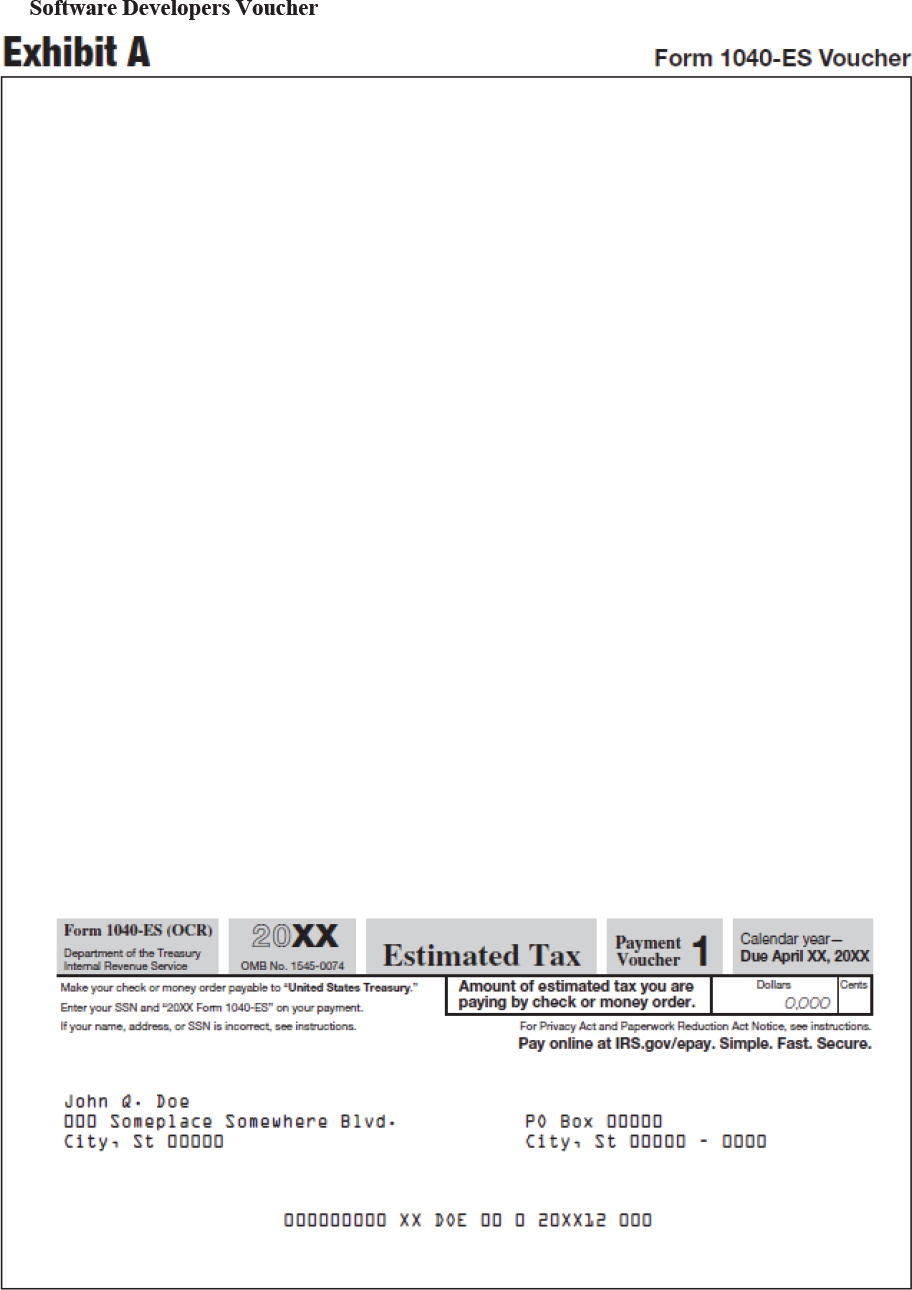
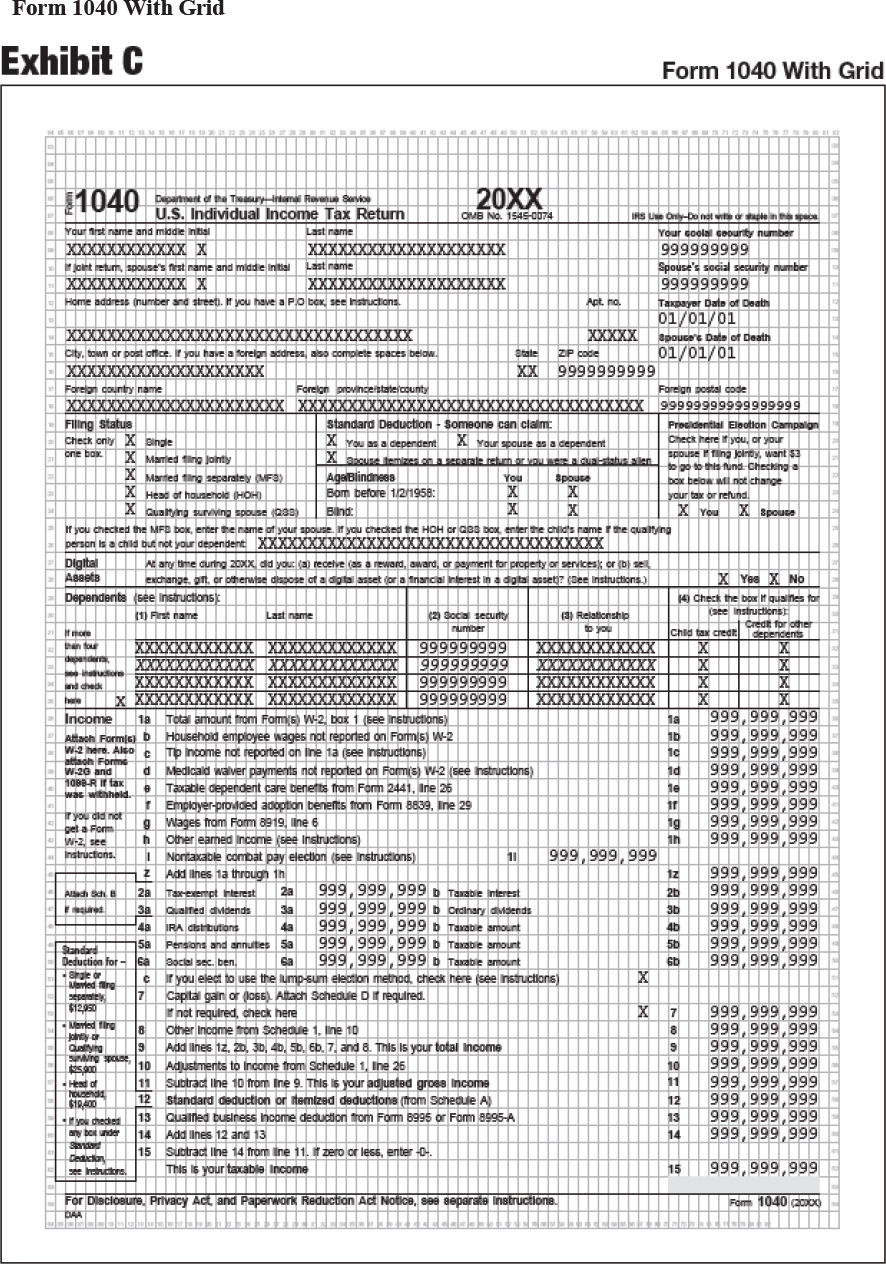
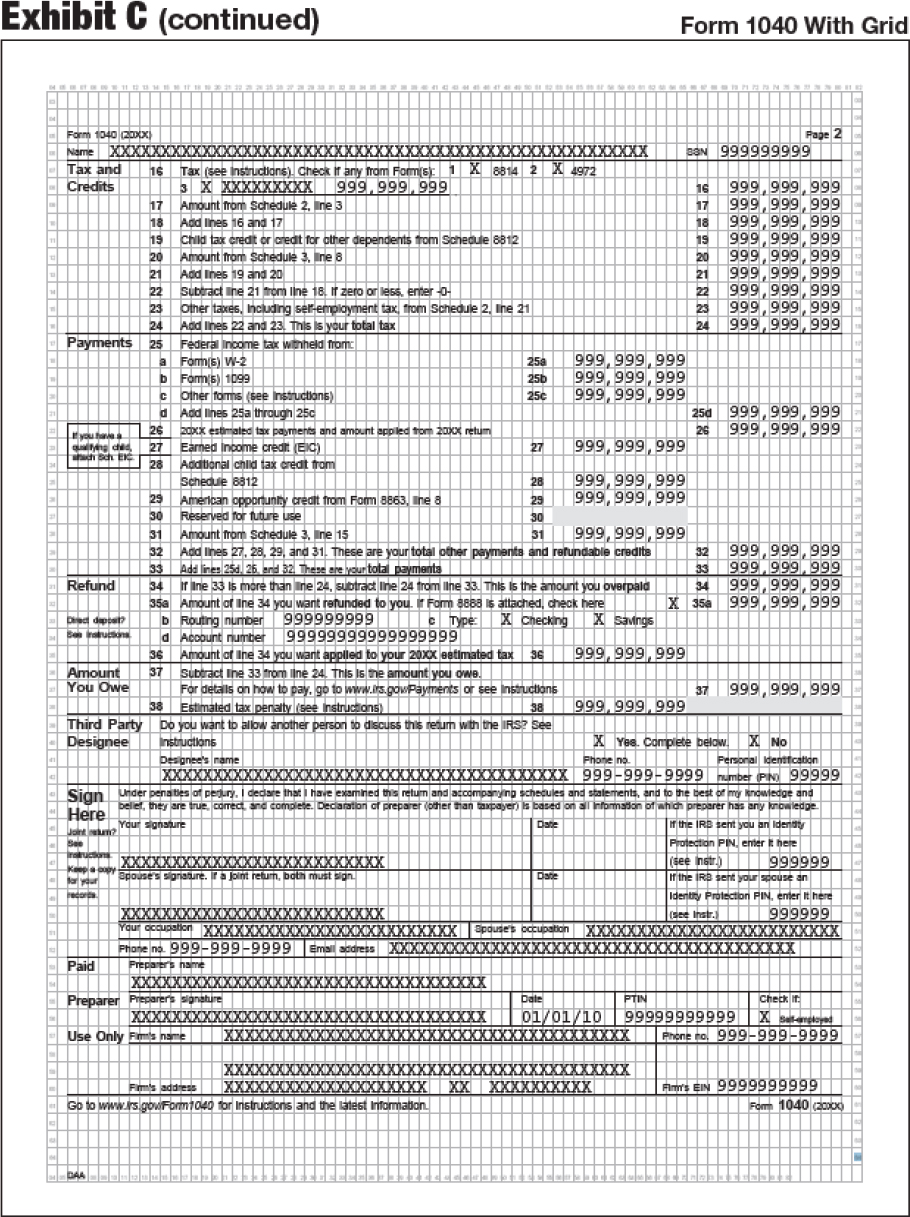
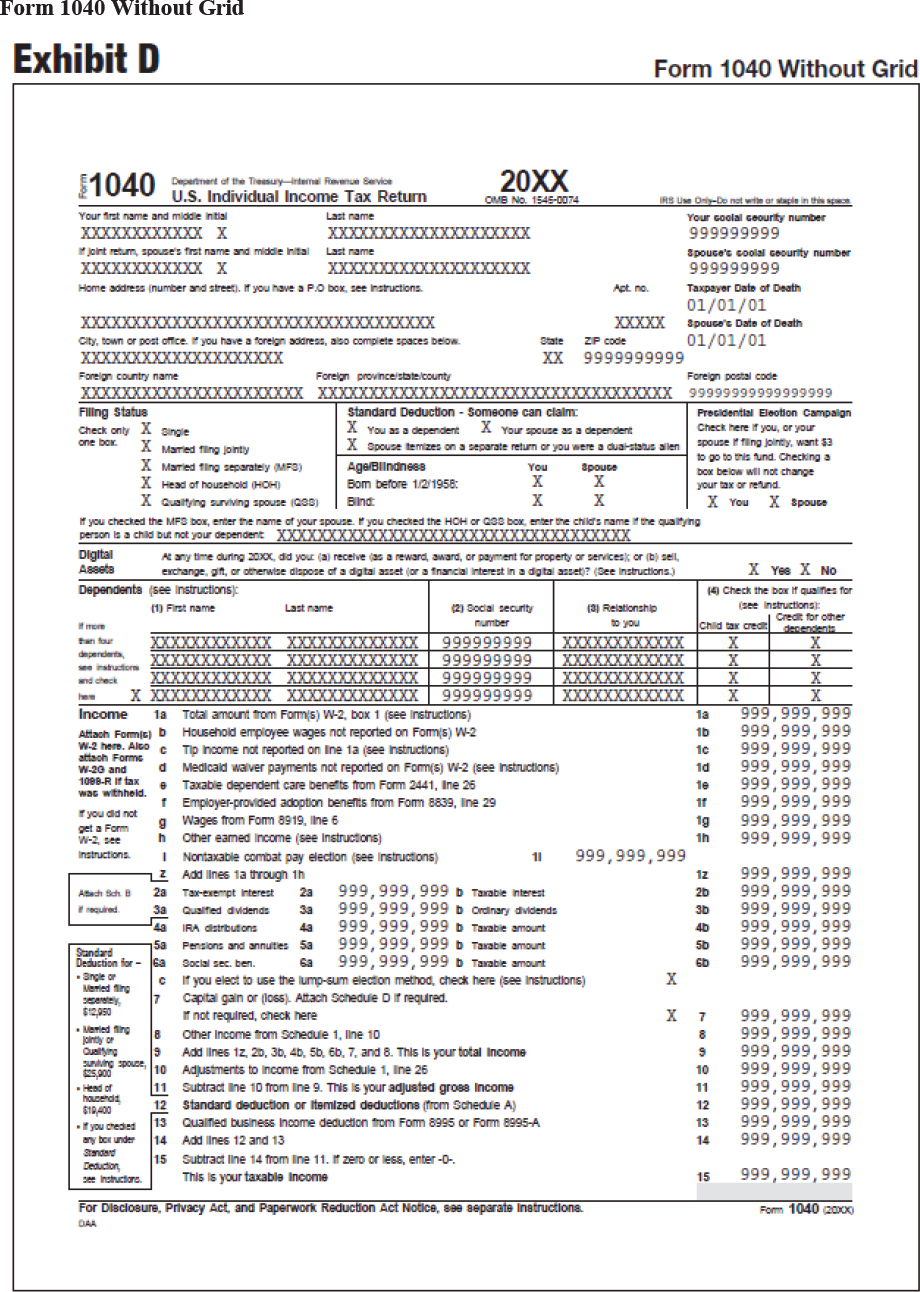
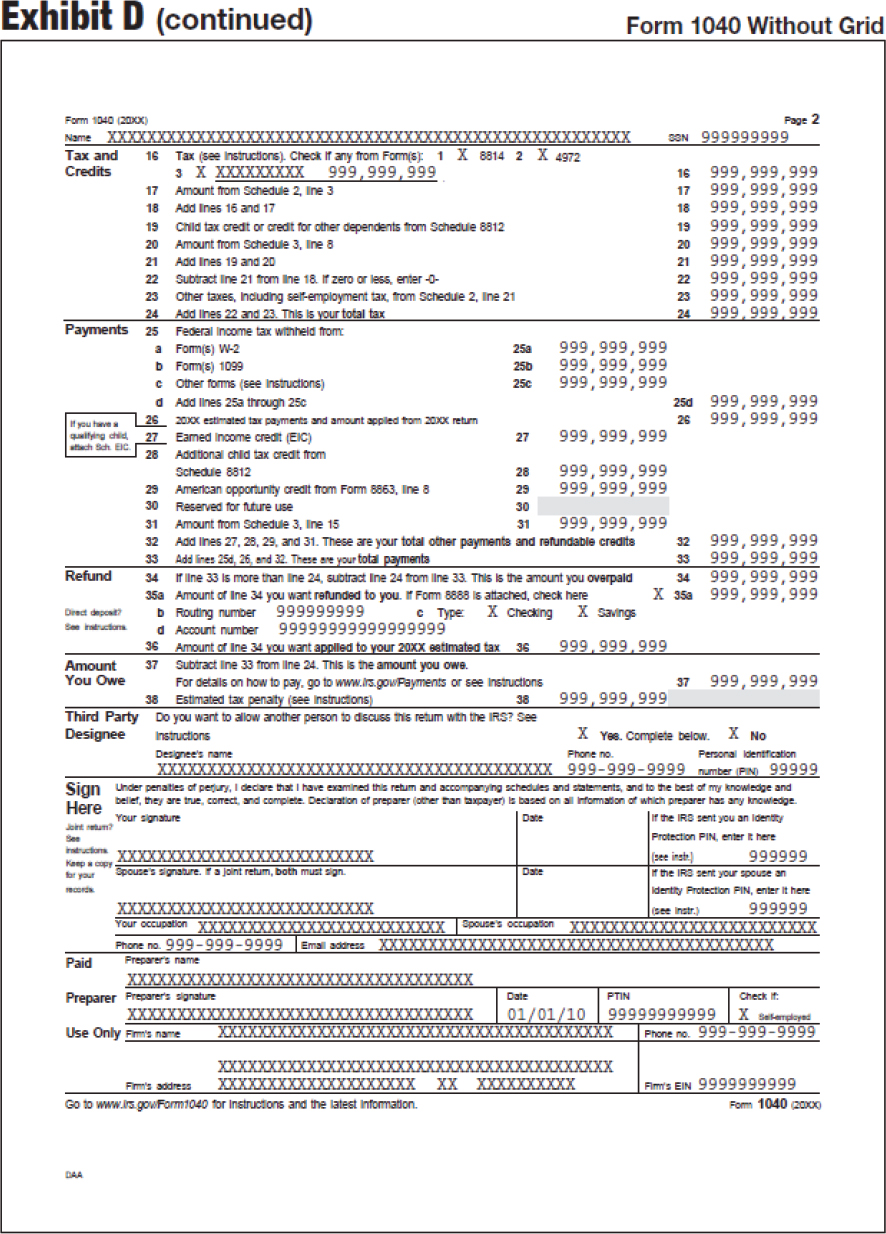
RIN 1545-BR91
AGENCY: Internal Revenue Service (IRS), Treasury.
ACTIONS: Notice of proposed rulemaking and withdrawal of proposed rulemaking.
SUMMARY: This document contains proposed regulations regarding general requirements for Trump accounts, the establishment of an initial Trump account (including automatic enrollment by the Secretary of the Treasury) and qualified general contributions (including qualified stock contributions), which are a special type of contribution made to Trump accounts. This document also withdraws a prior notice of proposed rulemaking (REG-117270-25) containing proposed regulations regarding the election to establish an initial Trump account and reproposes the regulations as CC-00226466-26. These proposed regulations would affect trustees of Trump accounts, account beneficiaries of Trump accounts, responsible parties of Trump accounts, and eligible donors who fund qualified general contributions.
DATES: Written or electronic comments and requests for a public hearing must be received by November 30, 2026.
ADDRESSES: Commenters are strongly encouraged to submit public comments electronically via the Federal eRulemaking Portal at https://www.regulations.gov (indicate IRS and CC-00226466-26) by following the online instructions for submitting comments. Requests for a public hearing must be submitted as prescribed in the “Comments and Requests for a Public Hearing” section. Once submitted to the Federal eRulemaking Portal, comments cannot be edited or withdrawn. The Department of the Treasury (Treasury Department) and the IRS will publish for public availability any comments submitted to the IRS’s public docket. Send paper submissions to: CC:PA:01:PR (CC-00226466-26), Room 5503, Internal Revenue Service, P.O. Box 7604, Ben Franklin Station, Washington, DC 20044. A plain language summary of the proposed regulations will be made available at https://www.regulations.gov.
FOR FURTHER INFORMATION CONTACT: Concerning the proposed regulations, Isaac Stein of the Office of Associate Chief Counsel (Employee Benefits, Exempt Organizations, and Employment Taxes) at (202) 317-6320 (not a toll-free number); concerning submissions of comments or requests for a public hearing, Publications and Regulations Section at (202) 317-6901 (not a toll-free number) or by email to publichearings@irs.gov (preferred).
SUPPLEMENTARY INFORMATION:
This document contains proposed amendments to the Income Tax Regulations (26 CFR part 1) that would implement section 530A of the Internal Revenue Code (the Code). These proposed regulations are issued under several express delegations of authority. Section 530A(a) authorizes the Secretary of the Treasury or the Secretary’s delegate (Secretary) to prescribe exceptions to the general rule that a Trump account shall be treated for purposes of the Code in the same manner as an individual retirement account (IRA) under section 408(a). Section 530A(b)(1)(A)(i) provides that an individual’s first Trump account (initial Trump account) is to be created or organized by the Secretary. Section 530A(b)(1)(B) provides that a Trump account must be designated (in such manner as the Secretary shall prescribe) at the time of the establishment of the account as a Trump account. Section 530A(b)(2)(C)(i) authorizes the Secretary to make an election to establish an initial Trump account for an eligible individual. Section 530A(b)(2)(C)(ii) authorizes the Secretary to prescribe rules regarding the time and manner for a person other than the Secretary to make an election to establish an initial Trump account for an eligible individual. Section 530A(f)(1)(A) defines a qualified general contribution as a contribution made by the Secretary pursuant to a general funding contribution. Section 530A(f)(3)(B) provides that a ‘qualified geographic area’ is any geographic area in which not less than 5,000 account beneficiaries reside and which is designated by the Secretary as a qualified geographic area. Section 530A(i)(1) provides, in relevant part, that the trustee of a Trump account will make reports to the Secretary and to the beneficiary, at such time and in such manner as may be required by the Secretary, with respect to such matters as the Secretary may require. Section 408(a)(2) authorizes the Secretary to approve as a nonbank trustee for an IRA a person who demonstrates to the satisfaction of the Secretary that the manner in which such other person will administer the trust will be consistent with the requirements of section 408. Section 7805(a) authorizes the Secretary to prescribe all needful rules and regulations for the enforcement of the Code, including all rules and regulations as may be necessary by reason of any alteration of law in relation to internal revenue.
Temporary regulations in the Rules and Regulations section of this issue of the Federal Register add §§ 1.530A-1T and 1.530A-7T to the Income Tax Regulations (26 CFR part 1) (temporary regulations). The temporary regulations address the establishment of an initial Trump account (including auto enrollment by the Secretary) and qualified general contributions (including qualified stock contributions), which are a special type of contribution made to Trump accounts. Except for the applicability provisions, the text of the temporary regulations also serves as the text of these proposed regulations. The preamble to the temporary regulations explains the background and amendments.
On March 9, 2026, the Treasury Department and the IRS published a notice of proposed rulemaking (NPRM) (REG-117270-25) in the Federal Register (91 FR 11194) containing proposed regulations (§§ 1.530A-1 through 1.530A-6) that would provide guidance on making an election to establish a Trump account and reserve additional sections for further guidance on Trump accounts (prior § 1.530A-1 NPRM).
Under the prior § 1.530A-1 NPRM (91 FR at 11196), elections to establish an initial Trump account generally would be made by persons other than the Secretary pursuant to section 530A(b)(2)(C)(ii). Although the prior § 1.530A-1 NPRM acknowledged that section 530A(b)(2)(C)(i) authorizes the Secretary to make an election to establish an initial Trump account, those proposed regulations contemplated that the Secretary’s exercise of that authority would be limited to instances in which the Secretary is deemed to have made an election when an election was submitted by a person who was not authorized to make the election (91 FR at 11197). That proposed approach reflected the need to issue the proposed regulations promptly in order to implement Trump accounts by the July 4, 2026, date on which contributions could first be made. Given the limited time available, the Treasury Department and the IRS were unable to fully resolve the legal and administrative issues associated with implementing broad automatic enrollment, including the need to prevent the unauthorized disclosure of return information.
Many commenters expressed strong support for auto enrollment of initial Trump accounts. Commenters urged the Secretary to make an election for each individual who satisfies the statutory age and social security number requirements, using information available from tax returns, Social Security Administration records, and other authorized sources. Commenters stated that requiring an affirmative election by a person other than the Secretary would reduce participation, particularly among nonfilers, families unfamiliar with tax procedures, and families with limited time or resources to complete a separate enrollment process. Commenters also stated that an eligible individual should not lose the opportunity to receive contributions or investment growth merely because no adult completed an election.
Following the publication of the prior § 1.530A-1 NPRM, and after considering the public comments supporting automatic enrollment, the Treasury Department and the IRS further considered how to address the legal and operational issues identified in that NPRM. In coordination with the Treasury Department’s financial agent and other governmental agencies, the Treasury Department and the IRS have identified an administrable structure under which the Secretary can make elections for eligible individuals while preserving separate IRA ownership and protecting return information from disclosure. This change in approach therefore reflects the development of a different administrative structure, rather than a change in the Treasury Department and the IRS’s interpretation of the authority conferred by section 530A(b)(2)(C)(i).
Under this structure, a separate initial Trump account is established for each eligible individual pursuant to a separate written governing instrument, and separate account-level records are maintained for each account, which are referred to as auto accounts. Contributions are received and recorded by the individual auto account, and the assets attributable to auto accounts are invested collectively through a master group trust that is intended to satisfy the applicable requirements of Rev. Rul. 81-100, as modified. Each auto account holds an undivided proportionate beneficial interest in the investments held through the master group trust that are attributable to contributions allocated to qualified classes of which the account beneficiary was a member and any $1,000 pilot program contribution made to that account, and records maintained for the Trump accounts program identify the assets attributable to each auto account. The structure thus combines separate account ownership and account-level recordkeeping with collective investment and administration.
The master group trust addresses the concerns reflected in the prior § 1.530A-1 NPRM about disclosure of return information because investments are held and administered at the master-group-trust level. Thus, the trustee of the master group trust can execute transactions for the trust without receiving or disclosing account-identifying return information for each account beneficiary in connection with each transaction. Return information used to identify eligible individuals and establish auto accounts is retained in a safeguarded environment by the Secretary and his financial agent authorized to receive that information on the Secretary’s behalf.
In addition, a person seeking to claim an auto account must independently submit the information required by the Secretary, authenticate the person’s identity, establish the person’s legal authority to act with respect to the account and to receive the account beneficiary’s return information, and execute any consent required for disclosures necessary to process the claim and transfer the account balance. This process permits an authorized person to claim and control the account without disclosing protected account information before the person’s legal authority to that information has been established.
Accordingly, after considering the comments and developing this new administrable structure, the Treasury Department and the IRS are withdrawing the prior § 1.530A-1 NPRM and issuing these proposed regulations.
A. Request for Comments Regarding Qualified ABLE Rollover Contributions from Auto Accounts
Under section 530A(d), the general prohibition on distributions from a Trump account during the growth period does not apply to qualified ABLE rollover contributions. Section 530A(d)(4) defines a qualified ABLE rollover contribution as an amount paid during the calendar year in which the account beneficiary attains age 17 in a direct trustee-to-trustee transfer from a Trump account maintained for the account beneficiary to an ABLE account under section 529A(e)(6)1 maintained for the same account beneficiary. The transferred amount must equal the entire balance of the Trump account.
An auto account presents administrative issues in implementing section 530A(d)(4). Before an auto account is claimed, the Secretary is the responsible party for the account. The Secretary generally will not know whether the account beneficiary is eligible to establish an ABLE account, whether an ABLE account has been established for the account beneficiary, or who has authority to act with respect to that ABLE account. In addition, because the qualified ABLE rollover contribution must be completed during the calendar year in which the account beneficiary attains age 17, the process must allow sufficient time to verify the request, coordinate with the receiving qualified ABLE program, and complete the trustee-to-trustee transfer before the end of that calendar year.
The Treasury Department and the IRS are considering a procedure under which an account beneficiary who has legal capacity or another person with appropriate authority could request a qualified ABLE rollover contribution from an auto account. One possible approach would permit the request to be made as part of the process for claiming the auto account (whether by the person with signature authority over the account beneficiary’s existing ABLE account or some other person), with the entire balance transferred directly from the auto account to an existing ABLE account during the calendar year in which an account beneficiary attains age 17. A second approach would require the auto account first to be claimed and the assets transferred to a claimed initial Trump account or rollover Trump account, after which the responsible party for that account could direct a qualified ABLE rollover contribution. Comments are requested on which approach would best facilitate the completion of a qualified ABLE rollover contribution within the statutory period while protecting the account beneficiary and permitting efficient administration. In particular, comments are requested on whether a direct transfer from an auto account to an existing ABLE account should be incorporated into the auto-account claim process or should be made available through a separate process.
Comments also are requested on who should be permitted to request the transfer and what evidence should be required to establish that person’s authority, including whether qualified ABLE programs should have an affirmative obligation to develop policies and procedures to ensure that auto account assets are identified and rolled over to qualified ABLE accounts for auto account beneficiaries before the statutory deadline for a qualified ABLE rollover contribution has lapsed.
B. Request for Comments Regarding Qualified Geographic Areas
Section 530A(f)(1) requires, in part, that a contribution be made to the Trump account of an account beneficiary in a qualified class of account beneficiaries specified in the general funding contribution. Section 530A(f)(3)(A)(ii) defines a qualified class as including a class of all account beneficiaries who are in their growth period when the contribution is made, and who reside in one or more States or other qualified geographic areas specified by the terms of the general funding contribution. Section 530A(f)(3)(B) defines a qualified geographic area as any geographic area in which not less than 5,000 account beneficiaries reside and which is designated by the Secretary as a qualified geographic area.
The Treasury Department and the IRS are considering how to designate qualified geographic areas using objective standards. Under the procedure being considered, a qualified geographic area must be constructed from United States Postal Service five-digit ZIP codes. An eligible donor would propose a geographic area by providing a list of one or more five-digit ZIP codes. A proposed geographic area would be designated as a qualified geographic area if at least 5,000 account beneficiaries in their growth period reside in the area and at least one of the following two conditions is met: (1) all included ZIP codes are contiguous and do not enclose excluded ZIP codes, or (2) all included ZIP codes correspond to ZIP Code Tabulation Areas that have a median household income below the threshold income for highly compensated employees in section 414(q), as indexed for inflation in the year of the contribution, according to the U.S. Census Bureau.
Comments are requested on all aspects of this procedure, as well as alternatives with administrable, objective criteria.
C. Request for Comments on Exceptions to the Minimum Holding Period Requirement
The Treasury Department and the IRS request comments on whether, and under what circumstances, narrowly tailored exceptions to the minimum holding period requirement should apply when continued ownership of Qualified Stock would create a legal or ethics conflict. Comments are requested on the certification and documentation that should be required to substantiate an exception and on appropriate safeguards to prevent avoidance of the minimum holding period requirement or other abuse.
D. Request for Comments Regarding Disclaimers of Trump Accounts
The Treasury Department and the IRS are considering providing a procedure under which an account beneficiary or a person authorized under applicable local law to make a disclaimer on behalf of the account beneficiary may be eligible to disclaim the account beneficiary’s entire interest in an auto account in the form and manner prescribed by the Secretary in applicable instructions.
A disclaimer of an auto account would be permitted only if the auto account has not been claimed, the auto account has not received a $1,000 pilot program contribution under section 6434, and the account beneficiary has attained age 18. The Secretary must receive the disclaimer no later than nine months after the date the account beneficiary attains age 21, and the disclaimer must otherwise satisfy the requirements of a qualified disclaimer under section 2518.
Upon making an auto account disclaimer, the account beneficiary would no longer have any rights with respect to the auto account. Comments are requested on the disposition of the disclaimed interest, including how to ensure that the interest passes without direction by the disclaimant to a person other than the disclaimant, as required by section 2518(b)(4).
In addition, the Treasury Department and the IRS have considered whether this proposed disclaimer rule should be broadened also to apply to all Trump accounts, instead of only to unclaimed auto accounts. Comments are requested on this issue, and on what other issues would need to be addressed in the event of such an expansion of the proposed disclaimer rule (such as, for example, what would or would not be considered to be an acceptance of the account, and whether partial disclaimers would be permitted).
Comments also are requested on the notice, if any, that should be provided to the account beneficiary before any disclaimer period expires. Comments should address the appropriate method and timing of notice, the information that may be disclosed consistently with section 6103, and whether the notice should describe potential consequences under section 2518 and means-tested benefit programs without providing individualized legal advice.
Proposed §§ 1.530A-1 and 1.530A-7 would apply to taxable years beginning on or after the date the Treasury decision adopting these regulations as final regulations is published in the Federal Register. Taxpayers may not rely on these proposed regulations. See §§ 1.530A-1T and 1.530A-7T.
The Regulatory Planning and Review section in the Special Analyses part of the preamble to the temporary regulations provides the relevant discussion.
The Paperwork Reduction Act of 1995 (44 U.S.C. 3501-3520) generally requires that a Federal agency obtain the approval of the Office of Management and Budget (OMB) before collecting information from the public, whether such collection of information is mandatory, voluntary, or required to obtain or retain a benefit. An agency may not conduct or sponsor, and a person is not required to respond to, a collection of information unless the collection of information displays a valid control number.
The collections of information in these proposed regulations contain reporting, third-party disclosure and recordkeeping requirements that are necessary for Trump account enrollment. These collections of information generally would be used by the Secretary to automatically enroll beneficiaries into Trump accounts.
The proposed regulations mention reporting requirements for making elections for Trump accounts by a person other than the Secretary, as detailed in 26 CFR 1.530A-1(d)(1)(ii). This reporting requirement is already approved by the OMB under OMB Control Number 1545-2336 and is not being revised by this proposed regulation.
The proposed regulations mention reporting requirements for filing a general funding contribution request and entering into a Treasury acceptance agreement, as detailed in 26 CFR 1.530A-7(c)(2). This reporting requirement is already approved by the OMB under OMB Control Number 1505-0285 and is not being revised by this proposed regulation.
The proposed regulations include reporting by account beneficiaries or responsible parties and third-party disclosures and associated recordkeeping requirements from trustees to account beneficiaries or responsible parties. These collections of information are necessary to allow account beneficiaries or responsible parties to claim accounts, and to inform account beneficiaries or responsible parties of any required sales and reinvestments related to qualified stock. IRS anticipates that the likely respondents are individuals, responsible parties, businesses, and for-profit organizations (trustees).
Table 1 provides a high-level description of the collection requirements created or changed within this regulation, and the regulatory sections that detail these requirements. Table 2 provides the estimated burden placed on respondents for each collection requirement. These collection requirements were approved by the OMB under OMB Control Number 1545-2336 pursuant to the emergency procedures in 5 CFR 1320.13.
Table 1: Description of Collections
| OMB Control Number | Collection Type | New or Revised Collection | Description | Regulatory Section with Additional Details |
|---|---|---|---|---|
| 1545-2336 | Third-party Disclosure and Recordkeeping | New | Claiming an auto account | 26 CFR 1.530A-1(f) |
| 1545-2336 | Third-party Disclosure and Recordkeeping | New | Beneficiary disclosure when stock held in a Trump account is either de-listed from a national securities exchange or generates property that is not successor qualified stock | 26 CFR 1.530A-7(d)(5), (d)(6) |
Table 2: Estimated Burden
| Collection | Estimated number of respondents | Estimated frequency of responses | Estimated average annual burden per response | Estimated total annual burden hours |
|---|---|---|---|---|
| 26 CFR 1.530A-1(f) | 63,360,000 | 1 | 6 minutes | 6,336,000 |
| 26 CFR 1.530A-7(d)(5), (d)(6) | 5 | 27,717 | 1 minute | 2,310 |
The Regulatory Flexibility Act (5 U.S.C. 601 et seq.) (RFA) imposes certain requirements with respect to Federal rules that are subject to the notice and comment requirements of section 553(b) of the Administrative Procedure Act (5 U.S.C. 551 et seq.) and that are likely to have a significant economic impact on a substantial number of small entities. Unless an agency determines that a proposal is not likely to have a significant economic impact on a substantial number of small entities, section 603 of the RFA requires the agency to present an initial regulatory flexibility analysis (IRFA) of the proposed rule. The Treasury Department and the IRS have not determined whether the proposed rule, when finalized, will likely have a significant economic impact on a substantial number of small entities. This determination requires further study. However, because there is a possibility of significant economic impact on a substantial number of small entities, an IRFA is provided in these proposed regulations. The Treasury Department and the IRS invite comments on both the number of entities affected and the economic impact on small entities.
Pursuant to section 7805(f), this notice of proposed rulemaking has been submitted to the Chief Counsel for Advocacy of the Small Business Administration for comment on its impact on small business.
1. Need for and objectives of the rule
The proposed regulations would provide greater access to Trump accounts under section 530A for children who are beneficiaries of Trump accounts; clarity to taxpayers that intend to take advantage of Trump accounts; and clarity to Trump account trustees regarding contributions to these accounts, including qualified general contributions and qualified stock contributions. The proposed regulations are necessary to implement both automatic enrollment of children into Trump accounts and a framework for private donors to make contributions to Trump accounts for a qualified class.
In particular, section 530A provides that a Trump account may be created or organized by the Secretary, and the proposed regulations implement the automatic enrollment of children into Trump accounts, which has been requested by both the Administration and outside stakeholders. These groups have also requested clarity on rules relating to qualified general contributions, so that eligible donors may fund these contributions for Trump accounts. Section 530A provides that qualified general contributions are contributions made by the Secretary pursuant to a general funding contribution, and the proposed regulations would provide rules on how qualified general contributions, including qualified stock contributions, may be made. The proposed regulations would also provide certainty regarding required trustee action, including disclosures to beneficiaries, when Trump accounts contain assets that are not eligible investments.
2. Affected small entities
The RFA directs agencies to provide a description of, and where feasible, an estimate of, the number of small entities that may be affected by the proposed rules, if adopted. The Small Business Administration’s Office of Advocacy estimates in its 2023 Frequently Asked Questions that 99.9 percent of American businesses meet its definition of a small business. The applicability of these proposed regulations does not depend on the size of the business, as defined by the Small Business Administration. These proposed regulations would affect small businesses that are trustees of Trump accounts. The Treasury Department and the IRS estimate that the total anticipated future number of Trump account trustees will be 4,600. Although there is uncertainty as to the exact number of small businesses within this group, the number is estimated to be 2,740.
The Treasury Department and the IRS expect to receive more information on the impact on small businesses through comments on this proposed rule and when taxpayers start to claim and administer Trump accounts using the guidance and procedures provided in these proposed regulations.
3. Impact of the rules
The proposed regulations would provide definitions and rules regarding the election to open Trump accounts (including claiming auto accounts) and contributions to Trump accounts. Taxpayers that are trustees of Trump accounts will have administrative costs related to reading and understanding the rules as well as recordkeeping and reporting requirements. First, responsible parties claiming auto accounts will result in more Trump accounts managed by trustees, leading to higher administrative costs for the trustees. In addition, Trump account trustees must provide a disclosure to a beneficiary regarding the investment of assets when stock held in a Trump account is either de-listed from a national securities exchange or when a Trump account receives cash or other property that is not successor qualified stock. The costs associated with these notifications will vary across different-sized entities.
Although the Treasury Department and the IRS do not have sufficient data to determine precisely the likely extent of the increased costs of compliance, the estimated burden of complying with the recordkeeping and reporting requirements is described in the Paperwork Reduction Act section of the preamble.
4. Alternatives considered
The Treasury Department and the IRS considered alternatives to the proposed regulations. For example, the Treasury Department and the IRS considered not enabling the automatic enrollment of children into Trump accounts and requiring that all elections to open Trump accounts be made by an election on Form 4547. However, the Treasury Department and the IRS decided that automatic enrollment of children into Trump accounts would result in a significant public benefit (that millions of children will have Trump accounts to receive contributions, including qualified general contributions), and is both administratively feasible and necessary to respond to demand for automatic enrollment from the public.
Comments are requested on the requirements in the proposed regulations, including qualified ABLE rollover contributions from auto accounts, qualified geographic areas (which are relevant to the requirements for qualified general contributions), and whether an account beneficiary should be allowed to disclaim an auto account.
5. Duplicative, overlapping, or conflicting Federal rules
The proposed regulations would not duplicate, overlap, or conflict with any relevant Federal rules. The proposed regulations would merely provide procedures, definitions, and requirements to allow eligible Trump account beneficiaries to be enrolled automatically in Trump accounts, and for taxpayers to make contributions to these accounts.
Section 202 of the Unfunded Mandates Reform Act of 1995 (UMRA) requires that agencies assess anticipated costs and benefits and take certain other actions before issuing a final rule that includes any Federal mandate that may result in expenditures in any one year by a State, local, or Tribal government, in the aggregate, or by the private sector, of $100 million in 1995 dollars, updated annually for inflation. These proposed regulations do not include any Federal mandate that may result in expenditures by State, local, or Tribal governments, or by the private sector in excess of that threshold.
Executive Order 13132 (Federalism) prohibits an agency from publishing any rule that has federalism implications if the rule either imposes substantial, direct compliance costs on State and local governments, and is not required by statute, or preempts State law, unless the agency meets the consultation and funding requirements of section 6 of the Executive order. These proposed regulations do not have federalism implications and do not impose substantial direct compliance costs on State and local governments or preempt State law within the meaning of the Executive order.
Before these proposed regulations are adopted as final regulations, consideration will be given to comments that are submitted timely to the IRS as prescribed in the preamble under the ADDRESSES heading. The Treasury Department and the IRS request comments on all aspects of the proposed regulations. Any comments will be made available at https://www.regulations.gov or upon request.
A public hearing will be scheduled if requested in writing by any person that timely submits electronic or written comments. Requests for a public hearing are encouraged to be made electronically. If a public hearing is scheduled, a notice of the date, time, and place for the public hearing will be published in the Federal Register.
Revenue Rulings, Revenue Procedures, Notices, and other guidance cited in this document are published in the Internal Revenue Bulletin (or Cumulative Bulletin) and are available from the Superintendent of Documents, U.S. Government Publishing Office, Washington, DC 20402, or by visiting the IRS website at https://www.irs.gov.
The principal author of these proposed regulations is Isaac Stein of the Office of Associate Chief Counsel (Employee Benefits, Exempt Organizations, and Employment Taxes). Other personnel from the Treasury Department and the IRS participated in their development.
Under the authority of 26 U.S.C. 7805, the notice of proposed rulemaking (REG-117270-25) that was published in the Federal Register on March 9, 2026 (91 FR 11194), is withdrawn.
Accordingly, the Treasury Department and the IRS propose to amend 26 CFR part 1 as follows:
Paragraph 1. The authority citation for part 1 is amended by adding entries for §§ 1.530A-1 and 1.530A-7 in numerical order to read, in part, as follows:
Authority: 26 U.S.C. 7805 * * *
* * * *
Section 1.530A-1 is also issued under 26 U.S.C. 408(a)(2), 530A(a), (b)(1)(A)(i), (b)(1)(B), (b)(2)(C)(i), and (b)(2)(C)(ii).
Section 1.530A-7 is also issued under 26 U.S.C. 530A(a), (f)(1)(A), and (f)(3)(B).
* * * * *
Par. 2. Section 1.530A-1 is added to read as follows:
(a) – (f) [The text of proposed § 1.530A-1(a) through (f) is the same as the text of § 1.530A-1T(a) through (f) in the temporary rule published elsewhere in this issue of the Federal Register.]
(g) Applicability date. This section applies to taxable years beginning on or after the date the Treasury decision adopting this section as a final regulation is published in the Federal Register.
Par. 4. Sections 1.530A-4 through 1.530A-6 are added and reserved.
Par. 5. Section 1.530A-7 is added to read as follows:
(a) – (e) [The text of proposed § 1.530A-7(a) through (e) is the same as the text of § 1.530A-7T(a) through (e) in the temporary rule published elsewhere in this issue of the Federal Register.]
(f) Applicability date. This section applies to taxable years beginning on or after the date the Treasury decision adopting this section as a final regulation is published in the Federal Register.
Frank J. Bisignano,
Chief Executive Officer.
(Filed by the Office of the Federal Register September 29, 2026, 8:45 a.m., and published in the issue of the Federal Register for September 30, 2026, 91 91 FR 61812)
1 Section 529A was enacted by the Stephen Beck, Jr., Achieving a Better Life Experience Act of 2014, which was enacted as part of the Tax Increase Prevention Act of 2014, Public Law 113-295 (128 Stat. 4010).
AGENCY: Internal Revenue Service (IRS), Treasury.
ACTION: Notice of proposed rulemaking.
SUMMARY: This document contains proposed regulations regarding the statutory election to pay in four equal annual installments the tax on the gain from the sale or exchange of qualified farmland property to a qualified farmer. The proposed regulations would affect taxpayers who sell or exchange qualified farmland to a qualified farmer and elect to pay the tax on the gain from that sale or exchange in equal annual installments over four years.
DATES: Written or electronic comments and requests for a public hearing must be received by November 30, 2026.
ADDRESSES: Commenters are strongly encouraged to submit public comments electronically via the Federal eRulemaking Portal at https://www.regulations.gov (indicate IRS and REG-117095-25) by following the online instructions for submitting comments. Requests for a public hearing must be submitted as prescribed in the “Comments and Requests for a Public Hearing” section. Once submitted to the Federal eRulemaking Portal, comments cannot be edited or withdrawn. The Department of the Treasury (Treasury Department) and the IRS will publish for public availability any comments submitted to the IRS’s public docket. Send paper submissions to: CC:PA:01:PR (REG-117095-25), Room 5503, Internal Revenue Service, P.O. Box 7604, Ben Franklin Station, Washington, DC 20044.
FOR FURTHER INFORMATION CONTACT: Concerning the proposed regulations, Nathan Cox of the Office of Associate Chief Counsel (Income Tax & Accounting) at (202) 317-7006 (not a toll-free number); concerning submissions of comments and requests for a public hearing, the Publications and Regulations Section at (202) 317-6901 (not a toll-free number) or by email at publichearings@irs.gov (preferred).
SUPPLEMENTARY INFORMATION:
This notice of proposed rulemaking contains proposed amendments that would add new regulations to the Income Tax Regulations (26 CFR part 1) under section 1062 of the Internal Revenue Code (Code), which was enacted by section 70437 of Public Law 119-21, 139 Stat. 72, 248-250 (July 4, 2025), commonly known as the One, Big, Beautiful Bill Act (OBBBA). Section 1062(a) provides an election to pay in equal installments over a four-year period the tax on the gain from the sale or exchange of qualified farmland property to a qualified farmer (qualified sale or exchange).
The proposed regulations are issued under the authority of section 7805(a) of the Code, which authorizes the Secretary of the Treasury or the Secretary’s delegate (Secretary) to prescribe all needful rules and regulations for the enforcement of the Code, including all rules and regulations as may be necessary by reason of any alteration of law in relation to internal revenue.
The proposed regulations also are issued under the authority of section 1062(c)(2). Section 1062(c)(2) authorizes the Secretary to prescribe regulations or other guidance as necessary to carry out the purposes of section 1062(c)(2), which provides that, in the case of a qualified sale or exchange by a partnership or an S corporation, the election under section 1062(a) is made at the partner or shareholder level.
In addition, the proposed regulations that would address consolidated groups are also issued under the authority of section 1502. Section 1502 authorizes the Secretary to prescribe regulations in order that the tax liability of any affiliated group of corporations making a consolidated return and of each corporation in the group, both during and after the period of affiliation, may be returned, determined, computed, assessed, collected, and adjusted, in such manner as clearly to reflect the income-tax liability and the various factors necessary for the determination of such liability, and in order to prevent avoidance of such tax liability.
Section 70437(a) of the OBBBA redesignated former section 1062 of the Code as new section 1063 of the Code and added a new section 1062. This new section 1062 allows taxpayers who sell or exchange qualified farmland property in a qualified sale or exchange to make an election to pay the tax on the gain from the qualified sale or exchange in equal installments over a four-year period (section 1062 election). Section 70437(c) of the OBBBA provides that the section 1062 election applies to qualified sales or exchanges made in taxable years beginning after July 4, 2025, the date of enactment of the OBBBA.
Section 1062(b)(1) provides that, if a section 1062 election is made with respect to a qualified sale or exchange, the first installment payment is due on the due date (without regard to extensions) for the Federal income tax return (return) for the taxable year of the qualified sale or exchange, and each successive installment payment is due on the due date (without regard to extensions) for the return for the taxable year following the taxable year for which the previous installment payment was made.
Section 1062(b)(2) provides three rules that may result in the acceleration of one or more installment payments prior to the date(s) for which the installment payment(s) otherwise would be due. First, section 1062(b)(2)(A) provides that, if there is an addition to tax for failure to timely pay an installment required under section 1062, the unpaid portion of all remaining installments is due on the date of that failure. Second, section 1062(b)(2)(B) provides that, in the case of an individual taxpayer who dies, the unpaid portion of all remaining installments is due on the due date for the return for the taxable year in which the taxpayer dies. Third, section 1062(b)(2)(C) provides that, for a taxpayer that is a C corporation, a trust, or an estate, if there is a liquidation or sale of substantially all the assets of the taxpayer, including in a case under title 11 of the United States Code or a similar case (title 11 or similar case), a cessation of business by the taxpayer (in the case of a C corporation), or any similar circumstance, the unpaid portion of all remaining installments is due on the date of that event (or, in the case of a title 11 or similar case, the day before the petition is filed). However, the rule in section 1062(b)(2)(C) does not apply in the case of a sale of substantially all the assets of the taxpayer to a buyer if the buyer enters into an agreement with the Commissioner of Internal Revenue (Commissioner) under which the buyer is liable for the remaining installment payments due under section 1062(b) in the same manner as if the buyer were the taxpayer.
Section 1062(b)(3) sets forth rules, referred to as the “proration rules” in this notice of proposed rulemaking, providing that, if a taxpayer has made a section 1062 election, and if a deficiency subsequently is assessed with respect to the taxpayer’s “applicable net tax liability,” the amount of the deficiency is prorated among the installments payable under section 1062(a). The part of the deficiency prorated to any installment payments that are not yet due will be due at the same time as, and as part of, that installment payment. The part of the deficiency prorated to any installment payment that is past due must be paid upon notice and demand from the Commissioner. However, the proration rules do not apply if the deficiency is due to negligence, intentional disregard of rules and regulations, or fraud with intent to evade tax.
Section 1062(c) provides rules regarding the making of a section 1062 election. Section 1062(c)(1) provides that a section 1062 election must be made no later than the due date for the return for the taxable year of the qualified sale or exchange. Section 1062(c)(2) provides that, in the case of a qualified sale or exchange by a partnership or an S corporation, the section 1062 election is made at the partner or shareholder level. In addition, section 1062(c)(2) authorizes the Secretary to prescribe such regulations or other guidance as necessary to carry out the purposes of section 1062(c)(2).
Section 1062(d) provides definitions of terms used in section 1062. Section 1062(d)(1) defines the term “applicable net tax liability” as the excess (if any) of (i) the taxpayer’s net income tax for the taxable year, over (ii) the taxpayer’s net income tax for that taxable year determined without regard to any gain recognized from the qualified sale or exchange. For this purpose, the term “net income tax” means the taxpayer’s regular tax liability reduced by the credits allowed under subparts A, B, and D of part IV of subchapter A of chapter 1 of the Code. As is provided in section 1062(a), the amount of tax on the gain from the qualified sale or exchange that may be paid in installments by the taxpayer is limited to the applicable net tax liability.
Section 1062(d)(2)(A) defines the term “qualified farmland property” to mean real property located in the United States that the taxpayer either has used as a farm for farming purposes or leased to a qualified farmer for farming purposes during substantially all of the 10-year period ending on the date of the qualified sale or exchange (prior 10-year period), and that is subject to a covenant or other legally enforceable restriction (section 1062 covenant) prohibiting the use of that real property other than as a farm for farming purposes during the 10-year period beginning on the date of the qualified sale or exchange. Section 1062(d)(2)(A) further provides that real property that is used as a farm for farming purposes or leased to a qualified farmer for farming purposes by a partnership or an S corporation during substantially all of the prior 10-year period will be treated as used or leased in that manner by each person who holds a direct or indirect interest in the partnership or S corporation.
Section 1062(d)(2)(B) defines the terms “farm” and “farming purposes” to have the respective meanings given to those terms under section 2032A(e) of the Code. Section 1062(d)(3) defines the term “qualified farmer” to mean any individual who is actively engaged in farming within the meaning of 7 U.S.C. 1308-1(b) and (c).
Section 1062(e) provides that a taxpayer making a section 1062 election must include a copy of the section 1062 covenant with the taxpayer’s return for the taxable year of the qualified sale or exchange.
This notice of proposed rulemaking proposes rules regarding the election under section 1062(a) to defer payment of tax on qualified sales or exchanges. Proposed § 1.1062-1 would provide general rules and definitions of terms used in the section 1062 regulations (that is, §§ 1.1062-0 through 1.1062-3). Proposed § 1.1062-2 would provide operating rules regarding the availability of the section 1062 election, the manner in which to make the section 1062 election, the amount of, timing of, and manner in which to make the installment payments of the applicable net tax liability, and other special rules. Proposed § 1.1062-3 would provide rules regarding events that would result in the acceleration of unpaid installment payments.
Proposed § 1.1062-2(a)(1) would provide that, in the case of gain from a qualified sale or exchange, the taxpayer may make a section 1062 election to pay in four equal annual installments the portion of the taxpayer’s net income tax for the taxable year of the qualified sale or exchange that is equal to the taxpayer’s applicable net tax liability. Proposed § 1.1062-1(q) would define the term “qualified sale or exchange” to mean a sale or exchange of qualified farmland property to a qualified farmer.
A. Qualified farmland property
Proposed § 1.1062-1(o)(1) would define the term “qualified farmland property” as real property (as defined in proposed § 1.1062-1(o)(8)) that meets the following three requirements. First, the real property must be located in the United States. Second, the real property must, during substantially all of the prior 10-year period (as would be defined in proposed § 1.1062-1(n)), either have been used by the taxpayer as a farm for farming purposes or have been leased by the taxpayer to a qualified farmer for farming purposes. Third, the real property must be subject to a section 1062 covenant (as would be defined in proposed § 1.1062-1(t)) that is attached to the taxpayer’s return for the relevant taxable year as required under section 1062(e). With respect to this third requirement, failure to attach the section 1062 covenant to the return would result in the real property not being qualified farmland property, which would mean that the sale or exchange of that property would not qualify for the section 1062 election.
Proposed § 1.1062-1(j) would define the term “farm” to mean a farm as defined in section 2032A(e)(4), and proposed § 1.1062-1(k) would define the term “farming purposes” to mean farming purposes as defined in section 2032A(e)(5). Finally, proposed § 1.1062-1(r) would define the term “relevant taxable year” of the taxpayer to mean the taxable year of the qualified sale or exchange.
1. Certain Periods of Non-Use Disregarded
Proposed § 1.1062-1(o)(2) would clarify that certain periods of non-use during a prior 10-year period are disregarded for purposes of determining whether real property may be considered qualified farmland property. Under the proposed rule, real property would not fail to be considered as used by the taxpayer as a farm for farming purposes or leased by the taxpayer to a qualified farmer for farming purposes if all necessary functions, such as land management activities (for example, protecting the soil from erosion), are performed to maintain the real property for farming purposes during periods in which one or more of the following conditions is met: the real property is taken out of production pursuant to a Federal, State, Tribal, or local government program; the real property is taken out of production pursuant to recognized good farming practices (for example, laying fallow or conditioning the soil); or the real property is taken out of production due to unforeseen events caused by factors outside the taxpayer’s control.
2. Certain Acquisitions of Qualified Farmland Property During the Prior 10-Year Period
Proposed § 1.1062-1(o)(3) would address limited cases in which real property acquired by the taxpayer during the prior 10-year period may be considered to be used or leased by the taxpayer during the prior 10-year period. Under proposed § 1.1062-1(o)(3)(i), if the taxpayer acquired the real property during the prior 10-year period in a transaction in which the taxpayer’s holding period for the real property is determined under section 1223(1) of the Code (for example, in an exchange under section 1031 of the Code), the taxpayer may include the period during the prior 10-year period for which the taxpayer used the real property exchanged for the acquired real property as a farm for farming purposes, or leased the real property exchanged for the acquired real property to a qualified farmer for farming purposes. In addition, under proposed § 1.1062-1(o)(3)(ii), if the taxpayer acquired the real property during the prior 10-year period in a transaction in which the taxpayer’s holding period for the real property is determined under section 1223(2) (for example, in a reorganization described in section 368(a) of the Code), the taxpayer may include the period during the prior 10-year period for which the other person referenced in section 1223(2) used the real property acquired as a farm for farming purposes, or leased the real property acquired to a qualified farmer for farming purposes. Finally, proposed § 1.1062-1(o)(3)(iii) would provide that if the taxpayer acquired the real property during the prior 10-year period from a decedent by reason of that individual’s death, the taxpayer may include the period during the prior 10-year period for which the decedent used the real property acquired as a farm for farming purposes, or leased the real property acquired to a qualified farmer for farming purposes.
3. Real Property Partially Used for Farming Purposes; Residential Real Property; Portion of Real Property Subject to Covenant Attached to Return
Proposed § 1.1062-1(o)(4) would clarify that residential buildings and related improvements (as described in section 2032A(e)(3), substituting the requirements of section 1062(d) for the requirements under section 2032A(b)(1)(C)) are considered to be used or leased by the taxpayer for farming purposes. Proposed § 1.1062-1(o)(5) would clarify that if only a portion of the real property is used or leased for farming purposes, only that portion of the real property is considered to be qualified farmland property. Similarly, proposed § 1.1062-1(o)(6) would clarify that, if only a portion of the real property is subject to a section 1062 covenant that is attached to the return for the relevant taxable year, only that portion of the real property is considered to be qualified farmland property.
4. Real Property Used or Leased by a Pass-Through Entity
Proposed § 1.1062-1(o)(7)(i) would clarify that real property used or leased by a pass-through entity in a manner described in proposed § 1.1062-1(o)(1)(i) during any period is considered used or leased in such manner by each person who holds a direct or indirect beneficial or equity interest in that pass-through entity during such period. A person who holds a direct or indirect beneficial or equity interest in the pass-through entity for only a portion of such period is considered to use or lease the property in a manner described in proposed § 1.1062-1(o)(1)(i) only during such portion of the period. See part III.A.2 of this Explanation of Provisions for the proposed definition of “pass-through entity.” Proposed § 1.1062-1(o)(7)(ii) would further provide that, in the case of a sale or exchange of real property by a pass-through entity, the determination of whether the real property is qualified farmland property must be made separately by each person who holds a direct or indirect beneficial or equity interest in that pass-through entity.
5. Section 1062 Covenant
Proposed § 1.1062-1(t) would define a “section 1062 covenant” to mean a covenant or other legally enforceable restriction with respect to real property that meets five requirements. First, the section 1062 covenant must prohibit using the real property as anything other than a farm for farming purposes for the 10-year period following the date of the sale or exchange. Second, the section 1062 covenant must be executed prior to or contemporaneously with the closing of the sale or exchange. Third, the section 1062 covenant must be recorded in the land records office of the jurisdiction in which the real property is located prior to or contemporaneously with the filing of the deed of transfer of the real property. Fourth, the section 1062 covenant must be enforceable against the buyer and any future owners of the real property prior to or beginning with the date of the sale or exchange. Finally, the section 1062 covenant must be enforceable against the buyer and any future owners of the real property, that is, the covenant must “run with the land,” for a period of at least 10 years following the date of the sale or exchange. The term “section 1062 covenant” would include an easement or other interest in real property that, under applicable law, has attributes similar to a covenant (for example, an equitable servitude).
B. Qualified farmer
Proposed § 1.1062-1(p)(1) would define a “qualified farmer” to mean an individual who is actively engaged in farming within the meaning of 7 U.S.C. 1308-1(b) and (c). See, for example, 7 U.S.C. 1308-1(b)(2)(A) (providing a general rule regarding when a person is considered to be actively engaged in farming). However, proposed § 1.1062-1(p)(2) would provide that a buyer is not treated as a qualified farmer if, pursuant to a plan or an arrangement between the seller, buyer, and a third party existing at the time of a sale or exchange, the qualified farmland property subsequently is transferred to a person who is neither a related person within the meaning of section 267(b) or section 707(b)(1) of the Code with respect to the individual, nor a qualified farmer.
A. Eligibility to make election
1. In General
As described in part II of this Explanation of Provisions, proposed § 1.1062-2(a)(1) would provide that, in the case of gain from a qualified sale or exchange, the taxpayer may make a section 1062 election to pay in four equal annual installments the portion of the taxpayer’s net income tax for the taxable year of the qualified sale or exchange that is equal to the taxpayer’s applicable net tax liability. Proposed § 1.1062-2(a)(2)(i)(A) thus would provide that only a person with an applicable net tax liability may elect to make a section 1062 election. Proposed § 1.1062-2(a)(2)(i)(B) further would provide that, absent an exception, a section 1062 election may be made only by a taxpayer with respect to whom none of the acceleration events described in proposed § 1.1062-3(b)(1) have occurred after the qualified sale or exchange but before the election is made.
2. Pass-Through Entities
a. Partnerships and S corporations
As noted in the Background section of this preamble, section 1062(c)(2) provides that, in the case of a qualified sale or exchange by a partnership or an S corporation, the section 1062 election is made at the partner or shareholder level and authorizes the Secretary to issue regulations or other guidance as necessary to carry out the purposes of section 1062(c)(2).
Proposed § 1.1062-1(m) would define the term “pass-through entity” as a partnership, an S corporation, or any other person other than a C corporation if the person’s gain from a qualified sale or exchange may be included in the income of one or more direct or indirect owners or beneficiaries of the person. This term would not include a real estate investment trust (as defined in section 856 of the Code), a regulated investment company (as defined in section 851 of the Code), or a bankruptcy estate under section 1398 of the Code.
Proposed § 1.1062-2(a)(2)(ii) would provide, in part, that a partner or an S corporation shareholder may make a section 1062 election with respect to that partner’s or shareholder’s applicable net tax liability arising from a qualified sale or exchange by a pass-through entity. This rule would apply even if there were several tiers of pass-through entities between the pass-through entity that engaged in the qualified sale or exchange and the taxpayer with the applicable net tax liability.
b. Trusts and decedent’s estates
In certain cases, a trust or a decedent’s estate may pass through some or all of its income, including gain from a qualified sale or exchange, to one or more beneficiaries. See, for example, sections 661 through 663 of the Code. In that case, the applicable net tax liability will be borne, in full or in part, by the beneficiaries rather than the trust or the decedent’s estate. Consistent with the rules for partnerships and S corporations, the definition of “pass-through entity” in proposed § 1.1062-1(m) would include a trust or a decedent’s estate because a trust or a decedent’s estate may pass through to one or more beneficiaries gain from a qualified sale or exchange. In that event, under proposed § 1.1062-2(a)(2)(ii), the beneficiary of the trust or decedent’s estate would be permitted to make a section 1062 election with respect to the beneficiary’s applicable net tax liability arising from a qualified sale or exchange by a pass-through entity.
c. Disregarded entities and grantor trusts
Under existing rules (see, for example, § 301.7701-3(b)), an entity may be disregarded as separate from its owner for Federal income tax purposes. Accordingly, for Federal income tax purposes (including for purposes of section 1062), activities of a disregarded entity are treated as the activities of the owner. Additionally, a grantor or other person treated as owning any portion of a trust under sections 671 through 679 of the Code (grantor trust) is treated as the owner of that portion of the trust property for Federal income tax purposes. See, for example, Revenue Ruling 85-13 (1985-1 C.B. 184). In the case of a qualified sale or exchange by a disregarded entity or a grantor trust, the qualified sale or exchange would be considered to have been made under existing rules by the owner of the disregarded entity or the grantor, respectively. Therefore, a disregarded entity or a grantor trust would not be a “pass-through entity” under proposed § 1.1062-1(m).
d. Pass-through entities subject to tax at the entity level
In certain cases, a trust, a decedent’s estate, or an S corporation may be subject to Federal income tax at the entity level, including on gain from a qualified sale or exchange. See, for example, sections 641 and 1374 of the Code. To address these situations, the definition of a “pass-through entity” in proposed § 1.1062-1(m) would provide that an entity other than a C corporation may be a pass-through entity even if it is subject to an entity-level tax with respect to a qualified sale or exchange, if any gain from the qualified sale or exchange may be included in the income of one or more direct or indirect owners or beneficiaries. For example, if a trust is subject to Federal income tax on a portion of its gain from a qualified sale or exchange and its beneficiaries are subject to tax on the remaining portion, the trust is treated as a pass-through entity.
Proposed § 1.1062-2(a)(2)(ii) would further provide that a pass-through entity may make a section 1062 election with respect to an entity-level applicable net tax liability. Thus, a trust with an entity-level tax liability from a qualified sale or exchange, or an S corporation subject to tax under section 1374 with respect to a qualified sale or exchange, may make a section 1062 election.
Additionally, proposed § 1.1062-2(a)(2)(ii) would provide that a section 1062 election by a pass-through entity is made solely with respect to its own applicable net tax liability and is independent from, and has no effect on, a section 1062 election by an owner or beneficiary of the pass-through entity with respect to the owner’s or beneficiary’s applicable net tax liability, and vice versa. Thus, a pass-through entity cannot make a section 1062 election on behalf of an owner or beneficiary, and vice versa. Rather, both the passthrough entity and each owner or beneficiary may make the election under section 1062 with regard to their respective shares of that gain.
3. Consolidated Group
Proposed § 1.1062-2(a)(2)(iii) would provide that, if a “member” of a “consolidated group” (within the meaning of § 1.1502-1(b) and (h), respectively) recognizes gain from a qualified sale or exchange, the consolidated group is treated as the taxpayer.
4. Election Unavailable Due to Acceleration Event
Proposed § 1.1062-2(a)(2)(i)(B) generally would not allow a taxpayer to make a section 1062 election if, with respect to the taxpayer, any acceleration event, as described in proposed § 1.1062-3(b)(1), has occurred after the qualified sale or exchange but before the election is due. See part IV.A of this Explanation of Provisions for a discussion of acceleration events. However, proposed § 1.1062-2(a)(2)(iv) would permit such a taxpayer to make the section 1062 election after the occurrence of an acceleration event if the election is made in accordance with proposed § 1.1062-2 and either the acceleration event is the death of the taxpayer, or the eligible section 1062 transferee exception applies. See part IV.B of this Explanation of Provisions.
B. Time and manner of making election
1. In General
Proposed § 1.1062-2(b)(1) would require that, in order to make a section 1062 election, a taxpayer must complete and file with its return a Form 1062, Deferral of Tax on Gain from the Sale or Exchange of Qualified Farmland Property to Qualified Farmers, and a Schedule A (Form 1062), Section 1062 Gain From the Sale or Exchange of Qualified Farmland Property to a Qualified Farmer, or in any other manner prescribed in guidance published in the Internal Revenue Bulletin or in forms and instructions.
2. Pass-Through Entities
To ensure that a partner, a shareholder, a beneficiary, or any other owner of a pass-through entity has the information necessary to make a section 1062 election with respect to its applicable net tax liability arising from a qualified sale or exchange by the pass-through entity, proposed § 1.1062-2(b)(2)(i)(A) and (B) would require the pass-through entity to complete and file a Schedule A (Form 1062) in accordance with its instructions (that is, the entity files only the Schedule A (Form 1062), but not the Form 1062 itself), and to provide a copy of its completed Schedule A (Form 1062) and the section 1062 covenant to its owners or beneficiaries. If a pass-through entity provides a copy of its Schedule A (Form 1062) and section 1062 covenant to an owner that is itself a pass-through entity (upper-tier pass-through entity), proposed § 1.1062-2(b)(2)(ii) would require the upper-tier pass-through entity to forward a copy of the Schedule A (Form 1062) and the section 1062 covenant to its owners, and so on through any additional tiers.
Proposed § 1.1062-2(b)(2)(iii) would require a pass-through entity to identify and report on the Schedule K-1 issued to its owners or beneficiaries each owner’s or beneficiary’s allocable share of the gain attributable to the qualified sale or exchange and such other information as may be required by the prescribed forms and the accompanying instructions. Proposed § 1.1062-2(b)(2)(iv) would provide that, if a pass-through entity fails to comply with the requirements of proposed § 1.1062-2(b)(2)(i) through (iii), its owners would be ineligible to make the section 1062 election with respect to any gain allocated by the pass-through entity. Proposed § 1.1062-2(b)(2)(v) would provide that a pass-through entity does not complete or file Form 1062 itself unless the pass-through entity has an entity-level applicable net tax liability and wishes to make a section 1062 election with respect to that tax liability. Lastly, proposed § 1.1062-2(b)(2)(vi) would provide that, in the case of a taxpayer who is a partner, a shareholder, a beneficiary, or any other owner of a pass-through entity that satisfies the requirements in § 1.1062-2(b)(2)(i) through (iii), the taxpayer makes the section 1062 election by completing and filing Form 1062 and Schedule A (Form 1062) with its return for the relevant taxable year.
3. Consolidated Groups
With respect to a consolidated group, proposed § 1.1062-2(a)(2)(iii) would provide that the agent for the group (within the meaning of § 1.1502-77) must make the section 1062 election.
4. Revocation
Proposed § 1.1062-2(b)(3) would provide that, once made, a section 1062 election may be revoked only by paying the full amount of the remaining unpaid applicable net tax liability.
C. Installment payments
1. General Rules
Proposed § 1.1062-2(c)(1) would provide that, if a taxpayer makes a section 1062 election, the amount of each installment payment is 25 percent of the taxpayer’s applicable net tax liability. Proposed § 1.1062-2(c)(2) would provide that the first installment payment is due on the due date (without regard to extensions) for filing the return for the relevant taxable year. For example, a calendar-year individual taxpayer making a section 1062 election for the relevant taxable year must pay the individual’s first installment payment on or before April 15, even if that individual has an extension of time to file the individual’s return until October 15. That is, the first installment payment may be due before the taxpayer makes the section 1062 election on the taxpayer’s return for the relevant taxable year. Similarly, each succeeding installment payment is due on the due date (without regard to extensions) for filing the return for the taxable year following the taxable year with respect to which the previous installment payment was made.
However, proposed § 1.1062-2(c)(3) would provide that, if a taxpayer is a specified individual with respect to a taxable year within which an installment payment is due, then for purposes of determining the due date of an installment payment, the due date (without regard to extensions) for filing the return for the taxable year will be treated as the fifteenth day of the sixth month following the close of the prior taxable year. Proposed § 1.1062-1(v) would define a “specified individual” as a person described in § 1.6081-5(a)(5) or (6) (which means a United States citizen or resident whose tax home and abode, in a real and substantial sense, is outside the United States and Puerto Rico or a United States citizen or resident in military or naval service on duty, including non-permanent or short term duty, outside the United States and Puerto Rico) who receives an extension of time under § 1.6081-5(a) for filing a return and paying any tax shown on the return for the taxable year.
2. Increased Installment Payments Due to Deficiency
Proposed § 1.1062-2(c)(4)(i) would provide that, if a taxpayer makes a section 1062 election, any deficiency assessed with respect to the taxpayer’s applicable net tax liability is prorated to the required installment payments. Proposed § 1.1062-2(c)(4)(ii)(A) would provide that, if the due date for an installment payment to which the deficiency is prorated has passed, then the amount of any deficiency prorated to that installment payment must be paid on notice and demand by the Commissioner. Proposed § 1.1062-2(c)(4)(ii)(B) would provide that, if the due date of an installment payment to which the deficiency is prorated has not passed, then the prorated amount is due at the same time as, and as part of, the relevant installment payment.
However, proposed § 1.1062-2(c)(4)(iii) would provide that this proration rule does not apply if a deficiency is due to negligence, intentional disregard of rules and regulations, or fraud with intent to evade tax. In that event, the full amount of the deficiency (including any applicable interest and penalties) must be paid on notice and demand by the Commissioner.
D. Applicable net tax liability
Proposed § 1.1062-2(d) would provide that a taxpayer’s applicable net tax liability equals the excess (if any) of the taxpayer’s net income tax for the relevant taxable year, over the taxpayer’s net income tax for the relevant taxable year determined without regard to the taxpayer’s gain that is recognized from the qualified sale or exchange. Proposed § 1.1062-1(l) would define the term “net income tax” to mean the taxpayer’s regular tax liability (as defined in section 26(b) of the Code) reduced by the credits allowed under subparts A, B, and D of part IV of subchapter A of chapter 1 of the Code.
Proposed § 1.1062-2(e) would provide that, for purposes of determining the amount of gain the taxpayer recognizes from a sale or exchange of property, only a portion of which is qualified farmland property, the taxpayer must equitably allocate its cost or other basis and the amount realized between the portion of the property that is qualified farmland property and the portion that is not qualified farmland property. See § 1.61-6 of the Income Tax Regulations. Taxpayers must maintain all documentation demonstrating how they made their equitable allocations.
Proposed § 1.1062-2(f) would provide that, in determining the amount of the taxpayer’s gain from a qualified sale or exchange, only the gain from the qualified sale or exchange that is included in gross income and recognized in the relevant taxable year is used. See the example in proposed § 1.1062-2(g)(5).
A. Acceleration events
Proposed § 1.1062-3(a) would provide that, if a taxpayer makes a section 1062 election, and if an acceleration event subsequently occurs with respect to that taxpayer, then the due date for the unpaid portion of all remaining installment payments is accelerated unless the eligible section 1062 transferee exception (as set forth in proposed § 1.1062-3(c)) applies.
1. Acceleration Events Applicable to All Taxpayers
Proposed § 1.1062-3(b)(1)(i) would provide that the assessment of an addition to tax for the failure to timely pay an installment payment is an acceleration event. Proposed § 1.1062-3(b)(2)(i) would provide that, in the case of such an acceleration event, the due date for the unpaid portion of all remaining installment payments is the date the addition to tax is assessed on the untimely installment payment.
2. Acceleration Events Applicable to Individual Taxpayers
Proposed § 1.1062-3(b)(1)(ii) would provide in part that, in the case of a taxpayer who is an individual, the death of that individual is an acceleration event. Proposed § 1.1062-3(b)(2)(ii) would provide that, in the case of such an acceleration event, the due date for the unpaid portion of all remaining installment payments is the due date (determined without regard to any extension of time for filing) for filing the individual’s return for the taxable year in which the individual dies.
3. Acceleration Events Applicable to Trusts and Estates
Proposed § 1.1062-3(b)(1)(iii) would provide in part that, in the case of a taxpayer that is a non-grantor trust or a decedent’s estate, a liquidation or sale, exchange, or other disposition of substantially all the assets of the taxpayer (including in a title 11 or similar case) is an acceleration event. Proposed § 1.1062-3(b)(2)(iii) would provide that, in the case of such an acceleration event, the due date for the unpaid portion of all remaining installment payments is the date of the acceleration event (or, in a title 11 or similar case, the day before the petition is filed).
As described in part III.A.2 of this Explanation of Provisions, under proposed § 1.1062-2(a)(2)(ii), a non-grantor trust or a decedent’s estate that passes through some but not all the gain with respect to a qualified sale or exchange may make a section 1062 election with respect to its entity-level applicable net tax liability, and a beneficiary may make a section 1062 election with respect to the beneficiary’s applicable net tax liability. In that case, the non-grantor trust or decedent’s estate is treated as a separate taxpayer from the beneficiary for purposes of section 1062. Thus, the death of the individual beneficiary would be an acceleration event for that individual’s remaining unpaid applicable net tax liability, but it would not be an acceleration event for the trust’s or decedent’s estate’s remaining unpaid applicable net tax liability. Similarly, the termination of the trust or decedent’s estate would be an acceleration event for the trust or decedent’s estate, but it would not be an acceleration event for any individual beneficiary with an applicable net tax liability prior to the trust’s or estate’s termination.
As described in part IV.B of this Explanation of Provisions, the eligible section 1062 transferee exception would apply in the case of acceleration due to a trust or estate selling substantially all its assets provided all requirements for the exception are satisfied.
4. Acceleration Events Applicable to C Corporations
Proposed § 1.1062-3(b)(1)(iii) through (vi) would describe acceleration events for a taxpayer that is a C corporation. An acceleration event includes: a liquidation or sale, exchange, or other disposition of substantially all the assets of the taxpayer (including in a title 11 or similar case); a cessation of business by the taxpayer; in the case of a C corporation that is not a member of a consolidated group, the C corporation becoming a member of a consolidated group; and in the case of a C corporation that is a member of a consolidated group, the consolidated group ceasing to exist or otherwise discontinuing to file a consolidated return.
Proposed § 1.1062-1(d) would define the term “C corporation” to mean a C corporation as defined in section 1361(a)(2) of the Code. This definition would include any corporation operating on a cooperative basis. Proposed § 1.1062-1(s) would define the term “S corporation” to mean an S corporation as defined in section 1361(a)(1). Additionally, proposed § 1.1062-3(a) would provide that if an S corporation has an applicable net tax liability or a remaining unpaid applicable net tax liability at the entity-level, then the S corporation is treated as a C corporation for purposes of determining whether there is an acceleration event. Accordingly, if an S corporation previously was a C corporation, and the S corporation makes an entity-level section 1062 election with respect to an applicable net tax liability from gain on a qualified sale or exchange that is subject to tax under section 1374, then the S corporation is treated as a C corporation for purposes of determining whether there is an acceleration event with respect to that applicable net tax liability. Additionally, if a C corporation makes a section 1062 election, and if the C corporation subsequently elects to be taxed as an S corporation under section 1362(a) of the Code while there is a remaining unpaid applicable net tax liability, the S corporation is treated as a C corporation for purposes of determining whether there is an acceleration event with respect to that remaining unpaid applicable net tax liability.
Proposed § 1.1062-3(b)(2)(iii) would provide that, in the case of an acceleration event described in proposed § 1.1062-3(b)(1)(iii) through (vi), the due date for the unpaid portion of all remaining installment payments is the date of the acceleration event (or, in a title 11 or similar case, the day before the petition is filed). As described in part IV.B of this Explanation of Provisions, the eligible section 1062 transferee exception would apply in the case of acceleration due to a C corporation selling substantially all its assets provided all requirements for the exception are satisfied.
B. Eligible section 1062 transferee exception
1. In General
Proposed § 1.1062-3(c)(1) would provide that the acceleration rules described in part IV.A of this Explanation of Provisions do not apply if the acceleration event is a sale of substantially all the assets of the eligible section 1062 transferor, and the eligible section 1062 transferor and the eligible section 1062 transferee enter into an agreement (transfer agreement) that satisfies the requirements set forth in proposed § 1.1062-3(c)(2). Proposed § 1.1062-1(i) would define the term “eligible section 1062 transferor” to mean a C corporation, trust, or estate that makes a section 1062 election, and with respect to which an acceleration event has occurred. Proposed § 1.1062-1(g) would define the term “eligible section 1062 transferee” to mean a single (that is, one) United States person that is not a partnership or an S corporation, a debtor in a title 11 or similar case, or insolvent (within the meaning of section 108(d)(3) of the Code). Section 1062 generally does not view partnerships and S corporations as taxpayers. See section 1062(c)(2). In this regard, since the statute treats an assumption of a section 1062 liability as though the obligor itself (in this case, a partnership or S corporation) incurred the liability, excluding partnerships and S corporations from the definition of an eligible section 1062 transferee is consistent with statute’s intent – that is, partnerships and S corporations are generally not entities eligible to incur a section 1062 liability.
2. Transfer Agreement
Proposed § 1.1062-3(c)(2)(i) would require a transfer agreement to be entered into by an eligible section 1062 transferor and an eligible 1062 transferee by timely filing a Form 1062-T, Transfer Agreement Under Section 1062(b)(2)(C), or in any other manner prescribed in guidance published in the Internal Revenue Bulletin or in forms and instructions. Proposed § 1.1062-3(c)(2)(iv) would set forth the items required to be included in the transfer agreement.
Proposed § 1.1062-3(c)(2)(ii)(A) generally would require the transfer agreement to be filed by both the eligible section 1062 transferor and the eligible section 1062 transferee on or before the date that is 30 days after the date of the acceleration event with respect to which the transfer agreement is entered into, with two exceptions. First, proposed § 1.1062-3(c)(2)(ii)(B) would provide that, if an acceleration event occurs prior to the date the taxpayer makes a section 1062 election, the transfer agreement with respect to that acceleration event will be timely filed if the eligible section 1062 transferor files the transfer agreement simultaneously with its section 1062 election. Second, proposed § 1.1062-3(c)(2)(ii)(C) would provide that, if an acceleration event occurs prior to the date of publication of final regulations under section 1062 in the Federal Register, the transfer agreement with respect to that acceleration event will be treated as timely filed if it is filed within 30 days after the date of publication of final regulations under section 1062 in the Federal Register.
Proposed § 1.1062-3(c)(2)(iii) would require the transfer agreement to be signed under penalties of perjury by both a person who is authorized to sign a return on behalf of the eligible section 1062 transferor, and a person who is authorized to sign a return on behalf of the eligible section 1062 transferee. With respect to consolidated groups, proposed § 1.1062-2(a)(2)(iii) would require the agent for the group to enter into any transfer agreement.
3. Consent of Commissioner
Proposed § 1.1062-3(c)(3)(i) would provide that, if an eligible section 1062 transferor and an eligible section 1062 transferee file a transfer agreement satisfying the requirements of proposed § 1.1062-3(c)(2), the eligible section 1062 transferee will be considered to have entered into an agreement with the Commissioner for purposes of proposed § 1.1062-3(c). If the Commissioner determines that additional information (for example, additional information regarding the ability of the eligible section 1062 transferee to fully pay the remaining applicable net tax liability) is necessary, the eligible section 1062 transferee would be required to provide that information upon request.
However, proposed § 1.1062-3(c)(3)(ii) would provide what could occur if the Commissioner determines that a transfer agreement contains a material misrepresentation or material omission, or if the eligible section 1062 transferee does not provide any additional information requested by the Commissioner within a time frame communicated by the Commissioner to the eligible section 1062 transferee. The Commissioner either may reject the transfer agreement (effective as of the date of the related acceleration event), or determine that an acceleration event has occurred with respect to the eligible section 1062 transferee as of the date of the Commissioner’s determination that a transfer agreement contains a material misrepresentation or material omission (such that any unpaid installment payments become due on that date).
4. Effect of Assumption
Proposed § 1.1062-3(c)(4)(i) would provide that, if the eligible section 1062 transferee exception applies with respect to an acceleration event, the eligible section 1062 transferee assumes all outstanding obligations and responsibilities of the eligible section 1062 transferor with respect to the applicable net tax liability as though the eligible section 1062 transferee had included the gain from the qualified sale or exchange in that transferee’s income. Accordingly, the eligible section 1062 transferee is responsible for making payments and reporting with respect to any unpaid installment payments of the eligible section 1062 transferor.
Proposed § 1.1062-3(c)(4)(ii) would provide that, if an acceleration event described in proposed § 1.1062-3(b)(1)(iii) through (vi) subsequently occurs with respect to an eligible section 1062 transferee, any unpaid installment payments of the eligible section 1062 transferor that were assumed by the eligible section 1062 transferee will become due on the date provided in proposed § 1.1062-3(b)(2)(iii).
These regulations are proposed to apply to qualified sales and exchanges occurring in taxable years ending after the date these final regulations are published in the Federal Register. Taxpayers may rely on these proposed regulations under section 1062 with respect to qualified sales or exchanges that occur in a taxable year beginning after July 4, 2025, and ending on or before the date these regulations are published as final regulations in the Federal Register, provided that the taxpayers comply with these proposed regulations in their entirety and in a consistent manner.
These proposed regulations are not subject to review under section 6(b) of Executive Order 12866 pursuant to the Memorandum of Agreement (July 4, 2025) between the Treasury Department and the Office of Management and Budget (OMB) regarding review of tax regulations.
The Paperwork Reduction Act of 1995 (44 U.S.C. 3501-3520) (PRA) generally requires that a Federal agency obtain the approval of the OMB before collecting information from the public, whether that collection of information is mandatory, voluntary, or required to obtain or retain a benefit. An agency may not conduct or sponsor, and a person is not required to respond to, a collection of information unless it displays a valid control number assigned by the OMB.
The recordkeeping requirements mentioned within these proposed regulations are considered general tax records under section 6001 of the Code. A taxpayer would use these records to establish its eligibility for the section 1062 election or the eligible section 1062 transferee exception. These records are required for the IRS to validate that taxpayers have met the regulatory requirements and are required as proof of their qualification for the section 1062 election. For PRA purposes, general tax records are already approved by OMB under 1545-0047 for tax-exempt organization filers, 1545-0074 for individual filers, 1545-0092 for estate and trust filers, and 1545-0123 for business filers. These proposed regulations are not changing this already approved OMB collection.
The collections of information in these proposed regulations include reporting, third-party disclosure, and recordkeeping requirements that are necessary to ensure that taxpayers qualify for the section 1062 election. The reporting requirements in these proposed regulations would include providing a copy of the section 1062 covenant found in § 1.1062-1(o)(1)(ii), and listing the information required to make a section 1062 election in § 1.1062-2(b)(1). Section 1.1062-2(b)(2) also would require a pass-through entity to provide information regarding the qualified sale or exchange to the IRS and its owners or beneficiaries and a copy of the section 1062 covenant to its owners or beneficiaries. The collections will be used by the IRS for tax compliance purposes and by taxpayers to ensure they qualify for the section 1062 election. The burden for these requirements will be approved by OMB, in accordance with 5 CFR 1320.10, under OMB control numbers 1545-0047 for tax-exempt organization filers, 1545-0074 for individual filers, 1545-0092 for estate and trust filers, and 1545-0123 for business entities.
In addition, proposed § 1.1062-3(c)(2) contains collection of information and reporting requirements for an eligible section 1062 transferor and an eligible section 1062 transferee. The collections of information in proposed § 1.1062-3(c)(2)(iii) and (iv) include reporting, third-party disclosure, and recordkeeping requirements that are necessary to ensure that taxpayers qualify for the eligible section 1062 transferee exception set forth in proposed § 1.1062-3(c). These collections will be used by the IRS for tax compliance purposes and by taxpayers to ensure they qualify for the eligible section 1062 transferee exception.
The IRS is soliciting feedback on the collection requirements for the eligible section 1062 transferee exception. The IRS anticipates that the likely respondents for the eligible section 1062 transferee exception are C corporations, trusts, and estates.
Estimated number of respondents: 1,030.
Estimated average annual burden per respondent: 3 hours, 12 minutes.
Estimated total annual reporting burden: 3,296 hours.
The collections contained in this notice of proposed rulemaking with respect to the eligible section 1062 transferee exception have been submitted to the OMB for review in accordance with the PRA under OMB Control Number 1545-NEW. Commenters are strongly encouraged to submit public comments electronically. Written comments and recommendations for the proposed information collection should be sent to https://www.reginfo.gov/public/do/PRAMain, with copies to the IRS. Find this particular information collection by selecting “Currently under Review - Open for Public Comments” then by using the search function. Submit electronic submissions for the proposed information collection to the IRS via email at pra.comments@irs.gov (indicate REG-117095-25 on the Subject line). Comments on the collection of information should be received by November 30, 2026.
Comments are specifically requested concerning: (i) Whether the proposed collection of information is necessary for the proper performance of the functions of the IRS, including whether the information will have practical utility; (ii) the accuracy of the estimated burden associated with the proposed collection of information; (iii) how the quality, utility, and clarity of the information to be collected may be enhanced; (iv) how the burden of complying with the proposed collection of information may be minimized, including through the application of automated collection techniques or other forms of information technology; and (v) estimates of capital or start-up costs and costs of operation, maintenance, and purchase of services to provide information.
It is hereby certified that these proposed regulations would not have a significant economic impact on a substantial number of small entities pursuant to the Regulatory Flexibility Act (5 U.S.C. chapter 6). The proposed rule would affect any entity electing to pay in installments the tax on the gain from the sale or exchange of qualified farmland property to an individual qualified farmer. Qualified farmland property is defined as real property located in the United States, that for substantially all of the prior 10-year period, has been used by the taxpayer as a farm for farming purposes or has been leased by the taxpayer to a qualified farmer for farming purposes and is subject to a section 1062 covenant. This election is voluntary.
Based on 2022 U.S. Census Bureau data, the Small Business Administration Office of Advocacy published a 2025 Small Business Profile showing there are more than 36.2 million U.S. small businesses. Based on filing data for the 2023 taxable year, the Treasury Department and the IRS estimate that approximately 1.9 million small entities may qualify to make the election under section 1062, but likely less will be impacted because this provision applies solely to entities that sell or exchange qualified farmland property to an individual qualified farmer during the taxable year. Based on the current data, the proposed regulations will not affect a substantial number of small entities. Further, the economic impact of the proposed regulations is not likely to be significant. Although a small business entity must complete and file additional forms to make a section 1062 election, the estimated time and cost burden per affected entity for completing and filing this election is $237.40 or 8.45 hours. Furthermore, the election is voluntary, and the small entity will economically benefit by making the election because it may defer the payment of tax on the gain from the sale or exchange of qualified farmland property over a four-year period. Thus, the economic impact of these proposed regulations is not likely to be significant.
Notwithstanding this certification, the Treasury Department and the IRS welcome comments on the impact of these proposed regulations on small entities.
Pursuant to section 7805(f) of the Code, the proposed regulations will be submitted to the Chief Counsel for the Office of Advocacy of the Small Business Administration for comment on their impact on small business.
Section 202 of the Unfunded Mandates Reform Act of 1995 requires that agencies assess anticipated costs and benefits and take certain other actions before issuing a final rule that includes any Federal mandate that may result in expenditures in any one year by a State, local, or Tribal government, in the aggregate, or by the private sector, of $100 million in 1995 dollars, updated annually for inflation. These proposed regulations do not include any Federal mandate that may result in expenditures by State, local, or Tribal governments, or by the private sector, in excess of that threshold.
Executive Order 13132 (Federalism) prohibits an agency from publishing any rule that has federalism implications if the rule either imposes substantial, direct compliance costs on State and local governments, and is not required by statute, or preempts State law, unless the agency meets the consultation and funding requirements of section 6 of the Executive order. These proposed regulations do not have federalism implications, do not impose substantial direct compliance costs on State and local governments, and do not preempt State law within the meaning of the Executive order.
Before these proposed regulations are adopted as final regulations, consideration will be given to any comments that are submitted timely to the IRS as prescribed in the preamble under the ADDRESSES heading. The Treasury Department and the IRS request comments on all aspects of the proposed regulations. Any comments submitted will be made available at https://www.regulations.gov or upon request.
A public hearing will be scheduled if requested in writing by any person that timely submits electronic or written comments. Requests for a public hearing also are encouraged to be made electronically. If a public hearing is scheduled, notice of the date and time for the public hearing will be published in the Federal Register.
IRS announcements and revenue rulings cited in this preamble are published in the Internal Revenue Bulletin and are available from the Superintendent of Documents, U.S. Government Publishing Office, Washington, DC 20402, or by visiting the IRS website at https://www.irs.gov.
The principal author of these proposed regulations is Chiyun Lee, Office of Associate Chief Counsel (Income Tax and Accounting). However, other personnel from the Treasury Department and the IRS participated in their development.
Accordingly, the Treasury Department and the IRS propose to amend 26 CFR part 1 as follows:
Paragraph 1. The authority citation for part 1 is amended by adding entries for §§ 1.1062-0 through 1.1062-3 in numerical order to read in part as follows:
Authority: 26 U.S.C. 7805 * * *
* * * * *
Section 1.1062-1 also issued under 26 U.S.C. 1062.
Section 1.1062-2 also issued under 26 U.S.C. 1062(c)(2).
Section 1.1062-3 also issued under 26 U.S.C. 1502.
* * * * *
Par. 2. Sections 1.1062-0 through 1.1062-3 are added to read as follows:
Sec.
* * * * *
1.1062-0 Table of contents.
1.1062-1 Section 1062 general rules and definitions.
1.1062-2 Election to pay in installments tax on the gain from qualified sales or exchanges and other special rules.
1.1062-3 Acceleration of payments.
* * * * *
This section lists the major captions contained in §§ 1.1062-1 through 1.1062-3.
§ 1.1062-1 Section 1062 general rules and definitions.
(a) Scope.
(b) Acceleration event.
(c) Applicable net tax liability.
(d) C corporation.
(e) Commissioner.
(f) Consolidated group; member.
(g) Eligible section 1062 transferee.
(h) Eligible section 1062 transferee exception.
(i) Eligible section 1062 transferor.
(j) Farm.
(k) Farming purposes.
(l) Net income tax.
(m) Pass-through entity.
(n) Prior 10-year period.
(o) Qualified farmland property.
(1) In general.
(2) Certain periods of non-use disregarded.
(3) Certain acquisitions of qualified farmland property during the prior 10-year period.
(4) Certain residential real property.
(5) Real property partially used or leased for farming purposes.
(6) Portion of real property covered by covenant.
(7) Real property used or leased by a pass-through entity.
(i) Use of qualified farmland property by a pass-through entity.
(ii) Sale or exchange by a pass-through entity.
(8) Real property.
(p) Qualified farmer.
(1) In general.
(2) Plan or arrangement.
(q) Qualified sale or exchange.
(r) Relevant taxable year.
(s) S corporation.
(t) Section 1062 covenant.
(1) In general.
(2) Other legally enforceable restrictions.
(u) Section 1062 election.
(v) Specified individual.
(w) Transfer agreement.
(x) Examples.
(1) Example 1: Certain periods of non-use disregarded.
(2) Example 2: Certain acquisitions of qualified farmland property during the prior 10-year period.
(3) Example 3: Qualified farmer’s acquisition through a disregarded entity.
(4) Example 4: Qualified farmer’s subsequent contribution to an S corporation.
(5) Example 5: Failure to attach the section 1062 covenant to the return for the relevant taxable year.
(y) Applicability date.
§ 1.1062-2 Election to pay in installments tax on the gain from qualified sales or exchanges and other special rules.
(a) Section 1062 election.
(1) In general.
(2) Eligible taxpayers.
(i) In general.
(ii) Section 1062 election by a pass-through entity.
(iii) Section 1062 election by a consolidated group.
(iv) Exception in the case of certain acceleration events.
(b) Time and manner of making a section 1062 election.
(1) In general.
(2) Pass-through entities.
(3) Revocation of election.
(c) Installment payments.
(1) In general.
(2) Due date of installment payments.
(3) Extension for specified individuals.
(4) Increased installment payments due to a deficiency.
(i) In general.
(ii) Timing.
(iii) Exception for negligence, intentional disregard, or fraud.
(d) Applicable net tax liability.
(e) Allocation of basis and amount realized from a sale or exchange of property only a portion of which is qualified farmland property
(f) Coordination with other provisions.
(g) Examples.
(1) Example 1: Pass-through entity.
(2) Example 2: Tiered pass-through entities.
(3) Example 3: Pass-through entity subject to entity-level tax.
(4) Example 4: Death of the individual after the qualified sale or exchange but before the section 1062 election is made
(5) Example 5: Coordination with section 453.
(6) Example 6: Coordination with section 121.
(h) Applicability date.
§ 1.1062-3 Acceleration of payments.
(a) Acceleration of remaining installment payments.
(b) Acceleration events.
(1) In general.
(2) Due date of remaining installment payments.
(3) Consolidated groups.
(c) Eligible section 1062 transferee exception.
(1) In general.
(2) Transfer agreement.
(i) Manner of making transfer agreement.
(ii) Timing.
(iii) Signature requirement.
(iv) Terms of transfer agreement.
(3) Consent of Commissioner.
(i) In general.
(ii) Material misrepresentations and omissions.
(4) Effect of assumption.
(i) In general.
(ii) Eligible section 1062 transferee.
(d) Examples.
(1) Example 1: Acceleration event—C corporation.
(2) Example 2: Acceleration event—S corporation.
(3) Example 3: Acceleration event—consolidated group.
(4) Example 4: Acceleration event—grantor trust.
(5) Example 5: Acceleration event—non-grantor trust.
(e) Applicability date.
(a) Scope. Section 1062(a) of the Internal Revenue Code (Code) allows a taxpayer that recognizes gain from the sale or exchange of qualified farmland property to a qualified farmer to make a section 1062 election to pay in four equal annual installments the portion of the taxpayer’s net income tax for the taxable year of the qualified sale or exchange that is equal to the taxpayer’s applicable net tax liability. Paragraphs (b) through (w) of this section set forth general rules and define terms for purposes of this section and §§ 1.1062-2 and 1.1062-3, and paragraph (x) of this section contains examples. Section 1.1062-2 provides rules regarding eligibility for and making a section 1062 election, paying the installments, and other special rules. Section 1.1062-3 provides rules regarding events that may result in the acceleration of the unpaid portion of all remaining installment payments.
(b) Acceleration event. The term acceleration event means an event described in § 1.1062-3(b)(1).
(c) Applicable net tax liability. The term applicable net tax liability means an amount described in § 1.1062-2(d).
(d) C corporation. The term C corporation means a C corporation as defined in section 1361(a)(2) of the Code.
(e) Commissioner. The term Commissioner means the Commissioner of Internal Revenue or the Commissioner’s delegate.
(f) Consolidated group; member. The term consolidated group means a consolidated group as defined in § 1.1502-1(h). The term member means a member (within the meaning of § 1.1502-1(b)) of a consolidated group.
(g) Eligible section 1062 transferee. The term eligible section 1062 transferee means a single United States person, as defined in section 7701(a)(30) of the Code, that is not—
(1) A partnership or an S corporation;
(2) A debtor in a case under title 11 of the United States Code or a similar case (title 11 or similar case); or
(3) Insolvent (within the meaning of section 108(d)(3) of the Code).
(h) Eligible section 1062 transferee exception. The term eligible section 1062 transferee exception means the exception described in § 1.1062-3(c)(1).
(i) Eligible section 1062 transferor. The term eligible section 1062 transferor means a C corporation, trust, or estate—
(1) That makes a section 1062 election; and
(2) With respect to which an acceleration event has occurred.
(j) Farm. The term farm means a farm as defined in section 2032A(e)(4) of the Code.
(k) Farming purposes. The term farming purposes means farming purposes as defined in section 2032A(e)(5).
(l) Net income tax. The term net income tax means the taxpayer’s regular tax liability (as defined in section 26(b) of the Code) reduced by the credits allowed under subparts A, B, and D of part IV of subchapter A of chapter 1 of the Code.
(m) Pass-through entity. The term pass-through entity means a partnership, an S corporation, or any other person other than a C corporation if any of the person’s gain from a qualified sale or exchange may be included in the income of one or more direct or indirect owners or beneficiaries of the person. If an entity other than a C corporation is subject to Federal income tax on a portion of the gain from a qualified sale or exchange and its owners or beneficiaries are subject to tax on the remaining portion, the entity is treated as a pass-through entity, and both the person and each owner or beneficiary of the person may make the election under section 1062 with regard to their respective shares of that gain.
(n) Prior 10-year period. The term prior 10-year period means the 10-year period ending on the date of the qualified sale or exchange.
(o) Qualified farmland property—(1) In general. The term qualified farmland property means real property located in the United States, as defined in section 7701(a)(9), that—
(i) During substantially all of the prior 10-year period—
(A) Has been used by the taxpayer as a farm for farming purposes; or
(B) Has been leased by the taxpayer to a qualified farmer for farming purposes; and
(ii) Is subject to a section 1062 covenant that is attached to the taxpayer’s Federal income tax return (return) for the relevant taxable year.
(2) Certain periods of non-use disregarded. If all necessary functions, such as land management activities (for example, protecting the soil from erosion), continue to be performed to maintain real property for farming purposes, real property will not fail to be considered as real property described in paragraph (o)(1)(i)(A) or (B) of this section, as applicable, during periods in which—
(i) The real property is taken out of production pursuant to a Federal, State, Tribal, or local government program;
(ii) The real property is taken out of production pursuant to recognized good farming practices (for example, laying fallow or conditioning the soil); or
(iii) The real property is taken out of production due to unforeseen events caused by factors outside the taxpayer’s control, such as natural disasters.
(3) Certain acquisitions of qualified farmland property during the prior 10-year period. If the taxpayer acquired the real property during the prior 10-year period under circumstances described in any of paragraphs (o)(3)(i) through (iii) of this section, the taxpayer may count any period described in paragraphs (o)(3)(i) through (iii) of this section, as applicable, toward the taxpayer’s satisfaction of the requirement described in paragraph (o)(1)(i) of this section.
(i) If the taxpayer acquired the real property in a transaction in which the taxpayer’s holding period for the real property is determined under section 1223(1) of the Code, the taxpayer may include the period during the prior 10-year period for which the taxpayer—
(A) Used the real property exchanged as a farm for farming purposes; or
(B) Leased the real property exchanged to a qualified farmer for farming purposes.
(ii) If the taxpayer acquired the real property in a transaction in which the taxpayer’s holding period for the real property is determined under section 1223(2), the taxpayer may include the period during the prior 10-year period in which the other person—
(A) Used the real property as a farm for farming purposes; or
(B) Leased the real property to a qualified farmer for farming purposes.
(iii) If the taxpayer acquired the real property by reason of a decedent’s death, the taxpayer may include the period during the prior 10-year period in which the decedent—
(A) Used the real property as a farm for farming purposes; or
(B) Leased the real property to a qualified farmer for farming purposes.
(4) Certain residential real property. For purposes of this paragraph (o), residential buildings and related improvements (as described in section 2032A(e)(3), substituting the requirements of section 1062(d) for the requirements under section 2032A(b)(1)(C)) are considered to be used or leased by the taxpayer for farming purposes.
(5) Real property partially used or leased for farming purposes. For purposes of this paragraph (o), if only a portion of the real property is used or leased for farming purposes, only that portion of the real property is considered to be qualified farmland property.
(6) Portion of real property covered by covenant. For purposes of this paragraph (o), if only a portion of the real property is subject to a section 1062 covenant, only the portion of the real property that is subject to the section 1062 covenant that is attached to the taxpayer’s return for the relevant taxable year is considered to be qualified farmland property.
(7) Real property used or leased by a pass-through entity—(i) Use of qualified farmland property by a pass-through entity. For purposes of this paragraph (o), real property used or leased by a pass-through entity in a manner described in proposed paragraph (o)(1)(i) of this section during any period is considered used or leased in such manner by each person who holds a direct or indirect beneficial or equity interest in that pass-through entity during such period. A person who holds a direct or indirect beneficial or equity interest in the pass-through entity for only a portion of such period is considered to use or lease the property in a manner described in proposed paragraph (o)(1)(i) only during such portion of the period.
(ii) Sale or exchange by a pass-through entity. In the case of a sale or exchange of real property by a pass-through entity, the determination of whether the real property is qualified farmland property must be made separately by each person who holds a direct or indirect beneficial or equity interest in that pass-through entity.
(8) Real property. For purposes of this section, the term real property has the meaning provided in § 1.1031(a)-3(a).
(p) Qualified farmer—(1) In general. A qualified farmer is an individual who is actively engaged in farming within the meaning of 7 U.S.C. 1308-1(b) and (c).
(2) Plan or arrangement. The term qualified farmer does not include an individual if, pursuant to a plan or an arrangement between the seller, buyer, and a third party existing at the time of a sale or exchange of qualified farmland property to that individual, the qualified farmland property subsequently is transferred to a person who is neither—
(i) A related person within the meaning of section 267(b) or section 707(b)(1) of the Code with respect to that individual; nor
(ii) A qualified farmer.
(q) Qualified sale or exchange. The term qualified sale or exchange means a sale or exchange of qualified farmland property to a qualified farmer.
(r) Relevant taxable year. The term relevant taxable year means the taxable year of the qualified sale or exchange.
(s) S corporation. The term S corporation means an S corporation as defined in section 1361(a)(1) of the Code.
(t) Section 1062 covenant—(1) In general. With respect to real property, the term section 1062 covenant means a covenant or other legally enforceable restriction that—
(i) Prohibits the use of the real property other than as a farm for farming purposes for any period before the date that is 10 years after the date of the sale or exchange of the real property;
(ii) Is executed prior to or contemporaneously with the closing of the sale or exchange;
(iii) Is recorded in the land records office of the jurisdiction in which the real property is located prior to or contemporaneously with the filing of the deed of transfer of the real property;
(iv) Is enforceable against the buyer and all future owners of the real property prior to or beginning with the date of the sale or exchange of the real property; and
(v) Does not cease to be enforceable against the buyer and all future owners of the real property on a date earlier than the date that is 10 years after the date of the sale or exchange.
(2) Other legally enforceable restrictions. The term section 1062 covenant includes an easement or other interest in real property that, under applicable law, has attributes similar to a covenant (for example, an equitable servitude).
(u) Section 1062 election. The term section 1062 election means the election described in § 1.1062-2(a).
(v) Specified individual. The term specified individual means a person described in § 1.6081-5(a)(5) or (6) who receives an extension of time under § 1.6081-5(a) for filing a return and for paying any tax shown on the return for the taxable year.
(w) Transfer agreement. The term transfer agreement has the meaning provided in § 1.1062-3(c)(2).
(x) Examples. The following examples illustrate the application of the rules of this section.
(1) Example 1: Certain periods of non-use disregarded—(i) Facts. Individual J has gain from the sale of real property that is subject to a section 1062 covenant, which J attached to J’s return for the relevant taxable year. During the prior 10-year period, J used the real property to grow crops during the spring and summer growing seasons. During the nonproducing seasons, J performs all necessary functions to maintain the real property for farming purposes. In addition, during that prior 10-year period, J left the real property fallow every third year as part of J’s crop rotation strategy to restore soil fertility, conserve moisture, and prevent pests and diseases. During those periods in which the real property has been left fallow, J performs all necessary functions to maintain the real property for farming purposes.
(ii) Analysis. To determine whether the real property has been used as a farm for farming purposes during substantially all of the prior 10-year period for purposes of paragraph (o)(1)(i) of this section, J may include both the nonproducing seasons and the fallow periods because J has performed all necessary functions to maintain the real property for farming purposes. Because the real property is subject to a section 1062 covenant (which J attaches to J’s return for the relevant taxable year) and has been used as a farm for farming purposes during substantially all of the prior 10-year period, pursuant to paragraph (o)(2)(ii) of this section, the real property qualifies as qualified farmland property.
(2) Example 2: Certain acquisitions of qualified farmland property during the prior 10-year period—(i) Facts. Individual K uses Property A as a farm for farming purposes for six years. K exchanges Property A for Property B in an exchange qualifying under section 1031 of the Code. K uses Property B as a farm for farming purposes for an additional four years before selling Property B to a qualified farmer at a gain. Property B is subject to a section 1062 covenant (which K attaches to K’s return for the relevant taxable year).
(ii) Analysis. To determine whether Property B has been used as a farm for farming purposes during substantially all of the prior 10-year period for purposes of paragraph (o)(1)(i) of this section, K may include the period during which K used Property A as a farm for farming purposes. Because Property B is subject to a section 1062 covenant (which K attaches to K’s return for the relevant taxable year) and has been used as a farm for farming purposes during substantially all of the prior 10-year period, pursuant to paragraph (o)(3)(i) of this section, Property B qualifies as qualified farmland property.
(3) Example 3: Qualified farmer’s acquisition through a disregarded entity—(i) Facts. Individual N is a qualified farmer who operates his farming business through Y, a limited liability company that is disregarded as an entity separate from N for Federal income tax purposes. Y enters into an agreement to purchase a qualified farmland property (Property C), from Individual O. Y will continue to use Property C for farming purposes after the sale.
(ii) Analysis. Because Y is disregarded as an entity separate from N for Federal income tax purposes, Y’s purchase of Property C is treated as a purchase by N, who is a qualified farmer. Accordingly, if O otherwise satisfies the requirements to make a section 1062 election, O may make a section 1062 election.
(4) Example 4: Qualified farmer’s subsequent contribution to an S corporation—(i) Facts. The facts are the same as in paragraph (x)(3)(i) of this section (Example 3), except that N enters into an agreement to purchase Property C directly from O, and N plans on contributing Property C to P (an S corporation wholly owned by N).
(ii) Analysis. N had a plan to contribute Property C to N’s wholly owned S corporation P at the time N purchased Property C from O. However, because N will transfer Property C to a related person, the acquisition by N is respected as an acquisition by a qualified farmer pursuant to paragraph (p) of this section.
(5) Example 5: Failure to attach the section 1062 covenant to the return for the relevant taxable year—(i) Facts. Individual P has owned Property Q, which is real property as defined in paragraph (o)(8) of this section that is located in the United States, and used as a farm for farming purposes for the last eleven years. In year twelve, P sells Property Q, which is subject to a section 1062 covenant, to a qualified farmer. P makes a section 1062 election pursuant to § 1.1062-2(b). However, P fails to attach a copy of the section 1062 covenant to P’s return for the relevant taxable year.
(ii) Analysis. Paragraph (o)(1)(ii) of this section requires a taxpayer to attach a copy of the section 1062 covenant to the taxpayer’s return for the relevant taxable year in order for their real property to constitute qualified farmland property. Because P did not attach a section 1062 covenant to P’s return for the relevant taxable year, Property Q is not qualified farmland property.
(y) Applicability date. This section applies to qualified sales or exchanges occurring in taxable years ending after [date of publication of final regulations in the Federal Register].
(a) Section 1062 election—(1) In general. In the case of gain from a qualified sale or exchange, a taxpayer may make an election in accordance with the rules of this section to pay in four equal annual installments the portion of the net income tax for the taxable year of the qualified sale or exchange that is equal to the taxpayer’s applicable net tax liability.
(2) Eligible taxpayers—(i) In general. Except as provided in paragraph (a)(2)(iv) of this section, a section 1062 election may be made only by a taxpayer—
(A) With an applicable net tax liability; and
(B) With respect to whom none of the acceleration events described in § 1.10623(b)(1) have occurred after the qualified sale or exchange but before the election is made.
(ii) Section 1062 election by a pass-through entity. In the case of a qualified sale or exchange made by a pass-through entity, a partner, shareholder, beneficiary, or other owner of the pass-through entity may make a section 1062 election with respect to the owner’s or the beneficiary’s applicable net tax liability arising from the qualified sale or exchange. If a pass-through entity has an entity-level applicable net tax liability, the pass-through entity may make a section 1062 election with respect to that tax liability. A section 1062 election by a pass-through entity is made solely with respect to its own applicable net tax liability and is independent from, and has no effect on, a section 1062 election by an owner or a beneficiary of the pass-through entity with respect to that owner’s or beneficiary’s applicable net tax liability, and vice versa.
(iii) Section 1062 election by a consolidated group. If a member of a consolidated group recognizes gain from a qualified sale or exchange, the consolidated group is treated as the taxpayer for purposes of this section and § 1.1062-3. Only the agent for the group (within the meaning of § 1.1502-77) may make a section 1062 election under this section and enter into any transfer agreement under § 1.1062-3(c)(2).
(iv) Exception in the case of certain acceleration events. A taxpayer that would be eligible to make a section 1062 election but for the occurrence of an acceleration event described in § 1.1062-3(b)(1) that occurs after the sale but before the election is to be made may make the section 1062 election in accordance with this section despite the intervening acceleration event if either—
(A) The acceleration event is the death of the individual as described in § 1.10623(b)(1)(ii); or
(B) The eligible section 1062 transferee exception in § 1.1062-3(c)(1) applies.
(b) Time and manner of making a section 1062 election—(1) In general. A section 1062 election must be made no later than the due date (including extensions, if any) for filing the taxpayer’s return for the relevant taxable year. An eligible taxpayer makes the section 1062 election for the relevant taxable year—
(i) By completing and filing with the taxpayer’s return a Form 1062, Deferral of Tax on Gain from the Sale or Exchange of Qualified Farmland Property to Qualified Farmers (or successor) and a Schedule A (Form 1062), Section 1062 Gain From the Sale or Exchange of Qualified Farmland Property to a Qualified Farmer (or successor); or
(ii) In any other manner prescribed in guidance published in the Internal Revenue Bulletin or in forms and instructions (see §§ 601.601(d)(2) and 601.602 of this chapter).
(2) Pass-through entities. In the case of a qualified sale or exchange made by a pass-through entity, the rules of this paragraph (b)(2) apply:
(i) In order for a partner, shareholder, beneficiary, or other owner of a pass-through entity to make a section 1062 election with respect to its applicable net tax liability arising from a qualified sale or exchange by a pass-through entity, the pass-through entity—
(A) Must complete and file Schedule A (Form 1062) (or successor) in accordance with its instructions (that is, the entity files only the Schedule A (Form 1062), but not the Form 1062 itself); and
(B) Must provide a copy of its completed Schedule A (Form 1062) (or successor) and the section 1062 covenant to its owners or beneficiaries.
(ii) If a pass-through entity provides a copy of its Schedule A (Form 1062) (or successor) and the section 1062 covenant to an owner that is itself a pass-through entity (upper-tier pass-through entity), the upper-tier pass-through entity must provide a copy of the Schedule A (Form 1062) (or successor) and the section 1062 covenant to its owners, and so on through any additional tiers.
(iii) A pass-through entity must identify and report on the Schedule K-1 issued to its owners or beneficiaries each owner’s or beneficiary’s allocable share of the gain attributable to the qualified sale or exchange and such other information as may be required by the prescribed forms and the accompanying instructions.
(iv) If a pass-through entity fails to comply with the requirements of paragraphs (b)(2)(i) through (iii) of this section, its owners or beneficiaries will be deemed ineligible to make the section 1062 election with respect to any gain allocated to them by the pass-through entity.
(v) A pass-through entity does not complete or file Form 1062 itself unless the pass-through entity has an entity-level applicable net tax liability and wishes to make a section 1062 election with respect to that tax liability.
(vi) If the requirements of paragraphs (b)(2)(i) through (iii) of this section have been satisfied, a partner, shareholder, beneficiary, or other owner of a pass-through entity makes the section 1062 election by completing and filing Form 1062 (or successor) and Schedule A (Form 1062) (or successor) with its return for the relevant taxable year.
(3) Revocation of election. Once made, a section 1062 election may be revoked only by paying the full amount of the remaining unpaid applicable net tax liability.
(c) Installment payments—(1) In general. Except as provided in paragraph (c)(4) of this section, if a taxpayer makes a section 1062 election, the amount of each installment payment is 25 percent of the applicable net tax liability.
(2) Due date of installment payments. Except as provided in paragraph (c)(3) or (4) of this section or § 1.1062-3, if a taxpayer makes a section 1062 election—
(i) The first installment payment is due on the due date (without regard to extensions) for filing the return for the relevant taxable year; and
(ii) Each succeeding installment payment is due on the due date (without regard to extensions) for filing the return for the taxable year following the taxable year with respect to which the previous installment payment was made.
(3) Extension for specified individuals. If a taxpayer is a specified individual (as defined under § 1.1062-1(v)) with respect to a taxable year within which an installment payment is due pursuant to paragraph (c)(2) of this section, then, for purposes of determining the due date of an installment payment under paragraph (c)(2) of this section, the due date (without regard to extensions) for filing the return for the taxable year will be treated as the fifteenth day of the sixth month following the close of the prior taxable year.
(4) Increased installment payments due to a deficiency—(i) In general. Except as provided in paragraph (c)(4)(iii) of this section, if a taxpayer makes a section 1062 election, any deficiency assessed with respect to the taxpayer’s applicable net tax liability is prorated to the installment payments described in paragraph (c)(1) of this section.
(ii) Timing—(A) Due date has passed. If the due date for an installment payment to which a deficiency described in paragraph (c)(4)(i) of this section is prorated has passed, the amount of any deficiency prorated to that installment payment must be paid on notice and demand by the Commissioner.
(B) Due date has not passed. If the due date for an installment payment to which the deficiency is prorated has not passed, then that prorated amount is due at the same time as, and as part of, the relevant installment payment.
(iii) Exception for negligence, intentional disregard, or fraud. If a deficiency is due to negligence, intentional disregard of rules and regulations, or fraud with intent to evade tax, the proration rule in this paragraph (c)(4) does not apply, and the full amount of the deficiency (as well as any applicable interest and penalties) must be paid on notice and demand by the Commissioner.
(d) Applicable net tax liability. With respect to a taxpayer, the amount of applicable net tax liability equals the excess (if any) of—
(1) The taxpayer’s net income tax for the relevant taxable year; over
(2) The taxpayer’s net income tax for the relevant taxable year determined without regard to the taxpayer’s gain that is recognized from the qualified sale or exchange.
(e) Allocation of basis and amount realized from a sale or exchange of property only a portion of which is qualified farmland property. For purposes of determining the amount of gain the taxpayer recognizes from a sale or exchange of property, only a portion of which is qualified farmland property, the taxpayer must equitably allocate the taxpayer’s cost or other basis and the amount realized between the portion of the property that is qualified farmland property and the portion that is not qualified farmland property.
(f) Coordination with other provisions. Only the gain from the qualified sale or exchange that is included in gross income and recognized in the relevant taxable year is used to determine the taxpayer’s gain from the qualified sale or exchange. See paragraphs (g)(5) and (6) of this section.
(g) Examples. The following examples illustrate the application of the rules of this section.
(1) Example 1: Pass-through entity—(i) Facts. Individuals A and B are the sole members in W, a limited liability company that is classified as a partnership for Federal income tax purposes. Under the organizing agreement for W, A and B share equally in the capital and profits of W. W recognizes gain from a qualified sale or exchange that is allocable equally to A and B. W has no applicable net tax liability with respect to that gain, but A and B each has an applicable net tax liability with respect to their distributive shares of that gain. W complies with the requirements of paragraphs (b)(2)(i) through (iii) of this section.
(ii) Analysis. Pursuant to paragraph (a)(2)(ii) of this section, because W has no applicable net tax liability with respect to the qualified sale or exchange, W may not make a section 1062 election. However, because A and B each has an applicable net tax liability with respect to the qualified sale or exchange, A and B each separately may choose to make a section 1062 election with respect to their distributive shares of W’s recognized gain.
(2) Example 2: Tiered pass-through entities—(i) Facts. C is a C corporation and D is an S corporation. C and D are the sole members in V, a limited liability company that is classified as a partnership for Federal income tax purposes. Individuals E and F are the sole shareholders of D. Under the organizing agreement for V, C and D share equally in the capital and profits of V. V recognizes gain from a qualified sale or exchange that is allocable equally to C and D. E and F each take into account a pro rata share of the gain from the qualified sale or exchange that is allocated to D. Neither V nor D has any applicable net tax liability with respect to the gain recognized from the qualified sale or exchange. However, C, E, and F each has an applicable net tax liability with respect to their respective shares of the gain recognized by V from the qualified sale or exchange. V and D each comply with the requirements of paragraphs (b)(2)(i) through (iii) of this section.
(ii) Analysis. Pursuant to paragraph (a)(2)(ii) of this section, because V and D have no applicable net tax liability with respect to the qualified sale or exchange, neither V nor D may make a section 1062 election. However, because C, E, and F each has an applicable net tax liability with respect to the qualified sale or exchange, they each separately may choose to make a section 1062 election with respect to their respective shares of V’s recognized gain.
(3) Example 3: Pass-through entity subject to entity-level tax—(i) Facts. Individuals G and H are the sole shareholders of R, an S corporation that previously was a C corporation. At the time of its conversion to an S corporation, R owned assets with a net unrealized built-in gain (as defined in section 1374(d)(2) of the Code), including a parcel of qualified farmland property. Within the recognition period (as defined in section 1374(d)(7)), R sells the qualified farmland property in a qualified sale or exchange and recognizes gain. Under section 1374, R is subject to an entity-level tax with respect to a portion of the gain recognized from its qualified sale or exchange. As a result, R has an applicable net tax liability with respect to the gain that is subject to tax under section 1374. G and H each takes into account a pro rata share of the remaining portion of net gain from the qualified sale or exchange and has an applicable net tax liability with regard to their pro rata shares of R’s items attributable to the qualified sale or exchange. R complies with the requirements of paragraphs (b)(2)(i) through (iii) of this section.
(ii) Analysis. Pursuant to paragraph (a)(2)(ii) of this section, because R has an applicable net tax liability with respect to part of the gain from the qualified sale or exchange, R may make a section 1062 election with respect to that applicable net tax liability. Whether R makes a section 1062 election has no effect on the application of section 1062 to G and H. Thus, G and H separately may choose to make a section 1062 election with respect to their applicable net tax liabilities.
(4) Example 4: Death of the individual after the qualified sale or exchange but before the section 1062 election is made—(i) Facts. Individual Q, a calendar year taxpayer, has an applicable net tax liability from a qualified sale or exchange in Year X. Q passes away shortly thereafter in January of the following taxable year, Year Y, prior to the due date for making an election and before Q makes a section 1062 election.
(ii) Analysis. Year X is the relevant taxable year. The death of Q is an acceleration event as described in § 1.1062-3(b)(1)(ii). However, pursuant to paragraph (a)(2)(iv) of this section, Q’s personal representative may make the section 1062 election on Q’s return for Year X by the due date of Q’s return if the requirements to make a section 1062 election are otherwise satisfied. Further, because Q’s death is an acceleration event described in § 1.1062-3(b)(1)(ii), the remaining amount of the unpaid applicable net tax liability will be due on the due date (without regard to extensions) of the Year Y return.
(5) Example 5: Coordination with section 453—(i) Facts. Corporation L owns qualified farmland property with a basis of $100x. L sells the qualified farmland property to a qualified farmer for $500x in a qualified sale or exchange. L will receive equal payments of $100x from the qualified farmer over five years, together with adequate stated interest, and will recognize gain pursuant to the installment method under section 453 of the Code. L receives the first payment of $100x in the relevant taxable year, of which $80x is recognized as gain from the qualified sale or exchange in the relevant taxable year.
(ii) Analysis. Pursuant to paragraph (f) of this section, only the gain from the qualified sale or exchange that is included in gross income and recognized in the relevant taxable year is used to determine L’s gain from the qualified sale or exchange. Under section 453, L’s gain from the qualified sale or exchange in the relevant taxable year is $80x. Accordingly, only $80x of gain is used to determine L’s gain from the qualified sale or exchange. No section 1062 election is available with respect to any net tax liability attributable to the remaining $320x ($400x - $80x) of L’s gain that is deferred to a taxable year other than the relevant taxable year.
(6) Example 6: Coordination with section 121—(i) Facts. Individual M and M’s spouse realize $1,000x of gain from a qualified sale or exchange. The qualified farmland property includes a farmhouse that is described in section 2032A(e)(3) (without regard to the requirements under section 2032A(b)(1)(C)). M and M’s spouse file a joint return for the relevant taxable year and determine that $300x of the gain is attributable to the farmhouse and is excluded from gross income under section 121 of the Code.
(ii) Analysis. Pursuant to paragraph (f) of this section, only the gain from the qualified sale or exchange that is included in gross income and recognized in the relevant taxable year is used to determine the couple’s gain from the qualified sale or exchange. Because $300x of the couple’s gain from the qualified sale or exchange is excluded from their gross income under section 121, only $700x of gain is used to determine their gain from the qualified sale or exchange.
(h) Applicability date. This section applies to qualified sales or exchanges occurring in taxable years ending after [date of publication of final regulations in the Federal Register].
(a) Acceleration of remaining installment payments. If a taxpayer makes a section 1062 election, and if an acceleration event subsequently occurs with respect to that taxpayer, the due date for the unpaid portion of all remaining installment payments is accelerated as provided in paragraph (b)(2) of this section unless the eligible section 1062 transferee exception provided in paragraph (c) of this section applies. For purposes of paragraph (b) of this section, an S corporation is treated as a C corporation if it has an applicable net tax liability or a remaining unpaid applicable net tax liability at the entity-level.
(b) Acceleration events—(1) In general. The following events are acceleration events for purposes of paragraph (a) of this section with respect to a taxpayer that has made a section 1062 election—
(i) The assessment of an addition to tax for the failure to timely pay an installment described in § 1.1062-2(c)(1);
(ii) In the case of a taxpayer that is an individual, the death of that individual;
(iii) In the case of a taxpayer that is a C corporation, a trust, or an estate, a liquidation, dissolution, termination, or sale, exchange, distribution, or other disposition of substantially all the assets of the taxpayer (including in a title 11 or similar case);
(iv) In the case of a taxpayer that is a C corporation, a cessation of business by the taxpayer;
(v) In the case of a taxpayer that is a C corporation and is not a member of a consolidated group, the C corporation becoming a member of a consolidated group;
(vi) In the case of a taxpayer that is a C corporation and a member of a consolidated group, the consolidated group ceasing to exist or otherwise discontinuing to file a consolidated return; and
(vii) In the case of a taxpayer that is a C corporation, a trust, or an estate, a determination by the Commissioner described in paragraph (c)(3)(ii)(A) of this section.
(2) Due date of remaining installment payments. The due date for the unpaid portion of all remaining installment payments is—
(i) In the case of an acceleration event described in paragraph (b)(1)(i) of this section, the date on which the addition to tax for failure to timely pay the installment payment is assessed;
(ii) In the case of an acceleration event described in paragraph (b)(1)(ii) of this section, the due date (without regard to extensions) for filing the return for the taxable year in which the individual dies; and
(iii) In the case of an acceleration event described in paragraphs (b)(1)(iii) through (vii) of this section, the date of the acceleration event (or, in a title 11 or similar case, the day before the petition is filed).
(3) Consolidated groups. Paragraphs (b)(1)(iii) and (iv) of this section apply to a consolidated group by treating the group as a single taxpayer. See § 1.1062-2(a)(2)(iii).
(c) Eligible section 1062 transferee exception—(1) In general. Paragraph (a) of this section will not apply to accelerate the unpaid portion of all remaining installment payments of a taxpayer with respect to which an acceleration event occurs if—
(i) The acceleration event is a sale of substantially all the assets of the eligible section 1062 transferor; and
(ii) The eligible section 1062 transferor and the eligible section 1062 transferee enter into a transfer agreement that satisfies the requirements of paragraph (c)(2) of this section.
(2) Transfer agreement—(i) Manner of making transfer agreement. A transfer agreement must be entered into by an eligible section 1062 transferor and an eligible section 1062 transferee—
(A) By both the eligible section 1062 transferor and the eligible section 1062 transferee timely filing a Form 1062-T, Transfer Agreement Under Section 1062(b)(2)(C) (or successor); or
(B) In any other manner prescribed in guidance published in the Internal Revenue Bulletin or in forms and instructions (see §§ 601.601(d)(2) and 601.602 of this chapter).
(ii) Timing—(A) In general. Except as provided in paragraph (c)(2)(ii)(B) or (C) of this section, a transfer agreement must be filed on or before the date that is 30 days after the date of the acceleration event with respect to which the transfer agreement is entered into.
(B) Acceleration event occurring before section 1062 election. If an acceleration event occurs prior to the date an eligible section 1062 transferor makes a section 1062 election, the transfer agreement with respect to the acceleration event will be treated as timely filed for purposes of paragraph (c)(2)(i)(A) of this section if it is filed simultaneously with the eligible section 1062 transferor’s section 1062 election. See § 1.1062-2(a)(2)(iv).
(C) Transition rule. If an acceleration event with respect to which a transfer agreement is entered into occurs on or before [date of publication of final regulations in the Federal Register], the transfer agreement with respect to the acceleration event will be treated as timely filed for purposes of paragraph (c)(2)(i)(A) of this section if it is filed by 30 days after [date of publication of final regulations in the Federal Register].
(iii) Signature requirement. The transfer agreement must be signed under penalties of perjury by both—
(A) A person who is authorized to sign a return on behalf of the eligible section 1062 transferor; and
(B) A person who is authorized to sign a return on behalf of the eligible section 1062 transferee.
(iv) Terms of transfer agreement. A transfer agreement must contain the following items:
(A) The name, address, and taxpayer identification number of the eligible section 1062 transferor and the eligible section 1062 transferee.
(B) The amount of the eligible section 1062 transferor’s remaining unpaid applicable net tax liability.
(C) The date and a detailed description of the acceleration event that led to the transfer agreement.
(D) A statement that the document constitutes an agreement by the eligible section 1062 transferee to assume the liability of the eligible section 1062 transferor for any unpaid installment payments of the eligible section 1062 transferor under section 1062.
(E) A statement that the eligible section 1062 transferee agrees to comply with all conditions and requirements of section 1062, this section and § 1.1062-2.
(F) A representation that the eligible section 1062 transferee has the financial ability to make the remaining installment payments required under section 1062, this section and § 1.1062-2 with respect to the applicable net tax liability being assumed by the eligible section 1062 transferee.
(G) A certification by the eligible section 1062 transferee stating that the eligible section 1062 transferee waives the right to a notice of liability and consents to the immediate assessment of the remaining unpaid portion of the eligible section 1062 transferor’s applicable net tax liability.
(H) If the eligible section 1062 transferor continues to exist immediately after the acceleration event, an acknowledgement that the eligible section 1062 transferor (and any subsequent successor to the eligible section 1062 transferor) will remain jointly and severally liable (including under § 1.1502-6, if applicable) for any unpaid applicable net tax liability of the eligible section 1062 transferor.
(I) Any additional information, representation, or certification required by guidance published in the Internal Revenue Bulletin or in forms and instructions (see §§ 601.601(d)(2) and 601.602 of this chapter).
(3) Consent of Commissioner—(i) In general. If an eligible section 1062 transferor and an eligible section 1062 transferee file a transfer agreement satisfying all the requirements of paragraph (c)(2) of this section, the eligible section 1062 transferee will be considered to have entered into an agreement with the Commissioner for purposes of this paragraph (c). If the Commissioner determines that additional information (for example, additional information regarding the ability of the eligible section 1062 transferee to fully pay the remaining applicable net tax liability) is necessary, the eligible section 1062 transferee must provide that information upon request.
(ii) Material misrepresentations and omissions. If the Commissioner determines that a transfer agreement contains a material misrepresentation or material omission, or if the eligible section 1062 transferee does not provide the additional information requested under paragraph (c)(3)(i) of this section within the timeframe communicated by the Commissioner to the eligible section 1062 transferee, then the Commissioner—
(A) May reject the transfer agreement (effective as of the date of the related acceleration event); or
(B) May determine that an acceleration event has occurred with respect to the eligible section 1062 transferee as of the date of the Commissioner’s determination that a transfer agreement contains a material misrepresentation or material omission (such that any unpaid installment payments become due on that date).
(4) Effect of assumption—(i) In general. If the eligible section 1062 transferee exception in this paragraph (c) applies with respect to an acceleration event, the eligible section 1062 transferee assumes all outstanding obligations and responsibilities of the eligible section 1062 transferor with respect to the applicable net tax liability as though the eligible section 1062 transferee had included in income the gain from the qualified sale or exchange. Accordingly, the eligible section 1062 transferee is responsible for making payments and reporting with respect to any unpaid installment payments.
(ii) Eligible section 1062 transferee. If an acceleration event described in paragraphs (b)(1)(iii) through (vi) of this section subsequently occurs with respect to an eligible section 1062 transferee, any unpaid installment payments of the eligible section 1062 transferor that were assumed by the eligible section 1062 transferee will become due on the date provided in paragraph (b)(2)(iii) of this section.
(d) Examples. The following examples illustrate the application of the rules of this section. For purposes of the examples under this paragraph (d), assume that the taxpayer has made a valid section 1062 election with respect to an applicable net tax liability from a qualified sale or exchange.
(1) Example 1: Acceleration event—C corporation—(i) Facts. At a time when A has remaining unpaid installment payments, A sells all its assets to B, a United States person, in a fully taxable transaction. Each of A and B is a C corporation.
(ii) Analysis. Pursuant to paragraph (b)(1)(iii) of this section, the sale by A of all its assets to B is an acceleration event. Accordingly, pursuant to paragraph (b)(2)(iii) of this section, the due date for the unpaid portion of A’s remaining installment payments is the date of the sale. However, B is an eligible section 1062 transferee. See § 1.1062-1(g). Consequently, if A and B enter into and file a transfer agreement that satisfies the requirements of paragraph (c)(2) of this section, the unpaid portion of A’s remaining installment payments will not become due; instead, B will be treated as having assumed all outstanding obligations and responsibilities with respect to those unpaid installment payments. See paragraphs (c)(1) and (4) of this section.
(2) Example 2: Acceleration event—S corporation—(i) Facts. The facts are the same as in paragraph (d)(1)(i) of this section (Example 1), except that A is an S corporation that was subject to tax on the gain from the qualified sale or exchange under section 1374 and made a valid section 1062 election with respect to its applicable net tax liability from that gain.
(ii) Analysis. Pursuant to paragraph (a) of this section, A is treated as a C corporation because it has an applicable net tax liability. Accordingly, the results are the same as in paragraph (d)(1)(ii) of this section (Example 1).
(3) Example 3: Acceleration event—consolidated group—(i) Facts. The facts are the same as in paragraph (d)(1)(i) of this section (Example 1), except that A is a member of a consolidated group of which C is the common parent (C Group). B is not a member of the C Group.
(ii) Analysis. Pursuant to paragraph (b)(3) of this section, the C Group is treated as the taxpayer. Accordingly, in determining whether the sale of assets is an acceleration event under paragraph (b)(1)(iii) of this section, the C Group must determine whether the assets held by A constitute substantially all the assets of the C Group. If the sale is an acceleration event, any transfer agreement under paragraph (c)(2) of this section must be entered into by the agent for the C group on behalf of A. See § 1.1062-2(a)(2)(iii).
(4) Example 4: Acceleration event—grantor trust—(i) Facts. Individual D is treated as owning all of E, a grantor trust, under sections 671 through 679 of the Code. Under local law, E is the owner of qualified farmland property, which E sells in a qualified sale or exchange. D, rather than E, has an applicable net tax liability with respect to the qualified sale or exchange. D makes a section 1062 election with respect to the qualified sale or exchange. Subsequently, D dies.
(ii) Analysis. D is treated as the taxpayer. Accordingly, D’s death is an acceleration event. Whether E has an event described in paragraph (b)(1) of this section is not relevant in determining whether an acceleration event occurs.
(5) Example 5: Acceleration event—non-grantor trust—(i) Facts. Individual F is a beneficiary of G, a non-grantor complex trust. No one is treated as owning any portion of G under sections 671 through 679. G has a qualified sale or exchange. In accordance with the provisions of sections 661, 662, and 643 of the Code, a portion of the gain on the qualified sale or exchange is deducted by G and reportable by F. F and G each has an applicable net tax liability with respect to the qualified sale or exchange, and F and G each makes a section 1062 election with respect to the qualified sale or exchange. F dies on Date 1. On Date 2, G terminates.
(ii) Analysis. F and G are treated as separate taxpayers. Accordingly, F’s death is an acceleration event with respect to F’s remaining unpaid applicable net tax liability. However, F’s death is not an acceleration event for G and has no effect on G’s remaining unpaid applicable net tax liability. Similarly, G’s termination is not an acceleration event for F and has no effect on F’s remaining unpaid applicable net tax liability. However, G’s termination is an acceleration event with respect to G’s remaining unpaid applicable net tax liability.
(e) Applicability date. This section applies to qualified sales or exchanges occurring in taxable years ending after [date of publication of final regulations in the Federal Register].
Frank J. Bisignano, Chief Executive Officer.
(Filed by the Office of the Federal Register September 28, 2026, 8:45 a.m., and published in the issue of the Federal Register for September 29, 2026, 91 FR 61367)
Revenue rulings and revenue procedures (hereinafter referred to as “rulings”) that have an effect on previous rulings use the following defined terms to describe the effect:
Amplified describes a situation where no change is being made in a prior published position, but the prior position is being extended to apply to a variation of the fact situation set forth therein. Thus, if an earlier ruling held that a principle applied to A, and the new ruling holds that the same principle also applies to B, the earlier ruling is amplified. (Compare with modified, below).
Clarified is used in those instances where the language in a prior ruling is being made clear because the language has caused, or may cause, some confusion. It is not used where a position in a prior ruling is being changed.
Distinguished describes a situation where a ruling mentions a previously published ruling and points out an essential difference between them.
Modified is used where the substance of a previously published position is being changed. Thus, if a prior ruling held that a principle applied to A but not to B, and the new ruling holds that it applies to both A and B, the prior ruling is modified because it corrects a published position. (Compare with amplified and clarified, above).
Obsoleted describes a previously published ruling that is not considered determinative with respect to future transactions. This term is most commonly used in a ruling that lists previously published rulings that are obsoleted because of changes in laws or regulations. A ruling may also be obsoleted because the substance has been included in regulations subsequently adopted.
Revoked describes situations where the position in the previously published ruling is not correct and the correct position is being stated in a new ruling.
Superseded describes a situation where the new ruling does nothing more than restate the substance and situation of a previously published ruling (or rulings). Thus, the term is used to republish under the 1986 Code and regulations the same position published under the 1939 Code and regulations. The term is also used when it is desired to republish in a single ruling a series of situations, names, etc., that were previously published over a period of time in separate rulings. If the new ruling does more than restate the substance of a prior ruling, a combination of terms is used. For example, modified and superseded describes a situation where the substance of a previously published ruling is being changed in part and is continued without change in part and it is desired to restate the valid portion of the previously published ruling in a new ruling that is self contained. In this case, the previously published ruling is first modified and then, as modified, is superseded.
Supplemented is used in situations in which a list, such as a list of the names of countries, is published in a ruling and that list is expanded by adding further names in subsequent rulings. After the original ruling has been supplemented several times, a new ruling may be published that includes the list in the original ruling and the additions, and supersedes all prior rulings in the series.
Suspended is used in rare situations to show that the previous published rulings will not be applied pending some future action such as the issuance of new or amended regulations, the outcome of cases in litigation, or the outcome of a Service study.
The following abbreviations in current use and formerly used will appear in material published in the Bulletin.
A—Individual.
Acq.—Acquiescence.
B—Individual.
BE—Beneficiary.
BK—Bank.
B.T.A.—Board of Tax Appeals.
C—Individual.
C.B.—Cumulative Bulletin.
CFR—Code of Federal Regulations.
CI—City.
COOP—Cooperative.
Ct.D.—Court Decision.
CY—County.
D—Decedent.
DC—Dummy Corporation.
DE—Donee.
Del. Order—Delegation Order.
DISC—Domestic International Sales Corporation.
DR—Donor.
E—Estate.
EE—Employee.
E.O.—Executive Order.
ER—Employer.
ERISA—Employee Retirement Income Security Act.
EX—Executor.
F—Fiduciary.
FC—Foreign Country.
FICA—Federal Insurance Contributions Act.
FISC—Foreign International Sales Company.
FPH—Foreign Personal Holding Company.
F.R.—Federal Register.
FUTA—Federal Unemployment Tax Act.
FX—Foreign corporation.
G.C.M.—Chief Counsel’s Memorandum.
GE—Grantee.
GP—General Partner.
GR—Grantor.
IC—Insurance Company.
I.R.B.—Internal Revenue Bulletin.
LE—Lessee.
LP—Limited Partner.
LR—Lessor.
M—Minor.
Nonacq.—Nonacquiescence.
O—Organization.
P—Parent Corporation.
PHC—Personal Holding Company.
PO—Possession of the U.S.
PR—Partner.
PRS—Partnership.
PTE—Prohibited Transaction Exemption.
Pub. L.—Public Law.
REIT—Real Estate Investment Trust.
Rev. Proc.—Revenue Procedure.
Rev. Rul.—Revenue Ruling.
S—Subsidiary.
S.P.R.—Statement of Procedural Rules.
Stat.—Statutes at Large.
T—Target Corporation.
T.C.—Tax Court.
T.D.—Treasury Decision.
TFE—Transferee.
TFR—Transferor.
T.I.R.—Technical Information Release.
TP—Taxpayer.
TR—Trust.
TT—Trustee.
U.S.C.—United States Code.
X—Corporation.
Y—Corporation.
Z—Corporation.
Bulletin 2026–44
Notices:
| Article | Issue | Link | Page |
|---|---|---|---|
| 2026-39 | 2026-27 I.R.B. | 2026-27 | 1 |
| 2026-38 | 2026-28 I.R.B. | 2026-28 | 30 |
| 2026-40 | 2026-28 I.R.B. | 2026-28 | 33 |
| 2026-41 | 2026-29 I.R.B. | 2026-29 | 39 |
| 2026-42 | 2026-29 I.R.B. | 2026-29 | 41 |
| 2026-43 | 2026-29 I.R.B. | 2026-29 | 42 |
| 2026-21 | 2026-30 I.R.B. | 2026-30 | 51 |
| 2026-44 | 2026-32 I.R.B. | 2026-32 | 143 |
| 2026-28 | 2026-34 I.R.B. | 2026-34 | 177 |
| 2026-46 | 2026-35 I.R.B. | 2026-35 | 182 |
| 2026-48 | 2026-35 I.R.B. | 2026-35 | 185 |
| 2026-49 | 2026-35 I.R.B. | 2026-35 | 198 |
| 2026-50 | 2026-36 I.R.B. | 2026-36 | 242 |
| 2026-51 | 2026-38 I.R.B. | 2026-38 | 314 |
| 2026-47 | 2026-41 I.R.B. | 2026-41 | 461 |
| 2026-53 | 2026-41 I.R.B. | 2026-41 | 462 |
| 2026-54 | 2026-42 I.R.B. | 2026-42 | 491 |
| 2026-55 | 2026-42 I.R.B. | 2026-42 | 497 |
| 2026-57 | 2026-42 I.R.B. | 2026-42 | 499 |
| 2026-58 | 2026-42 I.R.B. | 2026-42 | 503 |
| 2026-52 | 2026-43 I.R.B. | 2026-43 | 513 |
| 2026-60 | 2026-43 I.R.B. | 2026-43 | 513 |
| 2026-61 | 2026-43 I.R.B. | 2026-43 | 518 |
| 2026-62 | 2026-43 I.R.B. | 2026-43 | 521 |
| 2026-63 | 2026-44 I.R.B. | 2026-44 | 599 |
Proposed Regulations:
| Article | Issue | Link | Page |
|---|---|---|---|
| REG-101355-26 | 2026-37 I.R.B. | 2026-37 | 249 |
| REG-103844-26 | 2026-37 I.R.B. | 2026-37 | 275 |
| REG-115145-25 | 2026-37 I.R.B. | 2026-37 | 298 |
| CC-00349938-26 | 2026-38 I.R.B. | 2026-38 | 317 |
| REG-107855-25 | 2026-38 I.R.B. | 2026-38 | 333 |
| REG-117130-25 | 2026-38 I.R.B. | 2026-38 | 343 |
| REG-119882-25 | 2026-38 I.R.B. | 2026-38 | 355 |
| REG-115646-25 | 2026-39 I.R.B. | 2026-39 | 414 |
| REG-119986-25 | 2026-39 I.R.B. | 2026-39 | 440 |
| REG-117273-25 | 2026-40 I.R.B. | 2026-40 | 450 |
Revenue Procedures:
| Article | Issue | Link | Page |
|---|---|---|---|
| 2026-25 | 2026-29 I.R.B. | 2026-29 | 45 |
| 2026-18 | 2026-30 I.R.B. | 2026-30 | 53 |
| 2026-26 | 2026-31 I.R.B. | 2026-31 | 131 |
| 2026-32 | 2026-32 I.R.B. | 2026-32 | 146 |
| 2026-28 | 2026-33 I.R.B. | 2026-33 | 175 |
| 2026-30 | 2026-35 I.R.B. | 2026-35 | 212 |
| 2026-32 | 2026-39 I.R.B. | 2026-39 | 406 |
| 2026-29 | 2026-41 I.R.B. | 2026-41 | 470 |
| 2026-20 | 2026-43 I.R.B. | 2026-43 | 528 |
| 2026-31 | 2026-44 I.R.B. | 2026-44 | 601 |
Revenue Rulings:
| Article | Issue | Link | Page |
|---|---|---|---|
| 2026-12 | 2026-28 I.R.B. | 2026-28 | 27 |
| 2026-13 | 2026-32 I.R.B. | 2026-32 | 132 |
| 2026-14 | 2026-35 I.R.B. | 2026-35 | 181 |
| 2026-15 | 2026-36 I.R.B. | 2026-36 | 216 |
| 2026-16 | 2026-36 I.R.B. | 2026-36 | 237 |
| 2026-17 | 2026-37 I.R.B. | 2026-37 | 247 |
| 2026-18 | 2026-42 I.R.B. | 2026-42 | 488 |
| 2026-19 | 2026-42 I.R.B. | 2026-42 | 489 |
| 2026-20 | 2026-43 I.R.B. | 2026-43 | 511 |
1 A cumulative list of all revenue rulings, revenue procedures, Treasury decisions, etc., published in Internal Revenue Bulletins 2026–27 through 2026–52 is in Internal Revenue Bulletin 2025–52, dated December 21, 2025.
The Introduction at the beginning of this issue describes the purpose and content of this publication. The weekly Internal Revenue Bulletins are available at www.irs.gov/irb/.
If you have comments concerning the format or production of the Internal Revenue Bulletin or suggestions for improving it, we would be pleased to hear from you. You can email us your suggestions or comments through the IRS Internet Home Page www.irs.gov) or write to the
Internal Revenue Service, Publishing Division, IRB Publishing Program Desk, 1111 Constitution Ave. NW, IR-6230 Washington, DC 20224.